Results by title
279 books match the query 'Management' and 54 start with t
T.O.B.A. Time
Black Vaudeville and the Theater Owners’ Booking Association in Jazz-Age AmericaMichelle R. Scott
University of Illinois Press, 2023
Michelle R. Scott’s institutional history details T.O.B.A.’s origins and practices while telling the little-known stories of the managers, producers, performers, and audience members involved in the circuit. Looking at the organization over its eleven-year existence (1920–1931), Scott places T.O.B.A. against the backdrop of what entrepreneurship and business development meant in black America at the time. Scott also highlights how intellectuals debated the social, economic, and political significance of black entertainment from the early 1900s through T.O.B.A.’s decline during the Great Depression.
Clear-eyed and comprehensive, T.O.B.A. Time is a fascinating account of black entertainment and black business during a formative era.
Teaching, Tasks, and Trust
Functions of the Public ExecutiveJohn Brehm
Russell Sage Foundation, 2008

Techniques for Electronic Resource Management
TERMS and the Transition to OpenJill Emery
American Library Association, 2020
Technology Disaster Response and Recovery Planning
A LITA GuideMary Mallery
American Library Association, 2015

Technology in American Health Care
Policy Directions for Effective Evaluation and ManagementAlan B. Cohen and Ruth S. Hanft, with William E. Encinosa, Stephanie M. Spernak, Shirley A. Stewart, and Catherine C. White
University of Michigan Press, 2004
---The World Future Society, Best Books and Reports
"This excellent book provides a broad overview of the development, impact, and evaluation of health technology in the United States. . . .The authors take a well-organized and thorough approach to address these topics, combining reviews of each with case examples of particular technologies. . . .Given the broad scope of the book, it could serve as a text for students, an introduction to the field for healthcare professionals, or a tool for academics and policymakers wishing to fill knowledge gaps outside their disciplines. . . .The book makes a compelling case for the logic and potential benefits of medical technology evaluation as a tool for improving health care."
---Journal of the American Medical Association
"By being comprehensive in their review, the authors chart a clear path to understanding the future of health care technology in America. They clarify the technical methods for evaluation and provide insight into the sociopolitical aspects of development and diffusion. Case studies are informative. Excellent reading for students and health professionals either as a textbook or as an off-the-shelf guide to methods for deciding among alternative technologies."
---Norman W. Weissman, University of Alabama
"Technology today dominates every aspect of health care. This useful book offers a diverse range of perspectives for students, professors, and medical practitioners who wish to understand how to evaluate medical technology."
---Joel Howell, University of Michigan Medical School
Technology in American Health Care is a comprehensive, multidisciplinary guide to understanding how medical advances-new drugs, biological devices, and surgical procedures-are developed, brought to market, evaluated, and adopted into health care.
Cost-effective delivery of evidence-based health care is the sine qua non of American medicine in the twenty-first century. Health care decision makers, providers, payers, policymakers, and consumers all need vital information about the risks, benefits, and costs of new technologies in order to make informed decisions about which ones to adopt and how to use them. Alan B. Cohen and Ruth S. Hanft explore the evolving field of medical technology evaluation (MTE), as well as the current controversies surrounding the evaluation and diffusion of medical technologies, including the methods employed in their assessment and the policies that govern their adoption and use.
The book opens with an introduction that provides basic definitions and the history of technological change in American medicine, and a second chapter that explores critical questions regarding medical technology in health care. Part I discusses biomedical innovation, the development and diffusion of medical technology, and the adoption and use of technology by hospitals, physicians, and other health care organizations and professions under changing health care market conditions. Part II examines the methods of MTE-including randomized controlled trials, meta-analyses, economic evaluation methods (such as cost-benefit, cost-effectiveness, and cost-utility analyses), and clinical decision analysis. Part III focuses on key public policy issues and concerns that affect the organization, financing, and delivery of health care and that relate importantly to medical technology, including safety, efficacy, quality, cost, access, equity, social, ethical, legal, and evaluation concerns. All three parts of the book provide a historical perspective on the relevant issues, methods, and policy concerns and contain examples of technologies whose development, adoption, evaluation, and use have contributed to our understanding of the field.
This book will be invaluable in making MTE more accessible to individuals who are directly involved in the evaluation process and those who are touched by it in their professional lives-policymakers, clinicians, managers, and researchers.
Telecommunications Regulation
John Buckley
The Institution of Engineering and Technology, 2003

Temporary Power Systems
A guide to the application of BS 7671 and BS 7909 for temporary eventsJames Eade
The Institution of Engineering and Technology, 2014
The Art of the Turnaround
Creating and Maintaining Healthy Arts OrganizationsMichael M. Kaiser
Brandeis University Press, 2008
The Challenge of Library Management
Leading with Emotional EngagementPixey Anne Mosley
American Library Association, 2011
The Challenger Launch Decision
Risky Technology, Culture, and Deviance at NASADiane Vaughan
University of Chicago Press, 1995
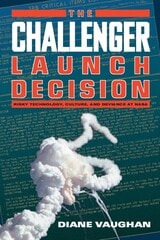
Journalists and investigators have historically cited production problems and managerial wrong-doing as the reasons behind the disaster. The Presidential Commission uncovered a flawed decision-making process at the space agency as well, citing a well-documented history of problems with the O-ring and a dramatic last-minute protest by engineers over the Solid Rocket Boosters as evidence of managerial neglect.
Why did NASA managers, who not only had all the information prior to the launch but also were warned against it, decide to proceed? In retelling how the decision unfolded through the eyes of the managers and the engineers, Vaughan uncovers an incremental descent into poor judgment, supported by a culture of high-risk technology. She reveals how and why NASA insiders, when repeatedly faced with evidence that something was wrong, normalized the deviance so that it became acceptable to them.
No safety rules were broken. No single individual was at fault. Instead, the cause of the disaster is a story not of evil but of the banality of organizational life. This powerful work explains why the Challenger tragedy must be reexamined and offers an unexpected warning about the hidden hazards of living in this technological age.
The Challenger Launch Decision
Risky Technology, Culture, and Deviance at NASA, Enlarged EditionDiane Vaughan
University of Chicago Press, 2015
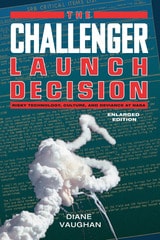
When the Space Shuttle Challenger exploded on January 28, 1986, millions of Americans became bound together in a single, historic moment. Many still vividly remember exactly where they were and what they were doing when they heard about the tragedy. Diane Vaughan recreates the steps leading up to that fateful decision, contradicting conventional interpretations to prove that what occurred at NASA was not skullduggery or misconduct but a disastrous mistake.
Why did NASA managers, who not only had all the information prior to the launch but also were warned against it, decide to proceed? In retelling how the decision unfolded through the eyes of the managers and the engineers, Vaughan uncovers an incremental descent into poor judgment, supported by a culture of high-risk technology. She reveals how and why NASA insiders, when repeatedly faced with evidence that something was wrong, normalized the deviance so that it became acceptable to them. In a new preface, Vaughan reveals the ramifications for this book and for her when a similar decision-making process brought down NASA's Space Shuttle Columbia in 2003.
The Colorado Plateau II
Biophysical, Socioeconomic, and Cultural ResearchEdited by Charles van Riper III and David J. Mattson
University of Arizona Press, 2005
The Colorado Plateau III
Integrating Research and Resources Management for Effective ConservationEdited by Charles van Riper III and Mark K. Sogge
University of Arizona Press, 2008
The Colorado Plateau IV
Shaping Conservation Through Science and ManagementCharles van Riper
University of Arizona Press, 2010
This book focuses on the integration of science and resource management issues in this unique and highly varied environment. Broken into three subsections, this volume addresses conservation biology, biophysical resources, and inventory and monitoring concerns. The chapters range in content, addressing conservation issues—past, present, and future—on the Colorado Plateau, measurement of human impacts on resources, grazing and wildland-urban interfaces, and tools and methods for monitoring habitats and species.
An informative read for people interested in the conservation and natural history of the region, the book will also serve as a valuable reference for those people engaged in the management of cultural and biological resources of the Colorado Plateau, as well as scientists interested in methods and tools for land and resource management throughout the West.
The Colorado Plateau V
Research, Environmental Planning, and Management for Collaborative ConservationEdited by Charles van Riper III, Miguel L. Villarreal, Carena J. van Riper, and Matthew J. Johnson
University of Arizona Press, 2012
This volume, the fifth from the University of Arizona Press and the tenth overall, focuses on adaptation of resource management and conservation to climate change and water scarcity, protecting biodiversity through restructured energy policies, ensuring wildlife habitat connectivity across barriers, building effective conservation networks, and exploring new opportunities for education and leadership in conservation science.
An informative read for people interested in the conservation and natural history of the region, the book will also serve as a valuable reference for those people engaged in the management of cultural and biological resources of the Colorado Plateau, as well as scientists interested in methods and tools for land and resource management throughout the West.
The Colorado Plateau VI
Science and Management at the Landscape ScaleEdited by Laura Foster Huenneke, Charles van Riper, and Kelley Ann Hays-Gilpin
University of Arizona Press, 2015
The Colorado Plateau VI’s contributors show how new technologies for monitoring, spatial analysis, restoration, and collaboration improve our understanding, management, and conservation of outcomes at the appropriate landscape scale for the Colorado Plateau. The volume’s chapters fall into five major themes: monitoring as a key tool for addressing management challenges, restoration approaches to improving ecosystem condition and function, collaboration and organizational innovations to achieve conservation and management objectives, landscape-scale approaches to understanding, and managing key species and ecological communities.
Focusing on the integration of science into resource management issues over the Colorado Plateau, this volume includes contributions from dozens of leading scholars of the region. The Colorado Plateau VI proves a valuable resource to all interested in the conservation management, natural history, and cultural biological resources of the Colorado Plateau.

The Complete Guide to Personal Digital Archiving
Brianna H. Marshall
American Library Association, 2017
The Cycle
A Practical Approach to Managing Arts OrganizationsMichael M. Kaiser and Brett E. Egan
Brandeis University Press, 2013
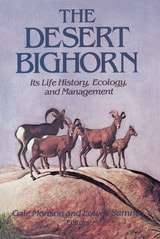
The Desert Bighorn
Its Life History, Ecology, and ManagementGale Monson
University of Arizona Press, 1980
"An intelligently researched and fully documented analysis of this noble rock-climber's life history, and ecology, and the human management of this nearly impossible-to-manage wilderness species." —American Field
"An outstanding and comprehensive work." —Books of the Southwest
"There is quite simply nothing else around that can tell you anywhere near as much about desert sheep, by anywhere near so distinguished a crew of authors." —Safari

The Disaster Planning Handbook for Libraries
Mary Grace Flaherty
American Library Association, 2021
Your library is a vital information hub and resource provider every single day, and that’s doubly true when calamity strikes. In fact, your library’s role as an “essential community function” during disasters is now encoded in U.S. law. Engaging as a partner in planning and preparedness will build much-needed community support should disaster strike, and even a basic plan will also save you time and stress later on. No matter where your library is in the disaster planning cycle, this handbook will make the process clearer and less daunting. You’ll get tools, activities, easy-to-adapt templates, and hands-on guidance on such topics as
- the six phases of disaster response;
- 15 first-hand accounts of library disaster planning or responses, helping you identify the library services most needed during a disaster;
- three essential factors that will shape the form of your disaster plan;
- preparing for hurricanes, tornadoes, fires, floods, and earthquakes;
- ideas for connecting with your community’s emergency response teams;
- federal government planning resources;
- pointers on working with state and local governments;
- a sample Memorandum of Understanding to outline mutual support for a speedier recovery;
- recommended courses and training, many of which are free;
- targeted advice for archives and special collections;
- sample building inspection checklists; and
- recommended games to help children and families prepare.
The Dysfunctional Workplace
Theory, Stories, and PracticeSeth Allcorn and Howard F. Stein
University of Missouri Press, 2015
This book explores an aspect of organizational life that is at times difficult to acknowledge and often painful to recall. Stories invite reflection and the development of greater understanding of organizational dynamics. This fresh scholarship provides a theoretical framework for discussion. Throughout this book, Allcorn and Stein utilize a psychoanalytically informed perspective to help readers understand why a leader, colleague or friend behaves in ways that are destructive of others and the organization and provides a basis for organizations to survive and thrive in a dysfunctional workplace.
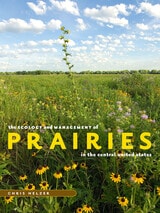
The Ecology and Management of Prairies in the Central United States
Chris Helzer
University of Iowa Press, 2010
Most prairies exist today as fragmented landscapes, making thoughtful and vigilant management ever more important. Intended for landowners and managers dedicated to understanding and nurturing their prairies as well as farmers, ranchers, conservationists, and all those with a strong interest in grasslands, ecologist Chris Helzer’s readable and practical manual educates prairie owners and managers about grassland ecology and gives them guidelines for keeping prairies diverse, vigorous, and viable.
Chapters in the first section, "Prairie Ecology," describe prairie plants and the communities they live in, the ways in which disturbance modifies plant communities, the animal and plant inhabitants that are key to prairie survival, and the importance of diversity within plant and animal communities. Chapters in the second section, "Prairie Management," explore the adaptive management process as well as guiding principles for designing management strategies, examples of successful management systems such as fire and grazing, guidance for dealing with birds and other species that have particular habitat requirements and with the invasive species that have become the most serious threat that prairie managers have to deal with, and general techniques for prairie restoration. Following the conclusion and a forward-thinking note on climate change, eight appendixes provide more information on grazing, prescribed fire, and invasive species as well as bibliographic notes, references, and national and state organizations with expertise in prairie management.
Grasslands can be found throughout much of North America, and the ideas and strategies in this book apply to most of them, particularly tallgrass and mixed-grass prairies in eastern North Dakota, eastern South Dakota, eastern Nebraska, eastern Kansas, eastern Oklahoma, northwestern Missouri, northern Illinois, northwestern Indiana, Iowa, southwestern Wisconsin, and southwestern Minnesota. By presenting all the factors that promote biological diversity and thus enhance prairie communities, then incorporating these factors into a set of clear-sighted management practices, The Ecology and Management of Prairies in the Central United States presents the tools necessary to ensure that grasslands are managed in the purposeful ways essential to the continued health and survival of prairie communities.
The Electronic Resources Troubleshooting Guide
Holly Talbott
American Library Association, 2020
A library user can’t access an article. Your log in credentials won’t work. In the realm of electronic resources everything runs smoothly—until suddenly, without warning, it doesn’t. Invariably, systems will break down, but a trial and error approach to finding out what’s wrong is highly inefficient. This hands-on guide from two expert ERM librarians walks you through the essentials of troubleshooting. It outlines a methodical process that will help you identify the source of a problem even when it’s not obvious and take steps to reach a resolution. With the goal of developing a library-wide workflow in mind, this guide will teach you how to
- familiarize yourself with the components of electronic resources, using flowchart diagrams of common access chains such as discovery services, knowledge bases, research guides, and library services platforms;
- navigate the complete triage and troubleshooting workflow, illustrated through 14 in-depth examples;
- recognize the symptoms of common access disruptions;
- conduct efficient troubleshooting interviews;
- manage help tickets and design problem reports that capture key information without overburdening the user;
- create publicly available help pages for problems originating with users’ devices or computers;
- communicate with vendors and IT personnel for speedy resolutions, providing dozens of clear definitions of library and technology terms that will help you minimize confusion; and
- customize your own troubleshooting workflow chart for common use across departments and staff hierarchies.
The Executive Way
Conflict Management in CorporationsCalvin Morrill
University of Chicago Press, 1995
Personal and corporate scandals, compensation battles, budget worries, interdepartmental rivalries, personal enmities, and general rancor are among everyday challenges faced by executives. Morrill shows what most influences the way managers handle routine conflicts are the cultures created by their company's organizational structure: whether there is a strong hierarchy, a weak hierarchy, or an absence of any strong central authority. The issues most likely to cause conflict within corporations Morrill identifies as managerial style, competition between departments, and performance evaluations, promotions, and compensation.
Among the people whose day-to-day lives we get to know are Jacobs, a divisional executive whose intuitive understanding of the corporate hierarchy enables him to topple his incompetent superior without direct confrontation; Fuller, who through a mix of brains, guile, and connections rises from staff executive secretary to corporate vice president in a large bank; Green, an old-fashioned accounting partner in a firm being taken over by management consultants; and the "Princess of Power," "Iron Man," and the "Terminator"—executives fighting their way to the top of a successful entertainment company.
Unprecedented in its direct access to top managers, this portrayal of daily life and conflict management among corporate elites will be of interest to professionals, scholars, and practitioners in organizational culture and behavior, managerial decision making, dispute, social control, law and society, and organizational ethnography.
The Governance of Not-for-Profit Organizations
Edited by Edward L. Glaeser
University of Chicago Press, 2003
This book attempts to answer that question, assembling leading experts on the economics of the not-for-profit sector to examine the problems of the health care industry, art museums, universities, and even the medieval church. Contributors look at a number of different aspects of not-for-profit operations, from the problems of fundraising, endowments, and governance to specific issues like hospital advertising.
The picture that emerges is complex and surprising. In some cases, not-for-profit firms appear to work extremely well: competition for workers, customers, and donors leads not-for-profit organizations to function as efficiently as any for-profit firm. In other contexts, large endowments and weak governance allow elite workers to maximize their own interests, rather than those of their donors, customers, or society at large.
Taken together, these papers greatly advance our knowledge of the dynamics and operations of not-for-profit organizations, revealing the under-explored systems of pressures and challenges that shape their governance.

The Great Orchestrator
Arthur Judson and American Arts ManagementJames M. Doering
University of Illinois Press, 2013
The High-Impact Digital Library
Innovative Approaches for Outreach and InstructionAnna Neatrour, Jeremy Myntti, Rachel Jane Wittmann, Rebekah Cummings, Jane Monson, and Megan Myres McMillan, in collaboration with Core Publishing
American Library Association, 2025
- discusses the results of a unique survey that provides new and structured information on digital library outreach and instruction;
- presents outreach case studies illustrating uses of social media promotion, integration of digital collections into teaching and instruction activities, partnerships with external campus units or community organizations, and other activities;
- explores many types of instruction, from drop-in class sessions and training to course-integrated instruction and ways that digital library practitioners can contribute to the Open Educational Resources (OER) and open pedagogy movements;
- details the digital humanities and digital scholarship programs developed at the University of Utah by many of the authors through cross-departmental collaboration;
- describes the ways in which the pandemic spurred many institutions to use rapid response collecting to practice community engagement; and
- speculates on future directions for outreach and instruction for digital libraries.
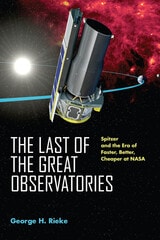
The Last of the Great Observatories
Spitzer and the Era of Faster, Better, Cheaper at NASAGeorge H. Rieke
University of Arizona Press, 2006
George Rieke played a key role in Spitzer and now relates the story of how that observatory was built and launched into space. Telling the story of this single mission within the context of NASA space science over two turbulent decades, he describes how, after a tortuous political trail to approval, Spitzer was started at the peak of NASA’s experiment with streamlining and downsizing its mission development process, termed “faster better cheaper.” Up to its official start and even afterward, Spitzer was significant not merely in terms of its scientific value but because it stood at the center of major changes in space science policy and politics. Through interviews with many of the project participants, Rieke reconstructs the political and managerial process by which space missions are conceived, approved, and developed. He reveals that by the time Spitzer had been completed, a number of mission failures had undermined faith in “faster-better-cheaper” and a more conservative approach was imposed. Rieke examines in detail the premises behind “faster better cheaper,” their strengths and weaknesses, and their ultimate impact within the context of NASA’s continuing search for the best way to build future missions.
Rieke’s participant’s perspective takes readers inside Congress and NASA to trace the progress of missions prior to the excitement of the launch, revealing the enormously complex and often disheartening political process that needs to be negotiated. He also shares some of the new observations and discoveries made by Spitzer in just its first year of operation. As the only book devoted to the Spitzer mission, The Last of the Great Observatories is a story at the nexus of politics and science, shedding new light on both spheres as it contemplates the future of mankind’s exploration of the universe.
The Librarian as Information Consultant
Sarah Anne Murphy
American Library Association, 2011

The Making of the Northwest Forest Plan
The Wild Science of Saving Old Growth EcosystemsK. Norman Johnson
Oregon State University Press, 2023
Tree sitters. Logger protests. Dying timber towns. An iconic species on the brink. The Timber Wars consumed the Pacific Northwest in the late 1980s and early1990s and led political leaders to ask scientists for a solution. The Northwest Forest Plan was the result.
For most of the twentieth century, the central theme of federal forest management in the Pacific Northwest had been logging old-growth forests to provide a sustained yield of timber. During the 1970s and 1980s, however, a series of studies by young scientists highlighted the destructive impact of that logging on northern spotted owls, salmon, and the old-growth ecosystem itself.
Combining this new science with newly minted environmental laws like the Endangered Species Act, environmental activists obtained court injunctions to stop old-growth logging on federal land, setting off a titanic struggle in the Pacific Northwest to find a way to accommodate conservation imperatives as well as the logging that provided employment for tens of thousands of people. That effort involved years of controversy and debate, federal courts, five science assessments, Congress, and eventually the president of the United States. It led to creation of the Northwest Forest Plan, which sharply and abruptly shifted the primary goal of federal forestry toward conserving the species and ecosystems of old-growth forests. Scientists went from spectators to planners and guides, employing their latest scientific findings and expertise to create a forest plan for 20 million acres that would satisfy the courts. The largest upheaval in federal forest management in history had occurred, along with a precipitous decline in timber harvest, and there was no going back.
In this book, three of the scientists who helped craft that change tell the story as they know it: the causes, development, adoption, and implementation of the Northwest Forest Plan. The book also incorporates personal reflections from the authors, short commentaries and histories from key figures— including spotted owl expert Eric Forsman—and experiences from managers who implemented the Plan as best they could. Legal expert Susan Jane M. Brown helped interpret court cases and Debora Johnson turned spatial data into maps. The final chapters cover the Plan’s ongoing significance and recommendations for conserving forest and aquatic ecosystems in an era of megafires and climate change.
The Medical Library Association Guide to Managing Health Care Libraries
Rosalind Farnam Dudden
American Library Association, 2011
The Neal-Schuman Technology Management Handbook for School Library Media Centers
American Library Association, 2010
The New Effective Voluntary Board of Directors
What It Is and How It WorksWilliam R. Conrad Jr.
Ohio University Press, 2003
More than one million nonprofit or voluntary organizations have been incorporated in the United States, and there are countless others throughout the world. Although they range in size and purpose from small social clubs to large and complex organizations such as universities and hospitals, they all have one thing in common: a board of directors of some type. What these boards do varies as much as the organizations themselves.
The New Effective Voluntary Board of Directors provides clear answers, illustrated with graphics, to previously ambiguous and bewildering questions, such as definitions of policy, the function of boards, the role of board members, and many other issues.
Dealing with the delicate balance in nonprofit organizations, the legal implications of serving on a board, the nonprofit leadership and management model, and other matters of concern, William Conrad applies his lifelong experience to providing a comprehensive, practical, and concise tool for those involved in the unique challenges associated with the leadership and management of nonprofit and voluntary groups.
With nearly 30,000 copies of earlier editions of this work in print, Swallow Press is pleased to publish the new, updated, and revised edition of this classic in its field.

The New History in an Old Museum
Creating the Past at Colonial WilliamsburgRichard Handler and Eric Gable
Duke University Press, 1997
During much of its existence, the "living museum" at Williamsburg has been considered a patriotic shrine, celebrating the upscale lifestyles of Virginia’s colonial-era elite. But in recent decades a new generation of social historians has injected a more populist and critical slant to the site’s narrative of nationhood. For example, in interactions with museum visitors, employees now relate stories about the experiences of African Americans and women, stories that several years ago did not enter into descriptions of life in Colonial Williamsburg. Handler and Gable focus on the way this public history is managed, as historians and administrators define historiographical policy and middle-level managers train and direct front-line staff to deliver this "product" to the public. They explore how visitors consume or modify what they hear and see, and reveal how interpreters and craftspeople resist or acquiesce in being managed. By deploying the voices of these various actors in a richly textured narrative, The New History in an Old Museum highlights the elements of cultural consensus that emerge from this cacophony of conflict and negotiation.
The Other Public Lands
Preservation, Extraction, and Politics on the Fifty States' Natural Resource LandsSteven Davis
Temple University Press, 2025
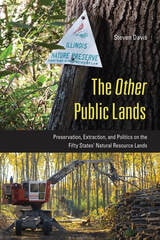
The Other Public Lands looks at both differences and common patterns in state land management, including the structure of natural resource agencies. Davis examines the privatization and commercialization of state parks, and the tensions between recreation, revenue and the preservation of biodiversity and natural landscapes. He also raises issues about equity, access, appropriate development, and ecological health. Chapters review state forests, state wildlife management areas, and school trust lands. In addition, the roles of interest groups, the courts, and agency culture and behavior are compared and analyzed both between states and the federal government and between states with differing approaches to specific issues.
As there has been a demand to transfer at least some federal lands to the states, The Other Public Lands concludes with an appraisal of whether states could handle this transfer and goes on to suggest ways to ensure adequate access in an era of increased demand.
The Postdevelopmental State
Dilemmas of Economic Democratization in Contemporary South KoreaJamie Doucette
University of Michigan Press, 2024
Winner of the 2025 Association of Korean Studies in Europe Book Prize
Over the last 25 years, South Korea has witnessed growing inequality due to the proliferation of non-standard employment, ballooning household debt, deepening export-dependency, and the growth of super-conglomerates such as Samsung and Hyundai. Combined with declining rates of economic growth and turbulent political events, these processes mark a departure from Korea’s past recognition as a high growth “developmental state.”
The Postdevelopmental State radically reframes research into the South Korean economy by foregrounding the efforts of pro-democratic reformers and social movements in South Korea to create an alternative economic model—one that can address Korea’s legacy of authoritarian economic development during the Cold War and neoliberal restructuring since the Asian Financial Crisis of the late 1990s. Understanding these attempts offers insight into the types of economic reforms that have been enacted since the late 1990s as well as the continued legacy of dictatorship-era politics within the Korean political and legal system. By examining the dilemmas economic democracy has encountered over the past 25 years, from the IMF Crisis to the aftermath of the Candlelight Revolution, the book reveals the enormous and comprehensive challenges involved in addressing the legacy of authoritarian economic models and their neoliberal transformations.
The Road to Love Canal
Managing Industrial Waste before EPABy Craig E. Colten and Peter N. Skinner
University of Texas Press, 1995
The toxic legacy of Love Canal vividly brought the crisis in industrial waste disposal to public awareness across the United States and led to the passage of the Superfund legislation in 1980. To discover why disasters like Love Canal have occurred and whether they could have been averted with knowledge available to waste managers of the time, this book examines industrial waste disposal before the formation of the Environmental Protection Agency in 1970.
Colten and Skinner build their study around three key questions. First, what was known before 1970 about the hazards of certain industrial wastes and their potential for causing public health problems? Second, what were the technical capabilities for treating or containing wastes during that time? And third, what factors other than technical knowledge guided the actions of waste managers before the enactment of explicit federal laws?
The authors find that significant information about the hazards of industrial wastes existed before 1970. Their explanations of why this knowledge did not prevent the toxic legacy now facing us will be essential reading for environmental historians and lawyers, public health personnel, and concerned citizens.
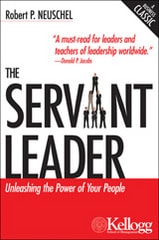
The Servant Leader
Unleashing the Power of Your PeopleRobert P. Neuschel
Northwestern University Press, 2005
He asks: what steps might we take to revitalize the quality and strength of our leadership? He then forcefully and straightforwardly gives an outline of what he believes are the major changes in leadership we must bring about. As a professor of management and strategy, and earlier, as a director and senior partner at a major consulting firm, and as a captain in the U. S. Army, Neuschel observed the best of leadership, and practiced it. He shares his insights with us in The Servant Leader.

The Specter of the Archive
Political Practice and the Information State in Early Modern BritainNicholas Popper
University of Chicago Press, 2024
We are used to thinking of ourselves as living in a time when more information is more available than ever before. In The Specter of the Archive, Nicholas Popper shows that earlier eras had to grapple with the same problem—how to deal with too much information at their fingertips.
He reveals that early modern Britain was a society newly drowning in paper, a light and durable technology whose spread allowed statesmen to record drafts, memoranda, and other ephemera that might otherwise have been lost, and also made it possible for ordinary people to collect political texts. As original paperwork and copies alike flooded the government, information management became the core of politics. Focusing on two of the primary political archives of early modern England, the Tower of London Record Office and the State Paper Office, Popper traces the circulation of their materials through the government and the broader public sphere. In this early media-saturated society, we find the origins of many issues we face today: Who shapes the archive? Can we trust the pictures of the past and the present that it shows us? And, in a more politically urgent vein: Does a huge volume of widely available information (not all of it accurate) risk contributing to polarization and extremism?

The Tallgrass Prairie Center Guide to Prairie Restoration in the Upper Midwest
Daryl Smith
University of Iowa Press, 2010
Although less than 3 percent of the original vast landscape survives, the tallgrass prairie remains a national treasure, glowing with a vast array of colorful wildflowers in spring and summer, enriched by the warm reds and browns of grasses in fall and winter. This comprehensive manual, crafted by the staff of the Tallgrass Prairie Center at the University of Northern Iowa, will be an essential companion for everyone dedicated to planning, developing, and maintaining all types of prairie restorations and reconstructions in the tallgrass prairie region of Iowa, northern Illinois, northwestern Indiana, southwestern Wisconsin, southwestern Minnesota, eastern South Dakota, eastern Nebraska, northwestern Missouri, and northeastern Kansas.
Focusing on conservation plantings, prairie recovery, native landscaping in yards and at schools, roadside plantings, and pasture renovations, the authors—who collectively have more than a hundred years of experience with prairie restoration—have created a manual that will be particularly useful to landowners, conservation agency personnel, ecosystem managers, native-seeding contractors, prairie enthusiasts, teachers, and roadside managers. A wealth of color and black-and-white photographs taken in the field as well as checklists and tables support the detailed text, which also includes useful online and print sources and references, a glossary, and lists of common and scientific names of all plant species discussed.
The text is divided into five parts. Part I, Reconstruction Planning, provides an overall summary of the entire process, information about securing good-quality seed, and the design of seed mixes. In Part II, Implementing Reconstruction, the authors consider ways to prepare and seed the site, manage the site in its first growing season, identify seedlings, and evaluate success. Part III, Prairie Restoration and Management, deals with identifying and assessing prairie remnants, working toward a predetermined restoration goal, and managing restored prairie remnants and completed reconstructions, including prescribed burning. Chapters in Part IV, Special Cases, discuss the uses of prairie in public spaces, roadside vegetation management, and landscaping on a smaller scale in yards and outdoor classrooms. Part V, Native Seed Production, describes the processes of harvesting, drying, cleaning, and storing native seed as well as propagating and transplanting native seedlings.
Although we cannot recreate the original blacksoil prairie, tallgrass prairie restoration offers the opportunity to reverse environmental damage and provide for the recovery of vital aspects of this lost ecosystem. Anyone in the Upper Midwest who wishes to improve water quality, reduce flood damage, support species diversity, preserve animal habitats, and enjoy the changing panorama of grasses and wildflowers will benefit from the clear, careful text and copious illustrations in this authoritative guide.
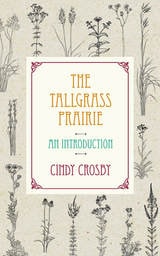
The Tallgrass Prairie
An IntroductionCindy Crosby
Northwestern University Press, 2017
Like a walking tour with a literate friend and expert, Cindy Crosby's Tallgrass Prairie prepares travelers and armchair travelers for an adventure in the tallgrass. Crosby's engaging gateway assumes no prior knowledge of tallgrass landscapes, and she acquaints readers with the native plants they’ll discover there. She demystifies botanic plant names and offers engaging mnemonic tips for mastering Latin names with verve and confidence. Visitors to the prairie will learn to identify native plants using the five senses to discover what makes each plant unique or memorable. In the summer, for example, the unusual square stem of cup plant, Silphium perfoliatum, sets it apart from its neighbors. And its distinctive leaf cups water after the rain.
A gifted raconteur, Crosby tells stories about how humankind has adopted the prairie as a grocery, an apothecary, and even as a shop for love charms. Rounding out this exceptional introduction are suggestions for experiencing the American prairie, including journaling techniques and sensory experiences, tips for preparing for a hike in tallgrass landscapes, ways to integrate native prairie plants into home landscapes (without upsetting the neighbors), and a wealth of resources for further exploration.
An instant classic in the tradition of American naturalist writing, The Tallgrass Prairie will delight not only scholars and policy makers, but guests to tallgrass prairie preserves, outdoors enthusiasts and gardeners, and readers interested in American ecosystems and native plants.

The Tillamook
A Created Forest Comes of AgeGail Wells
Oregon State University Press, 1999
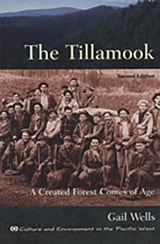
The Tillamook
A Created Forest Comes of Age: Second EditionGail Wells
Oregon State University Press, 2004
The Triangle Fire, Protocols Of Peace
And Industrial Democracy In ProgressiveRichard A. Greenwald
Temple University Press, 2005
The Unaccountability Machine
Why Big Systems Make Terrible Decisions—and How the World Lost Its MindDan Davies
University of Chicago Press, 2025
Passengers get bumped from flights. Phone menus disconnect. Automated financial trades produce market collapse. Of all the challenges in modern life, some of the most vexing come from our relationships with automation: a large system does us wrong, and there’s nothing we can do about it.
The problem, economist Dan Davies shows, is accountability sinks: systems in which decisions are delegated to a complex rule book or set of standard procedures, making it impossible to identify the source of mistakes when they happen. In our increasingly unhuman world—lives dominated by algorithms, artificial intelligence, and large organizations—these accountability sinks produce more than just aggravation. They make life and economy unknowable—a black box for no reason.
In The Unaccountability Machine, Davies lays bare how markets, institutions, and even governments systematically generate outcomes that no one—not even those involved in making them—seems to want. Since the earliest days of the computer age, theorists have foreseen the dangers of complex systems without personal accountability. In response, British business scholar Stafford Beer developed an accountability-first approach to management called “cybernetics,” which might have taken off had his biggest client (the Chilean government) not fallen to a bloody coup in 1973.
With his signature blend of economic and journalistic rigor, Davies examines what’s gone wrong since Beer, including what might have been had the world embraced cybernetics when it had the chance. The Unaccountability Machine is a revelatory and resonant account of how modern life became predisposed to dysfunction.
The Unaccountability Machine
Why Big Systems Make Terrible Decisions—and How the World Lost Its MindDan Davies
University of Chicago Press, 2025
Longlisted for the 2024 Financial Times Book of the Year. How life and the economy became a black box—a collection of systems no one understands, producing outcomes no one likes.
Passengers get bumped from flights. Phone menus disconnect. Automated financial trades produce market collapse. Of all the challenges in modern life, some of the most vexing come from our relationships with automation: a large system does us wrong, and there’s nothing we can do about it.
The problem, economist Dan Davies shows, is accountability sinks: systems in which decisions are delegated to a complex rule book or set of standard procedures, making it impossible to identify the source of mistakes when they happen. In our increasingly unhuman world—lives dominated by algorithms, artificial intelligence, and large organizations—these accountability sinks produce more than just aggravation. They make life and economy unknowable—a black box for no reason.
In The Unaccountability Machine, Davies lays bare how markets, institutions, and even governments systematically generate outcomes that no one—not even those involved in making them—seems to want. Since the earliest days of the computer age, theorists have foreseen the dangers of complex systems without personal accountability. In response, British business scholar Stafford Beer developed an accountability-first approach to management called “cybernetics,” which might have taken off had his biggest client (the Chilean government) not fallen to a bloody coup in 1973.
With his signature blend of economic and journalistic rigor, Davies examines what’s gone wrong since Beer, including what might have been had the world embraced cybernetics when it had the chance. The Unaccountability Machine is a revelatory and resonant account of how modern life became predisposed to dysfunction.

Thermal Power Plant Simulation and Control
Damian Flynn
The Institution of Engineering and Technology, 2003
Time to Get Real!
Turning Uncertainty into an Action Plan for Personal and Professional SuccessAlex J. Plinio
Rutgers University Press, 2019
The Life and Career Planning Model in Time to Get Real! has been utilized by individuals in early, mid and later career and life. Too many individuals let life happen to them. Control more of your life through readiness and preparation. We can help you visualize a future that you desire and a road that you can travel to get there.
Written by Alex J. Plinio, and Melissa Smith, acclaimed business leaders and life and career planning specialists, this book is filled with instructive case studies, illuminating stories, interactive exercises, and inspirational quotes enabling you to unlock those things leading to personal satisfaction and success. The Life and Career Planning Model helps you target what matters the most to you in your life while providing the impetus to move you forward in a positive direction. Whether you are 21, 41, or 61, it is now Time to Get Real!
Transforming Rural Water Governance
The Road from Resource Management to Political Activism in NicaraguaSarah T. Romano
University of Arizona Press, 2019
In Transforming Rural Water Governance Sarah T. Romano explains the bottom-up development and political impact of community-based water and sanitation committees (CAPS) in Nicaragua. Romano traces the evolution of CAPS from rural resource management associations into a national political force through grassroots organizing and strategic alliances.
Resource management and service provision is inherently political: charging residents fees for service, determining rules for household water shutoffs and reconnections, and negotiating access to water sources with local property owners constitute just a few of the highly political endeavors resource management associations like CAPS undertake as part of their day-to-day work in their communities. Yet, for decades in Nicaragua, this local work did not reflect political activism. In the mid-2000s CAPS’ collective push for social change propelled them onto a national stage and into new roles as they demanded recognition from the government.
Romano argues that the transformation of Nicaragua’s CAPS into political actors is a promising example of the pursuit of sustainable and equitable water governance, particularly in Latin America. Transforming Rural Water Governance demonstrates that when activism informs public policy processes, the outcome is more inclusive governance and the potential for greater social and environmental justice.

Tributary Voices
Literary and Rhetorical Exploration of the Colorado RiverPaul A. Formisano
University of Nevada Press, 2022
Through literary, rhetorical, and historical analysis of some of the Colorado River’s lesser-known stakeholders, Tributary Voices considers a more comprehensive approach to river management on the eve of the one-hundredth anniversary of the signing of the Colorado River Compact, which governs the allocation of water rights to the seven states in the region. Ranging from the early twentieth century to the present, Tributary Voices examines nature writing, women’s narratives, critiques of dam development, the Latina/o communities’ appeals for river restoration, American Indian authors’ and tribal nations’ claims of water sovereignty, and teachings about environmental stewardship and provident living. This innovative study models an interdisciplinary approach to water governance and reinvigorates our imagination in achieving a more sustainable water ethic.