98 books match the query 'Marginality, Social' and 17 start with t

cover of Tensions in the American Dream: Rhetoric, Reverie, or Reality

Tensions in the American Dream

Rhetoric, Reverie, or Reality

Roderick Bush

Temple University Press, 2015

Could the promise of upward mobility have a dark side? In Tensions in the American Dream, Melanie and Roderick Bush ask, how does a "nation of immigrants" pledge inclusion, yet marginalize so many citizens based on race, class, and gender? The authors consider the origins and development of the U.S. nation and empire; the founding principles of belonging, nationalism, and exceptionalism; and their lived reality.
 
Tensions in the American Dream also addresses the relevancy of nation to empire in the context of the historical world capitalist system. The authors ask, is the American Dream a reality only questioned by those unwilling or unable to achieve it? What is the "good life" and how is it particularly "American"?
[more]
cover of The Construction of Minorities: Cases for Comparison Across Time and Around the World

The Construction of Minorities

Cases for Comparison Across Time and Around the World

Andre Burguiere and Raymond Grew, Editors

University of Michigan Press, 2001
How does a minority come to be? In an unusual project, a notable group of French and American scholars take the view that minorities are socially constructed. Their original studies of specific historical examples produce a series of stimulating and provocative essays useful and enjoyable for specialists and the general reader alike.Spawned from a conference organized by the journals Annales and Comparative Studies in Society and History in concert with the Center for Historical Research at l'EHESS in Paris and the Department of History at the University of Michigan, this collection contrasts studies of Afro-Americans in the United States, French Protestants, notables in Renaissance Florence, religious minorities in the Ottoman Empire, Muslim and Chinese traders in Southeast Asia, the native peoples of Spanish America, lower-caste Indians, ethnic minorities in the Soviet Union, Australian aborigines, and American and French responses to AIDS to reveal valuable information about how minorities come to be constructed within societies. Some of the minorities considered are identified primarily in terms of their ethnicity, some by social class, and some by religion (Protestant, Jewish, and Muslim); a final essay asks whether the victims of AIDS constitute a minority at all.With its cross-cultural emphasis, this book will be a valuable addition to courses on diversity, ethnicity, and cultural comparison. It is destined to be a useful reference for undergraduate and research libraries and a much-consulted work for specialists on each of the societies considered.André Burguière is Research Director, l'Ecole des Hautes Etudes en Sciences Sociales (l'EHESS) in Paris. Raymond Grew is Professor of History Emeritus, University of Michigan.
[more]
cover of The Economics of Poverty Traps

The Economics of Poverty Traps

Edited by Christopher B. Barrett, Michael R. Carter, and Jean-Paul Chavas

University of Chicago Press, 2018

What circumstances or behaviors turn poverty into a cycle that perpetuates across generations? The answer to this question carries especially important implications for the design and evaluation of policies and projects intended to reduce poverty. Yet a major challenge analysts and policymakers face in understanding poverty traps is the sheer number of mechanisms—not just financial, but also environmental, physical, and psychological—that may contribute to the persistence of poverty all over the world.

The research in this volume explores the hypothesis that poverty is self-reinforcing because the equilibrium behaviors of the poor perpetuate low standards of living. Contributions explore the dynamic, complex processes by which households accumulate assets and increase their productivity and earnings potential, as well as the conditions under which some individuals, groups, and economies struggle to escape poverty. Investigating the full range of phenomena that combine to generate poverty traps—gleaned from behavioral, health, and resource economics as well as the sociology, psychology, and environmental literatures—chapters in this volume also  present new evidence that highlights both the insights and the limits of a poverty trap lens.

The framework introduced in this volume provides a robust platform for studying well-being dynamics in developing economies. 
 
[more]
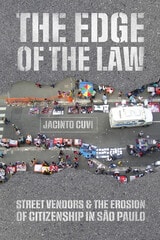
cover of The Edge of the Law: Street Vendors and the Erosion of Citizenship in São Paulo

The Edge of the Law

Street Vendors and the Erosion of Citizenship in São Paulo

Jacinto Cuvi

University of Chicago Press, 2025

How street vendors tangle with the law in São Paulo, Brazil.
 
With a little initiative and very little startup money, an outgoing individual might sell you a number of delights and conveniences familiar to city dwellers—from cold water bottles while you’re sitting in traffic to a popsicle from a cart on a summer afternoon in the park. Such vendors form a significant share of the workforce in São Paulo, Brazil, but their ubiquity belies perpetual struggle. Some have the right to practice their trade; others do not. All of them strive to make it—or stay afloat.
 
In The Edge of the Law, sociologist Jacinto Cuvi introduces us to the world of street vendors and teases out the relationship between the construction of legality and the experience of citizenship. As São Paulo’s city government undertakes a large-scale plan to cancel street vending licenses and evict street vendors, Cuvi reveals how the rights of informal workers can be revoked or withheld and how the lines can be redrawn between work that is “legal” and work that takes place under constant fear of law enforcement. Alongside the mechanics of disenfranchisement, Cuvi captures the lived experience of criminalization, dissecting the distribution of (shallow) rights among vendors who continually reinvent strategies to eke out a living while dealing with the constraints and pressures of informal citizenship at the edge of the law.
 
[more]
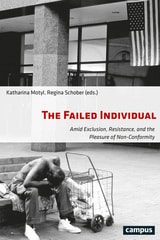
cover of The Failed Individual: Amid Exclusion, Resistance, and the Pleasure of Non-Conformity

The Failed Individual

Amid Exclusion, Resistance, and the Pleasure of Non-Conformity

Edited by Katharina Motyl and Regina Schober

Campus Verlag, 2017
The freedom of the individual to aim high is a deeply rooted part of the American ethos but we rarely acknowledge its flip side: failure. If people are responsible for their individual successes, is the same true of their failures? The Failed Individual brings together a variety of disciplinary approaches to explore how people fail in the United States and the West at large, whether economically, politically, socially, culturally, or physically. How do we understand individual failure, especially in the context of the zero-sum game of international capitalism? And what new spaces of resistance, or even pleasure, might failure open up for people and society?
[more]
cover of The Intestines of the State: Youth, Violence, and Belated Histories in the Cameroon Grassfields

The Intestines of the State

Youth, Violence, and Belated Histories in the Cameroon Grassfields

Nicolas Argenti

University of Chicago Press, 2007

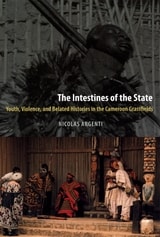
The young people of the Cameroon Grassfields have been subject to a long history of violence and political marginalization. For centuries the main victims of the slave trade, they became prime targets for forced labor campaigns under a series of colonial rulers. Today’s youth remain at the bottom of the fiercely hierarchical and polarized societies of the Grassfields, and it is their response to centuries of exploitation that Nicolas Argenti takes up in this absorbing and original book.

Beginning his study with a political analysis of youth in the Grassfields from the eighteenth century to the present, Argenti pays special attention to the repeated violent revolts staged by young victims of political oppression. He then combines this history with extensive ethnographic fieldwork in the Oku chiefdom, discovering that the specter of past violence lives on in the masked dance performances that have earned intense devotion from today’s youth. Argenti contends that by evoking the imagery of past cataclysmic events, these masquerades allow young Oku men and women to address the inequities they face in their relations with elders and state authorities today.
[more]
cover of The Latin American Subaltern Studies Reader

The Latin American Subaltern Studies Reader

Ileana Rodríguez, ed.

Duke University Press, 2001

Sharing a postrevolutionary sympathy with the struggles of the poor, the contributors to this first comprehensive collection of writing on subalternity in Latin America work to actively link politics, culture, and literature. Emerging from a decade of work and debates generated by a collective known as the Latin American Studies Group, the volume privileges the category of the subaltern over that of class, as contributors focus on the possibilities of investigating history from below.
In addition to an overview by Ranajit Guha, essay topics include nineteenth-century hygiene in Latin American countries, Rigoberta Menchú after the Nobel, commentaries on Haitian and Argentinian issues, the relationship between gender and race in Bolivia, and ungovernability and tragedy in Peru. Providing a radical critique of elite culture and of liberal, bourgeois, and modern epistemologies and projects, the essays included here prove that Latin American Subaltern Studies is much more than the mere translation of subaltern studies from South Asia to Latin America.

Contributors. Marcelo Bergman, John Beverley, Robert Carr, Sara Castro-Klarén, Michael Clark, Beatriz González Stephan, Ranajit Guha, María Milagros López , Walter Mignolo, Alberto Moreiras, Abdul-Karim Mustapha, José Rabasa, Ileana Rodríguez, Josefina Saldaña-Portillo, Javier Sanjinés, C. Patricia Seed, Doris Sommer, Marcia Stephenson, Mónica Szurmuk, Gareth Williams, Marc Zimmerman

[more]
cover of The Left Behind: Reimagining Britain's Socially Excluded

The Left Behind

Reimagining Britain's Socially Excluded

James

Pluto Press, 2022

Examines the ways in which the 'Left Behind' have been used to symbolize and foment social divisions in contemporary Britain.

'The Left Behind' is a defining motif of contemporary British political discourse. It is the thread that knits together the 2016 Brexit referendum, the crumbling of the fabled 'Red Wall' in the North, and the pernicious culture war being waged today. But who are the Left Behind?

James Morrison goes in search of the reality behind the rhetoric, offering the first comprehensive, historical analysis of the origins, uses and meanings of the term. He interrogates the popular archetype of the Left Behind - as a working-class, Leave-voting white male from a former industrial heartland - and situates the concept in the context of longstanding, demonizing discourses aimed at communities seen as backward and 'undeserving'.

Analyzing national newspaper coverage and parliamentary discussions, and drawing on interviews with MPs, community leaders, charities, and people with direct lived experiences of poverty and precarity, The Left Behind grapples with the real human cost of austerity for neglected post-industrial communities and other marginalized groups across the world, and the stigmatizing discourse that does little to serve them.
[more]
cover of The Long Emancipation: Moving toward Black Freedom

The Long Emancipation

Moving toward Black Freedom

Rinaldo Walcott

Duke University Press, 2021

In The Long Emancipation Rinaldo Walcott posits that Black people globally live in the time of emancipation and that emancipation is definitely not freedom. Taking examples from across the globe, he argues that wherever Black people have been emancipated from slavery and colonization, a potential freedom has been thwarted. Walcott names this condition the long emancipation—the ongoing interdiction of potential Black freedom and the continuation of the juridical and legislative status of Black nonbeing. Stating that Black people have yet to experience freedom, Walcott shows that being Black in the world is to exist in the time of emancipation in which Black people must constantly fashion alternate conceptions of freedom and reality through expressive culture. Given that Black unfreedom lies at the center of the making of the modern world, the attainment of freedom for Black people, Walcott contends, will transform the human experience worldwide. With The Long Emancipation, Walcott offers a new humanism that begins by acknowledging that present conceptions of what it means to be human do not currently include Black people.
[more]
cover of The Migrant's Paradox: Street Livelihoods and Marginal Citizenship in Britain

The Migrant's Paradox

Street Livelihoods and Marginal Citizenship in Britain

Suzanne M. Hall

University of Minnesota Press, 2021

Connects global migration with urban marginalization, exploring how “race” maps onto place across the globe, state, and street

In this richly observed account of migrant shopkeepers in five cities in the United Kingdom, Suzanne Hall examines the brutal contradictions of sovereignty and capitalism in the formation of street livelihoods in the urban margins. Hall locates The Migrant’s Paradox on streets in the far-flung parts of de-industrialized peripheries, where jobs are hard to come by and the impacts of historic state underinvestment are deeply felt. 

Drawing on hundreds of in-person interviews on streets in Birmingham, Bristol, Leicester, London, and Manchester, Hall brings together histories of colonization with current forms of coloniality. Her six-year project spans the combined impacts of the 2008 financial crisis, austerity governance, punitive immigration laws and the Brexit Referendum, and processes of state-sanctioned regeneration. She incorporates the spaces of shops, conference halls, and planning offices to capture how official border talk overlaps with everyday formations of work and belonging on the street.

Original and ambitious, Hall’s work complicates understandings of migrants, demonstrating how migrant journeys and claims to space illuminate the relations between global displacement and urban emplacement. In articulating “a citizenship of the edge” as an adaptive and audacious mode of belonging, she shows how sovereignty and inequality are maintained and refuted. 
[more]
cover of The Perils of Populism

The Perils of Populism

Sarah Tobias

Rutgers University Press, 2022

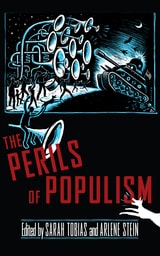
From Donald Trump in the U.S. to Jair Bolsonaro in Brazil, Viktor Orbán in Hungary, and Narendra Modi in India, right-wing populist leaders have taken power in many parts of the world. While each country’s populist movement is distinct, they are united by several key features, including the presence of a boastful strongman leader and the scapegoating of vulnerable populations, especially immigrants, people of color, LGBTQ people, and women.
 
The Perils of Populism shows how a feminist lens can help diagnose the factors behind the global rise of right-wing populism and teach us how to resist the threat it presents to democracy. Featuring interdisciplinary essays about politics in the United States, the Middle East, Europe, and India from a variety of acclaimed theorists and activists, the volume contributes to a rapidly expanding literature on gender and the far right. Together, these chapters offer a truly intersectional analysis of the problem, addressing everything from how populism has thrived in a “post-truth” era to the ways it appeals to working-class voters looking for an alternative to neoliberalism. Yet the authors also find reasons to be hopeful, as they showcase forms of grassroots feminist activism that challenge right-wing populism by advocating for racial and economic justice.
[more]
cover of The Right to Maim: Debility, Capacity, Disability

The Right to Maim

Debility, Capacity, Disability

Jasbir K. Puar

Duke University Press, 2017
In The Right to Maim Jasbir K. Puar brings her pathbreaking work on the liberal state, sexuality, and biopolitics to bear on our understanding of disability. Drawing on a stunning array of theoretical and methodological frameworks, Puar uses the concept of “debility”—bodily injury and social exclusion brought on by economic and political factors—to disrupt the category of disability. She shows how debility, disability, and capacity together constitute an assemblage that states use to control populations. Puar's analysis culminates in an interrogation of Israel's policies toward Palestine, in which she outlines how Israel brings Palestinians into biopolitical being by designating them available for injury. Supplementing its right to kill with what Puar calls the right to maim, the Israeli state relies on liberal frameworks of disability to obscure and enable the mass debilitation of Palestinian bodies. Tracing disability's interaction with debility and capacity, Puar offers a brilliant rethinking of Foucauldian biopolitics while showing how disability functions at the intersection of imperialism and racialized capital.
[more]
cover of The Ruined Anthracite: Historical Trauma in Coal-Mining Communities

The Ruined Anthracite

Historical Trauma in Coal-Mining Communities

Paul A. Shackel

University of Illinois Press, 2023

Once a busy if impoverished center for the anthracite coal industry, northeastern Pennsylvania exists today as a region suffering inexorable decline--racked by economic hardship and rampant opioid abuse, abandoned by young people, and steeped in xenophobic fear. Paul A. Shackel merges analysis with oral history to document the devastating effects of a lifetime of structural violence on the people who have stayed behind. Heroic stories of workers facing the dangers of underground mining stand beside accounts of people living their lives in a toxic environment and battling deprivation and starvation by foraging, bartering, and relying on the good will of neighbors. As Shackel reveals the effects of these long-term traumas, he sheds light on people’s poor health and lack of well-being. The result is a valuable on-the-ground perspective that expands our understanding of the social fracturing, economic decay, and anger afflicting many communities across the United States.

Insightful and dramatic, The Ruined Anthracite combines archaeology, documentary research, and oral history to render the ongoing human cost of environmental devastation and unchecked capitalism.
[more]
cover of The Ruptures Of American Capital: Women Of Color Feminism And The Culture Of Immigrant Labor

The Ruptures Of American Capital

Women Of Color Feminism And The Culture Of Immigrant Labor

Grace Kyungwon Hong

University of Minnesota Press, 2006
Universality is a dangerous concept, according to Grace Kyungwon Hong, one that has contributed to the rise of the U.S. nation-state that privileges the propertied individual. However, African American, Asian American, and Chicano people experience the same stretch of city sidewalk with varying degrees of safety, visibility, and surveillance.The Ruptures of American Capital examines two key social formations—women of color feminism and racialized immigrant women’s culture—in order to argue that race and gender are contradictions within the history of U.S. capital that should be understood not as monolithic but as marked by its crises. Hong shows how women of color feminism identified ways in which nationalist forms of capital, such as the right to own property, were repressive. The Ruptures of American Capital demonstrates that racialized immigrant women’s culture has brought to light contested modes of incorporation into consumer culture.Interweaving discussion of U.S. political economy with literary analyses (including readings from Booker T. Washington to Jessica Hagedorn) Hong challenges the individualism of the United States and the fetishization of difference that is one of the markers of globalization.Grace Kyungwon Hong is assistant professor of English and Asian American studies at the University of Wisconsin, Madison.
[more]
cover of The Surrounds: Urban Life within and beyond Capture

The Surrounds

Urban Life within and beyond Capture

AbdouMaliq Simone

Duke University Press, 2022
In The Surrounds renowned urbanist AbdouMaliq Simone offers a new theorization of the interface of the urban and the political. Working at the intersection of Black studies, urban theory, and decolonial and Islamic thought, Simone centers the surrounds—those urban spaces beyond control and capture that exist as a locus of rebellion and invention. He shows that even in clearly defined city environments, whether industrial, carceral, administrative, or domestic, residents use spaces for purposes they were not designed for: schools become housing, markets turn into classrooms, tax offices transform into repair shops. The surrounds, Simone contends, are where nothing fits according to design. They are where forgotten and marginalized populations invent new relations and ways of living and being, continuously reshaping what individuals and collectives can do. Focusing less on what new worlds may come to be and more on what people are creating now, Simone shows how the surrounds are an integral part of the expansiveness of urban imagination.
[more]
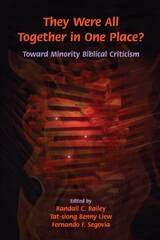
cover of They Were All Together in One Place? Toward Minority Biblical Criticism

They Were All Together in One Place? Toward Minority Biblical Criticism

Randall C. Bailey

SBL Press, 2009

Critics from three major racial/ethnic minority communities in the United States—African American, Asian American, and Latino/a American—focus on the problematic of race and ethnicity in the Bible and in contemporary biblical interpretation. With keen eyes on both ancient text and contemporary context, contributors pay close attention to how racial/ethnic dynamics intersect with other differential relations of power such as gender, class, sexuality, and colonialism. In groundbreaking interaction, they also consider their readings alongside those of other racial/ethnic minority communities. The volume includes an introduction pointing out the crucial role of this work within minority criticism by looking at its historical trajectory, critical findings, and future directions. The contributors are Cheryl B. Anderson, Francisco O. García-Treto, Jean-Pierre Ruiz, Frank M. Yamada, Gale A. Yee, Jae-Won Lee, Gay L. Byron, Fernando F. Segovia, Randall C. Bailey, Tat-siong Benny Liew, Demetrius K. Williams, Mayra Rivera Rivera, Evelyn L. Parker, and James Kyung-Jin Lee.

[more]
cover of Triumph of the Fatherland: German Unification and the Marginalization of Women

Triumph of the Fatherland

German Unification and the Marginalization of Women

Brigitte Young

University of Michigan Press, 1999

The East German uprising of 1989 was not a male revolution. Indeed, one of the most significant aspects of the fall of East Germany, compared to that of other East European nations, was the presence of women demanding a political role in the newly emerging social order. As one slogan proclaimed, "Without Women There Is No State."
Yet despite the determination of these women--and of West German feminist groups--to help shape the future of the German state, their influence remained, in the end, very limited. In Triumph of the Fatherland, political scientist Brigitte Young draws on in-depth interviews, archival sources, newspapers, and her own observations from 1989 to 1991 to study the goals, strategies, and eventual fate of the German women's movements during this tumultuous period.
Young focuses on the relationship between the state and its citizenry, outlining the mobilization of women in four states: the East German and West German states before unification; the "stateless state" in East Germany after the collapse of the Wall, and the West German state during unification. Ultimately she finds that the political opportunity structures opened during the "stateless state" closed again with unification, resulting in what Young calls "double gender marginalization."
Brigitte Young is Associate Professor, Department of Political Science, Otto-Suhr-Institute, Free University Berlin, Germany.
[more]