Results by title
50 books match the query 'Marine Biology' and 7 start with t
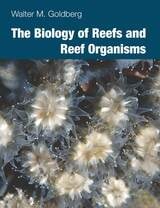
The Biology of Reefs and Reef Organisms
Walter M. Goldberg
University of Chicago Press, 2013
Goldberg examines the nature not only of coral reefs—the best known among types of reefs—but also of sponge reefs, worm reefs, and oyster reefs, explaining the factors that influence their growth, distribution, and structure. A central focus of the book is reef construction, and Goldberg details the plants and animals that form the scaffold of the reef system and allow for the attachment and growth of other organisms, including those that function as bafflers, binders, and cementing agents. He also tours readers through reef ecology, paleontology, and biogeography, all of which serve as background for the problems reefs face today and the challenge of their conservation.
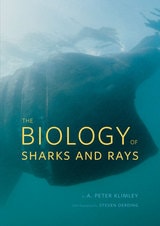
The Biology of Sharks and Rays
A. Peter Klimley
University of Chicago Press, 2013
The book will be a useful textbook for advanced ichthyology students as well as an encyclopedic source for those seeking a greater understanding of these fascinating creatures.

The Book of Shells
A Life-Size Guide to Identifying and Classifying Six Hundred SeashellsM. G. Harasewych and Fabio Moretzsohn
University of Chicago Press, 2010
Who among us hasn’t marveled at the diversity and beauty of shells? Or picked one up, held it to our ear, and then gazed in wonder at its shape and hue? Many a lifelong shell collector has cut teeth (and toes) on the beaches of the Jersey Shore, the Outer Banks, or the coasts of Sanibel Island. Some have even dived to the depths of the ocean. But most of us are not familiar with the biological origin of shells, their role in explaining evolutionary history, and the incredible variety of forms in which they come.
Shells are the external skeletons of mollusks, an ancient and diverse phylum of invertebrates that are in the earliest fossil record of multicellular life over 500 million years ago. There are over 100,000 kinds of recorded mollusks, and some estimate that there are over amillion more that have yet to be discovered. Some breathe air, others live in fresh water, but most live in the ocean. They range in size from a grain of sand to a beach ball and in weight from a few grams to several hundred pounds. And in this lavishly illustrated volume, they finally get their full due.
The Book of Shells offers a visually stunning and scientifically engaging guide to six hundred of the most intriguing mollusk shells, each chosen to convey the range of shapes and sizes that occur across a range of species. Each shell is reproduced here at its actual size, in full color, and is accompanied by an explanation of the shell’s range, distribution, abundance, habitat, and operculum—the piece that protects the mollusk when it’s in the shell. Brief scientific and historical accounts of each shell and related species include fun-filled facts and anecdotes that broaden its portrait.
The Matchless Cone, for instance, or Conus cedonulli, was one of the rarest shells collected during the eighteenth century. So much so, in fact, that a specimen in 1796 was sold for more than six times as much as a painting by Vermeer at the same auction. But since the advent of scuba diving, this shell has become far more accessible to collectors—though not without certain risks. Some species of Conus produce venom that has caused more than thirty known human deaths.
The Zebra Nerite, the Heart Cockle, the Indian Babylon, the Junonia, the Atlantic Thorny Oyster—shells from habitats spanning the poles and the tropics, from the highest mountains to the ocean’s deepest recesses, are all on display in this definitive work.
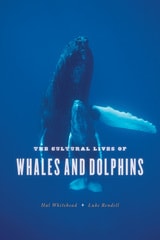
The Cultural Lives of Whales and Dolphins
Hal Whitehead and Luke Rendell
University of Chicago Press, 2014
Unequivocally: yes. In The Cultural Lives of Whales and Dolphins, cetacean biologists Hal Whitehead, who has spent much of his life on the ocean trying to understand whales, and Luke Rendell, whose research focuses on the evolution of social learning, open an astounding porthole onto the fascinating culture beneath the waves. As Whitehead and Rendell show, cetacean culture and its transmission are shaped by a blend of adaptations, innate sociality, and the unique environment in which whales and dolphins live: a watery world in which a hundred-and-fifty-ton blue whale can move with utter grace, and where the vertical expanse is as vital, and almost as vast, as the horizontal.
Drawing on their own research as well as a scientific literature as immense as the sea—including evolutionary biology, animal behavior, ecology, anthropology, psychology, and neuroscience—Whitehead and Rendell dive into realms both humbling and enlightening as they seek to define what cetacean culture is, why it exists, and what it means for the future of whales and dolphins. And, ultimately, what it means for our future, as well.
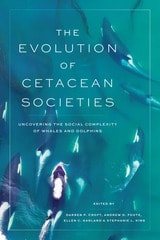
The Evolution of Cetacean Societies
Uncovering the Social Complexity of Whales and DolphinsEdited by Darren P. Croft, Andrew D. Foote, Ellen C. Garland, and Stephanie L. King
University of Chicago Press, 2026
Cetaceans—whales, dolphins, and porpoises—represent an evolutionary peak with respect to their advanced cognitive capacities; flexible communication systems; and structured, multilevel societies. Indeed, the social lives of whales and dolphins have long fascinated scientists and the public alike. The Evolution of Cetacean Societies provides a comprehensive overview of the significant advancements made in studying cetacean behavior and ecology over the last twenty-five years, focusing on our growing understanding of these animals’ complex social lives.
Bringing together scientists from multiple disciplines, the volume summarizes key innovations and progress related to studying cetacean societies’ cultural and genetic basis, their complex social structures, their use of cooperation and patterns of social conflict, and their significant interactions with humans. Each chapter provides an in-depth account of the social lives of whales and dolphins, incorporating the latest cutting-edge research from genomics, communication, network analysis, and animal culture to explain how these animals form societies, maintain relationships, and share information. The final chapters focus on the existential threats facing these diverse and charismatic species, how human-cetacean interactions have shaped our perceptions, and what scientists can learn from their diverse social lives by championing researcher diversity in marine mammal science. The result is an essential and forward-looking book that both contextualizes the lessons of the past two decades and questions the challenges these enigmatic species might face in the future.
Published in 2000 by Chicago, Cetacean Societies: Field Studies of Dolphins and Whales, edited by Janet Mann, Richard C. Connor, Peter Tyack, and Hal Whitehead, inspired a generation of marine biologists. In this new volume, Darren P. Croft, Andrew D. Foote, Ellen C. Garland, and Stephanie L. King—all respected cetacean researchers—offer a worthy successor.
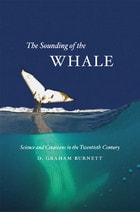
The Sounding of the Whale
Science and Cetaceans in the Twentieth CenturyD. Graham Burnett
University of Chicago Press, 2011
From the Bible’s “Canst thou raise leviathan with a hook?” to Captain Ahab’s “From Hell’s heart I stab at thee!,” from the trials of Job to the legends of Sinbad, whales have breached in the human imagination as looming figures of terror, power, confusion, and mystery.
In the twentieth century, however, our understanding of and relationship to these superlatives of creation underwent some astonishing changes, and with The Sounding of the Whale, D. Graham Burnett tells the fascinating story of the transformation of cetaceans from grotesque monsters, useful only as wallowing kegs of fat and fertilizer, to playful friends of humanity, bellwethers of environmental devastation, and, finally, totems of the counterculture in the Age of Aquarius. When Burnett opens his story, ignorance reigns: even Nature was misclassifying whales at the turn of the century, and the only biological study of the species was happening in gruesome Arctic slaughterhouses. But in the aftermath of World War I, an international effort to bring rational regulations to the whaling industry led to an explosion of global research—and regulations that, while well-meaning, were quashed, or widely flouted, by whaling nations, the first shot in a battle that continues to this day. The book closes with a look at the remarkable shift in public attitudes toward whales that began in the 1960s, as environmental concerns and new discoveries about whale behavior combined to make whales an object of sentimental concern and public adulation.
A sweeping history, grounded in nearly a decade of research, The Sounding of the Whale tells a remarkable story of how science, politics, and simple human wonder intertwined to transform the way we see these behemoths from below.

The Western Flyer
Steinbeck's Boat, the Sea of Cortez, and the Saga of Pacific FisheriesKevin M. Bailey
University of Chicago Press, 2015
In this book, Kevin M. Bailey resurrects this forgotten witness to the changing tides of Pacific fisheries. He draws on the Steinbeck archives, interviews with family members of crew, and more than three decades of working in Pacific Northwest fisheries to trace the depletion of marine life through the voyages of a single ship. After Steinbeck and his friend Ed Ricketts—a pioneer in the study of the West Coast’s diverse sea life and the inspiration behind “Doc” in Cannery Row—chartered the boat for their now-famous 1940 expedition, the Western Flyer returned to its life as a sardine seiner in California. But when the sardine fishery in Monterey collapsed, the boat moved on: fishing for Pacific ocean perch off Washington, king crab in the Bering Sea off Alaska, and finally wild Pacific salmon—all industries that would also face collapse.
As the Western Flyer herself faces an uncertain future—a businessman has bought her, intending to bring the boat to Salinas, California, and turn it into a restaurant feature just blocks from Steinbeck’s grave—debates about the status of the California sardine, and of West Coast fisheries generally, have resurfaced. A compelling and timely tale of a boat and the people it carried, of fisheries exploited, and of fortunes won and lost, The Western Flyer is environmental history at its best: a journey through time and across the sea, charting the ebb and flow of the cobalt waters of the Pacific coast.