Results by title
241 books match the query 'Marriage & Family' and 38 start with t

Taking Time
Mindy Fried
Temple University Press, 1998
This timely book provides an inside look at life in a major U.S. corporation, focusing on the impact of workplace culture on the use of parental leave and those who use it. Fried begins by describing why parental leave is critical to making parenting the job of both parents in two-parent families. She examines the varied experiences of different levels of workers in how parental leave policy is used.
The author tells a rich and textured tale of day-to-day life in the skyscraper offices of a large corporation. How people dress, what their offices look like, which cafeteria they eat in, how the supervisors and supervised talk -- all these things are part of the fabric of corporate culture that Fried describes.
Most of us live in work cultures that value overtime. Fried argues that, as a "time policy" parental leave clashes with the powerful norm that corporate employees must work long and hard. Taking time for parenting -- a job that is devalued in our culture -- may be perceived as "taking time away" from the company, and, in particular, from the company's productivity.
The Babushka Phenomenon
Older Women and the Political Sociology of Ageing in RussiaAnna Shadrina
University College London, 2025
The word “babushka” literally means “grandmother,” but it has come to represent much more since the Soviet era, not least the family caregiver. In her new study, Anna Shadrina explores the marginalization of older women in post-Soviet Russia, shedding light on the complex image of the babushka as both the cornerstone of the family unit and a passive recipient of social benefits. The author argues that this image has been shaped in no small part by welfare cutbacks that shifted the responsibility of family care from the state to individual women, as well as the increasing frustration of working-age people with the post-socialist economic system. Ultimately, she shows that despite being ostracized from society for defying age- and gender-specific social expectations, older women occupy a crucial position as active contributors to the economy.
The Battle over Marriage
Gay Rights Activism through the MediaLeigh Moscowitz
University of Illinois Press, 2013

The Charleston Orphan House
Children's Lives in the First Public Orphanage in AmericaJohn E. Murray
University of Chicago Press, 2012
The Chicana Motherwork Anthology
Edited by Cecilia Caballero, Yvette Martínez-Vu, Judith Pérez-Torres, Michelle Téllez, Christine Vega; Foreword by Ana Castillo
University of Arizona Press, 2019
The volume is organized in four parts: (1) separation, migration, state violence, and detention; (2) Chicana/Latina/WOC mother-activists; (3) intergenerational mothering; and (4) loss, reproductive justice, and holistic pregnancy. Contributors offer a just framework for Chicana and Women of Color mother-scholars, activists, and allies to thrive within and outside of the academy. They describe a new interpretation of motherwork that addresses the layers of care work needed for collective resistance to structural oppression and inequality.
This anthology is a call to action for justice. Contributions are both theoretical and epistemological, and they offer an understanding of motherwork through Chicana and Women of Color experiences.
The Circulation of Children
Kinship, Adoption, and Morality in Andean PeruJessaca B. Leinaweaver
Duke University Press, 2008
Leinaweaver provides insight into the emotional and material factors that bring together and separate indigenous Andean families in the highland city of Ayacucho. She describes how child circulation is intimately linked to survival in the city, which has had to withstand colonialism, economic isolation, and the devastating civil war unleashed by the Shining Path. Leinaweaver examines the practice from the perspective of parents who send their children to live in other households, the adults who receive them, and the children themselves. She relates child circulation to international laws and norms regarding children’s rights, adoptions, and orphans, and to Peru’s history of racial conflict and violence. Given that history, Leinaweaver maintains that it is not surprising that child circulation, a practice associated with Peru’s impoverished indigenous community, is alternately ignored, tolerated, or condemned by the state.
The Company We Keep
Interracial Friendships and Romantic Relationships from Adolescence to AdulthoodGrace Kao
Russell Sage Foundation, 2019
While research on interracial social ties has often focused on whites and blacks, Hispanics are the largest minority group and Asian Americans are the fastest growing racial group in the United States. The Company We Keep examines friendships and romantic relationships among blacks, whites, Hispanics, and Asian Americans to better understand the full spectrum of contemporary race relations. Using data from the National Longitudinal Study of Adolescent to Adult Health, the authors explore the social ties of more than 15,000 individuals from their first survey responses as middle and high school students in the mid-1990s through young adulthood nearly fifteen years later. They find that while approval for interracial marriages has increased and is nearly universal among young people, interracial friendships and romantic relationships remain relatively rare, especially for whites and blacks. Black women are particularly disadvantaged in forming interracial romantic relationships, while Asian men are disadvantaged in the formation of any romantic relationships, both as adolescents and as young adults. They also find that people in same-sex romantic relationships are more likely to have partners from a different racial group than are people in different-sex relationships. The authors pay close attention to how the formation of interracial friendships and romantic relationships depends on opportunities for interracial contact. They find that the number of students choosing different-race friends and romantic partners is greater in schools that are more racially diverse, indicating that school segregation has a profound impact on young people’s social ties.
Kao, Joyner, and Balistreri analyze the ways school diversity and adolescent interracial contact intersect to lay the groundwork for interracial relationships in young adulthood. The Company We Keep provides compelling insights and hope for the future of living and loving across racial divides.

The Dadly Virtues
Adventures from the Worst Job You'll Ever LoveJonathan V. Last
Templeton Press, 2015
The Dadly Virtues is a tongue-in-cheek collection of encouragement and guidance for any stage of fatherhood, from pacifying babies to prepping for senior prom, from cutting the cord to getting the first, “Best Grandpa” t-shirt. P.J. O’Rourke sets the stage with the chapter, “What Do Men Get from Fatherhood? Besides What They Put In …” and then is followed by:
•Matthew Continetti’s, “Newborn Terror: The Moment You Realize that ‘Bundle of Joy’ Is a Euphemism for Something Very Different.”
•Stephen F. Hayes’ “Siblings: The Best Gift You’ll Ever Give Your Kids.”
•Jonah Goldberg’s “Get Your Kid a Dog: The Moral Case for Pets.”
•Tucker Carlson’s “In Praise of Adventure: How to Fill a Child’s Life with Excitement and Danger (without Getting Them Killed).”
•Michael Graham’s, “Dating: Enjoy the Movie and Please Keep the Impregnation to a Minimum.”
•Christopher Caldwell’s “College: It’s Not as Bad as You Think; It’s Worse.”
•Andrew Ferguson’s “Emerging Adults and Empty Nesters: Just When You Had Fatherhood All Figured Out.”
•Toby Young’s “The Dark Side: Bad Parenting and the Things We Think, but Do Not Say.”
•Joseph Epstein’s “Thanks, Grandpa: Grandfatherhood and the Spirit of the Age.”
•And more.
Father-to-be, two-time-dad, or granddad, each essay will make you laugh and, at the same time, reinforce your commitment to the virtuous—the dadly—life.
The Decline in Marriage Among African Americans
Causes, Consequences, and Policy ImplicationsM. Belinda Tucker
Russell Sage Foundation, 1995
The Discourse of Marriage in the Greco-Roman World
Edited by Jeffrey Beneker and Georgia Tsouvala
University of Wisconsin Press, 2022
Through aesthetically informed and sensitive modes of analysis, these contributors examine a wealth of representations—including violence in weddings and spousal devotion after death. The Discourse of Marriage in the Greco-Roman World demonstrates the varying conceptions of an institution that was central to ancient social and political life—and remains prominent in the modern world. This volume will contribute to scholars' understanding of the era and fascinate anyone interested in historic depictions of marriage and the role and status of women in the late Hellenistic and early Imperial periods.
The Divine Institution
White Evangelicalism's Politics of the FamilySophie Bjork-James
Rutgers University Press, 2021
Winner of the Anne Bolin & Gil Herdt Book Prize from the Human Sexuality and Anthropology Interest Group (HSAIG)
The Divine Institution provides an account of how a theology of the family came to dominate a white evangelical tradition in the post-civil rights movement United States, providing a theological corollary to Religious Right politics.
This tradition inherently enforces racial inequality in that it draws moral, religious, and political attention away from problems of racial and economic structural oppression, explaining all social problems as a failure of the individual to achieve the strong gender and sexual identities that ground the nuclear family. The consequences of this theology are both personal suffering for individuals who cannot measure up to prescribed gender and sexual roles, and political support for conservative government policies. Exposure to experiences that undermine the idea that an emphasis on the family is the solution to all social problems is causing a younger generation of white evangelicals to shift away from this narrow theological emphasis and toward a more social justice-oriented theology. The material and political effects of this shift remain to be seen.
The End of International Adoption?
An Unraveling Reproductive Market and the Politics of Healthy BabiesEstye Fenton
Rutgers University Press, 2019
The Family and Inheritance
Marvin Sussman
Russell Sage Foundation, 1970
The Future of the Family
Daniel Patrick Moynihan
Russell Sage Foundation, 2004
The Genealogical Sublime
Julia Creet
University of Massachusetts Press, 2020
In The Genealogical Sublime, Julia Creet traces the histories of the largest, longest-running, most lucrative, and most rapidly growing genealogical databases to delineate a broader history of the industry. As each unique case study reveals, new database and DNA technologies enable an obsessive completeness—the desire to gather all of the world's genealogical records in the interests of life beyond death. Archival research and firsthand interviews with Church of Jesus Christ of Latter-day Saints officials, key industry players (including Ancestry.com founders and Family Search executives), and professional and amateur family historians round out this timely and essential study.
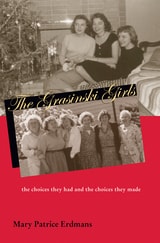
The Grasinski Girls
The Choices They Had and the Choices They MadeMary Patrice Erdmans
Ohio University Press, 2004
The Grasinski Girls were working-class Americans of Polish descent, born in the 1920s and 1930s, who created lives typical of women in their day. They went to high school, married, and had children. For the most part, they stayed home to raise their children. And they were happy doing that. They took care of their appearance and their husbands, who took care of them. Like most women of their generation, they did not join the women’s movement, and today they either reject or shy away from feminism.
Basing her account on interviews with her mother and aunts, Mary Erdmans explores the private lives of these white, Christian women in the post-World War II generation. She compares them, at times, to her own postfeminist generation. Situating these women within the religious routines that shaped their lives, Professor Erdmans explores how gender, class, ethnicity, and religion shaped the choices the Grasinski sisters were given as well as the choices they made. These women are both acted upon and actors; they are privileged and disadvantaged; they resist and surrender; they petition the Lord and accept His will.
The Grasinski Girls examines the complexity of ordinary lives, exposing privileges taken for granted as well as nuances of oppression often overlooked. Erdmans brings rigorous scholarship and familial insight to bear on the realities of twentieth-century working-class white women in America.

The Groves Conference on Marriage and Family
History and Impact on Family Science: Groves Monographs on Marriage and Family (Volume 2)Roger H Rubin
Michigan Publishing Services, 0
Groves Monographs on Marriage and Family is an edited book series based on the annual meetings of the Groves Conference on Marriage and Family, an interdisciplinary, interprofessional organization of limited invited membership founded in 1934. Groves Monographs publishes work on the leading edges of theory development and empirical research in the field of family studies. Individual volumes are edited by the chairs of the annual Groves Conferences and include peer-reviewed chapters by the conference presenters and invited authors. Topics are timely and provocative with diverse themes.

The Home on Gorham Street and the Voices of Its Children
Howard Goldstein
University of Alabama Press, 1996
Giving voice to childhood, memory, and resilience within a shared home.
The Home on Gorham Street looks back to an earlier era of care for orphaned and dependent children of Eastern European Jewish immigrants. Within this social history and ethnography, the voices of elders once wards of the home in the 1930s and 1940s tell us in sometimes poetic, often comic, usually ironic, and always poignant words what it was really like to grow up in an orphanage. Emerging from this penetrating adventure are principles for the future of effective group care in meeting the needs of the rapidly growing number of abused, forsaken, and orphaned children.
Goldstein's ethnography demonstrates amply that children who spend years in an institution can go on to lead productive lives under certain conditions. Such conditions may never have been met in any other children's institution. That they did exist one time, however, is cause not only to rejoice but also to understand that recreating these conditions is difficult and possibly impossible.
The Impotence Epidemic
Men's Medicine and Sexual Desire in Contemporary ChinaEverett Yuehong Zhang
Duke University Press, 2015

The Imprint of Another Life
Adoption Narratives and Human PossibilityMargaret Homans
University of Michigan Press, 2015
The Imprint of Another Life: Adoption Narratives and Human Possibilityaddresses a series of questions about common beliefs about adoption. Underlying these beliefs is the assumption that human qualities are innate and intrinsic, an assumption often held by adoptees and their families, sometimes at great emotional cost. This book explores representations of adoption—transracial, transnational, and domestic same-race adoption—that reimagine human possibility by questioning this assumption and conceiving of alternatives.
Literary scholar Margaret Homans examines fiction making’s special relationship to themes of adoption, an “as if” form of family making, fabricated or fictional instead of biological or “real.” Adoption has tended to generate stories rather than uncover bedrock truths. Adoptive families are made, not born; in the words of novelist Jeanette Winterson, “adopted children are self-invented because we have to be.” In attempting to recover their lost histories and identities, adoptees create new stories about themselves. While some believe that adoptees cannot be whole unless they reconnect with their origins, others believe that privileging biology reaffirms hierarchies (such as those of race) that harm societies and individuals. Adoption is lived and represented through an irresolvable tension between belief in the innate nature of human traits and belief in their constructedness, contingency, and changeability. The book shows some of the ways in which literary creation, and a concept of adoption as a form of creativity, manages this tension.
The texts examined include fiction (e.g., classic novels such as Silas Marner, What Maisie Knew, and Beloved); memoirs by adoptees, adoptive parents, and birthmothers; drama, documentary films, advice manuals, social science writing; and published interviews with adoptees, parents, and birth parents. Along the way the book tracks the quests of adoptees who, whether or not they meet their original families, must construct their own stories rather than finding them; follows transnational adoptees as they return, hopes held high, to Korea and China; looks over the shoulders of a generation of girls adopted from China as they watch Disney’s iconic Mulan, with its alluring story of destiny written on the skin; and listens to birthmothers as they struggle to tell painful secrets held for decades.
This book engages in debates within adoption studies, women’s and gender studies, transnational studies, and ethnic studies; it will appeal to literary scholars and critics, including specialists in memoir or narrative theory, and to general readers interested in adoption and in race.
The Journey into Adulthood in Uncertain Times
Robert Crosnoe
Russell Sage Foundation, 2025
Drawing on both quantitative and qualitative survey data over five decades, Crosnoe and Cavanagh find that young adults are, in fact, waiting longer to take on “real” adult roles, such as worker or parent. However, this is not out of a reluctance to grow up. Instead, increased inequality and changes in the economy have forced young people to adapt their lives in new ways. Young adults are now spending more time in school, have more trouble finding their footing in the labor force, and consequently postpone getting married and having children. They also mix and match roles in more complicated ways now than in the past—going back and forth between school and work over longer periods of time or disconnecting parenthood from their romantic relationships. While the period from late teens to mid-twenties does look different now than in the past, the change has been slow and steady rather than a dramatic shift due to social crises. The Great Recession, for example, had a more muted effect on young people’s social and economic attainment and family formation than fears of a lost generation would suggest.
Crosnoe and Cavanagh find that while the panic over young adults today may be somewhat overblown, this conclusion should not obscure some clear concerns. Young adults do struggle with their social and emotional wellbeing. They are more depressed than their counterparts in previous generations, drink less alcohol in ways that suggest less engagement with social life, and express deep distrust of social institutions and the idea of the American Dream. The authors argue that worries about the state of young adulthood today should trigger more reflection about how to support young people rather than how to fix them.
The Journey into Adulthood in Uncertain Times is a comprehensive and illuminating examination of the challenges faced by contemporary young adults.
The Long Shadow
Family Background, Disadvantaged Urban Youth, and the Transition to AdulthoodKarl Alexander
Russell Sage Foundation, 2014
The Motherhood Business
Consumption, Communication, and PrivilegeEdited by Anne Teresa Demo, Jennifer L. Borda, and Charlotte Kroløkke
University of Alabama Press, 2015
Examining how motherhood, consumption, and privilege shape identities in contemporary culture.
The Motherhood Business is a piercing collection of ten original essays that reveal the rhetoric of the motherhood industry. Focusing on the consumer life of mothers and the emerging entrepreneurship associated with motherhood, the collection considers how different forms of privilege (class, race, and nationality) inform discourses about mothering, consumption, mobility, and leisure.
The Motherhood Business follows the harried mother’s path into the anxious maelstrom of intelligent toys, healthy foods and meals, and educational choices. It also traces how some enterprising mothers leverage cultural capital and rhetorical vision to create thriving baby- and child-based businesses of their own, as evidenced by the rise of mommy bloggers and “mompreneurs”over the last decade.
Starting with the rapidly expanding global fertility market, The Motherhood Business explores the intersection of motherhood, consumption, and privilege in the context of fertility tourism, international adoption, and transnational surrogacy. The synergy between motherhood and the marketplace demonstrated across the essays affirms the stronghold of “intensive mothering ideology” in decisions over what mothers buy and how they brand their businesses even as that ideology evolves. Across diverse contexts, the volume also identifies how different forms or privilege shape how mothers construct their identities through their consumption and entrepreneurship.
Although social observers have long commented on the link between motherhood and consumerism, little has been written within the field of rhetoric. Penetrating and interdisciplinary, The Motherhood Business illuminates how consumer culture not only shapes contemporary motherhood but also changes in response to mothers who constitute a driving force of the economy.
The Motherlode
Why Most US Mothers Will Find Themselves Financially Supporting Their ChildrenJennifer L. Glass
Russell Sage Foundation, 2026
Despite cultural scripts that continue to view fathers as the primary breadwinners in their families, there has been a striking escalation of mothers’ assumption of that role. Over the last twenty years, the rate at which mothers become the primary breadwinner has increased by almost 50 percent and an astonishing 70 percent of American mothers can expect to become the primary earner for their household for at least a year before their first child turns eighteen. In The Motherlode, sociologist Jennifer L. Glass traces the rise of mothers as the primary financial providers for their children, investigates the causes of this increase, and evaluates the consequences of this shift for mothers and families.
Glass finds the swift increase of fiscal responsibility for children by their mothers is occurring in households of all racial backgrounds and across the educational spectrum. This increase is not due to more divorces or relationship breakups. In fact, the most rapid growth in mothers’ financial responsibility for the household has come from married mothers, not single mothers, and about half of contemporary mom-breadwinners have spouses or romantic partners living in the home. Nor is it due to a narrowing of the gender pay gap or mothers’ ability to out-earn their partners—the bulk of breadwinning mothers see large financial losses or are better off financially but still living in poverty when they become the primary earner. Instead, this rise is due to broader, long-term changes in the economy, which have led to less job security and wage stagnation for all workers.
The increase of mothers’ financial obligations to their children has occurred at the same time that nonfinancial responsibilities for children has increased—more time is dedicated to identifying, evaluating, and obtaining goods and services for children, including healthcare and schooling. There has not been a corresponding increase in support for mothers by their employers, the government, or fathers. This leaves mothers with greater burdens of both financial support and nonmonetary care for their children, which increases the number of children that are vulnerable to dependency on their mothers’ earnings and intermittent poverty. While this rise in maternal breadwinning is unlikely to decline anytime soon, Glass suggests policies that could provide mothers with more support, such as enacting labor protections for care occupations dominated by women and federal paid family and medical leave and providing federally funded, wraparound, non-means-tested systems of childcare.
The Motherlode is an illuminating and in-depth examination of the surprisingly pervasive phenomenon of maternal breadwinning in American society.
The Oocyte Economy
The Changing Meaning of Human EggsCatherine Waldby
Duke University Press, 2019
The Politics of International Marriage in Japan
Viktoriya Kim
Rutgers University Press, 2022
The Queerness of Home
Gender, Sexuality, and the Politics of Domesticity after World War IIStephen Vider
University of Chicago Press, 2021
From the Stonewall riots to the protests of ACT UP, histories of queer and trans politics have almost exclusively centered on public activism. In The Queerness of Home, Stephen Vider turns the focus inward, showing that the intimacy of domestic space has been equally crucial to the history of postwar LGBTQ life.
Beginning in the 1940s, LGBTQ activists looked increasingly to the home as a site of connection, care, and cultural inclusion. They struggled against the conventions of marriage, challenged the gendered codes of everyday labor, reimagined domestic architecture, and contested the racial and class boundaries of kinship and belonging. Retelling LGBTQ history from the inside out, Vider reveals the surprising ways that the home became, and remains, a charged space in battles for social and economic justice, making it clear that LGBTQ people not only realized new forms of community and culture for themselves—they remade the possibilities of home life for everyone.
The Single Life
Unpatriarchal Manhoods in English Renaissance LiteratureJordan Windholz
University of Alabama Press, 2025
Exploring the Varied Roles of Bachelors during the Renaissance
What if the Renaissance bachelor wasn’t just a social outlier but a literary lens through which early modern masculinity reveals its cracks? In The Single Life: Unpatriarchal Manhoods in English Renaissance Literature, Jordan Windholz examines the overlooked and often subversive roles played by never-married men in shaping gender, sexuality, and social order.
Windholz challenges conventional views on gender and sexuality, identifying five archetypes of bachelorhood that complicate our understanding of patriarchal success: the chaste youth, the journeyman bachelor, the true gallant, the incel scholar, and the unmarried eunuch. These figures don’t conform to ideals of marriage, legacy, or economic productivity, but they also weren’t merely left behind. Instead, they served to define what early modern society valued by embodying what it resisted. Windholz shows how Renaissance texts constructed, contained, and occasionally celebrated these “unpatriarchal manhoods.”
By examining the intersections of sexuality, labor, gentility, emotion, and gender, the book provides a nuanced understanding of how single men both upheld and resisted patriarchal norms. Each chapter offers a detailed analysis of literary texts, blending historical and literary analysis with feminist and queer theory. The first study of its kind, Windholz’s work is essential reading for anyone interested in Renaissance literature, gender studies, or those looking to understand the margins of masculinity and the meanings of singledom—then and now.
The Sport Marriage
Women Who Make It WorkSteven M. Ortiz
University of Illinois Press, 2020
Ortiz defines the traditional sport marriage as a career-dominated marriage, illustrating how it encourages women to contribute to their own subordination through adherence to an unwritten rulebook and a repertoire of self-management strategies. He explains how they make invaluable contributions to their husbands’ careers while adjusting to public life and trying to maintain family privacy, managing power and control issues, and coping with pervasive groupies, overinvolved mothers, a culture of infidelity, and husbands who prioritize team loyalty. He gives these historically silent women a voice, offering readers perceptive and sensitive insight into what it means to be a woman in the male-dominated world of professional sports.
The Tenacity of the Couple-Norm
Intimate Citizenship Regimes in a Changing EuropeSasha Roseneil, Isabel Crowhurst, Tone Hellesund, Ana Cristina Santos, and Mariya Stoilava
University College London, 2020
The Tenacity of the Couple-Norm makes an important contribution to literature on citizenship, intimacy, family life, and social change in sociology, social policy, socio-legal studies, gender/sexuality/queer studies, and psychosocial studies.
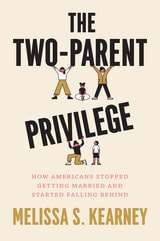
The Two-Parent Privilege
How Americans Stopped Getting Married and Started Falling BehindMelissa S. Kearney
University of Chicago Press, 2023
In The Two-Parent Privilege, Melissa S. Kearney makes a provocative, data-driven case for marriage by showing how the institution’s decline has led to a host of economic woes—problems that have fractured American society and rendered vulnerable populations even more vulnerable. Eschewing the religious and values-based arguments that have long dominated this conversation, Kearney shows how the greatest impacts of marriage are, in fact, economic: when two adults marry, their economic and household lives improve, offering a host of benefits not only for the married adults but for their children. Studies show that these effects are today starker, and more unevenly distributed, than ever before. Kearney examines the underlying causes of the marriage decline in the US and draws lessons for how the US can reverse this trend to ensure the country’s future prosperity.
Based on more than a decade of economic research, including her original work, Kearney shows that a household that includes two married parents—holding steady among upper-class adults, increasingly rare among most everyone else—functions as an economic vehicle that advantages some children over others. As these trends of marriage and class continue, the compounding effects on inequality and opportunity grow increasingly dire. Their effects include not just children’s behavioral and educational outcomes, but a surprisingly devastating effect on adult men, whose role in the workforce and society appears intractably damaged by the emerging economics of America’s new social norms.
For many, the two-parent home may be an old-fashioned symbol of the idyllic American dream. But The Two-Parent Privilege makes it clear that marriage, for all its challenges and faults, may be our best path to a more equitable future. By confronting the critical role that family makeup plays in shaping children’s lives and futures, Kearney offers a critical assessment of what a decline in marriage means for an economy and a society—and what we must do to change course.
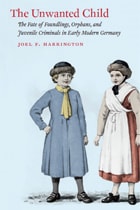
The Unwanted Child
The Fate of Foundlings, Orphans, and Juvenile Criminals in Early Modern GermanyJoel F. Harrington
University of Chicago Press, 2009
The baby abandoned on the doorstep is a phenomenon that has virtually disappeared from our experience, but in the early modern world, unwanted children were a very real problem for parents, government officials, and society. The Unwanted Child skillfully recreates sixteenth-century Nuremberg to explore what befell abandoned, neglected, abused, or delinquent children in this critical period.
Joel F. Harrington tackles this question by focusing on the stories of five individuals. In vivid and poignant detail, he recounts the experiences of an unmarried mother-to-be, a roaming mercenary who drifts in and out of his children’s lives, a civic leader handling the government’s response to problems arising from unwanted children, a homeless teenager turned prolific thief, and orphaned twins who enter state care at the age of nine. Braiding together these compelling portraits, Harrington uncovers and analyzes the key elements that link them, including the impact of war and the vital importance of informal networks among women. From the harrowing to the inspiring, The Unwanted Child paints a gripping picture of life on the streets five centuries ago.
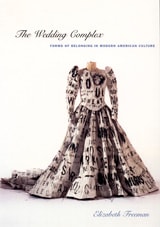
The Wedding Complex
Forms of Belonging in Modern American CultureElizabeth Freeman
Duke University Press, 2002
Freeman draws on queer theory and social history to focus on a range of texts where weddings do not necessarily lead to legal marriage but instead reflect yearnings for intimate arrangements other than long-term, state-sanctioned, domestic couplehood. Beginning with a look at the debates over gay marriage, she proceeds to consider literary works by Nathaniel Hawthorne, William Faulkner, Carson McCullers, Vladimir Nabokov, and Edgar Allan Poe, along with such Hollywood films as Father of the Bride, The Graduate, and The Godfather. She also discusses less well-known texts such as Su Friedrich’s experimental film First Comes Love and the off-Broadway, interactive dinner play Tony ‘n’ Tina’s Wedding.
Offering bold new ways to imagine attachment and belonging, and the public performance and recognition of social intimacy, The Wedding Complex is a major contribution to American studies, queer theory, and cultural studies.

Thundering Sneakers
By Prudence Mackintosh
University of Texas Press, 2002
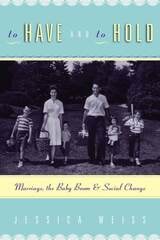
To Have and to Hold
Marriage, the Baby Boom, and Social ChangeJessica Weiss
University of Chicago Press, 2000
Jessica Weiss delves beneath these mythic images and paints a far more complex picture that reveals strong continuities between the baby boomers and their parents. Drawing on interviews with American couples from the 1950s to the 1980s, Weiss creates a dynamic portrait of family and social change in the postwar era. She pairs these firsthand accounts with a deft analysis of movies, television shows, magazines, and advice books from each decade, providing an unprecedented and intimate look at ordinary marriages in a time of sweeping cultural change.
Weiss shows how young couples in the 1950s attempted to combine egalitarian hopes with traditional gender roles. Middle-class women encouraged their husbands to become involved fathers. Midlife wives and mothers reshaped the labor force and the home by returning to work in the 1960s. And couples strove for fulfilling marriages as they dealt with the pressures of childrearing in the midst of the sexual and divorce revolutions of the 1960s and 1970s. By the 1980s, they were far more welcoming to the ideas of the women's movement than has often been assumed. More than simply changing with the times, the parents of the baby boom contributed to changing times themselves.
Weiss's excellent use of family interviews that span three decades, her imaginative examination of popular culture, and her incisive conclusions make her book an invaluable contribution not only to our understanding of the past but also to our understanding of men's and women's roles in today's family.
"Weiss has written an enlightening book that examines the dynamics of American families past and present. . . . Since Weiss is a historian, she provides analyses of her arguments that are factual rather than emotive, and her use of family interviews further contributes to a strong presentation. Overall, this is a unique works because its multidisciplinary approach informs but never preaches on the emotionally charged topic of the American family.—Sheila Devaney, Library Journal

Translating the Ketubah
The Jewish Marriage Contract in America and EnglandBenjamin Steiner
University of Alabama Press, 2025
A groundbreaking exploration of the Jewish marriage contract and its evolution in English translation
Translating the Ketubah offers a fresh perspective on the ketubah, the Jewish marriage contract. Traditionally composed in Aramaic, ketubot have been examined in other books within the frameworks of Jewish law and Jewish art. Here, however, Benjamin Steiner shows how translations of the ketubah into English helped Jews adapt to changing social and economic circumstances across more than two centuries.
Steiner uses ketubot to trace the intricate relationship between religious law and secular law, the changing status of women within and outside Judaism, and the complex desire of Jews to be both authentically Jewish and fully acculturated. Steiner further shows how ketubah translation aided Jews to achieve different cultural goals. It has been used to uphold rabbinic law in communities where religious affiliation was voluntary to ensure women's economic security. It has also facilitated socialization with non-Jews and addressed perceived crises within the Jewish family.
Through a nuanced analysis of ketubah translations from England and various regions of the United States from the late eighteenth century to the present, Steiner offers a detailed look at how Jews have adapted ancient tradition to meet the challenges and opportunities of different historical contexts. His work sheds new light on the rich history of American and British Jewry.

Transnational Adoption, Volume 21
Toby Alice Volkman and Cindi Katz, eds.
Duke University Press, 0
In this special issue, scholars—several of whom are adoptive parents—from a variety of disciplines focus on the culture and politics of transnational adoption, exploring relationships between the sending and receiving nations. Until the mid-1970s, adoptive families were pressured to forget the child’s past and birth culture and to create “as if” biological families. Since then, the culture of adoption has moved dramatically toward openness, generating preoccupations with origins and loss, as well as new kinds of border-crossing movements such as orphanage visits, homeland journeys, and culture camps established by sending nations now eager to embrace the adoptees. This collection of essays examines the complex interplay of race, culture, identity, kinship, and belonging in this contemporary form of family building.
Contributors. Lisa Cartwright, Claudia Fonseca, Cindi Katz, Eleana Kim, Toby Alice Volkman, Barbara Yngvesson
Transnational Marriage and Partner Migration
Constellations of Security, Citizenship, and RightsAnne-Marie D'Aoust
Rutgers University Press, 2022