Results by title
138 books match the query 'Meaning' and 45 start with t
Telling Rhythm
Body and Meaning in PoetryAmittai Aviram
University of Michigan Press, 1994
The Aesthetics of Meaning and Thought
The Bodily Roots of Philosophy, Science, Morality, and ArtMark Johnson
University of Chicago Press, 2018
This book gathers the best of philosopher Mark Johnson’s essays addressing questions of our embodiment as they deal with aesthetics—which, he argues, we need to rethink so that it takes into account the central role of body-based meaning. Viewed that way, the arts can give us profound insights into the processes of meaning making that underlie our conceptual systems and cultural practices. Johnson shows how our embodiment shapes our philosophy, science, morality, and art; what emerges is a view of humans as aesthetic, meaning-making creatures who draw on their deepest physical processes to make sense of the world around them.
The Ageless Self
Sources of Meaning in Late LifeSharon R. Kaufman
University of Wisconsin Press, 1994
Among the many studies of aging and the aged, there is comparatively little material in which the aged speak for themselves. In this compelling study, Sharon Kaufman encourages just such expression, recording and presenting the voices of a number of old Americans. Her informants tell their life stories and relate their most personal feelings about becoming old. Each story is unique, and yet, presented together, they inevitable weave a clear pattern, one that clashes sharply with much current gerontological thought. With this book, Sharon Kaufman allows us to understand the experience of the aging by listening to the aged themselves.
Kaufman, while maintaining objectivity, is able to draw an intimate portrait of her subjects. We come to know these people as individuals and we become involved with their lives. Through their words, we find that the aging process is not merely a period of sensory, functional, economic, and social decline. Old people continue to participate in society, and—more important—continue to interpret their participation in the social world. Through themes constructed from these stories, we can see how the old not only cope with losses, but how they create new meaning as they reformulate and build viable selves. Creating identity, Kaufman stresses, is a lifelong process.
Sharon Kaufman's book will be of interest and value not only to students of gerontology and life span development, and to professionals in the field of aging, but to everyone who is concerned with the aging process itself. As Sharon Kaufman says, "If we can find the sources of meaning held by the elderly and see how individuals put it all together, we will go a long way toward appreciating the complexity of human aging and the ultimate reality of coming to terms with one's whole life."
The Architectonics of Meaning
Foundations of the New PluralismWalter Watson
University of Chicago Press, 1993
The Body in the Mind
The Bodily Basis of Meaning, Imagination, and ReasonMark Johnson
University of Chicago Press, 1990
The Construction of Meaning
Edited by David I. Beaver, Luis D. Casillas Martinez, Brady Z. Clark, and Stefan
CSLI, 2002
The Crisis of Meaning and the Life-World
Husserl, Heidegger, Arendt, PatockaLubica Ucník
Ohio University Press, 2016
In The Crisis of Meaning and the Life-World, Ľubica Učník examines the existential conflict that formed the focus of Edmund Husserl’s final work, which she argues is very much with us today: how to reconcile scientific rationality with the meaning of human existence. To investigate this conundrum, she places Husserl in dialogue with three of his most important successors: Martin Heidegger, Hannah Arendt, and Jan Patočka.
For Husserl, 1930s Europe was characterized by a growing irrationalism that threatened to undermine its legacy of rational inquiry. Technological advancement in the sciences, Husserl argued, had led science to forget its own foundations in the primary “life-world”: the world of lived experience. Renewing Husserl’s concerns in today’s context, Učník first provides an original and compelling reading of his oeuvre through the lens of the formalization of the sciences, then traces the unfolding of this problem through the work of Heidegger, Arendt, and Patočka.
Although many scholars have written on Arendt, none until now has connected her philosophical thought with that of Czech phenomenologist Jan Patočka. Učník provides invaluable access to the work of the latter, who remains understudied in the English language. She shows that together, these four thinkers offer new challenges to the way we approach key issues confronting us today, providing us with ways to reconsider truth, freedom, and human responsibility in the face of the postmodern critique of metanarratives and a growing philosophical interest in new forms of materialism.

The Crisis of Meaning
In Culture and EducationDavid Trend
University of Minnesota Press, 1995
The Crisis of Meaning was first published in 1995. Minnesota Archive Editions uses digital technology to make long-unavailable books once again accessible, and are published unaltered from the original University of Minnesota Press editions.
Pick up any newspaper and it is clear that the United States is facing a democratic crisis. Recent culture wars and debates about political correctness and culture have illustrated how conventional definitions of citizenship and national identity have been thrown into question.
Investigating what he views as an inseparable link between culture and politics, David Trend analyzes how notions of patriotism, citizenship, community, and family are communicated within specific public and private institutions. He extends the meaning and purpose of pedagogy as a cultural practice outside the classroom, focusing on political activism in education, the mass media, and the art world.
The Crisis of Meaning supplies a crucial theoretical understanding of the ways in which the pedagogical and political intersect at a variety of cultural sites, as it points us toward a "democratic" process of national identity formation. It is indispensable reading for anyone interested in the connections between education and politics.
David Trend is executive director of the Center for Social Research and Education in San Francisco and also executive editor of the Socialist Review. He is the author of Cultural Pedagogy: Art/Education/Politics (1992).
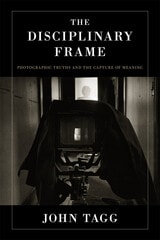
The Disciplinary Frame
Photographic Truths and the Capture of MeaningJohn Tagg
University of Minnesota Press, 2009
The meaning and power of photographs, Tagg asserts, are discursive effects of the regimens that produce them as official record, documentary image, historical evidence, or art. Teasing out the historical processes involved, he examines a series of revealing case studies from nineteenth-century European and American photographs to Depression-era works by Walker Evans, Dorothea Lange, and Margaret Bourke-White to the conceptualist photography of John Baldessari.
Central to this transformative work are questions of cultural strategy, the growth of the state, and broad issues of power and representation: how the discipline of the frame holds both photographic image and viewer in place, without erasing the possibility for evading, and even resisting, capture. Photographs, Tagg ultimately finds, are at once too big and too small for the frames in which they are enclosed—always saying more than is wanted and less than is desired.
The Edge of Meaning
James Boyd White
University of Chicago Press, 2001

The Heart Sutra
Revisiting Its Texts, History, and MeaningHenry C.H. Shiu
Hong Kong University Press, 2025
A nuanced reconsideration of the Heart Sutra, one of the most celebrated and widely chanted texts in Mahayana Buddhism.
In The Heart Sutra: Revisiting Its Texts, History, and Meaning, Henry C. H. Shiu investigates the historical origins of the Heart Sutra, a significant Buddhist scripture. He compares the Sanskrit texts with their Chinese and Tibetan translations to analyse whether the Heart Sutra might be a Chinese apocryphon, through detailed linguistic examination. To achieve this goal, Shiu thoroughly examines the primary sources from which the scripture was extracted. He emphasises the necessity of reading the Heart Sutra in the larger context of the Perfection of Wisdom literature, which contains the essence of Mahayana Buddhist teaching. In this monograph, Shiu successfully transcends the boundaries between the Chinese, Indian, and Tibetan Buddhist traditions and provides a revisionist interpretation of the Heart Sutra.
The Leviathan in the State Theory of Thomas Hobbes
Meaning and Failure of a Political SymbolCarl Schmitt
University of Chicago Press, 2008
“Carl Schmitt is surely the most controversial German political and legal philosopher of this century. . . . We deal with Schmitt, against all odds, because history stubbornly persists in proving many of his tenets right.”—Perspectives on Political Science
“[A] significant contribution. . . . The relation between Hobbes and Schmitt is one of the most important questions surrounding Schmitt: it includes a distinct, though occasionally vacillating, personal identification as well as an association of ideas.”—Telos

The Making and Meaning of Hospital Policy in the United States and Canada
Terry Boychuk
University of Michigan Press, 1999
The Meaning of Commercial Television
The Texas-Stanford Seminar, 1966Edited by Stanley T. Donner
University of Texas Press, 1967
Commercial television deserves praise for its many achievements, but since its earliest days, almost everyone has agreed that it is also open to many criticisms. The Texas-Stanford Seminars, made possible by a grant from TV Guide magazine, were intended "to help bring about the general improvement of television," and to provide "a place and a climate for significant discussion." The vigorous and enthusiastic participation in the seminars by executives from the three major networks, from a number of group stations and independent producers, and from advertising agencies and some of the larger advertisers demonstrated the desire of the industry itself to recognize its own faults and to understand the complaints of its critics.
The Meaning of Commercial Television collects the speeches presented at the second of these seminars, in April 1966. Contributors include Harry S. Ashmore, George Schaefer, August Priemer, Leonard S. Matthews, Thomas Moore, David M. Potter, Paul Goodman, Marshall McLuhan, and John R. Silber. Also in the book are summaries of the discussions which followed each of the speeches, and an examination of the overall impact of the meeting and the conclusions which might be drawn from it. Some of the topics discussed are "numbers" rating method of evaluating television programs; the position in the television industry of the independent producer, of the advertiser, and of the television network, and television itself with respect to its history, social perspective, and other aspects of American life to which it is related.
The Meaning of Conservatism
Roger Scruton
St. Augustine's Press, 2014
Rather, conservatism regards the individual not as the premise but the conclusion of politics, a politics that is fundamentally opposed to the ethic of social justice, to equality of station, income, and achievement, or to the attempt to bring major institutions of society (such as schools and universities) under government control.
The conservative outlook, says Scruton, is neither outmoded nor irrational. On the contrary, it is the most reasonable of political alternatives. The evils of socialism, he maintains, lie precisely where its supporters find its strengths, and the conditions for the credibility of socialism have long since disappeared. Neither socialism nor liberalism can come to terms with the real complexity of human society, and both appear plausible only because they direct attention away from what is actual, toward what is merely ideal.
From earlier editions of The Meaning of Conservatism:
“The book provides exactly that swift kick on the intellectual bottom which every undergraduate student of political science needs, most of them more urgently than ever before.” – T. E. Utley, (London) Daily Telegraph
“If the text is full of surprises, the manner is no less striking than the matter. Scruton is a great stylist, and one is continually arrested by beautifully crafted phrases which beg for quotation. . . . [He] is a cultured and critical guide through the traditional landscape of conservatism; his book provokes thought and it is a pleasure to read.”
– Bram Gieben, Political Quarterly
“. . . remarkable work. . . . The highest praise which one can bestow on The Meaning of Conservatism is to say that it reminds one at every page of Thomas Hobbes, the greatest master of the English language ever to write a work of political theory.” – Jonathan Sumption, Sunday Telegraph
“. . . clearly too ghastly to be taken seriously.” – Andrew Belsey, Radical Philosophy
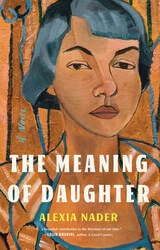
The Meaning of Daughter
Nader, Alexia
University of Iowa Press, 2026
After immigrating from Lebanon to Haiti as a young girl, Merjan comes of age in an insular, conservative community, where it seems as though her sole escape is marriage. Striking a bargain with a young art dealer, she marries and dreams of becoming a painter, only to discover her husband’s support tethered with expectations.
In the late 1970s, Merjan’s daughter Yvonne is a young woman on the cusp of a marriage of convenience. Though resentful of her mother, Yvonne dreams of establishing a Haitian art gallery in New York with the help of a well-connected older man—but her time there ends disastrously, creating a deep rift between her and her family.
In the present day, Yvonne’s daughter Eva is a student whose art draws inspiration from her grandmother Merjan’s largely undiscovered work. When Eva becomes unexpectedly pregnant, she moves back to her childhood home in Miami to sort out her ambivalent feelings, where she finds her family upended by feuds. An intimate family saga, The Meaning of Daughter explores questions about maternal ambivalence, ambition, artmaking, and how desire resists gendered expectations.
The Meaning of Democracy and the Vulnerabilities of Democracies
A Response to Tocqueville's ChallengeVincent Ostrom
University of Michigan Press, 1997
Arguing that democratic systems are characterized by self-governing--not state- governed--societies, Ostrom contends that the nature and strength of individual relationships and self-organizing behavior are critical to the creation and survival of a democratic political system. Ostrom begins with a basic contradiction identified by Alexis de Tocqueville. De Tocqueville suggested that if citizens acted on the basis of their natural inclinations they would expect government to provide for them and take care of their needs. Yet these conditions contradict what it means to be self-governing. Ostrom explores the social and cultural context necessary for a democratic system to flourish emphasizing the important role of ideas and the use of language in defining and understanding political life. Discussing differences in the ideas about social organization among various cultural and intellectual traditions, he considers the difficulties encountered over time in building democratic societies in America, Asia, Europe, and Africa. He outlines lessons from these experiences for the efforts to build democracy in the developing world and the countries emerging from communism.
Based on a lifetime of thinking about the social conditions necessary to support a democracy, this book makes a significant contribution to the recent discussion about civil society and the fragility of our formal and informal social institutions and will be of interest to social scientists, historians and all readers concerned with the state of democracy in the modern world.
Vincent Ostrom is Arthur F. Bentley Professor of Political Science Emeritus and Co-Director of the Workshop on Political Theory and Policy Analysis, Indiana University. He is the author of many works on political theory and public administration.
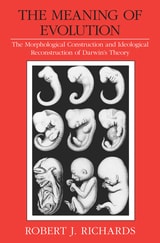
The Meaning of Evolution
The Morphological Construction and Ideological Reconstruction of Darwin's TheoryRobert J. Richards
University of Chicago Press, 1992
This provocative new reading of Darwin goes directly to the origins of evolutionary theory. Unlike most contemporary biologists or historians and philosophers of science, Richards holds that Darwin did concern himself with the idea of progress, or telos, as he constructed his theory. Richards maintains that Darwin drew on the traditional embryological meanings of the terms "evolution" and "descent with modification." In the 1600s and 1700s, "evolution" referred to the embryological theory of preformation, the idea that the embryo exists as a miniature adult of its own species that simply grows, or evolves, during gestation. By the early 1800s, however, the idea of preformation had become the concept of evolutionary recapitulation, the idea that during its development an embryo passes through a series of stages, each the adult form of an ancestor species.
Richards demonstrates that, for Darwin, embryological recapitulation provided a graphic model of how species evolve. If an embryo could be seen as successively taking the structures and forms of its ancestral species, then one could see the evolution of life itself as a succession of species, each transformed from its ancestor. Richards works with the Origin and other published and archival material to show that these embryological models were much on Darwin's mind as he considered the evidence for descent with modification.
Why do so many modern researchers find these embryological roots of Darwin's theory so problematic? Richards argues that the current tendency to see evolution as a process that is not progressive and not teleological imposes perspectives on Darwin that incorrectly deny the clearly progressive heart of his embryological models and his evolutionary theory.
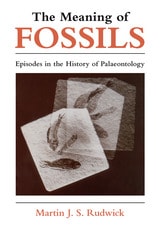
The Meaning of Fossils
Episodes in the History of PalaeontologyMartin J. S. Rudwick
University of Chicago Press, 1985
"Rudwick has not merely written the first book-length history of palaeontology in the English language; he has written a very intelligent one. . . . His accounts of sources are rounded and organic: he treats the structure of arguments as Cuvier handled fossil bones."—Roy S. Porter, History of Science
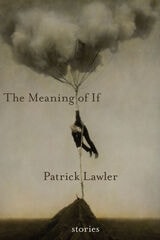
The Meaning of If
Patrick Lawler
Four Way Books, 2014
The Meaning of Liberalism - East and West
Zdenek Suda
Central European University Press, 1999
The Meaning of Liberalism provides a new perspective on the continuing debate about how liberalism should be defined and what it means in countries with an established parliamentary system, particularly in the new democracies of Central and Eastern Europe.
The key question this book addresses is: will the specific experience of communism and its aftermath give birth to a new distinct current of liberal thought, or will it simply enlarge the scope of the Western liberal debate? The authors argue that liberalism cannot be reduced merely to private property and market prices, but needs a very complex set of institutions and corresponding law.
Contributors come from both sides of the former Iron Curtain and they highlight the richness and diversity of liberalism and discuss different perceptions of liberal thinking in the East and West in the post-modern world.
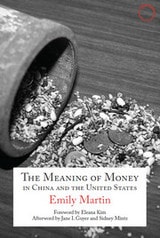
The Meaning of Money in China and the United States
The 1986 Lewis Henry Morgan LecturesEmily Martin
HAU, 2015
When Emily Martin delivered the annual Lewis Henry Morgan Lectures at the University of Rochester in 1986, she took as her subject the meaning of money in China and the United States. Though the topic is of perennial interest—and never more so than in our era, when economic forecasts of China’s growing economy generate shallow news stories and public fear—the lectures were never edited for publication, so their rich analysis has been unavailable to anthropologists ever since.
With this book—the first volume in a collaboration between Hau Books and the University of Rochester—Martin’s lectures are brought back, fully edited and richly illustrated. A new introduction by Martin herself brings her analysis wholly up to date, while an afterword by Jane I. Guyer and Sidney Mintz discusses Martin’s work, influence, and legacy. The Meaning of Money in China and the United States will instantly assume its rightful place as a classic in the field, with Martin’s insights as germane and productive as they were nearly thirty years ago.
The Meaning of Music
Leo Samama
Amsterdam University Press, 2016
Musician Leo Samama discusses these and many other questions while shaping a vibrant picture of music's importance in human lives both past and present. What is remarkable is that music is recognised almost universally as a type of language that we can use to wordlessly communicate. We can hardly shut ourselves off from music, and considering its primal role in our lives, it comes as no surprise that few would ever want to. Able to transverse borders and appeal to the most disparate of individuals, music is both a tool and a gift, and as Samama shows, a unifying thread running throughout the cultural history of mankind.
The Meaning of Rivers
Flow and Reflection in American LiteratureT. S. McMillin
University of Iowa Press, 2011

The Meaning of Shakespeare, Volume 1
The Comedy of Errors, Henry VI, A Midsummer Night's Dream, The Merchant of Venice, Romeo and Juliet, King John, Richard II, Henry IV, Henry V, Henry VIII, Much Ado about Nothing, As You Like It, Twelfth Night, Julius Caesar, Hamlet, and MoreHarold C. Goddard
University of Chicago Press, 1960
Centuries after they were originally performed, the plays of Shakespeare continue to inspire, entertain, and awe audiences and readers today. At the same time, however, there's no question that even the most sophisticated reader can sometimes benefit from the insight and guidance of an expert when entering Shakespeare's long-gone world and complicated figurative language.
William Goddard is here to help. He taught Shakespeare for decades as much-loved professor at Swarthmore College, and here he distills that experience into an accessible, engaging companion to the plays. Across two volumes, Goddard covers all of Shakespeare's plays and brings fresh insight to familiar characters, scenes, and verses. Goddard writes, "The greatest poetry has always depicted the world as a little citadel of nobility threatened by an immense barbarism, a flickering candle surrounded by infinite night" Shakespeare's candle still burns, and with Goddard's help we can all see it brighter than ever.
The Meaning of Shakespeare, Volume 2
Troilus and Cressida, All's Well That Ends Well, Measure for Measure, Othello, Macbeth, King Lear, Timon of Athens, Antony and Cleopatra, Coriolanus, Pericles, Cymbeline, The Winter's Tale, The TempestHarold C. Goddard
University of Chicago Press, 1960
Centuries after they were originally performed, the plays of Shakespeare continue to inspire, entertain, and awe audiences and readers today. At the same time, however, there's no question that even the most sophisticated reader can sometimes benefit from the insight and guidance of an expert when entering Shakespeare's long-gone world and complicated figurative language.
William Goddard is here to help. He taught Shakespeare for decades as much-loved professor at Swarthmore College, and here he distills that experience into an accessible, engaging companion to the plays. Across two volumes, Goddard covers all of Shakespeare's plays and brings fresh insight to familiar characters, scenes, and verses. Goddard writes, "The greatest poetry has always depicted the world as a little citadel of nobility threatened by an immense barbarism, a flickering candle surrounded by infinite night" Shakespeare's candle still burns, and with Goddard's help we can all see it brighter than ever.
The Meaning of Soul
Black Music and Resilience since the 1960sEmily J. Lordi
Duke University Press, 2020

The Meaning of Weather
A Media HistoryJohn Durham Peters
University of Chicago Press, 0
A sweeping history of our relationship with weather in art, media, philosophy, religion, and science—and how the climate continually defies demystification.
We moderns tend to take the weather for granted. We know it through hourly timetables and radar maps and otherwise make it the subject of predictable and safe conversation. But weather is not safe or predictable and never has been. People have long used all their ingenuity to imagine and portray its shifty ways. As John Durham Peters argues, a closer look at the history of these efforts, from painting and poetry to cartography and close observation, has the potential to disclose something important about what it means to live in the world.
In The Meaning of Weather, John Durham Peters shows how the long history of understanding the weather has seen dreamers and data-crunchers alike craft remarkable visions of the world around us. From Babylonian astronomy to the Event Horizon Telescope, from illuminated manuscripts to television, and more, Peters explores the kaleidoscopic ways people have sought to understand, tame, or manage the weather—and how the climate resists being bridled. In this magisterial telling, Peters reimagines Western culture as a continuing struggle to know ourselves and each other through an ever-changing environment.
The Meaning of Whitemen
Race and Modernity in the Orokaiva Cultural WorldIra Bashkow
University of Chicago Press, 2006
While Papua New Guinea’s resident white population has been severely reduced due to postcolonial white flight, the whiteman remains a significant racial and cultural other here—not only as an archetype of power and wealth in the modern arena, but also as a foil for people’s evaluations of themselves within vernacular frames of meaning. As Ira Bashkow explains, ideas of self versus other need not always be anti-humanistic or deprecatory, but can be a creative and potentially constructive part of all cultures.
A brilliant analysis of whiteness and race in a non-Western society, The Meaning of Whitemen turns traditional ethnography to the purpose of understanding how others see us.

The Meaning of Wilderness
Sigurd F. Olson
University of Minnesota Press, 2015
Sigurd F. Olson (1899-1982) was one of the greatest environmentalists of the twentieth century. A conservation activist and popular writer, Olson introduced a generation of readers to the importance of wilderness. He served as president of the Wilderness Society and the National Parks Association and as a consultant to the federal government on wilderness preservation and ecological problems. He earned many honors, including the highest possible from the Sierra Club, National Wildlife Federation, and Izaak Walton League.
Olson is perhaps best known, though, for his many books that express the wonder, awe, and peace he found in the wilderness, including the nature classics The Singing Wilderness, Listening Point, and Reflections from the North Country. While these books have greatly influenced subsequent environmentalist movements and writers such as Annie Dillard and Barry Lopez, a major portion of Olson’s wilderness writing-much of it originating as speeches-has been relatively inaccessible, scattered in a number of magazines and obscure books over a period of more than fifty years, or never published at all.
The Meaning of Wilderness gathers together the most important of Sigurd Olson’s articles and speeches, making them available for the first time. The book also contains an introduction and chapter-by-chapter commentary by Olson’s authorized biographer, David Backes, that help the reader discover the various facets of Olson’s wilderness philosophy and their development over time. A lively look at the evolution of one of environmentalism’s greatest figures, The Meaning of Wilderness will be essential reading for Olson fans, historians, and outdoors people around the country.
The Meaning of the Body
Aesthetics of Human UnderstandingMark Johnson
University of Chicago Press, 2007
In The Meaning of the Body, Mark Johnson continues his pioneering work on the exciting connections between cognitive science, language, and meaning first begun in the classic Metaphors We Live By. Johnson uses recent research into infant psychology to show how the body generates meaning even before self-consciousness has fully developed. From there he turns to cognitive neuroscience to further explore the bodily origins of meaning, thought, and language and examines the many dimensions of meaning—including images, qualities, emotions, and metaphors—that are all rooted in the body’s physical encounters with the world. Drawing on the psychology of art and pragmatist philosophy, Johnson argues that all of these aspects of meaning-making are fundamentally aesthetic. He concludes that the arts are the culmination of human attempts to find meaning and that studying the aesthetic dimensions of our experience is crucial to unlocking meaning's bodily sources.
The Meaning of the Built Environment
A Nonverbal Communication ApproachAmos Rapoport
University of Arizona Press, 1990
"Fills a significant gap: it introduces the notion of environmental meaning so clearly that no reader will doubt the basic premise that the environment holds meaning as part of a cultural system of symbols, and influences our actions and our determinations of social order." —Design Book Review
"This is the second edition of a book first published in 1982. . . . Enthusiastic and inquiring as the reader is brought into the writer's thought processes." —Progress in Human Geography (England)
"It has merits not to be found in any other book in this much-discussed and little understood subject, to wit: it is short, it is simple, and it is useful. It is even, in parts, entertaining....a book which will help architects to do their job better." —Architecture Australia

The Measurement of Meaning
Charles E. Osgood, George J. Suci, and Percy H. Tannenbaum
University of Illinois Press, 1957
deal with the nature and theory of meaning and present a new, objective
method for its measurement which they call the semantic differential.
This instrument is not a specific test, but rather a general technique of
measurement that can be adapted to a wide variety of problems in such areas
as clinical psychology, social psychology, linguistics, mass communications,
esthetics, and political science. The core of the book is the authors' description,
application, and evaluation of this important tool and its far-reaching
implications for empirical research.
The Quest
History and Meaning in ReligionMircea Eliade
University of Chicago Press, 1969
"Each of these essays contains insights which will be fruitful and challenging for professional students of religion, but at the same time they all retain the kind of cultural relevance and clarity of style which makes them accessible to anyone seriously concerned with man and his religious possibilities."—Joseph M. Kitagawa, Religious Education
The Ruins Lesson
Meaning and Material in Western CultureSusan Stewart
University of Chicago Press, 2019
Stewart takes us on a sweeping journey through founding legends of broken covenants and original sin, the Christian appropriation of the classical past, and images of decay in early modern allegory. Stewart looks in depth at the works of Goethe, Piranesi, Blake, and Wordsworth, each of whom found in ruins a means of reinventing his art. Lively and engaging, The Ruins Lesson ultimately asks what can resist ruination—and finds in the self-transforming, ever-fleeting practices of language and thought a clue to what might truly endure.

The Sea Within
Waves and the Meaning of All ThingsPeter Kreeft
St. Augustine's Press, 2006

The Seven Day Circle
The History and Meaning of the WeekEviatar Zerubavel
University of Chicago Press, 1989

The Skin of Meaning
Collected Literary Essays and TalksAaron Shurin
University of Michigan Press, 2016
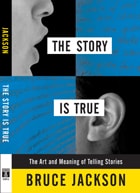
The Story Is True
The Art and Meaning of Telling StoriesBruce Jackson
Temple University Press, 2008
Making and experiencing stories, remembering and retelling them is something we all do. We tell stories over meals, at the water cooler, and to both friends and strangers. But how do stories work? What is it about telling and listening to stories that unites us? And, more importantly, how do we change them-and how do they change us?
In The Story Is True, author, filmmaker, and photographer Bruce Jackson explores the ways we use the stories that become a central part of our public and private lives. He examines, as no one before has, how stories narrate and bring meaning to our lives, by describing and explaining how stories are made and used. The perspectives shared in this engaging book come from the tellers, writers, filmmakers, listeners, and watchers who create and consume stories.
Jackson writes about his family and friends, acquaintances and experiences, focusing on more than a dozen personal stories. From oral histories, such as conversations the author had with poet Steven Spender, to public stories, such as what happened when Bob Dylan "went electric" at the 1965 Newport Folk Festival. Jackson also investigates how "words can kill" showing how diction can be an administrator of death, as in Nazi extermination camps. And finally, he considers the way lies come to resemble truth, showing how the stories we tell, whether true or not, resemble truth to the teller.
Ultimately, The Story Is True is about the place of stories-fiction or real-and the impact they have on the lives of each one of us.
Think Generic!
The Meaning and Use of Generic SentencesAriel Cohen
CSLI, 1999
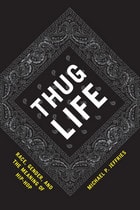
Thug Life
Race, Gender, and the Meaning of Hip-HopMichael P. Jeffries
University of Chicago Press, 2010
Hip-hop has come a long way from its origins in the Bronx in the 1970s, when rapping and DJing were just part of a lively, decidedly local scene that also venerated b-boying and graffiti. Now hip-hop is a global phenomenon and, in the United States, a massively successful corporate enterprise predominantly controlled and consumed by whites while the most prominent performers are black. How does this shift in racial dynamics affect our understanding of contemporary hip-hop, especially when the music perpetuates stereotypes of black men? Do black listeners interpret hip-hop differently from white fans?
These questions have dogged hip-hop for decades, but unlike most pundits, Michael P. Jeffries finds answers by interviewing everyday people. Instead of turning to performers or media critics, Thug Life focuses on the music’s fans—young men, both black and white—and the resulting account avoids romanticism, offering an unbiased examination of how hip-hop works in people’s daily lives. As Jeffries weaves the fans’ voices together with his own sophisticated analysis, we are able to understand hip-hop as a tool listeners use to make sense of themselves and society as well as a rich, self-contained world containing politics and pleasure, virtue and vice.
Tokens of Meaning
Papers in Honor of Lauri KarttunenEdited by Cleo Condoravdi and Tracy Holloway King
CSLI, 2019
Tolstoy's Phoenix
From Method to Meaning in War and PeaceGeorge R. Clay
Northwestern University Press, 1998
Tracking the Meaning of Life
A Philosophical JourneyYuval Lurie
University of Missouri Press, 2006
Tsewa's Gift
Magic and Meaning in an Amazonian SocietyMichael F. Brown
University of Alabama Press, 1986
Discover the spiritual threads that bind Amazonian life and culture.
Tsewa’s Gift is a profound exploration of the cultural and spiritual life of the indigenous peoples of the Peruvian Amazon. Anthropologist Michael F. Brown delves into the concept of tsewa, a spiritual force central to the worldview of the Aguaruna people, revealing how this belief system shapes social relationships, moral obligations, and the exchange of gifts. Through vivid ethnographic detail and thoughtful analysis, Brown examines the intersection of ritual, reciprocity, and cosmology, offering readers a nuanced understanding of how indigenous communities navigate identity, power, and meaning in a rapidly changing world. This book is an essential resource for scholars of anthropology, religion, and Latin American studies, as well as anyone seeking insight into the complexities of cultural resilience and adaptation.