Results by title
80 books match the query 'Medical (incl. Patients)' and 15 start with t

Tell the Driver
A Biography of Elinor F.E. Black, MDJulie Vandervoort
University of Manitoba Press, 1992
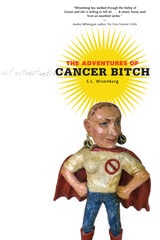
The Adventures of Cancer Bitch
S. L. Wisenberg
University of Iowa Press, 2009
Wisenberg’s writing has been compared to a mix of Leon Wieseltier and Fran Lebowitz, and in this book, she has Wieseltier’s erudition and Lebowitz’s self-deprecating cleverness: “If anybody ever offers you the choice between suffering and depression, take the suffering. And I don't mean physical suffering. I mean emotional suffering. I am hereby endorsing psychic suffering over depression.”
From The Adventures of Cancer Bitch:
I found that when you invite people to a pre-mastectomy party, they show up. Even those with small children. The kids were so young that they didn't notice that most of the food had nipples. . . . I talked to everyone—about what I'm not sure. Probably about my surgery. Everyone told me how well I looked. I felt giddy. I was going to go under, but not yet; I was going to be cut, but not yet; I was going to be bald, but not yet. As my friend who had bladder cancer says: The thing about cancer is you feel great until they start treating you for it.

The Body Alone
A Lyrical Articulation of Chronic PainNina Lohman
University of Iowa Press, 2024
In both form and content, The Body Alone represents boundary-pressing work that subverts the traditional narrative by putting pressure on the medical, cultural, and political systems that impact women’s access to fair and equal healthcare. This is more than an illness narrative, it is a battle cry demanding change.
The Bone Doctor's Concerto
Music, Surgery, and the Pieces in BetweenAlvin H. Crawford, MD
Ohio University Press, 2023
Published by the University of Cincinnati Press
Born in Memphis, Tennessee in 1939, Dr. Alvin Crawford grew up and attended medical school in a segregated world. Beginning with his early life in Orange Mound—a self-contained community for freed slaves established in the 1890s—Crawford’s autobiography describes his flirtation with a music degree and time spent playing in jazz bands through the segregated South. In 1960, Crawford began his ground-breaking medical career with his entrance into the University of Tennessee College of Medicine, becoming the school’s first African American student. After completing his medical training and traveling the world as a surgeon for the Navy, Crawford found himself in Cincinnati, where he established the Comprehensive Pediatric Orthopedic Clinic at Cincinnati Children’s Hospital, the first in the region.
Underlying this story are the systemic and very personal incidents of racism Crawford experienced throughout his career. His autobiography is a personal account of segregation, integration, ambition, hard work, and taking risks.
The Door of Last Resort
Memoirs of a Nurse PractitionerWard, Frances
Rutgers University Press, 2013
Ward views nurse practitioners as important providers of primary health care (including the prevention of and attention to the root causes of ill health) in independent practice and as equal members of professional teams of physicians, registered nurses, and other health care personnel. She describes the education of nurse practitioners, their scope of practice, their abilities to prescribe medications and diagnostic tests, and their overall management of patients’ acute and chronic illnesses. Also explored are the battles that nurse practitioners have waged to win the right to practice—battles with physicians, health insurance companies, and even other nurses.
The Door of Last Resort, though informed by Ward’s experiences, is not a traditional memoir. Rather, it explores issues in primary health care delivery to poor, urban populations from the perspective of nurse practitioners and is intended to be their voice. In doing so, it investigates the factors affecting health care delivery in the United States that have remained obscure throughout the current national debate

The Examined Illness
A Philosopher's Confrontation with Deadly DiseaseDarrel Moellendorf
Intellect Books, 2026
A visceral personal memoir of being seriously unwell—and the consolations of philosophy during sickness.
Being a patient is part of being alive. Disease and serious illness often strike randomly, and when they do, we quickly become subject to the impersonal forces of biochemistry and pharmacology. We rarely think about sickness beforehand and are often totally unprepared for it when it happens. Suddenly, there we are, subject to a standard treatment protocol.
Darrel Noellendorf learned this by experience during a month confined to a solitary and sterile hospital room where he received a life-saving stem cell transplant. His room was somebody’s workspace, his schedule was somebody’s work routine, his immune system was systematically crushed, and his prognosis was out of his hands. There was no assurance that it would all work out.
Having spent thirty years teaching philosophy to college students, He was facing the biggest test of all—perhaps the final exam. These are his reflections before, during, and after his cancer treatment, written in real time. He writes, “My brain was sometimes addled by the chemotherapy that sapped my energy and destroyed my immune system, but I wrote out of the conviction that living well includes living well with disease, and eventually living well facing death.” This memoir expresses the conviction that the virtues of patience, courage, trust, and hope serve us well. A measure of good humor also can’t hurt.
The Iron Rose
The Extraordinary Life of Charlotte Ross, MDFred Edge
University of Manitoba Press, 1992
The Light That Endures
Stories of Courage, Compassion, and Resilience at Dana-Farber Cancer InstituteTodd Weissman
University of Massachusetts Press, 2026
Showing that everyday people offer the deepest, most relatable lessons in grace
Offering an intimate glimpse into the lives of individuals connected to one of the world’s foremost centers for cancer care and research, The Light That Endures reveals how ordinary people at Boston’s Dana-Farber Cancer Institute demonstrate extraordinary resilience in the face of life’s most challenging moments. Through eight captivating profiles, readers meet a world-renowned pediatric oncologist who rode on horseback at Eisenhower’s inauguration, delivered a secret message in Soviet-controlled Czechoslovakia, and hosted the future King of England; a florist-turned-nurse-turned-teacher whose life changed drastically after a chance encounter on a train; an administrator who has faced adversity his entire life, from a violent father, to confronting his own identity, to being held up at gunpoint; a teenage patient whose battle with cancer was just one of many challenges he has navigated; and a woman who, despite spending her life bringing comfort to others, wonders whether she’s been enough as she reflects after a terminal diagnosis.
These remarkable people, diverse in their backgrounds, share a common bond through cancer and Dana-Farber, that much is obvious. However, it is their quiet acts of grace and service—woven into both their professional paths and personal journeys—that more deeply unite them. Their stories reveal a deeper truth: despite hardship and loss, the arc of life bends toward goodness. Fractured childhoods, family estrangement, mental health strains, winding career paths, and the ever-present shadow of self-doubt are not just obstacles but catalysts. The individuals profiled have found hope and meaning in community and their work, shaping lives of purpose, service, and gratitude. More than a recounting of lives touched by cancer, The Light That Endures is a celebration of the profound impact of compassion and human connection. It captures the essence of Dana-Farber’s ethos, where a shared mission of care fosters an environment of empathy and hope.
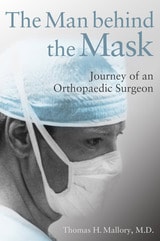
The Man Behind the Mask
Journey of an Orthopaedic SurgeonThomas H. Mallory, MD
University of Missouri Press, 2007
The perils of aging are many, but the debilitating effects of serious illness loom large. In this stirring memoir, readers will discover a man who improved the lives of many arthritis sufferers before himself succumbing to a cruel debilitating disease. The Man behind the Mask tells the story of Thomas Mallory, who was inspired to become a doctor after undergoing surgery for a high school football injury. He went on to become a renowned surgeon and a pioneer in joint replacement. In 2002, his successful career came to an abrupt halt when he was diagnosed with Parkinson’s disease.
Mallory was one of the first surgeons in the United States to see the potential for joint replacement technology, and in this memoir he describes not only the nuances of introducing hip replacement surgery but also the systems that he established to make it a highly successful operation. He tells how he overcame initial resistance to the procedure and became a respected teacher of the technology, training many surgeons who went on to successful careers, lecturing about his procedure around the world, and also seeing VIP patients who journeyed to Ohio just to be operated on by him.
As a pioneer in this type of operation, Mallory first recognized the value of using prosthetic innovation and development. He became a proponent of modularity in joint replacement surgery, which allowed a surgeon to customize a prosthesis to a patient’s joint in the operating room. His innovations, along with those of Dr. William Head, resulted in the introduction in 1983 of the Mallory-Head Hip System—a technology still in use today and one that has offered relief to thousands of patients.
Tracing the joys and sorrows of his own career, Mallory dispels the myth that surgeons are emotionally invulnerable and cold. He offers his perspective on the pursuit of medicine as a profession, on the doctor-patient relationship, and on litigious challenges to physicians. He also commends the benefits of family and leisure and the blessing of life in general while offering insight into the management of an incurable disease.
In our skeptical era, Thomas Mallory is a shining example of a prominent scientist who has maintained his faith in God throughout the highs and lows of life. The Man behind the Mask is an inspiring account for fellow professionals and general readers, as well as for those who have benefited from the procedures he introduced.
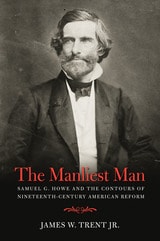
The Manliest Man
Samuel G. Howe and the Contours of Nineteenth-Century American ReformJames W. Trent
University of Massachusetts Press, 2012
A native of Boston and a physician by training, Samuel G. Howe (1801–1876) led a remarkable life. He was a veteran of the Greek War of Independence, a fervent abolitionist, and the founder of both the Perkins School for the Blind and the Massachusetts School for Idiotic and Feeble-Minded Children. Married to Julia Ward Howe, author of “Battle Hymn of the Republic,” he counted among his friends Senator Charles Sumner, public school advocate Horace Mann, and poet Henry Wadsworth Longfellow.
Always quick to refer to himself as a liberal, Howe embodied the American Renaissance's faith in the perfectibility of human beings, and he spoke out in favor of progressive services for disabled Americans. A Romantic figure even in his own day, he embraced a notion of manliness that included heroism under fire but also compassion for the underdog and the oppressed. Though hardly a man without flaws and failures, he nevertheless represented the optimism that characterized much of antebellum American reform.
The first full-length biography of Samuel G. Howe in more than fifty years, The Manliest Man explores his life through private letters and personal and public documents. It offers an original view of the reformer's personal life, his association with social causes of his time, and his efforts to shape those causes in ways that allowed for the greater inclusion of devalued people in the mainstream of American life.
The Mind is Not the Heart
Recollections of a Woman PhysicianEva J. Salber
Duke University Press, 1993
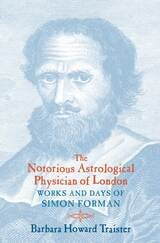
The Notorious Astrological Physician of London
Works and Days of Simon FormanBarbara Howard Traister
University of Chicago Press, 2000
Although he received no formal medical education, Forman built a thriving practice. His success rankled the College of Physicians of London, who hounded Forman with fines and jail terms for nearly two decades. In addition to detailing case histories of his medical practice—the first such records known from London—as well as his run-ins with the College, Forman's manuscripts cover a wide variety of other matters, from astrology and alchemy to gardening and the theater. His autobiographical writings are among the earliest English examples of their genre and display an abiding passion for reworking his personal history in the best possible light, even though they show little evidence that Forman ever intended to publish them.
Fantastic as many of Forman's manuscripts are, it is their more mundane aspects that make them such a priceless record of what daily life was like for ordinary inhabitants of Shakespeare's London. Forman's descriptions of the stench of a privy, the paralyzed limbs of a child, a lost bitch dog with a velvet collar all offer tantalizing glimpses of a world that seems at once very far away and intimately familiar. Anyone who wants to reclaim that world will enjoy this book.
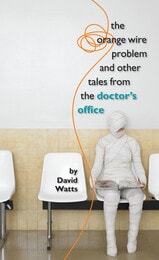
The Orange Wire Problem and Other Tales from the Doctor’s Office
David Watts
University of Iowa Press, 2009
With disarming candor and the audacity to admit that practicing medicine can be a crazy thing, Watts fills each page with riveting details, moving accounts, or belly-laughs. As the stories in this work unfold, we are witness to the moral dilemmas and personal rewards of ministering to the sick. Whether the subject is the potential benefits of therapeutic deception or telling a child about death, Watts’s ear for the right word, the right tone, and the right detail never fails him.
From The Orange Wire Problem and Other Tales from the Doctor’s Office:
We were lingering in the outer office. He mentioned again, no biopsy. I knew that. And I knew there would be no chemotherapy.
Maybe it's like that Orange Wire Problem, I said.
Yes exactly, he said, and four years from now when we're all sitting around the campfire we'll remember the Orange Wire Problem. . .
And I thought to myself, my brother did that. Spoke of the time ahead as he was dying of lung cancer. Six months from now he had said, we'll be glad we did all those drug therapies—as if to speak of the future laid claim to the future.
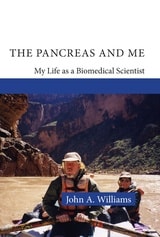
The Pancreas and Me
My Life as a Biomedical ScientistJohn A. Williams
Michigan Publishing Services, 2023
This is a personal story that weaves together the personal and professional aspects of a rewarding life in biomedical research. The book describes the education and career of John A. Williams, a leading biomedical scientist whose research focused on the exocrine pancreas and its function. It is arranged chronologically and covers Dr. Williams’ education, how he developed his interest in the pancreas, and how research on the pancreas developed over his 50 year career. It also provides insight into the state of American biomedical education, medical schools, and how research is funded and published.
As a professor, his research was on the exocrine pancreas, its secretion of digestive enzymes, and regulation by gastrointestinal hormones. He published over 400 papers and trained over 60 graduate students and postdoctoral fellows. Dr Williams served as President of two scientific societies, the American Pancreatic Association and the American Physiological Society, and as Editor of four journals. He also founded the Pancreapedia, an open access knowledgbase about the exocrine pancreas. In addition, he taught medical and graduate students with a focus on gastrointestinal function.
While a medical student, John married his life partner, Christa Smith, and they have been together 57 years raising two children and helping with four grandchildren and two great-grandchildren. John has a lifetime interest in outdoor activities, nature, and conservation. For the last decade he has been an advocate for reducing the use of fossil fuels. He is also active in the Ann Arbor Friends meeting.
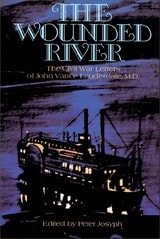
The Wounded River
The Civil War Letters of John Vance Lauderdale, M.D.Peter Josyph
Michigan State University Press, 1993
The Wounded River takes the reader back more than 130 years to reveal a marvelous, first-hand account of nineteenth-century warfare. In the process, the work cuts the legends and mythology that have come to frame and define accounts of America's bloodiest war. Of equal significance, Peter Josyph's editorial work on this superb collection of letters from the Western Americana Division of Yale University's Beinecke Rare Book and Manuscripts Library enhances and clarifies Lauderdale's experinces as a surgeon aboard the U.S. Army hospital ship D. A. January.
The reader looks on while Lauderdale, a New York civilian contract surgeon, operates on hundreds of Confederate and Union wounded. The young doctor's clear writing style and his great compassion for these unfortunate men whose bodies were ripped apart by bullets, shell fragments, and bayonets permits us to catch a disturbiing glimpse of what modern warfare does to humanity. Finally, we learn of Lauderdale's motives for volunteering, his impressions of the "hospital ship" D. A. January, Confederate morale, the Abolitionist cause, and black slavery. The Wounded River is a must read for anyone interested in the real American Civil War.