100 books match the query 'Microeconomics' and 23 start with t

cover of The Colors of Poverty: Why Racial and Ethnic Disparities Persist

The Colors of Poverty

Why Racial and Ethnic Disparities Persist

Ann Chih Lin

Russell Sage Foundation, 2008
Given the increasing diversity of the nation—particularly with respect to its growing Hispanic and Asian populations—why does racial and ethnic difference so often lead to disadvantage? In The Colors of Poverty, a multidisciplinary group of experts provides a breakthrough analysis of the complex mechanisms that connect poverty and race. The Colors of Poverty reframes the debate over the causes of minority poverty by emphasizing the cumulative effects of disadvantage in perpetuating poverty across generations. The contributors consider a kaleidoscope of factors that contribute to widening racial gaps, including education, racial discrimination, social capital, immigration, and incarceration. Michèle Lamont and Mario Small grapple with the theoretical ambiguities of existing cultural explanations for poverty disparities.  They argue that culture and structure are not competing explanations for poverty, but rather collaborate to produce disparities. Looking at how attitudes and beliefs exacerbate racial stratification, social psychologist Heather Bullock links the rise of inequality in the United States to an increase in public tolerance for disparity. She suggests that the American ethos of rugged individualism and meritocracy erodes support for antipoverty programs and reinforces the belief that people are responsible for their own poverty. Sociologists Darren Wheelock and Christopher Uggen focus on the collateral consequences of incarceration in exacerbating racial disparities and are the first to propose a link between legislation that blocks former drug felons from obtaining federal aid for higher education and the black/white educational attainment gap. Joe Soss and Sanford Schram argue that the increasingly decentralized and discretionary nature of state welfare programs allows for different treatment of racial groups, even when such policies are touted as "race-neutral." They find that states with more blacks and Hispanics on welfare rolls are consistently more likely to impose lifetime limits, caps on benefits for mothers with children, and stricter sanctions. The Colors of Poverty is a comprehensive and evocative introduction to the dynamics of race and inequality. The research in this landmark volume moves scholarship on inequality beyond a simple black-white paradigm, beyond the search for a single cause of poverty, and beyond the promise of one "magic bullet" solution. A Volume in the National Poverty Center Series on Poverty and Public Policy
[more]
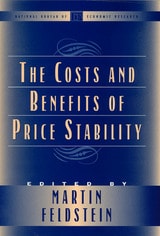
cover of The Costs and Benefits of Price Stability

The Costs and Benefits of Price Stability

Edited by Martin Feldstein

University of Chicago Press, 1999

In recent years, the Federal Reserve and central banks worldwide have enjoyed remarkable success in their battle against inflation. The challenge now confronting the Fed and its counterparts is how to proceed in this newly benign economic environment: Should monetary policy seek to maintain a rate of low-level inflation or eliminate inflation altogether in an effort to attain full price stability?

In a seminal article published in 1997, Martin Feldstein developed a framework for calculating the gains in economic welfare that might result from a move from a low level of inflation to full price stability. The present volume extends that analysis, focusing on the likely costs and benefits of achieving price stability not only in the United States, but in Germany, Spain, and the United Kingdom as well. The results show that even small changes in already low inflation rates can have a substantial impact on the economic performance of different countries, and that variations in national tax rules can affect the level of gain from disinflation.
[more]
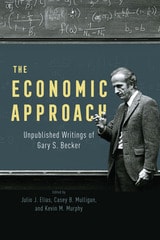
cover of The Economic Approach: Unpublished Writings of Gary S. Becker

The Economic Approach

Unpublished Writings of Gary S. Becker

Gary S. Becker

University of Chicago Press, 2023

Now in paperback, a revealing collection from the intellectual titan whose work shaped the modern world.

As an economist and public intellectual, Gary S. Becker was a giant. The recipient of a Nobel Prize, a John Bates Clark Medal, and a Presidential Medal of Freedom, Becker is widely regarded as the greatest microeconomist in history.

After forty years at the University of Chicago, Becker left a slew of unpublished writings that used an economic approach to human behavior, analyzing such topics as preference formation, rational indoctrination, income inequality, drugs and addiction, and the economics of family.

These papers unveil the process and personality—direct, critical, curious—that made him a beloved figure in his field and beyond. The Economic Approach examines these extant works as a capstone to the Becker oeuvre—not because the works are perfect, but because they offer an illuminating, instructive glimpse into the machinations of an economist who wasn’t motivated by publications. Here, and throughout his works, an inquisitive spirit remains remarkable and forever resonant.
[more]
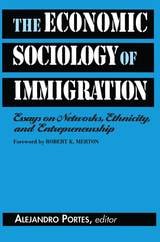
cover of The Economic Sociology of Immigration: Essays on Networks, Ethnicity, and Entrepreneurship

The Economic Sociology of Immigration

Essays on Networks, Ethnicity, and Entrepreneurship

Alejandro Portes

Russell Sage Foundation, 1995
"Portes suggests that immigration constitutes an especially appropriate Mertonian 'strategic research site' for economic sociology in that it provides very good opportunities for investigating the embeddedness of economic relationships in social situations....the contributors expand the conventional domain of economic sociology quite literally in both time and space."—Contemporary Sociology "Alejandro Portes and his splendid band of collaborators make clear that the causes, processes, and consequences of migration vary dramatically from group to group, that a group's history makes a profound difference to its fate in the American economy. They have produced a sinewy book, a book worth arguing with."—Charles Tilly, Columbia University The Economic Sociology of Immigration forges a dynamic link between the theoretical innovations of economic sociology with the latest empirical findings from immigration research, an area of critical concern as the problems of ethnic poverty and inequality become increasingly profound. Alejandro Portes' lucid overview of sociological approaches to economic phenomena provides the framework for six thoughtful, wide-ranging investigations into ethnic and immigrant labor networks and social resources, entrepreneurship, and cultural assimilation. Mark Granovetter illustrates how small businesses built on the bonds of ethnicity and kinship can, under certain conditions, flourish remarkably well. Bryan R. Roberts demonstrates how immigrant groups' expectations of the duration of their stay influence their propensity toward entrepreneurship. Ivan Light and Carolyn Rosenstein chart how specific metropolitan environments have stimulated or impeded entrepreneurial ventures in five ethnic populations. Saskia Sassen provides a revealing analysis of the unexpectedly flexible and vital labor market networks maintained between immigrants and their native countries, while M. Patricia Fernandez Kelly looks specifically at the black inner city to examine how insular cultural values hinder the acquisition of skills and jobs outside the neighborhood. Alejandro Portes also depicts the difference between the attitudes of American-born youths and those of recent immigrants and its effect on the economic success of immigrant children.
[more]
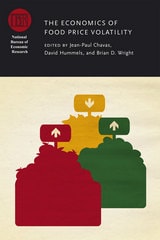
cover of The Economics of Food Price Volatility

The Economics of Food Price Volatility

Edited by Jean-Paul Chavas, David Hummels, and Brian D. Wright

University of Chicago Press, 2014

There has been an increase in food price instability in recent years, with varied consequences for farmers, market participants, and consumers. Before policy makers can design schemes to reduce food price uncertainty or ameliorate its effects, they must first understand the factors that have contributed to recent price instability. Does it arise primarily from technological or weather-related supply shocks, or from changes in demand like those induced by the growing use of biofuel? Does financial speculation affect food price volatility?

The researchers who contributed to The Economics of Food Price Volatility address these and other questions. They examine the forces driving both recent and historical patterns in food price volatility, as well as the effects of various public policies in affecting this volatility. The chapters include studies of the links between food and energy markets, the impact of biofuel policy on the level and variability of food prices, and the effects of weather-related disruptions in supply. The findings shed light on the way price volatility affects the welfare of farmers, traders, and consumers.
[more]
cover of The Firm, the Market, and the Law

The Firm, the Market, and the Law

R. H. Coase

University of Chicago Press, 1987

A Nobel Prize winner's most important, groundbreaking work, collected in one volume

The Firm, the Market, and the Law gathers the most important and lasting works by Nobel Prize-winning economist Ronald Coase. Awarded the Nobel Prize in 1991 for his groundbreaking work on the significance of transaction costs and property rights, Coase continually urged his fellow economists to examine the real-world foundations on which their theories rest. This volume collects some of his classic articles probing those very foundations. "The Nature of the Firm" (1937) introduced the then-revolutionary concept of transaction costs into economic theory. "The Problem of Social Cost" (1960) further developed this concept, emphasizing the effect of the law on the working of the economic system. The remaining papers and new introductory essay clarify and extend Coarse's arguments and address his critics.
 

[more]
cover of The Firm, the Market, and the Law

The Firm, the Market, and the Law

R. H. Coase

University of Chicago Press, 1987

This is an auto-narrated audiobook version of this book. 

Few other economists have been read and cited as often as R.H. Coase has been, even though, as he admits, "most economists have a different way of looking at economic problems and do not share my conception of the nature of our subject." Coase's particular interest has been that part of economic theory that deals with firms, industries, and markets—what is known as price theory or microeconomics. He has always urged his fellow economists to examine the foundations on which their theory exists, and this volume collects some of his classic articles probing those very foundations. "The Nature of the Firm" (1937) introduced the then-revolutionary concept of transaction costs into economic theory. "The Problem of Social Cost" (1960) further developed this concept, emphasizing the effect of the law on the working of the economic system. The remaining papers and new introductory essay clarify and extend Coarse's arguments and address his critics.

"These essays bear rereading. Coase's careful attention to actual institutions not only offers deep insight into economics but also provides the best argument for Coase's methodological position. The clarity of the exposition and the elegance of the style also make them a pleasure to read and a model worthy of emulation."—Lewis A. Kornhauser, Journal of Economic Literature

Ronald H. Coase was awarded the Nobel Prize in Economic Science in 1991.

[more]
cover of The Market Comes to Education in Sweden: An Evaluation of Sweden's Surprising School Reforms

The Market Comes to Education in Sweden

An Evaluation of Sweden's Surprising School Reforms

Anders Bjorklund

Russell Sage Foundation, 2005
A large central government providing numerous public services has long been a hallmark of Swedish society, which is also well-known for its pursuit of equality. Yet in the 1990s, Sweden moved away from this tradition in education, introducing market-oriented reforms that decentralized authority over public schools and encouraged competition between private and public schools. Many wondered if this approach would improve educational quality, or if it might expand inequality that Sweden has fought so hard to hold down. In The Market Comes to Education in Sweden, economists Anders Björklund, Melissa Clark, Per-Anders Edin, Peter Fredriksson, and Alan Krueger measure the impact of Sweden's bold experiment in governing and help answer the questions that societies across the globe have been debating as they try to improve their children's education. The Market Comes to Education in Sweden injects some much-needed objectivity into the heavily politicized debate about the effectiveness of educational reform. While advocates for reform herald the effectiveness of competition in improving outcomes, others suggest that the reforms will grossly increase educational inequality for young people. The authors find that increased competition did help improve students' math and language skills, but only slightly, and with no effect on the performance of foreign-born students and those with low-educated parents. They also find some signs of increasing school segregation and wider inequality in student performance, but nothing near the doomsday scenarios many feared. In fact, the authors note that the relationship between family background and school performance has hardly budged since before the reforms were enacted. The authors conclude by providing valuable recommendations for school reform, such as strengthening school evaluation criteria, which are essential for parents, students, and governments to make competent decisions regarding education. Whether or not the market-oriented reforms to Sweden's educational system succeed will have far reaching implications for other countries considering the same course of action. The Market Comes to Education in Sweden offers firm empirical answers to the questions raised by school reform and brings crucial facts to the debate over the future of schooling in countries across the world.
[more]
cover of The Measurement of Durable Goods Prices

The Measurement of Durable Goods Prices

Robert J. Gordon

University of Chicago Press, 1990

American business has recently been under fire, charged with inflated pricing and an inability to compete in the international marketplace. However, the evidence presented in this volume shows that the business community has been unfairly maligned—official measures of inflation and the standard of living have failed to account for progress in the quality of business equipment and consumer goods. Businesses have actually achieved higher productivity at lower prices, and new goods are lighter, faster, more energy efficient, and more reliable than their predecessors.

Robert J. Gordon has written the first full-scale work to treat the extent of quality changes over the entire range of durable goods, from autos to aircraft, computers to compressors, from televisions to tractors. He combines and extends existing methods of measurement, drawing data from industry sources, Consumer Reports, and the venerable Sears catalog.

Beyond his important finding that the American economy is more sound than officially recognized, Gordon provides a wealth of anecdotes tracing the postwar history of technological progress. Bolstering his argument that improved quality must be accurately measured, Gordon notes, for example, that today's mid-range personal computers outperform the multimillion-dollar mainframes of the 1970s. This remarkable book will be essential reading for economists and those in the business community.
[more]
cover of The Measurement of Labor Cost

The Measurement of Labor Cost

Edited by Jack E. Triplett

University of Chicago Press, 1983

Measuring costs of labor as a portion of total production costs has never before been treated so thoroughly or so thoughtfully. Moreover, contrary to most recent labor research, this book focuses on the demand side—the employer's point of view—and the behavior studied is employer behavior.

An introductory essay by the editor provides a useful guide to current thought in the analysis of labor cost. Other papers give new insights into problems encountered in accounting for the nonwage elements of labor compensation, the effect of pensions and other benefits, and the wage-measurement questions raised by incomes policies. In addition, there is a wealth of valuable new data on labor costs in the United States.

Labor economists, statisticians, econometric modelers, and advisers to government and industry will welcome this up-to-date and comprehensive treatment of the costs of production.
[more]
cover of The Missing Links: Formation and Decay of Economic Networks

The Missing Links

Formation and Decay of Economic Networks

James E. Rauch

Russell Sage Foundation, 2007
Half of all workers are hired through personal referrals, and networks of social connections channel the flows of capital, technology, and international trade. Sociologists and economists alike recognize that economic exchange is shaped by social networks, which propagate information and facilitate trust, but each discipline brings a distinct theoretical perspective to the study of networks. Sociologists have focused on how networks shape individual behavior, economists on how individual choices shape networks. The Missing Links is a bold effort by an interdisciplinary group of scholars to synthesize sociological and economic theories of how economic networks emerge and evolve. Interweaving sophisticated theoretical models and concrete case studies, The Missing Links is both an introduction to the study of economic networks and a catalyst for further research. Economists Rachel Kranton and Deborah Minehart illustrate their field's approach to modeling network formation, showing how manufacturers form networks of suppliers in ways that maximize profits. Exemplifying the sociological approach, Ronald Burt analyzes patterns of cooperation and peer evaluations among colleagues at a financial organization. He finds that dense connections of shared acquaintances lead to more stable reputations.  In the latter half of the book, contributors combine the insights of sociology and economics to explore a series of case studies. Ray Reagans, Ezra Zuckerman, and Bill McEvily investigate an R & D firm in which employees participate in overlapping collaborative teams, allowing the authors to disentangle the effects of network structure and individual human capital on team performance. Kaivan Munshi and Mark Rosenzweig examine how economic development and rising inequality in India are reshaping caste-based networks of mutual insurance and job referrals. Their study shows that people's economic decisions today are shaped both by the legacy of the caste hierarchies and by the particular incentives and constraints that each individual faces in an evolving labor market. Economic globalization is forging new connections between people in distant corners of the world, while unsettling long-standing social relations. Anyone interested in understanding the opportunities and challenges of this era of rapid change will find a highly informative guide in The Missing Links.
[more]
cover of The Nonprofit Sector in the Mixed Economy

The Nonprofit Sector in the Mixed Economy

Avner Ben-Ner and Benedetto Gui, Editors

University of Michigan Press, 1993
In recent years, the number of scholars doing research and teaching on the nonprofit sector, the number of research and teaching centers dedicated to it, and the number of books and journals focusing on the topic of nonprofit organizations have all grown significantly. Nonetheless, this is the first book that explicitly recognizes and emphasizes the role and behavior of the nonprofit sector in the mixed economy.The book’s twelve chapters present a picture of the nonprofit sector and its relationship with other sectors of the mixed economy and analyze theoretically and empirically various aspects of this relationship. The book offers new perspectives on the role of nonprofit organizations vis-à-vis for-profit firms and government organizations, a theoretical reevaluation of the relationship between government expenditures and private contributions, and a critique of the econometric studies of the “crowd-in” and “crowd-out” issues. It presents new analysis of the relationship between government expenditures and competition between nonprofit organizations and for-profit firms and new results on the Pareto efficiency of philanthropy and offers comprehensive statistical information on key variables in nonprofit organizations in comparison with for-profit firms and government organizations in several countries.Contributors: Avner Ben-Ner, Theresa Van Hoomissen, Benedetto Gui, Dennis A. Kaufman, Richard Steinberg, Jerald Schiff, Burton Weisbrod, Alphonse G. Holtmann, Steven G. Ullmann, Cyril F. Chang, Howard P. Tuckman, Helmut K. Anheier, Carlo Borzaga, Martin Knapp, and Jeremy Kendall.
[more]
cover of The Power of Productivity: Wealth, Poverty, and the Threat to Global Stability

The Power of Productivity

Wealth, Poverty, and the Threat to Global Stability

William W. Lewis

University of Chicago Press, 2004

A powerfully simple explanation of a complex problem: How productivity is the key to global economic growth
 
The disparity between rich and poor countries is the most serious, intractable problem facing the world today. The chronic poverty of many nations affects more than the citizens and economies of those nations; it threatens global stability as the pressures of immigration become unsustainable and rogue nations seek power and influence through extreme political and terrorist acts. To address this tenacious poverty, a vast array of international institutions has pumped billions of dollars into these nations in recent decades, yet despite this infusion of capital and attention, roughly five billion of the world's six billion people continue to live in poor countries. What isn't working? And how can we fix it? 

The Power of Productivity provides powerful and controversial answers to these questions. William W. Lewis, the director emeritus of the McKinsey Global Institute, here draws on extensive microeconomic studies of thirteen nations over twelve years—conducted by the Institute itself—to counter virtually all prevailing wisdom about how best to ameliorate economic disparity. Lewis's research, which included studying everything from state-of-the-art auto makers to black-market street vendors and mom-and-pop stores, conclusively demonstrates that, contrary to popular belief, providing more capital to poor nations is not the best way to help them. Nor is improving levels of education, exchange-rate flexibility, or government solvency enough. Rather, the key to improving economic conditions in poor countries, argues Lewis, is increasing productivity through intense, fair competition and protecting consumer rights.

As The Power of Productivity explains, this sweeping solution affects the economies of poor nations at all levels—from the viability of major industries to how the average consumer thinks about his or her purchases. Policies must be enacted in developing nations that reflect a consumer rather than a producer mindset and an attendant sense of consumer rights. Only one force, Lewis claims, can stand up to producer special privileges—consumer interests.

The Institute's unprecedented research method and Lewis's years of experience with economic policy combine to make The Power of Productivity the most authoritative and compelling view of the global economy today, one that will inform political and economic debate throughout the world for years to come.

[more]
cover of The Price of Independence: The Economics of Early Adulthood

The Price of Independence

The Economics of Early Adulthood

Sheldon Danziger

Russell Sage Foundation, 2007
More and more young men and women today are taking longer and having more difficulty making a successful transition to adulthood.  They are staying in school longer, having a harder time finding steady employment at jobs that provide health insurance, and are not marrying and having children until much later in life than their parents did. In The Price of Independence, a roster of distinguished experts diagnose the extent and causes of these trends. Observers of social trends have speculated on the economic changes that may be delaying the transition to adulthood—from worsening job opportunities to mounting student debt and higher housing costs—but few have offered empirical evidence to back up their claims. The Price of Independence represents the first significant analysis of these economic explanations, charting the evolving life circumstances of eighteen to thirty-five year-olds over the last few decades. Lisa Bell, Gary Burtless, Janet Gornick, and Timothy M. Smeeding show that the earnings of young workers in the United States and a number of industrialized countries have declined relative to the cost of supporting a family, which may explain their protracted dependence. In addition, Henry Farber finds that job stability for young male workers has dropped over the last generation. But while economic factors have some influence on young people's transitions to adulthood, The Price of Independence shows that changes in the economic climate can not account for the magnitude of the societal shift in the timing of independent living, marriage, and childbearing. Aaron Yelowitz debunks the myth that steep housing prices are forcing the young to live at home—housing costs actually fell between 1980 and 2000 once lower interest rates and tax subsidies are taken into account. And Ngina Chiteji reveals that average student loan debt is only $3,500 per household. The trend toward starting careers and families later appears to have more to do with changing social norms, as well as policies that have broadened access to higher education, than with changes in the economy. For better or worse, the current generation is redefining the nature and boundaries of  what it means to be a young adult. The Price of Independence documents just how dramatically the modern lifecycle has changed and offers evidence as an antidote to much of the conventional wisdom about these social changes.
[more]
cover of The Rebel's Dilemma

The Rebel's Dilemma

Mark Irving Lichbach

University of Michigan Press, 1998

Since the mid 1960s, theorists have elaborated over two dozen different solutions to the collection action problem. During much of this same period, students of conflict have explored many questions about protest and rebellion. The Rebel's Dilemma examines what happens when one brings the full richness of collective action theories to bear on the many complex problems of collective dissent.
". . . a significant contribution to the understanding of collective behavior, protest, and rebellion." --Choice
"The book is interesting and thought-provoking, and its insights extend beyond the narrow subject of rebellion to help illuminate many issues related to organizing groups to undertake collective action." --Public Choice
"[Lichbach's] book is monumental and pivotal. . . . [It] consolidates over three decades of research on collective action problems and sets the agenda for future studies of collective dissent and rebellion. . . . [This] book is a major step forward. It will have an enormous impact in the field of conflict studies and belongs on the shelf of anyone even casually interested in dissent, rebellion, and revolution. . . . [This] book is a major step forward. It will have an enormous impact in the field of conflict studies and belongs on the shelf of anyone even casually interested in dissent, rebellion, and revolution." --American Political Science Review
"For scholars interested in game-theoretic analyses of politics . . . essential reading." --Manus I. Midlarsky, Journal of Politics
"Lichbach has to be praised for providing valuable insight on the logic of collective dissent. . . ." --Political Studies
Mark Irving Lichbach is Professor of Political Science, University of Colorado.
[more]
cover of The Return to Increasing Returns

The Return to Increasing Returns

James M. Buchanan and Yong J. Yoon, Editors

University of Michigan Press, 1994

The wealth of a nation depends on the division of labor, and the division of labor depends on the extent of the market. Adam Smith advanced this proposition in 1776, but neoclassical economists, in particular, have had difficulty incorporating it into conversational models. Increasing returns, as related to the size of the market nexus, have never found a secure place in economic theory, despite early efforts by Adam Smith, Alfred Marshall, and Allyn Young.
 
The neoclassical theory of distribution, developed in the last decades of the nineteenth century, relies on the postulate that in equilibrium there exist constant returns to scale, not only in particular firms and industries, but in the economy as a whole. As general equilibrium theory developed, emphasis was sifted to the properties of equilibrium, to the proofs of its existence, and to the attributes of welfare. The possibility of increasing returns represented an analytical “monkey wrench” thrown in the whole neoclassical structure. Thus, the neglect of increasing returns may have been methodologically understandable – if scientifically scandalous. Only in recent years has the increasing returns postulate returned to the mainstream through analyses of endogenous growth, international trade, unemployment, and the economics of ethics.



[more]
cover of The Social Benefits of Education

The Social Benefits of Education

Jere R. Behrman and Nevzer Stacey, Editors

University of Michigan Press, 1997
For decades, the primary argument in justifying education has been based on its direct economic effects. Yet education also provides "social benefits" for individuals and society at large, including a better way of taking care of ourselves, and consequently creating a better society to live in. Though it is difficult to quantify these social benefits, a more systematic analysis would improve our understanding of the full effects of education and provide a basis for considering related policies. The Office of Research of the United States Department of Education commissioned a series of papers on measuring these effects of education.
Those papers, revised and updated, are collected here. Kenneth J. Arrow provides perspective on education and preference formation, and Jere R. Behrman considers general conceptual and measurement issues in assessing the social benefits of education and policies related to education. These issues are taken up by experts in four fields--health, parenting, the environment, and crime. Themes addressed include measurement issues regarding what we mean by education and its benefits; basic analytical issues in assessing the impact of education on these social benefits using behavioral data; and whether the social benefits of education justify public policy interventions.
Jere R. Behrman is William R. Kenan Jr. Professor of Economics, University of Pennsylvania. Nevzer G. Stacey is Senior Research Analyst, Office of Educational Research, U.S. Department of Education.
[more]
cover of The Stolper-Samuelson Theorem: A Golden Jubilee

The Stolper-Samuelson Theorem

A Golden Jubilee

Alan V. Deardorff and Robert M. Stern, Editors

University of Michigan Press, 1994
In celebration of the fiftieth anniversary of the Stolper-Samuelson Theorem, this volume collects in one place the original Stolper-Samuelson articles as well as the most significant later contributions that interpret, extend, and test the basic result. It also includes reflective papers by both Wolfgang F. Stolper and Paul A. Samuelson, an overview of the literature, and an annotated bibliography. Contributors to the volume, either in reprints of their original articles or in new commentary, are Robert E. Baldwin, Sundari R. Baru, Jagdish N. Bhagwati, John S. Chipman, Alan V. Deardorff, Wilfred Ethier, Ronald W. Jones, Murray C. Kemp, Ulrich Kohli, Paul R. Krugman, Edward E. Leamer, Stephen P. Magee, Lloyd A. Metzler, Ronald Rogowski, Paul A. Samuelson, Jose A. Scheinkman, Robert M. Stern, Wolfgang F. Stolper, and Leon Wegge.
[more]
cover of The Theory of Public Choice-II

The Theory of Public Choice-II

James M. Buchanan and Robert D. Tollison, Editors

University of Michigan Press, 1984
The Theory of Public Choice is a landmark volume that brings together key essays and articles charting the rapid evolution of public choice theory during its most formative decade. Edited by James M. Buchanan and Robert D. Tollison—leading figures in the “Virginian School” of political economy—this collection synthesizes the major advances of public choice as it applies the tools of economic analysis to the workings of democratic and political institutions.The volume begins with overviews of the field’s development, highlighting public choice’s foundational challenge to “romantic” notions of government and its turn toward a more realistic, empirical understanding of collective decision-making. Renowned contributors—including Buchanan, Dennis Mueller, Gordon Tullock, and many others—explore subjects from voting theory and constitutional economics to rent-seeking, bureaucracy, and the political economy of welfare and regulation.Organized into topical sections covering theoretical advances, applications, empirical studies, and philosophical issues, The Theory of Public Choice illuminates how economics, political science, and policy analysis intersect. Whether addressing topics like political resource allocation, the logic of majority rule, or the emergence of tax and spending limitations, these essays demonstrate how public choice theory has reshaped the way scholars, policymakers, and citizens think about government.Accessible yet rigorous, this collection is essential for anyone seeking insight into the mechanisms of collective action, constitutional design, and the ongoing challenge of ensuring accountability and efficiency in public institutions. It stands as a vital resource for students and scholars in economics, political science, public policy, and related fields.
[more]
cover of The Walrasian Vision of the Microeconomy: An Elementary Exposition of the Structure of Modern General Equilibrium Theory

The Walrasian Vision of the Microeconomy

An Elementary Exposition of the Structure of Modern General Equilibrium Theory

Donald W. Katzner

University of Michigan Press, 1990

The Walrasian Vision of the Microeconomy articulates the traditional vision that is conjured up in the minds of most contemporary economists as they contemplate the microeconomy. It does so by setting out a very simple general-equilibrium model containing 1 produced consumer good, 1 produced capital good, 2 factors, 2 consumers, and 2 firms. Most of the basic theoretical ingredients of perfect competition taught in microeconomic theory courses are geometrically developed in this context: market equilibrium, the derivation of consumer demand for goods and supply of factors from constrained utility maximization, the relation between cost and production functions, the derivation of firm output supply and input demand from profit maximization, and the connections between competitive equilibrium, Pareto optimality, and welfare maximization. Also included is an elementary geometric proof of the existence and uniqueness of competitive equilibrium. The underlying premise is that these elements are all components of a larger picture and, as a result, fit together into a unified whole. The book is ideally suited to accompany the fuller and more detailed expositions of standard microeconomic theory texts.
[more]
cover of Time, Ignorance, and Uncertainty in Economic Models

Time, Ignorance, and Uncertainty in Economic Models

Donald W. Katzner

University of Michigan Press, 1998

Emerging from the tradition of Marshall, Knight, Keynes, and Shackle, Time, Ignorance, and Uncertainty in Economic Models is concerned with the character of formal economic analysis when the notions of logical or mechanical time and probabilistic uncertainty and the relatively complete knowledge basis it requires, are replaced, respectively, by historical time, and nonprobabilistic uncertainty and ignorance. Examining that analytical character by constructing and exploring particular models, this book emphasizes doing actual economic analysis in a framework of historical time, nonprobabilistic uncertainty, and ignorance.
Donald W. Katzner begins with an extensive investigation of the distinction between potential surprise and probability. He presents a modified version of Shackle's model of decision-making in ignorance and examines in considerable detail its "comparative statics" and operationality properties. The meaning of aggregation and simultaneity under these conditions is also explored, and Shackle's model is applied to the construction of models of the consumer, the firm, microeconomics, and macroeconomics. Katzner concludes with discussions of the roles of history, hysteresis, and empirical investigation in economic inquiry.
Time, Ignorance, and Uncertainty in Economic Models will be of interest to economists and others engaged in the study of uncertainty, probability, aggregation, and simultaneity. Those interested in the microeconomics of consumer and firm behavior, general equilibrium, and macroeconomics will also benefit from this book.
Donald W. Katzner is Professor of Economics, University of Massachusetts.
[more]
cover of Trust and Distrust In Organizations: Dilemmas and Approaches

Trust and Distrust In Organizations

Dilemmas and Approaches

Roderick M. Kramer

Russell Sage Foundation, 2004

The effective functioning of a democratic society—including social, business, and political interactions—largely depends on trust. Yet trust remains a fragile and elusive resource in many of the organizations that make up society's building blocks. In their timely volume, Trust and Distrust in Organizations, editors Roderick M. Kramer and Karen S. Cook have compiled the most important research on trust in organizations, illuminating the complex nature of how trust develops, functions, and often is thwarted in organizational settings. With contributions from social psychologists, sociologists, political scientists, economists, and organizational theorists, the volume examines trust and distrust within a variety of settings—from employer-employee and doctor-patient relationships, to geographically dispersed work teams and virtual teams on the internet. Trust and Distrust in Organizations opens with an in-depth examination of hierarchical relationships to determine how trust is established and maintained between people with unequal power. Kurt Dirks and Daniel Skarlicki find that trust between leaders and their followers is established when people perceive a shared background or identity and interact well with their leader. After trust is established, people are willing to assume greater risks and to work harder. In part II, the contributors focus on trust between people in teams and networks. Roxanne Zolin and Pamela Hinds discover that trust is more easily established in geographically dispersed teams when they are able to meet face-to-face initially. Trust and Distrust in Organizations moves on to an examination of how people create and foster trust and of the effects of power and betrayal on trust. Kimberly Elsbach reports that managers achieve trust by demonstrating concern, maintaining open communication, and behaving consistently. The final chapter by Roderick Kramer and Dana Gavrieli includes recently declassified data from secret conversations between President Lyndon Johnson and his advisors that provide a rich window into a leader's struggles with problems of trust and distrust in his administration. Broad in scope, Trust and Distrust in Organizations provides a captivating and insightful look at trust, power, and betrayal, and is essential reading for anyone wishing to understand the underpinnings of trust within a relationship or an organization. A Volume in the Russell Sage Foundation Series on Trust
[more]
cover of Tyranny of the Market: A Critique of Theoretical Foundations

Tyranny of the Market

A Critique of Theoretical Foundations

Douglas Vickers

University of Michigan Press, 1995

This book critically reviews and evaluates a number of central theoretical concepts that have shaped economists' analysis of markets. In a rigorous discussion of the demand and supply sides of the market, Douglas Vickers questions the cogency of many of the established ideas and tools of economic analysis. The critique relies considerably on the significance of real historical time and the epistemic uniqueness of individuals in decision making. The author identifies deficiencies in the concepts of utility and its cognate -- preference orderings on the demand side of the market, and in marginal productivity and the related theory of income distribution on the supply side. Setting the critique of received traditions in historical perspective, The Tyranny of the Market reviews the bequests to contemporary theory of classical and neoclassical economics. The analytical problem of the place and significance of money in economic argument is addressed and the nonneutrality and substantial endogeneity of money are clarified. The book's analysis of macromarket failure, or the failure of the market system to provide automatically for the full employment of economic resources, incorporates a monetary-flow model of the macroeconomy. Economic theorists and scholars in related disciplines will appreciate the originality of the book's critique of the neoclassical and competing systems of thought.
[more]