Results by title
188 books match the query 'Middle Eastern' and 37 start with t
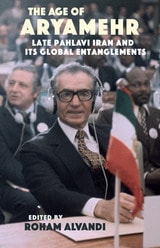
The Age of Aryamehr
Late Pahlavi Iran and Its Global EntanglementsEdited by Roham Alvandi
Gingko, 2025
The reign of the last Shah of Iran, Mohammad Reza Pahlavi (1941–79), marked the high point of Iran’s global interconnectedness. Never before had Iranians felt the impact of global political, social, economic, and cultural forces so intimately in their national and daily lives, nor had Iranian actors played such an important global role – on battlefields, barricades, and in board rooms far beyond Iran’s borders. Iranian intellectuals, technocrats, politicians, workers, artists, and students alike were influenced by the global ideas, movements, markets, and conflicts that they also helped to shape.
From the launch of the Shah’s White Revolution in 1963 to his overthrow in the popular revolution of 1978–79, Iran saw the longest period of sustained economic growth that the country had ever experienced. An entire generation took its cue from the shift from oil consumption to oil production to dream of, and aspire to, a modernized Iran, and the history of Iran in this period has tended to be presented as a prologue to the revolution. Those histories usually locate the political, social, and cultural origins of the revolution firmly within a national context, into which global actors intruded as Iranian actors retreated. While engaging with that national narrative, this volume is concerned with Iran’s place in the global history of the 1960s and ’70s. It examines and highlights the transnational threads that connected Pahlavi Iran to the world, from global traffic in modern art and narcotics to the embrace of American social science by Iranian technocrats and the encounter of European intellectuals with the Iranian Revolution.
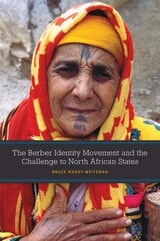
The Berber Identity Movement and the Challenge to North African States
By Bruce Maddy-Weitzman
University of Texas Press, 2011
Like many indigenous groups that have endured centuries of subordination, the Berber/Amazigh peoples of North Africa are demanding linguistic and cultural recognition and the redressing of injustices. Indeed, the movement seeks nothing less than a refashioning of the identity of North African states, a rewriting of their history, and a fundamental change in the basis of collective life. In so doing, it poses a challenge to the existing political and sociocultural orders in Morocco and Algeria, while serving as an important counterpoint to the oppositionist Islamist current.
This is the first book-length study to analyze the rise of the modern ethnocultural Berber/Amazigh movement in North Africa and the Berber diaspora. Bruce Maddy-Weitzman begins by tracing North African history from the perspective of its indigenous Berber inhabitants and their interactions with more powerful societies, from Hellenic and Roman times, through a millennium of Islam, to the era of Western colonialism. He then concentrates on the marginalization and eventual reemergence of the Berber question in independent Algeria and Morocco, against a background of the growing crisis of regime legitimacy in each country. His investigation illuminates many issues, including the fashioning of official national narratives and policies aimed at subordinating Berbers in an Arab nationalist and Islamic-centered universe; the emergence of a counter-movement promoting an expansive Berber "imagining" that emphasizes the rights of minority groups and indigenous peoples; and the international aspects of modern Berberism.
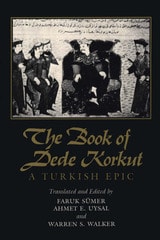
The Book of Dede Korkut
A Turkish EpicTranslated and edited by Faruk Sümer, Ahmet E. Uysal, and Warren S. Walker
University of Texas Press, 1972
One of the oldest surviving pieces of Turkish literature, The Book of Dede Korkut can be traced to tenth-century origins. Now considered the national epic of Turkey, it is the heritage of the ancient Oghuz Turks and was composed as they migrated westward from their homeland in Central Asia to the Middle East, eventually to settle in Anatolia. Who its primary creator was no one knows, the titular bard, Dede Korkut, being more a symbol of Turkish minstrelsy than a verifiable author. The songs and tales of countless minstrels lay behind The Book of Dede Korkut, and in its oral form the epic was undoubtedly subject to frequent improvisation by individual performers. Partly in prose, partly in verse, these legends were sung or chanted in the courts and camps of political and military leaders. Even after they had been recorded in written form, they remained part of an oral tradition.
The present edition is the first complete text in English. The translators provide an excellent introduction to the language and background of the legends as well as a history of Dede Korkut scholarship. These outstanding tales will be of interest to all students of world mythology and folklore.
The Cat Who Taught Me How to Fly
An Arab Prison NovelHashem Gharaibeh
Michigan State University Press, 2017
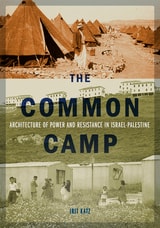
The Common Camp
Architecture of Power and Resistance in Israel–PalestineIrit Katz
University of Minnesota Press, 2022
Seeing the camp as a persistent political instrument in Israel–Palestine and beyond
The Common Camp underscores the role of the camp as a spatial instrument employed for reshaping, controlling, and struggling over specific territories and populations. Focusing on the geopolitical complexity of Israel–Palestine and the dramatic changes it has experienced during the past century, this book explores the region’s extensive networks of camps and their existence as both a tool of colonial power and a makeshift space of resistance.
Examining various forms of camps devised by and for Zionist settlers, Palestinian refugees, asylum seekers, and other groups, Irit Katz demonstrates how the camp serves as a common thread in shaping lands and lives of subjects from across the political spectrum. Analyzing the architectural and political evolution of the camp as a modern instrument engaged by colonial and national powers (as well as those opposing them), Katz offers a unique perspective on the dynamics of Israel–Palestine, highlighting how spatial transience has become permanent in the ongoing story of this contested territory.
The Common Camp presents a novel approach to the concept of the camp, detailing its varied history as an apparatus used for population containment and territorial expansion as well as a space of everyday life and subversive political action. Bringing together a broad range of historical and ethnographic materials within the context of this singular yet versatile entity, the book locates the camp at the core of modern societies and how they change and transform.
The Culinary Crescent
A History of Middle Eastern CuisinePeter Heine
Gingko, 2018
In The Culinary Crescent: A History of Middle Eastern Cuisine, Peter Heine combines years of scholarship with a personal passion: his knowledge of the cookery traditions of the Umayyad, Abbasid, Ottoman, Safavid, and Mughal courts is matched only by his love for the tastes and smells produced by the contemporary cooking of these areas today. In addition to offering a fascinating history, Heine presents more than one hundred recipes—from the modest to the extravagant—with dishes ranging from those created by the “celebrity chefs” of the bygone Mughal era, up to gastronomically complex presentations of modern times.
Beautifully produced, designed for both reading and cooking, and lavishly illustrated in color throughout, The Culinary Crescent is sure to provide a delectable window in the history of food in the Middle East.
The Dune's Twisted Edge
Journeys in the LevantGabriel Levin
University of Chicago Press, 2012
The Fabric of Classical Islamic Culture
A Cognitivist ApproachHouari Touati
University of Chicago Press, 2027
A sweeping account of the evolution of early Islamic culture.
This book argues that early Islamic literature was influenced less by the Qur’an and more by the bureaucratic culture of the Diwan, the secular political system in place long before a written religious culture emerged. As Houari Touati explains, this secular Arab culture quickly outstripped written religious erudition: first, because of the diverse communities who participated in the scholarly networks of the empire; and second, because of the universalizing influence of the period’s Greco-Arabic translation movement. This process of cross-cultural fertilization, Touati recounts, flourished within Islam until the canonization of the Hadith (the official sayings, actions, and sanctions of Muhammad) began to disrupt this dynamic of interchange after the tenth century, without, however, managing to put a definitive end to it. The Fabric of Classical Islamic Culture is a wide-ranging, comparative account of the parallel development of secular and sacred culture that produced the modern Arabic world.
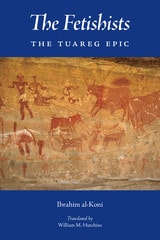
The Fetishists
By Ibrahim al-Koni, Translated by William M. Hutchins
University of Texas Press, 2018
The Fetishists, originally published in Arabic as Al Majus, is considered the masterpiece of Ibrahim al-Koni, one of the most prolific and important writers in Arabic today. In The Fetishists, Al-Koni explores what happens when a writer asks the novel to speak of and for the Sahara, when rival cultures clash, and when communities seek to build a utopia on Earth as individuals struggle between a desire for material well-being (represented by gold dust) and a need for spiritual meaning. As the story opens, Sultan Oragh of Timbuktu, who has already lost most of his power to Fetishist Bambara leaders of the forestlands, fears he will lose his only daughter, Tenere, as a human sacrifice to their god Amnay. The sultan sends Tenere to seek refuge with fellow Tuareg nomads in the plain. But even in their traditional, nomadic community, a competition rages between jihadi militant Islam; moderate Anhi Islam, which is the ancient Tuareg Law; and the cults of gold dust and of traditional African folk religions.
In this epic novel, Al-Koni blends Tuareg folklore and history with intense, fond descriptions of daily life in the desert, creating a mirror for life anywhere. Through its tragic rendering of a clash between the Tuareg and traditional African civilizations, the novel profoundly probes the contradictions of the human soul as it takes the reader on a unique spiritual adventure inside the Tuareg world.
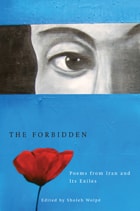
The Forbidden
Poems from Iran and its ExilesSholeh Wolpé
Michigan State University Press, 2012
During the 1979 revolution, Iranians from all walks of life, whether Muslim, Jewish, Christian, socialist, or atheist, fought side-by-side to end one tyrannical regime, only to find themselves in the clutches of another. When Khomeini came to power, freedom of the press was eliminated, religious tolerance disappeared, women’s rights narrowed to fit within a conservative interpretation of the Quran, and non-Islamic music and literature were banned. Poets, writers, and artists were driven deep underground and, in many cases, out of the country altogether. This moving anthology is a testament to both the centuries-old tradition of Persian poetry and the enduring will of the Iranian people to resist injustice. The poems selected for this collection represent the young, the old, and the ancient. They are written by poets who call or have called Iran home, many of whom have become part of a diverse and thriving diaspora.

The Islamic Utopia
The Illusion of Reform in Saudi ArabiaAndrew Hammond
Pluto Press, 2012
Will Saudi Arabia join the democratic wave in the Middle East? The uprisings and revolutions of 2011 do not, yet, seem to have affected the stability of the House of Saud, which remains secretive, highly repressive and propped up by the West.
The Islamic Utopia uses a range of sources including first-hand reporting and recently released WikiLeaks documents to examine Saudi Arabia in the decade after the 9/11 attacks, when King Abdullah’s 'reform' agenda took centre stage in public debate. It considers Saudi claims of 'exemption' from the democratic demands of the Arab Spring.
Andrew Hammond argues that for too long Western media and governments have accepted Saudi leaders' claims to be a buttress against jihadist Islam and that a new policy is needed towards the House of Saud.
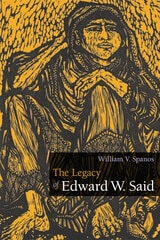
The Legacy of Edward W. Said
William V. Spanos
University of Illinois Press, 2008
With the untimely death of Edward W. Said in 2003, various academic and public intellectuals worldwide have begun to reassess the writings of this powerful oppositional intellectual. Figures on the neoconservative right have already begun to discredit Said’s work as that of a subversive intent on slandering America’s benign global image and undermining its global authority. On the left, a significant number of oppositional intellectuals are eager to counter this neoconservative vilification, proffering a Said who, in marked opposition to the “anti-humanism” of the great poststructuralist thinkers who were his contemporaries--Jacques Derrida, Jean-Francois Lyotard, Jacques Lacan, Louis Althusser, and Michel Foucault--reaffirms humanism and thus rejects poststructuralist theory.
In this provocative assessment of Edward Said’s lifework, William V. Spanos argues that Said’s lifelong anti-imperialist project is actually a fulfillment of the revolutionary possibilities of poststructuralist theory. Spanos examines Said, his legacy, and the various texts he wrote--including Orientalism,Culture and Imperialism, and Humanism and Democratic Criticism--that are now being considered for their lasting political impact.
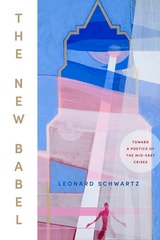
The New Babel
Toward a Poetics of the Mid-East CrisesLeonard Schwartz
University of Arkansas Press, 2016
The New Babel: Toward a Poetics of the Mid-East Crises evokes and investigates—from a Jewish American perspective and in the forms of poetry, essays, and interviews—the Israeli-Palestinian conflict, America’s involvement as both perpetrator and victim of events in the Middle East and Afghanistan, and the multiple ways that poetics can respond to political imperatives.
The poems range from the immediately lyrical to the experimental forms of the “Apple Anyone Sonnets” series, which relies heavily on the Arabic but has Shakespeare as its scaffolding.
In the essays, Schwartz calls on the power of poetry—and of some of the great poets in the Arabic, Jewish, and American traditions—to help rethink the battle lines of the contemporary Mid-East, with the Jewish philosopher Martin Buber looming large.
The interviews provide Schwartz’s discussions with Israeli poet and activist Aharon Shabtai, political philosopher Michael Hardt, and the late, great American poet Amiri Baraka.
In these creative, analytical, and conversational moments, Leonard Schwartz rethinks the battle lines of the contemporary Middle East and calls on the power of language as the essence of our humanity, endlessly fluid, but also the source of an intentional confusion there is a necessity to counter.
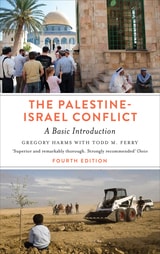
The Palestine-Israel Conflict
A Basic Introduction - Fourth EditionGregory Harms and Todd M. Ferry
Pluto Press, 2017
Perfect for both general readers and students, it offers a comprehensive yet lucid rendering of the conflict, setting it in historical context. This fourth edition brings us up to date with a new introduction, conclusion, and material covering recent events: Israel’s Operation Protective Edge, the Palestinian unity deal between Fatah and Hamas, and ongoing Palestinian resistance, America’s Middle East policy, and the election of Trump.
Cutting through layers of confused and inconsistent information, this new edition of The Palestine-Israel Conflict will clarify the ongoing struggle for all readers.
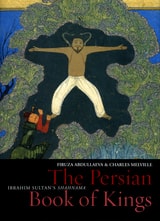
The Persian Book of Kings
Ibrahim Sultan's "Shahnama"Firuza Abdullaeva and Charles Melville
Bodleian Library Publishing, 2008
The Shahnama positions Iran at the heart of human civilization, and its sprawling and compelling narrative stretches from the beginning of time to the seventh-century takeover of the Persian Empire by Muslim Arabs. Ibrahim Sultan, governor of Shiraz in southern Iran from 1415 to 1435, commissioned an edition of the Shahnama that contained a lavish assortment of intricate original paintings. This version is now in the collection of the Bodleian Library, and The Persian Book of Kings explores this rare text in extensive detail.
The authors investigate the life of the poet Firdausi, unpack the literary context of the poem and its illuminations, and examine the royal court of Ibrahim Sultan for whom the manuscript was commissioned. The richly colored miniatures and illuminations spread through the text are given full exploration in this study, with examinations of both the artists’ techniques that influenced generations of illustrators and the artworks’ meanings. The book also features a helpful glossary of Persian terms and a list of the numerous characters that appear in the epic.
A gorgeously produced study of one of the great literary works of human history, The Persian Book of Kings offers a fascinating look at the myths and legends of an ancient culture.
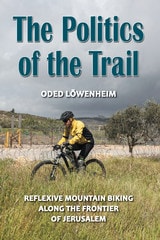
The Politics of the Trail
Reflexive Mountain Biking along the Frontier of JerusalemOded Löwenheim
University of Michigan Press, 2014
In The Politics of the Trail, Löwenheim confronts this tension by focusing on his encounters with three places along the trail: the separation fence between Israel and the Palestinians; the ruins of the Palestinian village Qalunya, demolished in 1948; and the trail connecting the largest 9/11 memorial site outside of the U.S. with a top-secret nuclear-proof bunker for the Israeli cabinet. He shares the stories of the people he meets along the way and considers how his own subjectivity is shaped by the landscape and culture of conflict. Moreover, he deconstructs, challenges, and resists the concepts and institutions that constitute such a culture and invites conversation about the idea of conflict as a culture.
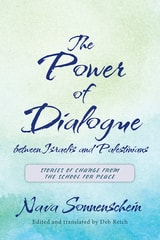
The Power of Dialogue between Israelis and Palestinians
Stories of Change from the School for PeaceSonnenschein, Nava
Rutgers University Press, 2019
The Privatisation of Israeli Security
Shir Hever
Pluto Press, 2017
The Quiet Violence of Empire
How USAID Waged Counterinsurgency in AfghanistanWesley Attewell
University of Minnesota Press, 2023
How the U.S. empire-state transformed post-1945 Afghanistan into a key site for reimagining development
Established in 1961 by President Kennedy, the United States Agency for International Development (USAID) is often viewed as an extension of the security state, playing a constant role on the ground in Afghanistan since the early sixties. The Quiet Violence of Empire traces USAID’s long and bloody history of development work in the region, revealing an empirically rich account of the transnational entanglements of imperialism and racial capitalism.
Wesley Attewell carefully analyzes three chronological moments of development as counterinsurgency in action: the Helmand Valley Project, the Soviet–Afghan conflict, and the post-9/11 occupation in Afghanistan. These case studies expose how USAID’s very public commitment to bringing seemingly inclusionary forms of self-help, technical assistance, and market development to Afghanistan has been undergirded by longer-standing infrastructures of race war and racial management. Attewell exposes how one of the net effects of USAID’s development mission to Afghanistan has been to constrain the life chances of Afghan beneficiaries while simultaneously diverting development capital back to U.S. contractors, deftly underscoring the notion of development as a form of slow violence.
The Quiet Violence of Empire asks the critical question: how might we refuse the ruse of USAID and its endlessly deferred promise of development? Thinking relationally across the fields of human geography, global studies, and critical ethnic studies, it uncovers the explicitly racial underpinnings of international development theory and praxis.
The Rubáiyát of Omar Khayyám
Illustrated Collector's EditionOmar Khayyám
Bodleian Library Publishing, 2014
A book of verses underneath the bough,
A jug of wine, a loaf of bread—and thou.
The Rubáiyát is one of the most popular poems of all time. A collection of quatrains composed in the eleventh century by Persian poet and philosopher Omar Khayyám, it was first published in English-language translation by Edward Fitzgerald in 1859. Since then, its melancholy tone and enigmatic philosophy of mourning the painful brevity of life while celebrating what pleasures we may find have made it an inspiration to many writers, including Matthew Arnold and Thomas Hardy. More recently, it has also been the subject of many music adaptations and films.
This collector’s edition of The Rubáiyát features stunning full-color illustrations created by René Bull in 1913 that interpret the poem’s brilliant sensual imagery and provide the perfect complement to Fitzgerald’s translation, which remains the most famous. Every page of poetry in this collector’s edition features unique art nouveau borders in gold, with each illustration framed in a gold border.
The Ruins of Ani
A Journey to Armenia's Medieval Capital and its LegacyKrikor Balakian
Rutgers University Press, 2019
From the tenth to the thirteenth centuries, the city of Ani was the jewel of the Armenian kingdom, renowned far and wide for its magnificent buildings. Known as the city of 1001 churches, Ani was a center for artistic innovation, and its architecture is a potential missing link between Byzantine and Gothic styles. By the fifteenth century, Ani was virtually abandoned, its stunning buildings left to crumble. Yet its ruins have remained a symbol of cultural accomplishment that looms large in the Armenian imagination.
The Ruins of Ani is a unique combination of history, art criticism, and travel memoir that takes readers on a thousand-year journey in search of past splendors. Today, Ani is a popular tourist site in Turkey, but the city has been falsified in its presentation by the Turkish government in order to erase Armenian history in the wake of the Armenian Genocide. This timely publication also raises questions about the preservation of major historic monuments in the face of post atrocity campaigns of cultural erasure.
Originally written by young priest Krikor Balakian in 1910, just a few years before the Armenian genocide, this book offers a powerful and poignant counterpart to Balakian’s acclaimed genocide memoir Armenian Golgotha. This new translation by the author’s great-nephew, Pulitzer Prize-winning poet Peter Balakian, eloquently renders the book’s vivid descriptions and lyrical prose into English. Including a new introduction that explores Ani’s continued relevance in the twenty-first century, The Ruins of Ani will give readers a new appreciation for this lost city’s status as a pinnacle of both Armenian civilization and human achievement.
The Scarecrow
By Ibrahim al-Koni, translated by William M. Hutchins
University of Texas Press, 2015
The Scarecrow is the final volume of Ibrahim al-Koni’s Oasis trilogy, which chronicles the founding, flourishing, and decline of a Saharan oasis. Fittingly, this continuation of a tale of greed and corruption opens with a meeting of the conspirators who assassinated the community’s leader at the end of the previous novel, The Puppet. They punished him for opposing the use of gold in business transactions—a symptom of a critical break with their nomadic past—and now they must search for a leader who shares their fetishistic love of gold. A desert retreat inspires the group to select a leader at random, but their “choice,” it appears, is not entirely human. This interloper from the spirit world proves a self-righteous despot, whose intolerance of humanity presages disaster for an oasis besieged by an international alliance. Though al-Koni has repeatedly stressed that he is not a political author, readers may see parallels not only to a former Libyan ruler but to other tyrants—past and present—who appear as hollow as a scarecrow.
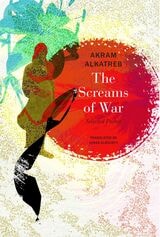
The Screams of War
Selected PoemsAkram Alkatreb
Seagull Books, 2024
“Those who believe in the currency of patience / Were burned out in the alleyway.”
The Screams of War is a visceral collection of poems that confront the realities of contemporary Syria. Akram Alkatreb’s verses capture the sense of the quotidian during war. His words, mere “murmurs engraved on stones,” long for and despair over an irrevocable past. At the heart of Alkatreb’s work lies a preoccupation with trauma and the profound burden of alienation that accompanies exile. Nascent memories are shrouded by the “scars of sleep,” and words find themselves nostalgic for destruction. The ubiquity of violence that Alkatreb channels into his poetry does not tolerate enclaves of innocence. The Screams of War is an unforgettable testament to the resilience of the human spirit and a stark reminder of the harsh realities faced by those trapped in conflict.
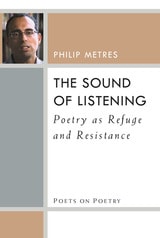
The Sound of Listening
Poetry as Refuge and ResistancePhilip Metres
University of Michigan Press, 2018
Philip Metres stakes a claim for the cultural work that poems can perform—from providing refuge to embodying resistance, from recovering silenced voices to building a more just world, in communities of solitude and solidarity. Gathering a decade of his writing on poetry, he widens our sense of poetry as a way of being in the world, proposing that poems can offer a permeability to marginalized voices and a shelter from the imperial noise and despair that can silence us. The Sound of Listening ranges between expansive surveys of the poetry of 9/11, Arab American poetry, documentary poetry, landscape poetry, installation poetry, and peace poetry; personal explorations of poets such as Adrienne Rich, Khalil Gibran, Lev Rubinstein, and Arseny Tarkovsky; and intimate dialogues with Randa Jarrar, Fady Joudah, and Micah Cavaleri, that illuminate Metres’s practice of listening in his 2015 work, Sand Opera.
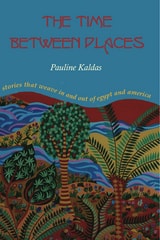
The Time between Places
Stories That Weave In and Out of Egypt and AmericaPauline Kaldas
University of Arkansas Press, 2010
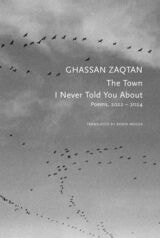
The Town I Never Told You About
Poems, 2022–2024Ghassan Zaqtan
Seagull Books, 2026
The Town I Never Told You About gathers poems written by celebrated Palestinian poet Ghassan Zaqtan between 2022 and 2024, at a time of intensifying conflict ravaging his homeland. Emerging from both memory and imagination, these poems trace the contours of hillscapes and villages, mapping a Palestine that is both historical and mythic, personal and collective. In Zaqtan’s hands, language threads its way through time—winding across landscapes marked by war, displacement, and enduring beauty. Each poem feels like part of a longer thread: a moment lifted from an ongoing inner epic, stitched into being with dreamlike clarity and haunting precision.
Long meditative pieces drift through shadow and sunlight, while other poems strike with the sharpness of remembered incident. This is poetry as pilgrimage—quiet, persistent, and full of echoes. A book that doesn’t so much end as continue resonating long after the last page is turned.
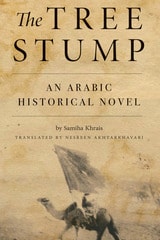
The Tree Stump
An Arabic Historical NovelSamiha Khrais
Michigan State University Press, 2017
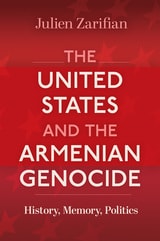
The United States and the Armenian Genocide
History, Memory, PoliticsJulien Zarifian
Rutgers University Press, 2024
This is the first book to examine how and why the United States refused to acknowledge the Armenian Genocide until the early 2020s. Although the American government expressed sympathy towards the plight of the Armenians in the 1910s and 1920s, historian Julien Zarifian explores how, from the 1960s, a set of geopolitical and institutional factors soon led the United States to adopt a policy of genocide non-recognition which it would cling to for over fifty years, through Republican and Democratic administrations alike. He describes the forces on each side of this issue: activists from the US Armenian diaspora and their allies, challenging Cold War statesmen worried about alienating NATO ally Turkey and dealing with a widespread American reluctance to directly confront the horrors of the past. Drawing from congressional records, rare newspapers, and interviews with lobbyists and decision-makers, he reveals how genocide recognition became such a complex, politically sensitive issue.
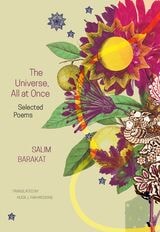
The Universe, All at Once
Selected PoemsSalim Barakat
Seagull Books, 2024
Salim Barakat, the captivating Kurdish-Syrian poet and novelist known for his mastery of Arabic style, is hailed as an enigmatic and intricate figure in contemporary Arabic literature. In The Universe, All at Once, he curates, in collaboration with translator Huda J. Fakhreddine, a selection from his later works, considering them the pinnacle of his poetic career. Drawn from pieces composed between 2021 and 2023, the poems in this collection vary from excerpts of an expansive book-length poem to concise, intense fragments. Fakhreddine expertly renders his writing in English, a courageous and praiseworthy attempt to challenge the barriers of the untranslatable.
This volume not only showcases the prolific author’s poetic evolution but also features a comprehensive interview with Barakat. Conducted by Fakhreddine, the interview delves into Barakat’s early influences, hobbies, talents, reader expectations, and reflections on displacement, childhood, and interpersonal connections. Together, The Universe, All at Once presents the best of Barakat’s latest poetry to his readers and allows invaluable insight into the writing processes and motivations of a visionary modern poet.
The West Bank Wall
Unmaking PalestineRay Dolphin
Pluto Press, 2006
Israel claims it is a security measure to protect Israeli citizens from terrorist attacks. Opponents point to the serious impact on the rights of Palestinians, depriving them of their land, mobility and access to health and educational services.
This book explores the Palestinian experience of the Wall in their international context. What are the real intentions behind the Israeli security argument? Is it a means of securing territory permanently through an illegal annexation of East Jerusalem? The West Bank Wall is a cutting account of the impact of the wall and how it affects prospects of a future peace in the Middle East.
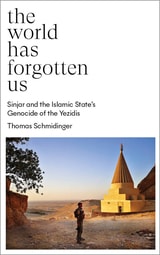
The World Has Forgotten Us
Sinjar and the Islamic State’s Genocide of the YezidisThomas Schmidinger
Pluto Press, 2022
The persecution of the Yezidis, a religious community originating in Upper Mesopotamia, has been ongoing since at least the 10th century. On 3 August 2014, Islamic State attacked the Yezidi community in Sinjar, Kurdistan. Thousands were enslaved or killed in this genocide, and 100,000 people fled to Mount Sinjar, permanently exiled from their homes.
Here, Thomas Schmidinger talks to the Yezidis in Iraq who tell the history of their people, why the genocide happened and how it affects their lives today. This is the first full account of these events, as told by the Yezidis in their own words, to be published in English.
The failure of the Kurdistan Peshmerga of the PDK in Iraq to protect the Yezidis is explored, as is the crucial support given by the Syrian-Kurdish YPG. This multi-faceted and important history brings the fight and trauma of the Yezidis back into focus, calling for the world to remember their struggle.
The Wound of the Name
Abdelkébir Khatibi and Matt Reeck
Northwestern University Press, 2025
Winner of the Global Humanities Translation Prize
Abdelkébir Khatibi’s The Wound of the Name (1974) is a classic work of North African critical theory that seeks to decolonize French ways of looking at and writing about Maghreb cultures. Writing at the height of French semiotics’ popularity and prestige, Khatibi proposes intersemiotics as a study of signs that pass through related but different cultural geographies, times, and expressions. Proverbs, tattoos, the rhetoric of lovemaking, calligraphy, and oral storytelling show a circulation of cultural signifiers over, across, and against borders. Signs are not stagnant; meaning is not fixed. Khatibi’s intent is in keeping with his emergent double critique, which aims to redefine not only European understanding of North African culture but also North African self-understanding, by freeing it from the anthropological mandates of the modern colonial era as well as from the retrenched theocratic models that were characteristic of North African postcolonial states.
Turkey and the Kurdish Peace Process
Actors, Issues, and ContextArin Y. Savran
University of Michigan Press, 2022
After the fall of the Ottoman Empire following World War I, the Kurds in the Middle East became the largest ethnic group in the region without a state of their own. Divided between Turkey, Syria, Iran, and Iraq, the Kurds have fought for their right to exist as a distinct national group, as well as for governing themselves. Turkey and the Kurdish Peace Process provides a historical and conceptual account of events in order to detail the key conditions, factors, and events that gave rise to the PKK (Kurdistan Workers’ Party) conflict in Turkey, as well as the conditions influencing the emergence, management, and collapse of the peace talks. Drawing from conflict resolution theories, this book investigates the transformation of key conflict actors and changes, over time, in their approach to the main conflict issues.
Moreover, Arin Y. Savran expands the concept of conflict transformation to encompass the ideological transformation of a movement as a result of a rigorous and deep intellectual epiphany on the part of the political leaders—a phenomenon that is unusual and little is known about, making it all the more relevant to include in future theoretical approaches in peace process studies. Methodologically, she rethinks conflict transformation/resolution approaches to focus on shifts in beliefs and relationships that occur prior to a peace process or the start of peace negotiations, when often much focus on peace processes is on the post-agreement phase. This book is among the first comprehensive, scholarly accounts to date (in the English language) that analyzes the Kurdish peace process.
Turkey's July 15th Coup
What Happened and WhyEdited by M. Hakan Yavuz and Bayram Balci
University of Utah Press, 2018
Utah Series in Middle East Studies
On July 15, 2016, a faction of the Turkish military attempted to overthrow the government of President Recep Tayyip Erdoğan. The Turkish government blamed the unsuccessful coup attempt on Gülenists, adherents of an Islamist movement led by Fethullah Gülen. They had helped elect Erdoğan and his AK Party, with the goal of bringing an ostensibly “soft” version of Islam into the secular Turkish government. In alliance with the AK Party, Gülenists steadfastly increased their representation in various government institutions, including the military, the police, and the judiciary. This volume focuses on the historical and sociopolitical contexts of the Gülen Movement’s origins and political ascendancy along with its possible role in the failed coup.
Editors Yavuz and Balcı are among the first international scholars to have studied the movement from its nascent stages in Turkey. The volume's contributors include scholars who have researched the movement in Turkey, Central Asia, and the Balkans. The result is a comprehensive, timely assessment of numerous dimensions of Gülenist activities, including its social and political networks and the institutions that supported the movement as it became a major economic and educational force in Turkey and elsewhere. This volume reflects exchanges among scholars who having studied the Gülenists, assembled to discuss how and why the movement became belligerent opponents of Erdoğan’s government, and it addresses questions such as how this major, still continuing disruption in Turkey’s politics will affect not only the future of the movement but also that of Turkey's embattled democracy as well.
Twenty Girls to Envy Me
Selected Poems of Orit GidaliBy Orit Gidali. Edited and translated by Marcela Sulak
University of Texas Press, 2016
This English-Hebrew book features three dozen poems by the extraordinary Israeli writer Orit Gidali (b. 1974), a unique voice among her contemporaries. Gidali’s work appears to focus on the domestic, but for her, the domestic sphere is the stage on which the drama of the geopolitical is reworked on an individual scale. The domestic is always inhabited by the Other, who in these deeply personal poems appears in various guises: a Palestinian mother, biblical figures, the poet’s own deceased mother, and her husband’s first wife. Gidali creates a space in her world to imaginatively reconfigure the current political impasses of the region through a focus on relationship and openness.
Gidali’s poems, beautifully captured in English by Marcela Sulak, present a world beset by danger and uncertainty, yet they nonetheless cry out for community, connection, cooperation, and coexistence.
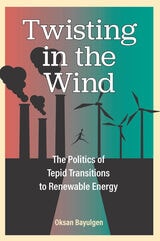
Twisting in the Wind
The Politics of Tepid Transitions to Renewable EnergyOksan Bayulgen
University of Michigan Press, 2022
Why do governments insist on fossil fuels? Why do renewables face uncertain and inconsistent legal and regulatory circumstances that slow their market-share growth against fossil fuels? Oksan Bayulgen studies the political determinants of partial energy reforms that result in tepid energy transitions and shifts the geographical focus from front-runner countries of energy innovation to developing countries, which have become the largest carbon emitters in the world. Her in-depth case study of energy policies in Turkey over the past two decades demonstrates that energy transitions are neither inevitable nor linear and that they are often initiated if and only when promoting renewables is in the interests of governing elites and stall when political dividends associated with energy rents change. This book contributes to the debates on the nature and pace of energy transitions by analyzing the power dynamics and political institutions under which energy reforms are initiated and implemented over time. This timely topic will be of interest to scholars, policymakers, energy investors, and anyone interested in environmental studies.
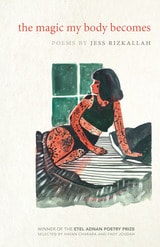
the magic my body becomes
Poems byJess Rizkallah
University of Arkansas Press, 2017
Winner, 2017 Etel Adnan Poetry Prize
In the magic my body becomes, Jess Rizkallah seeks a vernacular for the inescapable middle ground of being Arab American—a space that she finds, at times, to be too Arab for America and too American for her Lebanese elders.
These poems freely assert gender, sexuality, and religious beliefs while at the same time respecting a generational divide: the younger’s privilege gained by the sacrifice of the older, the impossibility of separating what is wholly hers from what is hers secondhand.
In exploring family history, civil war, trauma, and Lebanon itself, Rizkallah draws from the spirits of canonical Arab and Middle Eastern poets. As a result of her conjuring, the reader feels these spirits begin to exorcise the grief of those who are still alive. Throughout, there is the body, a reclamation and pushback against cultures that simultaneously sexualize and shame women. And there is a softness as inherent as rage, a resisting of stereotypes that too often speak louder than the complexities of a resilient cultural identity.
The magic my body becomes is an exciting new book from an exciting young poet, a love letter to a people as well as a fist in the air.