Results by title
89 books match the query 'Mind & Body' and 23 start with t
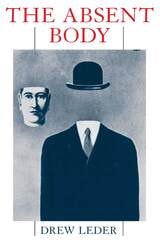
The Absent Body
Drew Leder
University of Chicago Press, 1990
In part 1, Leder explores a wide range of bodily functions with an eye to structures of concealment and alienation. He discusses not only perception and movement, skills and tools, but a variety of "bodies" that philosophers tend to overlook: the inner body with its anonymous rhythms; the sleeping body into which we nightly lapse; the prenatal body from which we first came to be. Leder thereby seeks to challenge "primacy of perception." In part 2, Leder shows how this phenomenology allows us to rethink traditional concepts of mind and body. Leder argues that Cartesian dualism exhibits an abiding power because it draws upon life-world experiences. Descartes' corpus is filled with disruptive bodies which can only be subdued by exercising "disembodied" reason. Leder explores the origins of this notion of reason as disembodied, focusing upon the hidden corporeality of language and thought. In a final chapter, Leder then proposes a new ethic of embodiment to carry us beyond Cartesianism.
This original, important, and accessible work uses examples from the author's medical training throughout. It will interest all those concerned with phenomenology, the philosophy of mind, or the Cartesian tradition; those working in the health care professions; and all those fascinated by the human body.
The Aesthetics of Meaning and Thought
The Bodily Roots of Philosophy, Science, Morality, and ArtMark Johnson
University of Chicago Press, 2018
This book gathers the best of philosopher Mark Johnson’s essays addressing questions of our embodiment as they deal with aesthetics—which, he argues, we need to rethink so that it takes into account the central role of body-based meaning. Viewed that way, the arts can give us profound insights into the processes of meaning making that underlie our conceptual systems and cultural practices. Johnson shows how our embodiment shapes our philosophy, science, morality, and art; what emerges is a view of humans as aesthetic, meaning-making creatures who draw on their deepest physical processes to make sense of the world around them.
The Arc of Love
How Our Romantic Lives Change over TimeAaron Ben-Ze'ev
University of Chicago Press, 2019
Aaron Ben-Ze’ev takes these experiences seriously, but he’s also here to remind us of the benefits of profound love—an emotion that can only develop with time. In The Arc of Love, he provides an in-depth, philosophical account of the experiences that arise in early, intense love—sexual passion, novelty, change—as well as the benefits of cultivating long-term, profound love—stability, development, calmness. Ben-Ze’ev analyzes the core of emotions many experience in early love and the challenges they encounter, and he offers pointers for weathering these challenges. Deploying the rigorous analysis of a philosopher, but writing clearly and in an often humorous style with an eye to lived experience, he takes on topics like compromise, commitment, polyamory, choosing a partner, online dating, and when to say “I love you.” Ultimately, Ben-Ze’ev assures us, while love is indeed best when fresh, if we tend to it carefully, it can become more delicious and nourishing even as time marches on.
The Body in the Mind
The Bodily Basis of Meaning, Imagination, and ReasonMark Johnson
University of Chicago Press, 1990
The Communicative Body
Studies in Communicative Philosophy, Politics, and SociologyJohn O'Neill
Northwestern University Press, 1989
The Concept of Mind
Gilbert Ryle
University of Chicago Press, 2003
The Erotic Phenomenon
Jean-Luc Marion
University of Chicago Press, 2006
While humanists have pondered the subject of love to the point of obsessiveness, philosophers have steadfastly ignored it. One might wonder whether the discipline of philosophy even recognizes love. The word philosophy means “love of wisdom,” but the absence of love from philosophical discourse is curiously glaring. So where did the love go? In The Erotic Phenomenon, Jean-Luc Marion asks this fundamental question of philosophy, while reviving inquiry into the concept of love itself.
Marion begins his profound and personal book with a critique of Descartes’ equation of the ego’s ability to doubt with the certainty that one exists—“I think, therefore I am”—arguing that this is worse than vain. We encounter being, he says, when we first experience love: I am loved, therefore I am; and this love is the reason I care whether I exist or not. This philosophical base allows Marion to probe several manifestations of love and its variations, including carnal excitement, self-hate, lying and perversion, fidelity, the generation of children, and the love of God. Throughout, Marion stresses that all erotic phenomena, including sentimentality, pornography, and even boasts about one’s sexual conquests, stem not from the ego as popularly understood but instead from love.
A thoroughly enlightening and captivating philosophical investigation of a strangely neglected subject, The Erotic Phenomenon is certain to initiate feverish new dialogue about the philosophical meanings of that most desirable and mysterious of all concepts—love.

The Examined Illness
A Philosopher's Confrontation with Deadly DiseaseDarrel Moellendorf
Intellect Books, 2026
A visceral personal memoir of being seriously unwell—and the consolations of philosophy during sickness.
Being a patient is part of being alive. Disease and serious illness often strike randomly, and when they do, we quickly become subject to the impersonal forces of biochemistry and pharmacology. We rarely think about sickness beforehand and are often totally unprepared for it when it happens. Suddenly, there we are, subject to a standard treatment protocol.
Darrel Noellendorf learned this by experience during a month confined to a solitary and sterile hospital room where he received a life-saving stem cell transplant. His room was somebody’s workspace, his schedule was somebody’s work routine, his immune system was systematically crushed, and his prognosis was out of his hands. There was no assurance that it would all work out.
Having spent thirty years teaching philosophy to college students, He was facing the biggest test of all—perhaps the final exam. These are his reflections before, during, and after his cancer treatment, written in real time. He writes, “My brain was sometimes addled by the chemotherapy that sapped my energy and destroyed my immune system, but I wrote out of the conviction that living well includes living well with disease, and eventually living well facing death.” This memoir expresses the conviction that the virtues of patience, courage, trust, and hope serve us well. A measure of good humor also can’t hurt.
The Forgotten Sense
Meditations on TouchPablo Maurette
University of Chicago Press, 2018
The Forgotten Sense gives touch its due, addressing it in multifarious ways through a series of six essays. Literary in feel, ambitious in conception, admirable in their range of reference and insight, these meditations address questions fundamental to the understanding of touch: What do we mean when we say that an artwork touches us? How does language affect our understanding of touch? Is the skin the deepest part of the human body? Can we philosophize about a kiss? To aid him in answering these questions, Pablo Maurette recruits an impressive roster of cultural figures from throughout history: Homer, Lucretius, Chrétien de Troyes, Melville, Sir Thomas Browne, Knausgaard, Michel Henry and many others help him unfurl the underestimated importance of the sense of touch and tactile experience.
The resulting book is essay writing at its best—exploratory, surprising, dazzling, a reading experience like no other. You will come away from it with a new appreciation of touch, and a new way of understanding our interactions with the world around us.
The Formation of Affectivity
A Christian ApproachFrancisco Insa
St. Augustine's Press, 2023
The present book aims to respond to this need by addressing the consonance and individuality in human nature, and the ways in which ordering in personality and psychology are
not inhibiting, but potentially liberating and influential. Francisco Insa draws from his medical and theological background, which includes both clinical and pastoral experience, to address all those responsible for the formation of others––including parents, teachers, priests, spiritual directors––and enables them to confront their roles as formators with greater insight and confidence. Insa's guidance through the human personality and its various expressions, the education of the character, growth in maturity, the particularity of each stage of the life cycle, sexuality and celibacy, chastity in the context of post-modern life, and mental illnesses is a landmark presentation of scientific rigor matched with practical application. As often as one says, "My situation is unique,"; the author here responds: "Yes, but special even more than you can express"; Insa is forthright about what can never be lost in human beings, but only recovered when the head and heart are aligned and formed properly.
For as much as this book may help the reader understand himself, it will also render him better understood by others. The Christian approach to the formation of affectivity, as Insa shows, is indispensable to deep and enduring human development, and it is often the only way to identify and mediate interior dissonance and confusion.
The Gold Leaf Lady and Other Parapsychological Investigations
Stephen E. Braude
University of Chicago Press, 2007
The Gospel of Happiness
How Secular Psychology Points to the Wisdom of Christian PracticeChristopher Kaczor
St. Augustine's Press, 2019
Just as Aristotelian metaphysics provided a new basis for the natural theology of Aquinas’s time, so too, positive psychology provides a basis for a natural moral theology in our own time. this book marshals the empirically verifiable findings of positive psychology that show the wisdom of the Christian tradition. Christian warnings about the dangers of greed, coveting a neighbor’s goods (social comparison), and pride find an empirical verification. Likewise, positive psychology vindicates the wisdom of Christian teaching on the importance of forgiveness, of gratitude, of humility, and of serving one’s neighbor. moreover, positive psychology also can be a service to Christian believers by helping them in their struggles with willpower, by providing new motivations for prayer, and by helping them identify their signature strengths. Finally, this book argues, in a variety of ways, that it is folly to think that even the best of psychology can serve as a replacement for Christianity.
The Healing Body
Creative Responses to Illness, Aging, and AfflictionDrew Leder
Northwestern University Press, 2024
As we grapple with the impacts of an aging population, the millions who struggle with chronic pain and illness, and the unknown number of COVID survivors dealing with long-term impairment, our individual and collective trust in our bodies is shaken. How to adapt? And how to live well, even when medical cure is unavailable? In The Healing Body: Creative Responses to Illness, Aging, and Affliction, philosopher and medical doctor Drew Leder shows how the phenomenology of lived embodiment makes available a variety of existential healing responses to bodily breakdown. Leder also turns to socially marginalized groups—people who have been incarcerated and those deemed “elderly”—to explore how individuals creatively cope with societal as well as physical challenges.
This book forwards current phenomenological research on the body, pain and suffering, disability, and aging. It deeply engages with the legacies of continental philosophy while also drawing insights from the traditions of Hinduism, Buddhism, and Taoism. The Healing Body is a uniquely creative and refreshingly innovative contribution to contemporary philosophy, demonstrating the importance of the philosophical method to the wider culture.
The Human Voice
Giorgio Agamben
Seagull Books, 2025
An inquiry into the origins of language and articulation, exploring how the transformation of the human voice shaped history, politics, and thought.
What does it mean to have a voice—and how does it shape what it means to be human? In The Human Voice, Giorgio Agamben embarks on a profound exploration of how the human voice transforms from mere sound into meaningful articulation, setting humans apart from the animal world. Tracing this transformation through ancient grammar and the history of writing, he unpacks the intricate relationship between voice and language, and the living being and the speaking subject.
Through a meticulous philosophical inquiry, Agamben reconstructs the mechanisms by which articulation turns expression into knowledge, revealing how the voice is the way we define humanity. This study reaches beyond linguistics, touching on politics and history, as it interrogates the enduring question of what—and who—is considered fully human.
The Matter of Disability
Materiality, Biopolitics, Crip AffectDavid T. Mitchell, Susan Antebi, and Sharon L. Snyder, Editors
University of Michigan Press, 2019
The Meaning of the Body
Aesthetics of Human UnderstandingMark Johnson
University of Chicago Press, 2007
In The Meaning of the Body, Mark Johnson continues his pioneering work on the exciting connections between cognitive science, language, and meaning first begun in the classic Metaphors We Live By. Johnson uses recent research into infant psychology to show how the body generates meaning even before self-consciousness has fully developed. From there he turns to cognitive neuroscience to further explore the bodily origins of meaning, thought, and language and examines the many dimensions of meaning—including images, qualities, emotions, and metaphors—that are all rooted in the body’s physical encounters with the world. Drawing on the psychology of art and pragmatist philosophy, Johnson argues that all of these aspects of meaning-making are fundamentally aesthetic. He concludes that the arts are the culmination of human attempts to find meaning and that studying the aesthetic dimensions of our experience is crucial to unlocking meaning's bodily sources.
The Middle Included
Logos in AristotleAygün, Ömer
Northwestern University Press, 2016
The Middle Included also explores human language in Aristotelian philosophy. After an account of acoustic phenomena and animal communication, Aygün argues that human language for Aristotle is the ability to understand and relay both first-hand experiences and non-first-hand experiences. This definition is key to understanding many core human experiences such as science, history, news media, education, sophistry, and indeed philosophy itself. Logos is thus never associated with any other animal nor with anything divine—it remains strictly and rigorously secular, humane, and yet full of the wonder.
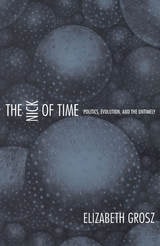
The Nick of Time
Politics, Evolution, and the UntimelyElizabeth Grosz
Duke University Press, 2004
Grosz develops her argument by juxtaposing the work of three major figures in Western thought: Charles Darwin, Friedrich Nietzsche, and Henri Bergson. She reveals that in theorizing time as an active, positive phenomenon with its own characteristics and specific effects, each of these thinkers had a profound effect on contemporary understandings of the body in relation to time. She shows how their allied concepts of life, evolution, and becoming are manifest in the work of Gilles Deleuze and Luce Irigaray. Throughout The Nick of Time, Grosz emphasizes the political and cultural imperative to fundamentally rethink time: the more clearly we understand our temporal location as beings straddling the past and the future without the security of a stable and abiding present, the more transformation becomes conceivable.
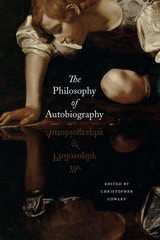
The Philosophy of Autobiography
Edited by Christopher Cowley
University of Chicago Press, 2015
Cowley and his contributors show that while philosophers have seemed uninterested in autobiography, they have actually long been preoccupied with many of its conceptual elements, issues such as the nature of the self, the problems of interpretation and understanding, the paradoxes of self-deception, and the meaning and narrative structure of human life. But rarely have philosophers brought these together into an overarching question about what it means to tell one’s life story or understand another’s. Tackling these questions, the contributors explore the relationship between autobiography and literature; between story-telling, knowledge, and agency; and between the past and the present, along the way engaging such issues as autobiographical ethics and the duty of writing. The result bridges long-standing debates and illuminates fascinating new philosophical and literary issues.
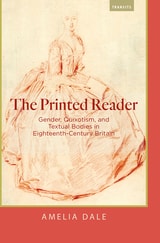
The Printed Reader
Gender, Quixotism, and Textual Bodies in Eighteenth-Century BritainAmelia Dale
Bucknell University Press, 2019
The Printed Reader explores the transformative power of reading in the eighteenth century, and how this was expressed in the fascination with Don Quixote and in a proliferation of narratives about quixotic readers, readers who attempt to reproduce and embody their readings. Through intersecting readings of quixotic narratives, including work by Charlotte Lennox, Laurence Sterne, George Colman, Richard Graves, and Elizabeth Hamilton, Amelia Dale argues that literature was envisaged as imprinting—most crucially, in gendered terms—the reader’s mind, character, and body. The Printed Reader brings together key debates concerning quixotic narratives, print culture, sensibility, empiricism, book history, and the material text, connecting developments in print technology to gendered conceptualizations of quixotism. Tracing the meanings of quixotic readers’ bodies, The Printed Reader claims the social and political text that is the quixotic reader is structured by the experiential, affective, and sexual resonances of imprinting and impressions.
Published by Bucknell University Press. Distributed worldwide by Rutgers University Press.
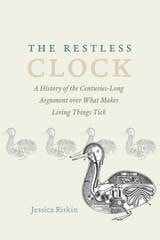
The Restless Clock
A History of the Centuries-Long Argument over What Makes Living Things TickJessica Riskin
University of Chicago Press, 2016
The Restless Clock examines the history of this principle, banning agency, in the life sciences. It also tells the story of dissenters embracing the opposite idea: that agency is essential to nature. The story begins with the automata of early modern Europe, as models for the new science of living things, and traces questions of science and agency through Descartes, Leibniz, Lamarck, and Darwin, among many others. Mechanist science, Jessica Riskin shows, had an associated theology: the argument from design, which found evidence for a designer in the mechanisms of nature. Rejecting such appeals to a supernatural God, the dissenters sought to naturalize agency rather than outsourcing it to a “divine engineer.” Their model cast living things not as passive but as active, self-making machines.
The conflict between passive- and active-mechanist approaches maintains a subterranean life in current science, shaping debates in fields such as evolutionary biology, cognitive science, and artificial intelligence. This history promises not only to inform such debates, but also our sense of the possibilities for what it means to engage in science—and even what it means to be alive.
The Still Arrow
Three Attempts to Annul TimeElvio Fachinelli
Seagull Books, 2021
Originally published in 1979, this book displays Fachinelli’s eclectic methodology. The Still Arrow goes against Freud’s attempt in Totem and Taboo to equate individual psycho-libidinal predicaments with those of whole societies. Yet, it argues that the difference between the two always remains one of degree, not of principle. The vexing problem of their relation is approached through an interrogation of time. From a psychoanalytic standpoint, individual obsessional neurosis is firmly connected to a repudiation of death. But, Fachinelli argues, comparable temporal strategies are also present at the group level, in disparate social and historical contexts, for instance, in the archaic transformation of the dead into ancestors and in what he names 'the fascist phenomenon'.
From this perspective, history is not just the sum of all possible histories but also of impossible ones. Fachinelli delineates an innovative knowledge of time which brings together apparently distant events into a characteristic series. This first English translation of a book by Fachinelli, The Still Arrow introduces a major critical European voice to the larger readership.
Thomas Aquinas on the Immateriality of the Human Intellect
Adam Wood
Catholic University of America Press, 2020