Results by title
56 books match the query 'Mississippian culture' and 12 start with t
Temples for Cahokia Lords
Preston Holder's 1955–1956 Excavations of Kunnemann MoundTimothy R. Pauketat with contributions by John R. Bozell, Sandra L. Dunavan, and a foreword by John O'Shea
University of Michigan Press, 1993

The Archaeology of Everyday Life at Early Moundville
Gregory D. Wilson
University of Alabama Press, 2007
Complex Mississippian polities were neither developed nor sustained in a vacuum. A broad range of small-scale social groups played a variety of roles in the emergence of regionally organized political hierarchies that governed large-scale ceremonial centers. Recent research has revealed the extent to which interactions among corporately organized clans led to the development, success, and collapse of Moundville. These insights into Moundville’s social complexity are based primarily on the study of monumental architecture and mortuary ceremonialism. Less is known about how everyday domestic practices produced and were produced by broader networks of power and inequality in the region.
Wilson’s research addresses this gap in our understanding by analyzing and interpreting large-scale architectural and ceramic data sets from domestic contexts. This study has revealed that the early Mississippian Moundville community consisted of numerous spatially discrete multi-household groups, similar to ethnohistorically described kin groups from the southeastern United States. Hosting feasts, dances, and other ceremonial events were important strategies by which elite groups created social debts and legitimized their positions of authority. Non-elite groups, on the other hand, maintained considerable economic and ritual autonomy through diversified production activities, risk sharing, and household ceremonialism. Organizational changes in Moundville’s residential occupation highlight the different ways kin groups defined and redefined their corporate status and identities over the long term.
The Archaeology of Town Creek
Edmond A. Boudreaux III
University of Alabama Press, 2007
The sequence of change for public architecture during the Mississippian period may reflect a centralization of political power through time. In the research presented here, some of the community-level assumptions attributed to the appearance of Mississippian mounds are tested against the archaeological record of the Town Creek site—the remains of a town located on the northeastern edge of the Mississippian culture area. In particular, the archaeological record of Town Creek is used to test the idea that the appearance of Mississippian platform mounds was accompanied by the centralization of political authority in the hands of a powerful chief.
A compelling argument has been made that mounds were the seats and symbols of political power within Mississippian societies. While platform mounds have been a part of Southeastern Native American communities since at least 100 B.C., around A.D. 400 leaders in some communities began to place their houses on top of earthen mounds—an act that has been interpreted as an attempt to legitimize personal authority by a community leader through the appropriation of a powerful, traditional, community-oriented symbol. Platform mounds at a number of sites were preceded by a distinctive type of building called an earthlodge—a structure with earth-embanked walls and an entrance indicated by short, parallel wall trenches. Earthlodges in the Southeast have been interpreted as places where a council of community leaders came together to make decisions based on consensus. In contrast to the more inclusive function proposed for premound earthlodges, it has been argued that access to the buildings on top of Mississippian platform mounds was limited to a much smaller subset of the community. If this was the case and if ground-level earthlodges were more accessible than mound-summit structures, then access to leaders and leadership may have decreased through time.
Excavations at the Town Creek archaeological site have shown that the public architecture there follows the earthlodge-to-platform mound sequence that is well known across the South Appalachian subarea of the Mississippian world. The clear changes in public architecture coupled with the extensive exposure of the site's domestic sphere make Town Creek an excellent case study for examining the relationship among changes in public architecture and leadership within a Mississippian society.
The Ascent of Chiefs
Cahokia and Mississippian Politics in Native North AmericaTimothy R. Pauketat
University of Alabama Press, 1994
Considering Cahokia in terms of class struggle, Pauketat claims that the political consolidation in this region of the Mississippi Valley happened quite suddenly, around A.D. 1000, after which the lords of Cahokia innovated strategies to preserve their power and ultimately emerged as divine chiefs. The new ideas and new data in this volume will invigorate the debate surrounding one of the most important developments in North American prehistory.
The Biological and Social Analyses of a Mississippian Cemetery from Southeast Missouri
The Turner Site, 23BU21AThomas K. Black, III
University of Michigan Press, 1979
The Chattahoochee Chiefdoms
John H. Blitz and Karl G. Lorenz
University of Alabama Press, 2006
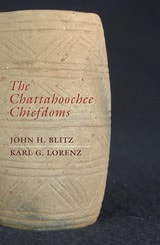
As objects from the mounds were unearthed, occasionally illustrated and discussed in print, attention became focused on the aesthetic qualities of the artifacts, the origins of the remains, and the possible relationship to the Creek Indians. Beginning in the 20th century, new concerns emerged as the developing science of archaeology was introduced to the region. As many of the sites became threatened or destroyed by reservoir construction, trained archaeologists initiated extensive excavations of the mounds. Although classification of artifacts and sites into a chronological progression of cultures was the main objective of this effort, a second concern, sometimes more latent than manifest, was the reconstruction of a past way of life. Archaeologists hoped to achieve a better understanding of the sociopolitical organization of the peoples who built the mounds and of how those organizations changed through time.
Contemporary archaeologists, while in agreement on many aspects of the ancient cultures, debate the causes, forms, and degrees of sociopolitical complexity in the ancient Southeast. Do the mounds mark the capitals of political territories? If so, what was the scale and scope of these ancient “provinces”? What manner of society constructed the mound settlements? What was the sociopolitical organization of these long-dead populations? How can archaeologists answer such queries with the mute and sometimes ordinary materials with which they work: pottery, stone tools, organic residues, and the strata of remnant settlements, buildings, and mounds?

The Mississippian Emergence
Bruce D. Smith
University of Alabama Press, 2007
The Mound Builders
Robert Silverberg
Ohio University Press, 1986
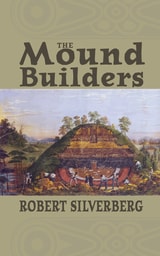
In Illinois, the one-hundred-foot Cahokia Mound spreads impressively across sixteen acres, and as many as ten thousand more mounds dot the Ohio River Valley alone. The Mound Builders traces the speculation surrounding these monuments and the scientific excavations which uncovered the history and culture of the ancient Americans who built them.
The mounds were constructed for religious and secular purposes some time between 1000 B.C. and 1000 A.D., and they have prompted curiosity and speculation from very early times. European settlers found them evidence of some ancient and glorious people. Even as eminent an American as Thomas Jefferson joined the controversy, though his conclusions—that the mounds were actually cemeteries of ancient Indians—remained unpopular for nearly a century.
Only in the late 19th century, as Smithsonian Institution investigators developed careful methodologies and reliable records, did the period of scientific investigation of the mounds and their builders begin. Silverberg follows these excavations and then recounts the story they revealed of the origins, development, and demise of the mound builder culture.
The Moundville Expeditions of Clarence Bloomfield Moore
Clarence Bloomfield MooreClarence Bloomfield Moore, edited and introduced by Vernon James Knight, Jr.
University of Alabama Press, 1996
The two works reprinted in this volume represent the pinnacle of the career of one of the most remarkable American archaeologists of the early 20th century, Clarence Bloomfield Moore.
Moore's Certain Aboriginal Remains of the Black Warrior River (1905) and Moundville Revisited (1907) brought the Moundville site in Alabama to the attention of the scholarly world in dramatic fashion by offering a splendid photographic display and expert commentary on its artifactual richness. Moore was the leading southeastern specialist of his day and the most prolific excavator of southern sites during the early part of the 20th century. Today Moore gives the impression of having been everywhere, having excavated everything, and having published on all of it. Moundville Expeditions contains facsimile reprints of these two classic works, along with a new scholarly introduction by one of the leading authorities on the Moundville archaeological site. Once again these rare materials on Moundville are available both for scholars and for a general audience.

The Savannah River Chiefdoms
Political Change in the Late Prehistoric SoutheastDavid G. Anderson
University of Alabama Press, 1994
This volume explores political change in chiefdoms, specifically how complex chiefdoms emerge and collapse, and how this process—called cycling—can be examined using archaeological, ethnohistoric, paleoclimatic, paleosubsistence, and physical anthropological data. The focus for the research is the prehistoric and initial contact-era Mississippian chiefdoms of the Southeastern United States, specifically the societies occupying the Savannah River basin from ca. A.D. 1000 to 1600. This regional focus and the multidisciplinary nature of the investigation provide a solid introduction to the Southeastern Mississippian archaeological record and the study of cultural evolution in general.
The Snodgrass Site of the Powers Phase of Southeast Missouri
James E. Price and James B. Griffin
University of Michigan Press, 1979
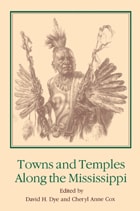
Towns and Temples Along the Mississippi
Edited by David H. Dye and Cheryl Anne Cox
University of Alabama Press, 1990
A Dan Josselyn Memorial Publication
Discover the stories, structures, and spirit that shaped life along America’s greatest river.
Specialists from archaeology, ethnohistory, physical anthropology, and cultural anthropology bring their varied points of view to this subject in an attempt to answer basic questions about the nature and extent of social change within the time period. The scholars' overriding concerns include presentation of a scientifically accurate depiction of the native cultures in the Central Mississippi Valley prior and immediately subsequent to European contact and the need to document the ensuing social and biological changes that eventually led to the widespread depopulation and cultural reorientation. Their findings lead to three basic hypotheses that will focus the scholarly research for decades to come.
Contributors include:
George J. Armelagos, Ian W. Brown, Chester B. DePratter, George F. Fielder, Jr., James B. Griffin, M. Cassandra Hill, Michael P. Hoffman, Charles Hudson, R. Barry Lewis, Dan F. Morse, Phyllis A. Morse, Mary Lucas Powell, Cynthia R. Price, James F. Price, Gerald P. Smith, Marvin T. Smith, and Stephen Williams