Results by title
618 books match the query 'Motion pictures' and 104 start with t

Taking Place
Location and the Moving ImageJohn David Rhodes
University of Minnesota Press, 2011
Taking Place argues that the relation between geographical location and the moving image is fundamental and that place grounds our experience of film and media. Its original essays analyze film, television, video, and installation art from diverse national and transnational contexts to rethink both the study of moving images and the theorization of place. Through its unprecedented—and at times even obsessive— attention to actual places, this volume traces the tensions between the global and the local, the universal and the particular, that inhere in contemporary debates on global cinema, television, art, and media.
Contributors: Rosalind Galt, U of Sussex; Frances Guerin, U of Kent; Ji-hoon Kim; Hugh S. Manon, Clark U; Ara Osterweil, McGill U; Brian Price, U of Toronto; Linda Robinson, U of Wisconsin–Whitewater; Michael Siegel; Noa Steimatsky, U of Chicago; Meghan Sutherland, U of Toronto; Mark W. Turner, Kings College London; Aurora Wallace, New York U; Charles Wolfe, U of California, Santa Barbara.
Teenagers And Teenpics
Juvenilization Of American MoviesThomas Doherty
Temple University Press, 2002
That Was the Wild East
Film Culture, Unification, and the "New" GermanyLeonie Naughton
University of Michigan Press, 2002
The Academy and the Award
The Coming of Age of Oscar and the Academy of Motion Picture Arts and SciencesBruce Davis
Brandeis University Press, 2026
For all the near-fanatic attention brought each year to the Academy Awards, the organization that dispenses those awards—the Academy of Motion Picture Arts and Sciences—has yet to be understood. To date, no one has ever produced a thorough account of the Academy’s birth and its awkward adolescence, and the few reports on those periods from outside the organization have always had a glancing, cursory quality. Yet the story of the Academy’s creation and development is a critical piece of Hollywood’s history.
Now that story is finally being told. Bruce Davis, executive director of the Academy for over twenty years, was given unprecedented access to its archives, and the result is a revealing and compelling story of the men and women, famous and infamous, who shaped one of the best-known organizations in the world. Davis writes about the Academy with an intimate view of its workings, its awards, and its world-famous membership. Thorough and long overdue, The Academy and the Award fills a crucial gap in Hollywood history. Available now for the first time in paperback.

The Alexander Medvedkin Reader
Alexander Medvedkin
University of Chicago Press, 2016
Although he was a dedicated Communist, Medvedkin’s satirical approach and social critiques ultimately led to his suppression by the Soviet regime. State institutions held back or marginalized his work, and for many years, his films were assumed to have been lost or destroyed. These texts, many assembled for this volume by Medvedkin himself, document for the first time his considerable achievements, experiments in film and theater, and attempts to develop satire as a major Soviet film genre. Through scripts, letters, autobiographical writings, and more, we see a Medvedkin supported and admired by figures like Eisenstein, Dovzhenko, and Maxim Gorky.
The Apartment Plot
Urban Living in American Film and Popular Culture, 1945 to 1975Pamela Robertson Wojcik
Duke University Press, 2010
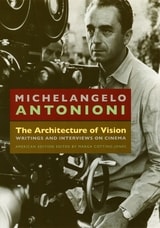
The Architecture of Vision
Writings and Interviews on CinemaMichelangelo Antonioni
University of Chicago Press, 2007
Through autobiographical sketches, theoretical essays, interviews, and conversations with such luminaries as Jean-Luc Godard and Alberto Moravia, this compelling volume explores the director’s unique brand of narrative-defying cinema as well as the motivations and anxieties of the man behind the camera.
“The Architecture of Vision provides a filmmaker’s absorbing reflections and insights on his career. . . . Antonioni’s comments . . . deepen and humanize a sometimes cerebral book.”—Publishers Weekly
“[Antonioni’s] erudition is astonishing . . . few of his peers can match his verbal articulateness.”—Film Quarterly
“This valuable resource offers entrée to material difficult to gain access to under other circumstances.”—Library Journal
The Attractions of the Moving Image
Essays on History, Theory, and the Avant-GardeTom Gunning
University of Chicago Press, 2025
Tom Gunning is the author of multiple books and nearly two hundred essays that have defined the field of cinema and media studies. His works have transformed our understanding of early cinema and the American avant-garde and reset the terms of many central debates in film and media history and theory. His 1986 essay “The Cinema of Attractions” is among the most cited essays on film ever published. Gunning’s writings articulate a distinctive and powerful model for thinking about cinema’s history and likely future, addressing the full range of moving-image media, from film to still photography to digital media. His discussions draw on stage melodrama and magic lantern shows, as well as criminology, world’s fairs, and Spiritualism, surveying the medium as a cultural phenomenon informed by the industrial and information ages, psychiatry, urban experience, discourses on art and aesthetics, and more.
This collection brings together twenty-six essays that showcase the depth and range of Gunning’s scholarship, including four that have never before been published. Together, they solidify Gunning’s place as a scholar who has transformed the way generations of scholars, archivists, critics, and artists think about cinema.
The Baroque Night
Spencer Golub
Northwestern University Press, 2018
The Baroque Night draws upon materials that have not previously been included in studies of either the baroque or film noir, while offering new perspectives on other, more familiar sources. Leibniz's concepts of the monad and compossibility provide organizing thought models, and death, fear, and mental illness cast their anamorphic images across surfaces that are deeper and closer than they at first appear. Key characters and situations in the book derive from the works of Alfred Hitchcock, Henri-Georges Clozot, Jean-Pierre Melville, Oscar Wilde, Georges Perec, Patricia Highsmith, William Shakespeare, Jean Racine, Pierre Corneille, and Arthur Conan Doyle, among many others.
This is virtuality and reality for the phobic, making it a fascinating and viable document of and episteme for the anxious age in which we (always) find ourselves living, though not yet fully alive. This performance of suspect evidence speaks to and in the ways we are organically inauthentic, the cause of our own causality and our own worst eyewitnesses to all that appears and disappears in space and time.
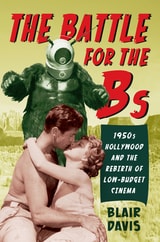
The Battle for the Bs
1950s Hollywood and the Rebirth of Low-Budget CinemaDavis, Blair
Rutgers University Press, 2012
The emergence of the double-bill in the 1930s created a divide between A-pictures and B-pictures as theaters typically screened packages featuring one of each. With the former considered more prestigious because of their larger budgets and more popular actors, the lower-budgeted Bs served largely as a support mechanism to A-films of the major studios—most of which also owned the theater chains in which movies were shown. When a 1948 U.S. Supreme Court antitrust ruling severed ownership of theaters from the studios, the B-movie soon became a different entity in the wake of profound changes to the corporate organization and production methods of the major Hollywood studios.
In The Battle for the Bs, Blair Davis analyzes how B-films were produced, distributed, and exhibited in the 1950s and demonstrates the possibilities that existed for low-budget filmmaking at a time when many in Hollywood had abandoned the Bs. Made by newly formed independent companies, 1950s B-movies took advantage of changing demographic patterns to fashion innovative marketing approaches. They established such genre cycles as science fiction and teen-oriented films (think Destination Moon and I Was a Teenage Werewolf) well before the major studios and also contributed to the emergence of the movement now known as underground cinema. Although frequently proving to be multimillion-dollar box-office draws by the end of the decade, the Bs existed in opposition to the cinematic mainstream in the 1950s and created a legacy that was passed on to independent filmmakers in the decades to come.
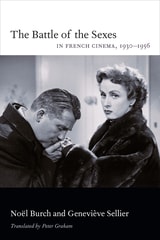
The Battle of the Sexes in French Cinema, 1930–1956
Noël Burch and Geneviève Sellier
Duke University Press, 2013
Citing more than 300 films and providing many in-depth interpretations, Burch and Sellier argue that films made in France between 1930 and 1956 created a national imaginary that equated masculinity with French identity. They track the changing representations of masculinity, explaining how the strong patriarch who saved fallen or troubled women from themselves in prewar films gave way to the impotent, unworthy, or incapable father figure of the Occupation. After the Liberation, the patriarch reemerged as protector and provider alongside assertive women who figured as threats not only to themselves but to society as a whole.
The Beautiful Skin
Football, Fantasy, and Cinematic Bodies in AfricaVlad Dima
Michigan State University Press, 2020
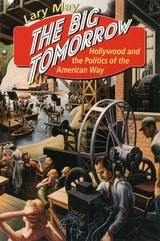
The Big Tomorrow
Hollywood and the Politics of the American WayLary May
University of Chicago Press, 2000
"The most exhilarating work of revisionist film history since Pauline Kael's Citizen Kane. . . . May's take on what movies once were (energizing, as opposed to enervating), and hence can become again, is enough to get you believing in them again as one of the regenerative forces America so sorely needs."—Jay Carr, Boston Globe
"A startling, revisionist history of Hollywood's impact on politics and American culture. . . . A convincing and important addition to American cultural criticism."—Publishers Weekly
"A controversial overview of 30 years of American film history; must reading for any serious student of the subject."—Choice
"A provocative social history of Hollywood's influence in American life from the 1930s to the 1950s. May argues persuasively that movies in the period offered a good deal of tough criticism of economic and social conditions in U.S. society. . . . May challenges us to engage in some serious rethinking about Hollywood's impact on American society in the middle of the twentieth century."—Robert Brent Toplin, American Historical Review
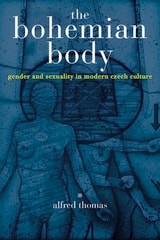
The Bohemian Body
Gender and Sexuality in Modern Czech CultureAlfred Thomas
University of Wisconsin Press, 2007
By re-examining the work of key Czech male and female writers and poets from the National Revival to the Velvet Revolution, Alfred Thomas exposes the tendency of Czech literary criticism to separate the political and the personal in modern Czech culture. He points instead to the complex interplay of the political and the personal across ethnic, cultural, and intellectual lines and within the works of such individual writers as Karel Hynek Mácha, Bozena Nemcová, and Rainer Maria Rilke, resulting in the emergence and evolution of a protean modern identity. The product is a seemingly paradoxical yet nuanced understanding of Czech culture (including literature, opera, and film), long overlooked or misunderstood by Western scholars.
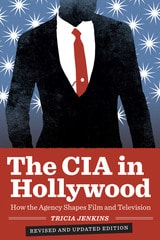
The CIA in Hollywood
How the Agency Shapes Film and TelevisionBy Tricia Jenkins
University of Texas Press, 2016
What’s your impression of the CIA? A bumbling agency that can’t protect its own spies? A rogue organization prone to covert operations and assassinations? Or a dedicated public service that advances the interests of the United States? Astute TV and movie viewers may have noticed that the CIA’s image in popular media has spanned this entire range, with a decided shift to more positive portrayals in recent years. But what very few people know is that the Central Intelligence Agency has been actively engaged in shaping the content of film and television, especially since it established an entertainment industry liaison program in the mid-1990s.
The CIA in Hollywood offers the first full-scale investigation of the relationship between the Agency and the film and television industries. Tricia Jenkins draws on numerous interviews with the CIA’s public affairs staff, operations officers, and historians, as well as with Hollywood technical consultants, producers, and screenwriters who have worked with the Agency, to uncover the nature of the CIA’s role in Hollywood. In particular, she delves into the Agency’s and its officers’ involvement in the production of The Agency, In the Company of Spies, Alias, The Recruit, The Sum of All Fears, Enemy of the State, Syriana, The Good Shepherd, and more. Her research reveals the significant influence that the CIA now wields in Hollywood and raises important and troubling questions about the ethics and legality of a government agency using popular media to manipulate its public image.
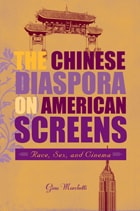
The Chinese Diaspora on American Screens
Race, Sex, and CinemaGina Marchetti
Temple University Press, 2012
The Chinese Diaspora on American Screens looks at the way in which issues of race and sexuality have become central concerns in cinema generated by and about Chinese communities in America after the mid-1990s. This companion volume to Marchetti's From Tian'anmen to Times Square looks specifically at the Chinese diaspora in relation to ethnic, racial, gender, and sexual identity as depicted in the cinema.
Examining films from the United States and Canada, as well as transnational co-productions, The Chinese Diaspora on American Screens includes analyses of films such as The Wedding Banquet and Double Happiness in addition to interviews with celebrated filmmakers such as Wayne Wang.
Marchetti also reflects on how Chinese identity is presented in a multitude of media forms, including commercial cinema, documentaries, experimental films, and hybrid digital media to offer a textured look at representations of the Chinese diasporic experience after Tian'anmen.
The Cinema of Economic Miracles
Visuality and Modernization in the Italian Art FilmAngelo Restivo
Duke University Press, 2002
Restivo studies numerous films of the period, focusing mainly on the works of Pier Paolo Pasolini and Michelangelo Antonioni. He finds that these auteurs’ films reworked the neorealist aesthetic developed in the 1940s and 1950s, explored issues brought to the fore by the subsequent consumer boom, and presaged developments central to both critical theory and the visual arts in the 1980s and 1990s. Drawing on the theories of Lacan, Zizek, Benjamin, Foucault, Jameson, and Deleuze, he shines new light on such films as Pasolini’s Accattone and Teorema, and Antonioni’s Red Desert and Blow-Up. Restivo’s model for understanding the relationship of the 1960s Italian art film to its cultural contexts also has implications that extend to the developing national cinemas of countries such as Brazil and Taiwan.
The Cinema of Economic Miracles will interest scholars and students in all areas of film studies, especially those studying theories of the image, national cinema theory, and Italian cinema, and to those engaged in poststructuralist theory, philosophy, and comparative literature.

The Cinema of Mika Kaurismäki
Transvergent Cinescapes, Emergent IdentitiesPietari Kääpä
Intellect Books, 2011
A PDF version of this book is available for free in open access via the OAPEN Library platform, www.oapen.org It has been made available under a Creative Commons Attribution 4.0 International Public License and is part of Knowledge Unlatched.
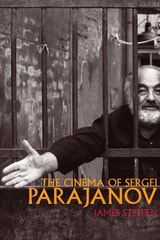
The Cinema of Sergei Parajanov
James Steffen
University of Wisconsin Press, 2013
The Cinema of Sergei Parajanov is the first English-language book on the director's films and the most comprehensive study of his work. James Steffen provides a detailed overview of Parajanov's artistic career: his identity as an Armenian in Georgia and its impact on his aesthetics; his early films in Ukraine; his international breakthrough in 1964 with Shadows of Forgotten Ancestors; his challenging 1969 masterpiece, The Color of Pomegranates, which was reedited against his wishes; his unrealized projects in the 1970s; and his eventual return to international prominence in the mid-to-late 1980s with The Legend of the Surami Fortress and Ashik-Kerib. Steffen also provides a rare, behind-the-scenes view of the Soviet film censorship process and tells the dramatic story of Parajanov's conflicts with the authorities, culminating in his 1973–77 arrest and imprisonment on charges related to homosexuality.
Ultimately, the figure of Parajanov offers a fascinating case study in the complicated dynamics of power, nationality, politics, ethnicity, sexuality, and culture in the republics of the former Soviet Union.
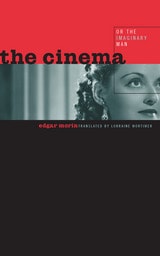
The Cinema, or The Imaginary Man
Edgar Morin
University of Minnesota Press, 2005
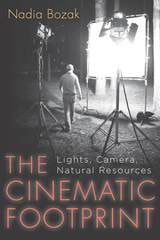
The Cinematic Footprint
Lights, Camera, Natural ResourcesBozak, Nadia
Rutgers University Press, 2011
Film is often used to represent the natural landscape and, increasingly, to communicate environmentalist messages. Yet behind even today’s “green” movies are ecologically unsustainable production, distribution, and consumption processes. Noting how seemingly immaterial moving images are supported by highly durable resource-dependent infrastructures, The Cinematic Footprint traces the history of how the “hydrocarbon imagination” has been central to the development of film as a medium.
Nadia Bozak’s innovative fusion of film studies and environmental studies makes provocative connections between the disappearance of material resources and the emergence of digital media—with examples ranging from early cinema to Dziga Vertov’s prescient eye, from Chris Marker’s analog experiments to the digital work of Agnès Varda, James Benning, and Zacharias Kunuk. Combining an analysis of cinema technology with a sensitive consideration of film aesthetics, The Cinematic Footprint offers a new perspective on moving images and the natural resources that sustain them.
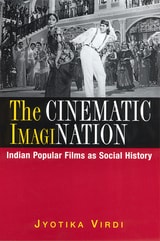
The Cinematic ImagiNation
Indian Popular Films as Social HistoryVirdi, Jyotika
Rutgers University Press, 2003
--Gina Marchetti, author of Romance and the "Yellow Peril": Race, Sex, and Discursive Strategies in Hollywood Fiction
India produces more films than any other country in the world, and these works are avidly consumed by non-Western cultures in Africa, Eastern Europe, the Middle East, and by the Indian communities in Australia, Britain, the Caribbean Islands, and North America. Jyotika Virdi focuses on how this dominant medium configures the "nation" in post-Independence Hindi cinema. She scrutinizes approximately thirty films that have appeared since 1950 and demonstrates how concepts of the nation form the center of this cinema's moral universe. As a kind of storytelling, Indian cinema provides a fascinating account of social history and cultural politics, with the family deployed as a symbol of the nation. Virdi demonstrates how the portrayal of the nation as a mythical community in Hindi films collapses under the weight of its own contradictions--irreconcilable differences that encompass gender, sexuality, family, class, and religious communities. Through these film narratives, the author traces transactions among the various constituencies that struggle, accommodate, coexist uneasily, or reconstitute each other over time, and, in the process, reveal the topography of postcolonial culture.
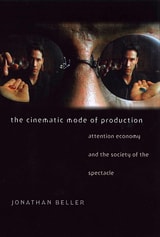
The Cinematic Mode of Production
Attention Economy and the Society of the SpectacleJonathan Beller
Dartmouth College Press, 2006
The Classical Mexican Cinema
The Poetics of the Exceptional Golden Age FilmsBy Charles Ramírez Berg
University of Texas Press, 2015
From the mid-1930s to the late 1950s, Mexican cinema became the most successful Latin American cinema and the leading Spanish-language film industry in the world. Many Cine de Oro (Golden Age cinema) films adhered to the dominant Hollywood model, but a small yet formidable filmmaking faction rejected Hollywood’s paradigm outright. Directors Fernando de Fuentes, Emilio Fernández, Luis Buñuel, Juan Bustillo Oro, Adolfo Best Maugard, and Julio Bracho sought to create a unique national cinema that, through the stories it told and the ways it told them, was wholly Mexican. The Classical Mexican Cinema traces the emergence and evolution of this Mexican cinematic aesthetic, a distinctive film form designed to express lo mexicano.
Charles Ramírez Berg begins by locating the classical style’s pre-cinematic roots in the work of popular Mexican artist José Guadalupe Posada at the turn of the twentieth century. He also looks at the dawning of Mexican classicism in the poetics of Enrique Rosas’ El Automóvil Gris, the crowning achievement of Mexico’s silent filmmaking era and the film that set the stage for the Golden Age films. Berg then analyzes mature examples of classical Mexican filmmaking by the predominant Golden Age auteurs of three successive decades. Drawing on neoformalism and neoauteurism within a cultural studies framework, he brilliantly reveals how the poetics of Classical Mexican Cinema deviated from the formal norms of the Golden Age to express a uniquely Mexican sensibility thematically, stylistically, and ideologically.
The Comedy Studies Reader
Edited by Nick Marx and Matt Sienkiewicz
University of Texas Press, 2018
The Cool and the Crazy
Pop Fifties CinemaStanfield, Peter
Rutgers University Press, 2015
The Culture of the Quake
The Great Kanto Earthquake and Taisho JapanAlex Bates
University of Michigan Press, 2015
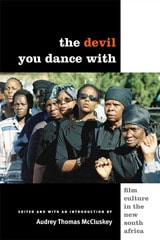
The Devil You Dance With
Film Culture in the New South AfricaEdited and with an Introduction by Audrey McCluskey
University of Illinois Press, 2008
This extraordinary volume presents twenty-five in-depth interviews with established and emerging South African filmmakers, collected and edited by Audrey Thomas McCluskey. The interviews capture the filmmakers’ spirit, energy, and ambition as they attempt to give birth to a film culture that reflects the heart and aspirations of their diverse and emergent nation. The collection includes a biographical profile of each filmmaker, as well an introductory essay by McCluskey, pointing to the themes, as well as creative differences and similarities, among the filmmakers.
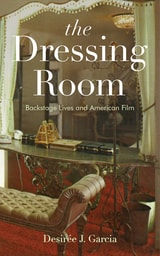
The Dressing Room
Backstage Lives and American FilmDesirée J. Garcia
Rutgers University Press, 2025
A recurrent and popular setting in American cinema, the dressing room has captured the imaginations of filmmakers and audiences for over a century. In The Dressing Room: Backstage Lives and American Film, the only book-length study of the space, author Desirée J. Garcia explores how dressing rooms are dynamic realms in which a diverse cast of performers are made and exposed. Garcia analyzes the backstage film, which spans film history, modes, and genre, to show how dressing rooms have been a useful space for filmmakers to examine the performativity of American life. From the Black maid to the wife and mother to the leading man, dressing rooms navigate, shape, and challenge society’s norms. The stakes are high in dressing rooms, Garcia argues, because they rehearse larger questions about identity and its performance, negotiating who can succeed and who cannot and on what terms.
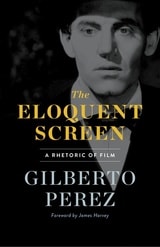
The Eloquent Screen
A Rhetoric of FilmGilberto Perez
University of Minnesota Press, 2019
A lifetime of cinematic writing culminates in this breathtaking statement on film’s unique ability to move us
Cinema is commonly hailed as “the universal language,” but how does it communicate so effortlessly across cultural and linguistic borders? In The Eloquent Screen, influential film critic Gilberto Perez makes a capstone statement on the powerful ways in which film acts on our minds and senses.
Drawing on a lifetime’s worth of viewing and re-viewing, Perez invokes a dizzying array of masters past and present—including Chaplin, Ford, Kiarostami, Eisenstein, Malick, Mizoguchi, Haneke, Hitchcock, and Godard—to explore the transaction between filmmaker and audience. He begins by explaining how film fits into the rhetorical tradition of persuasion and argumentation. Next, Perez explores how film embodies the central tropes of rhetoric––metaphor, metonymy, allegory, and synecdoche––and concludes with a thrilling account of cinema’s spectacular capacity to create relationships of identification with its audiences.
Although there have been several attempts to develop a poetics of film, there has been no sustained attempt to set forth a rhetoric of film—one that bridges aesthetics and audience. Grasping that challenge, The Eloquent Screen shows how cinema, as the consummate contemporary art form, establishes a thoroughly modern rhetoric in which different points of view are brought into clear focus.
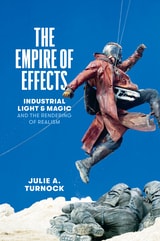
The Empire of Effects
Industrial Light and Magic and the Rendering of RealismJulie A. Turnock
University of Texas Press, 2022
2024 Finalist, Marshall McLuhan Outstanding Book Award, Media Ecology Association
How one company created the dominant aesthetic of digital realism.
Just about every major film now comes to us with an assist from digital effects. The results are obvious in superhero fantasies, yet dramas like Roma also rely on computer-generated imagery to enhance the verisimilitude of scenes. But the realism of digital effects is not actually true to life. It is a realism invented by Hollywood—by one company specifically: Industrial Light & Magic.
The Empire of Effects shows how the effects company known for the puppets and space battles of the original Star Wars went on to develop the dominant aesthetic of digital realism. Julie A. Turnock finds that ILM borrowed its technique from the New Hollywood of the 1970s, incorporating lens flares, wobbly camerawork, haphazard framing, and other cinematography that called attention to the person behind the camera. In the context of digital imagery, however, these aesthetic strategies had the opposite effect, heightening the sense of realism by calling on tropes suggesting the authenticity to which viewers were accustomed. ILM’s style, on display in the most successful films of the 1980s and beyond, was so convincing that other studios were forced to follow suit, and today, ILM is a victim of its own success, having fostered a cinematic monoculture in which it is but one player among many.
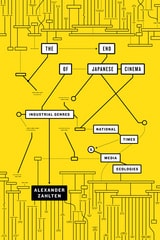
The End of Japanese Cinema
Industrial Genres, National Times, and Media EcologiesAlexander Zahlten
Duke University Press, 2017
A Study of the Weatherhead East Asian Institute, Columbia University
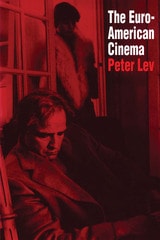
The Euro-American Cinema
By Peter Lev
University of Texas Press, 1993
With McDonalds in Moscow and Disneyland in Paris and Tokyo, American popular culture is spreading around the globe. Regional, national, and ethnic cultures are being powerfully affected by competition from American values and American popular forms. This literate and lively study explores the spread of American culture into international cinema as reflected by the collision and partial merger of two important styles of filmmaking: the Hollywood style of stars, genres, and action, and the European art film style of ambiguity, authorial commentary, and borrowings from other arts.
Peter Lev departs from the traditional approach of national cinema histories and discusses some of the blends, overlaps, and hegemonies that are typical of the world film industry of recent years. In Part One, he gives a historical and theoretical overview of what he terms the "Euro-American art film," which is characterized by prominent use of the English language, a European art film director, cast and crew from at least two countries, and a stylistic mixing of European art film and American entertainment.
The second part of Lev’s study examines in detail five examples of the Euro-American art film: Contempt (1963), Blow-Up (1966), The Canterbury Tales (1972), Paris, Texas (1983), and The Last Emperor (1987). These case studies reveal that the European art film has had a strong influence on world cinema and that many Euro-American films are truly cultural blends rather than abject takeovers by Hollywood cinema.
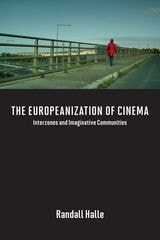
The Europeanization of Cinema
Interzones and Imaginative CommunitiesRandall Halle
University of Illinois Press, 2014
He focuses especially on films about borders, borderlands, and cultural zones as he traces the development of interzones from the inception of central European cinema to the avant-garde films of today. Throughout, he shows how cinema both reflects and engenders interzones that explore the important questions of Europe's social order: imperialism and nation-building in the late nineteenth and early twentieth centuries; "first contact" between former adversaries (such as East and West Germany) following World War II and the Cold War; and migration, neo-colonialism, and cultural imperialism in the twenty-first century.
Ultimately, Halle argues that today's cinema both produces and reflects imaginative communities. He demonstrates how, rather than simply erasing boundaries, the European Union instead fosters a network of cultural interzones that encourage cinematic exploration of the new Europe's processes and limits of connectivity, tolerance, and cooperation.
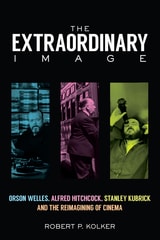
The Extraordinary Image
Orson Welles, Alfred Hitchcock, Stanley Kubrick, and the Reimagining of CinemaKolker, Robert P
Rutgers University Press, 2016
The Feature Film Distribution Deal
A Critical Analysis of the Single Most Important Film Industry AgreementJohn W. Cones
Southern Illinois University Press, 1997
John W. Cones, whose real goal is to stimulate a long-term film industry reform movement, shows how the financial control of the film industry in the hands of the major studios and distributors actually translates into creative control of the industry.
Cones discusses the pros and cons of the debate relating to the industry’s so-called net profit problem and the way in which the distribution deal plays an integral part in that problem. He then breaks down five major film finance/distribution scenarios, explaining various distribution deals and suggesting ways of negotiating distribution.
Critically examining the specific terms of the distribution deal itself, Cones covers gross receipts exclusions, distributor fees, and distribution expenses. He also investigates the various forms of interest, issues of production costs, matters of creative control, and general contractual provisions.
For handy reference, Cones includes an extensive checklist for negotiating any feature film distribution deal. The list deals with distribution fees, distribution expenses, interest, production costs, creative control issues, general contractual provisions, distributor commitments, and the limits of negotiating. His nine appendixes present a "Motion Picture Industry Overview," "Profit Participation Audit Firms," "ADI (Top 50) Market Rankings," an "AFMA Member List, 1992–1993," a "Production-Financing/Distribution Agreement," a "Negative Pickup Distribution Agreement," a "Distribution Rights Acquisition Agreement," a "Distribution Agreement (Rent-a-Distributor Deal)," and a "Foreign Distribution Agreement."
Cones wrote this book for independent producers, executive and associate producers and their representatives, directors, actors, screenwriters, members of talent guilds, distributors, and entertainment, antitrust, and securities attorneys. Securities issuers and dealers, investment bankers, and money finders, investors, and financiers of every sort also will be interested. In addition, Cones suggests and hopes that the book will interest "Congress, their research staff, government regulators at the Internal Revenue Service, the Securities and Exchange Commission, the Federal Trade Commission, and law enforcement officials such as the Los Angeles District Attorney and the U.S. Justice Department."
The Films of Bong Joon Ho
Nam Lee
Rutgers University Press, 2020
Bong Joon Ho won the Oscar® for Best Director for Parasite (2019), which also won Best Picture, the first foreign film to do so, and two other Academy Awards. Parasite was the first Korean film to win the Palme d’Or at Cannes. These achievements mark a new career peak for the director, who first achieved wide international acclaim with 2006’s monster movie The Host and whose forays into English-language film with Snowpiercer (2013) and Okja (2017) brought him further recognition.
As this timely book reveals, even as Bong Joon Ho has emerged as an internationally known director, his films still engage with distinctly Korean social and political contexts that may elude many Western viewers. The Films of Bong Joon Ho demonstrates how he hybridizes Hollywood conventions with local realities in order to create a cinema that foregrounds the absurd cultural anomie Koreans have experienced in tandem with their rapid economic development. Film critic and scholar Nam Lee explores how Bong subverts the structures of the genres he works within, from the crime thriller to the sci-fi film, in order to be truthful to Korean realities that often deny the reassurances of the happy Hollywood ending. With detailed readings of Bong’s films from Barking Dogs Never Bite (2000) through Parasite (2019), the book will give readers a new appreciation of this world-class cinematic talent.
The Flash of Capital
Film and Geopolitics in JapanEric Cazdyn
Duke University Press, 2002
Cazdyn focuses on three key moments of historical contradiction: colonialism, post-war reconstruction, and globalization. Considering great classics of Japanese film, documentaries, works of science fiction, animation, and pornography, he brings to light cinematic attempts to come to terms with the tensions inherent in each historical moment—tensions between the colonizer and the colonized, between the individual and the collective, and between the national and the transnational. Paying close attention to political context, Cazdyn shows how formal inventions in the realms of acting, film history and theory, thematics, documentary filmmaking, and adaptation articulate a struggle to solve implacable historical problems. This innovative work of cultural history and criticism offers explanations of historical change that challenge conventional distinctions between the aesthetic and the geopolitical.
The Future of Totality
Fredric Jameson and the Prospects of Critical TheoryNicholas Brown, Maria Elisa Cevasco, Fabio Akcelrud Durão, and Robert T. Tally Jr., editors
Duke University Press, 2026
The Future of an Illusion
Film, Feminism, and PsychoanalysisConstance Penley
University of Minnesota Press, 1989
The Future of an Illusion was first published in 1989. Minnesota Archive Editions uses digital technology to make long-unavailable books once again accessible, and are published unaltered from the original University of Minnesota Press editions.
The Future of an Illusion documents the pivotal role Constance Penley has played in the development of feminist film theory. Penley analyzes the primary movements that have shaped the field: the conjunction of feminism, film theory, and psychoanalysis, and the inherent debates surrounding the politics of women and representation. These debates center on the position of women in the classical Hollywood narrative, the construction of the spectator's desire in pornography and eroticism, and the implicitly male bias in psychoanalytically oriented film theory. Essential to anyone studying the sexual policies of representation, The Future of an Illusion ranges from avant-garde films to video, popular cinema, television, literature, and critical and cultural theory.
Constance Penley is associate professor of English and film studies at the University of Rochester. A co-editor of the journal Camera Obscura,she is the editor of Feminism and Film Theory.
The Great Movies III
Roger Ebert
University of Chicago Press, 2010
Roger Ebert has been writing film reviews for the Chicago Sun-Times for over four decades now and his biweekly essays on great movies have been appearing there since 1996. As Ebert noted in the introduction to the first collection of those pieces, “They are not the greatest films of all time, because all lists of great movies are a foolish attempt to codify works which must stand alone. But it’s fair to say: If you want to take a tour of the landmarks of the first century of cinema, start here.
Enter The Great Movies III, Ebert’s third collection of essays on the crème de la crème of the silver screen, each one a model of critical appreciation and a blend of love and analysis that will send readers back to the films with a fresh set of eyes and renewed enthusiasm—or maybe even lead to a first-time viewing. From The Godfather: Part II to Groundhog Day, from The Last Picture Show to Last Tango in Paris, the hundred pieces gathered here display a welcome balance between the familiar and the esoteric, spanning Hollywood blockbusters and hidden gems, independent works and foreign language films alike. Each essay draws on Ebert’s vast knowledge of the cinema, its fascinating history, and its breadth of techniques, introducing newcomers to some of the most exceptional movies ever made, while revealing new insights to connoisseurs as well.
Named the most powerful pundit in America by Forbes magazine, and a winner of the Pulitzer Prize, Roger Ebert is inarguably the most prominent and influential authority on the cinema today. The Great Movies III is sure to please his many fans and further enhance his reputation as America’s most respected—and trusted—film critic.
The Great Movies IV
Roger Ebert
University of Chicago Press, 2016
From films like The Cabinet of Caligari and Viridiana that have been considered canonical for decades to movies only recently recognized as masterpieces to Superman, The Big Lebowski, and Pink Floyd: The Wall, the pieces gathered here demonstrate the critical acumen seen in Ebert’s daily reviews and the more reflective and wide-ranging considerations that the longer format allowed him to offer. Ebert’s essays are joined here by an insightful foreword by film critic Matt Zoller Seitz, the current editor-in-chief of the official Roger Ebert website, and a touching introduction by Chaz Ebert.
A fitting capstone to a truly remarkable career, The Great Movies IV will introduce newcomers to some of the most exceptional movies ever made, while revealing new insights to connoisseurs as well.
The Heretical Archive
Digital Memory at the End of FilmDomietta Torlasco
University of Minnesota Press, 2013
The Heretical Archive examines the relationship between memory and creation in contemporary artworks that use digital technology while appropriating film materials. Domietta Torlasco argues that these digital films and multimedia installations radically transform our memory of cinema and our understanding of the archive. Indeed, such works define a notion of archiving not as the passive preservation of audiovisual signs but as an intervention and the creative rearticulation of cinema’s perceptual and political textures.
Connecting psychoanalysis, phenomenology, and feminist theory in innovative ways, Torlasco analyzes cutting-edge digital works that engage with the past of European cinema and visual culture, including video installations by Monica Bonvicini (Destroy She Said) and Pierre Huyghe (The Ellipsis), Agnès Varda’s film The Gleaners and I, Marco Poloni’s multimedia installation The Desert Room, and Chris Marker’s CD-ROM Immemory.
Torlasco’s central claim is that if the archives of psychoanalysis and cinema have long privileged the lineage that runs from Oedipus to Freud, the archives of the digital age—what she calls the “heretical archive”—can help us imagine an unruly, porous, multifaceted legacy, one in which marginal figures return to speak of lost life as much as of life that demands to be lived.
The Hollywood War Film
Critical Observations from World War I to IraqDaniel Binns
Intellect Books, 2017
Looking closely at films such as All Quiet on the Western Front, Full Metal Jacket, and The Hurt Locker, Binns reveals the commonalities in Hollywood films despite the distinct conflicts and eras they represent, and he shows how contemporary war films closely echo earlier films in their nationalistic and idealistic depictions. Offering a trenchant analysis of some of the most important war films from the past century, this book will be of interest to anyone who has been captivated by how film has dealt with one of humanity’s most difficult, but far too common, realities.
The Horse Who Drank the Sky
Film Experience Beyond Narrative and TheoryPomerance, Murray
Rutgers University Press, 2008
By looking at point of view, the gaze, the voice from nowhere, diegesis and its discontents, ideology, the system of the apparatus, invisible editing, and the technique of overlapping sound, he argues that it is often the minuscule or transitional moments in motion pictures that penetrate most deeply into viewers' experiences. In films that include Rebel Without a Cause, Dead Man, Chinatown, The Graduate, North by Northwest, Dinner at Eight, Jaws, M, Stage Fright, Saturday Night Fever, The Band Wagon, The Bourne Identity, and dozens more, Pomerance invokes complexities that many of the best of critics have rarely tackled and opens a revealing view of some of the most astonishing moments in cinema.
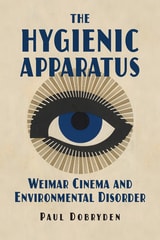
The Hygienic Apparatus
Weimar Cinema and Environmental DisorderPaul Dobryden
Northwestern University Press, 2022
Framing hygiene within the project of national reconstruction after World War I, The Hygienic Apparatus explores cinema’s material contexts alongside its representations of housework, urban space, traffic, pollution, disability, aging, and labor. Reformers worried about the health risks associated with moviegoing but later used film to popularize hygienic ideas, encouraging viewers to see the world and themselves in relation to public health objectives. Modernist architecture and design fashioned theaters into regenerative environments for fatigued spectators. Filmmakers like F. W. Murnau and Slatan Dudow, meanwhile, explored the aesthetic and political possibilities of dirt, contagion, intoxication, and disorder. Dobryden recovers a set of ecological and biopolitical concerns to show how the problem of environmental disorder fundamentally shaped cinema’s relationship to modernity. As accessible as it is persuasive, the book adds to a growing body of scholarship on biopolitics within German studies and reveals fresh ways of understanding the apparatus of Weimar cinema.
The Imaginary Geography of Hollywood Cinema 1960-2000
Christian Long
Intellect Books, 2017
A PDF version of this book is available for free in open access via the OAPEN Library platform, www.oapen.org It has been made available under a Creative Commons Attribution 4.0 International Public License and is part of Knowledge Unlatched.
The Immigrant Scene
Ethnic Amusements in New York, 1880–1920Sabine Haenni
University of Minnesota Press, 2008
Explores the relationship between immigrant and national culture
Yiddish melodramas about the tribulations of immigration. German plays about alpine tourism. Italian vaudeville performances. Rubbernecking tours of Chinatown. In the New York City of the late nineteenth and early twentieth centuries, these seemingly disparate leisure activities played similar roles: mediating the vast cultural, demographic, and social changes that were sweeping the nation’s largest city.
In The Immigrant Scene, Sabine Haenni reveals how theaters in New York created ethnic entertainment that shaped the culture of the United States in the early twentieth century. Considering the relationship between leisure and mass culture, The Immigrant Scene develops a new picture of the metropolis in which the movement of people, objects, and images on-screen and in the street helped residents negotiate the complexities of modern times. In analyzing how communities engaged with immigrant theaters and the nascent film culture in New York City, Haenni traces the ways in which performance and cinema provided virtual mobility—ways of navigating the socially complex metropolis—and influenced national ideas of immigration, culture, and diversity in surprising and lasting ways.
The Intelligence of a Machine
Jean Epstein
University of Minnesota Press, 2014
The advent of the cinema radically altered our comprehension of time, space, and reality. With his experience as a pioneering avant-garde filmmaker, Jean Epstein uses the universes created by the cinematograph to deconstruct our understanding of how time and space, reality and unreality, continuity and discontinuity, determinism and randomness function both inside and outside the cinema. Time, he says, should be regarded as the first, not the fourth, dimension—and the cinematograph allows us, for the first time, to manipulate it in directions and speeds of our choosing.
The theoretical work of Jean Epstein greatly influenced later generations of cinema philosophers, notably Gilles Deleuze and Jacques Rancière, but the bulk of his work remains unpublished. The Intelligence of a Machine, his first major title published in English, is one of the earliest philosophies of cinema.
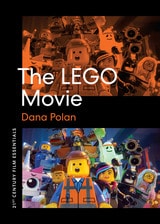
The LEGO Movie
By Dana Polan
University of Texas Press, 2020
What happens when we set out to understand LEGO not just as a physical object but as an idea, an icon of modernity, an image—maybe even a moving image? To what extent can the LEGO brick fit into the multimedia landscape of popular culture, especially film culture, today? Launching from these questions, Dana Polan traces LEGO from thing to film and asserts that The LEGO Movie is an exemplar of key directions in mainstream cinema, combining the visceral impact of effects and spectacle with ironic self-awareness and savvy critique of mass culture as it reaches for new heights of creativity.
Incorporating insights from conversations with producer Dan Lin and writer-directors Phil Lord and Chris Miller, Polan examines the production and reception of The LEGO Movie and closely analyzes the film within popular culture at large and in relation to LEGO as a toy and commodity. He identifies the film’s particular stylistic and narrative qualities, its grasp of and response to the culture industry, and what makes it a distinctive work of animation within the seeming omnipresence of animation in Hollywood, and reveals why the blockbuster film, in all its silliness and seriousness, stands apart as a divergent cultural work.