Results by title
405 books match the query 'Natural history' and 109 start with t
That Which Roots Us
Environmental Issues in the Pacific Northwest & BeyondMarion Dresner
University of Nevada Press, 2023
A work of natural and environmental history.
That Which Roots Us is a work of natural and environmental history that explores the origins of and resolutions to some of the United States’ environmental problems. Marion Dresner discusses the roots of Euro-American environmental exploitative action, starting with the environmental consequences of having treated Pacific Northwest forests as commodities. She shares her experiences visiting sites where animal-centered ice age culture changed to human-centered culture thousands of years ago with the advent of farming. The book explores the origins of the romantic philosophical movement, which arose out of the debilitating conditions of the industrial era. Those romantic attitudes toward nature inspired the twentieth-century preservation movement and America’s progressively modern conservation attitudes.
The book is centered around environmental issues in the Pacific Northwest, contrasting utilitarian views of nature with Native American practices of respect and reciprocity. The elements that make That Which Roots Us a truly unique and important contribution to environmental literature are the author’s personal recollections and interactions with the landscape. Ultimately, Dresner offers hope for a new stewardship of the land and a focus on science literacy and direct experience in the natural world as the most grounded way of knowing the planet.
The Annotated Malay Archipelago
Alfred Russell Wallace
National University of Singapore Press, 2014
This edition explains, updates and corrects the original text with an historical introduction and hundreds of explanatory notes. Wallace left hundreds of people, places, publications and species unidentified. He referred to most species only with the scientific name current at the time. Whenever available, the common names for species have been provided, and scientific names updated. The content of the book has never been thoroughly analysed and compared against other contemporary sources. It turns out that the book contains many errors. This includes not just incorrect dates and place names but some of the most remarkable anecdotes; for example, the dramatic claim that tigers "kill on an average a Chinaman every day" in Singapore or that a Dutch Governor General committed suicide by leaping from a waterfall on Celebes.
By correcting the text of the Malay Archipelago against Wallace's letters and notebooks and other contemporary sources and by enriching it with modern identifications this edition reveals Wallace's work as never before.
The Attention of a Traveller
Essays on William Bartram's "Travels" and LegacyEdited by Kathryn H. Braund
University of Alabama Press, 2022
An interdisciplinary reevaluation of William Bartram’s Travels, illuminating the natural, cultural, and intellectual landscapes of the eighteenth‑century Southeast through diverse scholarly lenses.
William Bartram, author of Travels through North and South Carolina, Georgia, East and West Florida, the Cherokee Country, the Extensive Territories of the Muscogulees, or Creek Confederacy, and the Country of the Chactaws, was colonial America’s first native born naturalist and artist, and the first author in the modern genre of writers who portrayed nature through personal experience as well as scientific observation. His book, first published in 1791, was based on his journeys through southern Indian nations and Britain’s southern colonies in the years just prior to the American Revolution and provides descriptions of the natural and cultural environments of what would soon become the American South. Scholars and general readers alike have long appreciated Bartram’s lush, vivid prose, his clarity of observation and evident wonder at the landscapes he traversed, and his engagement with the native nations whose lands he traveled through.
The Attention of a Traveller: Essays on William Bartram’s “Travels” and Legacy offers an interdisciplinary assessment of Bartram’s influence and evolving legacy, opening new avenues of research concerning the flora, fauna, and people connected to Bartram and his writings. Featuring 13 essays divided into five sections, contributors to the volume weave together scholarly perspectives from geology, art history, literary criticism, geography, and philosophy, alongside the more traditional Bartram-affiliated disciplines of biology and history. The collection concludes with a comprehensive treatment of the book as a material historical artifact.
The Bark River Chronicles
Stories from a Wisconsin WatershedMilton J. Bates
Wisconsin Historical Society Press, 2012
The Bark River valley in southeastern Wisconsin is a microcosm of the state's - indeed, of the Great Lakes region's - natural and human history. "The Bark River Chronicles" reports one couple's journey by canoe from the river's headwaters to its confluence with the Rock River and several miles farther downstream to Lake Koshkonong. Along the way, it tells the stories of Ice Age glaciation, the effigy mound builders, the Black Hawk War, early settlement and the development of waterpower sites, and recent efforts to remove old dams and mitigate the damage done by water pollution and invasive species.
Along with these big stories, the book recounts dozens of little stories associated with sites along the river. The winter ice harvest, grain milling technology, a key supreme court decision regarding toxic waste disposal, a small-town circus, a scheme to link the Great Lakes to the Mississippi River by canal, the murder of a Chicago mobster, controversies over race and social class in Waukesha County's lake country, community efforts to clean up the river and restore a marsh, visits to places associated with the work of important Wisconsin writers - these and many other stories belong to the Bark River chronicles.
For the two voyageurs who paddle the length of the Bark, it is a journey of rediscovery and exploration. As they glide through marshes, woods, farmland, and cities, they acquire not only historical and environmental knowledge but also a renewed sense of the place in which they live. Maps and historical photographs help the reader share their experience.
The Beginnings of Western Science
The European Scientific Tradition in Philosophical, Religious, and Institutional Context, Prehistory to A.D. 1450, Second EditionDavid C. Lindberg
University of Chicago Press, 2008
The Beginnings of Western Science is a landmark, the best book to ever to present a unified account of both ancient and medieval science in a single volume. Chronicling the development of scientific ideas, practices, and institutions from pre-Socratic Greek philosophy to late-Medieval scholasticism, David C. Lindberg surveys all the most important themes in the history of science, including developments in cosmology, astronomy, mechanics, optics, alchemy, natural history, and medicine. In addition, he offers an illuminating account of the transmission of Greek science to medieval Islam and subsequently to medieval Europe.
The Black Rock Desert
Text by William L. Fox; Photographs by Mark Klett
University of Arizona Press, 2002
The Blackwater Chronicle
PHILIP P. KENNEDY
West Virginia University Press, 2019
This wilderness travelogue about the exploration of Canaan Valley, West Virginia was originally published in 1853. With appeal far beyond its time and region, first editions of this chronicle reached New York, London, and even Germany. This often humorous and always fascinating story reveals Kennedy's journey into an unexplored territory.
The Capitol Reef Reader
Stephen Trimble
University of Utah Press, 2019
The volume features nearly fifty writers who have anchored their attention and imagination in Utah’s least-known national park. The bedrock elders of Colorado Plateau literature are here (Clarence Dutton, Wallace Stegner, Edward Abbey), as are generations of writers who love this land (including Ellen Meloy, Craig Childs, Charles Bowden, Renny Russell, Ann Zwinger, Gary Ferguson, and Rose Houk). Their pieces are a pleasure to read and each reveals a facet of Capitol Reef’s story, creating a gem of a volume. Editor Stephen Trimble guides and orients with commentary and context.
A visual survey of the park in almost 100 photographs adds another layer to our understanding of this place. Historic photos, pictures from Trimble’s forty-five years of hiking the park, as well as images from master visual artists who have worked in Capitol Reef are included. No other book captures the essence of Capitol Reef like this one.
Part of the National Park Reader series, edited by Lance Newman and David Stanley
The Cast Iron Forest
A Natural and Cultural History of the North American Cross TimbersBy Richard V. Francaviglia
University of Texas Press, 2000
Winner, Friends of the Dallas Public Library Award, Texas Institute of Letters, 2001
A complex mosaic of post oak and blackjack oak forests interspersed with prairies, the Cross Timbers covers a north-south belt of southern Kansas, eastern Oklahoma, and North Central Texas. Home to Native Americans over several thousand years, the Cross Timbers became a barrier to westward expansion in the nineteenth century, until roads and railroads opened it up to farmers and ranchers, coal miners, and modern city developers, all of whom changed its character in far-reaching ways.
This landmark book fully describes the natural environment of the Cross Timbers and the role that people have played in transforming the region. Richard Francaviglia opens with a natural history that discusses the region's geography and geology, vegetation, and climate. He then traces the interaction of people and the landscape, from the earliest Native American inhabitants and European explorers to the developers and residents of today's ever-expanding cities and suburbs. Many historical and contemporary maps and photographs illustrate the text.
The Changing Environment of Northern Michigan
A Century of Science and Nature at the University of Michigan Biological StationKnute J. Nadelhoffer, Alan J. Hogg, Jr., Brian A. Hazlett, editors
University of Michigan Press, 2009
Northern Michigan is undergoing unprecedented changes in land use, climate, resource extraction, and species distributions. For the last hundred years, the University of Michigan Biological Station has monitored these environmental transformations. Stretching 10,000 acres along Burt and Douglas Lakes in the northern Lower Peninsula and 3,200 acres on Sugar Island near Sault Ste. Marie, Michigan, the station has played host to nearly 10,000 students and a steady stream of top scientists in the fields of biology, ecology, geology, archeology, and climatology.
The Changing Environment of Northern Michigan collects essays by some of these scientists, who lead readers on virtual field trips exploring the history of people and science at the station itself, the relations of indigenous people to the land, the geophysical history of the region, characteristics of terrestrial and aquatic ecosystems, key groups of organisms and their relations to local habitats, and perspectives on critical environmental challenges of today and their effects on the region. Accompanying the chapters are color illustrations and photographs that bring the station's pristine setting to life.
Like the station itself, the book provides a solid background for better appreciating the relationships among living and nonliving parts of northern Michigan, for anyone interested in exploring the region's forests, fields, and wetlands; wading or paddling down its rivers; or swimming or floating across its lakes.
Knute J. Nadelhoffer is Director of the University of Michigan Biological Station and Professor of Ecology and Evolutionary Biology at the University of Michigan.
Alan J. Hogg, Jr., teaches science writing at the University of Michigan as a faculty member of the Sweetland Writing Center. His Ph.D. research explored the effects of ozone and nitrogen oxides on University of Michigan Biological Station forests.
Brian A. Hazlett is Professor Emeritus of Zoology at the University of Michigan.
The Changing Nature of the Maine Woods
Andrew M. Barton
University of New Hampshire Press, 2012
The Changing Nature of the Maine Woods is both a fascinating introduction to the forests of Maine and a detailed but accessible narrative of the dynamism of these ecosystems. This is natural history with a long view, starting with an overview of the state's geological history, the reemergence of the forest after glacial retreat, and the surprising changes right up to European arrival. The authors create a vivid picture of Maine forests just before the impact of Euro-Americans and trace the profound transformations since settlement.
Ambitious in its geographic range, this book explores how and why Maine forests differ across the state, from the top of Mount Katahdin to the coast. Through groundbreaking research and engaging narratives, the authors assess key ecological forces such as climate change, insects and disease, nonnative organisms, natural disturbance, and changing land use to create a dramatic portrait of Maine forests—past, present, and future.
This book both synthesizes the latest scientific discoveries regarding the changing forest and relates the findings to an educated lay and academic audience.
The Chicago River
A Natural and Unnatural HistoryLibby Hill
Southern Illinois University Press, 2019
This widely acclaimed volume weaves the perspectives of science, engineering, commerce, politics, economics, and the natural world into a chronicle of the river from its earliest geologic history through its repeated adaptations to the city that grew up around it. While explaining the river’s role in massive public works, such as drainage and straightening, designed to address the infrastructure needs of a growing population, Hill focuses on the synergy between the river and the people of greater Chicago, whether they be the tribal cultures that occupied the land after glacial retreat, the first European inhabitants, or more recent residents.
In the first edition, Hill brought together years of original research and the contributions of dozens of experts to tell the Chicago River’s story up until 2000. This revised edition features discussions of disinfection, Asian carp, green strategies, the evolution of the Chicago Riverwalk, and the river’s rejuvenation. It also explores how earlier solutions to problems challenge today’s engineers, architects, environmentalists, and public policy agencies as they address contemporary issues.
Revealing the river to be a microcosm of the uneasy relationship between nature and civilization, The Chicago River offers the tools and knowledge for the city’s residents to be champions on the river’s behalf.
The Colorado Plateau II
Biophysical, Socioeconomic, and Cultural ResearchEdited by Charles van Riper III and David J. Mattson
University of Arizona Press, 2005
The Colorado Plateau III
Integrating Research and Resources Management for Effective ConservationEdited by Charles van Riper III and Mark K. Sogge
University of Arizona Press, 2008
The Colorado Plateau IV
Shaping Conservation Through Science and ManagementCharles van Riper
University of Arizona Press, 2010
This book focuses on the integration of science and resource management issues in this unique and highly varied environment. Broken into three subsections, this volume addresses conservation biology, biophysical resources, and inventory and monitoring concerns. The chapters range in content, addressing conservation issues—past, present, and future—on the Colorado Plateau, measurement of human impacts on resources, grazing and wildland-urban interfaces, and tools and methods for monitoring habitats and species.
An informative read for people interested in the conservation and natural history of the region, the book will also serve as a valuable reference for those people engaged in the management of cultural and biological resources of the Colorado Plateau, as well as scientists interested in methods and tools for land and resource management throughout the West.
The Colorado Plateau V
Research, Environmental Planning, and Management for Collaborative ConservationEdited by Charles van Riper III, Miguel L. Villarreal, Carena J. van Riper, and Matthew J. Johnson
University of Arizona Press, 2012
This volume, the fifth from the University of Arizona Press and the tenth overall, focuses on adaptation of resource management and conservation to climate change and water scarcity, protecting biodiversity through restructured energy policies, ensuring wildlife habitat connectivity across barriers, building effective conservation networks, and exploring new opportunities for education and leadership in conservation science.
An informative read for people interested in the conservation and natural history of the region, the book will also serve as a valuable reference for those people engaged in the management of cultural and biological resources of the Colorado Plateau, as well as scientists interested in methods and tools for land and resource management throughout the West.
The Colorado Plateau VI
Science and Management at the Landscape ScaleEdited by Laura Foster Huenneke, Charles van Riper, and Kelley Ann Hays-Gilpin
University of Arizona Press, 2015
The Colorado Plateau VI’s contributors show how new technologies for monitoring, spatial analysis, restoration, and collaboration improve our understanding, management, and conservation of outcomes at the appropriate landscape scale for the Colorado Plateau. The volume’s chapters fall into five major themes: monitoring as a key tool for addressing management challenges, restoration approaches to improving ecosystem condition and function, collaboration and organizational innovations to achieve conservation and management objectives, landscape-scale approaches to understanding, and managing key species and ecological communities.
Focusing on the integration of science into resource management issues over the Colorado Plateau, this volume includes contributions from dozens of leading scholars of the region. The Colorado Plateau VI proves a valuable resource to all interested in the conservation management, natural history, and cultural biological resources of the Colorado Plateau.
The Desert Islands of Mexico’s Sea of Cortez
Stewart Aitchison
University of Arizona Press, 2010
The Desert Islands of Mexico’s Sea of Cortez is one of the few books devoted to the biogeography of this remarkable part of the world. The book explores the geologic origin of the gulf and its islands, presents some of the basics of island biogeography, details insular life—including residents of the intertidal zone —and provides a brief outlook for preserving this area. More than a simple guidebook, Aitchison’s writing will take both actual and armchair travelers through a gripping tale of natural history.
Like the rest of our fragile planet, the Sea of Cortez and its islands are threatened by humans. Overfishing has eliminated or greatly diminished many fish stocks, and dams on rivers that once flowed into the gulf prevent certain nutrients from reaching the sea. The tenuousness of this area makes the book’s extraordinary photographs and the firsthand descriptions by a well-known teacher, writer, and photographer all the more compelling.
The Desert Smells Like Rain
A Naturalist in O'odham CountryGary Paul Nabhan
University of Arizona Press, 2002
In this work, Gary Paul Nabhan brings O’odham voices to the page at every turn. He writes elegantly of how they husband scant water supplies, grow crops, and utilize edible wild foods. Woven through his account are coyote tales, O’odham children’s impressions of the desert, and observations of the political problems that come with living on both sides of an international border. Nabhan conveys the everyday life and extraordinary perseverance of these desert people.
This edition includes a new preface written by the author, in which he reflects on his gratitude for the O’odham people who shared their knowledge with him. He writes about his own heritage and connections to the desert, climate change, and the border. He shares his awe and gratitude for O’odham writers and storytellers who have been generous enough to share stories with those of us from other cultural traditions so that we may also respect and appreciate the smell of the desert after a rain.
Longtime residents of the Sonoran Desert, the Tohono O'odham people have spent centuries living off the land—a land that most modern citizens of southern Arizona consider totally inhospitable. Ethnobotanist Gary Nabhan has lived with the Tohono O'odham, long known as the Papagos, observing the delicate balance between these people and their environment. Bringing O'odham voices to the page at every turn, he writes elegantly of how they husband scant water supplies, grow crops, and utilize wild edible foods. Woven through his account are coyote tales, O'odham children's impressions of the desert, and observations on the political problems that come with living on both sides of an international border. Whether visiting a sacred cave in the Baboquivari Mountains or attending a saguaro wine-drinking ceremony, Nabhan conveys the everyday life and extraordinary perseverance of these desert people in a book that has become a contemporary classic of environmental literature.
The Desert Smells Like Rain
A Naturalist in O'odham CountryGary Paul Nabhan
University of Arizona Press, 1982
In this work, Gary Paul Nabhan brings O’odham voices to the page at every turn. He writes elegantly of how they husband scant water supplies, grow crops, and utilize edible wild foods. Woven through his account are coyote tales, O’odham children’s impressions of the desert, and observations of the political problems that come with living on both sides of an international border. Nabhan conveys the everyday life and extraordinary perseverance of these desert people.
This edition includes a new preface written by the author, in which he reflects on his gratitude for the O’odham people who shared their knowledge with him. He writes about his own heritage and connections to the desert, climate change, and the border. He shares his awe and gratitude for O’odham writers and storytellers who have been generous enough to share stories with those of us from other cultural traditions so that we may also respect and appreciate the smell of the desert after a rain.
The Desert Year
Joseph Wood Krutch
University of Iowa Press, 1952
Now back in print, Joseph Wood Krutch’s Burroughs Award–winning The Desert Year is as beautiful as it is philosophically profound. Although Krutch—often called the Cactus Walden—came to the desert relatively late in his life, his curiosity and delight in his surroundings abound throughout The Desert Year, whether he is marveling at the majesty of the endless dry sea, at flowers carpeting the desert floor, or at the unexpected appearance of an army of frogs after a heavy rain.
Krutch’s trenchant observations about life prospering in the hostile environment of Arizona’s Sonoran Desert turn to weighty questions about humanity and the precariousness of our existence, putting lie to Western denials of mind in the “lower” forms of life: “Let us not say that this animal or even this plant has ‘become adapted’ to desert conditions. Let us say rather that they have all shown courage and ingenuity in making the best of the world as they found it. And let us remember that if to use such terms in connection with them is a fallacy then it can only be somewhat less a fallacy to use the same terms in connection with ourselves.”
This edition contains 33 exacting drawings by noted illustrator Rudolf Freund. Closely tied to Krutch’s uncluttered text, the drawings tell a story of ineffable beauty.
The Devil’s Cormorant
A Natural HistoryRichard J. King
University Press of New England, 2014
The Eagle's Nest
Natural History and American Ideas, 1812-1842Charlotte M. Porter
University of Alabama Press, 1986
The Eastern San Juan Mountains
Their Ecology, Geology, and Human HistoryRob Blair
University Press of Colorado, 2011
A natural division between the eastern and western slopes of the San Juans is the north-south line that runs approximately through Lake City, south of the crossing of the Piedra River by US Highway 160. In this super guidebook, twenty-seven contributors--all experts in their fields--artfully bring the geology, hydrology, animal and plant life, human histories, and travel routes of these eastern slopes to life. Designed to inform researchers, educators, and students about the region's complex systems, The Eastern San Juan Mountains also serves as an informative guidebook to accompany visitors along their travels on the Silver Thread National Scenic Byway, which stretches between South Fork and Lake City.
The Eastern San Juan Mountains deserves a place next to The Western San Juan Mountains on the bookshelf of every naturalist, researcher, resident, educator, student, and tourist seeking a greater understanding of this marvelous place and its history.
The Emerald Horizon
The History of Nature in IowaCornelia F. Mutel
University of Iowa Press, 2008
In The Emerald Horizon, Cornelia Mutel combines lyrical writing with meticulous scientific research to portray the environmental past, present, and future of Iowa. In doing so, she ties all of Iowa's natural features into one comprehensive whole.
Since so much of the tallgrass state has been transformed into an agricultural landscape, Mutel focuses on understanding today's natural environment by understanding yesterday's changes. After summarizing the geological, archaeological, and ecological features that shaped Iowa's modern landscape, she recreates the once-wild native communities that existed prior to Euroamerican settlement. Next she examines the dramatic changes that overtook native plant and animal communities as Iowa's prairies, woodlands, and wetlands were transformed. Finally she presents realistic techniques for restoring native species and ecological processes as well as a broad variety of ways in which Iowans can reconnect with the natural world. Throughout, in addition to the many illustrations commissioned for this book, she offers careful scientific exposition, a strong sense of respect for the land, and encouragement to protect the future by learning from the past.
The "emerald prairie" that "gleamed and shone to the horizon's edge," as botanist Thomas Macbride described it in 1895, has vanished. Cornelia Mutel's passionate dedication to restoring this damaged landscape—and by extension the transformed landscape of the entire Corn Belt—invigorates her blend of natural history and human history. Believing that citizens who are knowledgeable about native species, communities, and ecological processes will better care for them, she gives us hope—and sound suggestions—for the future.
The Epochs of Nature
Georges-Louis Leclerc, le comte de Buffon
University of Chicago Press, 2018
In seven epochs, Buffon reveals the main features of an evolving Earth, from its hard rock substrate to the sedimentary layers on top, from the minerals and fossils found within these layers to volcanoes, earthquakes, and rises and falls in sea level—and he even touches on age-old mysteries like why the sun shines. In one of many moments of striking scientific prescience, Buffon details evidence for species extinction a generation before Cuvier’s more famous assertion of the phenomenon. His seventh and final epoch does nothing less than offer the first geological glimpse of the idea that humans are altering the very foundations of the Earth—an idea of remarkable resonance as we debate the designation of another epoch: the Anthropocene. Also featuring Buffon’s extensive “Notes Justificatives,” in which he offers further evidence to support his assertions (and discusses vanished monstrous North American beasts—what we know as mastodons—as well as the potential existence of human giants), plus an enlightening introduction by editor and translator Jan Zalasiewicz and historians of science Sverker Sörlin, Libby Robin, and Jacques Grinevald, this extraordinary new translation revives Buffon’s quite literally groundbreaking work for a new age.
The Essential Naturalist
Timeless Readings in Natural HistoryEdited by Michael H. Graham, Joan Parker, and Paul K. Dayton
University of Chicago Press, 2011
Like nearly every area of scholarly inquiry today, the biological sciences are broken into increasingly narrow fields and subfields, its practitioners divided into ecologists, evolutionary biologists, taxonomists, paleontologists, and much more. But all these splintered pieces have their origins in the larger field of natural history—and in this era where climate change and relentless population growth are irrevocably altering the world around us, perhaps it’s time to step back and take a new, fresh look at the larger picture.
The Essential Naturalist offers exactly that: a wide-ranging, eclectic collection of writings from more than eight centuries of observations of the natural world, from Leeuwenhoek to E. O. Wilson, from von Humboldt to Rachel Carson. Featuring commentaries by practicing scientists that offer personal accounts of the importance of the long tradition of natural history writing to their current research, the volume serves simultaneously as an overview of the field’s long history and as an inspirational starting point for new explorations, for trained scientists and amateur enthusiasts alike.
The Forgotten Peninsula
A Naturalist in Baja CaliforniaJoseph Wood Krutch
University of Arizona Press, 1986
"His superb writing style and the timelessness of his subject (the natural world and the interaction of human beings with it) make this every bit as enjoyable today as it was in the 1960's."—Books of the Southwest
"Well-written and fascinating."—Journal of Arid Environments
The Grand Canyon
Intimate ViewsEdited by Robert C. Euler and Frank Tikalsky; Foreword by Ann H. Zwinger
University of Arizona Press, 1992
Contents
Foreword, by Ann H. Zwinger
1. The Geologic Record, by Stanley S. Beus
2. The Living Canyon, by Steven W. Carothers
3. Grand Canyon Indians, by Robert C. Euler
4. Historical Explorations, by Robert C. Euler
5. The Canyon by River, by Kim Crumbo
6. Hiking the Canyon, by Frank Tikalsky
The Great Paleolithic War
How Science Forged an Understanding of America's Ice Age PastDavid J. Meltzer
University of Chicago Press, 2015
In The Great Paleolithic War, David J. Meltzer tells the story of a scientific quest that set off one of the longest-running feuds in the history of American anthropology, one so vicious at times that anthropologists were deliberately frightened away from investigating potential sites. Through his book, we come to understand how and why this controversy developed and stubbornly persisted for as long as it did; and how, in the process, it revolutionized American archaeology.
The Green Hour
A Natural History of HomeAlison Townsend
University of Wisconsin Press, 2021
With sparkling, lyrical prose, The Green Hour undulates effortlessly through time like a red-winged blackbird. Inspired by five beloved settings—eastern Pennsylvania, Vermont, California, western Oregon, and the spot atop the Wisconsin hill where she now resides—Townsend considers the role that place plays in shaping the self. She reveals the ways that a fresh perspective or new experience in any environment can incite wonder, build unexpected connections, and provide solace or salvation.
Mesmerizingly attentive to nature—its beauty, its fragility, and its redeeming powers—she asks what it means to live in community with wilderness and to allow our identities to be shaped by our interactions with it: our story as its story.
The Gulf of California
Biodiversity and ConservationRichard C. Brusca
University of Arizona Press, 2010
Few places in the world can claim such a diversity of species as the Gulf of California (Sea of Cortez), with its 6,000 recorded animal species estimated to be half the number actually living in its waters. So rich are the Gulf's water that over a half-million tons of seafood are taken from them annually—and this figure does not count the wasted by-catch, which would triple or quadruple that tonnage. This timely book provides a benchmark for understanding the Gulf's extraordinary diversity, how it is threatened, and in what ways it is—or should be—protected.
In spite of its dazzling richness, most of the Gulf's coastline now harbors but a pale shadow of the diversity that existed just a half-century ago. Recommendations based on sound, careful science must guide Mexico in moving forward to protect the Gulf of California.
This edited volume contains contributions by twenty-four Gulf of California experts, from both sides of the U.S.-Mexico border. From the origins of the Gulf to its physical and chemical characteristics, from urgently needed conservation alternatives for fisheries and the entire Gulf ecosystem to information about its invertebrates, fishes, cetaceans, and sea turtles, this thought-provoking book provides new insights and clear paths to achieve sustainable use solidly based on robust science. The interdisciplinary, international cooperation involved in creating this much-needed collection provides a model for achieving success in answering critically important questions about a precious but rapidly disappearing ecological treasure.
The Hanford Reach
A Land of ContrastsText by Susan Zwinger; Photographs by Skip Smith
University of Arizona Press, 2004
The Highlands
Critical Resources, Treasured LandscapesLathrop, Richard G
Rutgers University Press, 2011
Think of the Highlands as the “backyard” and “backstop” of the Philadelphia–New York–Hartford metroplex. A backyard that spans over three million acres across Pennsylvania, New York, and Connecticut, the Highlands serves as recreational open space for the metroplex’s burgeoning human population. As backstop, Highlands’ watersheds provide a ready source of high-quality drinking water for over fifteen million people.
The Highlands is the first book to examine the natural and cultural landscape of this four-state region, showing how it’s distinctive and why its conservation is vital. Each chapter is written by a different leading researcher and specialist in that field, and introduces readers to another aspect of the Highlands: its geological foundations, its aquifers and watersheds, its forest ecology, its past iron industry.
In the 1800s, the Highlands were mined, cutover, and then largely abandoned. Given time, the forests regenerated, the land healed, and the waters cleared. Increasingly, however, the Highlands are under assault again—polluted runoff contaminating lakes and streams, invasive species choking out the local flora and fauna, exurban sprawl blighting the rural landscape, and climate change threatening the integrity of its ecosystems.
The Highlands makes a compelling case for land use planning and resource management strategies that could help ensure a sustainable future for the region, strategies that could in turn be applied to other landscapes threatened by urbanization across the country. The Highlands are a valuable resource. And now, so is The Highlands.
The House on Ipswich Marsh
Exploring the Natural History of New EnglandWilliam Sargent
University Press of New England, 2015
The Hudson
An Illustrated Guide to the Living RiverStanne, Stephen P
Rutgers University Press, 2007
The Hudson River is one of the great rivers of the world. Not long ago, it was deeply threatened by pollution. Now it is coming back to life, a river where fish and birds can thrive again, a river valued once more by communities along its shores.
The unique environmental education program on board the sloop, Clearwater, founded by folksinger Pete Seeger, has taught thousands of children and adults to love the river. With this guidebook, Clearwater teachers bring their wealth of knowledge about the river to a wider audience.
This book covers, for the first time, the full sweep of the river's natural history and human heritage. It introduces you to the Hudson's diversity of plants and wildlife, to the geological forces that created the river, to the people who explored and settled its banks, to the river's enduring place in American history and art, and to the battles waged over its environmental preservation. Its engaging illustrations, maps, and text––distilled from the best research on the Hudson's habitat and history––invite you to explore the river yourself.
Royalties from the sale of this book will support the continued restoration of the river's ecological well-being through the programs of the Hudson River Sloop Clearwater, Inc., a nonprofit education and advocacy organization based in Poughkeepsie, New York.
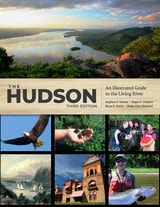
The Hudson
An Illustrated Guide to the Living RiverStephen P. Stanne
Rutgers University Press, 2021
This volume gives a detailed account of the Hudson River’s history, including the geological forces that created it, the various peoples who have lived on its banks, and the great works of art it has inspired. It also showcases the many species making a home on this waterway, including the Atlantic sturgeon, the bald eagle, the invasive zebra mussel, and the herons of New York Harbor. Combining both scientific and historical perspectives, this book demonstrates why the Hudson and its valley have been so central to the environmental movement.
As it charts the progress made towards restoring the river ecosystem and the effects of emerging threats like climate change, The Hudson identifies concrete ways that readers can help. To that end, royalties from the sale of this book will go to the non-profit environmental advocacy group Hudson River Sloop Clearwater, Inc.
The Iowa Lakeside Laboratory
A Century of Discovering the Nature of NatureMichael J. Lannoo
University of Iowa Press, 2012
Today’s huge array of environmental problems can best be solved by people who have learned about nature within nature at a place with a long history of research and observation, people who thoroughly understand and appreciate nature’s cogs and wheels. Lakeside Lab and biological research stations like it have never been more relevant to science and to society at large than they are today. Michael Lannoo convinces us that while Lakeside’s past is commendable, its future, grounded in ecological principles, will help shape a more sustainable society.
The Land between the Rivers
Thomas Nuttall's Ascent of the Arkansas, 1819Russell M. Lawson
University of Michigan Press, 2004
During the early nineteenth century, Nuttall explored the waters, valleys, plains, and mountains of the Great Lakes, Ohio River, Mississippi River, as well as the Missouri, Arkansas, Red, and Canadian river valleys of the former Louisiana Territory.
In this fascinating account of Nuttall's travels through the wilderness of the middle west, author Russell Lawson-using Nuttall's own journal-captures the sense of excitement of the early wanderer. As much a delight for the mind as the senses, The Land between the Rivers details the unremitting weather and rugged geography of uncharted lands within the Louisiana Territory. A sense of discovery pervades the narrative as Nuttall's odyssey builds to its climax in the prairie wilderness of what is now Oklahoma. Sickened by "ague"-in his case, malaria-Nuttall at times was barely able to go on; yet he continued to search for and catalog plants and animals.
The Land between the Rivers expands our knowledge of the work of one of the country's earliest botanists. We also learn a great deal about the early explorers, the inhabitants of the unsettled land, and about the land and culture of the times.
The Land of Journeys' Ending
Mary Austin
University of Illinois Press, 2003
When The Land of Journeys' Ending was first published in 1924, The Literary Reviewwarned, "This book is treacherous, waiting to overwhelm you with its abundant poetry." In it, successful New York author Mary Austin describes the epic journey she undertook in 1923, when left her East Coast home at the age of fifty-five to travel through the southwestern United States, the area where she lived as a child and where she would later retire.
The journey the book describes is a double one. Austin describes her transition from the cosmopolitan North East to the arid and largely unfamiliar land between the Colorado River and the Rio Grande. In telling her own story, Austin also tells the story of those who journeyed there before her-–Native American tribes, Spanish conquistadores, miners, adventurers, and California-bound migrants. The result is both an homage to the magnificence of the desert, mountains, rivers, canyons, plants, and animals of the Southwest and a history of the waves of people who inhabited the region.
Part memoir, part travel narrative, part historical investigation, and part ecological study, The Land of Journeys' Ending is a moving account of a woman coming full circle, finding solace in the broad landscape of her youth.
The Lives of Dillon Ripley
Natural Scientist, Wartime Spy, and Pioneering Leader of the Smithsonian InstitutionRoger D. Stone
University Press of New England, 2017
The Lost Species
Great Expeditions in the Collections of Natural History MuseumsChristopher Kemp
University of Chicago Press, 2017
With Kemp as our guide, we go spelunking into museum basements, dig through specimen trays, and inspect the drawers and jars of collections, scientific detectives on the hunt for new species. We discover king crabs from 1906, unidentified tarantulas, mislabeled Himalayan landsnails, an unknown rove beetle originally collected by Darwin, and an overlooked squeaker frog, among other curiosities. In each case, these specimens sat quietly for decades—sometimes longer than a century—within the collections of museums, before sharp-eyed scientists understood they were new. Each year, scientists continue to encounter new species in museum collections—a stark reminder that we have named only a fraction of the world’s biodiversity. Sadly, some specimens have waited so long to be named that they are gone from the wild before they were identified, victims of climate change and habitat loss. As Kemp shows, these stories showcase the enduring importance of these very collections.
The Lost Species vividly tells these stories of discovery—from the latest information on each creature to the people who collected them and the scientists who finally realized what they had unearthed—and will inspire many a museumgoer to want to peek behind the closed doors and rummage through the archives.
The Meaning of Wilderness
Sigurd F. Olson
University of Minnesota Press, 2015
Sigurd F. Olson (1899-1982) was one of the greatest environmentalists of the twentieth century. A conservation activist and popular writer, Olson introduced a generation of readers to the importance of wilderness. He served as president of the Wilderness Society and the National Parks Association and as a consultant to the federal government on wilderness preservation and ecological problems. He earned many honors, including the highest possible from the Sierra Club, National Wildlife Federation, and Izaak Walton League.
Olson is perhaps best known, though, for his many books that express the wonder, awe, and peace he found in the wilderness, including the nature classics The Singing Wilderness, Listening Point, and Reflections from the North Country. While these books have greatly influenced subsequent environmentalist movements and writers such as Annie Dillard and Barry Lopez, a major portion of Olson’s wilderness writing-much of it originating as speeches-has been relatively inaccessible, scattered in a number of magazines and obscure books over a period of more than fifty years, or never published at all.
The Meaning of Wilderness gathers together the most important of Sigurd Olson’s articles and speeches, making them available for the first time. The book also contains an introduction and chapter-by-chapter commentary by Olson’s authorized biographer, David Backes, that help the reader discover the various facets of Olson’s wilderness philosophy and their development over time. A lively look at the evolution of one of environmentalism’s greatest figures, The Meaning of Wilderness will be essential reading for Olson fans, historians, and outdoors people around the country.
The Michigan Roadside Naturalist
J. Alan Holman and Margaret B. Holman
University of Michigan Press, 2003
Did you know . . . ?
- Michigan is seventeenth in oil production in the United States.
- The Great Lakes are said to be the only glacially produced structures that can be seen from the moon.
- Michigan was once part of a coral reef.
- The wood frog is one of the commonest true frogs of moist woodland floors in Michigan today and is able to freeze solid during the winter without harmful effects.
These and many more amazing facts await the curious traveler in The Michigan Roadside Naturalist, J. Alan and Margaret B. Holman's captivating guide to the natural treasures of Michigan. A perfect accompaniment to the classic Michigan Trees and The Forests of Michigan, this user-friendly guide offers a Who's Who of the geology, biology, and archaeology of the Great Lakes State, as well as highway adventures along the state's major routes.
The book begins with an educational yet accessible tour of important points in Michigan's natural and archaeological history, followed by seven road trips based on commonly traveled state routes, moving from south to north in the Lower Peninsula and east to west in the Upper Peninsula. Readers can proceed directly to the road trips or familiarize themselves with the state's treasure trove of fascinating features before embarking. Either way, an informative and fun odyssey awaits the passionate naturalist, amateur or otherwise.
J. Alan Holman is Curator Emeritus of Vertebrate Paleontology at the Michigan State University Museum and Emeritus Professor of Geology and Zoology at Michigan State University. Margaret B. Holman is Research Associate at Michigan State University Museum and Department of Anthropology, Michigan State University.
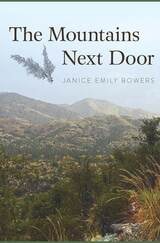
The Mountains Next Door
Janice Emily Bowers
University of Arizona Press, 1991
"I watched the seasons march through the canyons," writes Bowers, "followed the wildflower parade from February through November, and throughout it all realized that I could travel in the Rincon Mountains forever and never learn all they contained." It is also a book of meditations, as Bowers reflects upon the meaning of nature, the similarities between the scientific and creative processes, the value of wilderness in the face of urban encroachment, and other ideas. Participating in the long tradition of reflective natural history writing, she has produced a memorable book that depicts the delights and dilemmas of field botany as it explores the perennial struggle between science and mysticism that tugs at every naturalist's heart.
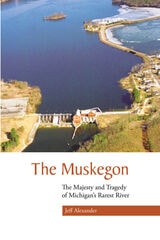
The Muskegon
The Majesty and Tragedy of Michigan's Rarest RiverJeff Alexander
Michigan State University Press, 2006
Muskegon is a derivation of a Native American word meaning "river with marshes." Jeff Alexander examines the creation, uses of, devastation, and restoration of Michigan's historic and beautiful Muskegon River.
Four of the five Great Lakes touch Michigan's shores; the state's shoreline spans more than 4,500 miles, not to mention more than 11,000 inland lakes and a multitude of rivers. The Muskegon River, the state's second longest river, runs 227 miles and has the most diverse features of any of Michigan’s many rivers. The Muskegon rises from the center of the state, widens, and moves westward, passing through the Pere Marquette and AuSable State Forests. The river ultimately flows toward Lake Michigan, where it opens into Muskegon Lake, a 12 square-mile, broad harbor located between the Muskegon River and Lake Michigan.
Formed several thousand years ago, when the glaciers that created the Great Lakes receded, and later inhabited by Ottawa and Potawatomi Indians, the Muskegon River was used by French fur trappers in the 1600s. Rich in white pine, the area was developed during the turn-of-the-century lumber boom, and at one time Muskegon Lake boasted more than 47 sawmills. The Muskegon was ravaged following settlement by Europeans, when rivers and streams were used to transport logs to the newly developing cities. Dams on rivers and larger streams provided power for sawmills and grain milling, and later provided energy for generating electricity as technology advanced.
There is now an ambitious effort to restore and protect this mighty river's natural features in the face of encroaching urbanization and land development that threatens to turn this majestic waterway into a mirror image of the Grand River, Michigan's longest river and one of its most polluted.
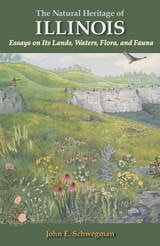
The Natural Heritage of Illinois
Essays on Its Lands, Waters, Flora, and FaunaJohn E. Schwegman
Southern Illinois University Press, 2016
Author John E. Schwegman looks at the state’s early natural history, including its prehistoric vegetation and wildlife. He describes surviving remnants of formerly widespread species, such as biting horseflies so abundant they could kill a horse and flights of passenger pigeons dense enough to block the sun. The book addresses issues of species decline, the ways animals adapt to climate change and dwindling habitats, and the problem of invasive exotic species. Ecosystem preservation is discussed, and readers will witness prescribed burning techniques and volunteers aiding in natural land management.
Animal and plant conservation in Illinois is illustrated by essays that examine the efforts to save our dwindling Prairie Chicken population and to reintroduce river otters, the return of nesting bald eagles and cormorants to the state, the discovery of armadillos in southern Illinois, the pros and cons of feeding birds, and the biological significance of frog calls. Essays on Illinois’ native plants cover a wide range of topics, from defensive strategies to poisonous and edible species, prairie’s dependence on fire, how to recognize our wild roses, orchids, prairie grasses, and more. Full of fascinating information and expert knowledge, this book will prove invaluable to scholars, students, teachers, and casual nature lovers.

The Natural History of H. G. Wells
John Robert Reed
Ohio University Press, 1982
This new study offers a general reassessment of H. G. Wells as a writer and thinker. It concentrates upon the close relationship between Wells’ developing philosophy and his literary techniques. The early chapters examine Wells’ treatment of such subjects as confinement and escape, sex, the nature of human identity, the relationship of individual to race, human progress, and the importance of education. At the same time, the describe the emotional topography that Wells created as a mean of vivifying his ideas, a topography constructed from image complexes largely based upon the analogy between individual and racial evolution.
The major contribution of the book comes in its later chapters, which deal with Wells’ metaphysical assumptions and his approach to his craft. His views on free will and strength of will were intimately related to his methods of literary composition. The important later chapters detail this relationship, while describing some of Wells’ characteristic literary devices, such as the intentional violations of certain novelistic conventions or the sly borrowing from and alluding to contemporary works of literature in what amounted to a covert polemic.
On the whole, this study argues for a coherent and consistent, though developing, philosophy operating throughout Wells’ career and manifested in experimental literary works which, while not always successful, were consistently inventive and intelligently crafted in the service of Wells’ principle aim, the education of the human species to a command of its own destiny.
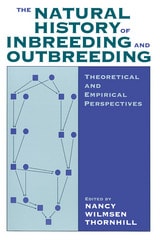
The Natural History of Inbreeding and Outbreeding
Theoretical and Empirical PerspectivesEdited by Nancy Wilmsen Thornhill
University of Chicago Press, 1993
The authors ask whether inbreeding is as problematic as biologists have thought, under what ecological conditions inbreeding occurs, and whether organisms that inbreed have mechanisms to dampen the anticipated problems of reduced genetic variation. The studies, including theoretical and empirical work on wild and captive populations, demonstrate that many plants and animals inbreed to a greater extent than biologists have thought, with variable effects on individual fitness. Graduate students and researchers in evolutionary biology, animal behavior, ecology, and conservation biology will welcome this wide-ranging collection.
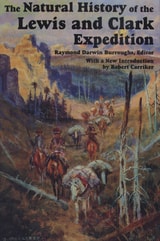
The Natural History of Lewis and Clark Expedition
Raymond Darwin Burroughs
Michigan State University Press, 1995
First published in 1961, The Natural History of the Lewis and Clark Expedition was the first work to discuss in detail the contributions to America's natural history made by the Corps of Discovery (1804-1806), or the Lewis and Clark Expedition, as it is popularly known. Raymond Darwin Burroughs tallied the quantity of game killed and consumed during the course of the expedition.
This paperback edition of Burroughs' work contains the entire original text, as well as a new introduction by Lewis and Clark scholar Robert Carriker. The major contribution of The Natural History of the Lewis and Clark Expedition was to organize and catalog the disparate discussions of animal and plant life that are scattered throughout the original journals by expedition members. These observations are presented in the explorers' words along with Burroughs's expert commentary.