Results by title
62 books match the query 'Naturalists' and 12 start with t
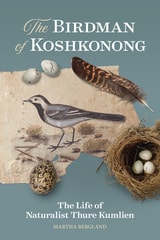
The Birdman of Koshkonong
The Life of Naturalist Thure KumlienMartha Bergland
Wisconsin Historical Society Press, 2021
For all of his achievements, Kumlien never gained the widespread notoriety of Wisconsin naturalists John Muir, Increase Lapham, or Aldo Leopold. Kumlien did his work behind the scenes, content to spend his days in the marshes and swamps rather than in the public eye. He once wrote that he was not “cut out for pretensions and show in the world.” Yet, his detailed observations of Wisconsin’s natural world—including the impact of early agriculture on the environment—were hugely important to the fields of ornithology and botany. As this carefully researched and lovingly rendered biography proves, Thure Kumlien deserves to be remembered as one of Wisconsin’s most influential naturalists.
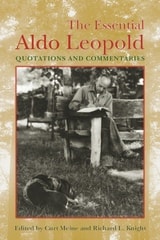
The Essential Aldo Leopold
Quotations and CommentariesEdited by Curt D. Meine and Richard L. Knight
University of Wisconsin Press, 1999
For the first time, the most important quotations of the great conservationist Aldo Leopold, author of A Sand County Almanac, are gathered in one volume. From conservation education to wildlife ecology, from wilderness protection to soil and water conservation, the writings of Aldo Leopold continue to have profound influence on those seeking to understand the earth and its care. Leopold biographer Curt Meine and noted conservation biologist Richard Knight have assembled this comprehensive collection of quotations from Leopold’s extensive and diverse writings, selected and organized to capture the richness and depth of the North American conservation movement.
Prominent biologists, conservationists, historians, and philosophers provide introductory commentaries describing Leopold’s contributions in varied fields and reflecting upon the significance of his work today.
Contributors:
J. Baird Callicott
David Ehrenfeld
Susan L. Flader
Eric T. Freyfogle
Wes Jackson
Paul W. Johnson
Joni L. Kinsey
Richard L. Knight
Gary K. Meffe
Curt Meine
Gary Paul Nabhan
Richard Nelson
Bryan G. Norton
David W. Orr
Edwin P. Pister
Donald Snow
Stanley A. Temple
Jack Ward Thomas
Charles Wilkinson
Terry Tempest Williams
Donald Worster
Joy B. Zedler
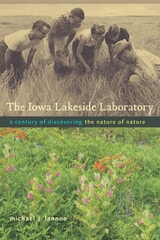
The Iowa Lakeside Laboratory
A Century of Discovering the Nature of NatureMichael J. Lannoo
University of Iowa Press, 2012
Today’s huge array of environmental problems can best be solved by people who have learned about nature within nature at a place with a long history of research and observation, people who thoroughly understand and appreciate nature’s cogs and wheels. Lakeside Lab and biological research stations like it have never been more relevant to science and to society at large than they are today. Michael Lannoo convinces us that while Lakeside’s past is commendable, its future, grounded in ecological principles, will help shape a more sustainable society.
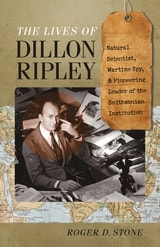
The Lives of Dillon Ripley
Natural Scientist, Wartime Spy, and Pioneering Leader of the Smithsonian InstitutionRoger D. Stone
University Press of New England, 2017
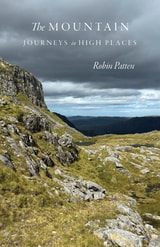
The Mountain
Journeys in High PlacesRobin Patten
University of Utah Press, 2025
Since antiquity, mountains have captured the human imagination. The Mountain takes readers into higher realms, exploring the complex kinship between mountains and human thought, traditions, and ways of being. Told through the author’s own journeys, the narrative ranges across cultures and iconic naturalists to consider how varied ideas and experiences related to mountains—from sacred to scientific, romantic to retreat, to simply home—are all facets of the same intricate topography.
No matter where one starts on the spectrum of understanding, an intimate encounter with a mountain leads to a broader perspective. High places create a simultaneous humbleness at our human insignificance and a sense of belonging within the greater world. That quality of belonging, and the associated commitment of caring for the planet and all that it holds, has never been more important than it is today.
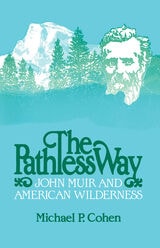
The Pathless Way
Michael Cohen
University of Wisconsin Press, 1986
"A tour de force, a remarkable narrative of spiritual and political development. . . . [Cohen's] oft unanswered, and unanswerable, questions, his views of Muir's spiritual, intellectual, and political growth are insightful, challenging, and new. They deserve an audience with scholars and Muir devotees."—Shirley Sargent, Pacific Historian
In this powerful study, Michael Cohen captures as never before the powerful consciousness, vision, and legacy of the pioneering environmentalist John Muir. Ultimately, Cohen stresses, this ecological consciousness would generate an ecological conscience.
It was no longer enough for Muir to individually test and celebrate his enlightenment in the wild. His vision, he now felt, must lead to concrete action, and the result was a protracted campaign that stressed the ecological education of the American public, governmental protection of natural resources, the establishment of the National Parks, and the encouragement of tourism.
Anyone interested in environmental studies, in American history and literature, or in the future of our natural heritage will be drawn by the very bracing flavor of his wilderness odyssey, evoked here by one of his own—a twentieth-century mountaineer and literary craftsman.
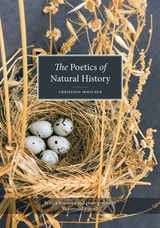
The Poetics of Natural History
Christoph Irmscher
Rutgers University Press, 2019
Early American naturalists assembled dazzling collections of native flora and fauna, from John Bartram’s botanical garden in Philadelphia and the artful display of animals in Charles Willson Peale’s museum to P. T. Barnum’s American Museum, infamously characterized by Henry James as “halls of humbug.” Yet physical collections were only one of the myriad ways that these naturalists captured, catalogued, and commemorated America’s rich biodiversity. They also turned to writing and art, from John Edward Holbrook’s forays into the fascinating world of herpetology to John James Audubon’s masterful portraits of American birds.
In this groundbreaking, now classic book, Christoph Irmscher argues that early American natural historians developed a distinctly poetic sensibility that allowed them to imagine themselves as part of, and not apart from, their environment. He also demonstrates what happens to such inclusiveness in the hands of Harvard scientist-turned Amazonian explorer Louis Agassiz, whose racist pseudoscience appalled his student William James.
This expanded, full-color edition of The Poetics of Natural History features a preface and art from award-winning artist Rosamond Purcell and invites the reader to be fully immersed in an era when the boundaries between literature, art, and science became fluid.
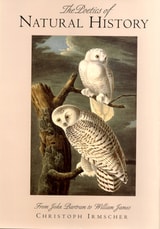
The Poetics of Natural History
From John Bartram to William JamesIrmscher, Christoph
Rutgers University Press, 1999
The Poetics of Natural History is about the “daydreams” of early American naturalists (from 1730 to 1868) and the collections they created around these dreams. Christoph Irmscher explores how, through the acts of organizing physical artifacts and reflecting upon their collections through writings and images, naturalists from John Bartram to Louis Agassiz were making sense of themselves and their world. These collections allowed them, in a way, to collect themselves.
In the first part of his book, Irmscher offers us a guided tour of the actual collections, beginning in Bartram’s disorderly botanical garden in Philadelphia and taking us through the artful display of animals in Charles Wilson Peale’s collections and, finally, to the “halls of humbug” of P. T. Barnum’s American Museum. The second part of the book moves away from the collections, and explores natural history words and images. Irmscher unforgettably describes American collectors’ fascination and horror with the American rattlesnake, and invokes the violent and beautiful world of American birds as described in John James Audubon’s paintings and writings. His book ends with a description of Louis Agassiz’s 1865 expedition to Brazil as seen through the eyes of the young William James, who reluctantly gathered Brazilian fish while his mentor assembled “proof” that some human beings were less human than others.
The Secret Life Of John C. Van Dyke
Selected LettersDavid W. Teague
University of Nevada Press, 1997
The author of The Desert, the book that made the American landscape accessible to the mainstream mind, was much less like his fellow environmental prophets John Muir and Henry David Thoreau than he would have had us believe. Van Dyke claimed to have wandered "alone on horseback for thousands of miles through the American Southwest and northern Mexico," as readers of The Desert—now in the millions since the book was published in 1901—were told. He did not. In The Secret Life of John C. Van Dyke, Teague and Wild unmask the desert saint with Van Dyke’s own recently discovered letters. These letters depict a privileged, patrician, and pampered member of the upper-class. His incriminating correspondence reveals that he saw most of the desert from plush railroad cars and grand hotel rooms. In the introduction, the editors clear up many misconceptions scholars currently hold about Van Dyke’s ecological principles, about his outdoorsmanship, and about his trip through the desert itself. As the centennial of the publication of The Desert approaches, this lively collection of letters helps set the record straight. The John C. Van Dyke unveiled in The Secret Life is a more varied character than we had supposed—still worthy of much admiration for his remarkable accomplishments, but still mysterious, and not the man we thought him to be.
Theodore Roosevelt in the Field
Michael R. Canfield
University of Chicago Press, 2015
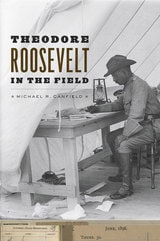
Drawing extensively on Roosevelt’s field notebooks, diaries, and letters, Canfield takes readers into the field on adventures alongside him. From Roosevelt’s early childhood observations of ants to his notes on ornithology as a teenager, Canfield shows how Roosevelt’s quest for knowledge coincided with his interest in the outdoors. We later travel to the Badlands, after the deaths of Roosevelt’s wife and mother, to understand his embrace of the rugged freedom of the ranch lifestyle and the Western wilderness. Finally, Canfield takes us to Africa and South America as we consider Roosevelt’s travels and writings after his presidency. Throughout, we see how the seemingly contradictory aspects of Roosevelt’s biography as a hunter and a naturalist are actually complementary traits of a man eager to directly understand and experience the environment around him.
As our connection to the natural world seems to be more tenuous, Theodore Roosevelt in the Field offers the chance to reinvigorate our enjoyment of nature alongside one of history’s most bold and restlessly curious figures.
Thoreau in His Own Time
A Biographical Chronicle of His Life, Drawn from Recollections, Interviews, and Memoirs by Family, Friends, and AssociatesSandra Harbert Petrulionis
University of Iowa Press, 2012
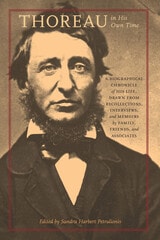
The forty-nine recollections gathered in Thoreau in His Own Time demonstrate that it was those who knew him personally, rather than his contemporary literati, who most prized Thoreau’s message, but even those who disparaged him respected his unabashed example of an unconventional life. Included are comments by Ralph Waldo Emerson—friend, mentor, Walden landlord, and progenitor of the spin on Thoreau’s posthumous reputation; Nathaniel Hawthorne, who could not compliment Thoreau without simultaneously denigrating him; and John Weiss, whose extended commentary on Thoreau’s spirituality reflects unusual tolerance. Selections from the correspondence of Caroline Healey Dall, Maria Thoreau, Sophia Hawthorne, Sarah Alden Bradford Ripley, and Amanda Mather amplify our understanding of the ways in which nineteenth-century women viewed Thoreau. An excerpt by John Burroughs, who alternately honored and condemned Thoreau, asserts his view that Thoreau was ever searching for the unattainable.
The dozens of primary sources in this crisply edited collection illustrate the complexity of Thoreau’s iconoclastic singularity in a way that no one biographer could. Each entry is introduced by a headnote that places the selection in historical and cultural context. Petrulionis’s comprehensive introduction and her detailed chronology of personal and literary events in Thoreau’s life provide a lively and informative gateway to the entries themselves. The collaborative biography that Petrulionis creates in Thoreau in His Own Time contextualizes the strikingly divergent views held by his contemporaries and highlights the reasons behind his profound legacy.
To Life
Jews Exploring NatureJoel Greenberg
Rutgers University Press, 2026
To Life explores the Jewish relationship with nature by illuminating significant Jewish thinkers who increased in important ways our understanding of various aspects of natural history. In eight compelling chapter-long biographies, naturalist Joel Greenberg demonstrates the diversity of both Jewish identity and the natural sciences.
Greenberg’s rich biographical sketches spotlight great Jewish scientists who not only made major contributions to the study of the natural world but also led rich and colorful lives: botanist and spy Aaron Aaronsohn, zoologist Libbie Henrietta Hyman, infamous ornithologist Nathan Leopold, mammalogist Philip Hershkovitz, arachnologist Herbert Levi, herpetologist Hymen Marx, public health entomologist Andrew Spielman, and ecologist Joan Ehrenfeld. These individuals manifested different aspects of Jewish identity—some observant, some secular—but all were affected in one way or another by their being Jewish.
By exploring the relationship between Jews and nature through the lives of these figures, Greenberg shares new and underrecognized aspects of Jewish and environmental history and opens new portals into the fields they studied.