Results by title
20 books match the query 'Adoptees'
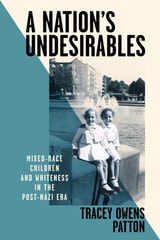
A Nation’s Undesirables
Mixed-Race Children and Whiteness in the Post-Nazi EraTracey Owens Patton
The Ohio State University Press, 2024
An innovative investigation of the entangled histories of race, transnational adoption, and post-Nazi Germany.
In a moving blend of family history and cutting-edge scholarship, Tracey Owens Patton’s A Nation’s Undesirables synthesizes work in rhetorical postmemory studies, critical adoption studies, Afrofuturism, and more to tell the story of her mother and aunt, Lore and Lilli. Two of thousands of children born to white German women and Black American men after World War II, the twins moved to the United States at age seven, where their mother renounced her parental rights and put them into the adoption system. They did not see her again for fifty-two years.Patton takes up the twins’ story and their reckoning with their mixed-race, Black German identity to disrupt standard narratives around World War II, Black experiences in Germany, and race and adoption. Combining family interviews, historical artifacts, and autoethnographic reflection, Patton composes a new narrative of women and Black German children in the postwar era. In examining the systemic racism of Germany’s efforts to move children like Lore and Lilli out of the country—and the suppression of German women’s bodily autonomy—Patton amplifies the once unacknowledged identities of these Black German children to broaden our understanding of citizenship, racism, and sexism after World War II.
Adopted Territory
Transnational Korean Adoptees and the Politics of BelongingEleana J. Kim
Duke University Press, 2010
Adoption Memoirs
Inside StoriesMarianne Novy
Temple University Press, 2024
Novy considers 45 memoirs, mostly from the twenty-first century, by birthmothers, adoptees, and adoptive parents, about same-race and transracial adoption. These adoptees, she recounts, wanted to learn about their ancestry and appreciated adoptive parents who helped. Birthmother Amy Seek shows why open adoption is not simple, and many other memoirs tell stories that continue past reunion.
Adoption Memoirs will enlighten readers who lack experience with adoption and help those looking for a shared experience to also understand adoption from a different standpoint.
Choosing Ethnicity, Negotiating Race
Korean Adoptees in AmericaMia Tuan
Russell Sage Foundation, 2011
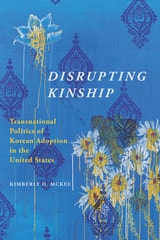
Disrupting Kinship
Transnational Politics of Korean Adoption in the United StatesKimberly D. McKee
University of Illinois Press, 2019
Kimberly D. McKee examines the growth of the neocolonial, multi-million-dollar global industry that shaped these families—a system she identifies as the transnational adoption industrial complex. As she shows, an alliance of the South Korean welfare state, orphanages, adoption agencies, and American immigration laws powered transnational adoption between the two countries. Adoption became a tool to supplement an inadequate social safety net for South Korea's unwed mothers and low-income families. At the same time, it commodified children, building a market that allowed Americans to create families at the expense of loving, biological ties between Koreans. McKee also looks at how Christian Americanism, South Korean welfare policy, and other facets of adoption interact with and disrupt American perceptions of nation, citizenship, belonging, family, and ethnic identity.

I Would Meet You Anywhere
A MemoirSusan Kiyo Ito
The Ohio State University Press, 2023
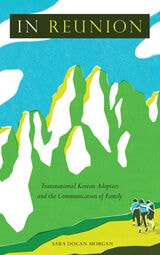
In Reunion
Transnational Korean Adoptees and the Communication of FamilyDocan-Morgan, Sara
Temple University Press, 2024
The paradoxes of adoption and reunion—shared history without blood relations, and blood relations without shared history—generate questions: What does it mean to be “family”? How do people use communication to constitute family relationships? How are family relationships created, maintained, and negotiated over time? In Reunion details adoptive and cultural identities, highlighting how adoptees often end up shouldering communicative responsibility in their family relationships. Interviews reveal how adoptees navigate birth family relationships across language and culture while also attempting to maintain relationships with their adoptive family members.
Docan-Morgan details the challenges, rewards, and contradictions of reunion. She also offers practical recommendations for transnational adoptees in reunion, adoptees considering reunion, adoptive families, and adoption practitioners.
In tracing the stories of the intercultural dynamics inherent in adoptees’ reunions, Docan-Morgan demonstrates the effort, flexibility, empathy, self-reflection, and time required to navigate long-term relationships with birth families.
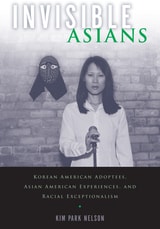
Invisible Asians
Korean American Adoptees, Asian American Experiences, and Racial ExceptionalismPark Nelson, Kim
Rutgers University Press, 2016
Invisible Asians offers an engaging account that makes an important contribution to our understanding of race in America, and illuminates issues of power and identity in a globalized world.
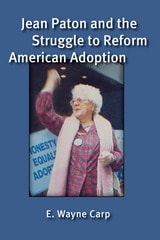
Jean Paton and the Struggle to Reform American Adoption
E. Wayne Carp
University of Michigan Press, 2013
Jean Paton (1908–2002) fought tirelessly to reform American adoption and to overcome prejudice against adult adoptees and women who give birth out of wedlock. Paton wrote widely and passionately about the adoption experience, corresponded with policymakers as well as individual adoptees, promoted the psychological well-being of adoptees, and facilitated reunions between adoptees and their birth parents. E. Wayne Carp's masterful biography brings to light the accomplishments of this neglected civil-rights pioneer, who paved the way for the explosive emergence of the adoption reform movement in the 1970s. Her unflagging efforts over five decades helped reverse harmful policies, practices, and laws concerning adoption and closed records, struggles that continue to this day.

Kin
Crystal Williams
Michigan State University Press, 2000
In her first book-length collection of poetry, Crystal Williams utilizes memory and music as she lyrically weaves her way through American culture, pointing to the ways in which alienation, loss, and sensed "otherness" are corollaries of recent phenomena. Williams writes about being adopted by an interracial couple, a jazz pianist/Ford Foundry worker and a school psychologist, and how that has affected her development as an African American woman. She tries to work out the answers to many difficult questions: in what way do African American artists define themselves? What do they owe the culture and what does it owe them? To what extent does our combined national memory inform our individual selves? These poems are steeped in the black literary tradition. They are brimming over with the oral tradition that Williams perfected while spending years on the poetry "slam" circuit. This, combined with her musical upbringing, give the collection not only a sense of urgency, but also a rhythm, a breath all its own. Kin tackles not only racial issues, but also the troubling realities of violent acts that can occur, especially in our inner cities. But more importantly, the landscape that Williams creates offers readers an alternative to the racial/political dichotomy in which we all live. Overall, the book resonates with a message of reconciliation that will leave the reader uplifted.
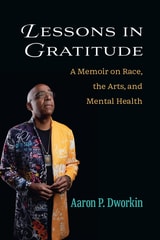
Lessons in Gratitude
A Memoir on Race, the Arts, and Mental HealthAaron P. Dworkin
University of Michigan Press, 2024
Aaron’s unique journey, which begins with his adoption by a white Jewish couple from Chicago at two weeks of age, leads him to the ultimate reunification with his birth family at the age of 31. Lessons of Gratitude is a coming of age story that examines the difficulties of biracial identity across generations and the challenges that mixed race families still face today. It is also a painful and honest adoption memoir, further complicating the narrator’s experiences of racial identity throughout his life and shaping his experiences with his own children. Through his work in the arts and the impact of this work, Dworkin has been able to “pay forward” the first thing that offered him unconditional love—music.
Lessons in Gratitude
A Memoir on Race, the Arts, and Mental HealthAaron P. Dworkin
University of Michigan Press, 2024
Aaron’s unique journey, which begins with his adoption by a white Jewish couple from Chicago at two weeks of age, leads him to the ultimate reunification with his birth family at the age of 31. Lessons in Gratitude is a coming of age story that examines the difficulties of biracial identity across generations and the challenges that mixed race families still face today. It is also a painful and honest adoption memoir, further complicating the narrator’s experiences of racial identity throughout his life and shaping his experiences with his own children. Through his work in the arts and the impact of this work, Dworkin has been able to “pay forward” the first thing that offered him unconditional love—music.

Murder in Montauk
Judy Soloway Kay
University of Michigan Press, 2005
The MICHIGAN Reading Plus Readers are original fiction written for students who wish to improve their reading skills. The MICHIGAN Reading Plus Readers support the need for extensive reading on topics of interest to today's students. The Readers offer students books in the genres of mystery, science-fiction, and romance. Activities that practice vocabulary and reading skills are provided on the companion website.
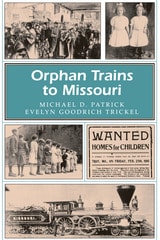
Orphan Trains to Missouri
Michael D. Patrick & Evelyn Goodrich Trickel
University of Missouri Press, 1997
As an "orphan train" crossed the country, it left part of its cargo at each stop, a few children in one small town and a few in another. Even though farmers needed many hands for labor, most of the small farm communities could not or would not take all of the children on the train. As the train moved to its next stop, those children not taken feared no one would ever want them.
Early immigration laws encouraged the poor of Europe to find new hope with new lives in the United States. But sometimes the immigrants exchanged a bad situation in their native country for an even worse one on the streets of New York and other industrial cities. As a result, the streets were filled with crowds of abandoned children that the police called "street arabs." Many New York citizens blamed the street arabs for crime and violence in the city and wanted them placed in orphan homes or prisons.
In 1853 a man by the name of Charles Loring Brace, along with other well-to-do men in New York City, founded the Children's Aid Society. The society planned to give food, lodging, and clothing to homeless children and provide educational and trade opportunities for them. But the number of children needing help was so large that the Children's Aid Society was unable to care for them, and Brace developed a plan to send many of the children to the rural Midwest by train. He was convinced that the children of the streets would find many benefits in rural America. In 1854 he persuaded the board of the society to send the first trainload of orphans west. With this, the orphan trains were born.
Cheap fares, the central location of the state, and numerous small farming towns along the railroad tracks made Missouri the perfect hub for the orphan trains, even though many areas of the state were still largely unsettled. Researchers have estimated that from 150,000 to 400,000 children were sent out on orphan trains, with perhaps as many as 100,000 being placed in Missouri.
Orphan Trains to Missouri documents the history of the children on those Orphan Trains--their struggles, their successes, and their failures. Touching stories of volunteers who oversaw the placement of the orphans as well as stories of the orphans themselves make this a rich record of American and midwestern history.
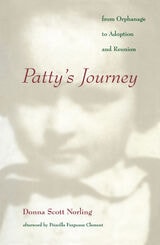
Patty’s Journey
From Orphanage To Adoption And ReunionDonna Scott Norling
University of Minnesota Press, 1998
The award-winning memoir of one woman’s struggles and triumphs to reclaim an identity she had lost.
This inspirational story of one girl’s search for a home is an engaging first-person narrative of life during the Great Depression and World War II. Readers and critics alike offer lavish praise for Norling’s graceful, simple prose and the heartbreaking, ultimately redemptive tale she shares.
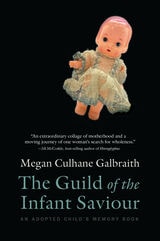
The Guild of the Infant Saviour
An Adopted Child's Memory BookMegan Culhane Galbraith
The Ohio State University Press, 2021
Shortly before Roe v. Wade legalized abortion, adoptee Megan Culhane Galbraith was born in a Catholic charity hospital in New York City to a teenaged resident of the Guild of the Infant Saviour, a home for unwed mothers. Decades later, on the eve of becoming a mother herself, she would travel to the former guild site; to her birth mother’s home in Scotland; and to Cornell University, where she discovered the startling history of its Domestic Economics program. There, from 1919 to 1969, coeds applied scientific principles to domesticity as they collectively mothered a rotating cast of babies awaiting adoption. The babies shared the last name Domecon and provided the inspiration for Galbraith’s art project, The Dollhouse.
The Guild of the Infant Saviour is a dizzyingly inventive hybrid memoir of one adoptee’s quest for her past. Galbraith pairs narrative with images from The Dollhouse as she weaves a personal and cultural history of adoption as it relates to guilt, shame, grief, identity, and memory itself. Ultimately, she connects her experiences to those of generations of adoptees, to the larger stories America tells about sex and motherhood, and to the shadows those stories cast on us all.
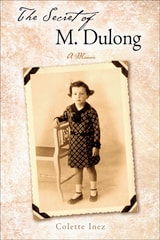
The Secret of M. Dulong
A MemoirColette Inez
University of Wisconsin Press, 2005
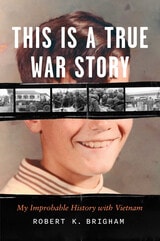
This Is a True War Story
My Improbable History with VietnamRobert K. Brigham
University of Chicago Press, 2026
Robert K. Brigham has had a substantial career as a historian of the Vietnam War, with a hand in nine books, a documentary, public history projects, and more. While many a historian has felt compelled at some point to write about a subject close to them personally, Brigham did not think he was doing that. But, at age fifty-eight, Brigham, who had long known he was adopted, discovered that he’d improbably and unknowingly been studying and talking about his biological father for decades. That man, Bruce Atwell, was a Marine Corps photographer who took some of that war’s most indelible and widely reproduced pictures. Brigham had used those images over and over again in decades’ worth of classes and public lectures, never knowing the truth.
Both Brigham and Atwell were products of the American foster care and adoption system, and both were defined professionally by Vietnam. In a story shot through with echoes and shadows, Brigham not only reveals his own history as an adoptee but opens a startlingly fresh vantage on the fragility of American families; the power of social norms and taboos to shape lives; and the forces that inequitably disrupt families, not least of them war. The result is an accessible and moving book that is at once both a powerful personal story and an illuminating social critique.
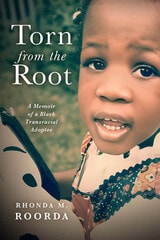
Torn from the Root
A Memoir of a Black Transracial AdopteeRhonda M. Roorda
Temple University Press, 2026
As a Black child adopted out of the New York foster care system as a toddler and raised by white evangelical parents, Rhonda Roorda had to learn how to walk in two different worlds. She often questioned “whether my skin was too dark” and if she “acted too white.” She recalls being haunted by feelings of shame and not being enough. Torn from the Root is her illuminating story of identity, belonging, and purpose and lays bare the deep pain she felt navigating life as a vulnerable Black girl and how she healed herself.
Roorda suffered trauma and abuse in her youth, but she also developed resilience. Eventually, she resolves to find her birth family and takes readers on her exciting and agonizing journey.
Torn from the Root thinks critically about the child welfare system and the long-term impacts of transracial adoption. Roorda helps readers understand her experience, posing necessary questions about the challenges of transracial adoption. Her emotional story, full of wisdom and reflection, recounts how she accepted the truth of her adoption and found balance, not discomfort, in her own skin.

Unnatural Selection
A Memoir of Adoption and WildernessAndrea Ross
CavanKerry Press, 2021