Results by title
176 books match the query 'Nevada' and 40 start with t
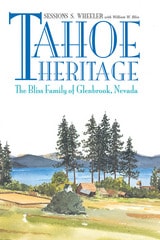
Tahoe Heritage
The Bliss Family Of Glenbrook, NevadaSessions S Wheeler
University of Nevada Press, 1997
Tahoe Heritage is a lively chronicle of four generations of the pioneering Bliss family, beginning with Duane L. Bliss, a visionary who built an impressive lumbering business and later the renowned Glenbrook Inn. The inn was completed in 1907 and quickly became a destination for the elite of San Francisco. The hotel register contains the names of national figures who loved and frequented Glenbrook: Ulysses Grant, Joaquin Miller, Thomas Edison, Henry Ford, Clark Gable, and Rita Hayworth, to name a few. The Bliss family closed the inn in 1976. Anyone who has visited the Tahoe area, now a very different place from the idyllic days of Bliss family management, will enjoy this account of its growth and the remarkable family which brought it about.
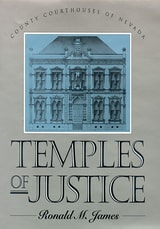
Temples Of Justice
County Courthouses Of NevadaRonald M. James
University of Nevada Press, 1994
From Storey County's High Victorian Italianate-styled courthouse to Lander County's former schoolhouse, now a Neo-classical courthouse, Temples of Justice provides an architectural history of the courthouses of Nevada. In Nevada's first published architectural history, Temples of Justice treats the state's buildings as a series of documents from the past. Presented collectively the courthouses illustrate the choices and influences that have affected Nevada's communities as the citizens have sought to project an image of themselves and their aspirations through public architecture. The courthouses are important local public facilities, and they provide an excellent opportunity to understand the history of attitudes and tastes in the state.
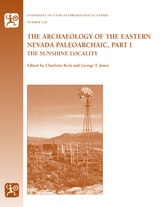
The Archaeology of the Eastern Nevada Paleoarchaic, Part 1
The Sunshine LocalityCharlotte Beck
University of Utah Press, 2009
The Sunshine Locality in the geographic center of the Great Basin has been the focus of scientific research since the mid-1960s. Authors Charlotte Beck and George T. Jones began studies there in 1992 and carried out excavations between 1993 and 1997 with the assistance of Hamilton College Field School. The area has yielded a rich and varied collection of diagnostic lithic tools, including fluted and unfluted lanceolate projectile points and a crescent, and a variety of gravers, scrapers, notches, and other tools common in Paleoindian toolkits across North America.
This volume provides the first comprehensive treatment that combines historical research with the more recent studies. Analysis and interpretations of the stratigraphic sequence in Sunshine Wash are presented, including analyses of sedimentary textures and structure, depositional processes, and chronology. Faunal remains are used to evaluate local and regional environmental changes. Finally, the authors address the nature of the processes that created the archaeological record at Sunshine Locality, its age, and whether artifacts and remains of extinct mammals also recovered at the site are associated. This work begins to answer unresolved questions about the paleoenvironmental resources of the Sunshine Locality.

The Battle to Stay in America
Immigration's Hidden Front LineMichael Kagan
University of Nevada Press, 2025
The Battle to Stay in America is the story of a community coming to grips with the federal government’s crackdown on immigrants, and learning how to defend itself. Informative and personal, this is a story about mothers and fathers, lawyers and activists, local police and federal agencies, and a struggle for the identity of a nation. This is the quintessential story of the war on immigrants, as fought and felt on the front lines in the heart of America.
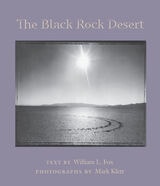
The Black Rock Desert
Text by William L. Fox; Photographs by Mark Klett
University of Arizona Press, 2002
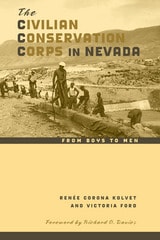
The Civilian Conservation Corps in Nevada
From Boys to MenRenée Corona Kolvet
University of Nevada Press, 2015
The Civilian Conservation Corps in Nevada is the first comprehensive history of the Nevada CCC, a program designed to help the nation get back on its feet, and of the “boys” who did so much to restore Nevada’s lands and resources. The book is based on extensive research in private manuscript collections, unpublished memoirs, CCC inspectors’ reports, and other records. The book also includes period photographs depicting the Nevada CCC and its activities.
The Essential Eldercare Handbook for Nevada
Kim Boyer
University of Nevada Press, 2014
Boyer and Shapiro provide Nevada-specific information\--medical, legal, and financial\--on the wide range of problems that arise during the elder years. Case studies show how a typical family copes with troubles such as failing health or financial cares and what options they have. This guide will help any Nevada resident plan for their own senior years and take care of aging parents, spouses, and other loved ones.
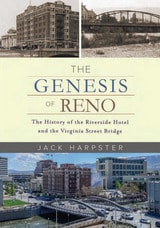
The Genesis of Reno
The History of the Riverside Hotel and the Virginia Street BridgeJack Harpster
University of Nevada Press, 2016
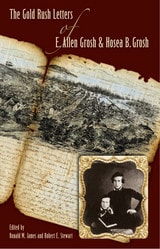
The Gold Rush Letters of E. Allen Grosh and Hosea B. Grosh
Ronald M. James
University of Nevada Press, 2016
The Groshes’ letters are rich in color and important historical details. Generously annotated and with an introduction that provides a context for the brothers’ career and the setting in which they tried to make their fortune, these documents powerfully depict the often harsh realities of Gold Rush life and society.
The History Of The Comstock Lode
Grant H. Smith
University of Nevada Press, 1998
The Infamous King Of The Comstock
William Sharon And The Gilded Age In The WestMichael J. Makley
University of Nevada Press, 2009

The Interior West
A Fire SurveyStephen J. Pyne
University of Arizona Press, 2018
In this collection of essays, fire historian Stephen J. Pyne explains the relevance of the Interior West to the national fire scene. This region offered the first scientific inquiry into landscape fire in the United States, including a map of Utah burns published in 1878 as part of John Wesley Powell’s Arid Lands report. Then its significance faded, and for most of the 20th century, the Interior West was the hole in the national donut of fire management. Recently the region has returned to prominence due to fires along its front ranges; invasive species, both exotics like cheatgrass and unleashed natives like mountain pine beetle; and fatality fires, notably at South Canyon in 1994.
The Interior West has long been passed over in national fire narratives. Here it reclaims its rightful place.
Included in this volume:
- A summary of 19th- and 20th-century fire history in the Interior West
- How this important region inspired U.S. studies of landscape fire
- Why the region disappeared from national fire management discussions
- How the expansion of invasive species and loss of native species has affected the region’s fire ecology
- The national significance of fire in the Interior West
The Main Event
Boxing in Nevada from the Mining Camps to the Las Vegas StripRichard O. Davies
University of Nevada Press, 2014
As the twentieth century dawned, bare-knuckle prizefighting was transforming into the popular sport of boxing, yet simultaneously it was banned as immoral in many locales. Nevada was the first state to legalize it, in 1897, solely to stage the Corbett-Fitzsimmons world heavyweight championship in Carson City. Davies shows that the history of boxing in Nevada is integral to the growth of the sport in America. Promoters such as Tex Rickard brought in fighters like Jack Dempsey to the mining towns of Goldfield and Tonopah and presented the Johnson-Jeffries “Fight of the Century” in Reno in 1910. Prizefights sold tickets, hotel rooms, drinks, meals, and bets on the outcomes. It was boxing\--before gambling, prostitution, and easy divorce\--that first got Nevada called “America’s Disgrace” and the “Sin State.” The Main Event explores how boxing’s growth in Nevada relates to the state’s role as a social and cultural outlier. Starting in the Rat Pack era, organized gambling’s moguls built arenas outside the Vegas casinos to stage championships\--more than two hundred from 1960 to the present. Tourists and players came to see and bet on historic bouts featuring Sonny Liston, Muhammad Ali, George Foreman, Sugar Ray Leonard, Mike Tyson, and other legends of the ring.
From the celebrated referee Mills Lane to the challenge posed by mixed martial arts in contemporary Las Vegas, the story of boxing in Nevada is a prism for viewing the sport. Davies utilizes primary and secondary sources to analyze how boxing in the Silver State intersects with its tourist economy and libertarian values, paying special attention to issues of race, class, and gender. Written in an engaging style that shifts easily between narrative and analysis, The Main Event will be essential reading for sports fans and historians everywhere.
The Making of Modern Nevada
Hal Rothman
University of Nevada Press, 2010
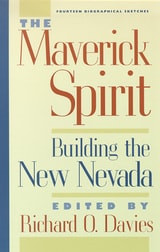
The Maverick Spirit
Building The New NevadaRichard O. Davies
University of Nevada Press, 1998
A collection of biographical essays on fourteen contemporary Nevadans. The subjects of the essays are Maude Frazier; Moe Dalitz; James B. McMillan; William F. Harrah; Hank Greenspun; Alan Bible; Robert Laxalt; Grant Sawyer; Molly Flagg Knudtsen; Paul Laxalt; Steve Wynn; William Raggio; Sue Wagner; and Jerry Tarkanian.
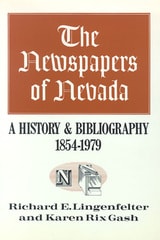
The Newspapers Of Nevada
A History And Bibliography, 1854-1979Richard E. Lingenfelter
University of Nevada Press, 1984
This new bibliography of Nevada's newspapers supersedes and greatly expands on previous works. More than 800 publications are now included: traditional newspapers, penny shoppers, comic and campaign sheets, entertainment and matrimonial guides, and fictitious newspapers that had life only in the columns of other papers. Also included is a brief appendix of early newspapers from boarder states that reported regularly on Nevada. The authors have provided a brief historical sketch of each publication, together with a list and location of known copies of the original papers, plus current microfilm holdings. The bibliography also documents frequency of publication, proprietorship, title changes, printing locations, and political affiliation. This volume will be of value to historians ranging from scholars to genealogy buffs who need access to the information only newspapers can provide.
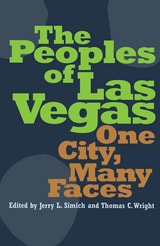
The Peoples Of Las Vegas
One City, Many FacesJerry L Simich
University of Nevada Press, 2005
Beneath the glitzy surface of the resorts and the seemingly cookie-cutter suburban sprawl of Las Vegas lies a vibrant and diverse ethnic life. People of varied origins make up the population of nearly two million and yet, until now, little mention of the city has been made in studies and discussion of ethnicity or immigration. The Peoples of Las Vegas: One City, Many Faces fills this void by presenting the work of seventeen scholars of history, political science, sociology, anthropology, law, urban studies, cultural studies, literature, social work, and ethnic studies to provide profiles of thirteen of the city’s many ethnic groups. The book’s introduction and opening chapters explore the historical and demographic context of these groups, as well as analyze the economic and social conditions that make Las Vegas so attractive to recent immigrants. Each group is the subject of the subsequent chapters, outlining migration motivations and processes, economic pursuits, cultural institutions and means of transmitting culture, involvement in the broader community, ties to homelands, and recent demographic trends.
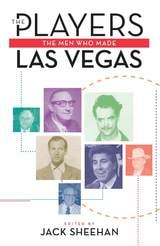
The Players
The Men Who Made Las VegasJack Sheehan
University of Nevada Press, 1997

The Possibility Machine
Music and Myth in Las VegasEdited by Jake Johnson
University of Illinois Press, 2023
At once a Technicolor wonderland and the embodiment of American mythology, Las Vegas exists at the Ground Zero of a reverence for risk-taking and the transformative power of a winning hand. Jake Johnson edits a collection of short essays and flash ideas that probes how music-making and soundscapes shape the City of Second Chances. Treating topics ranging from Cher to Cirque de Soleil, the contributors delve into how music and musicians factored in the early development of Vegas’s image; the role of local communities of musicians and Strip mainstays in sustaining tensions between belief and disbelief; the ways aging showroom stars provide a sense of timelessness that inoculates visitors against the outside world; the link connecting fantasies of sexual prowess and democracy with the musical values of Liberace and others; considerations of how musicians and establishments gambled with identity and opened the door for audience members to explore Sin City–only versions of themselves; and the echoes and energy generated by the idea of Las Vegas as it travels across the country.
Contributors: Celine Ayala, Kirstin Bews, Laura Dallman, Joanna Dee Das, James Deaville, Robert Fink, Pheaross Graham, Jessica A. Holmes, Maddie House-Tuck, Jake Johnson, Kelly Kessler, Michael Kinney, Carlo Lanfossi, Jason Leddington, Janis McKay, Sam Murray, Louis Niebur, Lynda Paul, Arianne Johnson Quinn, Michael M. Reinhard, Laura Risk, Cassaundra Rodriguez, Arreanna Rostosky, and Brian F. Wright
The Pottery Hill Site
A Historic Period Shoshone Settlement in Grass Valley, NevadaHelen Fairman Wells and Evelyn Seelinger
University of Utah Press, 2023
This archaeological study of the interactions between Western Shoshone families and Euro-American ranchers in the late nineteenth century helps fill the gap between what is known regarding Late Prehistoric foragers of the American West and ethnohistoric understanding of Native American peoples of the Great Basin.
Pottery Hill, an archaeological site located in Grass Valley, Nevada, northeast of the historic mining town of Austin, represents a small settlement of Native Americans who lived there in the late 1800s. The Grass Valley Shoshone, whose environment and traditional lifeways were disrupted by the arrival of miners and settlers in the 1860s, found work on the ranches and farms in the valley.
Archaeological fieldwork conducted in the 1970s investigated house remains, hearths, and artifacts. A recent analysis of these data, enhanced by the use of archival documents and oral history, provides new insights into the dynamics of late nineteenth-century life in central Nevada. The Pottery Hill Site addresses a critical period in the history of the Grass Valley Shoshone, who adopted and modified Euro-American artifacts and materials while maintaining important aspects of their traditional culture. It gives readers a deeper understanding of the effects of Euro-American settlement on the Shoshone, the history of the western United States, and the reciprocal impacts of cultural contact.
The Prehistory of Gold Butte
A Virgin River Hinterland, Clark County, NevadaKelly R McGuire
University of Utah Press, 2014
The Prehistory of Gold Butte uses a theoretical perspective rooted in human behavior ecology and other foraging models to present the results of one of the largest and most comprehensive archaeological investigations ever undertaken in southern Nevada, involving the systematic survey of more than 31,000 acres, the documentation of more than 377 sites, and the excavation of nine prehistoric sites. Gold Butte—at the crossroads of the Mojave Desert, the Great Basin, and the Colorado Plateau in southern Nevada—has a 12,000-year record of human occupation with archaeological elements that can be traced to all three culture zones.
The Rise Of The Biggest Little City
An Encyclopedic History Of Reno Gaming, 1931-1981Dwayne Kling
University of Nevada Press, 2010
The history of Reno during the first half century is to a great degree the history of Reno’s gaming industry. Between 1931 and 1981, the economy, skyline, and lifestyle of “the Biggest Little City in the World” were strongly influenced by the city’s casinos and the people who created and operated them. In The Rise of the Biggest Little City, longtime Reno gaming executive Dwayne Kling records the fruits of his fourteen years of research into the history of Reno’s casinos, from the backroom (and often illegal) dives of the industry’s beginnings to the elegant casino-hotels of today. Arranged in encyclopedic form with historic photographs (many never before published), the book offers the stories of such famous establishments as Harolds Club, the Cal-Neva, the Sands, and Harrah’s, as well as defunct clubs like the Cedars, the Silver Spur, and the Bank Club. We also find the stories of the men and women who created Reno’s gaming industry—such as James McKay and Bill Graham, who came from the rough-and-tumble saloons of boom-town Tonopah and developed a chain of illegal gambling clubs and brothels into Reno’s first major casino, the Bank Club; the Smith family—Raymond I. “Pappy,” Harold Sr., Raymond A., and Harold Jr.—whose Harolds Club was a prime downtown attraction for over fifty years and brought Reno national fame as a destination for fun and gambling; Bill Bailey, an African-American whose Harlem Club—one of the first integrated casinos in Reno—attracted such show-business luminaries as Louis Armstrong and Pearl Bailey (his cousin) for late-night jam sessions; William Harrah, who parleyed a string of small bingo parlors into a major gaming empire; and Jack Douglass, a slot-route operator in the early days of legal gaming who became a major figure in Reno’s modern casino industry. There are more. Kling records the stories of hundreds of gaming establishments, most of them long forgotten, stretching geographically from the Mount Rose Highway to the north end of town, from Verdi to Sparks; and of dozens of men and women who shaped the industry, for better and for worse. We learn from that Reno was the true pioneer of the gambling industry. It was here that big-name entertainment was first offered in a casino setting; that elegant hotel rooms and fine dining were first offered as amenities of the casino experience; that a casino corporation first traded its stock on the New York Stock Exchange; that ethnic minorities first owned and operated casinos, and first integrated them. The Rise of the Biggest Little City will engage readers with its authoritative account of the rise of modern Reno and of the colorful history that lies beneath today’s neon and glitz.
The River Underground
An Anthologyof Nevada FictionShaun T. Griffin
University of Nevada Press, 2001
Here we find a delightful and long-forgotten story by the doyen of Nevada writers, Robert Laxalt; a moving story by Adrian C. Louis, a Native American from Lovelock who has found national acclaim for his powerful fiction and poetry about reservation life; and excerpts from work by best-selling writers Teresa Jordan, Steven Nightingale, Douglas Unger, and Richard Wiley.
Settings range from rural Nevada to rural post-revolutionary China, from the glitz of Las Vegas to a Basque immigrant household in Carson City, from the hills of Appalachia to the Pacific during World War II. Characters include a pair of Mormon teenagers trying to escape the moral rigors of their faith, a fugitive Shoshone Indian trying to preserve the ways of his ancestors against the pressures of history, an immigrant family in Las Vegas coping with the father’s final illness, a trio of escaped prisoners bent on revenge, and an aging African American jazz musician. There is work by writers whose names are known to readers of fine fiction everywhere and work by talented newcomers.
Editor Griffin has provided for each selection a brief biographical sketch of the author and some comments on the qualities of the piece that prompted its inclusion in the anthology. As a collection of fiction, this is exciting reading—provocative, often moving, sometimes startling in its brilliance. It demonstrates unequivocally that writing, and writers, are flourishing in Nevada, and that the state’s literary community is remarkably abundant in talent, creativity, and the range of its voices and concerns.
The River and the Railroad
An Archaeological History of RenoMary Ringhoff
University of Nevada Press, 2011
The Roar and the Silence
A History of Virginia City and the Comstock LodeRonald M. James
University of Nevada Press, 1998
The Sagebrush State, 3d Edition
Nevada's History, Government, and PoliticsMichael W. Bowers
University of Nevada Press, 2006
The Sagebrush State, 4th Ed
Nevada’s History, Government, and PoliticsMichael W. Bowers
University of Nevada Press, 2013
The Sagebrush State, 5th Edition
Nevada's History, Government, and PoliticsMichael W. Bowers
University of Nevada Press, 2018
This comprehensive and insightful explanation discusses how Nevada’s history has shaped its political culture, and how its government operates today. The Sagebrush State serves as a highly readable and accessible text for the study of Nevada’s political history and constitution, which is a graduation requirement at the state’s colleges and universities. The fifth edition is updated through 2017 and includes the full text of the state constitution with extensive annotations of all amendments to the original 1864 document.
The Sagebrush State, 6th Edition
Nevada's History, Government, and PoliticsMichael W. Bowers
University of Nevada Press, 2021
The Sagebrush State, 7th Edition
Nevada's History, Government, and PoliticsMichael W. Bowers
University of Nevada Press, 2025
A dynamic study of Nevada’s government and politics from the state’s inception to the present day.
Starting with Michael W. Bowers’s first edition published in 1996, this concise volume explains the unique dynamics of Nevada’s formation and its political and economic development. David F. Damore continues this legacy in the book’s seventh edition by describing how even today, Nevada is unlike the other states in its politics and culture: economically conservative and averse to strong state government, yet socially libertarian and home to widespread gaming anchored by a 24/7 industry. Nevada has the highest percentage of federally owned lands and one of the highest rates of urbanization in the United States, yet it has often been dominated by rural legislators.
This comprehensive and insightful volume examines how Nevada’s history and founding have shaped its political culture and how its government operates today. The Sagebrush State serves as a highly readable and accessible text for the study of Nevada’s political history and constitution. The seventh edition is updated through 2023 and includes the results of the 2022 elections, policies advanced during the 2023 legislative session, and Nevada’s continuing recovery from the impacts of the COVID-19 recession. The full text of the state constitution with extensive annotations of all amendments to the original 1864 document is provided as an appendix.
The Silver State, 3rd Edition
Nevada'S Heritage ReinterpretedJames W. Hulse
University of Nevada Press, 2004
The Stars That Fell
PoemsGary Short
University of Nevada Press, 2026
Through his poems, Gary Short illuminates the humanity of the people of Nevada and the American West, specifically the rural communities that often get left out of the narrative. Focusing on family and the relationships between characters, he extends feelings of hope, solace, forgiveness, and even wisdom throughout this collection.
The University of Nevada, 1874-2024
150 Years of Inspiring ExcellenceJohn Trent
University of Nevada Press, 2024
As both the University’s student body and the state’s population grew, the campus was transferred to Reno in 1885-86 as an effort to secure the fledgling institution’s prospects for survival. Many of the initial class of thirty-five students resided in Morrill Hall, the only building on campus, where they also received instruction and ate their meals. As the University enhanced its academic offerings, enrollment grew to more than 1,000 students by the turn of the century. A strong belief that the University must always be changing and evolving to meet the needs of its students and answer the challenges of a particular era became the guiding forces behind the administration’s decision-making. With an increasingly diverse student body and one of the most productive academic faculties in the country, the little school on the hill expanded during its first 100 years to become a leading public university in the western United States.
Today, the University continues to achieve institutional benchmarks, including a record 5,000 graduates during the 2019–20 academic year. It is exactly this kind of student success that has always been at the heart of the Wolf Pack Family’s mission to help students find the path that is right for them, and beckon others to share in their journey.
The 150th anniversary book is published in honor of this milestone and highlights numerous parts of the University’s history, showcasing why the University of Nevada, Reno has truly been a catalyst for success and change throughout the state’s story.

The Westside Slugger
Joe Neal's Lifelong Fight for Social JusticeJohn L. Smith
University of Nevada Press, 2019
Filled with an intense desire for education, he joined the United States Air Force and later graduated from Southern University—studying political science and the law at a time of great upheaval in the racial status quo. As part of a group of courageous men, Neal joined a Department of Justice effort to register the first black voters in Madison Parish.
When Neal moved to southern Nevada in 1963 he found the Silver State to be every bit as discriminatory as his former Louisiana home. As Neal climbed through the political ranks, he used his position in the state senate to speak on behalf of the powerless for more than thirty years. He took on an array of powerful opponents ranging from the Clark County sheriff to the governor of the state, as well as Nevada’s political kingmakers and casino titans. He didn’t always succeed—he lost two runs for governor—but he never stopped fighting. His successes included improved rights for convicted felons and greater services for public education, mental health, and the state’s libraries. He also played an integral role in improving hotel fire safety in the wake of the deadly MGM Grand fire and preserving the pristine waters of Lake Tahoe, which brought him national attention.
Neal lived a life that personified what is right, just, and fair. Pushing through racial and civil rights hurdles and becoming a lifelong advocate for social justice, his dedication and determination are powerful reminders to always fight the good fight and never stop swinging.
The Word On The Street
Homeless Men In Las VegasKurt Borchard
University of Nevada Press, 2007
Borchard’s account offers a graphic, disturbing, and profoundly moving picture of life on Las Vegas’s streets, depicting the strategies that homeless men employ in order to survive, from the search for a safe place to sleep at night to the challenges of finding food, maintaining personal hygiene, and finding an acceptable place to rest during a long day on the street.
That such misery and desperation exist in the midst of Las Vegas’s hedonistic tourist economy and booming urban development is a cruel irony, according to the author, and it threatens the city’s future as a prime tourist destination. The book will be of interest to social workers, sociologists, anthropologists, politicians, and all those concerned about changing the misery on the street.
This Ecstatic Nation
The American Landscape and the Aesthetics of PatriotismTerre Ryan
University of Massachusetts Press, 2011
Terre Ryan examines this phenomenon by exploring the overlapping trails of national mythology, landscape aesthetics, patriotic discourse, and public policy. Tracing her journeys around bombing grounds in Nevada, logging sites in Oregon, and energy fields in Wyoming, she argues that business and government agencies often frame commercial projects and national myths according to nineteenth-century beliefs about landscape and bounty. Advertisements and political promotional materials following this aesthetic framework perpetuate frontier-era ideas about the environment as commodity, scenery, and cultural trashlands. Transmitted through all types of media, nineteenth-century perspectives on landscape continue to inform mainstream perceptions of the environment, environmental policies, and representations of American patriotism.
Combining personal narrative with factual reportage, political and cultural critique, and historical analysis, Ryan reframes the images we see every day and places them into a larger national narrative.
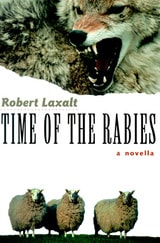
Time of the Rabies
A NovellaRobert Laxalt
University of Nevada Press, 2000

Touring Nevada
A Historic And Scenic GuideAl Glass
University of Nevada Press, 1983
A historic and scenic guide to Nevada from the glitz of Las Vegas to the solitude of the desert. Touring Nevada contains 34 one-day tours—all accessible by passenger car—designed to appeal to a wide variety of interests. The tours cover early settlements, the state’s indoor and outdoor recreational activities, and Nevada’s natural scenic wonders. The authors provide clear maps to ensure even the most unfamiliar travelers can find their way with ease.
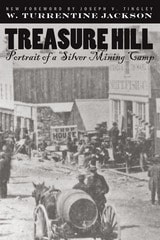
Treasure Hill
Portrait Of A Silver Mining CampW. Turrentine Jackson
University of Nevada Press, 2000
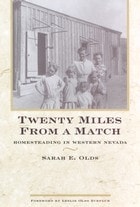
Twenty Miles From A Match
Homesteading In Western NevadaSarah E. Olds
University of Nevada Press, 1978