Results by title
94 books match the query 'New' and 25 start with t
The Balm of Gilead Tree
New and Selected StoriesRobert Morgan
Ohio University Press, 1999
Published in 1999 by Gnomon Press
In The Balm of Gilead Tree, acclaimed author and poet Robert Morgan presents a masterful collection of seventeen short stories—ten new and seven selected from earlier volumes—that illuminate the lives of working-class people in the American South, particularly in the Appalachian region. With lyrical precision and deep empathy, Morgan explores themes of hardship, resilience, and transformation across generations.
From the haunting historical imagination of “The Tracks of Chief de Soto” to the visceral immediacy of “The Ratchet,” where a truck driver faces a terrifying descent with failed brakes, Morgan’s stories are rich in sensory detail and emotional depth. Characters grapple with environmental peril, economic uncertainty, and the quiet dramas of rural life, all rendered with Morgan’s signature clarity and reverence for the natural world.
This collection affirms Morgan’s place as a vital voice in Southern literature, offering readers both the balm of storytelling and the grit of lived experience.
The Buried Sea
New and Selected PoemsRane Arroyo; Foreword by Luis Alberto Urrea
University of Arizona Press, 2008
Reading Rane Arroyo’s poems is a little like watching a movie playing at fastforward speed on the TV in your darkened bedroom. The colors pop and snap, the images leap and recede, the colors seem brighter than life—and you can’t stop watching even long enough to blink. It’s an intimate experience. Even at hyperspeed you can make out the images of friends, family, and lovers (especially lovers) burning rubber across the unblinking screen. And even without a sound track, you can hear the music—a symphony of jazz and samba, salsa and street sounds.
In The Buried Sea, Arroyo has selected poems from his first eleven books—five full-length collections of poems and six chapbooks—and has added nineteen new poems. When asked to describe himself, Arroyo writes that “the answer is easy: I’m a Puerto Rican, gay, Midwestern, educated, former working class, liberal, atheistic, humanist, American, male, ex-Mormon, ex-Catholic, pseudo-Buddhist, teacher, reader, global, and popular culture—informed poet.” Readers will find traces of all of these selves in this collection. And Arroyo does make it “easy” to follow the clues. His poems—vivacious, sexy, shiny, sly, pointed, ambitious—are easy to approach and easy to love. But they come with strings attached—like all affairs of the heart—and therein lies so much of their pleasure.
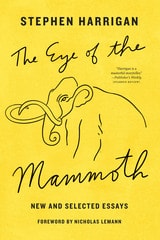
The Eye of the Mammoth
New and Selected EssaysBy Stephen Harrigan; foreword by Nicholas Lemann
University of Texas Press, 2013
History—natural history, human history, and personal history—and place are the cornerstones of The Eye of the Mammoth. Stephen Harrigan's career has taken him from the Alaska Highway to the Chihuahuan Desert, from the casinos of Monaco to his ancestors' village in the Czech Republic. And now, in this new edition, he movingly recounts in "Off Course" a quest to learn all he can about his father, who died in a plane crash six months before he was born.
Harrigan's deceptively straightforward voice belies an intense curiosity about things that, by his own admission, may be "unknowable." Certainly, we are limited in what we can know about the inner life of George Washington, the last days of Davy Crockett, the motives of a caged tiger, or a father we never met, but Harrigan's gift—a gift that has also made him an award-winning novelist—is to bring readers closer to such things, to make them less remote, just as a cave painting in the title essay eerily transmits the living stare of a long-extinct mammoth.
The Illiberal Liberals
An Appeal from the Old to the New LiberalsZbigniew Janowski
St. Augustine's Press, 2026
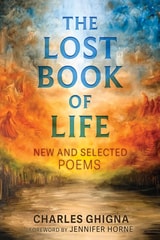
The Lost Book of Life
New and Selected PoemsCharles Ghigna, Foreword by Jennifer Horne
University of Alabama Press, 2026
A poetic journey through five decades of wonder, memory, and love, where the ordinary becomes sacred and every line leads home
Spanning five decades of poetic mastery, The Lost Book of Life: New and Selected Poems is the definitive collection from Charles Ghigna, a beloved and influential voice in contemporary Southern poetry. Drawing from fourteen previous volumes and featuring thirty-seven new poems, this landmark collection captures the full arc of Ghigna’s creative evolution, from his early meditations on nature and family to his later reflections on memory, mortality, and the enduring power of love.
With graceful shifts between free verse and traditional forms, Ghigna’s voice is both intimate and expansive—clear as spring water, alive with wit, and steeped in feeling. His poems open doorways into childhood’s bright dreaming, the quiet complexities of fatherhood, and the sacred hush of daily life. Ghigna invites readers to see the world anew, to find beauty in the familiar, and to embrace the sacred in the ordinary. For longtime admirers and new readers alike, The Lost Book of Life is a luminous testament to a life devoted to poetry. It is both compass and keepsake: a celebration of poetry’s enduring light, and a lasting gift to the literature of the American South.
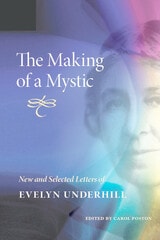
The Making of a Mystic
New and Selected Letters of Evelyn UnderhillEvelyn Underhill. Edited by Carol Poston.
University of Illinois Press, 2010
In time for the centennial celebration of her classic Mysticism, this volume of Underhill's letters will enable readers and researchers to follow her as she reconciled her beliefs with her daily life. The letters reveal her personal and theological development and clarify the relationships that influenced her life and work. Hardly aloof, she enjoyed the interests, mirth, and compassion of close friendships.
Drawing from collections previously unknown to scholars, The Making of a Mystic shows the range of Evelyn Underhill's mind and interests as well as the immense network of her correspondents, including Sir James Frazier and Nobel Prize laureate Rabindranath Tagore. This substantial selection of Underhill's correspondence demonstrates an exceptional scope, beginning with her earliest letters from boarding school to her mother and extending to a letter written to T. S. Eliot from what was to be her deathbed in London in 1941 as the London Blitz raged around her.
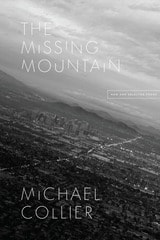
The Missing Mountain
New and Selected PoemsMichael Collier
University of Chicago Press, 2021
Whether Michael Collier is writing about an airline disaster, a friendship with a disgraced Catholic bishop, his father’s encounter with Charles Lindbergh, Lebanese beekeepers, a mother’s sewing machine, or a piano in the woods, he does so with the syntactic verve, scrupulously observed detail, and a flawless ear that has made him one of America’s most distinguished poets. These poems cross expanses, connecting the fear of missing love and the bliss of holding it, the ways we speak to ourselves and language we use with others, and deep personal grief and shadows of world history.
The Missing Mountain brings together a lifetime of work, chronicling Collier’s long and distinguished career as a poet and teacher. These selections, both of previously published and new poems, chart the development of Collier’s art and the cultivations of his passions and concerns.
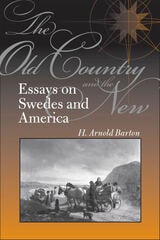
The Old Country and the New
Essays on Swedes and AmericaH. Arnold Barton
Southern Illinois University Press, 2006
Documenting a rich Scandinavian American culture and ethnic perspective
This notable collection of seventeen essays and six editorials by renowned Swedish American historian H. Arnold Barton was compiled from writings published between 1974 and 2005. The result of three decades of extensive research in the United States and Sweden, The Old Country and the New: Essays on Swedes and America, covers Swedish emigration to North America as well as the history and culture of Swedes in their new country.
In this rich mosaic of American ethnicity and cultural history, Barton analyzes the multifaceted Swedish emigration/immigration story. Essays include a survey of the historiography of emigration from the Scandinavian countries and the Scandinavian immigration to North America, Swedish emigration before 1846, and the Eric-Janssonist religious sect and its colony at Bishop Hill, Illinois.
Because Swedish immigrants were highly literate people, they wrote numerous letters describing their experiences to relatives and friends at home. What these letters related—or omitted—is the subject of another essay. Barton discusses Swedish immigrants who returned permanently to their homeland, affecting both the old country and the new. He also traces relations between the United States and Sweden, post—World War II Swedish immigration, and genealogy as history.
Offering a broad Scandinavian American ethnic perspective, The Old Country and the New appeals to both scholars and lay readers. Sixteen illustrations and a complete bibliography of Barton’s publications on Swedish American history and culture enhance the volume.

The Old Land and the New
The Journals of Two Swiss Families in America in the 1820sRobert H. Billigmeier and Fred Altschuler Picard, EditorsTranslated by Robert H. Billigmeier and Fred Altschuler PicardIllustrations by Hans Erni
University of Minnesota Press, 1965
The Old Land and the New was first published in 1965. Minnesota Archive Editions uses digital technology to make long-unavailable books once again accessible, and are published unaltered from the original University of Minnesota Press editions.
These are the journals in English translation of two early Swiss immigrants to America who provided an intriguing picture of life as they saw it in New York, Maryland, Pennsylvania, and Ohio. The book is illustrated with sketches by the Swiss artist, Hans Erni.
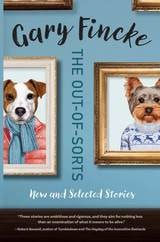
The Out-of-Sorts
New and Selected StoriesGary Fincke
West Virginia University Press, 2017
These stories are often set against large, significant events like the Cold War, Vietnam, and the Kent State shootings, but are always uniquely local. A mother fends off the police by brandishing copperhead snakes. A woman cares for the dog of an alleged double murderer. A husband who has lost his job works at trying to save his wife from a debilitating phobia.
This extensive collection by Gary Fincke, an accomplished poet and writer of fiction, gives rise to ordinary people living lives made fascinating by attention to the particulars of voice, place, and character. With precise language, surprising imagery, and sharp, evocative dialogue, these stories deepen beyond the oddities of their characters, who are scarred and defeated by circumstance and choice, but also attain moments of grace, compassion, and generosity of the spirit.
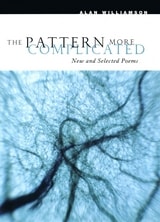
The Pattern More Complicated
New and Selected PoemsAlan Williamson
University of Chicago Press, 2004
The Pattern More Complicated assembles Williamson's most important, representative poems, marking the trajectory of poetic development and the recurrence of themes across the span of four previous collections to present a survey of a major American poet in a single volume.
The Roman Community at Table during the Principate, New and Expanded Edition
John F. Donahue
University of Michigan Press, 2017
This expanded edition of Donahue’s work includes significant new material on current trends in food studies, including the archaeology and bioarchaeology of ancient food and drink; an additional collection of inscriptions on public banquets from the Roman West; and an extensive bibliography of scholarship produced in the last ten years. It will be of interest not only to classicists and historians of the ancient world, but also to anthropologists and sociologists interested in food and social group dynamics.
The SILENT SINGER
NEW AND SELECTED POEMSLen Roberts
University of Illinois Press, 2001
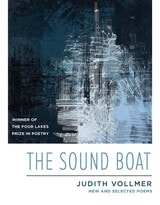
The Sound Boat
New and Selected PoemsJudith Vollmer
University of Wisconsin Press, 2022
Featuring twenty-one new and fifty-seven selected poems from her earlier volumes—The Apollonia Poems, The Water Books, Reactor, The Door Open to the Fire, and Level Green—The Sound Boat reveals Vollmer’s devotion to examining place and space to uncover poetry that touches emotions related to wandering physical and emotional realms: some familial and deeply personal, some unknowable.
down in the street, between the turtle fountain and the iron head
the party shouts and sings, sweats and snakes, swells into a throb
or momentum of sound.
—Excerpt from “The Sound Boat”
The Use of the Old Testament in the New and other essays
studies in honor of William Franklin StinespringJames M. Efird
Duke University Press, 1972
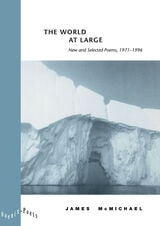
The World at Large
New and Selected Poems, 1971-1996James McMichael
University of Chicago Press, 1996
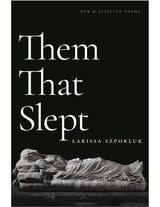
Them That Slept
New & Selected PoemsLarissa Szporluk
Tupelo Press, 2026
A selection of poems that form a narrative about psychological and spiritual somnambulance in our current age and the ever-urgent need to wake up.
In Them That Slept, Larissa Szporluk gathers three decades of work into a single incandescent arc—poems that braid feminist theology, eros, and myth into a lyric of fierce awakening. Borrowing its title from First Corinthians—“the firstfruits of them that slept”—this collection asks what it means to rise, not into certainty, but into desire, voice, and embodiment. Here, virgins become saints and saints become women of appetite. Daughters speak back to fathers. The sea mothers and devours. Joan of Arc lingers in her cell. Venus tweets. The body is never merely symbolic—it is radiant, wounded, knowing. Szporluk’s women are not passive figures in inherited narratives; they are theologians of touch, architects of longing, midwives of their own transformations.
Across selections from six previous books and a powerful suite of new poems, Szporluk reimagines sacred language as intimate speech. Biblical cadences shimmer against domestic interiors, fields, bedrooms, and storm skies. Eros is not an ornament but a form of knowledge; faith is not obedience but risk. These are poems that refuse to sleep through history. They burn toward revelation— sensual, subversive, and alive.
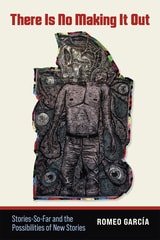
There Is No Making It Out
Stories-So-Far and the Possibilities of New StoriesRomeo García
Utah State University Press, 2025
Time's Reasons
Philosophies of History Old and NewLeonard Krieger
University of Chicago Press, 1989
The heart of Krieger's narrative is an insightful analysis of theories of history from the classical period to the present, with a principal focus on the modern period. Krieger's exposition covers such figures as Ranke, Hegel, Comte, Marx, Acton, Troeltsch, Spengler, Braudel, and Foucault, among others, and his discussion involves him in subtle distinctions among terms such as historism, historicism, and historicity. He points to the impact on history of academic political radicalism and its results: the new social history. Krieger argues for the autonomy of historical principles and methods while tracing the importation in the modern period of external principles for historical coherence.
Time's Reasons is a profound attempt to rejuvenate and restore integrity to the discipline of history by one of the leading masters of nineteenth- and twentieth-century historiography. As such, it will be required reading for all historiographers and intellectual historians of the modern period.

To the Bone
NEW AND SELECTED POEMSSydney Lea
University of Illinois Press, 1996
The writings of Didymus were censored and destroyed due to his posthumous condemnation for heresy. This study recovers the uncensored voice of Didymus through the commentaries among the Tura papyri, a massive set of documents discovered in an Egyptian quarry in 1941.
This neglected corpus offers an unprecedented glimpse into the internal workings of a Christian philosophical academy in the most vibrant and tumultuous cultural center of late antiquity. By exploring the social context of Christian instruction in the competitive environment of fourth-century Alexandria, Richard A. Layton elucidates the political implications of biblical interpretation.
Through detailed analysis of the commentaries on Psalms, Job, and Genesis, the author charts a profound tectonic shift in moral imagination as classical ethical vocabulary becomes indissolubly bound to biblical narrative. Attending to the complex interactions of political competition and intellectual inquiry, this study makes a unique contribution to the cultural history of late antiquity.
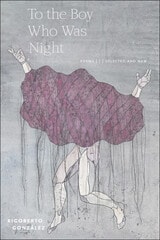
To the Boy Who Was Night
Poems: Selected and NewRigoberto González
Four Way Books, 2023
The capstone of a quarter-century career in poetry, To the Boy Who Was Night collects the poetry published by Rigoberto González since 1999, including selections from five previous books as well as new work. Mirroring González’s personal trajectory, the arc of this work articulates the course of a life: these poems recall leaving a beloved homeland, confront masculinity and sexuality in new adulthood, imagine the earth devoid of human inhabitants, descend into the realm of ghosts, and return to arrive at Dispatches from the Broken World. This latest section ventures into foreign terrain — an autobiographical confrontation with isolation and the aging body. His lyrical exploration, like the weather reports scrawled on ancient temple walls, will preserve this age-old message: “likely a poem, surely an epitaph.” To the Boy Who Was Night bears the fruit of 25 years of poetry, González’s boldest and most comprehensive volume yet.
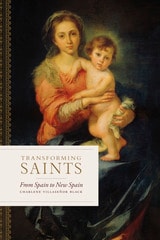
Transforming Saints
From Spain to New SpainCharlene Villaseñor Black
Vanderbilt University Press, 2022
The chapters here examine the rise of the cults of the lactating Madonna, St. Anne, St. Librada, St. Mary Magdalene, and the Suffering Virgin. Concerned with holy figures presented as feminine archetypes—images that came under Inquisition scrutiny—as well as with cults suspected of concealing Indigenous influences, Charlene Villaseñor Black argues that these images would come to reflect the empowerment and agency of women in viceregal Mexico. Her close analysis of the imagery additionally demonstrates artists' innovative responses to Inquisition censorship and the new artistic demands occasioned by conversion.
The concerns that motivated the twenty-first century protests against Chicana artists Yolanda López in 2001 and Alma López in 2003 have a long history in the Hispanic world, in the form of anxieties about the humanization of sacred female bodies and fears of Indigenous influences infiltrating Catholicism. In this context Black also examines a number of important artists in depth, including El Greco, Murillo, Jusepe de Ribera, Pedro de Mena, Baltasar de Echave Ibía, Juan Correa, Cristóbal de Villalpando, and Miguel Cabrera.
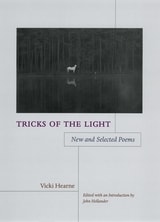
Tricks of the Light
New and Selected PoemsVicki Hearne
University of Chicago Press, 2007
The horse that, trotting with open heart
Against the wind, achieves bend and flow
Will live forever. So far, so good,
But they never do, until too late,
Bend properly and time spreads from
The momentary hesitations
Of their spines, circles their tossing necks,
Falls from their teeth like rejected oats,
Litters the ground like penitence.
This is where we come in, where the drop
Of time congeals the air and someone
Speaks to the discouraged grass . . .
Tricks of the Light explores the often fraught relationships between domestic animals and humans through mythological figurations, vibrant thought, and late-modern lyrics that seem to test their own boundaries. Vicki Hearne (1946–2001), best known and celebrated today as a writer of strikingly original poetry and prose, was a capable dog and horse trainer, and sometimes controversial animal advocate.
This definitive collection of Hearne’s poetry spans the entirety of her illustrious career, from her first book, Nervous Horses (1980), to never-before-published poems composed on her deathbed. But no matter the source, each of her meditative, metaphysical lyrics possesses that rare combination of philosophical speculation, practical knowledge of animals, and an unusually elegant style unlike that of any other poet writing today. Before her untimely death, Hearne entrusted the manuscript to distinguished poet, scholar, and long-time friend John Hollander, whose introduction provides both critical and personal insight into the poet’s magnum opus. Tricks of the Light—acute, vibrant, and deeply informed—is a sensuous reckoning of the connection between humans and the natural world.
Praise for The Parts of Light
“Hearne . . . strives to capture exactly what she knows she can't—the intense immediacy of animal consciousness, a consciousness free of the moral vagaries and intellectual preoccupations that pockmark human experience. Her style, smooth in some places, choppy in others, reflects both the wholeness of animal presence and the jarring, fragmentary nature of human reason and reflection. Hearne's poems demand participation, refuse passive enjoyment; she dares the reader to stay in the saddle.”—Publishers Weekly
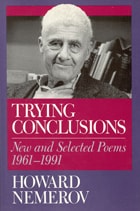
Trying Conclusions
New and Selected Poems, 1961-1991Howard Nemerov
University of Chicago Press, 1991
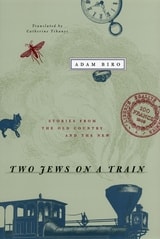
Two Jews on a Train
Stories from the Old Country and the NewAdam Biro
University of Chicago Press, 2001
As Biro recounts these tales, we hear not only his voice and the voice of his father, but those of generations of storytellers who have used humor to teach about the truly important issues in life—the delicacy of love, the fragility of friendship, the pitfalls of self-righteousness, the costs of narrow-mindedness, and the unpredictability of life itself. Biro artfully spins each story, lingering on the details, guiding the reader to the inevitable—yet always unexpected—punchline.
Taken individually, these stories will make you laugh out loud; taken as a whole, they form an invaluable record of the sensibilities of an entire people. Biro writes: "These Jewish stories of which not a single one happened to me, and of which I did not invent a single one, do describe me, do characterize me, do explain me. They are always my own story. And yours."