Results by title
87 books match the query 'Officials and employees' and 17 start with t
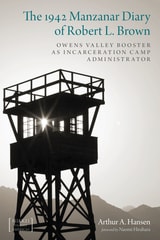
The 1942 Manzanar Diary of Robert L. Brown
Owens Valley Booster as Incarceration Camp AdministratorArthur A. Hansen
University Press of Colorado, 2026
This transcribed and edited wartime diary of Robert L. Brown—a trained journalist who served as public relations staff and assistant director at the Manzanar concentration camp—reveals the thoughts and perspective of the jailer, providing a window into the views of the local population around the presence and experience of a concentration camp for Japanese Americans in their community. In addition to the heavily footnoted diary, the book includes a prologue, introduction, and epilogue from Arthur A. Hansen, providing context for the journal as well as how Hansen came to transcribe the work with Brown’s blessing.
A departure from the typical recovered narratives from incarcerees, Brown’s diary is a historically significant primary source that provides insight into camp administration and local community relationships with Manzanar and a rich primary source for specialists in the field of Japanese American incarceration.
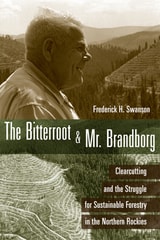
The Bitterroot and Mr. Brandborg
Clearcutting and the Struggle for Sustainable Forestry in the Northern RockiesFrederick H. Swanson
University of Utah Press, 2011
Winner of the Wallace Stegner Prize in American Environmental or Western History
Fredrick Swanson tells the story of Guy M. Brandborg and his impact on the practices of the U.S. Forest Service. As supervisor of Montana’s Bitterroot National Forest from 1935 to 1955, Brandborg engaged in a management style that promoted not only the well-being of the forest community but also the social and economic welfare of the local people. By relying on selective cutting, his goal was to protect the watersheds and wildlife habitats that are devastated by clear-cutting, and to prevent the job losses that follow such practices. Following his retirement, he became concerned that his agency was deviating from the practice of sustained-yield management of the forest’s timber lands, and led a highly visible public outcry that became known as the Bitterroot controversy. Brandborg’s behind-the-scenes lobbying contributed materially to the passage of the National Forest Management Act of 1976, the single most important law affecting public forestry since the creation of the Forest Service.
Winner of the Western Writers of America Spur Award for Best Western Nonfiction-Contemporary.
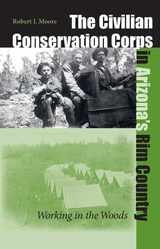
The Civilian Conservation Corps In Arizona's Rim Country
Working In The WoodsRobert J. Moore
University of Nevada Press, 2006
Part of the massive relief effort of Roosevelt’s New Deal, the CCC was created in 1933 to give young men an opportunity to work and make money to help families devastated by the Great Depression, and to participate in forest and conservation projects across the country. In Arizona, thousands of young men, many of them from the industrial Northeast, served in the state’s CCC forest camps. Arizona’s Mogollon Rim is a spectacular expanse of cliffs that slices through half the state, stretching from Sedona eastward to New Mexico. Along with the White Mountains, it includes the largest contiguous forest of ponderosa pine in America. Remote and little-visited in the 1930s, the Rim Country offered copious outlets for the CCC men’s energies: building roads, public campsites, hiking trails, fire lookout towers, and administration buildings; fighting fires; controlling erosion; eliminating vermin; and restoring damaged soils. The CCC enrollees were also given an opportunity to continue interrupted educations, learn useful skills and self-discipline, participate in sports and other leisure activities, and meet local residents. Author Robert J. Moore interviewed a number of CCC veterans who served in the Rim Country, and their stories are part of this book. So too are photographs—many of them from veterans’ personal collections—of Rim Country camps and workers, and such ephemera as camp newspapers. This is an engrossing account of several thousand young men who came to Arizona to escape the misery of the Great Depression, whose work in the woods changed the state, and who in the process were themselves changed. Here is the human face of Arizona’s CCC, the men’s experiences, their work, and their lasting impact on the forests of the Rim Country.
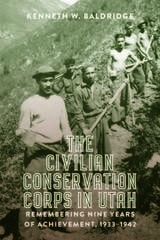
The Civilian Conservation Corps in Utah
Remembering Nine Years of Achievement, 1933-1942Kenneth W. Baldridge
University of Utah Press, 2018
Copublished with the Utah State Historical Society. Affiliated with the Utah Division of State History, Utah Department of Heritage & Arts
“There was a certain magic about sending young men into the woods. It was not so much man against nature as it was man in league with nature against the economic troubles that were then stalking the land.”—from the book
In 1932, unemployment in Utah was about 34 percent. Nearly every state west of the Mississippi River was struggling not only with unemployment but also with drought, erosion, and overgrazing. To solve these serious difficulties, President Franklin D. Roosevelt launched what would become arguably the most popular of his New Deal programs—the Civilian Conservation Corps (CCC). From 1933 to 1942, the CCC employed three million young men on land-improvement projects that are still used today.
In this book, Kenneth Baldridge chronicles the work of the 10,000 men who served at Utah’s 116 CCC camps. With facts and anecdotes drawn from camp newspapers, government files, interviews, letters written by enrollees, and other sources, he situates the CCC within the political climate and details not only the projects but also the day-to-day aspects of camp life. For thirty dollars a month—of which twenty-five was sent home to their folks—these young recruits planted trees; built roads, bridges, dams, and trails; fought fires; battled pests and noxious weeds; and erected cabins, campgrounds, amphitheaters, and reservoirs, and more.
Today the CCC is credited with creating greater public awareness and appreciation of the outdoors. It has also served as a model for the Student Conservation Corps and other youth programs. This volume documents the public good created by the CCC, provides an extensive bibliography, and is illustrated with numerous historic and modern photos.
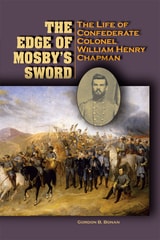
The Edge of Mosby’s Sword
The Life of Confederate Colonel William Henry ChapmanGordon B. Bonan
Southern Illinois University Press, 2009
The Edge of Mosby’s Sword is the first scholarly volume to delve into the story of one of John Singleton Mosby’s most trusted and respected officers, Colonel William Henry Chapman. Presenting both military and personal perspectives of Chapman’s life, Gordon B. Bonan offers an in-depth understanding of a man transformed by the shattering of his nation. This painstakingly researched account exposes a soldier and patriot whose convictions compelled him to battle fiercely for Southern independence; whose quest for greatness soured when faced with the brutal realities of warfare; and who sought to heal his wounded nation when the guns of war were silenced.
Born into a wealthy slave-owning family, Chapman was a student of the fiery secessionist rhetoric of antebellum Virginia who eagerly sought glory and adventure on the battlefields of the Civil War. Bonan traces Chapman’s evolution from an impassioned student at the University of Virginia to an experienced warrior and leader, providing new insight into the officer’s numerous military accomplishments. Explored here are Chapman’s previously overlooked endeavors as a student warrior, leader of the Dixie Artillery, and as second-in-command to Mosby, including his participation in the capture of Harpers Ferry, the battering of Union forces at Second Manassas, and his ferocious raids during the 1864 Shenandoah Valley campaign. Bonan reveals fresh perspectives on the intrepid maneuvers of Mosby’s Rangers, the hardships of war, and Chapman’s crucial role as the right hand of the “Gray Ghost.” But while Mosby recognized him for his bravery and daring, the fame Chapman sought always eluded him. Instead, with his honors and successes came disillusionment and sorrow, as he watched comrades and civilians alike succumb to the terrible toll of the war.
The end of the struggle between North and South saw Chapman accept defeat with dignity, leading the Rangers to their official surrender and parole at Winchester. With the horrors of the war behind him, he quickly moved to embrace the rebuilding of his country, joining the Republican party and beginning a forty-two-year career at the IRS enforcing Federal law throughout the South. In the end, Chapman’s life is a study in contradictions: nationalism and reconciliation; slavery and liberty; vengeance and chivalry.
The Emperor's Clothes
A Personal Viewpoint of Politics and Administration in the Imperial Ethiopian Government, 1941-1974Gaitachew Bekele
Michigan State University Press, 1993
. . . An engaging personal account of a public service career n the period leading to the 1974 revolution. It ...persuades and provides real insight into the genuine noblesse oblige of the first generation of technocrats drawn from the social elite of the post- war period.
-James McCann, Boston University
The Federal Appointments Process
A Constitutional and Historical AnalysisMichael J. Gerhardt
Duke University Press, 2003
Michael J. Gerhardt includes each U.S. president’s performance record regarding appointments, accounts of virtually all the major confirmation contests, as well as discussion of significant legal and constitutional questions raised throughout U.S. history. He also analyzes recess appointments, the Vacancies Act, the function of nominees in the appointment process, and the different treatment received by judicial and nonjudicial nominations. While discussing the important roles played by media and technology in federal appointments, Gerhardt not only puts particular controversies in perspective but also identifies important trends in the process, such as how leaders of different institutions attempt to protect—if not expand—their respective prerogatives by exercising their authority over federal appointments. Employing a newly emerging method of inquiry known as “historical institutionalism”—in which the ultimate goal is to examine the development of an institution in its entirety and not particular personalities or periods, this book concludes with suggestions for reforms in light of recent controversies springing from the longest delays in history that many judicial nominees face in the Senate.
Gerhardt’s intensive treatment of the subject will be of interest to students and scholars of political science, government, history, and legal studies.

The Foundation Administrator
A Study of Those Who Manage America's FoundationsArnold John Zurcher
Russell Sage Foundation, 1972
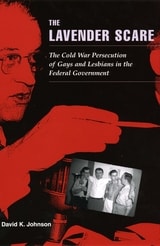
The Lavender Scare
The Cold War Persecution of Gays and Lesbians in the Federal GovernmentDavid K. Johnson
University of Chicago Press, 2003
Historian David K. Johnson here relates the frightening, untold story of how, during the Cold War, homosexuals were considered as dangerous a threat to national security as Communists. Charges that the Roosevelt and Truman administrations were havens for homosexuals proved a potent political weapon, sparking a "Lavender Scare" more vehement and long-lasting than McCarthy's Red Scare. Relying on newly declassified documents, years of research in the records of the National Archives and the FBI, and interviews with former civil servants, Johnson recreates the vibrant gay subculture that flourished in New Deal-era Washington and takes us inside the security interrogation rooms where thousands of Americans were questioned about their sex lives. The homosexual purges ended promising careers, ruined lives, and pushed many to suicide. But, as Johnson also shows, the purges brought victims together to protest their treatment, helping launch a new civil rights struggle.
The Lavender Scare shatters the myth that homosexuality has only recently become a national political issue, changing the way we think about both the McCarthy era and the origins of the gay rights movement. And perhaps just as importantly, this book is a cautionary tale, reminding us of how acts taken by the government in the name of "national security" during the Cold War resulted in the infringement of the civil liberties of thousands of Americans.
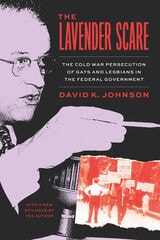
The Lavender Scare
The Cold War Persecution of Gays and Lesbians in the Federal GovernmentDavid K. Johnson
University of Chicago Press, 2023
In The Lavender Scare, David K. Johnson tells the frightening story of how, during the Cold War, homosexuals were considered as dangerous a threat to national security as Communists. Charges that the Roosevelt and Truman administrations were havens for homosexuals proved a potent political weapon, sparking a “Lavender Scare” more vehement and long-lasting than Joseph McCarthy’s Red Scare. Drawing on declassified documents, years of research in the records of the National Archives and the FBI, and interviews with former civil servants, Johnson recreates the vibrant gay subculture that flourished in midcentury Washington and takes us inside the security interrogation rooms where anti-homosexual purges ruined the lives and careers of thousands of Americans. This enlarged edition of Johnson’s classic work of history—the winner of numerous awards and the basis for an acclaimed documentary broadcast on PBS—features a new epilogue, bringing the still-relevant story into the twenty-first century.
The Power of Civil Servants
David Normington and Peter Hennessy
Haus Publishing, 2018
Throughout Britain, Civil Servants are exposed to public scrutiny today in unprecedented ways. What does it mean that the political neutrality of the Civil Service has only been enshrined in law since 2010, nearly 150 years after it was first proposed? Why is it so important for politicians to trust Civil Servants (and what difficulties arise when they do not)?
Coauthored by former First Civil Service Commissioner David Normington and historian Peter Hennessy, The Power of Whitehall provides answers through rich observations about the nature of the British Civil Service, its values and effectiveness, and how it should continue to adapt to a changing world.
The Soviet Writers' Union and Its Leaders
Identity and Authority under StalinCarol Any
Northwestern University Press, 2021
Winner, University of Southern California Book Prize in Literary and Cultural Studies
The Soviet Writers’ Union offered writers elite status and material luxuries in exchange for literature that championed the state. This book argues that Soviet ruler Joseph Stalin chose leaders for this crucial organization, such as Maxim Gorky and Alexander Fadeyev, who had psychological traits he could exploit. Stalin ensured their loyalty with various rewards but also with a philosophical argument calculated to assuage moral qualms, allowing them to feel they were not trading ethics for self‑interest.
Employing close textual analysis of public and private documents including speeches, debate transcripts, personal letters, and diaries, Carol Any exposes the misgivings of Writers’ Union leaders as well as the arguments they constructed when faced with a cognitive dissonance. She tells a dramatic story that reveals the interdependence of literary policy, communist morality, state‑sponsored terror, party infighting, and personal psychology. This book will be an important reference for scholars of the Soviet Union as well as anyone interested in identity, the construction of culture, and the interface between art and ideology.
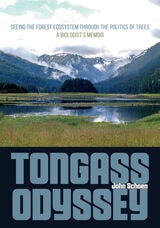
Tongass Odyssey
Seeing the Forest Ecosystem through the Politics of TreesJohn Schoen
University of Alaska Press, 2020
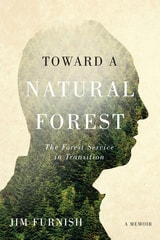
Toward a Natural Forest
The Forest Service in Transition (A Memoir)Jim Furnish
Oregon State University Press, 2015
The Forest Service stumbled in responding to a wave of lawsuits from environmental groups in the late 20th Century—a phenomenon best symbolized by the spotted owl controversy that shut down logging on public forests in the Pacific Northwest in the 1990s. The agency was brought to its knees, pitted between a powerful timber industry that had been having its way with the national forests for decades, and organized environmentalists who believed public lands had been abused and deserved better stewardship.
Toward a Natural Forest offers an insider’s view of this tumultuous time in the history of the Forest Service, presenting twin tales of transformation, both within the agency and within the author’s evolving environmental consciousness. While stewarding our national forests with the best of intentions, had the Forest Service diminished their natural essence and ecological values? How could one man confront the crisis while remaining loyal to his employer?
In this revealing memoir, Furnish addresses the fundamental human drive to gain sustenance from and protect the Earth, believing that we need not destroy it in the process. Drawing on the author’s personal experience and his broad professional knowledge, Toward a Natural Forest illuminates the potential of the Forest Service to provide strong leadership in global conservation efforts. Those interested in our public lands—environmentalists, natural resource professionals, academics, and historians—will find Jim Furnish’s story deeply informed, thought-provoking, and ultimately inspiring.
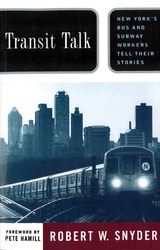
Transit Talk
New York's Bus and Subway Workers Tell Their StoriesRobert W. Snyder
Rutgers University Press, 1998
There are nearly 44,000 transit workers like those you will meet in Transit Talk , and every day they help five million of us travel to work, to school, to weddings, to funerals, to hospitals, to vacations. These workers labor daily on subway tracks inches from high-voltage powerlines, risking their lives for passengers they'U never know. The city can feel large and fragmented, but the transportation system and its workers create common threads in the lives of all New Yorkers, threads we take for granted.
Together, their stories create a human tableau of life and labor in the city within a city that is the MTA New York City Transit. Transit workers find satisfaction in fixing a damaged subway car, gain wisdom from mastering a dangerous workplace, nurse emotional wounds from tending to someone injured in an accident, battle frustration from difficulties with management, and express satisfaction when reflecting on a productive career. They tell of how years spent in the same shop create bonds between workers. They talk of the burden of laboring in a twenty-four-hour system with night shifts and weekend workdays that take them away from families. You'U hear painful tales of informing next-of-kin of a death on the tracks as well as joyous anecdotes of workers delivering a baby in a subway car.
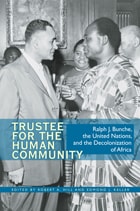
Trustee for the Human Community
Ralph J. Bunche, the United Nations, and the Decolonization of AfricaRobert A. Hill
Ohio University Press, 2010
Ralph J. Bunche (1904–1971), winner of the Nobel Peace Prize in 1950, was a key U.S. diplomat in the planning and creation of the United Nations in 1945. In 1947 he was invited to join the permanent UN Secretariat as director of the new Trusteeship Department. In this position, Bunche played a key role in setting up the trusteeship system that provided important impetus for postwar decolonization ending European control of Africa as well as an international framework for the oversight of the decolonization process after the Second World War.
Trustee for the Human Community is the first volume to examine the totality of Bunche’s unrivalled role in the struggle for African independence both as a key intellectual and an international diplomat and to illuminate it from the broader African American perspective.
These commissioned essays examine the full range of Ralph Bunche’s involvement in Africa. The scholars explore sensitive political issues, such as Bunche’s role in the Congo and his views on the struggle in South Africa. Trustee for the Human Community stands as a monument to the profoundly important role of one of the greatest Americans in one of the greatest political movements in the history of the twentieth century.
Contributors: David Anthony, Ralph A. Austen, Abena P. A. Busia, Neta C. Crawford, Robert R. Edgar, Charles P. Henry, Robert A. Hill, Edmond J. Keller, Martin Kilson, Georges Nzongola-Ntalaja, Jon Olver, Pearl T. Robinson, Elliott P. Skinner, Crawford Young
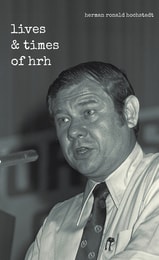
the lives & times of hrh
Herman Hochstadt
National University of Singapore Press, 2020