Results by title
242 books match the query 'Old Testament' and 66 start with t
Tel Dan in Its Northern Cultic Context
Andrew R. Davis
SBL Press, 2013
Texts and Contexts of the Book of Sirach / Texte und Kontexte des Sirachbuches
Gerhard Karner
SBL Press, 2017
Now available from SBL Press
Thirteen essays, some in German and others in English, tackle the complicated history of textual transmission of Sirach. This book presents the proceedings of an international conference held in 2014 in Eichstaett, Germany on the text of Ben Sira within its historical contexts.Contributors include James K. Aitken, Pierre-Maurice Bogaert, Franz Böhmisch, Anthony J. Forte SJ, Jan Joosten, Otto Kaiser, Siegfried Kreuzer, Jean-Sébastien Rey, Werner Urbanz, Knut Usener, Oda Wischmeyer, Markus Witte, Benjamin G. Wright, and Burkard M. Zapff.
Features:
- A sociocultural and theological history of Sirach
- Philological and textual problems of the Hebrew, Greek, Syriac, and Latin versions
- Translation strategies based on Greek, Syriac, and Latin text traditions and related hermeneutical questions
Textual History and the Reception of Scripture in Early Christianity
Johannes de Vries
SBL Press, 2013
The Archaeology of the Kingdom of Judah
Yosef Garfinkel
SBL Press, 2025
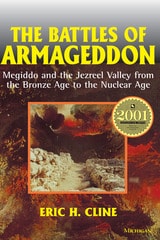
The Battles of Armageddon
Megiddo and the Jezreel Valley from the Bronze Age to the Nuclear AgeEric H. Cline
University of Michigan Press, 2002
> Best Popular Book on Archaeology
--Biblical Archaeology Society
Apocalypse. Judgment Day. The End Time. Armageddon. Students of the Bible know it as the place where the cataclysmic battle between the forces of good and the forces of evil will unfold. Many believe that this battle will take place in the very near future. But few know that Armageddon is a real place--one that has seen more fighting and bloodshed than any other spot on earth.
The name Armageddon is a corruption of the Hebrew phrase Har Megiddo, and it means "Mount of Megiddo." More than thirty bloody conflicts have been fought at the ancient site of Megiddo and adjacent areas of the Jezreel Valley during the past four thousand years. Egyptians, Israelites, Greeks, Muslims, Crusaders, Mongols, British, Germans, Arabs, and Israelis have all fought and died here. The names of the warring leaders reverberate throughout history: Thutmose III, Deborah, Gideon, Saul and Jonathan, Jezebel, Saladin, Napoleon, and Allenby, to name but the most famous. Throughout history Megiddo and the Jezreel Valley have been ground zero for battles that determined the very course of civilization. No wonder that the author of Revelation believed Armageddon, the penultimate battle between good and evil, would also take place here!
The Battles of Armageddon introduces readers to a rich cast of ancient and modern warriors, while bringing together for the first time the wide range of conflicts that have been fought at Megiddo and the Jezreel Valley from the Bronze Age to the Nuclear Age.
Eric H. Cline has participated in more than seventeen seasons of excavation and survey in Israel, Egypt, Jordan, Greece, and the United States. He is currently a Senior Staff Archaeologist at the ongoing excavations of Megiddo.
The Beginning of Wisdom
Reading GenesisLeon R. Kass
University of Chicago Press, 2006
“Extraordinary,” says the New York Times, “will leave no reader’s understanding of Genesis unchanged.”
Examining Genesis in a philosophical light, Leon Kass presents it not as a story of what happened long ago, but as the enduring story of humanity itself. He asserts that the first half of Genesis contains insights about human nature that “rival anything produced by the great philosophers.” Kass here reads these first stories—from Adam and Eve to the tower of Babel—as a mirror for self-discovery that reveals truths about human reason, speech, freedom, sexual desire, pride, shame, anger, and death. Taking a step further in the second half of his book, Kass explores the struggles in Genesis to launch a new way of life that addresses mankind’s morally ambiguous nature by promoting righteousness and holiness.
Even readers who don’t agree with Kass’s interpretations will find The Beginning of Wisdom a compelling book—a masterful philosophical take on one of the world’s seminal religious texts.

The Bible Without Theology
The Theological Tradition and Alternatives to ItRobert A. Oden, Jr.
University of Illinois Press, 1987
Using cross-cultural and interdisciplinary methodology, Oden investigates three biblical issues--the clothing of Adam and Eve, Jacob's name change to Israel, and ritual prostitution and Deuteronomy--in light of extra-biblical evidence. He also challenges scholars' assumptions of Scripture as monotheistic and proposes treating biblical narrative as myth rather than as historical fact.
The Bible as Christian Scripture
The Work of Brevard S. ChildsChristopher R. Seitz
SBL Press, 2013
The Bible in Greek
Translation, Transmission, and Theology of the SeptuagintSiegfried Kreuzer
SBL Press, 2015
This volume presents English and German papers that give an overview on important stages, developments, and problems of the Septuagint and the research related to it. Four sections deal with the cultural and theological background and beginnings of the Septuagint, the Old Greek and recensions of the text, the Septuagint and New Testament quotations, and a discussion of Papyrus 967 and Codex Vaticanus.
Features:
- A complete list of Kreuzer’s publications on the text and textual history of the Hebrew Bible and the Septuagint
- Criteria for analysis of the Antiochene/Lucianic Text and the Kaige-Recension
- A close examination of the origins and development of the Septuagint in the context of Alexandrian and early Jewish culture and learning
The Bible in the Sixteenth Century
David C. Steinmetz
Duke University Press, 1990
Contributors. Irena Backus, Guy Bedouelle, Kalman P. Bland, Kenneth G. Hagen, Scott H. Hagen, Scott H. Hendrix, R. Gerald Hobbs, Jean-Claude Margolin, H. C. Erik Midelfort, Richard A. Muller, John B. Payne, David C. Steinmetz
The Book of Jonah
A Social Justice CommentaryRabbi Dr. Shmuly Yanklowitz
Central Conference of American Rabbis, 2020
The Book of Proverbs
A Social Justice CommentaryRabbi Dr. Shmuly Yanklowitz
Central Conference of American Rabbis, 2022
The Book of the Twelve and Beyond
Collected Essays of James D. NogalskiJames D. Nogalski
SBL Press, 2017
A critical collection for specialists and serious students of prophetic literature
This book contains a collection of essays dealing with texts in the Book of the Twelve written by James D. Nogalski beginning in 1993. Essays use various methodological approaches to prophetic literature, including redaction criticism, form criticism, text criticism, intertextuality, and literary analysis. The variety of methods employed by one scholar, as well as the diverse texts treated, makes this volume useful for exploring changes in the field of prophetic studies in the last quarter century.
Features
- A helpful entry into the issues surrounding the historical and literary interpretation of the Book of the Twelve as a redacted corpus
- A collection of sixteen essays using a variety of methods
- Bracketed page numbers coordinating these essays with the pages in original publications

The Book of the Twelve and the New Form Criticism
Mark J. Boda
SBL Press, 2015
An exploration of genre questions for scholars and students
Contributors to this volume explore the theoretical issues at stake in recent changes in form criticism and the practical outcomes of applying the results of these theoretical shifts to the Book of the Twelve. This volume combines self-conscious methodological reflection with examination of specific texts illustrating the value of certain methodological approaches.
Features:
- Essays that demonstrate the practical consequences of theoretical decisions
- Contributions that illustrate new interpretations
- Focused attention to genre in the Book of the Twelve
The Christian Moses
Phillip Rousseau
Catholic University of America Press, 2019
The Curse of Cain
The Violent Legacy of MonotheismRegina M. Schwartz
University of Chicago Press, 1997
"[A] provocative and timely examination of the interrelationship of monotheism and violence. . . . This is a refreshing alternative to criticism-biblical and otherwise-that so often confuses interpretation with closure; it is an invitation to an ethic of possibility, plenitude, and generosity, a welcome antidote to violence, as important for its insights into memory, identity, and place as for its criticism of monotheism's violent legacy."—Booklist
"Brilliant and provocative, this is a work demanding close attention from critics, theologians, and all those interested in the imaginative roots of common life."—Rowan Williams, Bishop of Monmouth
"A stunningly important book."—Walter Brueggemann, Theology Today
"Artfully rendered, endlessly provocative."—Lawrence Weschler, New Yorker
The Guide of the Perplexed
Complete in One VolumeMoses Maimonides
University of Chicago Press, 1963
The twelfth-century Judeo-Arabic text The Guide of the Perplexed is a monument of rabbinical exegesis and one of the most important works in the history of Jewish thought. Written by Moses ben Maimon,commonly known as Maimonides, the Guide aims to liberate people from the perplexities that arise from an understanding of the Bible based only on its literal meaning.
Shlomo Pines’s translation has served students and scholars for decades, and it is presented here, with Leo Strauss’s influential introduction, in one volume for the first time.
The Hebrew Bible and Philosophy of Religion
Jaco Gericke
SBL Press, 2012
The Hermeneutics of Torah
Proverbs 2, Deuteronomy, and the Composition of Proverbs 1–9Bernd U. Schipper
SBL Press, 2021
This revised and expanded English edition of Bernd U. Schipper’s 2012 Hermeneutik der Tora incorporates the results of his continued research and writings on Proverbs. For nearly a century, many biblical scholars have argued that the main theological traditions, such as the divine law, God’s torah, do not appear in the book of Proverbs. In this volume, however, Schipper demonstrates that Proverbs interacts in a sophisticated way with the concept of the torah. A detailed analysis of Proverbs 2 and other passages from the first part of the book of Proverbs shows that Proverbs engages in a postexilic discourse around “wisdom and torah” concerning the abilities of humans to fulfill the will of YHWH exemplified in the divine torah.
The Holy Spirit in Luke-Acts
The Role of the ReaderMarco Wittenberg
Central European University Press, 2026
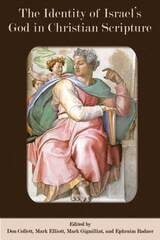
The Identity of Israel’s God in Christian Scripture
Don Collett
SBL Press, 2021
A broad, sweeping volume that breaches the walls separating biblical and theological disciplines
Biblical scholars and theologians engage an important question: Who is Israel’s God for Christian readers of the Old Testament? For Christians, Scripture is the Old and New Testament bound together in a single legacy. Contributors approach the question from multiple disciplinary vantage points. Essays on both Testaments focus on figural exegesis, critical exegesis, and the value of diachronic understandings of the Old Testament’s compositional history for the sake of a richer synchronic reading. This collection is offered in celebration of the life and work of Christopher R. Seitz. His rich and wide-ranging scholarly efforts have provided scholars and students alike a treasure trove of resources related to this critical question.
The Intercourse of Knowledge
On Gendering Desire and 'Sexuality' in the Hebrew BibleAthalya Brenner
SBL Press, 2016
Now in paperback!
This groundbreaking book, which builds on the author's earlier work in On Gendering Texts, studies how, by what means, and to what extent human love, desire and sex, and possibly even "sexuality"; are gendered in the Hebrew Bible. The investigation looks into the construction of male and female bodies in language and ideologies; the praxis and ideology of sex, procreation, and contraception; deviation from socio-sexual boundaries (e.g. incest, rape, adultery, homosexuality, prostitution); eroticism and "pornoprophetics."
Features:
- Paperback format of an essential Brill monograph
- A classification and gendering of the linguistic and semantic data
- Discussion of wider sociological and theological implications
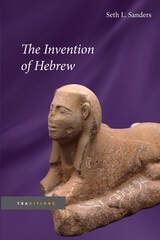
The Invention of Hebrew
Seth L. Sanders
University of Illinois Press, 2011
Seth L. Sanders connects the Bible's distinctive linguistic form--writing down a local spoken language--to a cultural desire to speak directly to people, summoning them to join a new community that the text itself helped call into being. Addressing the people of Israel through a vernacular literature, Hebrew texts reimagined their audience as a public. By comparing Biblical documents with related ancient texts in Hebrew, Ugaritic, and Babylonian, this book shows Hebrew's distinctiveness as a self-conscious political language. Illuminating the enduring stakes of Biblical writing, Sanders demonstrates how Hebrew assumed and promoted a source of power previously unknown in written literature: "the people" as the protagonist of religion and politics.
The Jewish Middle Ages
Carol Bakhos
SBL Press, 2023
For many, the Middle Ages in general evokes a sense of the sinister and brings to mind a world of fear, superstition, and religious fanaticism. For Jews it was a period marked by persecutions, pogroms, and expulsions. Yet at the same time, the Middle Ages was also a time of lively cultural exchange and heightened creativity for Jews. In The Jewish Middle Ages, contributors explore the ways in which the stories of biblical women, including, Eve, Sarah, Hagar, Rebekah, Zipporah, Ruth, Esther, and Judith, make their way into the rich tapestry of medieval Jewish literature, mystical texts, and art, particularly in works emanating from Ashkenazic circles. Contributors include Carol Bakhos, Judith R. Baskin, Elisheva Baumgarten, Dagmar Börner-Klein, Constanza Cordoni, Rachel Elior, Meret Gutmann-Grün, Robert A. Harris, Yuval Katz-Wilfing, Sheila Tuller Keiter, Katrin Kogman-Appel, Gerhard Langer, Aurora Salvatierra Ossorio, and Felicia Waldman. These essays give us a glimpse into the role women played and the authority they assumed in medieval Jewish culture beyond the rabbinic centers of Palestine and Babylonia.
The King David Report
Stefan Heym
Northwestern University Press, 1997
Written by one of Germany's most acclaimed dissident authors, The King David Report is both an analysis of the writer's obligations to truth, and an astute satire on the workings of history and politics in a totalitarian state.
The Kingdoms of Israel and Judah in the Eighth and Seventh Centuries B.C.E.
Antoon Schoors
SBL Press, 2013
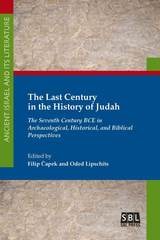
The Last Century in the History of Judah
The Seventh Century BCE in Archaeological, Historical, and Biblical PerspectivesFilip Čapek
SBL Press, 2019
An incomparable interdisciplinary study of the history of Judah
Experts from a variety of disciplines examine the history of Judah during the seventh century BCE, the last century of the kingdom’s existence. This important era is well defined historically and archaeologically beginning with the destruction layers left behind by Sennacherib’s Assyrian campaign (701 BCE) and ending with levels of destruction resulting from Nebuchadnezzar’s Babylonian campaign (588-586 BCE). Eleven essays develop the current ongoing discussion about Judah during this period and extend the debate to include further important insights in the fields of archaeology, history, cult, and the interpretation of Old Testament texts.
Features
- A new chronological frame for the Iron Age IIB-IIC
- Close examinations of archaeology, texts, and traditions related to the reigns of Hezekiah, Manasseh, and Josiah
- An evaluation of the religious, cultic, and political landscape < /UL>
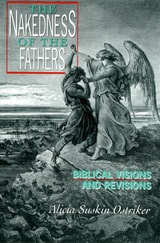
The Nakedness of the Fathers
Biblical Visions and RevisionsOstriker, Alicia Suskin
Rutgers University Press, 1997
In her introduction, "Entering the Tents, " Ostriker defines the need to struggle against a tradition in which women have been silenced and disempowered - and to recover the female power buried beneath the surface of the biblical texts. In "The Garden, " she reinterprets the mythically complex stories of Creation. Then she considers the stories of "The Fathers, " from Abraham and Isaac to Moses, David, and Solomon - and their wives, mothers, and sisters. In "The Return of the Mothers, " she begins with a radical new interpretation of the book of Esther, includes a meditation on the silenced wife of Job and the idea of justice, and concludes with a fable on the death of God and a prayer to the Shekhinah, the feminine aspect of God. Ostriker refuses to dismiss the Bible as meaningless to women. Instead, in this angry, eloquent, visionary book, she attempts to recover what is genuinely sacred in these sacred texts.
The Old Greek of Isaiah
An Analysis of Its Pluses and MinusesMirjam van der Vorm-Croughs
SBL Press, 2014
A concise study of a large number of examples of pluses and minus providing insight into translation from Hebrew to Greek
Van der Vorm-Croughs focuses this translation study on the processes leading to pluses and minuses including linguistic and stylistic aspects (i.e., cases in which elements have been added or omitted for the sake of a proper use of the Greek language), literary aspects (additions and omissions meant to embellish the Greek text), translation technical aspects (e.g., the avoidance of redundancy), and contextual and intertextual exegesis and harmonization. This work also covers the relation between the Greek Isaiah and its possible Hebrew Vorlage to try to determine which pluses and minuses may have been the result of the translator’s use of a different Hebrew text.
Features:
- Eleven categories for the pluses and minuses of the Greek Isaiah
- Examination of translation techniques and translator errors
- Use of Joseph Ziegler’s critical edition
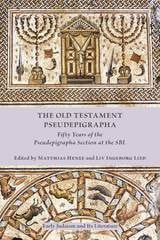
The Old Testament Pseudepigrapha
Fifty Years of the Pseudepigrapha Section at the SBLMatthias Henze
SBL Press, 2019
A history of research that changed scholarly perceptions of early Judaism
This collection of essays by some of the most important scholars in the fields of early Judaism and Christianity celebrates fifty years of the study of the Old Testament Pseudepigrapha at the Society of Biblical Literature and the pioneering scholars who introduced the Pseudepigrapha to the Society. Since its early days as a breakfast meeting in 1969, the Pseudepigrapha Section has provided a forum for a rigorous discussion of these understudied texts and their relevance for Judaism and Christianity. Contributors recount the history of the section's beginnings, critically examine the vivid debates that shaped the discipline, and challenge future generations to expand the field in new interdisciplinary directions.
Features:
- Reflections from early members of the Pseudepigrapha Group
- Essays that examine a methodological shift from capturing and preserving traditions to exploring the intellectual and social world of Jewish antiquity
- Evaluations of past interactions with adjacent fields and the larger academic world
The Old Testament and Christian Spirituality
Theoretical and Practical Essays from a South African PChristo Lombaard
SBL Press, 2012
An engaging anthology that deals with both theory and practice
The emerging discipline of biblical spirituality considers how faith finds expression within the biblical texts and how modern expressions of faith interact with those texts. This volume represents Christo Lombaard’s reflective, analytical, and exegetical contributions to the field in order to explore how biblical texts mediate faith, both ancient and contemporary. It reflects on aspects of the interaction of faith and Scripture, critically approaching both dimensions.
Features:
- Seven previously published papers drawn predominately from South African journals
- Explorations of how biblical texts mediate faith
- Close examination of the discipline of biblical spirituality as part of spirituality studies
The Old Testament for Latter-day Saints
Douglas, Alex
Signature Books, 2023
This book also explores the intriguing ways in which Latter-day Saints have interpreted and engaged with this ancient text and the author navigates their diverse interpretations of it. He examines how individuals have alternately embraced the Old Testament as myth or history, law or legend, wise counsel or sacred scripture. He shows where many traditional interpretations have come from, and offers many ways to encourage a more nuanced understanding of the text.
Drawing from a wealth of scholarly research and his own unique perspective, Douglas presents a compelling and multidimensional analysis of the Old Testament. However readers approach the text, this book sheds light on the complex nature of the Old Testament and its enduring relevance to the Latter-day Saint tradition.
The Old Testament for Latter-day Saints
Douglas, Alex
Signature Books, 2024
This book also explores the intriguing ways in which Latter-day Saints have interpreted and engaged with this ancient text and the author navigates their diverse interpretations of it. He examines how individuals have alternately embraced the Old Testament as myth or history, law or legend, wise counsel or sacred scripture. He shows where many traditional interpretations have come from, and offers many ways to encourage a more nuanced understanding of the text.
Drawing from a wealth of scholarly research and his own unique perspective, Douglas presents a compelling and multidimensional analysis of the Old Testament. However readers approach the text, this book sheds light on the complex nature of the Old Testament and its enduring relevance to the Latter-day Saint tradition.
The Philistines and Other Sea Peoples in Text and Archaeology
Ann E. Killebrew
SBL Press, 2013
The Philo of Alexandria Scripture Index
Sean A. Adams
SBL Press, 2023
The Philo of Alexandria Scripture Index identifies and lists every instance in which Philo of Alexandria cites or alludes to passages from Jewish Scripture. With 7,831 references, this book is the most comprehensive study of its kind to date. Unlike other volumes with a single index of Philo’s citations and allusions organized by biblical book, this volume includes a second index that follows Philo’s treatise order. This second format allows students and scholars easily to examine Philo’s engagement with Scripture in individual treatises and to interrogate how Philo collected and grouped intertexts. In addition to the indices, Sean A. Adams and Zanne Domoney-Lyttle provide an introduction to their methodology and their selection of texts, including Philo’s fragmentary works and those that survive only in the Armenian tradition.
The Politics of Pessimism in Ecclesiastes
A Social-Science PerspectiveMark R. Sneed
SBL Press, 2012
The Prophets Speak on Forced Migration
Mark J. Boda
SBL Press, 2015
A valuable resource with productive avenues for inquiry
In this collection of essays dealing with the prophetic material in the Hebrew Bible, scholars explore the motifs, effects, and role of forced migration on prophetic literature. Contributors focus on the study of geographical displacement, social identity ethics, trauma studies, theological diversification, hermeneutical strategies in relation to the memory, and the effects of various exilic conditions in order to open new avenues of study into the history of Israelite religion and early Judaism.
Features:
- An introductory essay that presents a history of scholarship and an overview of the collection
- Ten essays examining the rhetoric of exile in the prophets
- Current, thorough approaches to the issues and problems related to historical and cultural features of exile in biblical literature
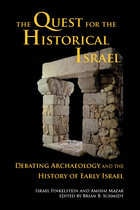
The Quest for the Historical Israel
Debating Archaeology and the History of Early IsraelIsrael Finkelstein
SBL Press, 2007
The Questions on the Octateuch, Volume 1
John F. Theodoret of Cyrus
Catholic University of America Press, 2007
The Questions on the Octateuch, Volume 2
John F. Theodoret of Cyrus
Catholic University of America Press, 2007
The SBL Commentary on the Septuagint
An IntroductionDirk Büchner
SBL Press, 2017
Explore the groundwork for a new commentary series from SBL Press
This book contains verse by verse commentary on selections from the Greek text of the Hebrew Bible known as the Septuagint. Each chapter is from a different bible book, for which there will eventually be a full commentary published in the Society of Biblical Literature Commentary on the Septuagint. The commentary series focuses on the actual process of translation, so its authors try to describe and explain the kinds of decisions the ancient Alexandrian translators made about how to render Hebrew into Greek.
Features
- Translations from and commentary on Genesis, Exodus, Leviticus, Numbers, Esther, Job, and Psalms Contributions from eight experts on the Septuagint
- Guidelines and procedures used in the production of the translations in the series
The Sacred Encounter
Jewish Perspectives on SexualityRabbi Lisa Grushcow, Dphil
Central Conference of American Rabbis, 2014
This wide-ranging anthology takes a close look at the breadth of human sexuality from a Jewish perspective. The essays begin with a look at biblical and rabbinic views on sexuality and then proceed to explorations of sexuality at different moments in the life cycle, sexuality and the marital model, diverse expressions of sexuality, examples of sexuality education, the nexus of sexuality and theology, and the challenges of contemporary sexual ethics. The Sacred Encounter is a thought-provoking and important Jewish resource. Perfect for personal study or for high school or adult classes.
The Samaritan Pentateuch
An Introduction to Its Origin, History, and Significance for Biblical StudiRobert T. Anderson
SBL Press, 2012
The Scribes of the Torah
The Formation of the Pentateuch in Its Literary and Historical ContextsKonrad Schmid
SBL Press, 2023
A revised view of the Pentateuch with consequences for the broader literary history of the Bible
This collection of thirty-one studies on the Pentateuch represents more than twenty years of Konrad Schmid’s research and publications advocating for a new view of the Pentateuch’s formation. Schmid’s essays present the case for a Persian period Priestly document that provided a basic narrative thread to the Torah, which included separate, pre-Priestly components of narratives in Genesis and the Moses story. Schmid’s open discussion includes evidence from various fields, such as literary history, comparative cultural history, historical linguistics, epigraphy, and archaeology. The essays are divided into eight sections usefully structured around the themes of the Pentateuch in the Enneateuch, the history of scholarship, the formation of the Torah, Genesis, the Moses story, the Priestly document, legal texts, and the Pentateuch in the history of ancient Israel’s religion.
The Second Conversation
Interpretive Authority in the Bible ClassroomZiva R. Hassenfeld
Brandeis University Press, 2024
In The Second Conversation, university professor Ziva R. Hassenfeld returns to the middle school classroom to study her own seventh grade Bible class. The book explores dilemmas of practice she encountered around interpretive authority in the classroom. She analyzes the questions that came up in her teaching within the context of the most influential religious education scholarship, literacy scholarship, sociocultural theory and literary theory. She highlights the importance of two conversations about interpretive rules within the classroom, the first about the text’s meaning, and the second about competing conventions for determining its meaning. Instructors of any type of literature will benefit from Hassenfeld’s study, which offers rich ideas about when and how teachers enforce a classroom’s way of reading or follow a student’s line of inquiry toward more flexible interpretation.
The Shape and Shaping of the Book of Psalms
The Current State of ScholarshipNancy L. deClaissé-Walford
SBL Press, 2014
A new and innovative way to approach the Psalter that moves beyond form and cult-functional criticism
Drawing inspiration from Gerald H. Wilson’s The Editing of the Hebrew Psalter, this volume explores questions of the formation of the Psalter from the perspective of canonical criticism. Though called “canonical criticism,” the study actually employs a number of historically traditional and nontraditional approaches to reading the text including form criticism, historical criticism of individual psalms as well as of the whole Psalter, and redaction criticism.
Features:
- Exploration of collections of psalms, theological viewpoints, sovereignty, and the shape and shaping of Psalms
- Examination of the impact of canonical criticism on the study of the Psalter
- Sixteen essays from the Book of Psalms Consultation group and invited scholars
The Social Groups behind the Pentateuch
Jaeyoung Jeon
SBL Press, 2021
A reexamination of the Pentateuch in light of the complex social, religious, and political conflicts of the Persian period
During the last several decades, scholars in pentateuchal studies have suggested new compositional models to replace the Documentary Hypothesis, yet no consensus has emerged. The ten essays in this collection advance the discussion by shifting the focus of pentateuchal studies from the literary stratification of different layers of the texts to the social, economic, religious, and political agendas behind them. Rather than limiting the focus of their studies to scribal and community groups within Persian Yehud, contributors look beyond Yehud to other Judahite communities in the diaspora, including Elephantine and the Samaritan community, establishing a proper academic context for setting the diverse voices of the Pentateuch as we now understand them. Contributors include Olivier Artus, Thomas B. Dozeman, Innocent Himbaza, Jürg Hutzli, Jaeyoung Jeon, Itamar Kislev, Ndikho Mtshiselwa, Dany Noquet, Katharina Pyschny, Thomas Römer, and Konrad Schmid.
The Social Justice Torah Commentary
Rabbi Barry H. Block
Central Conference of American Rabbis, 2021
What does the Torah have to say about social justice? As the contributors to The Social Justice Torah Commentary demonstrate, a great deal. A diverse array of authors delve deeply into each week's parashah, drawing lessons to inspire tikkun olam. Chapters address key contemporary issues such as racism, climate change, mass incarceration, immigration, disability, women's rights, voting rights, and many more. The result is an indispensable resource for weekly Torah study and for anyone committed to repairing the world.
The Torah/Law Is a Journey
Using Cognitive and Culturally Oriented Linguistics to Interpret and Translate Metaphors in the Hebrew BibleIvana Procházková
Karolinum Press, 2022
The Old Testament is rich in metaphor. Metaphorical expressions appear not only in places where you might expect them, like the poetic verses, but also in the legal texts. They appear in the preambles to collections of laws, in their final summaries, in general considerations on compliance with and violation of the law, in texts concerning the meaning of the law, and those dealing with topics now reserved for legal theory and legal philosophy. These metaphorical expressions reveal how the authors of the relevant Torah/Law texts understood their function in society and what the society of the time preferred in the law.
Anchored in cognitive and cultural linguistics, The Torah/Law Is a Journey investigates Hebrew metaphorical expressions concerning the key Old Testament concept of Torah/Law. Ivana Procházková identifies Hebrew conceptual metaphors and explicates the metaphorical expressions. She also uses cognitive linguistic analysis to look at modern translations of selected metaphorical expressions into Czech and English. Procházková closes with an analysis of the metaphors used in the Council of Europe publication Compass: Manual for Human Rights Education with Young People to conceptualize human rights.
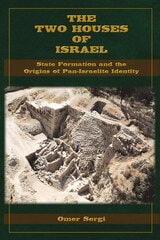
The Two Houses of Israel
State Formation and the Origins of Pan-Israelite IdentityOmer Sergi
SBL Press, 2023
The Two Houses of Israel: State Formation and the Origins of Pan-Israelite Identity bridges the gap between the biblical narrative of the great united monarchy ruled by David and Solomon and archaeological and historical reconstructions of a gradual, independent formation of Israel and Judah. Based on a thorough examination of the material remains and settlement patterns in the southern Levant during the Late Bronze Age and the Iron Age and on a review of the relevant historical sources, this book provides a detailed reconstruction of the ways in which Israel and Judah were formed as territorial polities and specifically how the house of David rose to power in Jerusalem and Judah. Omer Sergi further situates the stories of Saul and David in their accurate social and historical context in order to illuminate the historical conception of the united monarchy and the pan-Israelite ideology out of which it grew. Sergi provides a new history of the early Israelite monarchies, their formation, and the ways in which these social and political developments were commemorated in the cultural memory of generations to come.