106 books match the query 'Older people' and 19 start with t

cover of The Coming Health Crisis: Who Will Pay for Care for the Aged in the 21st Century?

The Coming Health Crisis

Who Will Pay for Care for the Aged in the 21st Century?

John R. Wolfe

University of Chicago Press, 1993

By the turn of the century, the largest generation of Americans in history, the "Baby Boomers," will be approaching 65 years old. But as the demand for health and long-term care is growing dramatically, health care programs have been shrinking instead of expanding to meet the older generation's needs. In this timely book, John R. Wolfe offers practical solutions to the coming health crisis, exploring innovative ways of developing insurance plans for the care of the large, aging "Baby Boom" generation and beyond.

In previous decades, when younger Americans far outnumbered older ones, retirees could depend on financial support through taxes from the population at large. But as "Boomers" retire and the work force begins to shrink, there will be a disproportionately large population of retirees to workers. With such a big jump in the percentage of older Americans in the population, fewer workers will be able to to transfer funds, through taxes, to retirees. Moreover, other traditionally reliable sources of financial assistance—Social Security, Medicare, and Medicaid—have faced serious financial difficulties in recent years. Who will the aged turn to for assistance?

The Coming Health Crisis suggests that as funds from all quarters dwindle, older Americans will have to look to alternative programs for financial assistance. Wolfe urges immediate action to develop new saving programs and increase existing transfer schemes to head off an imminent crisis. Although tax increases might provide some resources, he demonstrates that it is more important to accumulate capital to create solid reserves for the future. Wolfe also explores two roles for government: prefunding new or existing social insurance programs and promoting private insurance options. By exempting insurance fund income from corporate taxation and permitting people at all income levels to defer income tax on accounts earmarked for long-term care, he shows how government could greatly encourage and expand personal saving.

Finally, this work assesses the value of other recent health and long-term-care innovations: social/health maintenance organizations, long-term-care individual retirement accounts, and reverse annuity mortgages, in addition to vouchers, care rationing, mandatory public insurance, and expanded private coverage. Through this wide-ranging survey, Wolfe demonstrates that, through a combination of these programs, we can care for the aging "Baby Boom" generation by anticipating their needs and saving now.

[more]
cover of The Complete Cardinal Guide to Planning for and Living in Retirement

The Complete Cardinal Guide to Planning for and Living in Retirement

Hans "John" Scheil

Tupelo Press, 2016
The financial complexities we face in retirement can be daunting. The landscape of Social Security, Medicare, insurance, benefits, investments, and planning for long-term care presents many choices, challenges, and opportunities. The Complete Cardinal Guide gives you the tools you need to understand how to make informed decisions that are right for you. The purpose of this book is to guide you through the major retirement options that retirees face. It explains simple and effective strategies you can put in place now, with the help of professionals, to make your retirement financially successful. Author and founder of Cardinal Retirement Planning Hans “John” Scheil, a Certified Financial Planner™ (CFP®) and Chartered Advisor for Senior Living (CASL®), calls upon his 40 years of experience in the business to answer the following questions in depth, and he illustrates each with real-life stories: At what age should I start receiving my Social Security check?, What’s the best way to supplement my Medicare coverage?, Can I receive long-term care and stay at home? How do I afford it? ,How should I handle my IRA and/or 401k accounts?, What’s a smart investment strategy for financing my retirement years?, How do my income taxes change after I retire?, What if I live longer than my retirement savings last?, What’s the best way to transfer my life insurance and other assets to my children and grandchildren?, How do I ensure my survivors are OK after I die?,How should I approach choosing financial and legal professionals to help me plan my retirement?
[more]
cover of The Economic Effects of Aging in the United States and Japan

The Economic Effects of Aging in the United States and Japan

Edited by Michael D. Hurd and Naohiro Yashiro

University of Chicago Press, 1997

Due to falling fertility rates, the aging of the baby-boom cohort, and increases in life expectancy, the percentage of the population that is elderly is expected to increase rapidly in the United States and Japan over the next two decades. These fourteen essays show that, despite differences in culture and social and government structure, population aging will have many similar macro and micro effects on the economic status and behavior of the elderly in both countries.

The most obvious effects will be on social programs such as public pension systems and the provision for medical needs of the elderly. But, the contributors demonstrate, aging will also affect markets for labor, capital, housing, and health care services. It will affect firms through their participation in the demand side of the labor market and through their provisions for pensions. And aging will influence saving rates, the rate of return on assets, the balance of payments, and, most likely, economic growth.

This volume will interest scholars and policy makers concerned with the economics of aging.
[more]
cover of The Economics of Aging

The Economics of Aging

Edited by David A. Wise

University of Chicago Press, 1988

The Economics of Aging presents results from an ongoing National Bureau of Economic Research project. Contributors consider the housing mobility and living arrangements of the elderly, their labor force participation and retirement, the economics of their health care, and their financial status. The goal of the research is to further our understanding both of the factors that determine the well-being of the elderly and of the consequences that follow from an increasingly older population with longer individual life spans. Each paper is accompanied by critical commentary.
[more]
cover of The Environment for Aging: Interpersonal, Social, and Spatial Contexts

The Environment for Aging

Interpersonal, Social, and Spatial Contexts

Russell A. Ward

University of Alabama Press, 1988

The nature and consequences of aging depend on its environmental context, and the literature does not treat the various environmental dimensions in an integrated fashion. The authors introduce a general approach to the human ecosystem, highlighting theoretical and empirical issues necessary to an understanding of person-environment interaction related to aging. They then investigate in detail three aspects of the environment of older persons: residential and neighborhood, interpersonal support networks, and age-related attitudes. They give specific attention to the impact of the age composition of neighborhoods and interpersonal networks. The authors present findings from their interview survey of 1,185 community residents aged 60 and over. Major findings from the interviews include:
  1. Despite objective neighborhood problems, older persons express high neighborhood satisfaction. This partly reflects limited residential options, as well as a passive and vicarious spatial experience. The environment is experienced in diverse ways; however, urbanism and personal competence shape the nature and outcomes of person-environment interaction.
  2. Older persons have relatively robust interpersonal support networks. Perceived sufficiency of contact and support are more salient to morale than are more objective measures of interpersonal support.
  3. Although attitudes toward other older people are generally favorable, patterns of age identity reflect a detrimental view of aging. There is little evidence that socialization for aging or age-group solidarity make aging “easier” in this regard.
  4. Older persons exhibit moderate age homogeneity within their interpersonal networks, partly reflecting neighborhood age concentration. Contrary to the apparent benefits of planned age-segregated housing, age homogeneity in neighborhoods and networks does not contribute to well-being.
The authors examine three major themes in their concluding chapter; age itself does not “loom large” in the lives of these community residents, though age becomes salient under certain conditions; there is diversity in the implications of the environmental context for aging, in particular reflecting an “environmental docility” hypothesis; and aging must be viewed in interactional or transactional terms—older people “construct” the environment as a subjective entity.
 
[more]
cover of The Essential Eldercare Handbook for Nevada

The Essential Eldercare Handbook for Nevada

Kim Boyer

University of Nevada Press, 2014

The senior years can be daunting, for spouses, children, other caregivers, and seniors themselves. Too often a sudden crisis leaves a family unprepared and feeling helpless. Chronic illnesses and limited funds can present difficult and emotional choices regarding care or housing. Rules and resources vary from state to state. Everyone can use help from experienced professionals in understanding them.

Boyer and Shapiro provide Nevada-specific information\--medical, legal, and financial\--on the wide range of problems that arise during the elder years. Case studies show how a typical family copes with troubles such as failing health or financial cares and what options they have. This guide will help any Nevada resident plan for their own senior years and take care of aging parents, spouses, and other loved ones.
[more]
cover of The Essential Guide to Aging in the Twenty-First Century: Mind, Body, and Behavior

The Essential Guide to Aging in the Twenty-First Century

Mind, Body, and Behavior

Donald H. Kausler, Barry C. Kausler & Jill A. Krupsaw

University of Missouri Press, 2007

     For more than a decade, The Graying of America has helped thousands of middle-aged and senior citizens find their way through the thickets and thorns of growing old. Now greatly revised and expanded to include information gleaned from studies of the past five years, this third edition has been retitled to stress its ongoing purpose: conveying a wealth of commonsense information for general readers in nontechnical language.

            The book is a storehouse of concise, useful information on the effects of aging on health, the mind, and behavior. Its 588 entries (including 172 new and 150 substantially revised) cover a broad spectrum of topics—from adjusting to retirement to grandparenting, sleep disorders to Alzheimer’s disease. All are directed to the average reader; all stress successful aging and how to accomplish it.

New entries cover such topics as the incidence and causes of frailty, the cognitive benefits of diversified activity, and findings of the Women’s Health Initiative. There is new information on matters like the effects of untreated hearing impairment on spouses and the impact of insufficient exposure to sunlight on sleep, plus new insight into what to look for in searching for a quality nursing home for a loved one.

Also included are results of recent studies on interventions that help to reduce age-related declines in mental and physical health, among them revelations that reports on age-related declines in memory have been skewed by testing errors. And with memory a concern for seniors fearful of declining mental agility, the book tells how to bypass memory problems—such as how to remember where you parked your car—and how physical exercise and challenging mental games can help reduce the risk of dementia. Other “how to avoid” entries offer ways to protect against eye fatigue in computer use, hip fractures when falling, and back injuries while lifting heavy objects.

No other book is so specifically geared to the challenges of how to reduce or even eliminate many of the problems associated with growing old. Aging in the Twenty-First Century can help seniors come to grips with their own aging process—and help younger adults understand what is happening to older family members.
[more]
cover of The Evolution of Retirement: An American Economic History, 1880-1990

The Evolution of Retirement

An American Economic History, 1880-1990

Dora L. Costa

University of Chicago Press, 1998

Winner of the 1998 Paul A. Samuelson Award given by TIAA-CREF, The Evolution of Retirement is the first comprehensive economic history of retirement in America. With life expectancies steadily increasing, the retirement rate of men over age 64 has risen drastically. Dora L. Costa looks at factors underlying this increase and shows the dramatic implications of her findings for both the general public and the U.S. government. Using statistical, and demographic concepts, Costa sheds light on such important topics as rising incomes and retirement, work and disease, the job prospects of older workers, living arrangements of the elderly, the development of a retirement lifestyle, and pensions and politics.
[more]
cover of The Graying of America: An Encyclopedia of Aging, Health, Mind, and Behavior (2d ed.)

The Graying of America

An Encyclopedia of Aging, Health, Mind, and Behavior (2d ed.)

Donald H. Kausler and Barry C. Kausler

University of Illinois Press, 2001

This second edition of The Graying of America greatly expands and updates the most comprehensive reference book on aging that is readily accessible to the lay reader.
 
Featuring nontechnical language, user-friendly indexes, and more than 150 new entries, the second edition covers new topics such as acupuncture, wheelchairs, adjusting to bifocals, preparing for traveling, improving communication with physicians, and avoiding eye strain in computer use. Among other updates are more detailed coverage of health problems including arthritis, diabetes, osteoporosis, and various kinds of cancer, as well as advice on reducing the stress of caring for a family member with Alzheimer's disease. In addition to discussing hundreds of common ailments and conditions, Kausler and Kausler provide constructive guidance on regular physical activity, mental stimulation, and other behaviors that promote "successful aging."
 
[more]
cover of The Meanings of Age: Selected Papers

The Meanings of Age

Selected Papers

Bernice L. Neugarten

University of Chicago Press, 1996

One of the most distinguished psychologists of the century, Bernice L. Neugarten is best known for her groundbreaking contributions to the study of adult development and aging. Covering more than forty years of scholarship, this volume brings together Neugarten's most important contributions in four areas: Age as a Dimension of Social Organization; The Life Course; Personality and Adaptation; and Social Policy Issues. Each section is introduced by an eminent authority in the area, including George L. Maddox, Gunhild O. Hagestad, David L. Gutmann, Robert H. Binstock, and Dail A. Neugarten, who explains and highlights Neugarten's contributions in light of the most recent research.

Carefully edited by Dail Neugarten, each chapter presents the reader with Bernice Neugarten's original formulations on topics such as age norms and age constraints, the changing meanings of age, and age neutral social policy. Including four previously unpublished papers, The Meanings of Age will be of interest to scholars, students, and practitioners of psychology, education, law, medicine, social policy, and gerontology.
[more]
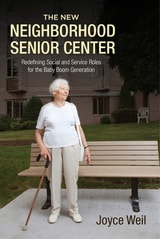
cover of The New Neighborhood Senior Center: Redefining Social and Service Roles for the Baby Boom Generation

The New Neighborhood Senior Center

Redefining Social and Service Roles for the Baby Boom Generation

Weil, Joyce

Rutgers University Press, 2014
In 2011, seven thousand American “baby boomers” (those born between 1946 and 1964) turned sixty-five daily. As this largest U.S. generation ages, cities, municipalities, and governments at every level must grapple with the allocation of resources and funding for maintaining the quality of life, health, and standard of living for an aging population. 

In The New Neighborhood Senior Center, Joyce Weil uses in-depth ethnographic methods to examine a working-class senior center in Queens, New York. She explores the ways in which social structure directly affects the lives of older Americans and traces the role of political, social, and economic institutions and neighborhood processes in the decision to close such centers throughout the city of New York. 

Many policy makers and gerontologists advocate a concept of “aging in place,” whereby the communities in which these older residents live provide access to resources that foster and maintain their independence. But all “aging in place” is not equal and the success of such efforts depends heavily upon the social class and availability of resources in any given community. Senior centers, expanded in part by funding from federal programs in the 1970s, were designed as focal points in the provision of community-based services. However, for the first wave of “boomers,” the role of these centers has come to be questioned.  

Declining government support has led to the closings of many centers, even as the remaining centers are beginning to “rebrand” to attract the boomer generation. However, The New Neighborhood Senior Centerdemonstrates the need to balance what the boomers’ want from centers with the needs of frailer or more vulnerable elders who rely on the services of senior centers on a daily basis. Weil challenges readers to consider what changes in social policies are needed to support or supplement senior centers and the functions they serve. 
[more]
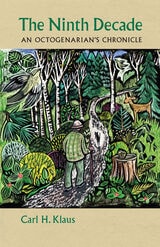
cover of The Ninth Decade: An Octogenarian’s Chronicle

The Ninth Decade

An Octogenarian’s Chronicle

Klaus, Carl H.

University of Iowa Press, 2021

The Ninth Decade is a path-breaking and timely book on aging: the first to focus explicitly and at length on eighty-somethings, the fastest-growing demographic in the industrialized world. Covering eight years in lively six-month installments, Klaus tells a vivid story not only of his own ninth decade and survival routines, but also of his loving companion, Jackie, who is strikingly different from him in her physical well-being, practical outlook, sociable temperament, and vigorous workouts. Cameos of their octogenarian friends and relatives near and far add to a wide-ranging and revelatory portrayal of advanced aging, as do bios of notable octogenarians.

The multi-year scope of his chronicle reveals the numerous physical and mental problems that arise during octogenarian life and how eighty-year-olds have dealt with those challenges. The Ninth Decade is a unique, first-hand source of information for anyone in their sixties, seventies, or eighties, as well as for persons devoted to care of the aged. Though the challenges of octogenarian life often require specialized care, The Ninth Decade also shows the pleasures of it to be so special as to have inspired Lillian Hellman’s paradoxical description of “longer life” as “the happy problem of our time.”
 
[more]
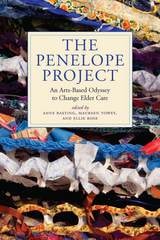
cover of The Penelope Project: An Arts-Based Odyssey to Change Elder Care

The Penelope Project

An Arts-Based Odyssey to Change Elder Care

Anne Basting, Maureen Towey, and Ellie Rose

University of Iowa Press, 2016

Of the 15,000 nursing homes in the United States, how many are places you’d want to visit, much less live in? Now that people are living longer and more of the population are elderly, this question is more important than ever, particularly for people with disabilities. We must transform long-term care into an experience we and our loved ones can face without dread. It can be done. The Penelope Project shows how by taking readers on an ambitious journey to create a long-term care community that engages its residents in challenging, meaningful art-making.

At Milwaukee’s Luther Manor, a team of artists from the University of Wisconsin’s theatre department and Sojourn Theatre Company, university students, staff, residents, and volunteers traded their bingo cards for copies of The Odyssey. They embarked on a two-year project to examine this ancient story from the perspective of the hero who never left home: Penelope, wife of Odysseus. Together, the team staged a play that engaged everyone and transcended the limits not just of old age and disability but also youth, institutional regulations, and disciplinary boundaries.

Inviting readers to see through the eyes of residents, students, artists, staff, family members, and experts in the fields of education, long-term care, and civically engaged arts practice, this book underscores the essential role of the arts and humanities in living richly. Waiting, as Penelope waited, need not be a time of loss and neglect. The Penelope Project boldly dreams of how to make late life a time of growth and learning. If you dream of improving people’s lives through creative endeavors, this book provides practical advice. 

[more]
cover of The Third and Only Way: Reflections on Staying Alive

The Third and Only Way

Reflections on Staying Alive

Helen Bevington

Duke University Press, 1996

In this autobiographical volume, the remarkable Helen Bevington looks for answers to the question of how to live or, more specifically, how to confront growing older. A familiar face on the literary landscape since the mid-1940s, Bevington contemplates the course of her own life in view of the suicide of her father, the final years her mother spent in unwilling solitude, and the tragic suicide of her son following a crippling automobile accident from which he could never recover. How is one to face the inevitability of death? What is the third alternative? How to persevere in life?
The unique Bevington way of autobiography recreates lessons and insights of other lives, historical figures, and compelling incidents, and combines them in a narrative that follows the emotional currents of her life. Evoking a wide range of historical and literary figures, including Chekhov, Marcus Aurelius, Flannery O’Connor, Simone de Beauvoir, Thoreau, Beatrix Potter, Sappho, Yeats, Alexander the Great, Montaigne, Saint Cecilia, Virginia Woolf, Liv Ullmann, and many others, Bevington finds in these lives a path that has guided her search away from solitude. Through her reflections on the ten years that followed her son’s death, we become aware of how far she has traveled, how the search has brightened, how she has eloquently evolved into old age. In the end she is sitting, like the Buddha, under her own fig tree, waiting not for death but for further illumination.
An original contemplation of the universal dilemmas and tragedies of existence, The Third and Only Way is at once warm, funny, and inspiring—full of learning and wisdom.
[more]
cover of The Well-Being of the Elderly in Asia: A Four-Country Comparative Study

The Well-Being of the Elderly in Asia

A Four-Country Comparative Study

Albert I. Hermalin, Editor

University of Michigan Press, 2010
In the broadest sense, The Well-Being of the Elderly in Asia is a study of social change and of anticipating future social change. It examines the effects on the current and future elderly of the rapid demographic transition that has occurred over much of Asia, accompanied in many countries by equally dramatic social and economic transformations. Policymakers in Asia have been aware of these trends and their potentially deleterious consequences for a decade or more, and have sought to fashion appropriate policies and programs that anticipate and mitigate their effects. Accordingly, any study of the sociodemographic trends and their impact must be examined in the light of policies put in place and under development.
[more]
cover of Themes in the Economics of Aging

Themes in the Economics of Aging

Edited by David A. Wise

University of Chicago Press, 2001

In the past few years, the economic ramifications of aging have garnered close attention from a group of NBER researchers led by David A. Wise. In this volume, Wise and his collaborators continue to analyze a nexus of age-related issues.

This volume begins by looking at the implications of private and public personal retirement plans, focusing in particular on the impact of 401(k) programs on retirement strategies in light of potential social security reform and factors such as annuitization and on asset accumulation. Next, the often-observed relationship between health and wealth is dissected from two different perspectives and correlated with striking increases in health-care spending over the past two decades, despite the improved health of older populations. The volume concludes with an investigation of the retirement effects of various social security provisions in both U.S. and German systems.

This carefully developed collection expands the current investigative focus and broadens the dialogue on a rapidly growing area of social and economic concern.

[more]
cover of Through Japanese Eyes: Thirty Years of Studying Aging in America

Through Japanese Eyes

Thirty Years of Studying Aging in America

Yohko Tsuji

Rutgers University Press, 2021

In Through Japanese Eyes, based on her thirty-year research at a senior center in upstate New York, anthropologist Yohko Tsuji describes old age in America from a cross-cultural perspective. Comparing aging in America and in her native Japan, she discovers that notable differences in the panhuman experience of aging are rooted in cultural differences between these two countries, and that Americans have strongly negative attitudes toward aging because it represents the antithesis of cherished American values, especially independence. Tsuji reveals that American culture, despite its seeming lack of guidance for those aging, plays a pivotal role in elders’ lives, simultaneously assisting and constraining them. Furthermore, the author’s lengthy period of research illustrates major changes in her interlocutors’ lives, incorporating their declines and death, and significant shifts in the culture of aging in American society as Tsuji herself gets to know American culture and grows into senescence herself.

Through Japanese Eyes offers an ethnography of aging in America from a cross-cultural perspective based on a lengthy period of research. It illustrates how older Americans cope with the gap between the ideal (e.g., independence) and the real (e.g., needing assistance) of growing older, and the changes the author observed over thirty years of research.
 
[more]
cover of Topics in the Economics of Aging

Topics in the Economics of Aging

Edited by David A. Wise

University of Chicago Press, 1992
The original essays and commentary in this volume—the third in a series reporting the results of the NBER Economics of Aging Program—address issues that are of particular importance to the well-being of individuals as they age and to a society at large that is composed increasingly of older persons. The contributors examine social security reform, including an analysis of the Japanese system; present the startling finding that the vast majority of people choose the wrong accumulation strategies for their pension plans; explore the continuing consequences of the decline in support of parents by children in the postwar period; investigate the relation between nursing home stays and the source of payment for the care; and offer initial findings on the implications of differences between developed and developing countries for understanding aging issues and determining appropriate directions for research.
[more]
cover of Transnational Aging and Reconfigurations of Kin Work

Transnational Aging and Reconfigurations of Kin Work

Dossa, Parin

Rutgers University Press, 2017

Transnational Aging and Reconfigurations of Kin Work documents the social and material contributions of older persons to their families in settings shaped by migration, their everyday lives in domestic and community spaces, and in the context of intergenerational relationships and diasporas. Much of this work is oriented toward supporting, connecting, and maintaining kin members and kin relationships—the work that enables a family to reproduce and regenerate itself across generations and across the globe.
 
[more]