Results by title
114 books match the query 'Other Stories' and 41 start with t
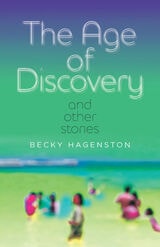
The Age of Discovery and Other Stories
Becky Hagenston
The Ohio State University Press, 2021
“These ingenious stories are so funny and sparkling and slyly inventive that their pain catches you by surprise, like a sunburn after a day at the beach.”—Eric Puchner
Winner, 2022 Mississippi Institute for Arts and Letters Prize for Best Fiction
In Becky Hagenston’s fourth collection, the real and the fantastic collide in stories that span from Mississippi to Europe, and from the recent past to the near future. The characters are sex-toy sellers, internet trolls, parents, students, and babysitters—all trying to make sense of a world where nothing is quite what it appears to be. A service robot makes increasingly disturbing requests. A middle school teacher is accused of witchcraft—and realizes the accusations might be true. Two college students devise a way to avoid getting hit on in bars. A baker finds bizarre anomalies in his sourdough. A librarian follows her dead ex-husband through the Atlanta airport. In these stories, men and women confront grief, danger, loneliness, and sometimes—the strangest discovery of all—unexpected joy. Hagenston delivers a collection that is, at its weird and shining heart, about people discovering what—for better or worse—they are capable of.
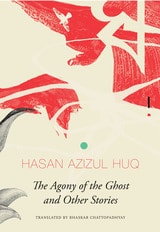
The Agony of the Ghost
And Other StoriesHasan Azizul Huq
Seagull Books, 2018
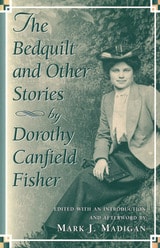
The Bedquilt and Other Stories
By Dorothy Canfield FisherEdited, Intro, & Afterword by Mark J. Madigan
University of Missouri Press, 1997
Dorothy Canfield Fisher, the prolific author of more than forty books, including translations, juveniles, and nonfiction, as well as novels and short-story collections, was one of the most popular and engaging American writers of the first half of the twentieth century. Although her work has been unduly neglected for several decades, it is currently enjoying a revival of critical attention. This colorful collection ranges in subject from New Englanders to the Basques of France to the struggles of African Americans to gain equal rights. Through her stories, many of which received literary awards, Fisher examined the complexities of modern life in the United States and abroad.
In addition to her writing, Fisher had a lifelong involvement in charitable work and social causes--so much so that Eleanor Roosevelt called her one of the most influential women of her time. As one of the earliest and most assertive members of the Book-of-the-Month Club selection committee, Fisher helped define literary taste in America for more than two decades. Mark J. Madigan discusses Fisher's extraordinary life and work in an Introduction and Afterword.
Because of Fisher's rare ability to distinguish enduring concerns from merely topical issues, her work will provide lasting pleasure for generations of readers to come.
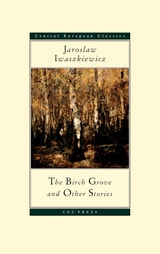
The Birch Grove and Other Stories
Jaroslaw Iwaszkiewicz
Central European University Press, 2002

The Burning And Other Stories
Jack Cady
University of Iowa Press, 1972
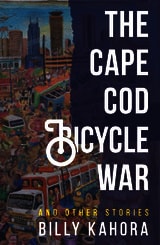
The Cape Cod Bicycle War
and Other StoriesBilly Kahora
Ohio University Press, 2020

The Cemetery of Chua Village and Other Stories
Doan Le
Northwestern University Press, 2005
This seventh volume in the "Voices from Vietnam" series introduces U. S. readers to another major figure in modern Vietnamese letters: Doan Le. Noted for her versatility of style and her originality, she writes tales that are intensely human and universal, exploring such subjects as greed, marriage, divorce, aging and human rights. For the scholar, these stories give insight into Vietnamese culture after the "renovation". For the general reader, these are stories that explore all the subtle enigmas of the human heart.
As Wayne Karlin notes in his introduction, "[She] is a master of allegory and gently complex satire...her stories can often be fantastical—Sholom Aleichem's village of Helm channeled by Kafka through Our Town—or they can be deeply personal and realistic. In both cases they grow unabashedly from the real vicissitudes of her life."
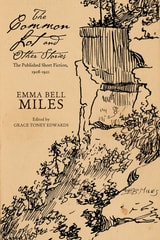
The Common Lot and Other Stories
The Published Short Fiction, 1908–1921Emma Bell Miles
Ohio University Press, 2016
The seventeen narratives of The Common Lot and Other Stories, published in popular magazines across the United States between 1908 and 1921 and collected here for the first time, are driven by Emma Bell Miles’s singular vision of the mountain people of her home in southeastern Tennessee. That vision is shaped by her strong sense of social justice, her naturalist’s sensibility, and her insider’s perspective.
Women are at the center of these stories, and Miles deftly works a feminist sensibility beneath the plot of the title tale about a girl caught between present drudgery in her father’s house and prospective drudgery as a young wife in her own. Wry, fiery, and suffused with details of both natural and social worlds, the pieces collected here provide a particularly acute portrayal of Appalachia in the early twentieth century.
Miles’s fiction brings us a world a century in the past, but one that will easily engage twenty-first-century readers. The introduction by editor and noted Miles expert Grace Toney Edwards places Miles in the literary context of her time. Edwards highlights Miles’s quest for women’s liberation from patriarchal domination and oppressive poverty, forces against which Miles herself struggled in making a name for herself as a writer and artist. Illustrations by the author and Miles family photographs complement the stories.
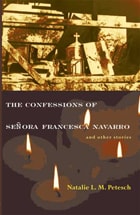
The Confessions of Señora Francesca Navarro and Other Stories
Natalie L. M. Petesch
Ohio University Press, 2005
“Memory, of course, is sometimes like a bucking horse, sometimes a runaway one, and one must control the reins until finally it stops, snorting with exhausted relief,” writes Natalie L. M. Petesch in her haunting new collection, The Confessions of Señora Francesca Navarro and Other Stories.
Petesch immerses readers in the lives of people caught up in the 1936–39 Spanish Civil War, which left more than five hundred thousand dead. She captures the hand-to-mouth existence on the streets of Madrid of two war orphans; an old soldier’s memories of a fallen militiawoman; the dilemma of Franco’s laundress as she seeks to duplicate a stolen religious icon she finds in his home; and a man’s struggle to find his bride among thousands of Republican refugees waiting for ships to evacuate them before Franco’s Fascists arrive to kill them.
In the title novella, an elderly woman describes to her granddaughter how the families of Franco’s officers fighting against Republican militiamen endured hunger, filth, and danger in an underground fortress. Petesch conveys the humiliating details of war through the sensibility of a cultured woman who recalls only too vividly latrines made of laundry tubs, the smell of unwashed humans, and the stench of death.
Brilliant in its imaginative power and heartbreaking in its access to the bottomless well of human tears, The Confessions of Señora Francesca Navarro and Other Stories is the work of a mature artist able to convey a particular world so vividly that we know these people as our own.

The Country of the Pointed Firs and Other Stories
Sarah Orne Jewett
University of New Hampshire Press, 1997
The Country of the Pointed Firs (1896) is Sarah Orne Jewett's most popular book. In its elegantly constructed sketches, a worldly, anonymous writer spends the summer in a tiny Maine fishing village where she hopes to find peace and solitude. As she gains the acceptance and trust of her hosts, the community's power and complexity are slowly revealed. While its episodes portray the difficulty and loneliness of rural life, they also display its dignity and strength, particularly as expressed in the bonds between women: mothers, daughters, and friends.
This centennial edition contains a facsimile of the original text, thereby restoring the novel to Jewett's own version, which had been considerably altered in other published versions, plus four related stories. Further enhancing the importance of this volume is editor Sarah Way Sherman's introduction, which includes a sketch of Jewett's life and professional development, a commentary on textual accuracy, and a discussion of the book's themes and techniques as well as its historical context.
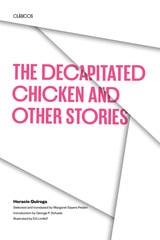
The Decapitated Chicken and Other Stories
By Horacio Quiroga
University of Texas Press, 1976
Tales of horror, madness, and death, tales of fantasy and morality: these are the works of South American master storyteller Horacio Quiroga. Author of some 200 pieces of fiction that have been compared to the works of Poe, Kipling, and Jack London, Quiroga experienced a life that surpassed in morbidity and horror many of the inventions of his fevered mind. As a young man, he suffered his father's accidental death and the suicide of his beloved stepfather. As a teenager, he shot and accidentally killed one of his closest friends. Seemingly cursed in love, he lost his first wife to suicide by poison. In the end, Quiroga himself downed cyanide to end his own life when he learned he was suffering from an incurable cancer.
In life Quiroga was obsessed with death, a legacy of the violence he had experienced. His stories are infused with death, too, but they span a wide range of short fiction genres: jungle tale, Gothic horror story, morality tale, psychological study. Many of his stories are set in the steaming jungle of the Misiones district of northern Argentina, where he spent much of his life, but his tales possess a universality that elevates them far above the work of a regional writer.
The first representative collection of his work in English, The Decapitated Chicken and Other Stories provides a valuable overview of the scope of Quiroga's fiction and the versatility and skill that have made him a classic Latin American writer.
The Devil's Church and Other Stories
By Joaquim Maria Machado de Assis
University of Texas Press, 1977
The modem Brazilian short story begins with the mature work of Joaquim Maria Machado de Assis (1839-1908), acclaimed almost unanimously as Brazil's greatest writer. Collectively, these nineteen stories are representative of Machado's unique style and world view, and this translation doubles the number of his stories previously available in English.
The stories in this volume reflect Machado's post-1880 emphasis on social satire and experimentation in psychological realism. If he had continued to produce the moralistic love stories and parlor intrigues of his earlier fiction, Machado's legacy would have been an entertaining but inconsequent body of work. However, by 1880 he had begun a devastating satirical assault on society through his fiction. In spite of his ruthlessness, Machado does at times reveal an ironic sympathy for his characters. He is not indifferent to human conflict but uses humor and irony to stress the absurdity of these conflicts, acted out against the backdrop of an indifferent universe. Such a spectacle creates a sense of helplessness that can only inspire wistful amusement.
In his technical mastery of the short story. Machado was decades ahead of his contemporaries and can still be considered more modern than most of the modernists themselves. That his stories elicit such strong and diverse reactions today is a tribute to their richness, complexity, and significance.
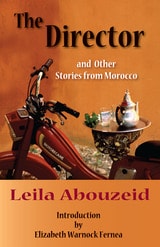
The Director and Other Stories from Morocco
By Leila Abouzeid
University of Texas Press, 2006
New stories by Leila Abouzeid, the noted Moroccan writer, constitute an event for both East and West, for, as in her critically acclaimed novel, Year of the Elephant, the author cuts across cultural and national boundaries to offer fiction that has meaning for both Western and Middle Eastern readers. The stories in this volume deal with issues both traditional and modern-relations between parents and children, between husbands and wives, and between citizens of newly independent Morocco and its new nationalist representative government.
Independence from French colonial rule has brought many changes to Morocco—some more beneficial than others. Women have entered the work force in great numbers, a development which has brought them new freedoms, but which has also caused problems within the traditional family. Abouzeid shows us how these changes have affected ordinary men and women, how small everyday events loom large in individual lives. To her crisp style, reminiscent of some Western realist novelists, she adds elements of Arabic fiction—the oral story-telling technique, for example.
Abouzeid writes first in Arabic, which she has stated is a political choice. This makes her a literary pioneer in North Africa, where, until recently, most authors wrote in French. Elizabeth Warnock Fernea has written an introduction for this book, setting the stories in historical context.
The Exchange and Other Stories
Yuri Trifonov
Northwestern University Press, 2002
Yury Trifonov took a turn toward the controversial, and a leap toward greatness, with the publication of the two novellas included in this collection. "The Exchange" and "The Long Goodbye" depict the complex dilemmas and compromises of Russian life after World War II. These works, along with the short stories "Games at Dusk" and "A Short Stay in the Torture Chamber," detail the moral and spiritual decline in Russia that resulted from the growing distance between the theoretical idealism of the Soviet state and the actual materialism and careerism that increasingly marked society.
The Exiles and Other Stories
By Horacio Quiroga
University of Texas Press, 1987
Tales of risk and danger, suffering, disease, horror, and death. Tales, also, of courage and dignity, hard work, and human endurance in the face of hostile nature and the frequent brutality of men. And tales flavored with piquant touches of humor and bemused irony.
These are the stories of the Uruguayan writer Horacio Quiroga, here presented in an important compilation of thirteen of his most compelling tales, sensitively selected and translated by J. David Danielson. Author of some two hundred pieces of fiction, often compared to the works of Kipling, Jack London, and Edgar Allan Poe, Quiroga set many of his stories in the territory of Misiones in northeastern Argentina, the subtropical jungle region where he spent much of his life.
Included here are stories from Los desterrados (1926) often said to be his best book, as well as others from Cuentos de amor de locura y de muerte (1917), Anaconda (1921), and El Desierto (1924). The publication of this selection marks the first appearance in English of all but two of the thirteen stories.
Quiroga here presents a wide range of characters: parents and children, servant girls and prostitutes, landowners and lumber barons, foremen and laborers, natives and immigrants, in stories pervaded by a vision of life that is elemental, incisive, and essentially tragic. The Exiles and Other Stories shows the versatility and skill that have made him a classic Spanish American writer. It complements and illumines The Decapitated Chicken and Other Stories, selected and translated by Margaret Sayers Peden, also published by the University of Texas Press.
The Falling Snow and Other Stories
José Maria Eça de Queirós
Catholic University of America Press, 2022
The Ghost of John Wayne
and Other StoriesRay Gonzalez
University of Arizona Press, 2001
The vast Texas borderland is a place divided, a land of legends and lies, sanctification and sinfulness, history and amnesia, haunted by the ghosts of the oppressed and the forgotten, who still stir beneath the parched fields and shimmering blacktops. It is a realm filled with scorpion eaters and mescal drinkers, cowboys and Indians, Anglos and Chicanos, spirit horses and beat-up pickups, brujos and putas, aching passion and seething rage, apparitions of the Virgin and bodies in the Rio Grande.
In his first collection of short fiction, award-winning poet, editor, and anthologist Ray Gonzalez powerfully evokes both the mystery and the reality of the El Paso border country where he came to manhood.
Here, in a riverbed filled with junked cars and old bones, a young boy is given a dark vision of a fiery future. Under the stones of the Alamo, amid the gift shops and tour buses, the wraiths of fallen soldiers cry out to be remembered. By an ancient burial site at the bottom of a hidden canyon, two lovers come face to face with their own dreams and fears.
In these stories, Ray Gonzalez is a literary alchemist, blending contemporary culture with ancient tradition to give a new voice to the peoples of the border.
The Grand Prize and Other Stories
Daniela Crasnaru
Northwestern University Press, 2005
Crasnaru portrays the lives of people so used to hardship that it never occurs to them to surrender. An unhappily married woman waits in vain for a call from a potential lover. A foul-mouthed mother of seven accuses a war hero of conning her out of her life savings. A lawyer is lured to a forest by a dead coworker's stories of a beautiful woman. Those with drab lives use fantasy to endure and those who believe themselves happy are forced to face grim realities. Crasnaru mixes elements of the ridiculous, the fanciful, and the grotesque with vivid realism and her remarkable stories, while taking place in a dark era in her nation's history, are about the human as well as the Romanian condition.

The Guy We Didn't Invite to the Orgy
and other storiesDavid Ebenbach
University of Massachusetts Press, 2017
There was one guy we didn't invite to the orgy. We invited everyone else: Solaire because she's crazy and John and Walt because they're both so good-looking and they're dating anyway, and we invited Amy because everybody just loves Amy. We even invited Miranda just because she's the jealous type, and since her sister was in town we threw the door open to her sister, too. But there was this one guy we didn't invite.
The stories in The Guy We Didn't Invite to the Orgy—funny, surprising, compassionate, true to life—are about people navigating the trickiest of landscapes: a world full of other people. Each of these characters wants to know, in her or his own way, given the crazy ups and downs and ins and outs of relationships, is it better to go it alone, or is it better to try to carve out a place for yourself, whatever it takes?
The Hawk Is Hungry and Other Stories
D'Arcy McNickle; Edited by Birgit Hans
University of Arizona Press, 1992
CONTENTS
The Reservation
Hard Riding
En roulant ma boule, roulant...
Meat for God
Snowfall
Train Time
Montana
The Hawk Is Hungry
Debt of Gratitude
Newcomers
Man's Work
Going to School
The City
Manhattan Wedlock
Let the War Be Fought
In the Alien Corn
Six Beautiful in Paris
The Silver Locket
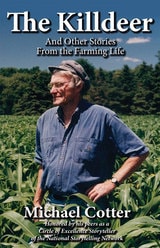
The Killdeer
And Other Stories From the Farming LifeMichael Cotter
Parkhurst Brothers, Inc., 2014
--Rex Ellis, Director of Museum programs, Smithsonian Institution, Washington, D.C.
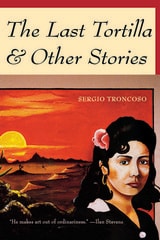
The Last Tortilla
and Other StoriesSergio Troncoso
University of Arizona Press, 1999
Writing in a straightforward, light-handed style reminiscent of Grace Paley and Raymond Carver, he spins charming tales that reflect his experiences in two worlds. Troncoso's El Paso is a normal town where common people who happen to be Mexican eat, sleep, fall in love, and undergo epiphanies just like everyone else. His tales are coming-of-age stories from the Mexican-American border, stories of the working class, stories of those coping with the trials of growing old in a rapidly changing society. He also explores New York with vignettes of life in the big city, capturing its loneliness and danger.
Beginning with Troncoso's widely acclaimed story "Angie Luna," the tale of a feverish love affair in which a young man rediscovers his Mexican heritage and learns how much love can hurt, these stories delve into the many dimensions of the human condition. We watch boys playing a game that begins innocently but takes a dangerous turn. We see an old Anglo woman befriending her Mexican gardener because both are lonely. We witness a man terrorized in his New York apartment, taking solace in memories of lost love. Two new stories will be welcomed by Troncoso's readers. "My Life in the City" relates a transplanted Texan's yearning for companionship in New York, while "The Last Tortilla" returns to the Southwest to explore family strains after a mother's death—and the secret behind that death. Each reflects an insight about the human heart that has already established the author's work in literary circles.
Troncoso sets aside the polemics about social discomfort sometimes found in contemporary Chicano writing and focuses instead on the moral and intellectual lives of his characters. The twelve stories gathered here form a richly textured tapestry that adds to our understanding of what it is to be human.
The Last of 'The Waltz Across Texas' and Other Stories
Jo Carson
Ohio University Press, 1993
Published in 1993 by Gnomon Press
The Last of 'The Waltz Across Texas' and Other Stories marks Jo Carson’s debut fiction collection. Across its pages, her keen imagination and sharp humor bring to life well-drawn characters navigating family, friends, and community.
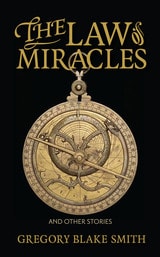
The Law of Miracles
And Other StoriesGregory Blake Smith
University of Massachusetts Press, 2011
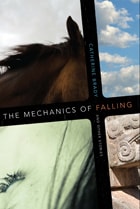
The Mechanics of Falling and Other Stories
Catherine Brady
University of Nevada Press, 2012
The stories in this collection explore those moments when the seemingly fixed coordinates of our lives abruptly give way—when mother love fractures, a faithful husband abandons his family, a conscientious middle-class life implodes, or loyalty demands an excruciating sacrifice. The characters share a fundamental predicament, the struggle to name and embrace some faith that can break their fall. In equal measure, they hunger for and resist this elusive possibility and what it demands of them.The Mechanics of Falling and Other Stories deals with a range of circumstances and relationships, and with characters who must decide what they are willing to risk for the sake of transformation, or for the right to refuse it. The stories trace the effort to traverse the boundaries between one state and another—between conviction and self-doubt, recklessness and despair, resignation and rebellion. And each story propels the reader to imagine what will happen next, to register the unfinished and always precarious quality of every life.
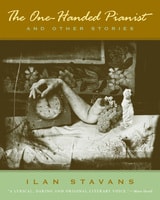
The One-Handed Pianist and Other Stories
Ilan Stavans
Northwestern University Press, 2007
The One-Handed Pianist was published to acclaim in the early 1990’s, with the two-part Spanish edition winning the Latino Literature Prize in 1989 and the Gamma Literature Prize in 1992. Its tales look at what it means to be Jewish in the Hispanic world—a world in which spirituality is often exercised outside the realm of orthodoxy.
Stavans constructs fables that raise questions about ethnicity and community; even Stavans’ person raises questions about ethnicity and community: what does it mean that a Jew of Eastern European lineage can call himself Latino and speak for that group?
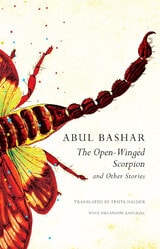
The Open-Winged Scorpion
And Other StoriesAbul Bashar
Seagull Books, 2018
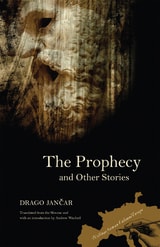
The Prophecy and Other Stories
Drago Jancar
Northwestern University Press, 2009
These newly collected short stories reveal a master at the top of his game. Drago Jancar possesses an acute understanding of the human psyche, enabling his stories to resonate beyond their particular milieu. This collection features seven pieces, drawn from four different collections, that together present the struggle of individuals against powerful forces. The characters try to make sense of a world of shifting borders and changing names that make the idea of a "homeland"—either literal or figurative—a dream rather than a reality.
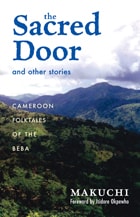
The Sacred Door and Other Stories
Cameroon Folktales of the BebaMakuchi
Ohio University Press, 2007
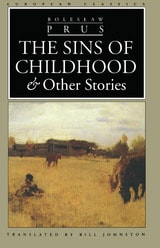
The Sins of Childhood and Other Stories
Boleslav Prus
Northwestern University Press, 1996
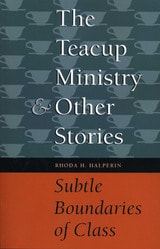
The Teacup Ministry and Other Stories
Subtle Boundaries of ClassBy Rhoda H. Halperin
University of Texas Press, 2001
In the global world of the twenty-first century, class boundaries are subtle and permeable, though real nonetheless. Markers of identity, authenticity, and belonging can change with a gesture or a glance, making people feel they do or don't belong in certain places, with certain people, at certain times. In these powerfully written ethnographic stories, Rhoda Halperin maps the boundaries of class by examining three themes: crossing class boundaries, class creativity, and class vulnerability.
In telling these stories, Halperin draws on a wealth of ethnographic experiences in this country and abroad. Her book challenges class stereotypes in ways that touch on universals across cultures and over time.
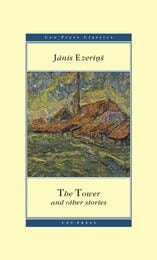
The Tower
and other storiesJanis Ezerins
Central European University Press, 2012
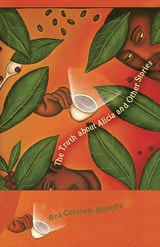
The Truth about Alicia
and Other StoriesAna Consuela Matiella
University of Arizona Press, 2002
Alicia is not the only woman with problems. In these stories about contemporary and traditional Latinas, Ana Consuelo Matiella uses sensitivity and wit to address issues faced by women of color and women everywhere—issues largely having to do with love: between men and women, mothers and daughters, women and friends. In engaging stories about family myths, gossip, and lies, comadres converse over afternoon café con leche. "I'm sure that I was the only wife whose husband was teaching their daughter to do Cheech Marin imitations," remarks one of Matiella's characters. Another sings the praises of the chocolate milkshake diet: "That’s one advantage of living on the border. You get to try all the latest gringo inventions as soon as they hit the streets." Through encounters with angels, conversations with dogs, and relationships with men overly concerned with the dimensions of their manhood, Matiella offers a new exploration of the human condition—one showing us that if we cannot laugh at life, no matter how tragic the circumstances, we are surely doomed.
With humor and insight that come only through close observation of her fellow human beings, this gifted writer brings new twists to familiar scenes. The Truth about Alicia and Other Stories is an authentic portrayal of the world of contemporary Chicanas that will delight everyone who enters it.
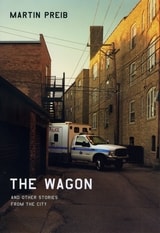
The Wagon and Other Stories from the City
Martin Preib
University of Chicago Press, 2010
Martin Preib is an officer in the Chicago Police Department—a beat cop whose first assignment as a rookie policeman was working on the wagon that picks up the dead. Inspired by Preib’s daily life on the job, The Wagon and Other Stories from the City chronicles the outer and inner lives of both a Chicago cop and the city itself.
The book follows Preib as he transports body bags, forges an unlikely connection with his female partner, trains a younger officer, and finds himself among people long forgotten—or rendered invisible—by the rest of society. Preib recounts how he navigates the tenuous labyrinths of race and class in the urban metropolis, such as a domestic disturbance call involving a gang member and his abused girlfriend or a run-in with a group of drunk yuppies. As he encounters the real and imagined geographies of Chicago, the city reveals itself to be not just a backdrop, but a central force in his narrative of life and death. Preib’s accounts, all told in his breathtaking prose, come alive in ways that readers will long remember.
The War of the Fatties and Other Stories from Aztec History
By Salvador Novo
University of Texas Press, 1993
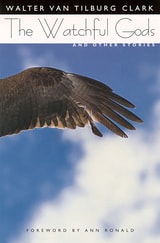
The Watchful Gods And Other Stories
Walter Van Tilburg Clark
University of Nevada Press, 2004
Critic John R. Milton once said that Walter Van Tilburg Clark "did perhaps more than anyone else to define (in his fiction) the mode of perception, the acquisition of knowledge, and the style which we tend to call Western." In 1950, Walter Van Tilburg Clark, author of the acclaimed novel The Ox-Bow Incident, published a collection of short stories that had already won distinction in various national magazines. The collection was well received by reviewers, and subsequent critics have noted that these stories reflect both Clark’s literary power and the major concerns of his novels: the interior and intuitive complexities of good and evil, and the fragile, intricate web that connects humankind to the rest of the natural world.
A foreword by Ann Ronald, one of the West’s most astute literary critics, sets the stories into the context of Clark’s oeuvre and illuminates the way they reveal crucial characteristics of this writer’s imagination.
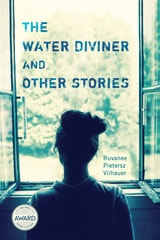
The Water Diviner and Other Stories
Ruvanee Pietersz Vilhauer
University of Iowa Press, 2018
In this thought-provoking collection, Sri Lankan immigrants grapple with events that challenge perspectives and alter lives. A volunteer faces memories of wartime violence when she meets a cantankerous old lady on a Meals on Wheels route. A lonely widow obsessed with an impending apocalypse meets an oddly inspiring man. A maidservant challenges class divisions when she becomes an American professor’s wife. An angry tenant fights suspicion when her landlord is burgled. Hardened inmates challenge a young jail psychiatrist’s competence. A father wonders whether to expose his young son’s bully at a basketball game. A student facing poverty courts a benefactor. And in the depths of an isolated Wyoming winter, a woman tries to resist a con artist. These and other tales explore the immigrant experience with a piercing authenticity.
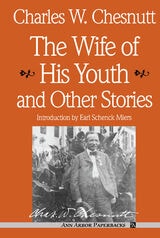
The Wife of His Youth and Other Stories
Charles W. Chesnutt
University of Michigan Press, 1968

The Year They Gave Women the Priesthood and Other Stories
Michael Fillerup
Signature Books, 2022
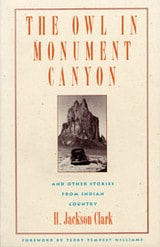
The owl in Monument Canyon, and other stories from Indian country
H. Jackson Clark
University of Utah Press, 1993
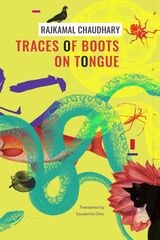
Traces of Boots on Tongue
and Other StoriesRajkamal Chaudhary
Seagull Books, 2023
Drawing influences from Indian folktales, French existentialism, and the Bengali Hungryalist movement, Rajkamal Chaudhary’s œuvre is like a secret back alley in an old city—not completely forgotten but existing only for the few. Even though Chaudhary also wrote in Maithili and Bengali, it was his writings in Hindi that established him as the bold new experimentalist of Indian literature. His India of the 1950 and 60s is populated with hopeless literature professors, scattered alcohol bottles, prostitutes, hysteria patients, and sell-out painters. His unconventional life and writing place him outside the mainstream, and so he remains as uncategorizable as the characters and lives he wrote about. Bringing together twelve of his most representative short stories, translated for the first time in English, Traces of Boots on Tongue and Other Stories allows a glimpse into the early decades of independent India and its weariness, which many readers will find in today’s India as well.