Results by title
57 books match the query 'Peasants' and 12 start with t
Terror in the Countryside
Campesino Responses to Political Violence in Guatemala, 1954–1985Rachel A. May
Ohio University Press, 2001
The key to democratization lies within the experience of the popular movements. Those who engaged in the popular struggle in Guatemala have a deep understanding of substantive democratic behavior, and the experience of Guatemala’s civil society should be the cornerstone for building a meaningful formal democracy.
In Terror in the Countryside Rachel May offers an in-depth examination of the relationship between political violence and civil society. Focusing on Guatemala, Professor May develops a theoretical scheme that calls into question the more conventional understandings of both violence and civil society.
By elaborating a cyclical model of violence, and suggesting a typology of rural (campesino) popular organizations, Terror in the Countryside provides both a history and an analysis of late-twentieth-century violence and of the role of campesino organizations during the worst years of conflict in Guatemala.
This history details the way ideologies, organizational structures, and mobilization strategies evolved in response to the climate of terror, emphasizing the courage and sacrifice of those who worked for justice and human rights.
This book argues that the peace accords can be considered only as a first step to eliminate a violence that has become deeply rooted in the political life of the country.
Thailand’s Political Peasants
Power in the Modern Rural EconomyAndrew Walker
University of Wisconsin Press, 2012
When a populist movement elected Thaksin Shinawatra as prime minister of Thailand in 2001, many of the country’s urban elite dismissed the outcome as just another symptom of rural corruption, a traditional patronage system dominated by local strongmen pressuring their neighbors through political bullying and vote-buying. In Thailand’s Political Peasants, however, Andrew Walker argues that the emergence of an entirely new socioeconomic dynamic has dramatically changed the relations of Thai peasants with the state, making them a political force to be reckoned with. Whereas their ancestors focused on subsistence, this generation of middle-income peasants seeks productive relationships with sources of state power, produces cash crops, and derives additional income through non-agricultural work. In the increasingly decentralized, disaggregated country, rural villagers and farmers have themselves become entrepreneurs and agents of the state at the local level, while the state has changed from an extractor of taxes to a supplier of subsidies and a patron of development projects.
Thailand’s Political Peasants provides an original, provocative analysis that encourages an ethnographic rethinking of rural politics in rapidly developing countries. Drawing on six years of fieldwork in Ban Tiam, a rural village in northern Thailand, Walker shows how analyses of peasant politics that focus primarily on rebellion, resistance, and evasion are becoming less useful for understanding emergent forms of political society.
The Chiapas Rebellion
The Struggle for Land and DemocracyNeil Harvey
Duke University Press, 1998
Beginning with an exploration of the history of ethnic and class conflict in Chiapas since the Conquest, Harvey moves specifically to trace the development of peasant and indigenous organizations in Chiapas since the early 1970s. He compares the struggles for agrarian rights of three grassroots movements facing hostility from both local elites and federal bureaucrats. His examination of the complexities of political change in Chiapas includes the impact of neoliberal economic policies, the origins of the Zapatista army of National Liberation (EZLN), and the political impact of the rebellion itself. Engaging with current theoretical debates on the role and significance of social movements in Mexico and Latin America, Harvey focuses on the primacy of political struggle and on the importance of these movements in the construction and meaning of citizenship. While suggesting that the Zapatista revolution has heightened awareness among the people of Chiapas of such democratic issues as ethnicity, gender, and land distribution, he concludes with an analysis of the obstacles to peace in the region today.
This unprecedented study of the Zapatista rebellion will provoke discussion among students and scholars of contemporary Mexico, political science, Latin American studies, history, sociology, and anthropology.
The End of the Future
Trauma, Memory, and Reconciliation in Peruvian AmazoniaBartholomew Dean
Vanderbilt University Press, 2023
To give context to the causes and consequences of the MRTA's presence in the lower and central Huallaga, this book relies on the written works and testimony of Sístero García Torres, an MRTA rebel commander; the government's Truth and Reconciliation Commission; MRTA propaganda; media accounts; and critical historical texts. Besides exposing Huallaga Valley human rights abuses, the book's contribution to political anthropology is consequential for its insistence that reconciliation is by no means equivalent to local, Indigenous notions of "justice" or customary forms of dispute resolution. Without deliberately addressing the diverse socio-cultural contours defining overlapping epistemologies of justice, freedom, and communal well-being, enduring reconciliation will likely remain elusive.
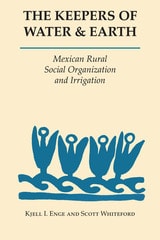
The Keepers of Water and Earth
Mexican Rural Social Organization and IrrigationBy Kjell I. Enge and Scott Whiteford
University of Texas Press, 1989
Agrarian reforms transformed the Mexican countryside in the late twentieth century but without, in many cases, altering fundamental power relationships. This study of the Tehuacán Valley in the state of Puebla highlights different strategies to manipulate the local implementation of federal government programs. With their very differing successes in the struggle to regain and maintain control of land and water rights, these strategies raise important questions about the meaning of the phrase "locally controlled development."
Because Mexico is dependent on irrigation for 45 percent of its cash crop production, national policy has focused on developing vast government controlled and financed irrigation systems. In the Tehuacán Valley, however, the inhabitants have developed a complex irrigation system without government aid or supervision. Yet, in contrast to most parts of Mexico, water rights can be bought and sold as a commodity, leading to accumulation, stratification, and emergence of a regional elite whose power is based on ownership of land and water. The analysis provides an important contribution to the understanding of local control.
The findings of this study will be important to a wide audience involved in the study of irrigation, local agricultural systems, and the interplay between local power structures and the national government in developing countries. The book also presents unique material on gravity-fed, horizontal wells, known as qanat in the Middle East, which had been unknown in the literature on Latin America before this book.
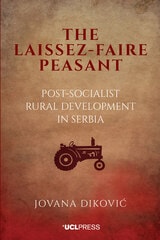
The Laissez-Faire Peasant
Post-Socialist Rural Development in SerbiaJovana Dikovic
University College London, 2025
The Laissez-Faire Peasant: Post-Socialist Rural Development in Serbia subverts conventional wisdom on rural development by shifting the focus from state-led planning to the agency of peasants themselves. Rejecting the notion that rural populations are passive victims of top-down policies, Jovana Dikovic presents a compelling ethnographic study of three Serbian villages, where autonomy and local cooperation drive economic and social resilience. She introduces the concept of the “laissez-faire peasant”—a figure who thrives outside rigid government schemes, shaping rural development on their own terms. By examining the friction between state policies and the everyday strategies of rural communities, Dikovic uncovers how peasant autonomy not only resists external intervention but fosters sustainable and self-sufficient growth.
The first in-depth study of contemporary Serbian peasantry, this book reframes rural life as a site of innovation rather than stagnation. An area of interest for scholars of post-socialist transitions, rural development, and economic anthropology, The Laissez-Faire Peasant provides a new lens on how rural communities survive and adapt in a rapidly changing world.

The Land and the Loom
Peasants and Profit in Northern France, 1680–1800Liana Vardi
Duke University Press, 1993
Drawing on evidence culled from parish registers, notarial records, and judicial archives, Liana Vardi outlines the development of the linen weaving trade in Montigny and details the local peasants' participation. The peasants that emerge from her study are not the figures of tradition, driven solely by symbolic attachment to the land and unreasonably devoted to village solidarities. Instead they reveal remarkable flexibility and diversity, not only improving farming methods and raising yields during the eighteenth century, but also using land to finance investments in industry and to develop local business, far-flung commercial networks and complex credit mechanisms. The eighteenth-century French countryside appears as a region and time of capitalist experimentation, cut short by pre-Revolutionary and Revolutionary crises.
Meticulously documented, broadly interpretive, and beautifully written, this fascinating book will permenantly alter conventional perceptions of peasant life and rural industry and, ultimately, the way ordinary people are seen in seemingly distant times and places.

The Polish Peasant in Europe and America
A CLASSIC WORK IN IMMIGRATION HISTORYWilliam I. Thomas and Florian Znaniecki
University of Illinois Press, 1984

The Small Matter of Suing Chevron
Suzana Sawyer
Duke University Press, 2022
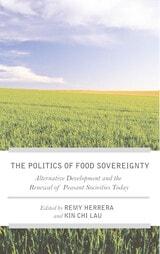
The Struggle for Food Sovereignty
Alternative Development and the Renewal of Peasant Societies TodayEdited by Remy Herrera and Kin Chi Lau
Pluto Press, 2015
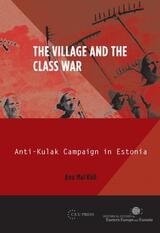
The Village and the Class War
Anti-Kulak Campaign in Estonia 1944-49Anu Mai Kõll
Central European University Press, 2013

The Warwolf
A Peasant Chronicle of the Thirty Years WarHermann Lons
Westholme Publishing, 2006
The Thirty Years War, fought between 1618 and 1648, was a ruthless struggle for political and religious control of central Europe. Engulfing most of present-day Germany, the war claimed at least ten million lives. The lengthy conflict was particularly hard on the general population, as thousands of undisciplined mercenaries serving Sweden, Spain, France, the Netherlands, and various German principalities, robbed, murdered, and pillaged communities; disease spread out of control and starvation became commonplace. In The Warwolf, Hermann Löns's acclaimed historical novel, the tragedy and horrors of war in general, and these times in particular are revealed. The Warwolf, based on the author's careful research, traces the life of Harm Wulf, a land-owning peasant farmer of the northern German heath who realizes after witnessing the murder of neighbours and family at the hands of marauding troops that he has a choice between compromising his morals or succumbing to inevitable torture and death. Despite his desire for peace, Wulf decides to band with his fellow farmers and live like "wolves," fiercely protecting their isolated communities from all intruders. Löns's brilliant portrayal of the two sides faced by any person in a moral crisis—in Harm Wulf's case, whether to kill or be killed—continues to resonate. Originally published in 1910 and still in print in Germany, The Warwolf is available for first time in English.