Results by title
88 books match the query 'Physicians' and 15 start with t

The ABC of Acid-Base Chemistry
The Elements of Physiological Blood-Gas Chemistry for Medical Students and PhysiciansHorace W. Davenport
University of Chicago Press, 1974
This new edition of Horace W. Davenport's standard text takes into account different ways of looking at the problems of acid-base derived from new instrumentation. The exposition has been modified to allow the student to apply his understanding to other systems of description of the acid-base status. Although the pH system has been retained, there is increasing emphasis on the use of hydrogen ion concentration.
Topics discussed include: partial pressure of gases, composition of alveolar gas, transport of oxygen and carbon dioxide in the blood, buffer action of hemoglobin and separated plasma, oxygenated whole blood and reduced blood, concepts of base excess and base deficit, and chemical regulation of respiration.
"Any reader who clearly understands the subject matter of this book will have a firm grounding in the principles of the subject; I find it the clearest text of this type that I have read."—British Journal of Hospital Medicine
"This little book is of great value to chemically trained physicians and medical students who want to get a clearer idea of the physiology of acid base chemistry in the blood."—The Journal of Gastroenterology
The Beggar and the Professor
A Sixteenth-Century Family SagaEmmanuel Le Roy Ladurie
University of Chicago Press, 1997
"Le Roy Ladurie paints a remarkably contemporary picture of life in the sixteenth century. . . . It's a good story, told with a deft narrative touch."—Michael S. Kimmel, The Nation
"Le Roy Ladurie is a master of the representative detail and uses the Platters' lives as a means to see a whole century 'through a glass, darkly'."—The Independent
"Le Roy Ladurie has not only thoroughly sketched out the Platters' particular brand of gusto, he has also made it seem a defining characteristic of the sixteenth century."—The New Republic
"All [of] the drama and pathos of a Disney film."—Emily Eakin, Lingua Franca
The Best Specimen of a Tyrant
The Ambitious Dr. Abraham Van Norstrand and the Wisconsin Insane HospitalThomas Doherty
University of Iowa Press, 2012
The City of Refuge [New and Expanded Edition]
The Collected Stories of Rudolph FisherRudolph Fisher, Edited & Intro by John McCluskey, Jr.
University of Missouri Press, 2008
A definitive collection of Fisher’s short stories, The City of Refuge offers vibrant tales that deal with the problems faced by newcomers to the city, ancestor figures who struggle to instill a sense of integrity in the young, problems of violence and vengeance, and tensions of caste and class. This anthology has now been expanded to include seven previously unpublished stories that take up such themes as marital infidelity and passing for black and also relate the further adventures of Jinx and Bubber, the comic duo who appeared in Fisher’s two novels.
This new edition also includes two unpublished speeches and the popular article “The Caucasian Storms Harlem,” describing the craze for black music and dance. John McCluskey’s introduction has been updated to place the additional works within the context of Fisher’s career while situating his oeuvre within the broader context of American writing during the twenties.
Fisher recognized the dramatic and comic power in African American folklore and music and frequented Harlem’s many cabarets, speakeasies, and nightclubs, and at the core of his work is a strong regard for music as context and counterpoint. The City of Refuge now better captures the sounds of the city experience by presenting all of Fisher’s known stories. It offers a portrait of Harlem unmatched in depth and range by Fisher’s contemporaries or successors, celebrating, as Booklist noted, “the complexity of black urban life in its encounter with the dangers and delights of the city.” This expanded edition adds new perspectives to that experience and will enhance Fisher’s status for a new generation of readers.
The Doctor Who Would Be King
Guillaume Lachenal
Duke University Press, 2022

The English Virtuoso
Art, Medicine, and Antiquarianism in the Age of EmpiricismCraig Ashley Hanson
University of Chicago Press, 2009
At the heart of this profoundly interdisciplinary study lies the Royal Society of London for the Improvement of Natural Knowledge, which from its founding in 1660 served as the major professional organization for London’s leading physicians, many of them prominent virtuosi. Craig Ashley Hanson reveals that a vital art audience emerged from the Royal Society—whose members assembled many of the period’s most important nonaristocratic collections—a century before most accounts date the establishment of an institutional base for the arts in England. Unearthing the fascinating stories of an impressive cast of characters, Hanson establishes a new foundation for understanding both the relationship between British art and science and the artistic accomplishments of the late eighteenth and nineteenth centuries.
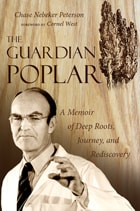
The Guardian Poplar
A Memoir of Deep Roots, Journey, and RediscoveryChase Nebeker Peterson
University of Utah Press, 2012
When Barney Clark received the Jarvik-7 artificial heart in 1983 and Cold Fusion came under fire in 1989, Chase Peterson, as the University of Utah president, was inevitably pulled into these campus events. While these episodes may be the best known in Peterson’s professional history, they are certainly not the only stories that make his autobiography worth reading.
The Guardian Poplar tells of a man who grew up in small-town Utah and carried his pioneer and Mormon heritage to a New England prep school and later to Harvard. He then returned to Utah as a doctor, but unexpectedly found himself back at Harvard as its dean of admissions, handling issues such as the Vietnam War and racial and gender reform. The book explains how Peterson’s home state recruited him back to become an administrator at the University of Utah and how he would eventually become the university president, taking on new issues and challenges. Peterson recounts these years by drawing on anecdotes that recall the people he served and the moments that brought his life meaning.
This autobiography is a compelling account of how Peterson has managed to balance family and career, handle the tensions that have arisen between his faith and his scientific training, and remain solid in the face of his newest challenge—cancer. The book’s engaging prose and honest reflections are sure to intrigue and inspire readers who know the man well, as well as those readers who simply want to know a man who can be described as dedicated, faithful, hardworking, and hopeful about the future.
“When I first met Chase Peterson as a Harvard freshman—along with our joint friend and brother David Evans—something deeply touched me. It was not only his sincere smile and open embrace but also a sense that here was a kind and courageous man comfortable in his own skin, secure in who he was yet eager to encounter new persons, new experiences, and new challenges. . . . He was from Utah but in New England, a Mormon in old Harvard, and a medical doctor in the deanship of admissions. Little did I know that his journey would enhance and enrich my own—owing to his critical allegiance to his family, his faith, his friends, and to his citizenship of country and world. His prophetic witness at Harvard in the turbulent ‘60s and ‘70s, his promotion of black priesthood in the Mormon church, his support of antiapartheid protests in the ‘80s, and his steadfast defense of academic freedom in the Cold Fusion controversy in the early ‘90s all express his quiet and humble effort to be true to himself—a self grounded in, but
not limited by, a rich Mormon tradition.”—from the foreword by Cornel West

The Iron Rose
The Extraordinary Life of Charlotte Ross, MDFred Edge
University of Manitoba Press, 1992
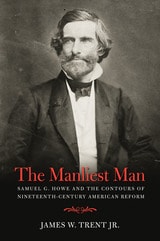
The Manliest Man
Samuel G. Howe and the Contours of Nineteenth-Century American ReformJames W. Trent
University of Massachusetts Press, 2012
A native of Boston and a physician by training, Samuel G. Howe (1801–1876) led a remarkable life. He was a veteran of the Greek War of Independence, a fervent abolitionist, and the founder of both the Perkins School for the Blind and the Massachusetts School for Idiotic and Feeble-Minded Children. Married to Julia Ward Howe, author of “Battle Hymn of the Republic,” he counted among his friends Senator Charles Sumner, public school advocate Horace Mann, and poet Henry Wadsworth Longfellow.
Always quick to refer to himself as a liberal, Howe embodied the American Renaissance's faith in the perfectibility of human beings, and he spoke out in favor of progressive services for disabled Americans. A Romantic figure even in his own day, he embraced a notion of manliness that included heroism under fire but also compassion for the underdog and the oppressed. Though hardly a man without flaws and failures, he nevertheless represented the optimism that characterized much of antebellum American reform.
The first full-length biography of Samuel G. Howe in more than fifty years, The Manliest Man explores his life through private letters and personal and public documents. It offers an original view of the reformer's personal life, his association with social causes of his time, and his efforts to shape those causes in ways that allowed for the greater inclusion of devalued people in the mainstream of American life.
The Medical Malpractice Myth
Tom Baker
University of Chicago Press, 2005
This, according to Tom Baker, is the myth of medical malpractice, and as a reality check he offers The Medical Malpractice Myth, a stunning dismantling of this familiar, but inaccurate, picture of the health care industry. Are there too many medical malpractice suits? No, according to Baker; there is actually a great deal more medical malpractice, with only a fraction of the cases ever seeing the inside of a courtroom. Is too much litigation to blame for the malpractice insurance crisis? No, for that we can look to financial trends and competitive behavior in the insurance industry. Are these lawsuits frivolous? Very rarely. Point by point, Baker—a leading authority on insurance and law—pulls together the research that demolishes the myths that have taken hold about medical malpractice and suggests a series of legal reforms that would help doctors manage malpractice insurance while also improving patient safety and medical accountability.
President Bush has made medical malpractice reform a priority in his last term in office, but if history is any indication, legislative reform would only worsen the situation and perpetuate the gross misunderstanding of it. The debate surely will be transformed by The Medical Malpractice Myth, a book aimed squarely at general readers but with radical conclusions that speak to the highest level of domestic policymaking.
The Midnight Meal and Other Essays About Doctors, Patients, and Medicine
Jerome Lowenstein
University of Michigan Press, 2005
In this expanded edition, an accomplished physician and teacher of medicine discusses the importance of being a caring doctor, especially now that the focus of medicine is increasingly on technological innovation and health care costs.
With wisdom and compassion, Dr. Jerome Lowenstein tells stories about relationships between medical students and their teachers, physicians and their patients. He reflects on what doctors learn from treating chronic illness; how they respond to patients' needs for reassurance; how they bear the burden of treating patients with life-threatening or degenerative disease; whether the distinction between traditional and "alternative" medical treatment is ultimately beneficial or destructive; and many other issues. Dr. Lowenstein's ruminations on humanistic approaches to learning and practicing medicine will be treasured by physicians, medical students, and patients alike.
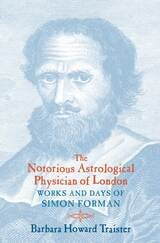
The Notorious Astrological Physician of London
Works and Days of Simon FormanBarbara Howard Traister
University of Chicago Press, 2000
Although he received no formal medical education, Forman built a thriving practice. His success rankled the College of Physicians of London, who hounded Forman with fines and jail terms for nearly two decades. In addition to detailing case histories of his medical practice—the first such records known from London—as well as his run-ins with the College, Forman's manuscripts cover a wide variety of other matters, from astrology and alchemy to gardening and the theater. His autobiographical writings are among the earliest English examples of their genre and display an abiding passion for reworking his personal history in the best possible light, even though they show little evidence that Forman ever intended to publish them.
Fantastic as many of Forman's manuscripts are, it is their more mundane aspects that make them such a priceless record of what daily life was like for ordinary inhabitants of Shakespeare's London. Forman's descriptions of the stench of a privy, the paralyzed limbs of a child, a lost bitch dog with a velvet collar all offer tantalizing glimpses of a world that seems at once very far away and intimately familiar. Anyone who wants to reclaim that world will enjoy this book.
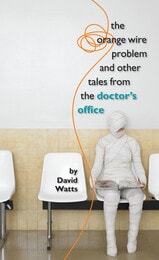
The Orange Wire Problem and Other Tales from the Doctor’s Office
David Watts
University of Iowa Press, 2009
With disarming candor and the audacity to admit that practicing medicine can be a crazy thing, Watts fills each page with riveting details, moving accounts, or belly-laughs. As the stories in this work unfold, we are witness to the moral dilemmas and personal rewards of ministering to the sick. Whether the subject is the potential benefits of therapeutic deception or telling a child about death, Watts’s ear for the right word, the right tone, and the right detail never fails him.
From The Orange Wire Problem and Other Tales from the Doctor’s Office:
We were lingering in the outer office. He mentioned again, no biopsy. I knew that. And I knew there would be no chemotherapy.
Maybe it's like that Orange Wire Problem, I said.
Yes exactly, he said, and four years from now when we're all sitting around the campfire we'll remember the Orange Wire Problem. . .
And I thought to myself, my brother did that. Spoke of the time ahead as he was dying of lung cancer. Six months from now he had said, we'll be glad we did all those drug therapies—as if to speak of the future laid claim to the future.
The Sanctity of Social Life
Physician's Treatment of Critically Ill PatientsDiana Crane
Russell Sage Foundation, 1975
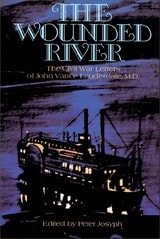
The Wounded River
The Civil War Letters of John Vance Lauderdale, M.D.Peter Josyph
Michigan State University Press, 1993
The Wounded River takes the reader back more than 130 years to reveal a marvelous, first-hand account of nineteenth-century warfare. In the process, the work cuts the legends and mythology that have come to frame and define accounts of America's bloodiest war. Of equal significance, Peter Josyph's editorial work on this superb collection of letters from the Western Americana Division of Yale University's Beinecke Rare Book and Manuscripts Library enhances and clarifies Lauderdale's experinces as a surgeon aboard the U.S. Army hospital ship D. A. January.
The reader looks on while Lauderdale, a New York civilian contract surgeon, operates on hundreds of Confederate and Union wounded. The young doctor's clear writing style and his great compassion for these unfortunate men whose bodies were ripped apart by bullets, shell fragments, and bayonets permits us to catch a disturbiing glimpse of what modern warfare does to humanity. Finally, we learn of Lauderdale's motives for volunteering, his impressions of the "hospital ship" D. A. January, Confederate morale, the Abolitionist cause, and black slavery. The Wounded River is a must read for anyone interested in the real American Civil War.