Results by title
183 books match the query 'Places' and 34 start with t
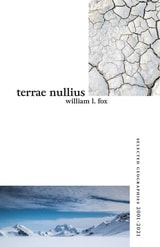
Terrae Nullius
Selected Geographies 2001-2021William L. Fox
University of Nevada Press, 2027
The Alaska Pipeline becomes a line of poetry, a line in the land—the beginning of an epic and the end of an era. A map in the Antarctic becomes the ground beneath the reader’s feet, erasing itself with every step. A monk in a monastery beneath Mount Everest writes a prayer as the mountain traces a contrail across the upper atmosphere, inscribing a path to be followed.
In each place, William L. Fox reveals how the world leaves its mark on us—and how, through language, we move toward a sense of belonging. His spare, minimalist poems inhabit the planet’s wide empty spaces: Nevada’s Great Basin, the Antarctic and Arctic, the red deserts of interior Australia, the immense playas of Chile’s Atacama, and beyond. Between and within these lines, the poems explore how land becomes landscape, how terrain becomes territory, and how meaning is made.

Texas on the Table
People, Places, and Recipes Celebrating the Flavors of the Lone Star StateBy Terry Thompson-Anderson, Photos by Sandy Wilson
University of Texas Press, 2014
With a bounty of locally grown meats and produce, artisanal cheeses, and a flourishing wine culture, it’s a luscious time to be cooking in Texas. From restaurant chefs to home cooks, Texans are going to local dairies, orchards, farmers’ markets, ranches, vineyards, and seafood sellers to buy the very freshest ingredients, whether we’re cooking traditional favorites or the latest haute cuisine. We’ve discovered that Texas terroir—our rich variety of climates and soils, as well as our diverse ethnic cultures—creates a unique “taste of place” that gives Texas food a flavor all its own.
Written by one of Texas’s leading cookbook authors, Terry Thompson-Anderson, Texas on the Table presents 150 new and classic recipes, along with stories of the people—farmers, ranchers, shrimpers, cheesemakers, winemakers, and chefs—who inspired so many of them and who are changing the taste of Texas food. The recipes span the full range from finger foods and first courses to soups and breads, salads, seafood, chicken, meat (including wild game), sides and vegetarian dishes, and sweets. Some of the recipes come from the state’s most renowned chefs, and all are user-friendly for home cooks. Finally, the authors and winemakers tell which recipes they turn to when opening their favorite wines.
This delicious compilation of recipes and stories of the people behind them, illustrated with Sandy Wilson’s beautiful photographs, makes Texas on the Table the must-have cookbook for everyone who relishes the flavors of the Lone Star State.
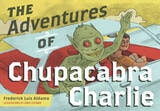
The Adventures of Chupacabra Charlie
Written by Frederick Luis AldamaIllustrated by Chris Escobar
The Ohio State University Press, 2020
With magical realism, allegory, and gentle humor, Aldama and Escobar have created a story that will resonate with young and old readers alike as it incorporates folklore into its subtle take on the current humanitarian crisis at the border.
The Anchorage
PoemsMark Wunderlich
University of Massachusetts Press, 1999
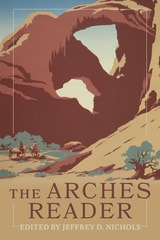
The Arches Reader
Edited by Jeffrey D. Nichols
University of Utah Press, 2024
Part of the National Park Readers series, The Arches Reader is an anthology of writing about Arches National Park and the surrounding area. The selections range from creative nonfiction to short fiction to poetry to amateur versions of scientific reports; they are wide-ranging and have never before been collected in one place; several selections are previously unpublished. Photographs collected here include both historic black-and-white images and beautiful, full-color images of some of Arches’ most striking features. The Arches Reader is an essential companion for anyone who wants to better understand its unique natural and human past.
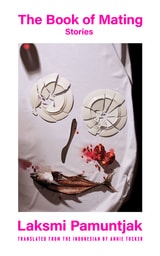
The Book of Mating
StoriesLaksmi Pamuntjak, Annie Tucker
Northwestern University Press, 2027
Winner of the Humanities in Translation Prize
The Book of Mating is a masterfully translated collection of stories in which Indonesian women explore the full spectrum of mating: marital, sexual, and spiritual; forced and free; transcendent, ruinous, and mundane. Laksmi Pamuntjak portrays both the constraints and opportunities facing women caught between the enduring restrictions of local norms and hierarchies and the tantalizing promises of globalized modern life, between internalized myths and social realities.
An experimental melding of Pamuntjak’s creative, journalistic, and activist work, these stories read as urgent dispatches from the Indonesian archipelago and diaspora—and as universal narratives of women’s lived experiences. Annie Tucker’s nuanced translation takes us from the prison island of Buru and the Bogor Botanical Gardens to Paris’s Left Bank, offering a polyphonic testament to the universal fight for women’s autonomy over their bodies and their lives.
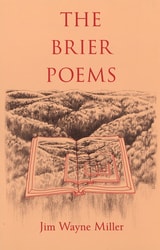
The Brier Poems
Jim Wayne Miller
Ohio University Press, 1997
Published in 1997 by Gnomon Press. Jim Wayne Miller’s The Brier Poems, published posthumously, is a selection of poetry from The Mountains Have Come Closer (where the Brier figure first emerged) and Brier, His Book, along with additional poems not published in previous volumes. It celebrates the Appalachian region and its people through “The Brier,” the enlightened Appalachian who laments what is happening to the world that nurtured him. Through vivid imagery and rich language, Miller explores themes of identity and tradition and the connection between the land and its inhabitants. The poems capture the spirit and resilience of Appalachian culture, blending personal reflection with social commentary. Miller’s work highlights the beauty and complexity of life in the mountains, offering a voice to the often-overlooked experiences of rural Appalachia.

The Centenary Edition of the Works of Nathaniel Hawthorne
Vol. XXI, the English Notebooks, 1853–1856Nathaniel Hawthorne
The Ohio State University Press, 1997
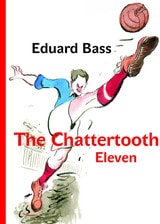
The Chattertooth Eleven
Eduard Bass
Karolinum Press, 2009
In 1922, the same year that saw the establishment of the Czechoslovak Football Association, a former singer and cabaret director from Prague published a novel about soccer. Eighty-six years later, that novel, Eduard Bass’s The Chattertooth Eleven, has been reprinted more than thirty times, has been made into a film, and has become one of the most popular works of Czech fiction.
The novel tells the extraordinary adventures of an ordinary father, Chattertooth, and his eleven sons—whom he has raised as an unbeatable soccer team. This humorous tale—set in the aftermath of World War I—celebrates fair play and perseverance while simultaneously taking a gently ironic stance towards the Czech infatuation with soccer. This edition, in a new graphic layout by Zdenek Ziegler, is accompanied by charming illustrations by Jirí Grus.
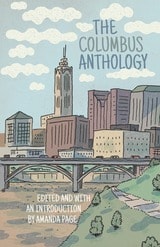
The Columbus Anthology
Amanda Page
The Ohio State University Press, 2020
Race, sports, the endless squeeze of gentrification, the city’s booming literary and comics scenes, its reputation as a haven for queer life, the sometimes devastating differences in perspective among black and white, native and transplant residents—and more than one tribute to Buckeye Donuts—make this anthology a challenging and an energizing read. From Hanif Abdurraqib’s sparkling and urgent portrait of Columbus’s vital immigrant culture as experienced through Crew games to Nick Dekker’s insights into breakfast as a vehicle for getting to know a city to the poetry of Maggie Smith and Ruth Awad, the pieces gathered here show us a Columbus far more textured than any test marketer could dream up.
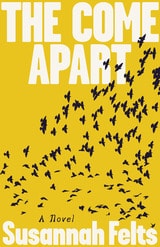
The Come Apart
A NovelSusannah Felts
Northwestern University Press, 2026
An authentic rock band story from Chicago to Nashville and, just maybe, back again
On the cusp of turning thirty, Chicago indie musician Maggie Corbin has hustled for a decade, set on making her rock and roll dreams come true. Her band, Spinning Birds, fronted by Maggie and her romantic partner Matt Turkish, releases a debut record to critical acclaim, hits the road, and begins working on a follow-up. From the outside, her path looks like success—but as streaming deconstructs the industry and Maggie’s relationships shift and slip, the question remains: Can you live for art alone?
When a sudden move back to the South forces Maggie to reframe her dreams and reckon with familial rifts and her past—while still fighting to reimagine what her future could be—a natural disaster in Nashville and a surprise encounter with a character from her childhood shift her perspective on healing, community, and the ties that bind. Drifting in and out of songwriting sessions, cozy kitchens, and moments of bearing witness to the curious power of the natural world, The Come Apart celebrates the times when we must come fully undone in order to put ourselves back together.
The Counterpunch (and Other Horizontal Poems)/El contragolpe (y otros poemas horizontales)
Juan Carlos Flores
University of Alabama Press, 2016
Mapping contemporary Cuba through the architecture of poetry and place.
Alamar, the home of award-winning Cuban poet Juan Carlos Flores, is the setting for his collection, The Counterpunch and Other Horizontal Poems) / El contragolpe (y otros poemas horizontales). Constructed as a self-help community in eastern Havana, Alamar is the largest housing complex in the world. Flores’s highly structured texts, organized into “art galleries,” present prose paintings of a big place in very small form.
Flores builds a poetic landscape with repeating structures that mirror Alamar’s five-floor walkups. Exploring life and dream on the flat surfaces of the poems, he gives fleeting glimpses of perception and survival at the urban margins. As the poet ages, so ages Alamar itself. Yet both find renewal through poetry.
The eighty poems in this bilingual edition offer the first English translation of a complete Flores collection. It will also be of interest to Spanish-language readers seeking access to Cuban literature abroad. Award-winning scholar and translator Kristin Dykstra has compiled an introduction in which she presents Flores, his literary contexts, and references in his poems. Because Flores made specific requests regarding translation, fascinating notes also clarify and expound on choices Dykstra makes in the English version.
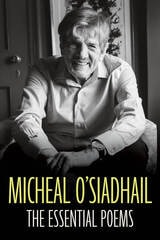
The Essential Poems
Micheal O'Siadhail
Northwestern University Press, 2026
The essential selected works of Ireland’s leading poet, Micheal O’Siadhail
With an illustrious literary career that has spanned over fifty years, renowned poet Micheal O’Siadhail has cemented his place on the international stage. From his debut collection, The Leap Year (1978), to his latest collection, Desire (2023), O’Siadhail captures evolving struggles with love, faith, and humanity. Here, spanning the entirety of his outstanding career, is the essence of his masterful body of work.
The Essential Poems voyages through traditional and innovative poetic forms, investigating love and passion, joy and loss, world-shaping events and personal experiences. O’Siadhail sounds the depths of meaning and evokes wonder, surprise, anguish, and delight. A lyrical meditation on the relationships between humanity and nature, despair and faith, and the richness of courage in the acts of healing completes what proves to be this unforgettable and necessary collection of the inimitable Irish poet.
The Faith Healer of Olive Avenue
StoriesManuel Muñoz and Cherríe Moraga
Northwestern University Press, 2025
From the divergent paths of triplet brothers to a grieving father confronting his mistreatment of his son, these stories interweave a recurring cast of neighborhood characters, many of them in search of escape or release. Lauded for its empathetic portrayals of communities often ignored, The Faith Healer of Olive Avenue won a Whiting Award and an O. Henry Award; it was shortlisted for the Frank O’Connor International Short Story Award as one of the best collections published in English worldwide. A new foreword by author and activist Cherríe Moraga gives testament to Muñoz’s status as “the cartographer of a people.”
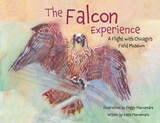
The Falcon Experience
A Flight with Chicago’s Field MuseumIllustrations by Peggy Macnamara; Written by Katie Macnamara
Northwestern University Press, 2026
A joyful, educational flight from the halls of Chicago’s Field Museum to the nests of mighty peregrine falcons
Rosie the Tarantula, famous for her adventure in the corridors and collections of Chicago’s celebrated Field Museum of Natural History, is back. This time, Rosie is focused not on spiders, but on falcons! The Falcon Experience brings us with Rosie as she follows Mary Hennen, the museum’s real-life peregrine program director, giving children and parents alike a front-row seat to the lives of these majestic birds and the scientist who cares for them. Rosie learns how falcons fly, hunt, eat, mate, construct nests and raise chicks (via the peregrine webcam!) in unexpected and challenging places in the city. Mary’s teachings also show how humans can be the key to helping our natural environment.
Beautifully illustrated with watercolors by renowned Field Museum artist-in-residence Peggy Macnamara, The Falcon Experience is told by Peggy’s daughter, author and educator Katie Macnamara, in rhyme ideal for reading aloud to children. This keepsake-quality book will delight budding young scientists and their families while providing a colorful, interactive experience with one of Chicago’s foremost cultural institutions.
The Good Oak
Martin Etchart
University of Nevada Press, 2005
The Granite Pail
The Selected Poems of Lorine NiedeckerLorine Niedecker
Ohio University Press, 1996
This edition was published in 1996 by Gnomon Press.
The Granite Pail is a masterful collection that showcases the poetic brilliance of one of America’s most underappreciated modernist poets. Known for its minimalist style and deep connection to the natural world, Niedecker’s work combines precision with emotional depth in poems that resonate long after they are read.
This volume brings together some of Niedecker’s finest poetry, illustrating her gift for capturing profound truths in the simplest of forms. With themes ranging from the intimate and domestic to the universal and ecological, her poems reflect a life deeply rooted in the landscapes of rural Wisconsin. From meditations on the passage of time to lyrical explorations of nature, The Granite Pail reveals the interplay between solitude, creativity, and the human condition.
Edited and introduced by Cid Corman, a champion of Niedecker’s work, the collection highlights her unique voice within the Objectivist tradition and her ability to create moments of beauty and insight with remarkable economy. This edition also provides context for her life and influences, shedding light on her artistic evolution and the lasting significance of her poetry.
For both longtime admirers and those new to Niedecker’s work, The Granite Pail offers an essential glimpse into the mind of a poet whose quiet brilliance continues to inspire readers and writers alike.
The Land of the Dead Is Open for Business
Jacob Strautmann
Four Way Books, 2020
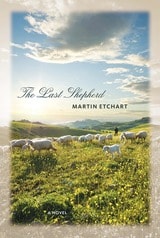
The Last Shepherd
Martin Etchart
University of Nevada Press, 2012
Matt’s journey to manhood takes place in a vividly depicted landscape populated by lively, memorable characters. This is the powerful story of a young man’s search for an identity that encompasses two cultures and one complex, scattered family.
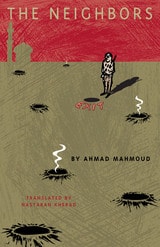
The Neighbors
By Ahmad Mahmoud
University of Texas Press, 2013
Ahmad Mahmoud sets The Neighbors against the backdrop of the oil nationalization crisis that gripped Iran in the early 1950s. His protagonist, Khaled, a young man from a rundown neighborhood in Ahvaz, a city in southern Iran, becomes involved in the struggle to wrest Iran’s oil industry from the British and, as the result of his political activities, comes to realize that there is more to life than the drudgery and poverty his parents and neighbors have experienced.
The Neighbors, published in 1974, cemented Mahmoud’s reputation as a novelist and captured the ethos of a generation—the generation that laid the groundwork for those who continue to struggle for democracy in Iran today. Though the novel received considerable praise and was read widely, its political nature earned the ire of Mohammad Reza Shah’s regime, and the Islamic Republic has objected to its sexually explicit content. This is the first time one of Ahmad Mahmoud’s novels has appeared in English translation.
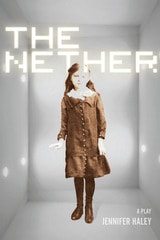
The Nether
A PlayJennifer Haley
Northwestern University Press, 2015
When the lines between reality and fantasy blur, what counts as ethical? Who decides?
The Nether, a daring examination of moral responsibility in virtual worlds, opens with a familiar interrogation scene given a technological twist. As Detective Morris, an online investigator, questions Mr. Sims about his activities in a role-playing realm so realistic it could be life, she finds herself on slippery ethical ground. Sims argues for the freedom to explore even the most deviant corners of our imagination. Morris holds that we cannot flesh out our malign fantasies without consequence. Their clash of wills leads to a consequence neither could have imagined. Suspenseful, ingeniously constructed, and fiercely intelligent, Haley’s play forces us to confront deeply disturbing questions about the boundaries of reality.

The Places of History
Regionalism Revisited in Latin AmericaDoris Sommer, ed.
Duke University Press, 1999
Representing a broad range of contemporary criticism, this volume features many short essays by the most well-known and respected Latin Americanists, each devoting attention to specific matters of history. The topics range from Incan architecture to Chicano and Nuyorican habitats; from turn of the century Argentine criminology to Caribbean homophobia; from the rhetorics of independence and dictatorship to Mexican ambivalence about opera and Brazil’s move beyond monarchy; and from the precarious survival of Spanish language in Latin America to its paradoxical legacy of enlightenment in the Philippines. Originally published as a special issue of Modern Language Quarterly (June 1996), this expanded edition includes a new introduction by Doris Sommer and a new essay by Vincente Rafael. Viewed together, these essays reveal a cultural richness that is sure to interest literary scholars and Latin Americanists alike.
Contributors. Carlos J. Alonso, Antonio Benítez-Rojo, John Beverley, Debra A. Castillo, Arcadio Diaz-Quiñones, Juan Flores, Mary M. Gaylord, José Limón, Josefina Ludmer, Francine Masiello, Antonio Mazzotti, Walter D. Mignolo, Sylvia Molloy, Mary Louise Pratt, Vincente Rafael, Julio Ramos, Susana Rotker, Roberto Schwarz, Diana Taylor, Nancy Vogeley

The Postal Confessions
Max Garland
University of Massachusetts Press, 1995
These poems wrestle with the inherited myths of their particular time and place. Often set in a small corner of western Kentucky, they explore moments when an individual life becomes implicated in a larger scheme—the realm of Cold War politics, the mysteries of religious faith, the codes and rituals of romantic love. Max Garland shows a lyrical determination to deal with history through the lives, minds, and emotions of ordinary people “stricken with time.”
In poems about baptism, bowling, Greek goddesses, and the hydrogen bomb, Garland seems to say that knowledge and even revelation might come from anywhere. The book ends with the image of the empty space Michelangelo left between the hands of Adam and God on the ceiling of the Sistine Chapel; that tension between what lasts and what passes away, comprises the territory of these poems.

The Rendering
Anthony Cody
Omnidawn, 2023
Through a series of experimental poems centered on ecology, Anthony Cody’s The Rendering confronts the history of the Dust Bowl and its residual impacts on our current climate crisis, while acknowledging the complicities of capitalism. These poems grapple with questions of wholeness and annihilation in an Anthropocenic world where the fallout of settler colonialism continues to inflict environmental and cultural devastation. Cody encourages readers to participate in radical acts of refreshing and reimagining the page, poem, collection, and the self, and he invites us to reflect on what lies ahead should our climate continue on its current trajectory toward destruction.
These poems consider if wholeness, or a journey toward wholeness, can exist in the Anthropocene. And, if wholeness cannot exist in these times, we are invited to look at our lives and the world through and beyond annihilation.
The Soluble Hour
Hillary Gravendyk
Omnidawn, 2017
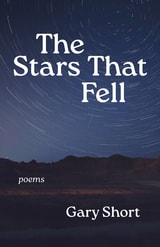
The Stars That Fell
PoemsGary Short
University of Nevada Press, 2026
Through his poems, Gary Short illuminates the humanity of the people of Nevada and the American West, specifically the rural communities that often get left out of the narrative. Focusing on family and the relationships between characters, he extends feelings of hope, solace, forgiveness, and even wisdom throughout this collection.
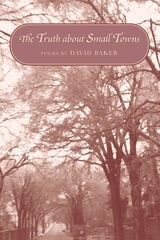
The Truth about Small Towns
PoemsDavid Baker
University of Arkansas Press, 1998
Winner of the 1998 Ohioana Poetry Award
Skilled at both extended narratives and intense, intimate lyrics, David Baker combines his talents in his fifth collection of poems. Working in syllabics, sonnets, couplets, and free verse, Baker can write unflinchingly about love, illness, madness, and perseverance.
His small towns are the burgs of the Midwest, where there is a constant tension between a future that’s coming and a past that may never vanish. The grocer on the corner now carries mango chutney, and the city council must decide—Wendy’s or wetlands.
From these rural towns, Baker evokes lovers, mothers and fathers, highway workmen, hospital patients, and the long dead. He spots the inner struggles of everyday living, as in these lines from “The Women”: “there comes a rubbing of hands, and not as in cleaning. / As when something’s put away, but it won’t stay down.”
Regional in the best sense, Baker’s poems capture the universal human commerce of love and conflict enduring under the water towers and storefronts of America’s heartland.

The Upside-Down Forest
The Vanished Souls Duology, Book 2Richard Zimler
Tagus Press, 2027
When cruelty is sanctified, betrayal is rewarded as virtue, and the innocent must hide their true identities to survive, seventeen-year-old Isaaque Zarco struggles to preserve the principles he lives by and protect the people he loves in this luminous and deeply moving conclusion to The Vanished Souls duology.
As Isaaque attempts to put his life back together, mysteries and conflicts continue to haunt him, most prominently his father’s inexplicable rejection and the knowledge that his survival depends on concealing his identity and faith.
His world is shaken by a letter saying his grandmother, Flor, has been arrested. Unable to abandon the woman who guided him throughout his childhood, Isaaque crosses into Spain, entering a society ruled by fear and deception, where anonymous accusations carry the force of law and compassion itself has become an act of defiance. Flor has been transferred to a prison in Madrid. She has been physically broken by imprisonment. Isaaque learns that, under torture, she revealed the names of two of his oldest friends as secret Jews. Racing back to his home village, he embarks on a desperate attempt to help them escape before the Inquisition comes for them.
The Upside-Down Forest portrays a society in which slander is revered as truth, mercy is condemned as weakness, and persecution masquerades as justice. Giving voice to victims whose suffering has too often been erased from history, Richard Zimler explores how systems of fear corrupt not only institutions but also the bonds between family, friends, and neighbors. Ultimately, it asks what remains of our humanity when the moral order itself has been turned upside down—and whether a life shaped by love, loyalty, and compassion can still endure when survival itself demands treachery and betrayal.
The Village of Vanished Souls
The Vanished Souls Duology, Book 1Richard Zimler
Tagus Press, 2027
Winner of Book of the Year in Portugal, The Village of Vanished Souls is a sweeping historical tale inspired by authentic records of the Portuguese Inquisition and the real lives of villagers whose stories have long been forgotten.
Portugal, 1671—Nine-year-old Isaaque Zarco lives a peaceful life in the remote mountain village of Castelo Rodrigo, where he helps his mother prepare meals, roams the surrounding forests with his spirited best friend Lena, and learns about nature from the village apothecary, Samuel. But his idyllic childhood is shattered when Lena and her family suddenly vanish, followed by a series of brutal murders that plunge the isolated community into fear.
When Isaaque’s formidable Castilian grandmother visits, she says what no one else dares: the Inquisition is hunting descendants of Jews who continue to secretly practice. Then she entrusts Isaaque with an even more dangerous secret—that he, too, belongs to a secret Jewish family. As she introduces him to the forbidden traditions and sacred writings of their ancestors, Isaaque’s understanding of his parents, his village, and himself is transformed forever.
As Isaaque comes of age, he is drawn into a clandestine network that helps persecuted Jews escape Portugal. Every mission carries the risk of imprisonment, torture, and death, yet this dangerous work gives Isaaque a profound sense of purpose while deepening his commitment to his heritage. When he learns that his beloved grandmother is ill, he embarks on a journey that will expose long-buried family secrets and reveal that learning to embrace his heritage is only the beginning of what will soon be asked of him.
Inspired by the names, arrest records, and testimonies preserved in Inquisitional archives, The Village of Vanished Souls recreates a little-known chapter of history with vivid historical detail and emotional depth. At once an unforgettable coming-of-age story and a moving portrait of resilience, identity, faith, and love, it gives voice to people whose courage endured despite centuries of persecution and forced silence.
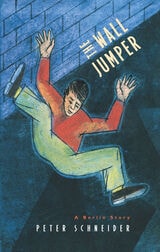
The Wall Jumper
A Berlin StoryPeter Schneider
University of Chicago Press, 1998
When the Berlin Wall was still the most tangible representation of the Cold War, Peter Schneider made this political and ideological symbol into something personal, that could be perceived on a human level, from more than one side. In Schneider's Berlin, real people cross the Wall not to defect but to quarrel with their lovers, see Hollywood movies, and sometimes just because they can't help themselves—the Wall has divided their emotions as much as it has their country. This unforgettable novel, originally published in 1982, takes us back to a time when the Cold War seemed to have no end in sight and the Wall loomed over everyday life on both sides of Berlin.
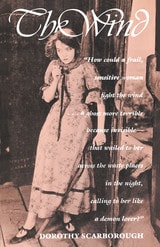
The Wind
By Dorothy Scarborough
University of Texas Press, 1979
The Wind stirred up a fury among Texas readers when it was first published in 1925.
This is the story of Letty, a delicate girl who is forced to move from lush Virginia to desolate West Texas. The numbing blizzards, the howling sand storms, and the loneliness of the prairie all combine to undo her nerves. But it is the wind itself, a demon personified, that eventually drives her over the brink of madness.
While the West Texas Chamber of Commerce rose up in anger over this slander of their state, Dorothy Scarborough's depiction of the cattle country around Sweetwater during the drought of the late 1880s is essentially accurate. Her blend of realistic description, authentic folklore, and a tragic heroine, bound together by a supernatural theme, is unique in Southwestern literature. As a story by and about a woman, The Wind is a rarity in the early chronicles of the cattle industry. It is also one of the first novels to deal realistically with the more negative aspects of the West.
Sylvia Ann Grider's foreword reports on the life and work of Dorothy Scarborough, a native Texan and a well-respected scholar.
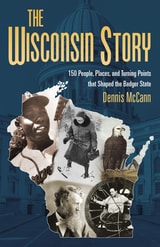
The Wisconsin Story
150 People, Places, and Turning Points that Shaped the Badger StateDennis McCann
Wisconsin Historical Society Press, 2019
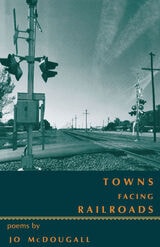
Towns Facing Railroads
PoemsJo McDougall
University of Arkansas Press, 1991
In her second book of poetry, Jo McDougall takes her readers to the dusty prairie towns of the central states, places where the flat terrain belies a complex human landscape. In short, dceptively simple lines, McDougall can so keenly trace the lineaments of place and era that her subject stands before us, its essence displayed and made timeless.
Quietly, with an almost aphoristic bit, McDougall writes about ordinary lives and small towns in a way that her readers may never forget.
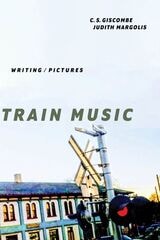
Train Music
Writing / PicturesC.S. Giscombe and Judith Margolis
Omnidawn, 2021
Late in the fall of 2017, poet C. S. Giscombe and book artist Judith Margolis boarded an Amtrak train in New York City and, four days later, stepped off another train at the edge of San Francisco Bay. Giscombe was returning home to California to address an all-white audience on the problem of white supremacy, and expatriate Margolis, accustomed to a somewhat solitary existence, was visiting the United States and making collages. Traveling together, they each turned their train quarters into writing and drawing “studios” where they engaged in conversations and arguments and shared experiences of the discomforts and failures of recent times.
Their original intention had been to travel west and document, in journals and sketchpads, the complex, charged American landscape, but as the trip progressed—and in the months afterwards—the project took on a new shape. Train Music, the book that resulted, recollects and explores the century’s racial and gendered conflicts—sometimes sensually, sometimes in stark images, sometimes in a “mixed economy” of poetry and prose.