Results by title
50 books match the query 'Plants & Animals' and 12 start with t
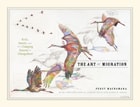
The Art of Migration
Birds, Insects, and the Changing Seasons in ChicagolandPaintings by Peggy Macnamara
University of Chicago Press, 2013
As the only artist in residence at the Field Museum, Peggy Macnamara has a unique vantage point for studying these patterns and capturing their distinctive traits. Her magnificent watercolor illustrations capture flocks, movement, and species-specific details. The illustrations are accompanied by text from museum staff and include details such as natural histories, notable features for identification, behavior, and how species have adapted to environmental changes. The book follows a gentle seasonal sequence and includes chapters on studying migration, artist’s notes on illustrating wildlife, and tips on the best ways to watch for birds and insects in the Chicago area.
A perfect balance of science and art, The Art of Migration will prompt us to marvel anew at the remarkable spectacle going on around us.
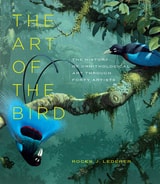
The Art of the Bird
The History of Ornithological Art through Forty ArtistsRoger J. Lederer
University of Chicago Press, 2019
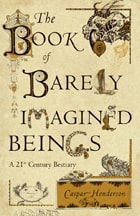
The Book of Barely Imagined Beings
A 21st Century BestiaryCaspar Henderson
University of Chicago Press, 2013
With The Book of Barely Imagined Beings, Caspar Henderson offers readers a fascinating, beautifully produced modern-day menagerie. But whereas medieval bestiaries were often based on folklore and myth, the creatures that abound in Henderson’s book—from the axolotl to the zebrafish—are, with one exception, very much with us, albeit sometimes in depleted numbers. The Book of Barely Imagined Beings transports readers to a world of real creatures that seem as if they should be made up—that are somehow more astonishing than anything we might have imagined. The yeti crab, for example, uses its furry claws to farm the bacteria on which it feeds. The waterbear, meanwhile, is among nature’s “extreme survivors,” able to withstand a week unprotected in outer space. These and other strange and surprising species invite readers to reflect on what we value—or fail to value—and what we might change.
A powerful combination of wit, cutting-edge natural history, and philosophical meditation, The Book of Barely Imagined Beings is an infectious and inspiring celebration of the sheer ingenuity and variety of life in a time of crisis and change.
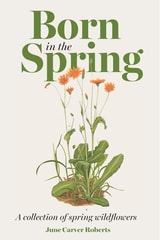
The Born in the Spring
A Collection of Spring WildflowersJune Carver Roberts
Ohio University Press, 2024
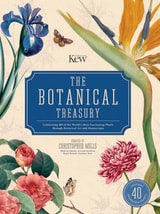
The Botanical Treasury
Celebrating 40 of the World’s Most Fascinating Plants through Historical Art and ManuscriptsEdited by Christopher Mills
University of Chicago Press, 2016
This treasury features a full-color exploration of our most important and interesting plants; facsimiles of rarely seen letters, maps, and journals from the Royal Botanic Gardens, Kew; and forty beautifully reproduced, frameable prints. Together they offer a fascinating look at the world of plant hunting and the cultivation of our knowledge about the plant world.
Every one of the featured plants is extraordinary in some way, be it for its appearance, biology, medicinal properties, or importance to economics, politics, or the arts. Equally extraordinary are the stories associated with the discovery of these plants, revealing the lengths to which collectors and growers would go to find them. The entries build a history of botany and paint a larger picture of the age of exploration.
The Botanical Treasury is a rare treat. Looking through its pages and relishing its prints allows us to fully understand why we are so driven to learn all we can about the natural world. It is an exceptional gift that will wow gardeners, and anyone else fascinated by the greenery that sustains and inspires us.
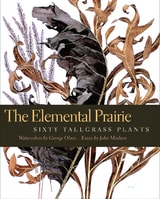
The Elemental Prairie
Sixty Tallgrass PlantsOlson, George
University of Iowa Press, 2005
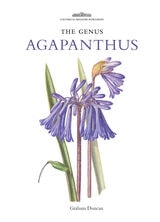
The Genus Agapanthus
Graham Duncan
Royal Botanic Gardens, Kew, 2021
Renowned for its stunning blue flowers, agapanthus—sometimes known as the blue lily or lily of the Nile—is a group of rhizomatous plants native to southern Africa. First cultivated in the Netherlands in the late seventeenth century, it rose to prominence as a conservatory plant in England during the eighteenth and nineteenth centuries after certain varieties were found to be hardy enough to withstand the colder climate of the British Isles. Graham Duncan’s The Genus Agapanthus provides both a revised classification of this plant group and a superbly illustrated celebration of their unique beauty. Featuring new watercolors from South African artist Elbe Joubert and color photographs showing the species in their spectacular and varied natural habitats, the book also highlights a selection of more than 150 of the most notable agapanthus cultivars from growers across Europe, Africa, and Oceania. The agapanthus’s natural history is spotlighted as well, with comprehensive descriptions of each species, maps of their global distribution, and information on how to successfully cultivate, propagate, and care for them. This book’s blend of science, horticulture, and art makes it essential for all varieties of plant lovers.
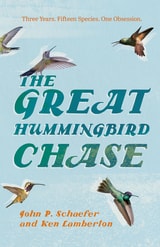
The Great Hummingbird Chase
John P. Schaefer and Ken Lamberton
University of Arizona Press, 2027
Southern Arizona is a world-renown hummingbird destination. The Great Hummingbird Chase chronicles John P. Schaefer and Ken Lamberton’s passionate quest to photograph all fifteen of Arizona’s hummingbird species.
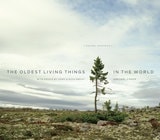
The Oldest Living Things in the World
Rachel Sussman
University of Chicago Press, 2014
Her work is both timeless and timely, and spans disciplines, continents, and millennia. It is underscored by an innate environmentalism and driven by Sussman’s relentless curiosity. She begins at “year zero,” and looks back from there, photographing the past in the present. These ancient individuals live on every continent and range from Greenlandic lichens that grow only one centimeter a century, to unique desert shrubs in Africa and South America, a predatory fungus in Oregon, Caribbean brain coral, to an 80,000-year-old colony of aspen in Utah. Sussman journeyed to Antarctica to photograph 5,500-year-old moss; Australia for stromatolites, primeval organisms tied to the oxygenation of the planet and the beginnings of life on Earth; and to Tasmania to capture a 43,600-year-old self-propagating shrub that’s the last individual of its kind. Her portraits reveal the living history of our planet—and what we stand to lose in the future. These ancient survivors have weathered millennia in some of the world’s most extreme environments, yet climate change and human encroachment have put many of them in danger. Two of her subjects have already met with untimely deaths by human hands.
Alongside the photographs, Sussman relays fascinating – and sometimes harrowing – tales of her global adventures tracking down her subjects and shares insights from the scientists who research them. The oldest living things in the world are a record and celebration of the past, a call to action in the present, and a barometer of our future.
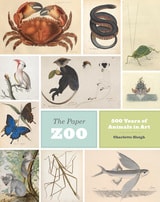
The Paper Zoo
500 Years of Animals in ArtCharlotte Sleigh
University of Chicago Press, 2017
In this stunning book, historian of science Charlotte Sleigh draws on the ultimate bibliophile’s menagerie—the collections of the British Library—to present a lavishly illustrated homage to this historical collaboration between art and science. Gathering together a breathtaking range of nature illustrations from manuscripts, prints, drawings, and rare printed books from across the world, Sleigh brings us face to face (or face to tentacle) with images of butterflies, beetles, and spiders, of shells, fish, and coral polyps. Organized into four themed sections—exotic, native, domestic, and paradoxical—the images introduce us to some of the world’s most renowned natural history illustrators, from John James Audubon to Mark Catesby and Ernst Haeckel, as well as to lesser-known artists. In her accompanying text, Sleigh traces the story of the art of natural history from the Renaissance through the great age of exploration and into the nineteenth century, offering insight into the changing connections between the natural and human worlds.
But the story does not end there. From caterpillars to crabs, langurs to dugongs, stick insects to Old English pigs; from the sinuous tail feathers of birds of paradise to the lime-green wings of New Zealand’s enormous flightless parrot, the kakapo; from the crenellated plates of a tortoise’s shell to imagined likenesses of unicorns, mermaids, and dinosaurs, the story continues in this book. It is a Paper Zoo for all time.
The State Park Movement in America
A Critical ReviewNey C. Landrum
University of Missouri Press, 2013
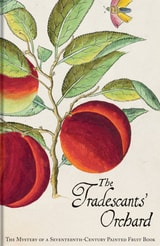
The Tradescants' Orchard
The Mystery of a Seventeenth-Century Painted Fruit BookBarrie Juniper and Hanneke Grootenboer
Bodleian Library Publishing, 2013
The Tradescants’ Orchard reproduces for the first time the entire manuscript, traditionally associated with the renowned father-and-son nurserymen the John Tradescants. The paintings pose many questions: Who painted them and why? What is the significance of the wildlife—birds, butterflies, frogs, and snails—that appear throughout? Why is there only one depiction of an apple tree despite its popularity? Were there others that have since gone missing?
A visual feast that will appeal to botany and gardening enthusiasts, the book also includes an introduction that maps out the mystery of how and why these enigmatic watercolors were made.