Results by title
557 books match the query 'Poems' and 128 start with t

THE WAYS WE TOUCH
POEMSMiller Williams
University of Illinois Press, 1997
"Of History and Hope,"
the 1997 Presidential Inaugural Poem
When Miller Williams
read his Inaugural Poem, "Of History and Hope," to a world-wide
audience in January, his proverbial "fifteen minutes of fame"
lasted far less--somewhere between three and four minutes. That was long
enough to make a big impact on many. Said poet Paul Zimmer, one of the
millions in his viewing audience, "I came up out of my Lazy-Boy and
cheered loudly!"
Williams is an
American original whose poems have been praised for both the elegance
of their style and the simplicity of their language, for their wonderful
humor and genuine passion. The works in his newest collection, The
Ways We Touch, may be nostalgic or challenging, humorous or full of
moral fortitude; always Williams speaks with the kind of insight that
rises from wisdom and experience.
Praise for Williams's
earlier work:
"Miller
Williams is one of those writers whose books drag me snorkeling happily
along. Happy as a pig among truffles, I hurry to the next treasure."
-- William Stafford
"Most contemporary
poets might well go to him for lessons in the art of speaking plainly
in disciplined lines alive with emotional energy." -- X. J. Kennedy
"Better
than almost anything else being published." -- Donald Justice

Tahrir Suite
PoemsMatthew Shenoda
Northwestern University Press, 2015
Winner, Arab American National Museum's 2015 George Ellenbogen Poetry Award
Tahrir Suite is a book-length poem that contemplates immigration, homeland, and diaspora in the twenty-first century. The poem, inspired by recent events in Egypt, cycles through the journey of two Egyptians moving across borders, languages, cultures, landscapes, and political systems while their life in the U.S. diaspora evolves and their home country undergoes revolutionary change.
Written from a perspective and about a place that is virtually unexplored in contemporary American poetry, Tahrir Suite works to capture the complicated essence of what it means to be from a specific place that is experiencing such radical change and how our understandings of “home” and “place” constantly evolve. Tahrir Suite is a musical meditation on what it means to be a global citizen in contemporary times.
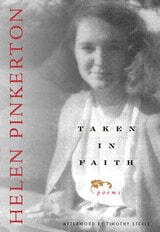
Taken In Faith
PoemsHelen Pinkerton
Ohio University Press, 2002
In 1967, Yvor Winters wrote of Helen Pinkerton, “she is a master of poetic style and of her material. No poet in English writes with more authority.” Unfortunately, in 1967 mastery of poetic style was not, by and large, considered a virtue, and Pinkerton’s finely crafted poems were neglected in favor of more improvisational and flashier talents. Though her work won the attention and praise of serious readers, who tracked her poems as they appeared in such journals as The Paris Review, The Sewanee Review, and The Southern Review, her verse has never been available in a trade book. Taken in Faith remedies that situation, bringing Pinkerton’s remarkable poems to a general audience for the first time.
Even her very earliest works embody a rare depth and seriousness. Primarily lyrical and devotional, they always touch on larger issues of human struggle and conduct. More recent poems, concerned in part with history, exhibit a stylistic as well as a thematic shift, moving away from the rhymed forms of her devotional works into a blank verse marked by a quiet flexibility and contemplative grace.
Like Virginia Adair, another poet who waited long for proper recognition, Pinkerton speaks as a woman who has lived fully and observed acutely and who has set the life and observations down in memorable verse. Taken in Faith represents a half-century of her poetic efforts.
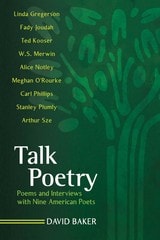
Talk Poetry
Poems and Interviews with Nine American PoetsDavid Baker
University of Arkansas Press, 2012
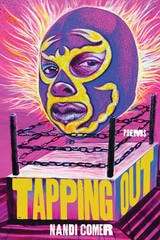
Tapping Out
PoemsNandi Comer
Northwestern University Press, 2020
The harsh realities of being migrant and immigrant, being birthright and oppressed, are as hard-pressed as the plancha move to the body. Each poem in Tapping Out is a “freestyle movement” of language and complexity put on full display, under the bright lights and roars of survival. Comer’s splendid and barbed, Detroit style of language melts the masks with searing words.
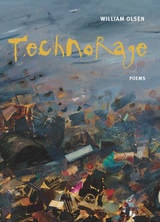
TechnoRage
PoemsWilliam Olsen
Northwestern University Press, 2017
Teeth Never Sleep
PoemsÁngel García
University of Arkansas Press, 2018
Finalist, 2019 PEN Open Book Award
Winner, 2019 American Book Award, Before Columbus Foundation
Drawing on folklore and fantasy, childhood memory and hallucination, and marked by a tone of piercing divulgence, Teeth Never Sleep nimbly negotiates the split consciousness a culture of dominance requires of men (especially men of color), highlighting the fissures in selfhood created by the pressure to seek submission over intimacy while still wanting desperately to be loved, and tracing the contorted route by which emotional pain finds expression in violence. “The night my girlfriend tells my mother I beat her, / I feel betrayed. This was a secret we kept between us. / That night, I was no longer my mother’s loving son,” the speaker in one poem confesses, and later “I never wanted to be this kind of animal.”
And yet, through the lens of Ángel García’s sharp imagining, men frequently appear as beasts (sometimes literally)—as hybrid beings both tender and brutal—that he steadfastly refuses to let off the hook as he obsessively catalogs the origins of toxic masculinity (the first time I made my mother cry, the first time I pitied my father, the first time I saw a girl bleed) and its quiet, lasting effects: “Still a part of me believes a / man shouldn’t cry in front of a woman, even in the dark.”
In a culture of weaponized masculinity, the poems in Teeth Never Sleep make a doorway of a wound, inviting readers to walk through and sit down inside the raw pain they harbor to meditate on two central, urgent questions: what it means to be a man and how, as a man, to love.
Terminal Diagrams
PoemsGarrick Davis
Ohio University Press, 2010
Garrick Davis’s Terminal Diagrams may have been inspired by the illustrated maps in airport lounges, or perhaps they are the blueprints of the Apocalypse, with their subjects and objects representing the bitter fruits of either some future nightmare or the present world. Regardless, their vision is so bleak and unsparing, only a few will be able to savor them. Here, the art of poetry has been mechanized just as the world has been mechanized. Whether his subject is a car accident on the freeways of Los Angeles or the Book of Revelation transmitted by television, Davis’s stanzas conjure a kind of futuristic noir. In poem after poem, he examines the artistic possibilities of the machine, and its alterations of human experience, with a modern spirit that—as Baudelaire defined it—has embraced “the sublimity and monstrousness of something new.”
Terminal Surreal
PoemsMartha Silano
Acre Books, 2025
In her masterful poetry collection Terminal Surreal, Martha Silano confronts the reality of mortality with gorgeous attention to imagery and scene. The book follows a trajectory from early symptoms before diagnosis with amyotrophic lateral sclerosis (ALS) to full-blown illness and its effects on friends and family, including her children, who appear in poems like “After Dropping My Son Off at College” and “My Nineteen-Year-Old Daughter Is My Personal Assistant.”
With a devoted naturalist’s eye, Silano revels in birds, trees, and flowers in a way that reminds readers we are connected to the world around us. The book touches on the medical, the metaphysical, and even the cosmological (through encounters in medical offices and on a moon of Mars). With Nutter Butters and Lorna Doones, abecedarians and self-elegies, Silano’s singular, feisty, contemporary voice propels these poems of grief and acceptance as they explore the transformational power of art.
When I Learn Catastrophically
is an anagram of amyotrophic lateral sclerosis.
When I learn I probably have a couple years,
maybe (catastrophically) less, crossword puzzles
begin to feel meaningless, though not the pair
of mergansers, not the red cardinal of my heart.
The sky does all sorts of marvelously uncatastrophic
things that winter I shimmy between science
& song, between widgeons & windows, weather
& its invitation to walk. Walking, which becomes
my lose less, my less morsels, my lose smile
while more sore looms. . . .
Terra Incognita
PoemsSara Henning
Ohio University Press, 2022
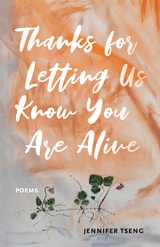
Thanks for Letting Us Know You Are Alive
PoemsJennifer Tseng
University of Massachusetts Press, 2024
Crafted with lines from her late father’s letters, Jennifer Tseng’s Thanks for Letting Us Know You Are Alive is a portrait of an immigrant, a rootless person whose unspoken loss—that of his native geography, family, traditions, language—underlies every word. Though her father’s first language was Mandarin, for more than twenty years he wrote these letters in English, so that she could understand them. Some are riddled with errors, some nearly unintelligible. Lines from his letters appear as titles and are scattered throughout the poems, blending voices of father and daughter. This collection enacts what it means to lose someone and commune with them simultaneously—the paradox of grief and all it gives us.
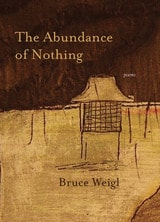
The Abundance of Nothing
PoemsBruce Weigl
Northwestern University Press, 2012
Finalist, 2013 Pulitzer Prize for Poetry
Throughout his award-winning career, Bruce Weigl has proven himself to be a poet of extraordinary emotional acuity and consummate craftsmanship. In The Abundance of Nothing, these qualities are on full display, animating and informing poems that combine rich, metaphoric imagery with direct, powerful language. Deftly weaving history and everyday experience, Weigl transports readers from the front lines of the Vietnam War and all the tangled cultural and emotional scenes of that time to the slow winds of the American Midwest that softly ease the voice of the veteran returning home. Though the poems struggle with themes of mortality and illness, violence and forgiveness, the poet’s voice never wavers in its meditative calm, poise, and compassion. Elegiac yet agile, ethereal yet embodied, The Abundance of Nothing is a work of searching openness, generous insight, and remarkable grace.
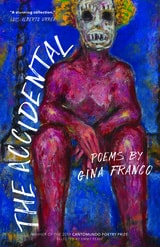
The Accidental
PoemsGina Franco
University of Arkansas Press, 2019
Cascading through each of the poems in Gina Franco’s The Accidental is a question: What does it mean to be human in a world where the soul is exalted but the body brutalized? Franco explores the terrain of the borderlands—not just the physical space of the American southwest, but the spaces where lines are drawn between body and soul, God and self, violence and ecstasy. Unfolding along these borders in a torrent of deep contemplation, Franco’s poems bring the reader to the line between accident and choice, delving into the role each plays in creating the lives we are born into and in determining how those lives end. A body caught in a tree after a flood—an accident—calls to mind deliberate violences: crucifixion and lynching.
Guided, even so, by a stark hopefulness, The Accidental makes a character of the soul and traces its pilgrimage from suffering toward transcendence. “The soul saw,” Franco writes, “that it saw through the wound.” This book tenders a creation myth steeped in existential philosophy and shimmering with the vernacular of the ecstatic.
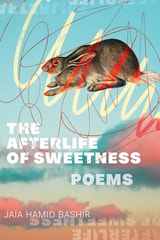
The Afterlife of Sweetness
PoemsJaia Hamid Bashir
The Ohio State University Press, 2026
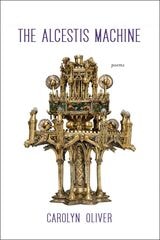
The Alcestis Machine
PoemsCarolyn Oliver
Acre Books, 2024
Inspired by the Greek myth of Alcestis, this poetry collection brings to life myriad voices who venture beyond the known world and exist between realities.
In Greek mythology, Alcestis descends to the mysterious kingdom of death in her beloved’s place. In The Alcestis Machine, Carolyn Oliver’s second poetry collection, loss and queer desire echo across the multiverse. “In another life, I’m a . . .” sea witch or swineherd, vampire or troubadour, florist or fossil or museum guard, Oliver writes. These parallel personas inhabit space stations and medieval villages, excavate the Devonian seabed, and plumb a subterranean Anthropocene. In possible futures and imagined pasts, they might encounter “all wrong turns and broken signs” or carry “a suitcase full of stars.”
Oliver’s poems are animated by lush, unsettling verse and forms both traditional and experimental. The Alcestis Machine demonstrates how very present absence can be and how desire knows no boundaries. In neighborhood subdivisions or the vast reaches of space, it’s impossible to know “whose time is slipping / again.” Anyone “could come loose / from gravity’s shine.”
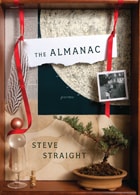
The Almanac
PoemsSteve Straight
Northwestern University Press, 2012
While the poems in Steve Straight’'s new collection lead the reader "into the dark forest of memory / or onto the carnival ride of hypothesis, / or even right off the cliff of surprise," they maintain a sure course through the din and distraction of modern life. Bits of news from the natural sciences, chance encounters, and even convicted felon and crafting queen Martha Stewart all fall under Straight’s observant eye. The result is a collection of conversational poems that lend a sense of wonder to the commonplace.
The American Sonnet
An Anthology of Poems and EssaysDora Malech
University of Iowa Press, 2023
Contributor List: Essayists
Abdul Ali, Baltimore, MD
Anna Lena Phillips Bell, University of North Carolina, Wilmington
Jodie Childers, Queens, New York
Benjamin Crawford, University of Alabama
Meg Day, Franklin and Marshall College
Donna Denizé, St. Albans School
Michael Dumanis, Bennington College
Jordan Finkin, Hebrew Union College
Rebecca Morgan Frank, Northwestern University
Anna Maria Hong, Mount Holyoke College
Gillian Huang-Tiller, University of Virginia, Wise
Walt Hunter, Clemson University
John James, University of California, Berkeley
Matthew Kilbane, University of Notre Dame
Diana Leca, University of Oxford
Ariel Martino, Colgate University
Nate Mickelson, New York University
Lisa L. Moore, University of Texas at Austin
Timo Müller, University of Konstanz, Germany
Carl Phillips, Washington University in St. Louis
Zoë Pollak, Columbia University
Jonathan F.S. Post, UCLA
Stephen Regan, Durham University, UK
Jahan Ramazani, University of Virginia
Hollis Robbins, University of Utah
Nathan Spoon, Joelton, TN
Marlo Starr, Wittenberg University
Yuki Tanaka, Hosei University, Japan
Tess Taylor, Ashland University
Michael Theune, Illinois Wesleyan University
Eleanor Wakefield, University of Oregon
Lesley Wheeler, Washington and Lee University
Jon Woodson, Howard University emeritus
Contributors List: Poets
Elizabeth Alexander, Agha Shahid Ali, Julia Alvarez, Maggie Anderson, Tacey Atsitty, Charles Bernstein, Ted Berrigan, Jen Bervin, Elizabeth Bishop, Louise Bogan, Ruth Muskrat Bronson, Gwendolyn Brooks, Jericho Brown, Lucille Clifton, Henri Cole, Wanda Coleman, Countee Cullen, William Cullen Bryant, E.E. Cummings, Meg Day, Natalie Diaz, Paul Laurence Dunbar, Alice Moore Dunbar-Nelson, Ralph Waldo Emerson, Rhina Espaillat, Tarfia Faizullah, Robert Frost, torrin a. greathouse, Marilyn Hacker, Robert Hayden, Terrance Hayes, Anthony Hecht, Lynn Hejinian, Leslie Pinckney Hill, Anna Maria Hong, Langston Hughes, David Humphreys, Helen Hunt Jackson, Tyehimba Jess, Helene Johnson, James Weldon Johnson, June Jordan, Douglas Kearney, Richard Kenney, Joan Larkin, Emma Lazarus, Mani Levb, Amy Lowell, Robert Lowell, Nate Marshall, Bernadette Mayer, George Marion McClellan, Brandy Nalani McDougall, Claude McKay, Joyelle McSweeney, Lo Kwa Mei-en, James Merrill, Phillip Metres, Edna St. Vincent Millay, Simone Muench, Marilyn Nelson, Craig Santos Perez, Carl Phillips, Sylvia Plath, Alexander Posey, Lizette Woodworth Reese, Adrienne Rich, Lola Ridge, Muriel Rukeyeser, Kay Ryan, Diane Seuss, Fradel Shtok, Aaron Shurin, giovanni singleton, Patricia Smith, Mary Ellen Solt, Nathan Spoon, Gertrude Stein, Adrienne Su, Lorenzo Thomas, Dunstan Thompson, Natasha Tretheway, Fredrick Goddard Tuckerman, Mona Van Duyn, Ellen Bryant Voight, Margaret Walker, Lucian B. Watkins, Phillis Wheatley, John Wheelwright, Jackie K. White, Walt Whitman, James Wright, Elinor Wylie
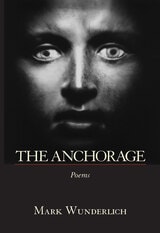
The Anchorage
PoemsMark Wunderlich
University of Massachusetts Press, 1999
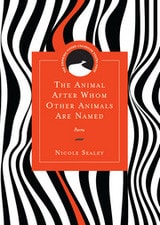
The Animal After Whom Other Animals Are Named
PoemsNicole Sealey
Northwestern University Press, 2016
The Poetry and Poetics Colloquium, in conjunction with Northwestern University Press, is delighted to announce that Nicole Sealey is the winner of the fourth annual Drinking Gourd Chapbook Poetry Prize. The Animal After Whom Other Animals Are Named will be published by Northwestern University Press with a planned launch party at the Poetry Foundation in Chicago in January 2016.
At turns humorous and heartbreaking, The Animal After Whom Other Animals Are Named explores in both formal and free verse what it means to die, which is to say, also, what it means to live. In this collection, Sealey displays an exquisite sense of the lyric, as well as an acute political awareness. Never heavy-handed or dogmatic, the poems included in this slim volume excavate the shadows of both personal and collective memory and are, at all points, relentless. To quote the poet herself, here is a debut as luminous and unforgiving "as the unsparing light at tunnel’s end."
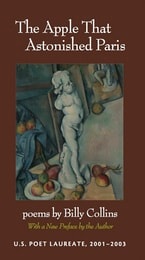
The Apple That Astonished Paris
PoemsBilly Collins
University of Arkansas Press, 2006
Bruce Weber in the New York Times called Billy Collins “the most popular poet in America.” He is the author of many books of poetry, including, most recently, The Rain in Portugal: Poems.
In 1988 the University of Arkansas Press published Billy Collins’s The Apple That Astonished Paris, his “first real book of poems,” as he describes it in a new, delightful preface written expressly for this new printing to help celebrate both the Press’s twenty-fifth anniversary and this book, one of the Press’s all-time best sellers. In his usual witty and dry style, Collins writes, “I gathered together what I considered my best poems and threw them in the mail.” After “what seemed like a very long time” Press director Miller Williams, a poet as well, returned the poems to him in the “familiar self-addressed, stamped envelope.” He told Collins that there was good work here but that there was work to be done before he’d have a real collection he and the Press could be proud of: “Williams’s words were more encouragement than I had ever gotten before and more than enough to inspire me to begin taking my writing more seriously than I had before.”
This collection includes some of Collins’s most anthologized poems, including “Introduction to Poetry,” “Another Reason Why I Don’t Keep a Gun in the House,” and “Advice to Writers.” Its success over the years is testament to Collins’s talent as one of our best poets, and as he writes in the preface, “this new edition . . . is a credit to the sustained vibrancy of the University of Arkansas Press and, I suspect, to the abiding spirit of its former director, my first editorial father.”
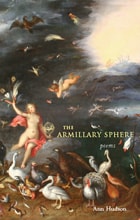
The Armillary Sphere
PoemsAnn Hudson
Ohio University Press, 2006
Taking the warp of dream, sometimes nightmare, and weaving it with the ordinary world, the poems of The Armillary Sphere, Ann Hudson’s award-winning debut collection, do not simplify the mystery but deepen it. Just as the interlocking rings of the armillary sphere of the title represent the great circles of the heavens, so do the poems herein demonstrate out of the beautiful, the extraordinary, and the cast off, a fresh scaffolding, a new way to see out from the center of our selves, a new measure of our relationship to the things of this world and the next.
Chosen from hundreds of manuscripts as this year’s winner of the Hollis Summers Poetry Prize, Ann Hudson’s The Armillary Sphere possesses, in the words of final judge Mary Kinzie,
“… a brightness of spirit and quickness of thought that are conveyed with extraordinary care as she frames moments of experience. Her style is unobtrusive—no fireworks of phrasing obscure the thing felt and seen. So simple a device as taking an intransitive verb transitively can shed strong light on the moment: “A fine sheen /of sweat glistens the cocktail glasses,”—and Hudson studies emotions with a brave restraint that resists cliché, while deftly joining together intuitions that bring contradictory or opposing charge.… Both circular and digressive, Hudson’s portrayal of beings of all ages poised on their varying thresholds brings a novelist’s sense of details unfolding into their future under the control of a fine poet’s pure and condensed language of likeness.”Insomnia
If you were awake too, I’d tell you
the whole story, how I dreamt
we never saw the child, how easily
we forgot. Instead I shuffle
to the porch to watch
traffic pass the house
and an occasional bat dive
under the streetlamps, ruthless
after its dark targets.
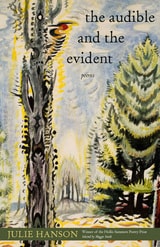
The Audible and the Evident
PoemsJulie Hanson
Ohio University Press, 2020
The Blue Divide
PoemsLinda Nemec Foster
New Issues Poetry and Prose, 2021

The Body Taken
PoemsLisa Beech Hartz
University of Massachusetts Press, 2027
A searing exploration of young womanhood in a culture of being seen
Inspired by an exhibit of vintage photographs by Francesca Woodman, whose work is often shocking in its exploration of a woman’s relationship with her body in a misogynistic culture, The Body Taken combines the confessional, the ekphrastic, and the erasure of women’s artistry. In a New York City gallery, Lisa Beech Hartz finds herself completely captivated and especially moved by how much the photographer’s self-portraits resemble a sort of mash-up of the poet and her dearest friend in their late teens, writing: “Mirrored in girlhood / recollection / and all our fables — / all the frazzled strands / of stories / I can never braid / complete / for lack of you.”
These poems grieve the poet’s deep youthful bond while also reflecting on each girl’s family life and their shared experiences: adventurous trips into the New York of the late seventies from their suburban town; encounters with distant, heavy-drinking parents; various medical and emotional challenges; and navigating the rampant and casual misogyny of the time. Memories are punctuated with examinations and interpretations of Francesca Woodman's photographs, attempting to decipher what the artist captured about her experience of being a young woman and what it meant to live inside a young woman’s body: “Francesca crouches / in her dotted dress seam- / split and gaping. Fingers / splayed across her face / she calculates her escape.”
The collection also includes erasures of critical responses to Woodman’s work which are sometimes respectful, even reverential, and other times reinforce the fascination with her suicide and her sexuality. Using provocative imagery, this collection serves as a love letter to lost girlhood, exploring themes of identity, loss, and the female body in the world.
The Bottomland
PoemsHarry Humes
University of Arkansas Press, 1995
The Broken World
POEMSMarcus Cafagna
University of Illinois Press, 1996
as one of five volumes published in 1996 in the National Poetry Series
"Marcus Cafagña is a poet who shies at nothing, who will
not turn away from what he sees--ordinary people struggling against, and
sometimes breaking on, the wheel of their fate. The Broken World
is a deeply humane and accomplished first book--probing, watchful, compassionate,
and necessary."
-- Edward Hirsch
"I challenge anyone to be unmoved by The Broken World. Cafagña
never gives up in these difficult, heart-rending poems." -- Jim Daniels,
editor of Letters to America: Contemporary American Poetry on Race
The Broken World, the powerful debut of a poet of great depth
and maturity, begins with narratives of individuals caught up in circumstance--a
distressed girl on a Detroit overpass, a boy shooting baskets at a crisis
center. By the end of the slim volume, Marcus Cafagña has led us
through the postwar New York of Jewish Holocaust survivors to his native
Michigan, where his marriage ended tragically with his wife's suicide,
a death that has come to symbolize for Cafagña the confusion and
madness of the twentieth century.
The Burning World
PoemsRobert Gibb
University of Arkansas Press, 2004
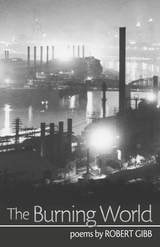
These lyrical and devastatingly beautiful poems are powerful in both their ability to evoke the past and in the poignancy of the losses they catalog, beginning with heartbreaking personal losses and extending into communal ones. Indeed, a book so freighted with loss and sadness might have deteriorated into maudlin nostalgia in lesser hands. But Gibb has elevated The Burning World to the level of tragedy, with all the dignity and severity that that word calls forth.
The Centaur
May Swenson
Utah State University Press, 2007
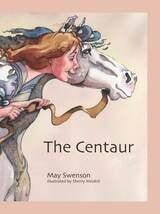
First published in 1956, May Swenson's "The Centaur" remains one of her most popular and most anthologized poems. This is its first appearance as a picture book for children.
In images bright and brisk and nearly tangible, the poet re-creates the joy of riding a stick horse through a small-town summer. We find ourselves, with her, straddling "a long limber horse with . . . a few leaves for a tail," and pounding through the lovely dust along the path by the old canal. As her shape shifts from child to horse and back, we know exactly what she feels.
Sherry Meidell's water-color illustrations perfectly convey the wit and wisdom of May Swenson's poem. These are playful, satisfying images full of vitality and imagination. Meidell handles the joy of poem's fantasy and the joy of its occasional naughtiness with equal success.
Other books by and about May Swenson: Body My House, May Swenson, Dear Elizabeth, May Out West
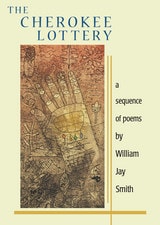
The Cherokee Lottery
A Sequence of PoemsWilliam Jay Smith
Northwestern University Press, 2000
In powerful poetry of epic proportions, which Harold Bloom has called his best work, Smith paints a stark and vivid picture of this ordeal and its principal participants, among them Sequoyah, the inventor of the Cherokee alphabet, and Osceola, the Seminole chief.
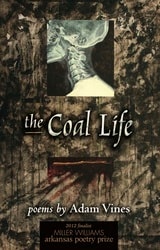
The Coal Life
PoemsAdam Vines
University of Arkansas Press, 2012
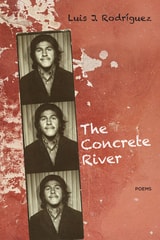
The Concrete River
PoemsLuis J. Rodríguez
Northwestern University Press, 1995
The Concrete River is a collection of poems by poet laureate of Los Angeles Luis Rodríguez. They illuminate the gritty idiosyncrasies of immigrant life in urban barrios spanning Los Angeles to Chicago to Harlem. Rodríguez lends powerful voices to those struggling to keep the gas on, to find work, and to keep love. Populated by a vibrant cast of characters, ranging from the drugged, to the eccentric, to the heartbroken, Rodríguez’s poems protest capitalism, violence, and exploitation while reveling in the potential of compassion.
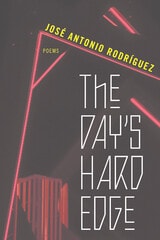
The Day's Hard Edge
PoemsJose A. Rodriguez
Northwestern University Press, 2024
In his fourth poetry collection, José Antonio Rodríguez investigates how one constructs a relationship to the self, to community, and to poetry itself. The Day's Hard Edge is composed of three sections, the first of which situates the reader in the speaker’s world, one marked by multiple forms of trauma. Here are the contours of the Texas/Mexico borderlands where the speaker’s initial sense of self and community emerges. The second section broadens in scope and considers the potential and limitations of poetry as a site for meaning-making. The third section brings the speaker to a new understanding of the poem as it relates to the transformative and destabilizing experience of trauma. Ultimately this book lays bare an individual and, in doing so, shows how poetry acts as a place of succor and vulnerability for one’s very identity. Together these poems explore what it means to be queer, immigrant, and Chicano.
The Days Between
Blessings, Poems, and Directions of the Heart for the Jewish High Holiday SeasonMarcia Falk
Brandeis University Press, 2014
The Devil's Workshop
PoemsDemetria Martínez
University of Arizona Press, 2002
Don't believe it for a minute. In this collection of fifty-three poems, the author of the award-winning novel Mother Tongue explores the themes that have long characterized her writing: the creative and destructive powers of romantic love, the failure of political systems, the spiritual life, and the need to forgive oneself in order to move on with the work of transformation, both social and personal. Through poems that confront mortality even as they demand social justice, Martínez writes of surviving in a culture where traditional values often get lost in the complexities of everyday life. Of nurturing relationships with nieces, nephews, and parents while pondering questions of life and death, love and loss. Of caring for one's own body when "each cough is an underground nuclear explosion, / Unraveling your body’s hard-won peace accord." Martínez cauterizes old wounds inflicted by various agents: death, political repression, betrayal, and of course failed romance: "Don’t bother, I did it / First. Broke my own / Damn heart." Here are "kernels of loneliness too stubborn to grind / Down to blue meal," and the struggle for a renewed sense of self as middle age approaches:
At this age you touch what little sanctity you can muster.
The yearning burns to do more, to do more by hand.
To thread your very life through a needle's eye.
Martínez serves up a heady blend of political and sensual imagery. Her keen observations and compassionate voice lead the reader on a journey of self-exploration, of coping with life's mundanities as well as its heartaches: "I could use a loving word, / A loaf of bread, a rose, / Help with the laundry." Through her unquenchable passion for life, Demetria Martínez leaves the devil’s workshop and brings us closer to an understanding of what is real.
The Dirt Riddles
PoemsMichael Walsh
University of Arkansas Press, 2010
The Dove of the Morning News
PoemsBruce Bond
University of Nevada Press, 2024
In poems both personal and historical, The Dove of the Morning News explores conceptions of collectivity, inflected by each psyche, as a force of both connection and division. In its look at tribalism and systemic cruelty as rooted in shame, dread, and insecurity, the book seeks a better understanding of how power needs, spurred by communities of hatred, weaponize the brain’s tendencies to think in animated figures, caricatures, erasures, or, as in the book’s mediation on vellum, texts written across the bodies of others.
As a lens into contemporary life, the title sequence interrogates the vision of Pierre Teilhard de Chardin, whose sense of our increasingly interwoven cultural conversation figures now as a premonition of the internet. If his hope for the noosphere as a fulfillment of divine promise feels problematic, it nonetheless sees our globe as an organism whose long-term survival depends on the capacity of each to forge friendship across difference, to take the health and integration of the individual as emblematic of the whole.
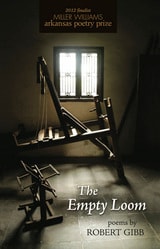
The Empty Loom
PoemsRobert Gibb
University of Arkansas Press, 2012
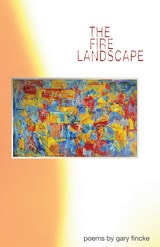
The Fire Landscape
PoemsGary Fincke
University of Arkansas Press, 2008
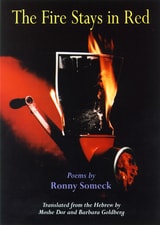
The Fire Stays in Red
PoemsRonnie Someck
University of Wisconsin Press, 2002
"My mother dreams in Arabic, I dream in Hebrew," says Ronny Someck. Born in 1951, he was uprooted from his native Iraq when he was four. Transplanted to Israel, Someck spent his childhood in a transit camp for new immigrants. There he was surrounded by music, the great singers Umm Kulthum, Farid al Atrash, and Fairuz shouldering up against Elvis Presley and Billie Holiday. No wonder he is so beloved in Israel. In what other poet do we find Tarzan, Marilyn Monroe, and cowboys battling with Rabbi Yehuda Halevi for the hearts and souls of Israelis?
Someck’s poems are rich in slang and distinguished by staccato rhythms, quick cuts, close-ups, and disturbing segues. As in film noir, the sensations are of speed, danger, uncertainty. His distinct Sephardi voice invokes the odors of falafel and schwarma, the army with its supporting cast of recruits and commandos, the bustle of southern Tel Aviv with its small garages, shops, cheap restaurants, its gangs and its Arab workers. He is also the troubadour of the lovelorn, with poems that are hot, erotic, comic, tragic, agape at the wonders of a tear and a tattoo and a snapshot and a bra and a scarecrow.
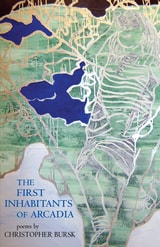
The First Inhabitants of Arcadia
PoemsChristopher Bursk
University of Arkansas Press, 2006
Herman Melville, Matthew Arnold, Sarah Orne Jewett, Dusty Rhodes, and Hoyt Wilhelm skinny-dip and pick up gondoliers and cut figure eights into the ice in Christopher Bursk’s new collection. But the main cast of characters for these poems is the alphabet itself, “the first inhabitants of Arcadia, / now homesick, curious exiles from Eden.” Here are a boy’s first investigations into the nature of language as he studies the backs of baseball cards, and a young man’s infatuation with the “F-word.” The titles sing their lettered songs: “An Ode to j,” “M-m-m Good!” and “O in Trouble.”
Here are “reading lessons,” the author’s exploration of the curses and blessings of the word. It is about the fall from paradise and the gifts that fall makes possible. And over the whole book broods the great lexicographer, Samuel Johnson, that deeply troubled caretaker of the mother tongue. More than an ABC book, this collection asks questions at the very heart of how we understand the world and shows us the glory and silliness at the heart of human life.
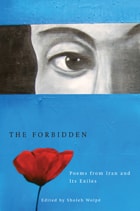
The Forbidden
Poems from Iran and its ExilesSholeh Wolpé
Michigan State University Press, 2012
During the 1979 revolution, Iranians from all walks of life, whether Muslim, Jewish, Christian, socialist, or atheist, fought side-by-side to end one tyrannical regime, only to find themselves in the clutches of another. When Khomeini came to power, freedom of the press was eliminated, religious tolerance disappeared, women’s rights narrowed to fit within a conservative interpretation of the Quran, and non-Islamic music and literature were banned. Poets, writers, and artists were driven deep underground and, in many cases, out of the country altogether. This moving anthology is a testament to both the centuries-old tradition of Persian poetry and the enduring will of the Iranian people to resist injustice. The poems selected for this collection represent the young, the old, and the ancient. They are written by poets who call or have called Iran home, many of whom have become part of a diverse and thriving diaspora.
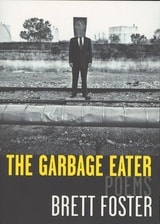
The Garbage Eater
PoemsBrett Foster
Northwestern University Press, 2011
In Foster’s vivid imagination, however, they point to the surprises hidden in the quotidian: a trip to the DMV, a visit to a chain restaurant, and the saintly reflections of the Kansas City Royals’ best closer. A lesser, more faddish writer would then tend toward ironic distance, but Foster fearlessly raises such unfashionable subjects as joy, doubt, gratitude, and grief without losing a sly sense of humor, even (as the sample poem shows) about poetry itself. Given its ambition, The Garbage Eater hardly seems a debut work. Foster’s universal subject matter and approachable style will win fans among both the most experienced poetry readers and those easily intimidated by contemporary verse.
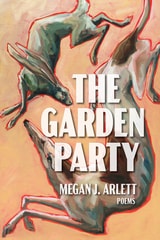
The Garden Party
PoemsMegan J. Arlett
Northwestern University Press, 2027
A stroll through deceptively tranquil spaces and the restlessness of social convention
Depicting the uneasy performance of class and femininity in the stilted, suffocating spaces of a social life suffused with English propriety, Megan J. Arlett’s The Garden Party is a poetic meditation on desire and agency. From the imagined space of the titular garden party to the interior of an art gallery, from the rolling hills of Sussex to Trinidad under British colonial rule, Arlett paints the conventions of polite society as both strange and arbitrary, allowing the restlessness of the poems’ speakers to rise to the surface. Through free verse, received forms, and ekphrasis, these poems stage a conversation with other artists, eras, and art media, moving through natural and constructed locations that are sometimes historical and often imagined. This collection considers what it means to love a place despite its histories and flaws and offers ways of navigating this tension through art. The Garden Party is a striking yet quiet rebellion against order and expectation.
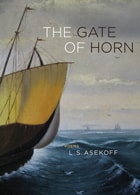
The Gate of Horn
PoemsL.S. Asekoff
Northwestern University Press, 2010
Recepient of 2013 Guggenheim Fellowship
Apart from two volumes published in the 1990s, the work of L. S. Asekoff has been winning admirers only among those lucky enough to encounter it in poetry journals and magazines over the last three decades. Now comes a new collection from this startlingly original poet. Astonishing in its variety of forms and subject matter, The Gate of Horn includes a series of monologues in which Asekoff conjures voices as disparate as the Marquis de Sade, an ancient Aztec warrior, an immigrant
Korean woman, a Vietnam vet, and a Holocaust historian. Above all, however, it is Asekoff’s own unmistakable voice that is on display— surreally sensual, intensely lyrical, darkly tragicomic. Through the gates of death and dreams, these wide-ranging, loosely associative poems speak with wit and erudition to the deepest mysteries of language and of life.
The God of Indeterminacy
POEMSSandra McPherson
University of Illinois Press, 1993
"I count Sandra McPherson as one of the dozen or so truly outstanding
American poets who write brilliantly in the Romantic tradition. . . .
The God of Indeterminacy brings together a group of exciting poems
showing the vital influence of her interest in the blues tradition and
in African-American quiltmaking. They are brilliant testimonials to this
fruitful wedding of the musical, the visual, and the literary."
-- Clarance Major
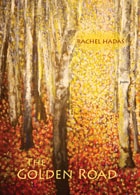
The Golden Road
PoemsRachel Hadas
Northwestern University Press, 2012
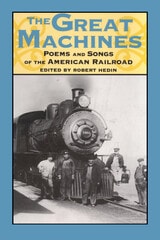
The Great Machines
Poems and Songs from the Age of the American RailroadRobert Hedin
University of Iowa Press, 1996
Here, for the first time, is a feast for anyone who has ever been beguiled by the trains that formerly thrummed through the landscapes of our lives. This entertaining and evocative anthology presents the amazing variety of poems and songs written about the American railroad in the last century and a half. Comprised of selections from both oral and written traditions, the volume celebrates the historical and cultural significance of this marvel of engineering skills. Hedin's anthology allows all readers, from the most avid railroad buff to anyone who has fond memories of train travel, to enjoy the romance of trains.
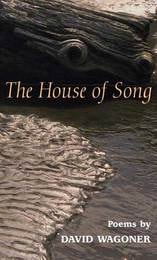
The HOUSE OF SONG
POEMSDavid Wagoner
University of Illinois Press, 2002
In The House of Song, he offers a hundred new poems in six parts. At turns elegiac, comic, and nostalgic, these poems venture to the seemingly infinitesimal points where people, legends, and culture collide with nature, memory, and action.
With characteristic wit and brevity, Wagoner chronicles the material invasions of the natural world, reconsidering Thoreau amid ruminations on voyeurs and destroyers, slug watchers and moth collectors.
The House of Song asserts Wagoner's place among the finest of American poets, past and present.
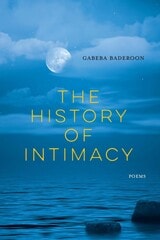
The History of Intimacy
PoemsGabeba Baderoon
Northwestern University Press, 2021
Born on the coastal shores of Port Elizabeth, Baderoon is one of South Africa’s most acclaimed literary voices. In The History of Intimacy—originally published by Kwela Books—she crafts resonant poems about a writer’s beginnings, love across boundaries, and “how not to be alone.”
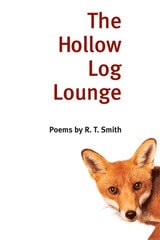
The Hollow Log Lounge
POEMSR. T. Smith
University of Illinois Press, 2003
The men and women who live and work near Opelika, Alabama, gather at the Hollow Log Lounge. There, under the watchful eye of the stuffed fox behind the bar, they unload their gripes and worries, tell their stories, argue, joke, commune, complain, and confess.
In this collection of poems, R. T. Smith paints a vividly imagined portrait of the community in this small-town bar, capturing the chorus of the patrons' voices echoing off the knotted wood-paneled walls. Smith's stand-in, Sam Buckhannon, scribbles stories heard and overheard as tongues loosened by liquor spin out monologues in which southern idiom and vernacular seem perfectly at home within the constraints of measured verse.