Results by title
336 books match the query 'Political Economy' and 69 start with t
T?he Commons
Economic Alternatives in the Digital AgeVangelis Papadimitropoulos
University of Westminster Press, 2020
This book explores the potential creation of a broader collaborative economy through commons-based peer production (P2P) and the emergent role of information and communication technologies (ICTs). The book seeks to critically engage in the political discussion of commons-based peer production, which can be classified into three basic arguments: the liberal, the reformist and the anti-capitalist. This book categorises the liberal argument as being in favour of the coexistence of the commons with the market and the state. Reformists, on the other hand, advocate for the gradual adjustment of the state and of capitalism to the commons, while anti-capitalists situate the commons against capitalism and the state. By discussing these three viewpoints, the book contributes to contemporary debates concerning the future of commons-based peer production.
Further, the author argues that for the commons to become a fully operational mode of peer production, it needs to reach critical mass arguing that the liberal argument underestimates the reformist insight that technology has the potential to decentralise production, thereby forcing capitalism to transition to post-capitalism. Surveying the three main strands of commons-based peer production, this book makes the case for a post-capitalist commons-orientated transition that moves beyond neoliberalism.
Tariff Wars and the Politics of Jacksonian America
William K. Bolt
Vanderbilt University Press, 2016
The spreading of democracy caused by the tariff evoked bitter sectional controversy among Americans. Northerners claimed they needed a tariff to protect their industries and also their wages. Southerners alleged the tariff forced them to buy goods at increased prices. Having lost the argument against the tariff on its merits, in the 1820s, southerners began to argue the Constitution did not allow Congress to enact a protective tariff. In this fight, we see increased tensions between northerners and southerners in the decades before the Civil War began.
As Tariff Wars reveals, this struggle spawned a controversy that placed the nation on a path that would lead to the early morning hours of Charleston Harbor in April of 1861.
Thailand’s Political Peasants
Power in the Modern Rural EconomyAndrew Walker
University of Wisconsin Press, 2012
When a populist movement elected Thaksin Shinawatra as prime minister of Thailand in 2001, many of the country’s urban elite dismissed the outcome as just another symptom of rural corruption, a traditional patronage system dominated by local strongmen pressuring their neighbors through political bullying and vote-buying. In Thailand’s Political Peasants, however, Andrew Walker argues that the emergence of an entirely new socioeconomic dynamic has dramatically changed the relations of Thai peasants with the state, making them a political force to be reckoned with. Whereas their ancestors focused on subsistence, this generation of middle-income peasants seeks productive relationships with sources of state power, produces cash crops, and derives additional income through non-agricultural work. In the increasingly decentralized, disaggregated country, rural villagers and farmers have themselves become entrepreneurs and agents of the state at the local level, while the state has changed from an extractor of taxes to a supplier of subsidies and a patron of development projects.
Thailand’s Political Peasants provides an original, provocative analysis that encourages an ethnographic rethinking of rural politics in rapidly developing countries. Drawing on six years of fieldwork in Ban Tiam, a rural village in northern Thailand, Walker shows how analyses of peasant politics that focus primarily on rebellion, resistance, and evasion are becoming less useful for understanding emergent forms of political society.
The ABCs of Political Economy
A Modern ApproachRobin Hahnel
Pluto Press, 2014
Dispelling myths about financial liberalisation, fiscal austerity, globalisation and free markets, ABCs offers a critical perspective on our present system and outlines clear alternatives for the future.
This second edition applies the analytical tools developed to help readers understand the origins of the financial crisis of 2007, the ensuing 'Great Recession', and why government policies in Europe and North America over the past six years have failed to improve matters for the majority of their citizens. The second edition also helps explain what is causing climate change and what will be required if it is to be resolved effectively and fairly.

The Ambivalence of Power in the Twenty-First Century Economy
Cases from Russia and BeyondEdited by Vadim Radaev and Zoya Kotelnikova
University College London, 2022
This book explores the ambivalent nature of power as wielded in economic practices from an empirical perspective. It offers a collection of country-based cases and critically assesses the existing conceptions of power from a cross-disciplinary perspective. Analyzing power at the macro, meso, and micro levels allows the volume to highlight the complexity of political economy in the twenty-first century. Each chapter addresses key elements of a given political economy (from the ambivalence of the cases of former communist countries that do not conform with the grand narratives about democracy and markets to the dual utility of new technologies such as face-recognition), thus providing mounting evidence for the centrality of understanding ambivalence in the analysis of power.

The Ambivalence of Scarcity and Other Essays
Paul Dumouchel
Michigan State University Press, 2014
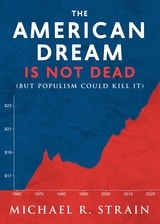
The American Dream Is Not Dead
(But Populism Could Kill It)Michael R. Strain
Templeton Press, 2020
Populists on both sides of the political aisle routinely announce that the American Dream is dead. According to them, the game has been rigged by elites, workers can’t get ahead, wages have been stagnant for decades, and the middle class is dying.
Michael R. Strain, director of economic policy studies at the American Enterprise Institute, disputes this rhetoric as wrong and dangerous. In this succinctly argued volume, he shows that, on measures of economic opportunity and quality of life, there has never been a better time to be alive in America. He backs his argument with overwhelming—and underreported—data to show how the facts favor realistic optimism.
He warns, however, that the false prophets of populism pose a serious danger to our current and future prosperity. Their policies would leave workers worse off. And their erroneous claim that the American Dream is dead could discourage people from taking advantage of real opportunities to better their lives. If enough people start to believe the Dream is dead, they could, in effect, kill it. To prevent this self-fulfilling prophecy, Strain’s book is urgent reading for anyone feeling the pull of the populists.
E. J. Dionne and Henry Olsen provide spirited responses to Strain’s argument.
The Anatomy of Post-Communist Regimes
A Conceptual FrameworkBálint Magyar
Central European University Press, 2021
Offering a single, coherent framework of the political, economic, and social phenomena that characterize post-communist regimes, this is the most comprehensive work on the subject to date. Focusing on Central Europe, the post-Soviet countries and China, the study provides a systematic mapping of possible post-communist trajectories.
At exploring the structural foundations of post-communist regime development, the work discusses the types of state, with an emphasis on informality and patronalism; the variety of actors in the political, economic, and communal spheres; the ways autocrats neutralize media, elections, etc. The analysis embraces the color revolutions of civil resistance (as in Georgia and in Ukraine) and the defensive mechanisms of democracy and autocracy; the evolution of corruption and the workings of “relational economy”; an analysis of China as “market-exploiting dictatorship”; the sociology of “clientage society”; and the instrumental use of ideology, with an emphasis on populism. Beyond a cataloguing of phenomena—actors, institutions, and dynamics of post-communist democracies, autocracies, and dictatorships—Magyar and Madlovics also conceptualize everything as building blocks to a larger, coherent structure: a new language for post-communist regimes.
While being the most definitive book on the topic, the book is nevertheless written in an accessible style suitable for both beginners who wish to understand the logic of post-communism and scholars who are interested in original contributions to comparative regime theory. The book is equipped with QR codes that link to www.postcommunistregimes.com, which contains interactive, 3D supplementary material for teaching.
The Biological Consequences of Socioeconomic Inequalities
Barbara Wolfe
Russell Sage Foundation, 2013
The Black Boom
Riley, Jason L.
Templeton Press, 2021
Economic inequality continues to be one of America’s most hotly debated topics. Still, there has been relatively little discussion of the fact that black-white gaps in joblessness, income, poverty and other measures were shrinking before the pandemic. Why was it happening, and why did this phenomenon go unacknowledged by so much media?
In The Black Boom, Jason L. Riley—acclaimed Wall Street Journal columnist and senior fellow at the Manhattan Institute—digs into the data and concludes that the economic lives of black people improved significantly under policies put into place during the Trump administration. To acknowledge as much is not to endorse the 45th president but to champion policies that achieve a clear moral objective shared by most Americans.
Riley argues that before the Covid-19 pandemic of 2020, the economic fortunes of blacks improved under Trump to an extent unseen under Obama and unseen going back several generations. Black unemployment and poverty reached historic lows, and black wages increased faster than white wages.
Less inequality is something that everyone wants, but disapproval of Trump’s personality and methods too often skewed the media’s appraisal of effective policies advocated by his administration. If we're going to make real progress in improving the lives of low-income minorities, says Riley, we must look beyond our partisan differences at what works and keep doing it. Unfortunately, many press outlets were unable or unwilling to do that.
Riley notes that political reporters were not unaware of this data. Instead, they chose to ignore or downplay it because it was inconvenient. In their view, Trump, because he was a Republican and because he was Trump, had it in for blacks, and thus his policy preferences would be harmful to minorities. To highlight that significant racial disparities were narrowing on his watch—that the administration’s tax and regulatory reforms were mainly boosting the working and middle classes rather than ‘the rich’—would have undermined a narrative that the media preferred to advance, regardless of its veracity.”
As with previous books in our New Threats to Freedom series, The Black Boom includes two essays from prominent experts who take issue with the author’s perspective. Juan Williams, a veteran journalist, and Wilfred Reilly, a political scientist, contribute thoughtful responses to Riley and show that it is possible to share a deep concern for disadvantaged groups while disagreeing on how best to help them.

The Causes and Consequences of Increasing Inequality
Edited by Finis Welch
University of Chicago Press, 2001
This volume draws together a panel of distinguished scholars who address these issues in terms comprehensible to noneconomists. Their findings are surprising, suggesting that factors such as trade imbalances, immigration rates, and differences in educational resources do not account for recent increases in the inequality of wealth and earnings. Rather, the contributors maintain that these discrepancies can be attributed to workplace demand for high-skilled labor. They also insist that further research must examine the organization of industry in order to better understand the concurrent devaluation of manual labor.
Addressing a topic that is of considerable public interest, this collection helps move the issue of increasing economic inequality in America to the center of the public policy arena.
Contributors: Donald R. Deere, Claudia Goldin, Lawrence F. Katz, James P. Smith, Franco Peracchi, Gary Solon, Eric A. Hanushek, Julie A. Somers, Marvin H. Kosters, William Cline, Finis Welch, Angus Deaton, Charles Murray, Kevin Murphy
The Czech and Slovak Republics
Twenty years of Independence, 1993–2013M. Mark Stolarik
Central European University Press, 2017

The Dangerous Class
The Concept of the LumpenproletariatClyde W. Barrow
University of Michigan Press, 2020
The Distributional Aspects of Social Security and Social Security Reform
Edited by Martin Feldstein and Jeffrey B. Liebman
University of Chicago Press, 2002
As this volume suggests, the distributional consequences of these proposals are substantially different and may disproportionately affect those groups who depend on social security to avoid poverty in old age. Together, these studies persuasively show that appropriately designed investment-based social security reforms can effectively reduce the long-term burden of an aging society on future taxpayers, increase the expected future income of retirees, and mitigate poverty rates among the elderly.
The Economy and Material Culture of Russia, 1600-1725
Richard Hellie
University of Chicago Press, 1999
Impressive in scope and data analysis, Economy and Material Culture of Russia, 1600-1725 will be an invaluable resource and reference work for all readers interested in economic history and the history of material culture. Since there is no comparable one-volume work for any other society at any other time in history, Hellie's is a truly unique and profound achievement.
The End Of Capitalism (As We Knew It)
A Feminist Critique of Political EconomyJ. K. Gibson-Graham
University of Minnesota Press, 2006
“Paralyzing problems are banished by this dazzlingly lucid, creative, and practical rethinking of class and economic transformation.” —Meaghan Morris, Lingnan University, Hong Kong
“Profoundly imaginative.” —Eve Kosofsky Sedgwick, City University of New York “Filled with insights, it is clearly written and well supported with good examples of actual, deconstructive practices.” —International Journal of Urban and Regional Research
J. K. Gibson-Graham is the pen name of Katherine Gibson and Julie Graham, feminist economic geographers who work, respectively, at the Australian National University in Canberra and the University of Massachusetts Amherst.

The Fatal Conceit
The Errors of SocialismF. A. Hayek
University of Chicago Press, 1988
"The achievement of The Fatal Conceit is that it freshly shows why socialism must be refuted rather than merely dismissed—then refutes it again."—David R. Henderson, Fortune.
"Fascinating. . . . The energy and precision with which Mr. Hayek sweeps away his opposition is impressive."—Edward H. Crane, Wall Street Journal
F. A. Hayek is considered a pioneer in monetary theory, the preeminent proponent of the libertarian philosophy, and the ideological mentor of the Reagan and Thatcher "revolutions."

The Future of Digital Surveillance
Why Digital Monitoring Will Never Lose Its Appeal in a World of Algorithm-Driven AIYong Jin Park
University of Michigan Press, 2021
Are humans hard-wired to make good decisions about managing their privacy in an increasingly public world? Or are we helpless victims of surveillance through our use of invasive digital media? Exploring the chasm between the tyranny of surveillance and the ideal of privacy, this book traces the origins of personal data collection in digital technologies including artificial intelligence (AI) embedded in social network sites, search engines, mobile apps, the web, and email. The Future of Digital Surveillance argues against a technologically deterministic view—digital technologies by nature do not cause surveillance. Instead, the shaping of surveillance technologies is embedded in a complex set of individual psychology, institutional behaviors, and policy principles.
The Gratis Economy
Privately Provided Public GoodsAndrás Kelen
Central European University Press, 2002
The Great Recession
David B. Grusky
Russell Sage Foundation, 2012

The History of Wisconsin, Volume V
War, a New Era, and Depression, 1914-1940Paul W. Glad
Wisconsin Historical Society Press, 1990
The fifth volume in The History of Wisconsin series covers the years from the outbreak of World War I to the eve of American entry into World War II. In between, the rise of the woman's movement, the advent of universal suffrage, and the "great experiment" of Prohibition are explored, along with the contest between newly emergent labor unions and powerful business and industrial corporations. Author Paul W. Glad also investigates the Great Depression in Wisconsin and its impact on rural and urban families in the state. Photographs and maps further illustrate this volume which tells the story of one of the most exciting and stressful eras in the history of the state.
The Impact of International Trade on Wages
Edited by Robert C. Feenstra
University of Chicago Press, 2000
This collection brings together innovative new ideas and data sources in order to provide more satisfying alternatives to the trade versus technology debate and to assess directly the specific impact of international trade on U.S. wages. This timely volume offers a thorough appraisal of the wage distribution predicament, examining the continued effects of technology and globalization on the labor market.
The Invention of Capitalism
Classical Political Economy and the Secret History of Primitive AccumulationMichael Perelman
Duke University Press, 2000
Clearly, they did not go willingly. As Michael Perelman shows, they were forced into the factories with the active support of the same economists who were making theoretical claims for capitalism as a self-correcting mechanism that thrived without needing government intervention. Directly contradicting the laissez-faire principles they claimed to espouse, these men advocated government policies that deprived the peasantry of the means for self-provision in order to coerce these small farmers into wage labor. To show how Adam Smith and the other classical economists appear to have deliberately obscured the nature of the control of labor and how policies attacking the economic independence of the rural peasantry were essentially conceived to foster primitive accumulation, Perelman examines diaries, letters, and the more practical writings of the classical economists. He argues that these private and practical writings reveal the real intentions and goals of classical political economy—to separate a rural peasantry from their access to land.
This rereading of the history of classical political economy sheds important light on the rise of capitalism to its present state of world dominance. Historians of political economy and Marxist thought will find that this book broadens their understanding of how capitalism took hold in the industrial age.
The Life and Political Economy of Lauchlin Currie
New Dealer, Presidential Advisor, and Development EconomistRoger J. Sandilands
Duke University Press, 1990
His involvement in U.S. policymaking in China, where he directed Lend-Lease operations from 1941-1943, was one of the factors leading to his confrontation with Senator Joseph McCarthy. In 1949 he directed the first World Bank mission to Colombia.
Roger Sandilands had access to Currie’s own papers and to previously unpublished material. In this biography he provides the reader with a critical evaluation of Currie’s contribution to the literature on the theory and practice of economic development in general, together with an analysis of how his concepts were shaped during the New Deal and in post-World War II Colombia.
The Logistics Counterrevolution
Supply Chain Imperialism and Anticolonial StruggleCharmaine Chua
University of Minnesota Press, 2027
How the global supply chain developed in response to postcolonial struggles for independence
No part of the global economy today remains untouched by the logistics sector. Each time we make a purchase online, buy a car, or shop for groceries, we interact with planetary supply chains that connect industrial, transport, and service workers across vast distances. The Logistics Counterrevolution critically reexamines the history of global logistics from the perspective of anticolonial struggles that coincided with its emergence. Positioning this history as a counterrevolution on behalf of powerful state and capitalist interests, Charmaine Chua underscores how subaltern resistance shaped the development of the supply chains, containerization, and maritime logistics that underpin our daily lives.
This book charts how the logistics economy emerged after World War II as a response to the perceived threat of national liberation and economic autonomy among developing nations. Drawing from case studies in Indonesia, Singapore, the Philippines, and in international institutions, Chua demonstrates how the global supply chain not only sped up the international circulation of goods but also enacted new forms of imperialism leveled against the emerging nations of the Global South.
With insights from Filipino seafarers, Amazon warehouse workers, postcolonial leaders, and shipping executives, The Logistics Counterrevolution uncovers the enormous infrastructures and economic mechanisms that sustain capital distribution systems across the world. Combining ethnography with historical research from company and colonial archives, this book offers a necessary reconsideration of the logistics industry by illuminating the internationalist struggles that precipitated its rise.
Retail e-book files for this title are screen-reader friendly with images accompanied by short alt text and/or extended descriptions.
The Moneywasting Machine
Five Months Inside Serbia‘s Ministry of EconomyDusan Pavlovic
Central European University Press, 2022
For five months in 2013–2014, Dušan Pavlović took time off from teaching to accept a senior position in Serbia’s Ministry of Economy. This short period was long enough for him to make a penetrating diagnosis of the economic activity of the postcommunist government. He found that a coterie of tycoons and politicians live off the wealth of the majority of citizens and smaller entrepreneurs, while the economy performs below its capacities. In academic terms, extractive economic institutions create allocative inefficiency.
Vivid, suggestive, and even entertaining accounts depict how privatization is administered and foreign investment projects are handled, and how party members, relatives, and friends are hired into public administration and state-owned companies. They show how the managers of firms that queue for state subsidies resist the systematic screening of their businesses. The principles of Keynesian economics are distorted and misused to conceal deliberate fiscal mismanagement. Huge ill-conceived development projects siphon taxpayers’ money from “non-economic” activities like social services, health, education, science, and culture.
What Pavlović found in Serbia is acutely symptomatic of many other European post-communist regimes of our time, lending his book singular importance.

The Paradox of Progress
Economic Change, Individual Enterprise, and Politic Culture in Michigan, 1837-1878Martin J. Hershock
Ohio University Press, 2003
Guiding this transformation was the nineteenth-century Republican party. Drawing heavily from both the pro-market commitments of the early Whig party and the anti-capitalist culture of Jackson's Democratic party, the early Republican party found itself torn between these competing values. Nowhere was this contested process more obvious or more absorbing than in Civil War-era Michigan, the birthplace of the Republican party.
In The Paradox of Progress, a fascinating look at the central factors underlying the history of the GOP, Martin Hershock reveals how in their determination to resolve their ideological dilemma, Republicans of the Civil War era struggled to contrive a formula that wo uld enable them to win popular elections and to model America's acceptance of Gilded Age capitalism.

The Persistence of Violence
Colombian Popular CultureToby Miller
Rutgers University Press, 2020
The Political Economy of American Trade Policy
Edited by Anne O. Krueger
University of Chicago Press, 1995
Eight analytical histories of the automobile, steel, semiconductor, lumber, wheat, and textile and apparel industries demonstrate that trade barriers rarely have unequivocal benefits and may be counterproductive. They show that criteria for awarding protection do not take into account the interests of consumers or other industries and that political influence and an organized lobby are major sources of protection.
Based on these findings, a final essay suggests that current policy fails to consider adequately economic efficiency, the public good, and indirect negative effects. This volume will interest scholars in economics, business, and public policy who deal with trade issues.

The Political Economy of Artificial Intelligence
Edited by Ajay Agrawal, Joshua Gans, Avi Goldfarb, and Catherine E. Tucker
University of Chicago Press, 2026
An authoritative look at how artificial intelligence both shapes and is shaped by the political and economic forces of the modern world.
As the effects of artificial intelligence are felt across economies and societies, many of its ramifications are still emerging. This volume brings together economists and political scientists to examine how AI intersects with regulation, military power, and political identity—offering analytical frameworks and identifying key open questions for future research.
The contributions address topics such as the allocation of property rights for AI inputs, trade-offs among alternative regulatory regimes, and the role of interest groups in shaping the technology’s trajectory. They explore how AI-related capabilities influence military effectiveness, resource allocation, and bargaining power among nations, and consider AI’s effects on political preferences, from the influence of AI-curated information on polarization to the implications of targeted political advertising and personalized education for national identity formation. The volume highlights key trade-offs that arise in AI’s political economy, and points toward empirical strategies and theoretical models that can advance understanding in this emerging field.
Drawing on diverse disciplinary perspectives, the collection provides a foundation for rigorous inquiry into how AI both shapes and is shaped by political and economic forces.
The Political Economy of Brazil
Public Policies in an Era of TransitionEdited by Lawrence S. Graham and Robert H. Wilson
University of Texas Press, 1992
The transition from authoritarian to democratic government in Brazil unleashed profound changes in government and society that cannot be adequately understood from any single theoretical perspective. The great need, say Graham and Wilson, is a holistic vision of what occurred in Brazil, one that opens political and economic analysis to new vistas. This need is answered in The Political Economy of Brazil, a groundbreaking study of late twentieth-century Brazilian issues from a policy perspective.
The book was an outgrowth of a year-long policy research project undertaken jointly by the Lyndon B. Johnson School of Public Affairs and the Teresa Lozano Long Institute of Latin American Studies, both at the University of Texas at Austin. In this book, several noted scholars focus on specific issues central to an understanding of the political and economic choices that were under debate in Brazil. Their findings reveal that for Brazil the break with the past—the authoritarian regime—could not be complete due to economic choices made in the 1960s and 1970s, and also the way in which economic resources committed at that time locked the government into a relatively limited number of options in balancing external and internal pressures.
These conclusions will be important for everyone working in Latin American and Third World development.

The Political Economy of Development
The World Bank, Neoliberalism and Development ResearchEdited by Kate Bayliss, Ben Fine, and Elisa Van Waeyenberge
Pluto Press, 2011
Any student, academic or practitioner wanting to succeed in development studies, radical or mainstream, must understand the World Bank's role and the evolution of its thinking and activities. The Political Economy of Development provides tools for gaining this understanding and applies them across a range of topics.
The research, practice and scholarship of development are always set against the backdrop of the World Bank, whose formidable presence shapes both development practice and thinking. This book brings together academics that specialise in different subject areas of development and reviews their findings in the context of the World Bank as knowledge bank, policy-maker and financial institution. The volume offers a compelling contribution to our understanding of development studies and of development itself.
The Political Economy of Development is an invaluable critical resource for students, policy-makers and activists in development studies.
The Political Economy of Distributism
Property, Liberty, and the Common GoodAlexander William Salter
Catholic University of America Press, 2023
The Political Economy of Dual Transformations
Market Reform and Democratization in HungaryDavid L. Bartlett
University of Michigan Press, 1997
The Political Economy of Expertise
Information and Efficiency in American National PoliticsKevin M. Esterling
University of Michigan Press, 2004
More than mere touts for the interests of Washington insiders, these groups encourage Congress to enact policies that are likely to succeed while avoiding those that have too great of a risk of failure. The surprising result is greater legislative efficiency. The Political Economy of Expertise illustrates that this system actually favors effective and informed decision making, thereby increasing the likelihood that new policies will benefit the American public.
The Political Economy of Global Communication
An IntroductionPeter Wilkin
Pluto Press, 2001
To what extent do developments in global communication enhance or undermine autonomy? As the world's media companies continue to merge, we are moving towards an ever more commercially driven system of global information. Wilkin argues that private ownership provides an increasingly powerful obstacle to human autonomy, and that the neo-liberal institutional and policy framework – now a global tendency – raises major problems for the attainment of human security. At the same time it has provided the ideological justification for the extension of private power into ever wider areas of public life. Changes in global communication reflect wider tendencies to enhance the power of global elites at the expense of working people and the author illustrates how and why these changes have taken place and the forms of opposition that have arisen in response to them.

The Political Economy of Health in Africa
Mis Af#60Toyin Falola
Ohio University Press, 1992
The Political Economy of Israel's Occupation
Repression Beyond ExploitationShir Hever
Pluto Press, 2010
The Israeli occupation of the Palestinian territories since 1967 has many important economic aspects that are often overlooked. In this highly original book, Shir Hever shows that understanding the economic dimensions of the occupation is crucial to unravelling the Israeli-Palestinian conflict.
Hever rejects the premise that Israel keeps control over Palestinian territories for material gain, and also the premise that Israel is merely defending itself from Palestinian aggression. Instead, he argues that the occupation has reached an impasse, with the Palestinian resistance making exploitation of the Palestinians by Israeli business interests difficult, but the Israeli authorities reluctant to give up control.
With traditional economic analysis failing to explain this turn of events, this book will be invaluable for students, activists and journalists struggling to make sense of the complex issues surrounding Israel's occupation.
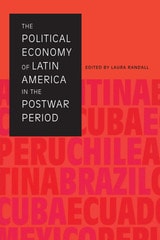
The Political Economy of Latin America in the Postwar Period
Edited by Laura Randall
University of Texas Press, 1998
The historic and increasing interdependence of the Latin American and U.S. economies makes an understanding of the political economies of Latin American nations particularly timely and important. After World War II, many nations initially implemented import substituting industrialization policies. Their outcomes, and the shift in policies, are related to the domestic policies and world economic conditions that led to government deficits, inflation, foreign borrowing, debt renegotiation, and renewed emphasis on common markets and other devices to stimulate trade and investment.
In The Political Economy of Latin America in the Postwar Period, important policy measures are evaluated, such as indexation of prices and contracts; special provisions for financing the government through the Central Bank; stabilization; and deregulation of the economy.
The introduction presents trends in Latin American growth and the factors that influence them. This is followed by parallel studies of the economic development of Argentina, Brazil, Chile, Cuba, Ecuador, Mexico, and Peru from 1945 to the mid-1990s. Noted experts bring their considerable experience to analyzing the content and impact of the economic theories that guided policymaking and their effects on output, income, and quality of life.
The Political Economy of NGOs
State Formation in Sri Lanka and BangladeshJude L. Fernando
Pluto Press, 2011
Jude L. Fernando explores the paradoxical relationship between NGOs and capitalism, showing that supposedly progressive organisations often promote essentially the same policies and ideas as existing governments.
The book examines how a diverse group of NGOs have shaped state formation in Bangladesh and Sri Lanka. It argues that, rather than influencing state formation for the better, NGOs have been integrated into the capitalist system and their language adopted to give traditional exploitative social relations a transformative appearance.
This enlightening study will give pause to those who see NGOs as drivers of true social change and will encourage students of development studies to make a deeper analysis of state formation.
The Political Economy of Pipelines
A Century of Comparative Institutional DevelopmentJeff D. Makholm
University of Chicago Press, 2012
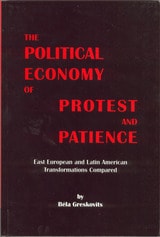
The Political Economy of Protest and Patience
East European and Latin American Trasformations ComparedBéla Greskovits
Central European University Press, 1998
Despite gloomy prophecies, democracy and the market economy seem to be taking root throughout Central and Eastern Europe, although set against a background of a recession deeper and longer than that of the Great Depression. How is this possible? Why did Eastern Europeans protest less about the brutal social consequences of systemic change than the people of Latin America a decade earlier? Why has the region-wide authoritarian or populist turnabout not occurred? Why has democracy in these countries proved to be crisis-proof? In what ways has economic crisis impacted on the politics of the region?
In addressing these questions, Béla Greskovits uses a comparative analysis of the structures, institutions, cultures, and actors shaping both the Eastern European and the Latin American transformations. He argues that structural, institutional, and cultural factors have put a brake on destabilizing collective actions and have paved the way for the emergence of the enduring, low-level equilibrium between incomplete democracy and imperfect market economy which seems set to characterize the Central and Eastern European experience for the foreseeable future.
The Political Economy of Regional Peacemaking
Edited by Steven E. Lobell and Norrin M. Ripsman
University of Michigan Press, 2016
The chapters that follow are grouped in three sections, corresponding to the three stages of peacemaking: reduction or management of regional conflict; peacemaking or progress toward a peace treaty; and maintenance of bilateral peace and the regionalization of the peace settlement. In each chapter, the contributors consider the five key questions from a variety of methodological, historical, cultural, and empirical perspectives, drawing data from the Pacific, the Middle East, Europe, Asia, and Latin America. The conclusion expands on several themes found in the chapters and proposes an agenda for future research.
The Political Economy of Stigma
HIV, Memoir, Medicine, and Crip PositionalitiesAlly Day
The Ohio State University Press, 2021
In The Political Economy of Stigma, Ally Day offers a compelling critique of neoliberal medical practices in the US by coupling an analysis of HIV memoir with a critical examination of narrative medicine practice. Using insights from feminist disability studies and crip theory, Day argues that stories of illness and disability—such as HIV memoirs—operate within a political economy of stigma, which she defines as the formal and informal circulation of personal illness and disability narratives that benefits some while hindering others. On the one hand, this system decreases access to appropriate medical care for those with chronic conditions by producing narratives of personal illness that frame one’s relationship to structural inequality as a result of personal failure. On the other hand, the political economy of stigma rewards those who procure such narratives and circulate them for public consumption.
The political economy of stigma is theorized from three primary research sites: a reading group with women living with HIV, a reading group with AIDS service workers, and participant observation research and critical close reading of practices in narrative medicine. Ultimately, it is the women living with HIV who provide an alternative way to understand disability and illness narratives, a practice of differential reading that can challenge stigmatizing tropes and reconceptualize the creation, reception, and circulation of patient memoir.
The Political Economy of Tax Reform
Edited by Takatoshi Ito and Anne O. Krueger
University of Chicago Press, 1992
Experts from Taiwan, Korea, the Philippines, Japan, and Thailand, as well as the United States, Canada, and Israel examine the major tax programs of the 1980s and their domestic and international economic effects. The analyses reveal similarities between the United States and countries in East Asia in political constraints on policy making, and taken together they show how growing interdependence interacts with domestic economic and political concerns to affect issues as politically vital as tax reform. Economists, policymakers, and members of the business community will benefit from these studies.
The Political Economy of Third World Intervention
Mines, Money, and U.S. Policy in the Congo CrisisDavid N. Gibbs
University of Chicago Press, 1991
In The Political Economy of Third World Intervention, David Gibbs explores the factors that motivate intervention, especially the influence of business interests. He challenges conventional views of international relations, eschewing both the popular "realist" view that the state is influenced by diverse national interests and the "dependency" approach that stresses conflicts between industrialized countries and the Third World. Instead, Gibbs proposes a new theoretical model of "business conflict" which stresses divisions between different business interests and shows how such divisions can influence foreign policy and interventionism. Moreover, he focuses on the conflicts among the core countries, highlighting friction among private interests within these countries.
Drawing on U.S. government documents—including a wealth of newly declassified materials—he applies his new model to a detailed case study of the Congo Crisis of the 1960s. Gibbs demonstrates that the Crisis is more accurately characterized by competition among Western interests for access to the Congo's mineral wealth, than by Cold War competition, as has been previously argued.
Offering a fresh perspective for understanding the roots of any international conflict, this remarkably accessible volume will be of special interest to students of international political economy, comparative politics, and business-government relations.
"This book is an extremely important contribution to the study of international relations theory; Gibbs' treatment of the Congo case is superb. He effectively takes the "statists" to task and presents a compelling new way of analyzing external interventions in the Third World."—Michael G. Schatzberg, University of Wisconsin
"David Gibbs makes an original and important contribution to our understanding of the influence of business interests in the making of U.S. foreign policy. His business conflict model provides a synthetic theoretical framework for the analysis of business-government relations, one which yields fresh insights, overcomes inconsistencies in other approaches, and opens new ground for important research. . . . [Gibbs] provides a sophisticated analysis of the conflicts within the U.S. business community and identifies the complex ways in which they interacted with agencies within the government to form U.S. foreign policy toward the Congo. . . . This is a well-crafted analysis of a critical case of U.S. postwar intervention which should be of general interest to scholars and others concerned with the domestic bases of foreign policy."—Thomas J. Biersteker, Director, School of International Relations, University of Southern California
The Political Economy of Trade Protection
Edited by Anne O. Krueger
University of Chicago Press, 1995
In case studies of trade barriers imposed during the 1980s to help the steel, semiconductor, automobile, lumber, wheat, and textile and apparel industries, the contributors trace the evolution of efforts to obtain protection, protectionist measures, and their results. A chapter assessing the common themes that emerge from the studies concludes that the focus of current trade law is exclusively on the individual protection-seeking industries, with little regard for indirect effects on using industries or for consumers. Reform could usefully take these effects into account.
This volume will interest policymakers, business executives, and anyone interested in trade policy formulation and practice.
The Political Economy of Turkey
Zulkuf Aydin
Pluto Press, 2005
The Political Economy of the Brazilian State, 1889–1930
By Steven Topik
University of Texas Press, 1987
In this first overview of the Brazilian republican state based on extensive primary source material, Steven Topik demonstrates that well before the disruption of the export economy in 1929, the Brazilian state was one of the most interventionist in Latin America. This study counters the previous general belief that before 1930 Brazil was dominated by an export oligarchy comprised of European and North American capitalists and that only later did the state become prominent in the country’s economic development.
Topik examines the state’s performance during the First Republic (1889–1930) in four sectors—finance, the coffee trade, railroads, and industry. By looking at the controversies in these areas, he explains how domestic interclass and international struggles shaped policy and notes the degree to which the state acted relatively independently of civil society.
Topik’s primary concern is the actions of state officials and whether their decisions reflected the demands of the ruling class. He shows that conflicting interests of fractions of the ruling class and foreign investors gradually led to far greater state participation than any of the participants originally desired, and that the structure of the economy and of society—not the intentions of the actors—best explains the state’s economic presence.