Results by title
105 books match the query 'Political activists' and 10 start with t

Taking Part
A Twentieth-Century LifeRobert Josephy
University of Iowa Press, 1993
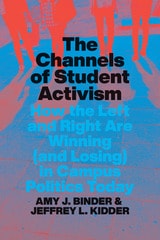
The Channels of Student Activism
How the Left and Right Are Winning (and Losing) in Campus Politics TodayAmy J. Binder and Jeffrey L. Kidder
University of Chicago Press, 2022
The past six years have been marked by a contentious political atmosphere that has touched every arena of public life, including higher education. Though most college campuses are considered ideologically progressive, how can it be that the right has been so successful in mobilizing young people even in these environments?
As Amy J. Binder and Jeffrey L. Kidder show in this surprising analysis of the relationship between political activism on college campuses and the broader US political landscape, while liberal students often outnumber conservatives on college campuses, liberal campus organizing remains removed from national institutions that effectively engage students after graduation. And though they are usually in the minority, conservative student groups have strong ties to national right-leaning organizations, which provide funds and expertise, as well as job opportunities and avenues for involvement after graduation. Though the left is more prominent on campus, the right has built a much more effective system for mobilizing ongoing engagement. What’s more, the conservative college ecosystem has worked to increase the number of political provocations on campus and lower the public’s trust in higher education.
In analyzing collegiate activism from the left, right, and center, The Channels of Student Activism shows exactly how politically engaged college students are channeled into two distinct forms of mobilization and why that has profound consequences for the future of American politics.

The Lost Promise of Patriotism
Debating American Identity, 1890-1920Jonathan M. Hansen
University of Chicago Press, 2003
Intellectuals such as William James, John Dewey, Jane Addams, Eugene V. Debs, and W. E. B. Du Bois repudiated liberalism's association with acquisitive individualism and laissez-faire economics, advocating a model of liberal citizenship whose virtues and commitments amount to what Hansen calls cosmopolitan patriotism. Rooted not in war but in dedication to social equity, cosmopolitan patriotism favored the fight against sexism, racism, and political corruption in the United States over battles against foreign foes. Its adherents held the domestic and foreign policy of the United States to its own democratic ideals and maintained that promoting democracy universally constituted the ultimate form of self-defense. Perhaps most important, the cosmopolitan patriots regarded critical engagement with one's country as the essence of patriotism, thereby justifying scrutiny of American militarism in wartime.
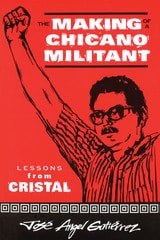
The Making of a Chicano Militant
Lessons from CristalJose Angel Gutierrez
University of Wisconsin Press, 1999
Texas, for years, was a one-party state controlled by white democrats. In 1962, a young eighteen-year-old heard the first rumblings of Chicano community organization in the barrios of Cristal. The rumor in the town was that five Mexican Americans were going to run for all five seats on the city council. But first, poor citizens had to find a way to pay the $1.75 poll tax. Money had to be raised—through bake sales of tamales, cake walks, and dances. So began the political activism of José Angel Gutiérrez.
Gutiérrez's autobiography, The Making of a Chicano Militant, is the first insider's view of the important political and social events within the Mexican American communities in South Texas during the 1960s and 1970s. A controversial and dynamic political figure during the height of the Chicano movement, Gutiérrez offers an absorbing personal account of his life at the forefront of the Mexican-American civil rights movement—first as a Chicano and then as a militant.
Gutiérrez traces the racial, ethnic, economic, and social prejudices facing Chicanos with powerful scenes from his own life: his first summer job as a tortilla maker at the age of eleven, his racially motivated kidnapping as a teenager, and his coming of age in the face of discrimination as a radical organizer in college and graduate school. When Gutiérrez finally returned to Cristal, he helped form the Mexican American Youth Organization and, subsequently the Raza Unida Party to confront issues of ethnic intolerance in his community. His story is soon to be a classic in the developing literature of Mexican American leaders.
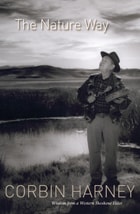
The Nature Way
Writings from a Western Shoshone ElderCorbin Harney
University of Nevada Press, 2009
Corbin Harney’s long life encompassed remarkable changes in the lives of Native Americans and in the technological and political development of the world. Born into an impoverished Western Shoshone family on the Nevada-Idaho border and orphaned as a newborn, he was brought up by grandparents who taught him the traditional ways of their people and the ancient spiritual beliefs that sustained their culture. As an adult, Harney found his calling as a traditional healer and spiritual leader. Soon he became involved in the Shoshone struggle for civil rights, including their efforts to protect and heal their traditional lands in what became the Nevada Test Site. This involvement led Harney to his eventual role as a leader of the international antinuclear movement.The Nature Way is a rich compendium of Corbin Harney’s experience and wisdom. His account of his life incorporates the tragic history of Native Americans in the Great Basin after the arrival of Euro-Americans, his realization of his own identity as a Native American, and his long study of his people’s traditions and spiritual practices. His summary of the Shoshone and Paiute use of indigenous plants for food and healing highlights their understanding that the Earth and her denizens and products must be respected and protected in order to preserve the connection that all creatures have with sacred Mother Earth. Finally, his account of his role as an antinuclear activist expands on his awareness of the human responsibility to protect the Earth, especially from the extreme danger posed by nuclear technology and nuclear weapons of mass destruction. Corbin Harney’s voice is one of the clearest expressions yet of the values, concerns, and spirituality of contemporary Native America. He offers all of us an eloquent plea that we respect and cooperate with Nature to ensure the survival of the planet.
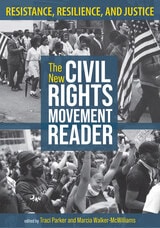
The New Civil Rights Movement Reader
Resistance, Resilience, and JusticeEdited by Traci Parker and Marcia Walker-McWilliams
University of Massachusetts Press, 2023
In the United States, the fight to secure full civil rights for African American people has endured for centuries. The movement has included many voices, among them, working people, charismatic activists, musicians and artists, the LGBTQIA community, veterans, suburbanites, and elected officials. Moving from the labor struggles of the 1930s to the sit-ins and boycotts of midcentury, and the Black Lives Matter protests of today, this expansive volume brings together first-person accounts, political documents and speeches, and historical photographs from each region of the country.
Designed for use in courses and engaging for general readers, this new compilation is the most diverse, most inclusive, and most comprehensive resource available for teaching and learning about the civil rights movement. With chronological and geographical depth, The New Civil Rights Movement Reader addresses a range of key topics, including youth activism, regional and local freedom struggles, voting rights, economic inequality, gender, sexuality, and culture, and the movement’s global reach.

The Rise of Nerd Politics
Digital Activism and Political ChangeJohn Postill
Pluto Press, 2018
Drawing from long-term ethnographic research in Spain, Indonesia and Malaysia--as well as empirical examples from the United States, Iceland, Taiwan and further afield--Postill tracks the rise of technology "nerds" as a new transnational class of political brokers with growing influence. The book identifies and explores four domains of "nerd politics" that have experienced a dramatic expansion since 2010: digital rights, data activism, social protest, and institutional politics.
A lively and engaging intervention at the conjuncture of anthropology, media studies, and sociology, this book offers a pertinent reflection on the future of political change in the digital age.
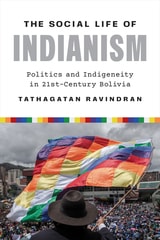
The Social Life of Indianism
Politics and Indigeneity in Twenty-First-Century BoliviaTathagatan Ravindran
University of Texas Press, 2025
A sophisticated analysis of an influential Indigenous political ideology.
When the political ideology known as “Indianism” developed in Bolivia in the 1960s, it was premised on a rejection of Bolivian nationalism. Over the ensuing decades, however, it underwent several mutations as it moved out of a close circle of intellectuals to grip the urban masses that brought Evo Morales—the first Indigenous president—to power in 2006.
The Social Life of Indianism offers a fresh perspective by examining Bolivian Indigenous politics through the lens of political ideology. Through an ethnographic study of Indianism in the city of El Alto, Tathagatan Ravindran shows how canonical Indianism—the original ideology that rejects Bolivia as enslaver of the Indian nation—provided philosophical ballast for exponents of a more popular folk Indianism that accommodates the Bolivian state and pursues Indigenous empowerment within it. Synthesizing approaches from several disciplines, Ravindran demonstrates how canonical Indianism was not refuted or supplanted; it refracted, in the broader public, into a new common sense. A sophisticated analysis of a complex political landscape, The Social Life of Indianism brings much-needed nuance to one of the most prominent forms of Indigenous ideology and offers a unique framework for analyzing political ideologies across the contemporary world.

The Squatters' Movement in Europe
Commons and Autonomy as Alternatives to CapitalismEdited by Squatting Europe Kollective
Pluto Press, 2014
The Squatters' Movement in Europe is the first definitive guide to squatting as an alternative to capitalism. It offers a unique insider's view on the movement – its ideals, actions and ways of life. At a time of growing crisis in Europe with high unemployment, dwindling social housing and declining living standards, squatting has become an increasingly popular option.
The book is written by an activist-scholar collective, whose members have direct experience of squatting: many are still squatters today. There are contributions from the Netherlands, Spain, the USA, France, Italy, Germany, Switzerland and the UK.
In an age of austerity and precarity this book shows what has been achieved by this resilient social movement, which holds lessons for policy-makers, activists and academics alike.
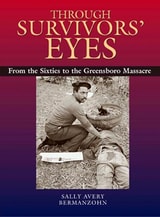
Through Survivors' Eyes
From the Sixties to the Greensboro MassacreSally Avery Bermanzohn
Vanderbilt University Press, 2003
In passionate first-person accounts, Through Survivors' Eyes tells the story of six remarkable people who set out to change the world. The survivors came of age as the "protest generation," joining the social movements of the 1960s and 1970s. They marched for civil rights, against war, for textile and healthcare workers, and for black power and women's liberation. As the mass mobilizations waned in the mid-1970s, they searched for a way to continue their activism, studied Marxism, and became communists.
Nelson Johnson, who grew up on a farm in eastern North Carolina in a family proud of its African American heritage, settled in Greensboro in the 1960s and became a leader of the Black Liberation Movement and a decade later the founder of the Faith Community Church. Willena Cannon, the daughter of black sharecroppers, witnessed a KKK murder as a child and was spurred to a life of activism. Her son, Kwame Cannon, was only ten when he saw the Greensboro killings. Marty Nathan, who grew up the daughter of a Midwestern union organizer and came to the South to attend medical school, lost her husband to the Klan/Nazi gunfire. Paul Bermanzohn, the son of Jewish Holocaust survivors, was permanently injured during the shootings. Sally Avery Bermanzohn, a child of the New York suburbs who came south to join the Civil Rights Movement, watched in horror as her friends were killed and her husband was wounded.
Through Survivors' Eyes is the story of people who abandoned conventional lives to become civil rights activists and then revolutionaries. It is about blacks and whites who united against Klan/Nazi terror, and then had to overcome unbearable hardship, and persist in seeking justice. It is also a story of one divided southern community, from the protests of black college students of the late 1960s to the convening this January of a Truth and Community Reconciliation Project (on the South African model) intended to reassess the Massacre.