Results by title
233 books match the query 'Political culture' and 46 start with t
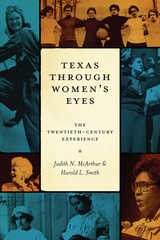
Texas Through Women's Eyes
The Twentieth-Century ExperienceBy Judith N. McArthur and Harold L. Smith
University of Texas Press, 2010
Winner, Liz Carpenter Award For Research in the History of Women, Texas State Historical Association, 2010
Texas women broke barriers throughout the twentieth century, winning the right to vote, expanding their access to higher education, entering new professions, participating fully in civic and political life, and planning their families. Yet these major achievements have hardly been recognized in histories of twentieth-century Texas. By contrast, Texas Through Women's Eyes offers a fascinating overview of women's experiences and achievements in the twentieth century, with an inclusive focus on rural women, working-class women, and women of color.
McArthur and Smith trace the history of Texas women through four eras. They discuss how women entered the public sphere to work for social reforms and the right to vote during the Progressive era (1900–1920); how they continued working for reform and social justice and for greater opportunities in education and the workforce during the Great Depression and World War II (1920–1945); how African American and Mexican American women fought for labor and civil rights while Anglo women laid the foundation for two-party politics during the postwar years (1945–1965); and how second-wave feminists (1965–2000) promoted diverse and sometimes competing goals, including passage of the Equal Rights Amendment, reproductive freedom, gender equity in sports, and the rise of the New Right and the Republican party.

The Anarchy of Black Religion
A Mystic SongJ. Kameron Carter
Duke University Press, 2023
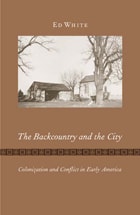
The Backcountry and the City
Colonization and Conflict in Early AmericaEd White
University of Minnesota Press, 2005
Ed White explores the backcountry-city divide as well as the dynamics of indigenous peoples, bringing together two distinct bodies of scholarship: one stressing the political culture of the Revolutionary era, the other taking an ethnohistorical view of white–Native American contact. White concentrates his study in Pennsylvania, a state in which the majority of the population was rural, and in Philadelphia, a city that was a center of publishing and politics and the national capital for a decade. Against this backdrop, White reads classic political texts such as Crèvecoeur’s Letters from an American Farmer, Franklin’s Autobiography, and Paine’s “Agrarian Justice,” alongside missionary and captivity narratives, farmers’ petitions, and Native American treaties. Using historical and ethnographic sources to enrich familiar texts, White demonstrates the importance of rural areas in the study of U.S. nation formation and finds unexpected continuities between the early colonial period and the federal ascendancy of the 1790s.
Ed White is associate professor of English at the University of Florida.
The Basic Symbols of the American Political Tradition
Willmoore Kendall
Catholic University of America Press, 1995

The Brown Plague
Travels in Late Weimar and Early Nazi GermanyDaniel Guérin
Duke University Press, 1994
Guérin’s travels took him across the countryside and into the cities of Germany. He describes with extraordinary clarity, for example, his encounters with large groups of unemployed workers in Berlin and the spectacle of Goering presiding over the Reichstag. Staying in youth hostels, Guérin met individuals representing a range of various groups and movements, including the Wandervögel, leftist brigades, Hitler Youth, and the strange, semicriminal sexual underground of the Wild-frei. Devoting particular attention to the cultural politics of fascism and the lure of Nazism for Germany’s disaffected youth, he describes the seductive rituals by which the Nazis were able to win over much of the population. As Robert Schwartzwald makes clear in his introduction, Guérin’s interest in Germany at this time was driven, in part, by a homoerotic component that could not be stated explicitly in his published material. This excellent companion essay also places The Brown Plague within a broad historical and literary context while drawing connections between fascism, aesthetics, and sexuality.
Informed by an epic view of class struggle and an admiration for German culture, The Brown Plague, a notable primary source in the literature of modern Europe, provides a unique view onto the rise of Nazism.
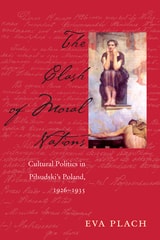
The Clash of Moral Nations
Cultural Politics in Pilsudski’s Poland, 1926–1935Eva Plach
Ohio University Press, 2006

The Conservative Frontier
Texas and the Origins of the New RightJeff Roche
University of Texas Press, 2025
2026 Al Lowman Memorial Prize, Texas State Historical Association (TSHA)
2026 Bonney MacDonald Outstanding Book Award Winner, Center for the Study of the American West at West Texas A&M University (CSAW)
How West Texas business and culture molded the rise of conservatism in the United States.
Much of what we understand as modern American political conservatism was born in West Texas, where today it predominates. How did the people of such a vast region—larger than New England and encompassing big cities like Lubbock and Amarillo, as well as tiny towns from Anson to Dalhart—develop such a uniform political culture? And why and how did it go national?
Jeff Roche finds answers in the history of what he calls cowboy conservatism. Political power players matter in this story, but so do football coaches, newspaper editors, and a breakfast cereal tycoon who founded a capitalist utopia. The Conservative Frontier follows these and other figures as they promoted an ideology grounded in the entrepreneurial and proto-libertarian attitudes of nineteenth-century Texas ranchers, including a fierce devotion to both individualism and small-town notions of community responsibility. This political sensibility was in turn popularized by its association with the mythology and iconography of the cowboy as imagined in twentieth-century mass media. By the 1970s and the rise of Ronald Reagan, Roche shows, it was clear that the cowboy conservatism of West Texas had set the stage for the emergence of the New Right—the more professionalized and tech-savvy operation that dominated national conservative politics for the next quarter century.
The Constitutional Bind
How Americans Came to Idolize a Document That Fails ThemAziz Rana
University of Chicago Press, 2024
An eye-opening account of how Americans came to revere the Constitution and what this reverence has meant domestically and around the world.
Some Americans today worry that the Federal Constitution is ill-equipped to respond to mounting democratic threats and may even exacerbate the worst features of American politics. Yet for as long as anyone can remember, the Constitution has occupied a quasi-mythical status in American political culture, which ties ideals of liberty and equality to assumptions about the inherent goodness of the text’s design. The Constitutional Bind explores how a flawed document came to be so glorified and how this has impacted American life.
In a pathbreaking retelling of the American experience, Aziz Rana shows that today’s reverential constitutional culture is a distinctively twentieth-century phenomenon. Rana connects this widespread idolization to another relatively recent development: the rise of US global dominance. Ultimately, such veneration has had far-reaching consequences: despite offering a unifying language of reform, it has also unleashed an interventionist national security state abroad while undermining the possibility of deeper change at home.
Revealing how the current constitutional order was forged over the twentieth century, The Constitutional Bind also sheds light on an array of movement activists—in Black, Indigenous, feminist, labor, and immigrant politics—who struggled to imagine different constitutional horizons. As time passed, these voices of opposition were excised from memory. Today, they offer essential insights.
The Cubans of Union City
Immigrants and Exiles in a New Jersey CommunityYolanda Prieto
Temple University Press, 2009
As a result of the conflicts between Cuba and the United States, especially after 1959, Cubans immigrated in great numbers. Most stayed in Miami, but many headed north to Union City, making it second only to Miami in its concentration of Cubans. In The Cubans of Union City, Yolanda Prieto discusses why Cubans were drawn to this particular city and how the local economy and organizations developed. Central aspects of this story are the roles of women, religion, political culture, and the fact of exile itself.
As a member of this community and a participant in many of its activities, Prieto speaks with special authority about its demographic uniqueness. Far from being a snapshot of the community, The Cubans of Union City conveys an ongoing research agenda extending over more than twenty years, from 1959 to the 1980s. As a long-term observer who was also a resident, Prieto offers a unique and insightful view of the dynamics of this community’s evolution.
The Disappearing South?
Studies in Regional Change and ContinuityRobert P. Steed
University of Alabama Press, 1990
There is widespread agreement that the South has changed dramatically since the end of World War II—the essays in The Disappearing South address the ongoing debate
There is widespread agreement that the South has changed dramatically since the end of World War II. Social, demographic, economic, and political changes have altered significantly the region long considered the nation’s most distinctive. There is less agreement, however, about the extent to which the forces of nationalization have eroded the major elements of Southern distinctiveness. Although this volume does not purport to settle the debate on Southern political change, it does present a variety of recent evidence that helps put this important debate into perspective. In the process it helps clarify the contemporary politics of the South for readers ranging from the scholar to the more casual observer.
The essays in The Disappearing South address the ongoing debate. Contributors, in addition to the editors, include E. Lee Bernick, Earl Black, Merle Black, Lewis Bowman, Edward G. Carmines, Patrick Cotter, Thomas Eamon, Douglas G. Feig, John C. Green, James L. Guth, William E. Hulbary, Anne E. Kelley, Lyman A. Kellstedt, David M. Olson, John Shelton Reed, Harold Stanley, James G. Stovall, John Theilmann, Stephen H. Wainscott, and Allen Wilhite.
The Fires of New England
A Story of Protest and Rebellion in Antebellum AmericaEric J. Morser
University of Massachusetts Press, 2017
Few people embraced the manifesto and its radical message. Nonetheless, as Eric J. Morser illustrates in this eloquently written and deeply researched book, the address matters because it reveals how commercial, cultural, political, and social changes were remaking the lives of the men who drafted and shared it in the 1830s. Using an imaginative range of sources, Morser artfully reconstructs their moving personal tales and locates them in a grander historical context. By doing so, he demonstrates that even seemingly small stories from antebellum America can help us understand the rich complexities of the era.
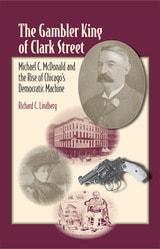
The Gambler King of Clark Street
Michael C. McDonald and the Rise of Chicago's Democratic MachineRichard C. Lindberg with a Foreword by John Miya.
Southern Illinois University Press, 2009
The Gambler King of Clark Street tells the story of a larger-than-life figure who fused Chicago’s criminal underworld with the city’s political and commercial spheres to create an urban machine built on graft, bribery, and intimidation. Lindberg vividly paints the life of the Democratic kingmaker against the wider backdrop of nineteenth-century Chicago crime and politics.
McDonald has long been cited in the published work of city historians, members of academia, and the press as the principal architect of a unified criminal enterprise that reached into the corridors of power in Chicago, Cook County, the state of Illinois, and ultimately the Oval Office. The Gambler King of Clark Street is both a major addition to Chicago’s historical literature and a revealing biography of a powerful and troubled man.
Illinois State Historical Society Scholarly Award, Certificate of Excellence, 2009
Society of Midland Authors Biography Award, 2009
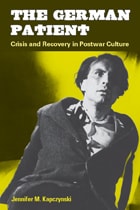
The German Patient
Crisis and Recovery in Postwar CultureJennifer M. Kapczynski
University of Michigan Press, 2010
The German Patient takes an original look at fascist constructions of health and illness, arguing that the idea of a healthy "national body"---propagated by the Nazis as justification for the brutal elimination of various unwanted populations---continued to shape post-1945 discussions about the state of national culture. Through an examination of literature, film, and popular media of the era, Jennifer M. Kapczynski demonstrates the ways in which postwar German thinkers inverted the illness metaphor, portraying fascism as a national malady and the nation as a body struggling to recover. Yet, in working to heal the German wounds of war and restore national vigor through the excising of "sick" elements, artists and writers often betrayed a troubling affinity for the very biopolitical rhetoric they were struggling against. Through its exploration of the discourse of collective illness, The German Patient tells a larger story about ideological continuities in pre- and post-1945 German culture.
Jennifer M. Kapczynski is Assistant Professor of Germanic Languages and Literatures at Washington University in St. Louis. She is the coeditor of the anthology A New History of German Cinema.
Cover art: From The Murderers Are Among Us (1946). Reprinted courtesy of the Deutsche Kinemathek.
"A highly evocative work of meticulous scholarship, Kapczynski's deftly argued German Patient advances the current revaluation of Germany's postwar reconstruction in wholly original and even exciting ways: its insights into discussions of collective sickness and health resonate well beyond postwar Germany."
---Jaimey Fischer, University of California, Davis
"The German Patient provides an important historical backdrop and a richly specific cultural context for thinking about German guilt and responsibility after Hitler. An eminently readable and engaging text."
---Johannes von Moltke, University of Michigan
"This is a polished, eloquently written, and highly informative study speaking to the most pressing debates in contemporary Germany. The German Patient will be essential reading for anyone interested in mass death, genocide, and memory."
---Paul Lerner, University of Southern California
The Great Brain Suck
And Other American EpiphaniesEugene Halton
University of Chicago Press, 2008
Luckily Halton, with scalpel-sharp wit in one hand and the balm of wisdom in the other, is here to operate on the declining body politic. His initial diagnosis is bleak: fast food and too much time spent sitting, whether in our cars or on our couches, are ruining our bodies, while our minds are weakened by the proliferation of electronic devices—TVs, computers, cell phones, iPods, video games—and their alienating effects. If we are losing the battle between autonomy and automation, he asks, how can our culture regain self-sufficiency? Halton finds the answer in the inspiring visions—deeply rooted in American culture—of an organic and more spontaneous life at the heart of the work of master craftsman Wharton Esherick, legendary blues singer Muddy Waters, urban critic Lewis Mumford, and artist Maya Lin, among others.
A scathing and original jeremiad against modern materialism, The Great Brain Suck is also a series of epiphanies of a simpler but more profound life.
The Hidden 1970s
Histories of RadicalismBerger, Dan
Rutgers University Press, 2010
This powerful collection is a compelling assessment of left-wing social movements in a period many have described as dominated by conservatism or confusion. Scholars examine critical and largely buried legacies of the 1970s. The decade of Nixon's fall and Reagan's rise also saw widespread indigenous militancy, prisoner uprisings, transnational campaigns for self-determination, pacifism, and queer theories of play as political action. Contributors focus on diverse topics, including the internationalization of Black Power and Native sovereignty, organizing for Puerto Rican independence among Latinos and whites, and women's self-defense. Essays and ideas trace the roots of struggles from the 1960s through the 1970s, providing fascinating insight into the myriad ways that radical social movements shaped American political culture in the 1970s and the many ways they continue to do so today.

The House Will Come To Order
How the Texas Speaker Became a Power in State and National PoliticsBy Patrick L. Cox and Michael Phillips
University of Texas Press, 2010
In a state assumed to have a constitutionally weak governor, the Speaker of the Texas House wields enormous power, with the ability to almost single-handedly dictate the legislative agenda. The House Will Come to Order charts the evolution of the Speaker's role from a relatively obscure office to one of the most powerful in the state. This fascinating account, drawn from the Briscoe Center's oral history project on the former Speakers, is the story of transition, modernization, and power struggles.
Weaving a compelling story of scandal, service, and opportunity, Patrick Cox and Michael Phillips describe the divisions within the traditional Democratic Party, the ascendance of Republicans, and how Texas business, agriculture, and media shaped perceptions of officeholders. While the governor and lieutenant governor wielded their power, the authors show how the modern Texas House Speaker built an office of equal power as the state became more complex and diverse. The authors also explore how race, class, and gender affected this transition as they explain the importance of the office in Texas and the impact the state's Speakers have had on national politics.
At the apex of its power, the Texas House Speaker's role at last receives the critical consideration it deserves.
The Last Days of El Comandante
By Alberto Barrera Tyszka; translated by Rosalind Harvey and Jessie Mendez Sayer
University of Texas Press, 2020
2021 — Honorable Mention, Best Fiction Book Translation – International Latino Book Awards, Latino Literacy Now
Winner of the Tusquets Prize in 2015 and previously translated into French, German, Dutch, Polish, and Portuguese, Alberto Barrera Tyszka’s Patria o muerte is now available in English.
President Hugo Chávez’s cancer looms large over Venezuela in 2012, casting a shadow of uncertainty and creating an atmosphere of secrets, lies, and upheaval across the country. This literary thriller follows the connected lives of several Caracas neighbors consumed by the turmoil surrounding the Venezuelan president’s impending death.
Retired oncologist Miguel Sanabria, seeing the increasingly combustible world around him, feels on constant edge. He finds himself at odds with his wife, an extreme anti-Chavista, and his radical Chavista brother. These feelings grow when his nephew asks him to undertake the perilous task of hiding cell-phone footage of Chávez in Cuba. Fredy Lecuna, an unemployed journalist, takes a job writing a book about Chávez’s condition, which requires him to leave for Cuba while his landlord attempts to kick his wife and son out of their apartment. Nine-year-old María, long confined to an apartment with a neurotic mother intensely fearful of the city’s violence, finds her only contact with the outside world through a boy she messages online.
The Lost Promise of Patriotism
Debating American Identity, 1890-1920Jonathan M. Hansen
University of Chicago Press, 2003
Intellectuals such as William James, John Dewey, Jane Addams, Eugene V. Debs, and W. E. B. Du Bois repudiated liberalism's association with acquisitive individualism and laissez-faire economics, advocating a model of liberal citizenship whose virtues and commitments amount to what Hansen calls cosmopolitan patriotism. Rooted not in war but in dedication to social equity, cosmopolitan patriotism favored the fight against sexism, racism, and political corruption in the United States over battles against foreign foes. Its adherents held the domestic and foreign policy of the United States to its own democratic ideals and maintained that promoting democracy universally constituted the ultimate form of self-defense. Perhaps most important, the cosmopolitan patriots regarded critical engagement with one's country as the essence of patriotism, thereby justifying scrutiny of American militarism in wartime.
The Mandarin and the Cadre
China’s Political CulturesLucian W. Pye
University of Michigan Press, 2000
The Misinterpellated Subject
James R. Martel
Duke University Press, 2017
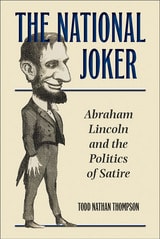
The National Joker
Abraham Lincoln and the Politics of SatireTodd Nathan Thompson
Southern Illinois University Press, 2015
In his speeches, writings, and public persona, Lincoln combined modesty and attack, engaging in strategic self-deprecation while denouncing his opponents, their policies, and their arguments, thus refiguring satiric discourse as political discourse and vice versa. At the same time, he astutely deflected his opponents’ criticisms of him by embracing and sometimes preemptively initiating those criticisms. Thompson traces Lincoln’s comic sources and explains how, in reapplying others’ jokes and stories to political circumstances, he transformed humor into satire. Time and time again, Thompson shows, Lincoln engaged in self-mockery, turning negative assumptions or depictions of him—as ugly, cowardly, jocular, inexperienced—into positive traits that identified him as an everyman while attacking his opponents’ claims to greatness, heroism, and experience as aristocratic or demagogic. Thompson also considers how Lincoln took advantage of political cartoons and other media to help proliferate the particular Lincoln image of the “self-made man”; underscores exceptions to Lincoln’s ability to mitigate negative, satiric depictions of him; and closely examines political cartoons from both the 1860 and 1864 elections. Throughout, Thompson’s deft analysis brings to life Lincoln’s popular humor.
The Necromantic State
Spectral Remains in the Afterglow of Venezuela's Bolivarian RevolutionIrina R. Troconis
Duke University Press, 2025
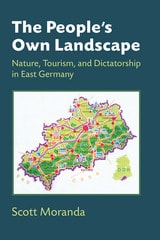
The People's Own Landscape
Nature, Tourism, and Dictatorship in East GermanyScott Moranda
University of Michigan Press, 2014
East Germany’s Socialist Unity Party aimed to placate a public well aware of the higher standards of living enjoyed elsewhere by encouraging them to participate in outdoor activities and take vacations in the countryside. Scott Moranda considers East Germany’s rural landscapes from the perspective of both technical experts (landscape architects, biologists, and physicians) who hoped to dictate how vacationers interacted with nature, and the vacationers themselves, whose outdoor experience shaped their understanding of environmental change. As authorities eliminated traditional tourist and nature conservation organizations, dissident conservationists demanded better protection of natural spaces. At the same time, many East Germans shared their government’s expectations for economic development that had real consequences for the land. By the 1980s, environmentalists saw themselves as outsiders struggling against the state and a public that had embraced mainstream ideas about limitless economic growth and material pleasures.
The Personality of Power
A Theory of Fascism for Anti-fascist LifeBrian Massumi
Duke University Press, 2025
The Political Culture of the American Whigs
Daniel Walker Howe
University of Chicago Press, 1984
The Political Style of Conspiracy
Chase, Sumner, and LincolnMichael William Pfau
Michigan State University Press, 2005
The turbulent history of the United States has provided a fertile ground for conspiracies, both real and imagined. From the American Revolution to the present day, conspiracy discourse—linguistic and symbolic practices and artifacts revolving around themes, claims, or accusations of conspiracy—has been a staple of political rhetoric. Some conspiracy theories never catch on with the public, while others achieve widespread popularity. Whether successful or not, the means by which particular conspiracy theories spread is a rhetorical process, a process in which persuasive language, symbolism, and arguments act upon individual minds within concrete historical and political settings.
Conspiracy rhetoric was a driving force in the evolution of antebellum political culture, contributing to the rise and fall of the great parties in the nineteenth century. One conspiracy theory in particular—the "slave power" conspiracy—was instrumental in facilitating the growth of the young Republican Party's membership and ideology. The Political Style of Conspiracy analyzes the concept and reality of the "slave power" in the rhetorical discourse of the mid-nineteenth-century, in particular the speeches and writing of politicians Salmon P. Chase, Charles Sumner, and Abraham Lincoln. By examining their mainstream texts, Pfau reveals that, in addition to the "paranoid style" of conspiracy rhetoric that inhabits the margins of political life, Lincoln, Chase, and Sumner also engaged in a distinctive form of conspiracy rhetoric that is often found at the center of mainstream American society and politics.
The Politics of Trust
Reubin Askew and Florida in the 1970sGordon E. Harvey
University of Alabama Press, 2015
Askew rose to power on a wave of “New South” leadership that hoped to advance the Democratic Party beyond the intransigent torpor of southern politics since the Civil War. He hoped to replace appeals to white supremacy with a vision of a more diverse and inclusive party. Following his election in Florida, other New South leaders such as Georgia’s Jimmy Carter, Arkansas’s Dale Bumpers, and South Carolina’s John C. West all came to power.
Audacious and gifted, Askew was one of six children raised by a single mother in Pensacola. As he worked his way up through the ranks of the state legislature, few in Florida except his constituents knew his name when he challenged Republic incumbent Claude R. Kirk Jr. on a populist platform promising higher corporate taxes. When he won, he inaugurated a series of reforms, including a new 5 percent corporate income tax; lower consumer, property, and school taxes; a review of penal statutes; environmental protections; higher welfare benefits; and workers’ compensation to previously uncovered migrant laborers.
Touting honesty, candor, and transparency, Askew dubbed his administration “government in the sunshine.” Harvey demonstrates that Askew’s success was not in spite of his penchant for bold, sometimes unpopular stances, but rather because his mix of unvarnished candor, sober ethics, and religious faith won the trust of the diverse peoples of his state.
The Postwar Transformation of Germany
Democracy, Prosperity and NationhoodJohn S. Brady, Beverly Crawford, and Sarah Elise Wiliarty, Editors
University of Michigan Press, 1999
The Public and Its Possibilities
Triumphs and Tragedies in the American CityJohn D. Fairfield
Temple University Press, 2012
In his compelling reinterpretation of American history, The Public and Its Possibilities, John Fairfieldargues that our unrealized civic aspirations provide the essential counterpoint to an excessive focus on private interests. Inspired by the revolutionary generation, nineteenth-century Americans struggled to build an economy and a culture to complement their republican institutions. But over the course of the twentieth century, a corporate economy and consumer culture undercut civic values, conflating consumer and citizen.
Fairfield places the city at the center of American experience, describing how a resilient demand for an urban participatory democracy has bumped up against the fog of war, the allure of the marketplace, and persistent prejudices of race, class, and gender. In chronicling and synthesizing centuries of U.S. history—including the struggles of the antislavery, labor, women’s rights movements—Fairfield explores the ebb and flow of civic participation, activism, and democracy. He revisits what the public has done for civic activism, and the possibility of taking a greater role.
In this age where there has been a move towards greater participation in America's public life from its citizens, Fairfield’s book—written in an accessible, jargon-free style and addressed to general readers—is especially topical.
The Queen of America Goes to Washington City
Essays on Sex and CitizenshipLauren Berlant
Duke University Press, 1997
As Berlant traces the guiding images of U.S. citizenship through the process of privatization, she discusses the ideas of intimacy that have come to define national culture. From the fantasy of the American dream to the lessons of Forrest Gump, Lisa Simpson to Queer Nation, the reactionary culture of imperilled privilege to the testimony of Anita Hill, Berlant charts the landscape of American politics and culture. She examines the consequences of a shrinking and privatized concept of citizenship on increasing class, racial, sexual, and gender animosity and explores the contradictions of a conservative politics that maintains the sacredness of privacy, the virtue of the free market, and the immorality of state overregulation—except when it comes to issues of intimacy.
Drawing on literature, the law, and popular media, The Queen of America Goes to Washington City is a stunning and major statement about the nation and its citizens in an age of mass mediation. As it opens a critical space for new theory of agency, its narratives and gallery of images will challenge readers to rethink what it means to be American and to seek salvation in its promise.

The Reagan Range
The Nostalgic Myth in American PoliticsJames Combs
University of Wisconsin Press, 1993
This book is an attempt to make sense out of Ronald Reagan by linking him to various grassroots dimensions of American popular mythology and mind. It attempts to utilize a variety of sources from American and popular culture studies, works on Reagan, and popular materials such as movies to offer an interpretation of reagan as an exemplar of the political relevance and power of popular culture.
The Rise of Populist Nationalism
Social Resentments and Capturing the Constitution in HungaryBalázs Majtényi
Central European University Press, 2020
The Rise of Trump
America's Authoritarian SpringMatthew C. MacWilliams
Amherst College Press, 2016
The Rise of the Ku Klux Klan
Right-Wing Movements and National PoliticsRory McVeigh
University of Minnesota Press, 2009
The Salem Clique
Oregon's Founding BrothersBarbara S. Mahoney
Oregon State University Press, 2017
While not in agreement with some of the more extreme contemporary accusations against the Clique, many historians have concluded that its members were vicious men who were able, because of their command of the Democratic party, to impose their hegemony on the Oregon Territory’s inhabitants. Other scholars have seen them as merely another instance of the contentious politics of the period.
Although the Salem Clique has been given considerable prominence in nearly every account of Oregon’s Territorial period, there has not been a detailed study of its role until now. What sort of people were these men? What was their impact on the issues, events, and movements of the period? What role did they play in the years after Oregon became a state? In The Salem Clique, Historian Barbara Mahoney sets out to answer these and many other questions in this comprehensive and deeply researched history.
The Time of Liberty
Popular Political Culture in Oaxaca, 1750–1850Peter Guardino
Duke University Press, 2005
Guardino makes extensive use of archival materials, including judicial transcripts and newspaper accounts, to illuminate the dramatic contrasts between the local politics of the city and of the countryside, describing in detail how both sets of citizens spoke and acted politically. He contends that although it was the elites who initiated the national change to republicanism, the transition took root only when engaged by subalterns. He convincingly argues that various aspects of the new political paradigms found adherents among even some of the most isolated segments of society and that any subsequent failure of electoral politics was due to an absence of pluralism rather than a lack of widespread political participation.
The War of My Generation
Youth Culture and the War on TerrorKieran, David
Rutgers University Press, 2015
The War of My Generation is the first essay collection to focus specifically on how the terrorist attacks and their aftermath have shaped these new generations of Americans. Drawing from a variety of disciplines, including anthropology, sociology, cultural studies, and literary studies, the essays cover a wide range of topics, from graphic war images in the classroom to computer games designed to promote military recruitment to emails from parents in the combat zone. The collection considers what cultural factors and products have shaped young people's experience of the 9/11 attacks, the wars that have followed, and their experiences as emerging citizen-subjects in that moment. Revealing how young people understand the War on Terror—and how adults understand the way young people think—The War of My Generation offers groundbreaking research on catastrophic events still fresh in our minds.
The World Sixties Made
Politics And Culture In Recent Americaedited by Van Gosse and Richard Moser
Temple University Press, 2003
Those Without A Country
The Political Culture of Italian American SyndicalistsMichael Miller Topp
University of Minnesota Press, 2001
In the first book-length history of the Italian American syndicalist movement—the Italian Socialist Federation—Michael Miller Topp presents a new way of understanding the Progressive Era labor movement in relation to migration, transnationalism, gender, and class identity. Those without a Country demonstrates that characterizations of "old" (pre-1960s) social movements as predominantly class-based are vastly oversimplified—and contribute to current debates about the implications of identity politics for the American Left and American culture generally.
Topp traces the rise and fall of the Italian American syndicalist movement from the turn of the twentieth century to the executions of Sacco and Vanzetti in 1927. His use of Italian-language sources, combined with his attention to transnationalism and masculinity, provides new vantage points on a range of related topics, including the 1912 Lawrence, Massachusetts, textile workers’ strike, the impact of World War I on this immigrant community, and the genesis of both fascism and antifascism. Those without a Country brings forward fascinating new material to revise and refine our views of not only Progressive Era radicalism but immigration, gender, and working-class history as well.
Tippecanoe and Tyler Too
Famous Slogans and Catchphrases in American HistoryJan R. Van Meter
University of Chicago Press, 2008
“By necessity, by proclivity, by delight,” Ralph Waldo Emerson said in 1876, “we all quote.” But often the phrases that fall most readily from our collective lips—like “fire when ready,” “speak softly and carry a big stick,” or “nice guys finish last”—are those whose origins and true meanings we have ceased to consider. Restoring three-dimensionality to more than fifty of these American sayings, Tippecanoe and Tyler Too turns clichés back into history by telling the life stories of the words that have served as our most powerful battle cries, rallying points, laments, and inspirations.
In individual entries on slogans and catchphrases from the early seventeenth to the late twentieth century, Jan Van Meter reveals that each one is a living, malleable entity that has profoundly shaped and continues to influence our public culture. From John Winthrop’s “We shall be as a city upon a hill” and the 1840 Log Cabin Campaign’s “Tippecanoe and Tyler Too” to Martin Luther King Jr.’s “I have a dream” and Ronald Reagan’s “Mr. Gorbachev, tear down this wall,” each of Van Meter’s selections emerges as a memory device for a larger political or cultural story. Taken together in Van Meter’s able hands, these famous slogans and catchphrases give voice to our common history even as we argue about where it should lead us.
“As Van Meter argues, these are important ‘memory devices for a larger story.’ . . . The author has thoroughly researched all the catchphrases . . . . This book would make delightful in-flight reading or a nice gift for a trivia buff. Recommended.”—Choice
Transatlantic Central Europe
Contesting Geography and Redifining Culture beyond the NationJessie Labov
Central European University Press, 2019
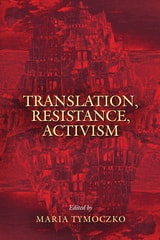
Translation, Resistance, Activism
Maria Tymoczko
University of Massachusetts Press, 2010
From silence to radical manipulation of texts, translation strategies are instrumental in significant historical interventions and cultural change. Translation plays a pivotal role in ideological dialogue and struggle, including resistance to oppression and cultural straitjackets of all types, from sexual puritanism to military dictatorships. Situated in their own space, time, history, and political contexts, translators promote ideological agendas by creating new cultural narratives, pragmatically adjusting tactics so as to maximize the social and political impact.
The essays in this volume explore ways to read translations as records of cultural contestation and ideological struggle; as means of fighting censorship, physical coercion, cultural repression, and political dominance; and as texts that foster a wide variety of goals from cultural nationalism to armed confrontation. Translations are set in relief as central cultural documents rather than derivative, peripheral, or marginalized productions. They are seen as forms of ethical, political, and ideological activity rather than as mere communicative transactions or creative literary exercises.
The contributors demonstrate that engaged and activist translations are performative acts within broader political and ideological contexts. The essays detail the initiative, resourcefulness, and courage of individual translators, whose willingness to put themselves on the line for social change can sometimes move the world.
In addition to Maria Tymoczko, contributors include Pua'ala'okalani D. Aiu, Brian James Baer, Mona Baker, Paul F. Bandia, Georges L. Bastin, Nitsa Ben-Ari, Ãngela Campo, Antonia Carcelen-Estrada, Ãlvaro Echeverri, Denise Merkle, John Milton, and Else R.P. Vieira.
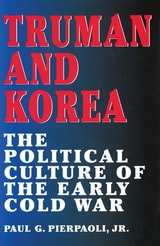
Truman and Korea
The Political Culture of the Early Cold WarPaul G. Pierpaoli, Jr.
University of Missouri Press, 1999
Detailing for the first time the story of America's homefront during the Korean War, Truman and Korea fills an important gap in the historical scholarship of the postwar era. Paul Pierpaoli analyzes the political, economic, social, and international ramifications of America's first war of Soviet containment, never losing sight of the larger context of the cold war. He focuses on how and why the Truman administration undertook a bloody, inconclusive war on the Korean peninsula while permanently placing the nation on a war footing.
Truman and Korea illuminates the importance of the Korean conflict as a critical turning point in the cold war by examining both the immediate and the long-term domestic and foreign policy effects of the conflict. Pierpaoli addresses such important topics as presidential war powers and debates concerning the Defense Production Act; the inner workings of the many war mobilization agencies; the operations and politics of nationwide price and wage controls; questions concerning cold war tax policies and fiscal and monetary policies; and the evolution of national security policy.
Pierpaoli shows that President Truman's decision to intervene in the Korean War quickly became subsumed by larger cold war concerns. By the autumn of 1950 the Korean mobilization program had become the nation's de facto cold war preparedness program, which would come to span nearly forty years and eight presidential administrations. After 1950 the cold war not only continued to significantly shape political and ideological discourse in the United States but also began to reshape aggregate economic policy. By doing so, it altered the nation's industrial and economic contours, giving birth to the concept of an institutionalized "national security state," which in turn spawned the cold war military-industrial-scientific complex.
Based upon extensive research in the papers and official presidential files of Harry S. Truman, as well as many manuscript collections and records of wartime and government agencies, Truman and Korea offers a new perspective on the Korean War era and its inextricable ties to broader cold war decision making.
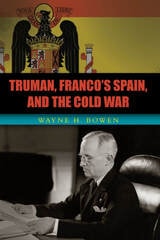
Truman, Franco's Spain, and the Cold War
Wayne H Bowen
University of Missouri Press, 2017
President Harry S. Truman harbored an abiding disdain for Spain and its government. During his presidency (1945–1953), the State Department and the Department of Defense lobbied Truman to form an alliance with Spain to leverage that nation’s geostrategic position, despite Francisco Franco’s authoritarian dictatorship. The eventual alliance between the two countries came only after years of argument for such a shift by nearly the entire U.S. diplomatic and military establishment. This delay increased the financial cost of the 1953 defense agreements with Spain, undermined U.S. planning for the defense of Europe, and caused dysfunction over foreign policy at the height of the Cold War.
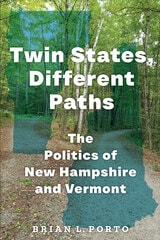
Twin States, Different Paths
The Politics of New Hampshire and VermontBrian L. Porto
University of Massachusetts Press, 2026
A cultural and policy history that explains why two neighboring states developed divergent attitudes toward government and culture
At first glance, New Hampshire and Vermont seem like mirror images. Separated only by the Connecticut River, the oft-termed “Twin States” share a common history, relatively small populations, and heavily mountainous and forested landscapes dotted with small towns. Yet despite their similarities, they have evolved strikingly different political cultures, with Vermont prizing cooperation and community and New Hampshire celebrating independence and freedom from government. Perhaps nowhere is this divergence in political visions more pronounced than in their respective state mottos: Vermont’s communal "Freedom and Unity" and New Hampshire’s libertarian “Live Free or Die.”
Twin States, Different Paths explores these contrasting political cultures. Brian Porto traces these differences back to the land itself: to the geology and geography that shaped early settlement, patterns of land use, and the distinct ways people built their communities. From these origins emerged two enduring civic philosophies—New Hampshire’s devotion to low taxes and limited government, and Vermont’s emphasis on equality and shared responsibility. Bringing historical and cultural analysis together with contemporary case studies, Porto examines how these traditions influence each state’s approach to today’s policy challenges, including affordable housing and public-school funding. The result is a clear, balanced portrait of how deeply rooted attitudes toward freedom, unity, and governance continue to shape public life in both states.
Written with scholarly rigor yet in an engaging and accessible style, Twin States, Different Paths fills a notable gap in the study of New England politics. It offers insights not only for scholars and students of political culture, history, and public policy, but also for general readers, policymakers, and residents who wish to understand how two neighbors—so similar in geography and spirit—continue to follow such different paths in defining the role of government and community.
Two-Party Politics in the One-Party South
Alabama's Hill Country, 1874–1920Samuel L. Webb
University of Alabama Press, 1997
A challenge to the long-held view that the only important and influential politicians in post-Reconstruction Deep South states were Democrats.
In this insightful and exhaustively researched volume, Samuel L. Webb presents new evidence that, contrary to popular belief, voters in at least one Deep South state did not flee en masse from the Republican party after Reconstruction. As Webb demonstrates conclusively, the party gained strength among white voters in Upcountry areas of northern Alabama between 1896 and 1920. Not only did GOP presidential candidates win more than a dozen area counties but Republican congressional candidates made progress in Democratic strongholds, and local GOP officials gained control of several county courthouses.
Nor were these new Republicans simply the descendants of anti-Confederate families, as some historians have claimed. Rather, they were former independents, Greenbackers, and Populists, who, in keeping with the 1890s Populist movement, were reacting against what they perceived as the control of the Democratic party by "moneyed elites" and planter landlords. Webb also breaks with previous historical opinion by showing that ex-Populists in the Hill Country, who had been radical reformers during the 1890s, remained reform minded after 1900.
Webb's ground-breaking reassessment of Alabama state politics from Reconstruction to the 1920s describes a people whose political culture had strong roots in the democratic and egalitarian Jacksonian ideology that dominated north Alabama in the antebellum period. These people carried forward elements of Jacksonianism into the late 19th century, with its tenets continuing to influence them well into the early 20th century.