Results by title
100 books match the query 'Politicians' and 17 start with t
THOMAS WORTHINGTON
FATHER OF OHIO STATEHOODAlfred Byron Sears
The Ohio State University Press, 1998
The Architects
Stefan Heym
Northwestern University Press, 2006

The Complete Reflections
Conversations with PoliticiansPeter Hennessy and Robert Shepherd
Haus Publishing, 2020
In The Complete Reflections, Peter Hennessy and Robert Shepherd provide not only an overview of the past three decades of British politics but also delve into the minds of those at the forefront of public life during times of great change. Hennessy’s deep knowledge and understanding of the lives and motivations of his interviewees, along with the obvious esteem in which they hold their interlocutor, leads to frank and revealing conversations in which the subject is not an object but an equal, giving these exchanges a unique veracity. The results are portraits of high authority, in which interviews become the chronicles that endure above all others—nothing less than the first draft of history.
The Conservative Frontier
Texas and the Origins of the New RightJeff Roche
University of Texas Press, 2025
2026 Al Lowman Memorial Prize, Texas State Historical Association (TSHA)
2026 Bonney MacDonald Outstanding Book Award Winner, Center for the Study of the American West at West Texas A&M University (CSAW)
How West Texas business and culture molded the rise of conservatism in the United States.
Much of what we understand as modern American political conservatism was born in West Texas, where today it predominates. How did the people of such a vast region—larger than New England and encompassing big cities like Lubbock and Amarillo, as well as tiny towns from Anson to Dalhart—develop such a uniform political culture? And why and how did it go national?
Jeff Roche finds answers in the history of what he calls cowboy conservatism. Political power players matter in this story, but so do football coaches, newspaper editors, and a breakfast cereal tycoon who founded a capitalist utopia. The Conservative Frontier follows these and other figures as they promoted an ideology grounded in the entrepreneurial and proto-libertarian attitudes of nineteenth-century Texas ranchers, including a fierce devotion to both individualism and small-town notions of community responsibility. This political sensibility was in turn popularized by its association with the mythology and iconography of the cowboy as imagined in twentieth-century mass media. By the 1970s and the rise of Ronald Reagan, Roche shows, it was clear that the cowboy conservatism of West Texas had set the stage for the emergence of the New Right—the more professionalized and tech-savvy operation that dominated national conservative politics for the next quarter century.
The Dealmakers of Downstate Illinois
Paul Powell, Clyde L. Choate, John H. StelleRobert E. Hartley
Southern Illinois University Press, 2016
Many people are unaware that from 1945 to 1975, downstate lawmakers dominated the Illinois political arena. In The Dealmakers of Downstate Illinois, Robert E. Hartley details the lives and contributions of three influential southern Illinois politicians, Paul Powell, Clyde Choate, and John Stelle. He describes how these “dealmakers” were able to work with Democrats and Republicans throughout the state to bring jobs and facilities to their region. Using a variety of coalitions, they maintained downstate political strength in the face of growing Chicago influence.
Hartley traces the personal histories of Powell, Choate, and Stelle, shows how they teamed up to advance a downstate political agenda, and reviews their challenges and successes. Beginning with an account of early experiences, including the battlefield courage that earned Choate the Medal of Honor as well as Stelle’s World War I experience and later entrepreneurship, the book continues with an exploration of the groundwork for their collaborative legislative agenda and their roles in the growth of Southern Illinois University and the passage of income tax legislation. Hartley reviews the importance of Powell’s relationship with Governor Stratton, Choate’s leadership of the 1972 Democratic National Convention and his relationships with Governor Walker and with Chicago interests.
The Dealmakers of Downstate Illinois is a vivid, straightforward tale of fighting in the legislative chambers, backstabbing behind the scenes, and trading special favors for votes in pursuit of not only personal gain but also the advancement of a regional agenda.
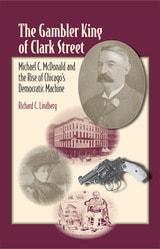
The Gambler King of Clark Street
Michael C. McDonald and the Rise of Chicago's Democratic MachineRichard C. Lindberg with a Foreword by John Miya.
Southern Illinois University Press, 2009
The Gambler King of Clark Street tells the story of a larger-than-life figure who fused Chicago’s criminal underworld with the city’s political and commercial spheres to create an urban machine built on graft, bribery, and intimidation. Lindberg vividly paints the life of the Democratic kingmaker against the wider backdrop of nineteenth-century Chicago crime and politics.
McDonald has long been cited in the published work of city historians, members of academia, and the press as the principal architect of a unified criminal enterprise that reached into the corridors of power in Chicago, Cook County, the state of Illinois, and ultimately the Oval Office. The Gambler King of Clark Street is both a major addition to Chicago’s historical literature and a revealing biography of a powerful and troubled man.
Illinois State Historical Society Scholarly Award, Certificate of Excellence, 2009
Society of Midland Authors Biography Award, 2009
The Invincible Duff Green
Whig of the WestW. Stephen Belko
University of Missouri Press, 2006
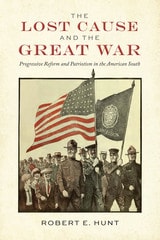
The Lost Cause and the Great War
Progressive Reform and Patriotism in the American SouthRobert E. Hunt
University of Alabama Press, 2025
How Tennessee reformers reconciled Southern heritage with rising nationalism, weaving the Lost Cause into the fabric of American progress and identity.
The Lost Cause and the Great War tells the stories of central Tennessee Progressive-era reformers to illustrate the fascinating broader issue of how Southerners steeped in Lost Cause Civil War mythologies simultaneously developed patriotic American fervor. Focusing on Luke Lea, a prominent politician and American army officer who attempted to capture Kaiser Wilhelm II during World War I, the book reveals the intricate interplay between three competing ideas: attachment to the memory of the Confederacy, intense American nationalism, and advocacy for progressive reforms.
Hunt shows that Lea and his contemporaries sought either to harmonize these competing loyalties or to compartmentalize them to use when needed. Through insightful accounts of Tennessee’s 1928 presidential campaign, the American Legion’s response to cuts to veteran benefits in 1933, and the redefinition of America’s global role post–World War II, Hunt shows how these reformers achieved a balance that held until the Civil Rights movement disrupted this delicate consensus.
Hunt’s rich account reveals how Lea and others like him wove national patriotism and Southern collective memory into a cohesive narrative that supported their broader Progressive goals. The book offers much to readers interested in Southern history, the Gilded Age, Prohibition, World War I, World War II, and the beginnings of the Civil Rights movement. It provides vivid examples of how collective memory and narratives shape social and political movements. General readers will discover how white Southerners who remained devoted to vindicating the Confederacy nonetheless became fervent supporters of America's growing nationalism in the early twentieth century.
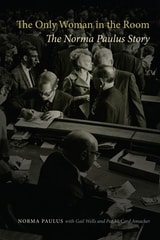
The Only Woman in the Room
The Norma Paulus StoryNorma Paulus
Oregon State University Press, 2017
Paulus came from a family of Roosevelt Democrats, but when a friend campaigned for a Republican seat in the state legislature, she switched parties. As she put it, “The Republicans were in politics for all the right reasons.” Amid the nationwide political upheavals of the late 1960s, Oregon’s Republicans, led by popular governor Tom McCall, seemed to be her kind of people—principled, pragmatic, and committed to education, the environment, and equality for all citizens under the law.
Paulus’s appointment by Governor McCall to the Marion-Polk Boundary Commission in 1969, a precursor to Oregon’s urban growth boundaries, helped launched her on a long and distinguished career of public service. She ran successfully for the Oregon House of Representatives in 1970, the first women to do so in the district. After three terms in the House, where she championed environmental causes, women’s rights and government transparency, she was elected Oregon’s Secretary of State in 1976—the first woman to hold that office and be elected to a statewide office in Oregon. She was the Republican candidate for governor in 1986, served a stint on the Northwest Power and Conservation Council, went on to become Oregon’s superintendent of public instruction, and headed the Oregon Historical Society.
During her years of public service, spanning the 1970s through the early 2000s, Norma Paulus occupied a distinctive niche in Oregon’s progressive political ecosystem. Her vivid personality and strong convictions endeared her to a broad swath of citizens. Beautiful and opinionated, charming and forceful, Paulus was widely covered in statewide and national newspapers and television during her eventful, sometimes controversial career. Now, The Only Woman in the Room sums up her life and work in a lively, anecdotal history that will appeal to historians, political scientists, newshounds, and ordinary citizens alike.
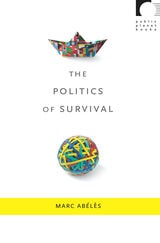
The Politics of Survival
Marc Abélès
Duke University Press, 2010
Abélès examines the new global politics, which assumes many forms and is enacted by diverse figures with varied sympathies: the officials at meetings of the WTO and the demonstrators outside them, celebrity activists, and online contributors to international charities. He makes an impassioned case that our accounts of globalization need to reckon with the preoccupations and affiliations now driving global politics. The Politics of Survival was first published in France in 2006. This English-language edition has been revised and includes a new preface.
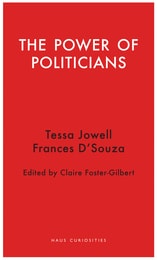
The Power of Politicians
Tessa Jowell and Frances D’Souza
Haus Publishing, 2018
With former Lord Speaker Frances D’Souza serving as Jowell’s interlocutor, this book provides a passionate and inspiring interpretation on moral duty. Ultimately, The Power of Politicians offers not just a case study of the life and everyday work of a politician, but also attends to deeper questions about what is demanded from the political class. The overall result is a nothing less than a master class in how to be a good politician.
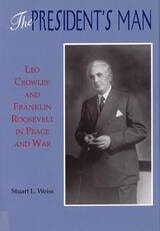
The President's Man
Leo Crowley and Franklin Roosevelt in Peace and WarStuart L. Weiss
Southern Illinois University Press, 1996
Leo Crowley has been known only as the administrator condemned by President Truman for cutting off Soviet lend-lease after V-E Day. Stuart L. Weiss revises this view while exploring Crowley’s long, significant state and federal career, emphasizing his service as Franklin D. Roosevelt’s man for all seasons.
Weiss deals effectively with Crowley’s flaws and virtues as well as those of the administrations he served. Crowley was confirmed as chair of the FDIC in 1934 despite a charge, unknown to President Roosevelt, that Crowley had committed fraud as a banker in Wisconsin. Crowley then served with distinction for more than eleven years as the administration twice buried a 1935 Treasury Department report that, had it been handed to Wisconsin authorities, could have sent him to prison: Roosevelt valued Crowley’s political and administrative talents too highly to allow that to happen.
In 1939, Roosevelt, anxious to have business support for stopping the Axis powers, encouraged Crowley to take the chair of a holding company about to be prosecuted by the SEC. After Pearl Harbor, like priorities prompted the president first to name Crowley alien property custodian, then chair of the Board of Economic Warfare to supplant Roosevelt’s politically troublesome vice president, and, finally, foreign economic administrator, the person responsible for civilian lend-lease activity
In this vibrant biography, Weiss furnishes the reader with detailed portraits of a man faithful to his president even when he disagreed with him and of a president willing to do what he felt was necessary for the good of the country.
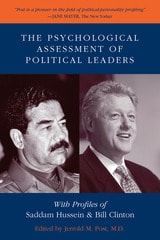
The Psychological Assessment of Political Leaders
With Profiles of Saddam Hussein and Bill ClintonJerrold M. Post, Editor
University of Michigan Press, 2005
In an age when world affairs are powerfully driven by personality, politics require an understanding of what motivates political leaders such as Hussein, Bush, Blair, and bin Laden. Through exacting case studies and the careful sifting of evidence, Jerrold Post and his team of contributors lay out an effective system of at-a-distance evaluation. Observations from political psychology, psycholinguistics and a range of other disciplines join forces to produce comprehensive political and psychological profiles, and a deeper understanding of the volatile influences of personality on global affairs.
Even in this age of free-flowing global information, capital, and people, sovereign states and boundaries remain the hallmark of the international order -- a fact which is especially clear from the events of September 11th and the War on Terrorism.
Jerrold M. Post, M.D., is Professor of Psychiatry, Political Psychology, and International Affairs, and Director of the Political Psychology Program at George Washington University. He is the founder of the CIA's Center for the Analysis of Personality and Political Behavior.
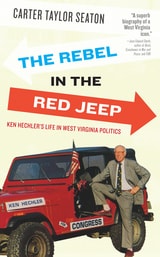
The Rebel in the Red Jeep
Ken Hechler's Life in West Virginia PoliticsCarter Taylor Seaton
West Virginia University Press, 2017
This biography recounts a century of accomplishments, from Hechler’s introduction of innovative teaching methods at major universities, to his work as a speechwriter and researcher for President Harry Truman, and finally to his time representing West Virginia in the US House of Representatives and as the secretary of state.
In West Virginia, where he resisted mainstream political ideology, Hechler was the principal architect behind the Federal Coal Mine Health and Safety Act of 1969 and constantly battled big coal, strip-mining, and fellow politicians alike. He and his signature red jeep remain a fixture in West Virginia. Since 2004, Hechler has campaigned against mountaintop removal mining. He was arrested for trespassing during a protest in 2009 at the age of 94.
The Salem Clique
Oregon's Founding BrothersBarbara S. Mahoney
Oregon State University Press, 2017
While not in agreement with some of the more extreme contemporary accusations against the Clique, many historians have concluded that its members were vicious men who were able, because of their command of the Democratic party, to impose their hegemony on the Oregon Territory’s inhabitants. Other scholars have seen them as merely another instance of the contentious politics of the period.
Although the Salem Clique has been given considerable prominence in nearly every account of Oregon’s Territorial period, there has not been a detailed study of its role until now. What sort of people were these men? What was their impact on the issues, events, and movements of the period? What role did they play in the years after Oregon became a state? In The Salem Clique, Historian Barbara Mahoney sets out to answer these and many other questions in this comprehensive and deeply researched history.

Thomas Taggart
Public Servant, Political Boss, 1856-1929James Phillip Fadely
Indiana Historical Society Press, 1997
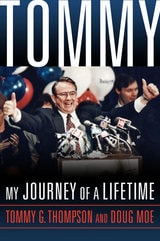
Tommy
My Journey of a LifetimeTommy G. Thompson and Doug Moe
University of Wisconsin Press, 2018
Personal and revealing stories punctuate the biographical details and policy discussions. Here is Tommy as a young man, just happening to be on the National Mall in 1964 when Dr. Martin Luther King told the nation "I have a dream." Here is Tommy as Wisconsin governor, struggling to start a Harley-Davidson motorcycle before leading "a pack of Hell's Republicans" on a ride through the state. Here is Tommy in Washington after the 9/11 attacks, slipping out of a secure bunker (in defiance of orders) to aid the emergency medical response.
Thompson speaks candidly of his achievements and regrets, including his involvement with welfare reform, school choice, land conservancy, prisons, the financing of Miller Park, stem cell research, and health insurance.