Results by title
1668 books match the query 'Popular culture' and 292 start with t
THE ECONOMICS OF FANTASY
RAPE IN TWENTIETH-CENTURY LITERATURESharon Stockton
The Ohio State University Press, 2006
It is important to make clear that the genre of rape story studied here presumes a white masculine subject and a white feminine object. Stockton makes the case that the aestheticized rape narrative reveals particular things about the way white masculinity represents itself. Plotting violent sexual fantasy on the grid of economic concerns locates masculine agency in relation to an explicitly contingent material system of power, value, and order. It is in this way that The Economics of Fantasy discloses the increased desperation with which the body has been made to carry ideology under systems of advanced capitalism.
TV Family Values
Gender, Domestic Labor, and 1980s SitcomsAlice Leppert
Rutgers University Press, 2019
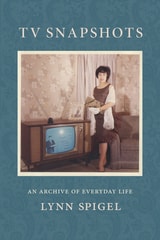
TV Snapshots
An Archive of Everyday LifeLynn Spigel
Duke University Press, 2022
Tabloid Culture
Trash Taste, Popular Power, and the Transformation of American TelevisionKevin Glynn
Duke University Press, 2000
Glynn begins by situating these media shifts within the context of Reaganism, which gave rise to distinctive ideological currents in society and led the socially and economically disenfranchised to access new forms of information via the exploding television industry. He then tackles specific daytime talk shows and tabloid newscasts such as Jerry Springer and A Current Affair, reality-TV programs such as Cops and America’s Most Wanted, and two different supermarket tabloids’ coverage of the O.J. Simpson case. Tabloid Culture is the first book to treat these diverse yet related media forms and events in tandem. Rejecting the elitist dismissal of sensationalist media, Glynn instead traces the cultural currents and countercurrents running through their forms and products. Locating both reactionary and oppositional meanings in these texts, he demonstrates how these particular media genres draw on and contribute to important cultural struggles over the meanings of race, sexuality, gender, class, “normality,” “truth,” and “reality.” The study ends by discussing how the growing use of the Internet provides an entirely new realm in which such material can circulate, distort, inform, and flourish.
This innovative and provocative study of contemporary mainstream media culture in the United States will be valuable to those interested in both print and television media, the cultural-political influence of the Reagan era, and American culture in general.

Take Two
Adapting the Contemporary American Novel to FilmBarbara Tepa Lupack
University of Wisconsin Press, 1994
Different in its complexities from the classic novels of Dickens, London, and Tolstoy to which earlier filmmakers turned, the contemporary American novel poses a real challenge to the filmmaker, who must translate its occasionally unfilmable essence for a new audience. Take Two closely analyzes the adaptations of ten such works: Catch-22, One Flew over the Cuckoo's Nest, Slaughterhouse-Five, Being There, The World According to Garp, Sophie’s Choice, The Color Purple, Ironweed, Tough Guys Don't Dance, and Billy Bathgate.
Taking It to the Streets
The Social Protest Theater of Luis Valdez and Amiri BarakaHarry J. Elam, Jr.
University of Michigan Press, 2001
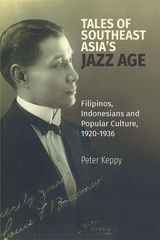
Tales of Southeast Asia’s Jazz Age
Filipinos, Indonesians and Popular Culture, 1920-1936Peter Keppy
National University of Singapore Press, 2019
This artistic era was marked by experimentation and adaption, and this was reflected in both Borromeo’s and Riboet’s styles. They were pioneering cultural brokers who dealt in hybrids. They were adept at combining high art and banal entertainment, tradition and modernity, and the foreign and the local.
Leaning on cultural studies and the work on cosmopolitanism and modernity by Henry Jenkins and Joel Kahn, Peter Keppy examines pop culture at this time as a contradictory social phenomenon. He challenges notions of Southeast Asia’s popular culture as lowbrow entertainment created by elites and commerce to manipulate the masses, arguing instead that audiences seized on this popular culture to channel emancipatory activities, to articulate social critique, and to propagate an inclusive nationalism without being radically anticolonial.
Taylor Swift as Storyteller
Identity, Power, and Digital CultureEdited by Alison Halsall
The Ohio State University Press, 2027
Taylor Swift as Storyteller examines one of the most influential cultural figures of the twenty-first century as both artist and “star text,” arguing that Swift’s global impact is shaped through the dynamic interplay of music, media, fandom, and branding. Bringing together literary scholars, ethnographers, and musicologists, this collection positions Swift as not just a pop figure but a transmedial construct.
Contributors explore how Swift’s carefully curated personae—from girl-next-door to feminist icon to “tortured poet”—generate powerful affective connections with audiences while also functioning as strategic marketing tools. At the same time, contributors retheorize authorship and control in the digital age. By foregrounding the roles of management, branding, and platform circulation, and by interrogating the participatory roles of Swifties as cocreators of meaning, Taylor Swift as Storyteller complicates the idea of singular authorship. Attending to questions of feminism, authorship, nostalgia, and literary adaptation, this collection ultimately reveals how Swift’s enterprise both reflects and reshapes contemporary media culture, illuminating the complex relationship between narrative, identity, and power in the digital age.
Contributors:
Natalie Abbott, Alexander Carpenter, Zixiao Chen, Katie E. Cline, Jennifer Duggan, Rachel M. Friars, Andrea LeMahieu Glaws, Wendy J. Glenn, Alison Halsall, Roxanne Harde, Juliette Holder, Erika Kvistad, Zhimou Li, Sarah E. Maier, Catherine McCarthy, Elly McCausland, Laura Carman McClintock, Adrianna Mirabal, Linh S. Nguy?n, Hazel O’Brien, Anah-Jayne Samuelson, L. M. Schmidt, Katlin Marisol Sweeney-Romero
Teaching the Bible through Popular Culture and the Arts
Mark Roncace
SBL Press, 2007

Team Chemistry
The History of Drugs and Alcohol in Major League BaseballNathan Corzine
University of Illinois Press, 2016
- In 1889, Pud Galvin tried a testosterone-derived "elixir" to help him pile up some of his 646 complete games.
- Sandy Koufax needed Codeine and an anti-inflammatory used on horses to pitch through his late-career elbow woes.
- Players returning from World War II mainstreamed the use of the amphetamines they had used as servicemen.
- Vida Blue invited teammates to cocaine parties, Tim Raines used it to stay awake on the bench, and Will McEnaney snorted it between innings.
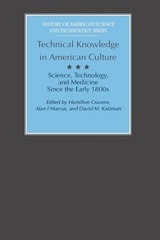
Technical Knowledge in American Culture
Science, Technology, and Medicine Since the Early 1800sEdited by Hamilton Cravens, Alan I Marcus, and David M. Katzman
University of Alabama Press, 1996
Addresses the relationships between what modern-day experts say to each other and to their constituencies
Technical Knowledge in American Culture is an interdisciplinary volume that brings together leading historians to investigate how science, technology, and medicine have shaped—and been shaped by—American intellectual and cultural traditions since the early nineteenth century. Rather than treating science and technology simply as products of social forces, the contributors examine them as forms of knowledge with their own internal logics, debates, and authority structures. The book asks a central question: how do experts—scientists, engineers, physicians—communicate with one another and with broader audiences, and how does that communication influence American society?
The volume is organized into three major sections, each anchored in a distinct historical moment: Part I: The Rise of Democratic Culture, 1800–1870; Part II: The Age of Hierarchy, 1870–1920; and Part III: Toward an Infinity of Dimensions (20th Century). Across its essays, the book argues that technical knowledge is not just a tool of progress—it is a cultural force shaped by communication, interpretation, and authority. By focusing on case studies rather than sweeping narratives, the volume reveals how expertise operates in practice and how it influences broader debates about science, society, and public trust.
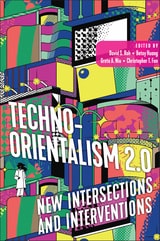
Techno-Orientalism 2.0
New Intersections and InterventionsDavid S. Roh
Rutgers University Press, 2025
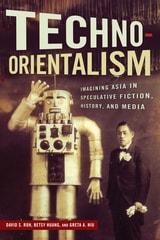
Techno-Orientalism
Imagining Asia in Speculative Fiction, History, and MediaRoh, David S.
Rutgers University Press, 2015
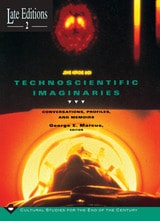
Technoscientific Imaginaries
Conversations, Profiles, and MemoirsEdited by George E. Marcus
University of Chicago Press, 1995
In these penetrating essays, twenty-four distinguished contributors from a broad range of fields present the voices of the scientists themselves—through interviews, conversations, and memoirs. We hear from Lithuanian physicists who discuss science after Communism and their own fantasies about what Western science is; a Japanese-American woman struggling with her ambivalence over designing nuclear weapons; political activists in India who examine relations among science, environmental politics, and government ideology in the aftermath of the Bhopal disaster; and many others, including biologists, physicians, corporate researchers, and scientists working with virtual reality and other cutting-edge technologies.
The contributors to this volume are Mario Biagioli, Maria E. Carson, Gary Lee Downey, Joseph Dumit, Michael M. J. Fischer, Mary-Jo DelVecchio Good, Hugh Gusterson, Diana L. L. Hill, James Holston, Herbert C. Hoover, Jr., Gudrun Klein, Leszek Koczanowicz, Irene Kuter, Kim Laughlin, Rita Linggood, George E. Marcus, Kathryn Milun, Livia Polanyi, Christopher Pound, Simon Powell, Paul Rabinow, Kathleen Stewart, Allucquere Rosanne Stone, and Sharon Traweek.
Teenage Dreams
Girlhood Sexualities in the U.S. Culture WarsCharlie Jeffries
Rutgers University Press, 2022
Tehrangeles Dreaming
Intimacy and Imagination in Southern California's Iranian Pop MusicFarzaneh Hemmasi
Duke University Press, 2020
Telemodernities
Television and Transforming Lives in AsiaTania Lewis, Fran Martin, and Wanning Sun
Duke University Press, 2016
Telling Incest
Narratives of Dangerous Remembering from Stein to SapphireJanice Doane and Devon Hodges
University of Michigan Press, 2001
Examining the work of writers from Gertrude Stein to Toni Morrison and Dorothy Allison, Telling Incest argues that an incest story's plausibility depends upon a shifting set of narrative conventions and cultural expectations. As contexts for telling incest stories have changed, so too have the tasks of those who tell and those who listen. The authors analyze both fictional and nonfiction narratives about father-daughter incest, beginning by scrutinizing the shadowy accounts found in nineteenth-century case records, letters, and narratives.
Telling Incest next explores African American stories that shift the blame for incest from the black family to the predations of a paternalistic white culture. Janice Doane and Devon Hodges demonstrate that writers drew upon this reworked incest narrative in the 1970s and early 1980s in order to relate a feminist story about incest, a story that criticizes patriarchal power. This feminist form of the story, increasingly emphasizing trauma and recovery, can be found in such popular books as Alice Walker's The Color Purple and Jane Smiley's A Thousand Acres. Doane and Hodges then examine recent memoirs and novels such as Dorothy Allison's Bastard Out of Carolina and Sapphire's Push, narratives that again rework the incest story in an effort to "tell" about women's complex experiences of subjugation and hope.
Telling Incest will be of particular interest to readers who have enjoyed the popular and culturally significant work of writers such as Alice Walker, Toni Morrison, Jane Smiley, and Dorothy Allison and to students of women's studies, feminist theory, and cultural studies.
Janice Doane is Professor of English, St. Mary's College of California. Devon Hodges is Professor of English, George Mason University. They have also coauthored From Klein to Kristeva: Psychoanalytic Feminism and the Search for the "Good Enough" Mother and Nostalgia and Sexual Difference: The Resistance to Contemporary Feminism.
Ten Women of Mystery
Edited by Earl F. Bargainnier
University of Wisconsin Press, 1981
This volume, which examines the special contributions of a number of women mystery writers, sheds light on this significant example of common interests in recreational reading among women and men and the reasons behind the early and continuing uncharacteristic near-equality of both sexes in this field of endeavor.
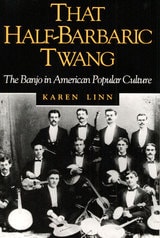
That Half-Barbaric Twang
The Banjo in American Popular CultureKaren Linn
University of Illinois Press, 1991
Long a symbol of American culture, the banjo actually originated in Africa before European-Americans adopted it. Karen Linn shows how the banjo--despite design innovations and several modernizing agendas--has failed to escape its image as a "half-barbaric" instrument symbolic of antimodernism and sentimentalism.
Caught in the morass of American racial attitudes and often used to express ambivalence toward modern industrial society, the banjo stood in opposition to the "official" values of rationalism, modernism, and belief in the beneficence of material progress. Linn uses popular literature, visual arts, advertisements, film, performance practices, instrument construction and decoration, and song lyrics to illustrate how notions about the banjo have changed.
Linn also traces the instrument from its African origins through the 1980s, alternating between themes of urban modernization and rural nostalgia. She examines the banjo fad of bourgeois Northerners during the late nineteenth century; the African-American banjo tradition and the commercially popular cultural image of the southern black banjo player; the banjo's use in ragtime and early jazz; and the image of the white Southerner and mountaineer as banjo player.
That Was the Wild East
Film Culture, Unification, and the "New" GermanyLeonie Naughton
University of Michigan Press, 2002

The Abyss of Freedom/Ages of the World
Slavoj Zizek and F.W.J. von Schelling
University of Michigan Press, 1997
Zizek argues that Schelling's most profound thoughts are found in the series of three consecutive attempts he made to formulate the "ages of the world/Weltalter," the stages of the self-development of the Absolute. Of the three versions, claims Zizek, it is the second that is the most eloquent and definitive encompassing of Schelling's lyrical thought. It centers on the problem of how the Absolute (God) himself, in order to become actual, to exist effectively, has to accomplish a radically contingent move of acquiring material, bodily existence. Never before available in English, this version finally renders accessible one of the key texts of modern philosophy, a text that is widely debated in philosophical circles today.
The Abyss of Freedom is Zizek's own reading of Schelling based upon Lacanian psychoanalytic theory. It focuses on the notion that Lacan's theory--which claims that the symbolic universe emerged from presymbolic drives--is prefigured in Schelling's idea of logos as given birth to from the vortex of primordial drives, or from what "in God is not yet God." For Zizek, this connection is monumental, showing that Schelling's ideas forcefully presage the post-modern "deconstruction" of logocentrism.
Slavoj Zizek is not a philosopher who stoops to conquer objects but a radical voice who believes that philosophy is nothing if it is not embodied, nothing if it is only abstract. For him, true philosophy always speaks of something rather than nothing. Those interested in the genesis of contemporary thought and the fate of reason in our "age of anxiety" will find this coupling of texts not only philosophically relevant, but vitally important.
Slavoj Zizek is the author of The Sublime Object of Ideology, Tarrying with the Negative: Kant, Hegel and the Critique of Ideology, and most recently, The Indivisible Remainder: An Essay on Schelling and Related Matters. Currently he is a Senior Researcher at the Institute for Social Sciences, University of Ljubljana. Judith Norman is Assistant Professor of Philosophy at Trinity University in San Antonio, Texas.

The Acoustic World of Early Modern England
Attending to the O-FactorBruce R. Smith
University of Chicago Press, 1999
In this ear-opening journey into the sound-worlds of Shakespeare's contemporaries, Bruce R. Smith explores both the physical aspects of human speech (ears, lungs, tongue) and the surrounding environment (buildings, landscape, climate), as well as social and political structures. Drawing on a staggeringly wide range of evidence, he crafts a historical phenomenology of sound, from reconstructions of the "soundscapes" of city, country, and court to detailed accounts of the acoustic properties of the Globe and Blackfriars theaters and how scripts designed for the two spaces exploited sound very differently.
Critical for anyone who wants to understand the world of early modern England, Smith's pathbreaking "ecology" of voice and listening also has much to offer musicologists and acoustic ecologists.
The Aesthetics of Survival
A Composer's View of Twentieth-Century MusicGeorge Rochberg
University of Michigan Press, 2005
"Rochberg presents the rare spectacle of a composer who has made his peace with tradition while maintaining a strikingly individual profile. . . . [H]e succeeds in transforming the sublime concepts of traditional music into contemporary language."
---Washington Post
"An indispensable book for anyone who wishes to understand the sad and curious fate of music in the twentieth century."
---Atlantic Monthly
"The writings of George Rochberg stand as a pinnacle from which our past and future can be viewed."
---Kansas City Star
As a composer, George Rochberg has played a leading role in bringing about a transformation of contemporary music through a reassessment of its relation to tonality, melody, and harmony. In The Aesthetics of Survival, the author addresses the legacy of modernism in music and its related effect on the cultural milieu, particularly its overemphasis on the abstract, rationalist thinking embraced by contemporary science, technology, and philosophy. Rochberg argues for the renewal of holistic values in order to ensure the survival of music as a humanly expressive art.
A renowned composer, thinker, and teacher, George Rochberg has been honored with innumerable awards, including, most recently, an Alfred I. du Pont Award for Outstanding Conductors and Composers, and an André and Clara Mertens Contemporary Composer Award. He lives in Pennsylvania.

The Agatha Christie Companion
Russell H. Fitzgibbon
University of Wisconsin Press, 1980
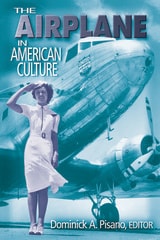
The Airplane in American Culture
Dominick A. Pisano, Editor
University of Michigan Press, 2003
Although countless books for aviation buffs have appeared since World War II, none has attempted to place the airplane in its full social, cultural, and interdisciplinary context until now. The first book of its kind, The Airplane in American Culture presents essays by distinguished contributors including historians, literary scholars, scholars of American studies, art historians, and museum professionals that explore a range of topics, including the connections between flying and race and gender; aviation's role in forming perceptions of the landscape; the airplane's significance to the culture of war; and the influence of flight on literature and art.
A must-read collection for anyone fascinated by the airplane, The Airplane in American Culture represents a dramatic new approach to writing the history of aviation, and makes an important contribution to American social and cultural history.
Dominick A. Pisano is Curator of the Aeronautics Department at the National Air and Space Museum, Smithsonian Institution.
The Alabama Folk Lyric
A Study in Origins and Media of DisseminationCollected and Edited with an Introduction and Notes by Ray B. Browne
University of Wisconsin Press, 1979
Alabamians have always been a singing people. The settlers who moved into the various sections of the state brought with them songs which reflected their national origins and geographical backgrounds, and as they spread into the hills and over the lowlands they created new songs out of the conditions under which they lived. Also, they absorbed songs from outside sources whenever these pieces could be adapted to their sentiments and ways of life. Thus, by a process of memory, composition and recreation they developed a rich body of folk songs. The following collection a part of the effort to discover and preserve these songs.
The American Dream in Vietnamese
Nhi T. Lieu
University of Minnesota Press, 2010
Lieu examines how live music variety shows and videos, beauty pageants, and Web sites created by and for Vietnamese Americans contributed to the shaping of their cultural identity. She shows how popular culture forms repositories for conflicting expectations of assimilation, cultural preservation, and invention, alongside gendered and classed dimensions of ethnic and diasporic identity.
The American Dream in Vietnamese demonstrates how the circulation of images manufactured by both Americans and Vietnamese immigrants serves to produce these immigrants’ paradoxical desires. Within these desires and their representations, Lieu finds the dramatization of the community’s struggle to define itself against the legacy of the refugee label, a classification that continues to pathologize their experiences in American society.
The American Historical Imaginary
Contested Narratives of the PastCaroline Guthrie
Rutgers University Press, 2023
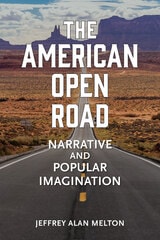
The American Open Road
Narrative and Popular ImaginationJeffrey Alan Melton
University of Alabama Press, 2025
WINNER OF THE ELIZABETH AGEE PRIZE IN AMERICAN LITERATURE
The rearview mirror perspective of a road trip across the American “open road.”
The American Open Road: Narrative and Popular Imagination offers a rich exploration of how the mythos of the open road has shaped, and been shaped by, American culture. Beginning with the post–World War II boom that solidified car culture as central to American life, Melton reflects on how roads, automobiles, and landscapes have been represented in literature, film, and other cultural texts, highlighting the interplay between mobility and narrative.
Drawing on a wide range of cultural texts, from traditional classic road novels and cinematic presentations, to advertisements, poetry, and prose, Melton examines how the open road functions as a symbol of autonomy, reinvention, and resistance. He highlights how road narratives have also exposed deeper tensions in American life—especially around race, gender, and power—and how historically marginalized voices have used the road to reclaim space and tell new stories.
From the romanticism of Route 66 to the political edge of modern road films, The American Open Road offers a thoughtful, engaging analysis of the narratives that continue to define American identity and longing. For readers interested in cultural history, travel literature, or the enduring pull of the highway, this book offers a compelling view from the passenger seat of America’s most iconic journeys.
The American West
The Invention Of A MythDavid Hamilton Murdoch
University of Nevada Press, 2001
The Americanization of the Global Village
Essays in Comparative Popular CultureRoger Rollin
University of Wisconsin Press, 1989
This collection of essays taken from a series of papers given at the Popular Culture division of the MLA convention in 1987 consists of a serious investigation of Popular Culture and in simplest terms investigates what people do and why they do it. Rolin's collection deals with the national identity of consumer countries and comes to grips with the fact that the consumption of foreign products could generate emoions of disjunction and displacement.
The Animal Within
Masculinity and the GothicCyndy Hendershot
University of Michigan Press, 1998
The book's keen critical insight, meticulous close readings and cross-cultural comparisons interrogate the historically situated function of masculinity in texts and films that range across the two-hundred year history of the Gothic. Matthew Lewis's The Monk is compared to Philip Kaufman's Invasion of the Body Snatchers to reveal the "hauntedness" of the male body. Hawthorne's short story "The Birthmark" is juxtaposed with J. S. Le Fanu's "Green Tea" to ground the fantastic qualities of the scientific imagination. Conrad's Heart of Darkness converses with Jean Rhys's Wide Sargasso Sea about the nature of imperialism. And Jane Campion's film The Piano is figured as an imaginative foray into new forms of masculinity. Utilizing the insights of Lacanian theory, Hendershot demonstrates how the Gothic realm of ghosts, demons, and hidden passages continues to suggest alternative realities to claustrophobic cultural imaginations.
"Masculinity and the Gothic combines solid literary critical insight and close readings in a detailed and lively survey of various manifestations of the gothic within British and American cultural traditions, and admirably explores the connections between various cultural discourses. It will make a fine complement to the numerous recent publications of issues of femininity in the gothic." --Sharon Willis, University of Rochester
Cyndy Hendershot is Assistant Professor of English, Arkansas State University.
The Anxiety of Obsolescence
The American Novel in the Age of TelevisionKathleen Fitzpatrick
Vanderbilt University Press, 2006
It almost goes without saying that the rise in popularity of television has killed the audience for "serious" literature. This is such a given that reading Fitzpatrick's challenge to this notion can be very disconcerting, as she traces the ways in which a small cadre of writers of "serious" literature--DeLillo, Pynchon, and Franzen, for instance--have propagated this myth in order to set themselves up as the last bastions of good writing. Fitzpatrick first explores whether serious literature was ever as all-pervasive as critics of the television culture claim and then asks the obvious question: what, or who, exactly, are these guys defending good writing against?
Fitzpatrick examines the ways in which the anxiety about the supposed death of the novel is built on a myth of the novel's past ubiquity and its present displacement by television. She explores the ways in which this myth plays out in and around contemporary fiction and how it serves as a kind of unacknowledged discourse about race, class, and gender. The declaration constructs a minority status for the "white male author" who needs protecting from television's largely female and increasingly non-white audience. The novel, then, is transformed from a primary means of communication into an ancient, almost forgotten, and thus, treasured form reserved for the well-educated and well-to-do, and the men who practice it are exalted as the practitioners of an almost lost art.
Such positioning serves to further marginalize women writers and writers of color because it makes the novel, by definition, the preserve of the poor endangered white man. If the novel is only a product of a small group of white men, how can the contributions of women and writers of color be recognized? Instead, this positioning abandons women and people of color to television as a creative outlet, and in return, cedes television to them. Fitzpatrick argues that there's a level of unrecognized patronization in assuming that television serves no purpose but to provide dumb entertainment to bored women and others too stupid to understand novels. And, instead, she demonstrates the real positive effects of a televisual culture.
The Apartment Plot
Urban Living in American Film and Popular Culture, 1945 to 1975Pamela Robertson Wojcik
Duke University Press, 2010
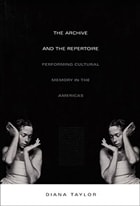
The Archive and the Repertoire
Performing Cultural Memory in the AmericasDiana Taylor
Duke University Press, 2003
Examining various genres of performance including demonstrations by the children of the disappeared in Argentina, the Peruvian theatre group Yuyachkani, and televised astrological readings by Univision personality Walter Mercado, Taylor explores how the archive and the repertoire work together to make political claims, transmit traumatic memory, and forge a new sense of cultural identity. Through her consideration of performances such as Coco Fusco and Guillermo Gómez-Peña’s show Two Undiscovered Amerindians Visit . . . , Taylor illuminates how scenarios of discovery and conquest haunt the Americas, trapping even those who attempt to dismantle them. Meditating on events like those of September 11, 2001 and media representations of them, she examines both the crucial role of performance in contemporary culture and her own role as witness to and participant in hemispheric dramas. The Archive and the Repertoire is a compelling demonstration of the many ways that the study of performance enables a deeper understanding of the past and present, of ourselves and others.
The Argument about Things in the 1980s
Goods and Garbage in an Age of NeoliberalismTim Jelfs
West Virginia University Press, 2018
Tim Jelfs’s The Argument about Things in the 1980s considers all this and more in a broad study of the literature and culture of the “long 1980s.” It contributes to of-the-moment scholarly debate about material culture, high finance, and ecological degradation, shedding new light on the complex relationship between neoliberalism and cultural life.
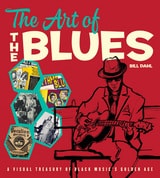
The Art of the Blues
A Visual Treasury of Black Music's Golden AgeBill Dahl
University of Chicago Press, 2016
What will astonish readers who thumb through these pages is the amazing range of ways that the blues have been represented—whether via album covers, posters, flyers, 78 rpm labels, advertising, or other promotional materials. We see the blues as it was first visually captured in the highly colorful sheet music covers of the early twentieth century. We see striking and hard-to-find label designs from labels big (Columbia) and small (Rhumboogie). We see William Alexander’s humorous artwork on postwar Miltone Records; the cherished ephemera of concert and movie posters; and Chess Records’ iconic early albums designed by Don Bronstein, which would set a new standard for modern album cover design.
What these images collectively portray is the evolution of a distinctively American art form. And they do so in the richest way imaginable. The result is a sumptuous book, a visual treasury as alive in spirit as the music it so vibrantly captures.
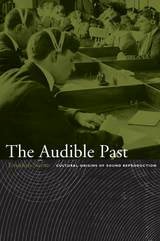
The Audible Past
Cultural Origins of Sound ReproductionJonathan Sterne
Duke University Press, 2003
Blending cultural studies and the history of communication technology, Sterne follows modern sound technologies back through a historical labyrinth. Along the way, he encounters capitalists and inventors, musicians and philosophers, embalmers and grave robbers, doctors and patients, deaf children and their teachers, professionals and hobbyists, folklorists and tribal singers. The Audible Past tracks the connections between the history of sound and the defining features of modernity: from developments in medicine, physics, and philosophy to the tumultuous shifts of industrial capitalism, colonialism, urbanization, modern technology, and the rise of a new middle class.
A provocative history of sound, The Audible Past challenges theoretical commonplaces such as the philosophical privilege of the speaking subject, the visual bias in theories of modernity, and static descriptions of nature. It will interest those in cultural studies, media and communication studies, the new musicology, and the history of technology.
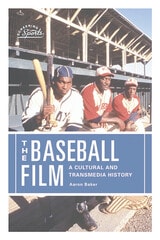
The Baseball Film
A Cultural and Transmedia HistoryAaron Baker
Rutgers University Press, 2022
This study offers an extensive look at nearly one hundred years of baseball-themed movies, documentaries, and TV shows. Film and sports scholar Aaron Baker examines works like A League of their Own (1992) and Sugar (2008), which dramatize the underrepresented contributions of female and immigrant players, alongside classic baseball movies like The Natural that are full of nostalgia for a time when native-born white men could use the game to achieve the American dream. He further explores how biopics have both mythologized and demystified such legendary figures as Ty Cobb, Babe Ruth, Lou Gehrig, Jackie Robinson and Fernando Valenzuela.
The Baseball Film charts the variety of ways that Hollywood presents the game as integral to American life, whether showing little league as a site of parent-child bonding or depicting fans’ lifelong love affairs with their home teams. Covering everything from Bull Durham (1988) to The Bad News Bears (1976), this book offers an essential look at one of the most cinematic of all sports.
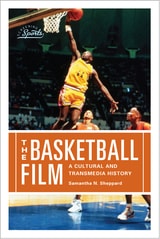
The Basketball Film
A Cultural and Transmedia HistorySamantha N. Sheppard
Rutgers University Press, 2027
The Basketball Film: A Cultural and Transmedia History reveals how stories about the game extend far beyond the court. From classic Hollywood dramas to independent documentaries, basketball films capture the rhythms of play while reflecting deeper struggles over race, identity, community, and aspiration. This groundbreaking study examines the basketball court as both a stage and a mirror for American life—where questions of belonging, opportunity, and cultural power are played out on and off the court. Moving across film, television, and video games, the book traces how basketball’s visual culture has evolved alongside the sport’s rise to global prominence. Through close readings of both celebrated and overlooked works, The Basketball Film offers an expansive and engaging portrait of how basketball has been imagined, represented, and mythologized across popular culture, revealing what the game continues to mean to audiences and players alike.
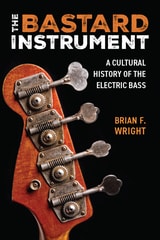
The Bastard Instrument
A Cultural History of the Electric BassBrian F. Wright
University of Michigan Press, 2024

The Bible in the American Experience
Claudia Setzer
SBL Press, 2020
An interdisciplinary investigation of the Bible's place in American experience
Much has changed since the Society of Biblical Literature's Bible in American Culture series was published in the 1980s, but the influence of the Bible has not waned. In the United States, the stories, themes, and characters of the Bible continue to shape art, literature, music, politics, education, and social movements to varying degrees. In this volume, contributors highlight new approaches that move beyond simple citation of texts and explore how biblical themes infuse US culture and how this process in turn transforms biblical traditions.
Features
- An examination of changes in the production, transmission, and consumption of the Bible
- An exploration of how Bible producers disseminate US experiences to a global audience
- An assessment of the factors that produce widespread myths about and nostalgia for a more biblically grounded nation
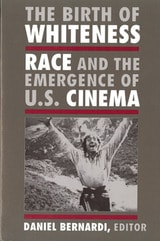
The Birth of Whiteness
Race and the Emergence of United States CinemaEdited by Daniel Leonard Bernardi
Rutgers University Press, 1996
As indelible components of the history of the United States, race and racism have permeated nearly all aspects of life: cultural, economic, political, and social. In this first anthology on race in early cinema, fourteen scholars examine the origins, dynamics, and ramifications of racism and Eurocentrism and the resistance to both during the early years of American motion pictures. Any discussion of racial themes and practices in any arena inevitably begins with the definition of race. Is race an innate and biologically determined "essence" or is it a culturally constructed category? Is the question irrelevant? Perhaps race exists as an ever-changing historical and social formation that, regardless of any standard definition, involves exploitation, degradation, and struggle. In his introduction, Daniel Bernardi writes that "early cinema has been a clear partner in the hegemonic struggle over the meaning of race" and that it was steadfastly aligned with a Eurocentric world view at the expense of those who didn't count as white.
The contributors to this work tackle these problems and address such subjects as biological determinism, miscegenation, Manifest Destiny, assimilation, and nativism and their impact on early cinema. Analyses of The Birth of a Nation, Romona, Nanook of the North and Madame Butterfly and the directorial styles of D. W. Griffith, Oscar Micheaux, and Edwin Porter are included in the volume.
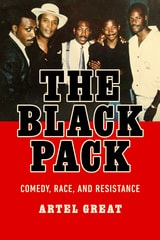
The Black Pack
Comedy, Race, and ResistanceArtel Great
Rutgers University Press, 2025
Working together as writers, directors, producers, actors, and consultants, the Black Pack created some of the most provocative and enduring Black films and television shows of the twentieth century, including classic productions like In Living Color, Coming to America, Hollywood Shuffle, and The Arsenio Hall Show. The Black Pack collective was armed with a signature comedic style which combined politically-Black satire with edgy social humor that entertained millions, shattered box-office records, and slyly critiqued America’s racial condition. Amid escalating social tensions in the 1980s, the Black Pack’s comedic output transformed anger into art, wielding the cloak of humor as a rebellious tool to confront unjust business practices in Hollywood and challenge racial narratives embedded in American culture. Their work empowered unapologetically Black voices and expanded creative possibilities for Black artists in the entertainment industry.
In The Black Pack, Artel Great delivers the most comprehensive analysis of this groundbreaking comedy collective, uncovering how the group’s socially and politically-charged humor defied systemic barriers to achieve unprecedented commercial success and establish a cultural legacy that continues to inspire media creators today and across new generations.

The Black Public Sphere
Edited by The Black Public Sphere Collective
University of Chicago Press, 1995
To think about the black public sphere we have to be willing to rethink the relationship between markets and freedom, commodity and identity, property and pleasure. This book provides more sophisticated approaches to matters historically consigned to inadequate rubrics—"the Negro problem," "subcultures," "minorities," "inner city," and "multicultural." While these rubrics constrict and stereotype, the analytic potential of the black public sphere is that it facilitates new ways to discuss democratic values and citizenship.
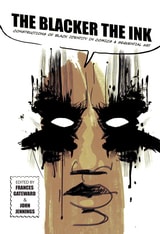
The Blacker the Ink
Constructions of Black Identity in Comics and Sequential ArtGateward, Frances
Rutgers University Press, 2015
Winner of the 2016 Ray and Pat Browne Award for Best Edited Collection in Popular Culture and American Culture by the Popular Culture Association/American Culture Association
Winner of the 2016 PEN Oakland-Josephine Miles Award for Excellence in Literature
When many think of comic books the first thing that comes to mind are caped crusaders and spandex-wearing super-heroes. Perhaps, inevitably, these images are of white men (and more rarely, women). It was not until the 1970s that African American superheroes such as Luke Cage, Blade, and others emerged. But as this exciting new collection reveals, these superhero comics are only one small component in a wealth of representations of black characters within comic strips, comic books, and graphic novels over the past century.
The Blacker the Ink is the first book to explore not only the diverse range of black characters in comics, but also the multitude of ways that black artists, writers, and publishers have made a mark on the industry. Organized thematically into “panels” in tribute to sequential art published in the funny pages of newspapers, the fifteen original essays take us on a journey that reaches from the African American newspaper comics of the 1930s to the Francophone graphic novels of the 2000s. Even as it demonstrates the wide spectrum of images of African Americans in comics and sequential art, the collection also identifies common character types and themes running through everything from the strip The Boondocks to the graphic novel Nat Turner.
Though it does not shy away from examining the legacy of racial stereotypes in comics and racial biases in the industry, The Blacker the Ink also offers inspiring stories of trailblazing African American artists and writers. Whether you are a diehard comic book fan or a casual reader of the funny pages, these essays will give you a new appreciation for how black characters and creators have brought a vibrant splash of color to the world of comics.
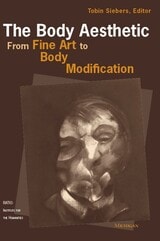
The Body Aesthetic
From Fine Art to Body ModificationTobin Siebers, Editor
University of Michigan Press, 2000
Generously and variously illustrated, this volume gathers together the work of literary critics and artists, classicists, art historians, and specialists on the history of the body, who survey the strangeness and variety with which the body has given human beings form. Richard Leppert traces how the representation of little girls responds directly to the cultural anxieties of modernity. René Girard plots how starvation becomes an art form, while Eric Gans surveys the contemporary phenomenon of body modification. Sander Gilman explores aesthetic surgery as a response to human unhappiness. Simon Goldhill discovers in the Roman empire the initial stirrings of institutions that focus on the spectacle of the body, and Cynthia S. Greig provides a glimpse of what the history of photography would look like if male nudes replaced female ones. Marion Jackson details how the different physical existence of the Inuit guides the way they make art. Joseph Grigely transforms aesthetics as usual by focusing on the disabled body, while Tobin Siebers describes the traumatic appeal in both fine art and the media of wounded flesh, whether human or animal.
The Body Aesthetic is a broad exercise in cultural studies and will address a variety of readers, from those interested in detailed, theoretical accounts of the body, to those interested in belles lettres, to those interested in fine art.
Tobin Siebers is Professor of English, University of Michigan.
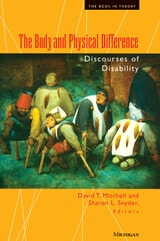
The Body and Physical Difference
Discourses of DisabilityDavid T. Mitchell and Sharon L. Snyder, Editors
University of Michigan Press, 1997
The book provides a provocative range of topics and perspectives: the absence of physical "otherness" in Ancient Greece, the depiction of the female invalid in Victorian literature, the production of tragic innocence in British and American telethons, the reconstruction of Civil War amputees, and disability as the aesthetic basis for definitions of expendable life within the modern eugenics movement. With this new, secure anchoring in the humanities, disability studies now emerges as a significant strain in contemporary theories of identity and social marginality.
Moving beyond the oversimplication that disabled people are marginalized and made invisible by able-ist assumptions and practices, the contributors demonstrate that representation is founded upon the perpetual exhibition of human anomalies. In this sense, all art can be said to migrate toward the "freakish" and the "grotesque." Such a project paradoxically makes disability the exception and the rule of the desire to represent that which has been traditionally out-of-bounds in polite discourse.
The Body and Physical Difference has relevance across a wide range of academic specialties such as cultural studies, the sociology of medicine, history, literature and medicine, the allied health professions, rehabilitation, aesthetics, philosophical discourses of the body, literary and film studies, and narrative theory.
David T. Mitchell is Assistant Professor of English, Northern Michigan University. Sharon L. Snyder teaches film and literature at Northern Michigan University.
The Body in Late-Capitalist USA
Donald M. Lowe
Duke University Press, 1995
Moving beyond studies of representations and images of the body, Lowe focuses on the intersection of body practices, language, and the Social to describe concretely the reality of a lived body. His strongly synthetic work brings together Marxist critique, semiotics, Foucaultian discourse analysis, and systems and communications theory to examine those practices that construct the body under late capitalism: habits of work and consumption, the ways we give birth and raise children, socialization, mental and physical healing, reconstructions and contestations of sexuality and gender. Lowe draws upon a wide range of sources, including government and labor studies and statistics, diagnostic and statistical manuals on mental illness, computer manuals, self-help books, and guides to work-related stress disorders, to illustrate the transformation of the body into a nexus of exchange value in postmodern society.