Results by title
192 books match the query 'Popular music' and 24 start with t
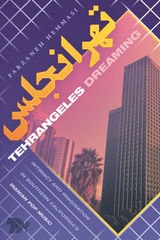
Tehrangeles Dreaming
Intimacy and Imagination in Southern California's Iranian Pop MusicFarzaneh Hemmasi
Duke University Press, 2020
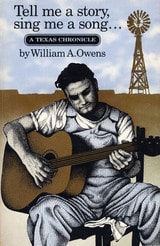
Tell Me a Story, Sing Me a Song
A Texas ChronicleBy William A. Owens
University of Texas Press, 1983
Texas, the 1930s—the years of the Great Depression. It was the Texas of great men: Dobie, Bedichek, Webb, the young Américo Paredes. And it was the Texas of May McCord and "Cocky" Thompson, the Reverend I. B. Loud, the Cajun Marcelle Comeaux, the black man they called "Grey Ghost," and all the other extraordinary "ordinary" people whom William A. Owens met in his travels.
"Up and down and sideways" across Texas, Owens traveled. His goal: to learn for himself what the diverse peoples of the state "believed in, yearned for, laughed at, fought over, as revealed in story and song." Tell me a story, sing me a song brings together both the songs he gathered—many accompanied by music—and Owens' warm reminiscences of his travels in the Texas of the Thirties and early Forties.

Tenement Songs
The Popular Music of the Jewish ImmigrantsMark Slobin
University of Illinois Press, 1982
Terminated for Reasons of Taste
Other Ways to Hear Essential and Inessential MusicChuck Eddy
Duke University Press, 2016
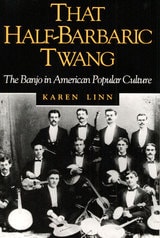
That Half-Barbaric Twang
The Banjo in American Popular CultureKaren Linn
University of Illinois Press, 1991
Long a symbol of American culture, the banjo actually originated in Africa before European-Americans adopted it. Karen Linn shows how the banjo--despite design innovations and several modernizing agendas--has failed to escape its image as a "half-barbaric" instrument symbolic of antimodernism and sentimentalism.
Caught in the morass of American racial attitudes and often used to express ambivalence toward modern industrial society, the banjo stood in opposition to the "official" values of rationalism, modernism, and belief in the beneficence of material progress. Linn uses popular literature, visual arts, advertisements, film, performance practices, instrument construction and decoration, and song lyrics to illustrate how notions about the banjo have changed.
Linn also traces the instrument from its African origins through the 1980s, alternating between themes of urban modernization and rural nostalgia. She examines the banjo fad of bourgeois Northerners during the late nineteenth century; the African-American banjo tradition and the commercially popular cultural image of the southern black banjo player; the banjo's use in ragtime and early jazz; and the image of the white Southerner and mountaineer as banjo player.
The Bastard Instrument
A Cultural History of the Electric BassBrian F. Wright
University of Michigan Press, 2024
The Black Musician and the White City
Race and Music in Chicago, 1900-1967Amy Absher
University of Michigan Press, 2014
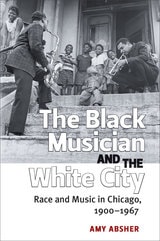
Absher’s work diverges from existing studies in three ways: First, she takes the history beyond the study of jazz and blues by examining the significant role that classically trained black musicians played in building the Chicago South Side community. By acknowledging the presence and importance of classical musicians, Absher argues that black migrants in Chicago had diverse education and economic backgrounds but found common cause in the city’s music community. Second, Absher brings numerous maps to the history, illustrating the relationship between Chicago’s physical lines of segregation and the geography of black music in the city over the years. Third, Absher’s use of archival sources is both extensive and original, drawing on manuscript and oral history collections at the Center for Black Music Research in Chicago, Columbia University, Rutgers’s Institute of Jazz Studies, and Tulane’s Hogan Jazz Archive. By approaching the Chicago black musical community from these previously untapped angles, Absher offers a history that goes beyond the retelling of the achievements of the famous musicians by discussing musicians as a group. In The Black Musician and the White City, black musicians are the leading actors, thinkers, organizers, and critics of their own story.
The Brazilian Sound
Samba, Bossa Nova, and the Popular Music of BrazilChris McGowan
Temple University Press, 2008
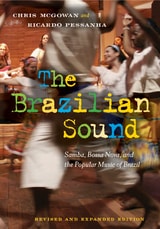
Here is an illustrated guide to the rich music of Brazil—its history, styles, performers, instruments, and impact on musicians around the globe. From the boisterous rhythms of samba to the cool elegance of bossa nova to the hot percussion of Bahian axé music, The Brazilian Sound celebrates a world music phenomenon. This revised and expanded edition includes discussions of developments in samba and other key genres, the rise of female singer-songwriters in recent years, new works by established artists like Milton Nascimento and Marisa Monte, and the mixing of bossa with electronica. This clearly written and lavishly illustrated encyclopedic survey features new entries and photographs, an extensive glossary of Brazilian music terms and more.
This edition of The Brazilian Sound contains new discussions of:
· música sertaneja and música caipira
· Brazilian funk, rap/hip-hop, and electronic dance music
· important new samba and MPB artists
· Plus! An updated bibliography and glossary, and a list of Web resources

The Capitalist Imaginaries of Popular Music
Charles Fairchild
Intellect Books, 2027
Traditionally, popular music has long been said to intrinsically contest, resist, and defy the powers that be. This new book challenges this long-standing orthodoxy, arguing that popular music is not so much a form of resistance to authority, but it often perpetuates the very power it is supposed to be raging against: neoliberal capitalism.
This misconception of popular music came to dominance in the mid-1980s and persists today, even when the vast majority of people have been disempowered, impoverished, and marginalized at home, at work, and in politics. This book explains why such a robust, pervasive, and persistent set of ideas about popular music has taken such a tenacious hold despite substantive evidence to the contrary.
The Meaning of Soul
Black Music and Resilience since the 1960sEmily J. Lordi
Duke University Press, 2020
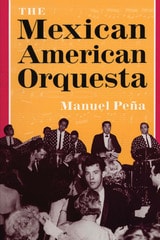
The Mexican American Orquesta
Music, Culture, and the Dialectic of ConflictBy Manuel Peña
University of Texas Press, 1999
The Mexican American orquesta is neither a Mexican nor an American music. Relying on both the Mexican orquesta and the American dance band for repertorial and stylistic cues, it forges a synthesis of the two. The ensemble emerges historically as a powerful artistic vehicle for the expression of what Manuel Peña calls the "dialectic of conflict." Grounded in ethnic and class conflict, this dialectic compels the orquesta and its upwardly mobile advocates to waver between acculturation and ethnic resistance. The musical result: a complex mesh of cultural elements—Mexican and American, working- and middle-class, traditional and contemporary.
In this book, Manuel Peña traces the evolution of the orquesta in the Southwest from its beginnings in the nineteenth century through its pinnacle in the 1970s and its decline since the 1980s. Drawing on fifteen years of field research, he embeds the development of the orquesta within a historical-materialist matrix to achieve the optimal balance between description and interpretation. Rich in ethnographic detail and boldly analytical, his book is the first in-depth study of this important but neglected field of artistic culture.
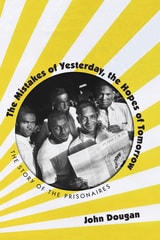
The Mistakes of Yesterday, the Hopes of Tomorrow
The Story of the PrisonairesJohn Dougan
University of Massachusetts Press, 2012
Early in the morning on June 1, 1953, five African American men boarded a van to make the 200-mile trip from Nashville to Memphis for a daylong recording session at the legendary Sun Studios, to be overseen by Sun founder Sam Phillips. One of the two tracks cut that day, “Just Walkin' in the Rain,” would go on to become a regional R&B hit, Sun Records' biggest record of the pre-Elvis era. It would, however, be the group's only hit. They were the Prisonaires, a vocal quintet who had honed their skills while inmates at the Tennessee State Penitentiary in Nashville.
In this book, John Dougan tells the story of the Prisonaires, their hit single, and the afterlife of this one remarkable song. The group and the song itself represent a compelling concept: imprisoned men using music as a means of cultural and personal survival. The song was re-recorded by white singer Johnnie Ray, who made it a huge hit in 1956. Over the years, other singers and groups would move the song further away from its origins, recasting the deep emotions that came from creating music in a hostile, controlled environment.
The story of the Prisonaires, for all of its triumphs, reflects the disappointment of men caught in a paradoxical search for personal independence while fully cognizant of a future consigned to prison. Their brief career and the unusual circumstances under which it flourished sheds light on the harsh realities of race relations in the pre–Civil Rights South. The book also provides a portrait of Nashville just as it was gaining traction as a nationally recognized music center.
The Oxford American Book of Great Music Writing
Marc Smirnoff
University of Arkansas Press, 2010
To celebrate ten years of Southern music issues, most of which are sold-out or very hard to find, the fifty-five essays collected in this dynamic, wide-ranging, and vast anthology appeal to both music fans and fans of great writing.
The Politics of Same-Sex Marriage
Edited by Craig A. Rimmerman and Clyde Wilcox
University of Chicago Press, 2007
Same-sex marriage emerged in 2004 as one of the hottest issues of the campaign season. But in a severe blow to gay rights advocates, all eleven states that had the issue on the ballot passed amendments banning the practice, and the subject soon dropped off the media’s radar. This pattern of waxing and waning in the public eye has characterized the debate over same-sex marriage since 1996 and the passing of the Defense of Marriage Act. Since then, court rulings and local legislatures have kept the issue alive in the political sphere, and conservatives and gay rights advocates have made the issue a key battlefield in the culture wars.
The Politics of Same-Sex Marriage brings together an esteemed list of scholars to explore all facets of this heated issue, including the ideologies and strategies on both sides of the argument, the public’s response, the use of the issue in political campaigns, and how same-sex marriage fits into the broad context of policy cycles and windows of political opportunity. With comprehensive coverage from a variety of different approaches, this volume will be a vital sourcebook for activists, politicians, and scholars alike.
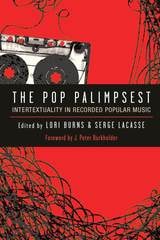
The Pop Palimpsest
Intertextuality in Recorded Popular MusicLori Burns and Serge Lacasse, Editors
University of Michigan Press, 2018

The Republic of Love
Cultural Intimacy in Turkish Popular MusicMartin Stokes
University of Chicago Press, 2010
At the heart of The Republic of Love are the voices of three musicians—queer nightclub star Zeki Müren, arabesk originator Orhan Gencebay, and pop diva Sezen Aksu—who collectively have dominated mass media in Turkey since the early 1950s. Their fame and ubiquity have made them national icons—but, Martin Stokes here contends, they do not represent the official version of Turkish identity propagated by anthems or flags; instead they evoke a much more intimate and ambivalent conception of Turkishness.
Using these three singers as a lens, Stokes examines Turkey’s repressive politics and civil violence as well as its uncommonly vibrant public life in which music, art, literature, sports, and journalism have flourished. However, Stokes’s primary concern is how Müren, Gencebay, and Aksu’s music and careers can be understood in light of theories of cultural intimacy. In particular, he considers their contributions to the development of a Turkish concept of love, analyzing the ways these singers explore the private matters of intimacy, affection, and sentiment on the public stage.
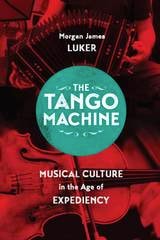
The Tango Machine
Musical Culture in the Age of ExpediencyMorgan James Luker
University of Chicago Press, 2016
Luker traces the diverse and often contradictory ways tango is used in Argentina in activities ranging from state cultural policy-making to its export abroad as a cultural emblem, from the expanding nonprofit arts sector to tango-themed urban renewal projects. He shows how projects such as these are not peripheral to an otherwise “real” tango—they are the absolutely central means by which the values of this musical culture are cultivated. By richly detailing the interdependence of aesthetic value and the regimes of cultural management, this book sheds light on core conceptual challenges facing critical music scholarship today.
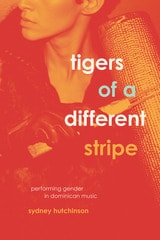
Tigers of a Different Stripe
Performing Gender in Dominican MusicSydney Hutchinson
University of Chicago Press, 2016
Drawing on over a decade of fieldwork in the Dominican Republic and New York among musicians, fans, and patrons of merengue típico—not to mention her own experiences as a female instrumentalist—Hutchinson details a complex nexus of class, race, and artistic tradition that unsettles the typical binary between the masculine and feminine. She sketches the portrait of the classic male figure of the tíguere, a dandified but sexually aggressive and street-smart “tiger,” and she shows how female musicians have developed a feminine counterpart: the tíguera, an assertive, sensual, and respected female figure who looks like a woman but often plays and even sings like a man. Through these musical figures and studies of both straight and queer performers, she unveils rich ambiguities in gender construction in the Dominican Republic and the long history of a unique form of Caribbean feminism.
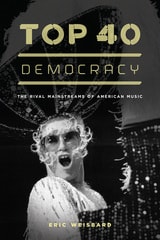
Top 40 Democracy
The Rival Mainstreams of American MusicEric Weisbard
University of Chicago Press, 2014
In Top 40 Democracy, Eric Weisbard studies the evolution of this multicentered pop landscape, along the way telling the stories of the Isley Brothers, Dolly Parton, A&M Records, and Elton John, among others. He sheds new light on the upheavals in the music industry over the past fifteen years and their implications for the audiences the industry has shaped. Weisbard focuses in particular on formats—constructed mainstreams designed to appeal to distinct populations—showing how taste became intertwined with class, race, gender, and region. While many historians and music critics have criticized the segmentation of pop radio, Weisbard finds that the creation of multiple formats allowed different subgroups to attain a kind of separate majority status—for example, even in its most mainstream form, the R&B of the Isley Brothers helped to create a sphere where black identity was nourished. Music formats became the one reliable place where different groups of Americans could listen to modern life unfold from their distinct perspectives. The centers of pop, it turns out, were as complicated, diverse, and surprising as the cultural margins. Weisbard’s stimulating book is a tour de force, shaking up our ideas about the mainstream music industry in order to tease out the cultural importance of all performers and songs.
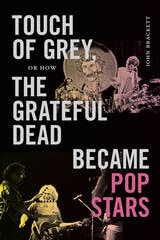
Touch of Grey, or How the Grateful Dead Became Pop Stars
John Brackett
Duke University Press, 2026
Touch of Grey, or How the Grateful Dead Became Pop Stars tells the story of how one song transformed the popular legacy of one of rock’s most iconic musical groups. John Brackett traces the history of the song “Touch of Grey,” beginning with songwriter Robert Hunter’s lyrical sketches and the Grateful Dead’s earliest live arrangements, culminating in the group’s popular renaissance following the release of “Touch of Grey” and the album In the Dark in the summer of 1987. Brackett details how particular recording technologies, notable musical characteristics, modes of attending and listening, and the mechanics of the contemporary music industry shaped this defining moment in the group’s career. Drawing on extensive archival research, Touch of Grey examines how the band and their label worked to produce a hit record, a dynamic music video, and an effective promotional campaign that would propel the Grateful Dead from a group with a devoted cult following to become a pop culture phenomenon.
Tracks on the Trail
Popular Music, Race, and the US PresidencyDana Gorzelany-Mostak
University of Michigan Press, 2023
From Bill Clinton playing his saxophone on The Arsenio Hall Show to Barack Obama referencing Jay-Z’s song “Dirt Off Your Shoulder,” politicians have used music not only to construct their personal presidential identities but to create the broader identity of the American presidency. Through music, candidates can appear relatable, show cultural competency, communicate values and ideas, or connect with a specific constituency. On a less explicit level, episodes such as Clinton’s sax-playing and Obama’s shoulder brush operate as aural and visual articulations of race and racial identity. But why do candidates choose to engage with race in this manner? And why do supporters and detractors on YouTube and the Twittersphere similarly engage with race when they create music videos or remixes in homage to their favorite candidates?
With Barack Obama, Ben Carson, Kamala Harris, and Donald Trump as case studies, Tracks on the Trail: Popular Music, Race, and the US Presidency sheds light on the factors that motivate candidates and constituents alike to articulate race through music on the campaign trail and shows how the racialization of sound intersects with other markers of difference and ultimately shapes the public discourse surrounding candidates, popular music, and the meanings attached to race in the 21st century. Gorzelany-Mostak explores musical engagement broadly, including official music in the form of candidate playlists and launch event setlists, as well as unofficial music in the form of newly composed campaign songs, mashups, parodies, and remixes.

Troubadours, Trumpeters, Troubled Makers
Lyricism, Nationalism, and Hybridity in China and Its OthersGregory B. Lee
Duke University Press, 1996
Lee’s broad definition of lyric includes the work of poets, amateur versifiers, and all manner of popular songwriters, and his inclusive sense of nation refers to all Chinese communities regardless of geographic location. Whether examining the globalized consumption of satellite-broadcast pop music or the heroic efforts of little-known poets on the margins of the Chinese diaspora, he finds a questioning and contesting of both the Orientalist construction of a mythic monolithic China invented by the West and the Chinese obsession with ideas of authenticity and purity of nationhood. Lee explores the lyrical transgression of these ideological boundaries in China, in the Chinese communities of America and Britain, and in other marginalized communities, before using the examples of Hong Kong and other non-nationalistic sites to discuss the creative possibilities of hybrid cultures and societies.
Troubling Gender
Youth and Cumbia in Argentina's Music SceneAuthored by Pablo Vila and Pablo Semán, contributions by Eloísa Martín and María Julia Carozzi
Temple University Press, 2011
Cumbia villera—literally, cumbia from the shantytowns— is a musical genre quite popular with Argentine youth who frequent urban dance halls. Its songs are known for having highly sexualized lyrics— about girls dancing provocatively or experiencing erotic pleasure. The songs exhibit the tensions at play in the different ways people relate to this musical genre.
In Troubling Gender, noted sociologists Pablo Vila and Pablo Semán scrutinize the music's lyrics and the singers' and dancers' performances. At the same time, the authors conduct in-depth interviews to examine the ways males construct and appropriate cumbia's lyrics, and how females identify, appropriate, and playfully and critically manipulate the same misogynistic songs.
Addressing the relationship between this form of music and the wider social, political, and economic changes that influence the lives of urban youth, Troubling Gender argues that the music both reflects and influences the ways in which women's and men's roles are changing in Argentine society.
Tween Pop
Children's Music and Public CultureTyler Bickford
Duke University Press, 2020