Results by title
88 books match the query 'Population' and 20 start with t
The American People
Census 2000Reynolds Farley
Russell Sage Foundation, 2005
The Boston Renaissance
Race, Space, and Economic Change in an American MetropolisBarry Bluestone
Russell Sage Foundation, 2000

The Color Line and the Quality of Life in America
Reynolds Farley
Russell Sage Foundation, 1987
The Demographics of Empire
The Colonial Order and the Creation of KnowledgeKarl Ittmann
Ohio University Press, 2010
The Demographics of Empire is a collection of essays examining the multifaceted nature of the colonial science of demography in the last two centuries. The contributing scholars of Africa and the British and French empires focus on three questions: How have historians, demographers, and other social scientists understood colonial populations? What were the demographic realities of African societies and how did they affect colonial systems of power? Finally, how did demographic theories developed in Europe shape policies and administrative structures in the colonies? The essays approach the subject as either broad analyses of major demographic questions in Africa’s history or focused case studies that demonstrate how particular historical circumstances in individual African societies contributed to differing levels of fertility, mortality, and migration. Together, the contributors to The Demographics of Empire question demographic orthodoxy, and in particular the assumption that African societies in the past exhibited a single demographic regime characterized by high fertility and high mortality.

The Earth Remains Forever
Generations at a CrossroadsBy Rob Jackson
University of Texas Press, 2002
Writing especially for people who've tuned out the environmental debate, Rob Jackson persuasively argues that we're at a crucial turning point in environmental history, where choices we make now will determine the quality of life into the unforeseeable future. Laying out the scientific facts in plain language and with flashes of humor, he shows how the escalation of population growth and resource consumption in the twentieth century caused problems from ozone depletion to global warming, habitat destruction, and biodiversity loss. At the same time, however, he highlights ongoing solutions to these problems and ways in which we can create a sustainable future for subsequent generations and all life on earth. His urgent message is not that we've already failed, but that we can succeed.
The Economic Consequences of Demographic Change in East Asia
Edited by Takatoshi Ito and Andrew K. Rose
University of Chicago Press, 2010
Recent studies show that almost all industrial countries have experienced dramatic decreases in both fertility and mortality rates. This situation has led to aging societies with economies that suffer from both a decline in the working population and a rise in fiscal deficits linked to increased government spending. East Asia exemplifies these trends, and this volume offers an in-depth look at how long-term demographic transitions have taken shape there and how they have affected the economy in the region.
The Economic Consequences of Demographic Change in East Asia assembles a group of experts to explore such topics as comparative demographic change, population aging, the rising cost of health care, and specific policy concerns in individual countries. The volume provides an overview of economic growth in East Asia as well as more specific studies on Japan, Korea, China, and Hong Kong. Offering important insights into the causes and consequences of this transition, this book will benefit students, researchers, and policy makers focused on East Asia as well as anyone concerned with similar trends elsewhere in the world.
The Hard Count
The Political and Social Challenges of Census MobilizationD. Sunshine Hillygus
Russell Sage Foundation, 2006
The Motions Beneath
Indigenous Migrants on the Urban Frontier of New SpainLaurent Corbeil
University of Arizona Press, 2018
The Motions Beneath is a social history of the encounter of these thousands of indigenous peoples representing ten linguistic groups. Using baptism and marriage records, Laurent Corbeil creates a demographic image of the town’s population. He studies two generations of highly mobile individuals, revealing their agency and subjectivity when facing colonial structures of exploitation on a daily basis.
Corbeil’s study depicts the variety of paths on which indigenous peoples migrated north to build this diverse urban society. Breaking new ground by bridging stories of migration, labor relations, sexuality, legal culture, and identity construction, Corbeil challenges the assumption that urban indigenous communities were organized along ethnic lines. He posits instead that indigenous peoples developed extensive networks and organized themselves according to labor, trade, and social connections.
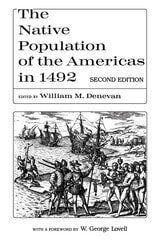
The Native Population of the Americas in 1492
Edited by William M. Denevan
University of Wisconsin Press, 1992
William M. Denevan writes that, "The discovery of America was followed by possibly the greatest demographic disaster in the history of the world." Research by some scholars provides population estimates of the pre-contact Americas to be as high as 112 million in 1492, while others estimate the population to have been as low as eight million. In any case, the native population declined to less than six million by 1650.
In this collection of essays, historians, anthropologists, and geographers discuss the discrepancies in the population estimates and the evidence for the post-European decline. Woodrow Borah, Angel Rosenblat, William T. Sanders, and others touch on such topics as the Indian slave trade, diseases, military action, and the disruption of the social systems of the native peoples. Offering varying points of view, the contributors critically analyze major hemispheric and regional data and estimates for pre- and post-European contact.
This revised edition features a new introduction by Denevan reviewing recent literature and providing a new hemispheric estimate of 54 million, a foreword by W. George Lovell of Queen's University, and a comprehensive updating of the already extensive bibliography. Research in this subject is accelerating, with contributions from many disciplines. The discussions and essays presented here can serve both as an overview of past estimates, conflicts, and methods and as indicators of new approaches and perspectives to this timely subject.
The Peoples Of Las Vegas
One City, Many FacesJerry L Simich
University of Nevada Press, 2005
Beneath the glitzy surface of the resorts and the seemingly cookie-cutter suburban sprawl of Las Vegas lies a vibrant and diverse ethnic life. People of varied origins make up the population of nearly two million and yet, until now, little mention of the city has been made in studies and discussion of ethnicity or immigration. The Peoples of Las Vegas: One City, Many Faces fills this void by presenting the work of seventeen scholars of history, political science, sociology, anthropology, law, urban studies, cultural studies, literature, social work, and ethnic studies to provide profiles of thirteen of the city’s many ethnic groups. The book’s introduction and opening chapters explore the historical and demographic context of these groups, as well as analyze the economic and social conditions that make Las Vegas so attractive to recent immigrants. Each group is the subject of the subsequent chapters, outlining migration motivations and processes, economic pursuits, cultural institutions and means of transmitting culture, involvement in the broader community, ties to homelands, and recent demographic trends.

The Politics of Population in Brazil
Elite Ambivalence and Public DemandBy Peter McDonough and Amaury DeSouza
University of Texas Press, 1981
The population of Brazil increased tenfold, from 10 to over 100 million, between 1880 and 1980, nearly half of this increase occurring since the end of World War II. The Politics of Population in Brazil examines the attitudes toward population planning of Brazilian government officials and other elites—bishops, politicians, labor leaders, and business owners—in comparison with mass public opinion. The authors' findings that elites seriously underestimate the desire for family planning services, while the public views birth control as a basic issue, represent an important contribution on a timely issue.
A major reason for this disparity is that the elites tend to define the issue as a matter of national power and collective growth, and the public sees it as a bread-and-butter question affecting the daily lives of families. McDonough and DeSouza document not only the real gulf between elite and mass opinion but also the propensity of the elites to exaggerate this gap through their stereotyping of public opinion as conservative and disinterested in family planning.
Despite these differences, the authors demonstrate that population planning is less conflict ridden than many other controversies in Brazilian politics and probably more amenable to piecemeal bargaining than some earlier studies suggest. In part, this is because attitudes on the issue are not closely identified with opinions regarding left-versus-right disputes. In addition, for the public in general, religious sentiment affects attitudes toward family planning only indirectly. This separation, which reflects the historical lack of penetration of Brazilian society on the part of the church, further attenuates the issue's potential for galvanizing deep-seated antagonisms. As the authors note, this situation stands in contrast to the fierce debates that moral issues have generated in Spain and Ireland.
The study is noteworthy not only for its original approach—the incorporation of mass and elite data and the departure from the standard concerns with fertility determinants in population—but also for its sophisticated methodology and lucid presentation.
The Population of the South
Structure and Change in Social Demographic ContextEdited by Dudley L. Poston, Jr., and Robert H. Weller
University of Texas Press, 1981
The expression “the New South” was introduced by Henry Grady, editor of the Atlanta Constitution, to a New York audience in 1886; every generation of writers since has used the term. The southern population, unique in its socioeconomic and cultural characteristics, has always been a topic of major interest with U.S. demographers.
The articles in this book, the majority of which were originally presented at the Southern Regional Demographic Group meeting in 1976, deal with fertility, mortality, migration, and the factors that influence these components. A number of the contributors trace patterns of demographic change in the South showing convergence with the rest of the United States. Questions are raised about whether the convergence represents a permanent trend—possibly due to increased communication—or whether further divergence may be expected in the future.
The contributors include Dudley L. Poston, Jr., William J. Serow, Robert H. Weller, Ronald R. Rindfuss, Harry M. Rosenberg, Drusilla Burnham, David F. Sly, Omer R. Galle, Robert N. Stern, Joachim Singelmann, Susan E. Clarke, and George C. Myers.

The Presence of Myth
Leszek Kolakowski
University of Chicago Press, 1989
With The Presence of Myth, Kolakowski demonstrates that no matter how hard man strives for purely rational thought, there has always been-and always will be-a reservoir of mythical images that lend "being" and "consciousness" a specifically human meaning.
"Kolakowski undertakes a philosophy of culture which extends to all realms of human intercourse—intellectual, artistic, scientific, and emotional. . . . [His] book has real significance for today, and may well become a classic in the philosophy of culture."—Anglican Theological Review
The Shotgun Method
The Demography of the Ancient Greek City-State CultureMogens Herman Hansen
University of Missouri Press, 2006
Although the polis, or city-state, defined the essence of classical Greek civilization, evidence of its most basic characteristics is woefully inadequate. Now a leading scholar in the evaluation of data from the ancient world sheds new light on how those units were constituted.
The Slow Failure
Population Decline and Independent Ireland, 1920–1973Mary E. Daly
University of Wisconsin Press, 2006
Today Ireland’s population is rising, immigration outpaces emigration, most families have two or at most three children, and full-time farmers are in steady decline. But the opposite was true for more than a century, from the great famine of the 1840s until the 1960s. Between 1922 and 1966—most of the first fifty years after independence—the population of Ireland was falling, in the 1950s as rapidly as in the 1880s. Mary Daly’s The Slow Failure examines not just the reasons for the decline, but the responses to it by politicians, academics, journalists, churchmen, and others who publicly agonized over their nation’s “slow failure.” Eager to reverse population decline but fearful that economic development would undermine Irish national identity, they fashioned statistical evidence to support ultimately fruitless policies to encourage large, rural farm families. Focusing on both Irish government and society, Daly places Ireland’s population history in the mainstream history of independent Ireland.
Daly’s research reveals how pastoral visions of an ideal Ireland made it virtually impossible to reverse the fall in population. Promoting large families, for example, contributed to late marriages, actually slowing population growth further. The crucial issue of emigration failed to attract serious government attention except during World War II; successive Irish governments refused to provide welfare services for emigrants, leaving that role to the Catholic Church. Daly takes these and other elements of an often-sad story, weaving them into essential reading for understanding modern Irish history

The Study of Population
An Inventory and AppraisalEdited by Philip M. Hauser and Otis Dudley Duncan
University of Chicago Press, 1959
The Well-Being of the Elderly in Asia
A Four-Country Comparative StudyAlbert I. Hermalin, Editor
University of Michigan Press, 2010
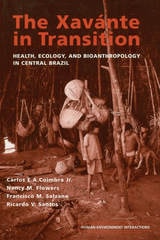
The Xavante in Transition
Health, Ecology, and Bioanthropology in Central BrazilCarlos E. A. Coimbra, Jr., Nancy M. Flowers, Francisco M. Salzano, and Ricardo V. Santos
University of Michigan Press, 2004
". . . an integrated and politically informed anthropology for the new millennium. They show how the local and the regional meet on the ground and under the skin."
--Alan H. Goodman, Professor of Biological Anthropology, Hampshire College
--Daniel Gross, Lead Anthropologist, The World Bank
--Laura R. Graham, Professor of Anthropology, University of Iowa
Thicker Than Blood
How Racial Statistics LieTukufu Zuberi
University of Minnesota Press, 2003
A hard-hitting investigation of the racist uses of statistics—now in paperback!
Tukufu Zuberi offers a concise account of the historical connections between the development of the idea of race and the birth of social statistics. Zuberi describes how race-differentiated data are misinterpreted in the social sciences and asks searching questions about the ways racial statistics are used. He argues that statistical analysis can and must be deracialized, and that this deracialization is essential to the goal of achieving social justice for all.

This Magnetic North
Candid Conversations on a Changing Northern MichiganTim Mulherin
Michigan State University Press, 2025
This book explores a phenomenon occurring around Michigan’s Great Lakes and other high-demand scenic locations across the country: natural landscapes are undergoing profound human and climatological change as people pick up their lives and move to bucolic locations. The Grand Traverse region in northwest lower Michigan has been one of the most impacted regions in the state, with the population increase accelerated by the pandemic and climate change. The impact of this growth is explored through field observations and interviews involving dozens of born-and-raised locals, “boomerangers” (those who grew up, left, then returned), and relocators. The author explores the tensions between newcomers and “natives.” Interviewees include tourist industry leaders, conservationists, business owners, public safety officials, tribal members, Sleeping Bear Dunes National Lakeshore officials, and more. These voices characterize the region’s diverse views, providing insight into how one of the most popular vacation destinations in the country is attempting to balance environmental preservation with an influx of people. Northwest lower Michigan’s story of transformation, as tradition collides with progress, holds many lessons and will resonate with everyone who has ever lived in or visited such an enchanting place and dreams of calling it home.