Results by title
137 books match the query 'Poverty' and 23 start with t
The Biological Consequences of Socioeconomic Inequalities
Barbara Wolfe
Russell Sage Foundation, 2013
The Color of Opportunity
Pathways to Family, Welfare, and WorkHaya Stier and Marta Tienda
University of Chicago Press, 2000
The culmination of a six-year collaboration analyzing the Urban Poverty and Family Life Survey of Chicago, The Color of Opportunity is the first major work to compare Chicago's inner city minorities with national populations of like race and ethnicity from a life course perspective. The authors find that blacks, whites, Mexicans, and Puerto Ricans living in poor neighborhoods differ in their experiences with early material deprivation and the lifetime disadvantages that accumulate—but they do not differ much from the urban poor in their family formation, welfare participation, or labor force attachment. Stier and Tienda find little evidence for ghetto-specific behavior, but they document the myriad ways color still restricts economic opportunity.
The Color of Opportunity stands as a much-needed corrective to increasingly negative views of poor people of color, especially the poor who live in deprived neighborhoods. It makes a key and lasting contribution to ongoing debates about the origins and nature of urban poverty.
The Colors of Poverty
Why Racial and Ethnic Disparities PersistAnn Chih Lin
Russell Sage Foundation, 2008
The Death Gap
How Inequality KillsDavid A. Ansell, MD
University of Chicago Press, 2017
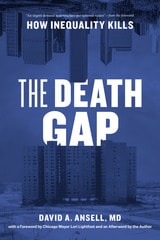
While the contrasts and disparities among Chicago’s communities are particularly stark, the death gap is truly a nationwide epidemic—as Ansell shows, there is a thirty-five-year difference in life expectancy between the healthiest and wealthiest and the poorest and sickest American neighborhoods. If you are poor, where you live in America can dictate when you die. It doesn’t need to be this way; such divisions are not inevitable. Ansell calls out the social and cultural arguments that have been raised as ways of explaining or excusing these gaps, and he lays bare the structural violence—the racism, economic exploitation, and discrimination—that is really to blame. Inequality is a disease, Ansell argues, and we need to treat and eradicate it as we would any major illness. To do so, he outlines a vision that will provide the foundation for a healthier nation—for all.
Inequality is all around us, and often the distance between high and low life expectancy can be a matter of just a few blocks. But geography need not be destiny, urges Ansell. In The Death Gap he shows us how we can face this national health crisis head-on and take action against the circumstances that rob people of their dignity and their lives.
The Death Gap
How Inequality KillsDavid A. Ansell, MD
University of Chicago Press, 2021
While the contrasts and disparities among Chicago’s communities are particularly stark, the death gap is truly a nationwide epidemic—as Ansell shows, there is a thirty-five-year difference in life expectancy between the healthiest and wealthiest and the poorest and sickest American neighborhoods. If you are poor, where you live in America can dictate when you die. It doesn’t need to be this way; such divisions are not inevitable. Ansell calls out the social and cultural arguments that have been raised as ways of explaining or excusing these gaps, and he lays bare the structural violence—the racism, economic exploitation, and discrimination—that is really to blame. Inequality is a disease, Ansell argues, and we need to treat and eradicate it as we would any major illness. To do so, he outlines a vision that will provide the foundation for a healthier nation—for all.
As the COVID-19 mortality rates in underserved communities proved, inequality is all around us, and often the distance between high and low life expectancy can be a matter of just a few blocks. Updated with a new foreword by Chicago mayor Lori Lightfoot and an afterword by Ansell, The Death Gap speaks to the urgency to face this national health crisis head-on.
The Displaced of Capital
Anne Winters
University of Chicago Press, 2004
The long-awaited follow-up to The Key to the City—a finalist for the National Book Critics Circle Award in 1986—Anne Winters's The Displaced of Capital emanates a quiet and authoritative passion for social justice, embodying the voice of a subtle, sophisticated conscience.
The "displaced" in the book's title refers to the poor, the homeless, and the disenfranchised who populate New York, the city that serves at once as gritty backdrop, city of dreams, and urban nightmare. Winters also addresses the culturally, ethnically, and emotionally excluded and, in these politically sensitive poems, writes without sentimentality of a cityscape of tenements and immigrants, offering her poetry as a testament to the lives of have-nots. In the central poem, Winters witnesses the relationship between two women of disparate social classes whose friendship represents the poet's political convictions. With poems both powerful and musical, The Displaced of Capital marks Anne Winters's triumphant return and assures her standing as an essential New York poet.

The Economics of Killing
How the West Fuels War and Poverty in the Developing WorldVijay Mehta
Pluto Press, 2012
Globalisation has created an interconnected world, but has not diminished violence, militarism and inequality. The Economics of Killing describes how the power of global elites, entrenched under globalisation, has created a deadly cycle of violence.
In this groundbreaking work, Vijay Mehta shows how attempts at peaceful national development are routinely blocked by Western powers. He locates the 2008 financial crisis in US attempts to block China's model of development. He shows how Europe and the US conspire with regional dictators to prevent countries from developing advanced industries, and how this system has fed terrorism.
Mehta argues that a different world is possible, based on policies of disarmament, demilitarisation and sustainable development. This original and thought-provoking book will be of great interest to anyone concerned about the consequences of endless war fuelled by the West.
The Economics of Poverty Traps
Edited by Christopher B. Barrett, Michael R. Carter, and Jean-Paul Chavas
University of Chicago Press, 2018
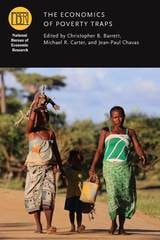
The research in this volume explores the hypothesis that poverty is self-reinforcing because the equilibrium behaviors of the poor perpetuate low standards of living. Contributions explore the dynamic, complex processes by which households accumulate assets and increase their productivity and earnings potential, as well as the conditions under which some individuals, groups, and economies struggle to escape poverty. Investigating the full range of phenomena that combine to generate poverty traps—gleaned from behavioral, health, and resource economics as well as the sociology, psychology, and environmental literatures—chapters in this volume also present new evidence that highlights both the insights and the limits of a poverty trap lens.
The framework introduced in this volume provides a robust platform for studying well-being dynamics in developing economies.

The Fundamental Institution
Poverty, Social Welfare, and Agriculture in American Poor FarmsMegan Birk
University of Illinois Press, 2022
In-depth and innovative, The Fundamental Institution offers an overdue portrait of rural social welfare in the United States.
The Hidden Famine
Hunger, Poverty and Sectarianism in Belfast 1840-50Christine Kinealy and Gerard Mac Atasney
Pluto Press, 2000
The New Plagues
Pandemics and Poverty in a Globalized WorldStefan Kaufmann
Haus Publishing, 2009
The News Untold
Community Journalism and the Failure to Confront Poverty in AppalachiaMichael Clay Carey
West Virginia University Press, 2017
Weatherford Award winner, nonfiction
The News Untold offers an important new perspective on media narratives about poverty in Appalachia. It focuses on how small-town reporters and editors in some of the region’s poorest communities decide what aspects of poverty are news, how their audiences interpret those decisions, and how those two related processes help shape broader understandings of economic need and local social responsibility. Focusing on patterns of both media creation and consumption, The News Untold shows how a lack of constructive news coverage of economic need can make it harder for the poor to voice their concerns.
Critical and inclusive news coverage of poverty at the local level, Michael Clay Carey writes, can help communities start to look past old stereotypes and attitudes and encourage solutions that incorporate broader sets of community voices. Such an effort will require journalists and community leaders to reexamine some of the professional traditions and social views that often shape what news looks like in small towns.
The Paradox of Agrarian Change
Food Security and the Politics of Social Protection in IndonesiaEdited by John McCarthy, Andrew McWilliam, and Gerben Nooteboom
National University of Singapore Press, 2023
Economic growth in the middle-income countries of Southeast Asia over the past few decades has been widely praised for reducing poverty in both absolute and relative terms. Indonesia is a prime example. But while poverty has declined in Indonesia, patterns of food poverty persist across Indonesia. What explains this troubling paradox? How does it relate to Indonesia’s enthusiastic embrace of the “entitlements revolution,” the use of direct cash transfers as a tool for reducing poverty and building social inclusion?
This book analyzes the nature and social consequences of economic development and agrarian change processes in rural Indonesia in relation to the scope and effectiveness of Indonesia’s social protection programs. The findings are based on a series of extensive ground-up case studies in Indonesian communities in a variety of eco-agrarian settings that seek to understand the drivers of food insecurity and vulnerability at a household level. The results show that while high-value farming, diversification, and migration may offer a means of economic progress for poor households, opportunities for accumulation are limited. This, the authors show, is due to the way class, gender, and power work in remote local contexts, and the fact that much surplus income is used for enhanced consumption and changing lifestyles. There are few signs of the classical structural transformation of the countryside which has historically been considered the most decisive pathway out of rural poverty. The authors conclude that social assistance is unlikely to counter the persistence of rural poverty, food insecurity, and precarity in the absence of other redistributive strategies that shift the structural drivers of inequality.
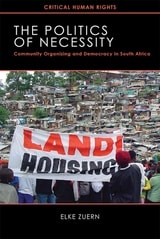
The Politics of Necessity
Community Organizing and Democracy in South AfricaElke Zuern
University of Wisconsin Press, 2011
The end of apartheid in South Africa broke down political barriers, extending to all races the formal rights of citizenship, including the right to participate in free elections and parliamentary democracy. But South Africa remains one of the most economically polarized nations in the world. In The Politics of Necessity Elke Zuern forcefully argues that working toward greater socio-economic equality—access to food, housing, land, jobs—is crucial to achieving a successful and sustainable democracy.
Drawing on interviews with local residents and activists in South Africa’s impoverished townships during more than a decade of dramatic political change, Zuern tracks the development of community organizing and reveals the shifting challenges faced by poor citizens. Under apartheid, township residents began organizing to press the government to address the basic material necessities of the poor and expanded their demands to include full civil and political rights. While the movement succeeded in gaining formal political rights, democratization led to a new government that instituted neo-liberal economic reforms and sought to minimize protest. In discouraging dissent and failing to reduce economic inequality, South Africa’s new democracy has continued to disempower the poor.
By comparing movements in South Africa to those in other African and Latin American states, this book identifies profound challenges to democratization. Zuern asserts the fundamental indivisibility of all human rights, showing how protest movements that call attention to socio-economic demands, though often labeled a threat to democracy, offer significant opportunities for modern democracies to evolve into systems of rule that empower all citizens.

The Poor Are Not Us
Poverty and Pastoralism in Eastern AfricaDavid M. Anderson
Ohio University Press, 1999
Eastern African pastoralists often present themselves as being egalitarian, equating cattle ownership with wealth. By this definition “the poor are not us”, poverty is confined to non-pastoralist, socially excluded persons and groups.
Exploring this notion means discovering something about self-perceptions and community consciousness, how pastoralist identity has been made in opposition to other modes of production, how pastoralists want others to see them and how they see themselves.
This collection rejects the premise of pastoral egalitarianism and poses questions about the gradual creep of poverty, changing patterns of wealth and accumulation, the impact of diminishing resources on pastoral communities and the impact of external values of land, labor, and livestock.
The Poverty of Capitalism
Economic Meltdown and the Struggle for What Comes NextJohn Hilary
Pluto Press, 2013
Capitalist growth is widely heralded as the only answer to the crisis still sweeping the global economy. Yet the era of corporate globalisation has been defined by unprecedented levels of inequality and environmental degradation. A return to capitalist growth threatens to exacerbate these problems, not solve them.
In The Poverty of Capitalism, John Hilary reveals the true face of transnational capital in its insatiable drive for expansion and accumulation. He exposes the myth of ‘corporate social responsibility’ (CSR), and highlights key areas of conflict over natural resources, labour rights and food sovereignty.
Hilary also describes the growing popular resistance to corporate power, as well as the new social movements seeking to develop alternatives to capitalism itself. This book will be essential reading for all those concerned with global justice, human rights and equity in the world order.
The Power of Productivity
Wealth, Poverty, and the Threat to Global StabilityWilliam W. Lewis
University of Chicago Press, 2004
The Power of Productivity provides powerful and controversial answers to these questions. William W. Lewis, the director emeritus of the McKinsey Global Institute, here draws on extensive microeconomic studies of thirteen nations over twelve years—conducted by the Institute itself—to counter virtually all prevailing wisdom about how best to ameliorate economic disparity. Lewis's research, which included studying everything from state-of-the-art auto makers to black-market street vendors and mom-and-pop stores, conclusively demonstrates that, contrary to popular belief, providing more capital to poor nations is not the best way to help them. Nor is improving levels of education, exchange-rate flexibility, or government solvency enough. Rather, the key to improving economic conditions in poor countries, argues Lewis, is increasing productivity through intense, fair competition and protecting consumer rights.
As The Power of Productivity explains, this sweeping solution affects the economies of poor nations at all levels—from the viability of major industries to how the average consumer thinks about his or her purchases. Policies must be enacted in developing nations that reflect a consumer rather than a producer mindset and an attendant sense of consumer rights. Only one force, Lewis claims, can stand up to producer special privileges—consumer interests.
The Institute's unprecedented research method and Lewis's years of experience with economic policy combine to make The Power of Productivity the most authoritative and compelling view of the global economy today, one that will inform political and economic debate throughout the world for years to come.
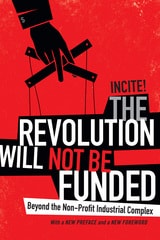
The Revolution Will Not Be Funded
Beyond the Non-Profit Industrial ComplexINCITE! Women of Color Against Violence
Duke University Press, 2017
Contributors. Christine E. Ahn, Robert L. Allen, Alisa Bierria, Nicole Burrowes, Communities Against Rape and Abuse (CARA), William Cordery, Morgan Cousins, Ruth Wilson Gilmore, Stephanie Guilloud, Adjoa Florência Jones de Almeida, Tiffany Lethabo King, Paul Kivel, Soniya Munshi, Ewuare Osayande, Amara H. Pérez, Project South: Institute for the Elimination of Poverty and Genocide, Dylan Rodríguez, Paula X. Rojas, Ana Clarissa Rojas Durazo, Sisters in Action for Power, Andrea Smith, Eric Tang, Madonna Thunder Hawk, Ije Ude, Craig Willse
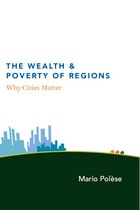
The Wealth and Poverty of Regions
Why Cities MatterMario Polèse
University of Chicago Press, 2009
As the world becomes more interconnected through travel and electronic communication, many believe that physical places will become less important. But as Mario Polèse argues in The Wealth and Poverty of Regions, geography will matter more than ever before in a world where distance is allegedly dead.
This provocative book surveys the globe, from London and Cape Town to New York and Beijing, contending that regions rise—or fall—due to their location, not only within nations but also on the world map. Polèse reveals how concentrations of industries and populations in specific locales often result in minor advantages that accumulate over time, resulting in reduced prices, improved transportation networks, increased diversity, and not least of all, “buzz”—the excitement and vitality that attracts ambitious people. The Wealth and Poverty of Regions maps out how a heady mix of size, infrastructure, proximity, and cost will determine which urban centers become the thriving metropolises of the future, and which become the deserted cities of the past. Engagingly written, the book provides insight to the past, present, and future of regions.
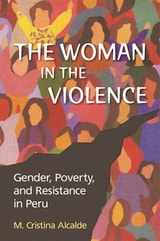
The Woman in the Violence
Gender, Poverty, and Resistance in PeruM. Cristina Alcalde
Vanderbilt University Press, 2010
Focusing on the experiences of women who are predominantly poor, nonwhite, rural-to-urban migrants with little or no formal education, The Woman in the Violence addresses a range of serious concerns. What types of violence do women experience at different stages in their lives? Which identities and roles are manifested throughout their lives, and do some of these increase their vulnerability to different forms of violence? What strategies do women employ to gain some power and control in these situations, and how can we conceptualize these strategies?
In examining these questions, The Woman in the Violence contributes to our understanding of violence, gender, race, resistance, and urbanism as it exposes and analyzes systemic violence against women. The everyday forms of resistance these women employ provide significant insight for students, scholars, and health professionals.
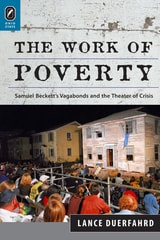
The Work of Poverty
Samuel Beckett's Vagabonds and the Theater of CrisisLance Duerfahrd
The Ohio State University Press, 2013
Those Who Work, Those Who Don't
Poverty, Morality, and Family in Rural AmericaJennifer Sherman
University of Minnesota Press, 2009
When the rural poor prioritize issues such as the right to bear arms, and disapprove of welfare despite their economic concerns, they are often dismissed as uneducated and backward by academics and political analysts. In Those Who Work, Those Who Don't, Jennifer Sherman offers a much-needed sympathetic understanding of poor rural Americans, persuasively arguing that the growing cultural significance of moral values is a reasonable and inevitable response to economic collapse and political powerlessness.
Those Who Work, Those Who Don't is based on the intimate interviews and in-depth research Sherman conducted while spending a year living in "Golden Valley," a remote logging town in Northern California. Economically devastated by the 1990 ruling that listed the northern spotted owl as a threatened species, Golden Valley proved to be a rich case study for Sherman. She looks at how the members of the community coped with downward mobility caused by the loss of timber industry jobs and examines a wide range of reactions. She shows how substance abuse, domestic violence, and gender roles fluctuated under the town's economic strain.
Compellingly written, shot through with honesty and empathy, Those Who Work, Those Who Don't is a rare firsthand account that studies the rural poor. As incomes erode and the American dream becomes more and more inaccessible, Sherman reveals that moral values and practices become a way for the poor to gain status and maintain a sense of dignity in the face of economic ruin.
Tired of Weeping
Mother Love, Child Death, and Poverty in Guinea-BissauJonina Einarsdottir
University of Wisconsin Press, 2004