Results by title
159 books match the query 'Present' and 32 start with t
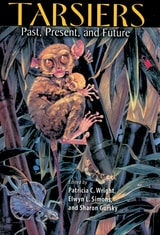
Tarsiers
Past, Present, and FutureWright, Patricia C.
Rutgers University Press, 2003
Tarsiiformes, or tarsiers for short, are a group of living species of special interest to primatologists because their combination of derived and ancient characters make them pivotal to understanding the roots of primate evolution. These small-bodied, nocturnal, solitary creatures resemble lower primates in their behavior but genetically, DNA evidence aligns them more closely with higher primates, such as monkeys, apes, and humans. These astounding creatures exhibit an ability found in no other living mammal¾they can turn their heads 180 degrees in either direction to see both prey and predators. The world’s only exclusive carnivorous primate, they eat live food (primarily insects, but the occasional vertebrate, such as lizards, snakes, or frogs will also do). This unique combination of behavior and anatomy makes the tarsier an especially interesting and controversial animal for study among primate behaviorists, evolutionists, and taxonomists, who view the tarsiers as “living fossils” that link past and present, lower and higher, primates in the long chain of evolutionary history.
This new volume presents alternative and contrasting perspectives on the most debated questions that have arisen in tarsier studies. Top researchers bring together perspectives from anatomical, behavioral, genetic, and conservation studies in this new and exciting addition to the understanding of primate evolution.
This book is a volume in the Rutgers Series on Human Evolution, edited by Robert Trivers, Lee Cronk, Helen Fischer, and Lionel Tiger.

The Ancient Art of Emulation
Studies in Artistic Originality and Tradition from the Present to Classical AntiquityElaine K. Gazda, Editor
University of Michigan Press, 2002
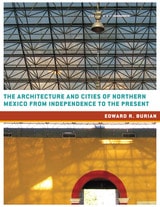
The Architecture and Cities of Northern Mexico from Independence to the Present
By Edward R. Burian
University of Texas Press, 2015
The states of Northern Mexico—Tamaulipas, Nuevo León, Coahuila, Chihuahua, Durango, Sonora, Sinaloa, and Baja California Norte and Sur—have architecture, urbanism, and landscape design that offer numerous lessons in how to build well, but this constructed environment is largely undervalued or unknown. To make this architecture better known to a wide professional, academic, and public audience, this book presents the first comprehensive overview in either English or Spanish of the architecture, urban landscapes, and cities of Northern Mexico from the country’s emergence as a modern nation in 1821 to the present day.
Profusely illustrated with color and black-and-white photographs, maps, and analytical drawings of urban cores of major cities, The Architecture and Cities of Northern Mexico systematically examines significant works of architecture in large cities and small towns in each state, from the earliest buildings in the urban core to the newest at the periphery. Edward R. Burian describes the most memorable works of architecture in each city in greater detail in terms of their spatial organization, materials, and sensory experience. He also includes a concise geographical and historical summary of the region that provides a useful background for the discussions of the works of architecture. Burian concludes the book with a brief commentary on lessons learned and possible futures for the architectural culture of the region, as well as the first comprehensive biographical listing of the architects practicing in Northern Mexico during the past two centuries.
The Art of Protest
Culture and Activism from the Civil Rights Movement to the PresentT.V. Reed
University of Minnesota Press, 2019
A second edition of the classic introduction to arts in social movements, fully updated and now including Black Lives Matter, Occupy Wall Street, and new digital and social media forms of cultural resistance
The Art of Protest, first published in 2006, was hailed as an “essential” introduction to progressive social movements in the United States and praised for its “fluid writing style” and “well-informed and insightful” contribution (Choice Magazine). Now thoroughly revised and updated, this new edition of T. V. Reed’s acclaimed work offers engaging accounts of ten key progressive movements in postwar America, from the African American struggle for civil rights beginning in the 1950s to Occupy Wall Street and Black Lives Matter in the twenty-first century.
Reed focuses on the artistic activities of these movements as a lively way to frame progressive social change and its cultural legacies: civil rights freedom songs, the street drama of the Black Panthers, revolutionary murals of the Chicano movement, poetry in women’s movements, the American Indian Movement’s use of film and video, anti-apartheid rock music, ACT UP’s visual art, digital arts in #Occupy, Black Lives Matter rap videos, and more.
Through the kaleidoscopic lens of artistic expression, Reed reveals how activism profoundly shapes popular cultural forms. For students and scholars of social change and those seeking to counter reactionary efforts to turn back the clock on social equality and justice, the new edition of The Art of Protest will be both informative and inspiring.
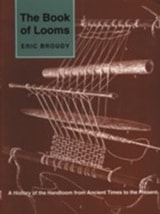
The Book of Looms
A History of the Handloom from Ancient Times to the PresentEric Broudy
University Press of New England, 1993
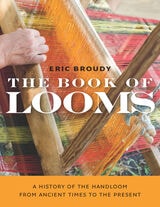
The Book of Looms
A History of the Handloom from Ancient Times to the PresentEric Broudy
Brandeis University Press, 2021
The handloom—often no more than a bundle of sticks and a few lengths of cordage—has been known to almost all cultures for thousands of years. Eric Broudy places the wide variety of handlooms in their historical context. What influenced their development? How did they travel from one geographic area to another? Were they invented independently by different cultures? How have modern cultures improved on ancient weaving skills and methods? Broudy shows how virtually every culture has woven on handlooms. He highlights the incredible technical achievement of early cultures that created magnificent textiles with the crudest of tools and demonstrates that modern technology has done nothing to surpass their skill or inventiveness.
The Buck, the Black, and the Existential Hero
Refiguring the Black Male Literary Canon, 1850 to PresentJames B. Haile III
Northwestern University Press, 2020
The Buck, the Black, and the Existential Hero: Refiguring the Black Male Literary Canon, 1850 to Present combines philosophy, literary theory, and jazz studies with Africana studies to develop a theory of the black male literary imagination. In doing so, it seeks to answer fundamental aesthetic and existential questions: How does the experience of being black and male in the modern West affect the telling of a narrative, the shape or structure of a novel, the development of characters and plot lines, and the nature of criticism itself?
James B. Haile argues that, since black male identity is largely fluid and open to interpretation, reinterpretation, and misinterpretation, the literature of black men has developed flexibility and improvisation, termed the “jazz of life.” Our reading of this literature requires the same kind of flexibility and improvisation to understand what is being said and why, as well as what is not being said and why. Finally, the book attempts to offer this new reading experience by placing texts by well-known authors, such as Frederick Douglass, Ralph Ellison, and Colson Whitehead, in conversation with texts by those who are less well known and those who have, for the most part, been forgotten, in particular, Cecil Brown. Doing so challenges the reader to visit and revisit these novels with a new perspective about the social, political, historical, and psychic realities of black men.
The Burden of the Ancients
Maya Ceremonies of World Renewal from the Pre-columbian Period to the PresentBy Allen J. Christenson
University of Texas Press, 2016
In Maya theology, everything from humans and crops to gods and the world itself passes through endless cycles of birth, maturation, dissolution, death, and rebirth. Traditional Maya believe that human beings perpetuate this cycle through ritual offerings and ceremonies that have the power to rebirth the world at critical points during the calendar year. The most elaborate ceremonies take place during Semana Santa (Holy Week), the days preceding Easter on the Christian calendar, during which traditionalist Maya replicate many of the most important world-renewing rituals that their ancient ancestors practiced at the end of the calendar year in anticipation of the New Year’s rites.
Marshaling a wealth of evidence from Pre-Columbian texts, early colonial Spanish writings, and decades of fieldwork with present-day Maya, The Burden of the Ancients presents a masterfully detailed account of world-renewing ceremonies that spans the Pre-Columbian era through the crisis of the Conquest period and the subsequent colonial occupation all the way to the present. Allen J. Christenson focuses on Santiago Atitlán, a Tz’utujil Maya community in highland Guatemala, and offers the first systematic analysis of how the Maya preserved important elements of their ancient world renewal ceremonies by adopting similar elements of Roman Catholic observances and infusing them with traditional Maya meanings. His extensive description of Holy Week in Santiago Atitlán demonstrates that the community’s contemporary ritual practices and mythic stories bear a remarkable resemblance to similar cultural entities from its Pre-Columbian past.
The Cultural Turn in U. S. History
Past, Present, and FutureEdited by James W. Cook, Lawrence B. Glickman, and Michael O'Malley
University of Chicago Press, 2008
The Darkness of the Present
Poetics, Anachronism, and the AnomalySteve McCaffery
University of Alabama Press, 2012
The Economics of Climate Change
Adaptations Past and PresentEdited by Gary D. Libecap and Richard H. Steckel
University of Chicago Press, 2011
While debates over the consequences of climate change are often pessimistic, historical data from the past two centuries indicate many viable opportunities for responding to potential changes. This volume takes a close look at the ways in which economies—particularly that of the United States—have adjusted to the challenges climate change poses, including institutional features that help insulate the economy from shocks, new crop varieties, irrigation, flood control, and ways of extending cultivation to new geographic areas. These innovations indicate that people and economies have considerable capacity to acclimate, especially when private gains complement public benefits. Options for adjusting to climate change abound, and with improved communication and the emergence of new information and technologies, the potential for adaptation will be even greater in the future.
The First World War and Popular Cinema
1914 to the PresentParis, Michael
Rutgers University Press, 2000
The Great War played an instrumental role in the development of cinema, so necessary was it to the mobilization efforts of the combatant nations. In turn, after the war, as memory began to fade, cinema continued to shape the war's legacy and eventually to determine the ways in which all warfare is imagined.
The First World War and Popular Cinema provides fresh insight into the role of film as an historical and cultural tool. Through a comparative approach, essays by contributors from Europe, Australia, Canada, and the United States enrich our understanding of cinematic depictions of the Great War in particular and combat in general. New historical research on both the uses of propaganda and the development of national cinemas make this collection one of the first to show the ways in which film history can contribute to our study of national histories. The contributors to the volume monitor popular perceptions of the war, the reshaping of the war's legacy, and the evolution of cinematic clichés that are perpetuated in filmmaking through the century. Some of the films they discuss are All Quiet on the Western Front, Gallipoli, The Grand Illusion, The Big Parade, Battle of the Somme, J'Accuse, Regeneration, and many more. The First World War and Popular Cinema is a vital addition to film studies and history, two fields only recently united in a productive way.
The Heart of the Lakes
Freshwater in the Past, Present and Future of Southeast MichiganDave Dempsey
Michigan State University Press, 2019

The Jersey Shore
The Past, Present & Future of a National TreasureMazzagetti, Dominick
Rutgers University Press, 2018
Divided into chronological and thematic sections, this book will attract general readers interested in the history of the Shore: how it appeared to early European explorers; how the earliest settlers came to the beaches for the whaling trade; the first attractions for tourists in the nineteenth century; and how the coming of railroads, and ultimately automobiles, transformed the Shore into a major vacation destination over a century later. Mazzagetti also explores how the impact of changing national mores on development, race relations, and the environment, impacted the Shore in recent decades and will into the future. Ultimately, this book is an enthusiastic and comprehensive portrait by a native son, whose passion for the region is shared by millions of beachgoers throughout the Northeast.

The Kurds in Iraq - Second Edition
The Past, Present and FutureKerim Yildiz
Pluto Press, 2007
The book is a unique account of the problems that all political groups face in bringing stability to the country. It explores Kurdish links to those political groups and their role in international relations in the broader sense. It should be required reading for policymakers and anyone interested in the current position of the Kurds in Iraq.
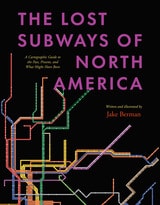
The Lost Subways of North America
A Cartographic Guide to the Past, Present, and What Might Have BeenJake Berman
University of Chicago Press, 2023
A visual exploration of the transit histories of twenty-three US and Canadian cities.
Every driver in North America shares one miserable, soul-sucking universal experience—being stuck in traffic. But things weren’t always like this. Why is it that the mass transit systems of most cities in the United States and Canada are now utterly inadequate?
The Lost Subways of North America offers a new way to consider this eternal question, with a strikingly visual—and fun—journey through past, present, and unbuilt urban transit. Using meticulous archival research, cartographer and artist Jake Berman has successfully plotted maps of old train networks covering twenty-three North American metropolises, ranging from New York City’s Civil War–era plan for a steam-powered subway under Fifth Avenue to the ultramodern automated Vancouver SkyTrain and the thousand-mile electric railway system of pre–World War II Los Angeles. He takes us through colorful maps of old, often forgotten streetcar lines, lost ideas for never-built transit, and modern rail systems—drawing us into the captivating transit histories of US and Canadian cities.
Berman combines vintage styling with modern printing technology to create a sweeping visual history of North American public transit and urban development. With more than one hundred original maps, accompanied by essays on each city’s urban development, this book presents a fascinating look at North American rapid transit systems.
The Mountain
A Political History from the Enlightenment to the PresentBernard Debarbieux and Gilles Rudaz
University of Chicago Press, 2015
In The Mountain, geographers Bernard Debarbieux and Gilles Rudaz trace the origins of the very concept of a mountain, showing how it is not a mere geographic feature but ultimately an idea, one that has evolved over time, influenced by changes in political climates and cultural attitudes. To truly understand mountains, they argue, we must view them not only as material realities but as social constructs, ones that can mean radically different things to different people in different settings.
From the Enlightenment to the present day, and using a variety of case studies from all the continents, the authors show us how our ideas of and about mountains have changed with the times and how a wide range of policies, from border delineation to forestry as well as nature protection and social programs, have been shaped according to them. A rich hybrid analysis of geography, history, culture, and politics, the book promises to forever change the way we look at mountains.
The Mystic of Friendship
Divining the Present in Settler AmazoniaAshley Lebner
University of Chicago Press, 2025
On Brazil’s Amazonian frontier, settlers pursue land and opportunity, but they also gather for prayer and pilgrimage, yearning for a deep relationship with God and one another. In this book, anthropologist Ashley Lebner examines how everyday religious practices and feelings, what she calls a mystic of friendship, shape and sustain colonization in the Amazon.
Lebner invites us to a stretch of highway in Pará, Brazil, where violent colonization coexists with prophetic dreams, Afro-Brazilian prayers, and emerging evangelicalism. She shows how, amid political tensions and physical hardship, settlers believe that the violence they experience and enact derives from the bestial nature of earthly life that must be overcome. In exposing a longing for divinely-infused friendship that animates colonization, Lebner offers a powerful new perspective on the forces driving colonialism as much as religious and political expression.
The Nahua
Language and Culture from the 16th Century to the PresentGalen Brokaw
University Press of Colorado, 2024
During the colonial period, Nahuatl became a means of empowerment, oppression, and indoctrination. In modern times, Nahuatl continues to serve as an ideological lightning rod for both the Mexican government and Indigenous communities. Contributors to this volume focus on Nahua intellectual production from the sixteenth century to the present; contact and the negotiation of meaning; adaptations of Christian lore that show how representations of creation, hell, and the Passion of Christ reflected Nahua perceptions and understandings; Nahua cultural expressions, including poetry, healing rituals, and even running; language and geography; Nahuatl place-names; and the transformation of Nahuatl speakers from antiquity to the present.
Showcasing how Nahuatl’s cultural resilience permanently shaped the region’s social geography, The Nahua engages the field’s interest in the nonhomogenous character of the language, with regional and subregional dialects and pronunciations that reflect the history of pre-Columbian migrations and modern-era influences. Bridging the study of Nahuatl as a “historical” Indigenous language tradition with the study of modern-day speakers and their experiences, this work is of significance to students, scholars, and speakers of the languages as well as those studying colonial New Spain, Indigenous resilience, or Indigenous linguistics.
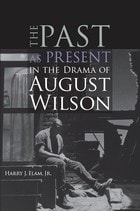
The Past as Present in the Drama of August Wilson
Harry J. Elam, Jr.
University of Michigan Press, 2004
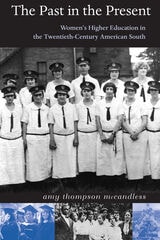
The Past in the Present
Women's Higher Education in the Twentieth-Century American SouthAmy T. McCandless
University of Alabama Press, 1999
The Past, Present, and Future of Early Modern Digital Studies
Iter at 25Edited by Laura Estill and Ray Siemens
Iter Press, 2025
Early modern digital studies is a thriving field that draws in strands from publishing, textual studies, digital humanities, and more. Yet it is also rapidly changing. This volume shows that early modern digital studies must be reconsidered from different perspectives as new projects and tools emerge, change, or disappear, and as we make advances into better understanding the past. The chapters in this volume explore how and what we publish (digitally and otherwise), how we value, evaluate, and sustain those publications and digital projects, and how these projects enable us to ask new research questions about early modern literature and culture. This collection does not seek to be a definitive or final state-of-the-field, but rather, a celebration of existing scholarship and an invitation to further scholarship about our ever-evolving practices.
The Present of the Future
Edited by Susanne Witzgall and Kerstin Stakemeier
Diaphanes, 2018
The result of a lecture series held at the cx centre for interdisciplinary studies at the Academy of Fine Arts, Munich, The Present of the Future explores our current relationship to the future and considers strategies for artists and scholars to establish effective action for shaping alternative futures. Contributors to the book approach this problem from the perspective of diverse disciplines, including art, design, architecture, and philosophy.

The Revival of Metaphysical Poetry
The History of Style, 1800 to the PresentJoseph E. Duncan
University of Minnesota Press, 1959
The Revival of Metaphysical Poetry was first published in 1959. Minnesota Archive Editions uses digital technology to make long-unavailable books once again accessible, and are published unaltered from the original University of Minnesota Press editions.
The metaphysical style, as expressed in its most distinguished and distinguishable form by the seventeenth-century poet John Donne, has had an increasing influence on latterday critics and poets. Thus it is important to an understanding of literary history to examine this revival. Professor Duncan traces the movement and analyzes changing interpretations of the style in the work of British and American poets and critics. He shows that much of the "new criticism" and the metaphysical poetry of T. S. Eliot and that of the metaphysical style has thrived on fresh critical interpretation and vital poetic experimentation.

The Roots of Modern Hollywood
The Persistence of Values in American Cinema, from the New Deal to the PresentNick Smedley
Intellect Books, 2014
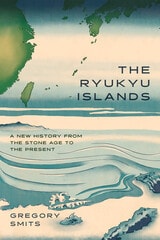
The Ryukyu Islands
A New History from the Stone Age to the PresentGregory Smits
University of Chicago Press, 2025
The Ryukyu Islands between Japan and Taiwan consist of around 160 islands and are home to about 1.5 million inhabitants. Across the islands’ history, sea-lanes and trade patterns have connected them to the East China Sea region, giving them a unique vantage point on the region’s changes and making them a useful lens through which to view and understand those transformations. In this book, Gregory Smits marshals his expertise to canvass the environmental, political, and social history of this fascinating area, emphasizing the diversity of influences from China, Japan, and Korea that have shaped it. Smits begins by tracing the islands’ early history from the time of the oldest extant human remains, through massive inflows of settlers from Japan, until the emergence of a centralized state in the sixteenth century. He then traces the development of the Ryukyu Kingdom from the fifteenth to the nineteenth century, examining its major cultural formations and the interplay of local and external influences driving its evolution. Finally, Smits ushers readers to the modern era, from the end of the Ryukyu Kingdom in 1879 through World War II, the era of American military control, and on to the present. He concludes with their present-day status as a tourist destination affected by ongoing geopolitical, economic, and environmental challenges. Synthesizing decades of research, this book is an indispensable, comprehensive guide to the islands’ history for scholars and nonspecialists alike.
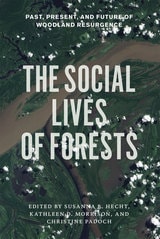
The Social Lives of Forests
Past, Present, and Future of Woodland ResurgenceEdited by Susanna B. Hecht, Kathleen D. Morrison, and Christine Padoch
University of Chicago Press, 2014
Focusing on the history and current use of woodlands from India to the Amazon, The Social Lives of Forests attempts to build a coherent view of forests sited at the nexus of nature, culture, and development. With chapters covering the effects of human activities on succession patterns in now-protected Costa Rican forests; the intersection of gender and knowledge in African shea nut tree markets; and even the unexpectedly rich urban woodlands of Chicago, this book explores forests as places of significant human action, with complex institutions, ecologies, and economies that have transformed these landscapes in the past and continue to shape them today. From rain forests to timber farms, the face of forests—how we define, understand, and maintain them—is changing.
The Theory of German Word Order from the Renaissance to the Present
Aldo Scaglione
University of Minnesota Press, 1981
The Theory of German Word Order from the Renaissance to the Present was first published in 1981. Minnesota Archive Editions uses digital technology to make long unavailable books once again accessible, and are published unaltered from the original University of Minnesota Press editions.
The uniquely systematic character of German word order and sentence structure has long been recognized as an important feature of the language and of its literary uses. This book is the first comprehensive survey of the way theorists and stylists have interpreted these features through the centuries. Aldo Scaglione contends that the story of this theoretical awareness is part of the emerging cultural and literary consciousness of the German nation, as well as a testing ground for contemporary linguistic typology.
German speculation on the nature of a national language is, to Scaglione, best understood as a dialogue with the prevailing models of Latin, Italian, French, and English. His account of the debates over German word order is thus grounded in the complex historical circumstances from which they emerge: Renaissance grammarians took stock of German divergencies from the Latin cultural model, and those in the seventeenth century faced the challenges of French rationalism, nineteenth-century Romanticism and the many linguistic movements of the twentieth century have all cast new light upon the peculiarities of German sentence structure. Readers interested in historical syntax, rhetorical traditions, and the history of the German language will value both Scaglione's wide-ranging knowledge and his lively style.
The Treadmill Affect
Marxism, Subjectivity, and the PresentBenjamin Lee
Prickly Paradigm Press, 2025
The Treadmill Affect draws upon the work of three University of Chicago professors, each a former program director at the Center for Transcultural Studies: literary and cultural critic Lauren Berlant, historian and social theorist Moishe Postone, and linguist Michael Silverstein. Through this intellectual synthesis, Benjamin Lee demonstrates the critical possibilities of uniting a revived linguistic turn with Marxist accounts of affect and subjectivity, adding new dimensions to the "treadmill" affective structure of cruel optimism.
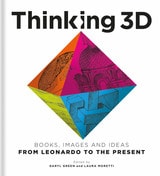
Thinking 3D
Books, Images and Ideas from Leonardo to the PresentEdited by Daryl Green and Laura Moretti
Bodleian Library Publishing, 2019
Through essays on some of the world’s greatest artists and thinkers—such as Leonardo da Vinci, Luca Pacioli, Andreas Vesalius, Johann Kepler, Galileo Galilei, William Hunter, and many more—this book tells the story of how of we learned to communicate three-dimensional forms on the two-dimensional page. It features some of Leonardo da Vinci’s ground-breaking drawings now in the Royal Collections and British Library as well as extraordinary anatomical illustrations, early paper engineering such as volvelles and flaps, beautiful architectural plans, and even views of the moon. With in-depth analysis of more than forty manuscripts and books, Thinking 3D also reveals the impact that developing techniques had on artists and draftsmen throughout time and across space, culminating in the latest innovations in computer software and 3D printing.
To Quench Our Thirst
The Present and Future Status of Freshwater Resources of the United StatesDavid A. Francko and Robert G. Wetzel
University of Michigan Press, 1983
Tropical Rainforests
Past, Present, and FutureEdited by Eldredge Bermingham, Christopher Dick, and Craig Moritz
University of Chicago Press, 2005