Results by title
69 books match the query 'Public Affairs & Administration' and 14 start with t
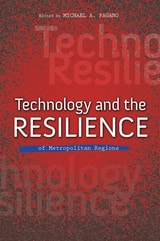
Technology and the Resilience of Metropolitan Regions
Edited by Michael E. Pagano
University of Illinois Press, 2015
In this new collection, Michael A. Pagano curates engagement with such questions by public intellectuals, stakeholders, academics, policy analysts, and citizens. Each essay explores issues related to the impact and opportunities technology provides in government and citizenship, health care, workforce development, service delivery to citizens, and metropolitan growth. As the authors show, rapidly emerging technologies and access to such technologies shape the ways people and institutions interact in the public sphere and private marketplace. The direction of metropolitan growth and development, in turn, depends on access to appropriate technology scaled and informed by the individual, household, and community needs of the region.
Contributors include Randy Blankenhorn, Bénédicte Callan, Jane Fountain, Sandee Kastrul, Karen Mossberger, Dan O'Neil, Michelle Russell, Alfred Tatum, Stephanie Truchan, Darrel West, and Howard Wial.
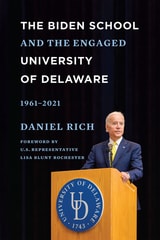
The Biden School and the Engaged University of Delaware, 1961-2021
Daniel Rich
University of Delaware Press, 2023
The Federal Appointments Process
A Constitutional and Historical AnalysisMichael J. Gerhardt
Duke University Press, 2003
Michael J. Gerhardt includes each U.S. president’s performance record regarding appointments, accounts of virtually all the major confirmation contests, as well as discussion of significant legal and constitutional questions raised throughout U.S. history. He also analyzes recess appointments, the Vacancies Act, the function of nominees in the appointment process, and the different treatment received by judicial and nonjudicial nominations. While discussing the important roles played by media and technology in federal appointments, Gerhardt not only puts particular controversies in perspective but also identifies important trends in the process, such as how leaders of different institutions attempt to protect—if not expand—their respective prerogatives by exercising their authority over federal appointments. Employing a newly emerging method of inquiry known as “historical institutionalism”—in which the ultimate goal is to examine the development of an institution in its entirety and not particular personalities or periods, this book concludes with suggestions for reforms in light of recent controversies springing from the longest delays in history that many judicial nominees face in the Senate.
Gerhardt’s intensive treatment of the subject will be of interest to students and scholars of political science, government, history, and legal studies.
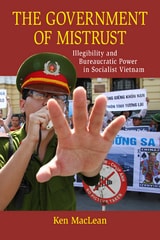
The Government of Mistrust
Illegibility and Bureaucratic Power in Socialist VietnamKen MacLean
University of Wisconsin Press, 2013

The Intellectual Crisis in American Public Administration
Vincent Ostrom
University of Alabama Press, 1989
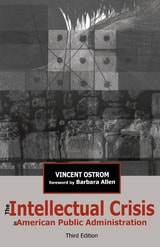
The Intellectual Crisis in American Public Administration
Vincent Ostrom
University of Alabama Press, 2007
Rethinking governance: Where democracy meets administration.
This revised and expanded third edition extends Ostrom’s analysis to account for the most resent developments in American politics, including those of the Clinton and Bush administrations.
First published in 1973, The Intellectual Crisis in American Public Administration remains one of the most influential critiques of the administrative state. Vincent Ostrom examines the intellectual roots of American public administration, questioning whether centralized bureaucratic systems align with the constitutional principles of self-governance. Through a rigorous analysis of institutional design, federalism, and public choice theory, Ostrom advocates for polycentric governance—an approach that empowers citizens and decentralizes authority. This seminal work continues to inspire debates on accountability, legitimacy, and the future of democratic administration.
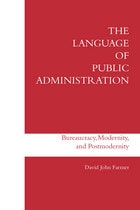
The Language of Public Administration
Bureaucracy, Modernity, and PostmodernityDavid John Farmer
University of Alabama Press, 1995
Rethinking bureaucracy through the lenses of modernity, postmodernity, and administrative imagination.
Coping with the practical problems of bureaucracy is hampered by the limited self-conception and the constricted mindsets of mainstream public administration thinking. Modernist public administration theory, although valuable and capable of producing ever more remarkable results, is limiting as an explanatory and catalytic force in resolving fundamental problems about the nature, size, scope, and functioning of public bureaucracy and in transforming public bureaucracy into a more positive force.
This original study specifies a reflexive language paradigm for public administration thinking and shows how a postmodern perspective permits a revolution in the character of thinking about public bureaucracy. The author considers imagination, deconstruction, deterritorialization, and alterity. Farmer's work emphasizes the need for an expansion in the character and scope of public administration's disciplinary concerns and shows clearly how the study and practice of public administration can be reinvigorated.

The Minnesota Commission of Administration and Finance, 1925-1939
An Administrative HistoryLloyd M. Short and Carl W. Tiller
University of Minnesota Press, 0
The Minnesota Commission of Administration and Finance, 1925-1939 was first published in 1964. Minnesota Archive Editions uses digital technology to make long-unavailable books once again accessible, and are published unaltered from the original University of Minnesota Press editions.
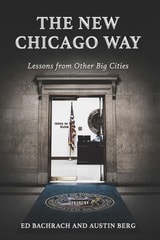
The New Chicago Way
Lessons from Other Big CitiesEd Bachrach and Austin Berg
Southern Illinois University Press, 2019
Rather than simply lament the situation, criticize specific leaders, or justify an ideology, Bachrach and Berg compare the decisions about Chicago’s governance and finances with choices made in fourteen other large U.S. cities. The problems that seem unique to Chicago have been encountered elsewhere, and Chicagoans, the authors posit, can learn from the successful solutions other cities have embraced.
Chicago government and its citizens must let go of the past to prepare for the future, argue Bachrach and Berg. A future filled with demographic, technological, and economic change requires a government capable of responding and adapting. Reforms can transform the city. The prescriptions for change provided in this book point toward a hopeful future: the New Chicago Way.
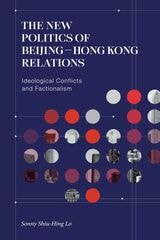
The New Politics of Beijing–Hong Kong Relations
Ideological Conflicts and FactionalismSonny Shiu-Hing Lo
Hong Kong University Press, 2024
The New Politics of Beijing–Hong Kong Relations particularly examines the paternalistic authoritarianism that can be seen in Beijing's policy toward Hong Kong since the promulgation of the national security law in late June 2020. Lo analyzes the ideological shift from liberal nationalism to conservative nationalism on the mainland Chinese side since late 2012. The increasingly radical localism on the Hong Kong side after 2014 altered Beijing-Hong Kong relations and introduced factional struggles. While the imposition of the national security law in Hong Kong in late June 2020 has stabilized the city politically, Beijing's policy toward Hong Kong is now guided by the principles of protecting its national security and maintaining economic pragmatism, with implications for Beijing's relations with Taipei in the coming years.
The Three Ages of Government
From the Person, to the Group, to the WorldJos C.N. Raadschelders
University of Michigan Press, 2020

To Live and Die in America
Class, Power, Health and HealthcareRobert Chernomas and Ian Hudson
Pluto Press, 2013
To Live and Die in America details how the United States has among the worst indicators of health in the industrialised world and at the same time spends significantly more on its health care system than any other industrial nation.
Robert Chernomas and Ian Hudson explain this contradictory phenomenon as the product of the unique brand of capitalism that has developed in the US. It is this particular form of capitalism that created both the social and economic conditions that largely influence health outcomes and the inefficient, unpopular and inaccessible health care system that is incapable of dealing with them.
The authors argue that improving health in America requires a change in the conditions in which people live and work as well as a restructured health care system.

Tribal Administration Handbook
A Guide for Native Nations in the United StatesRebecca M. Webster
Michigan State University Press, 2022

Truth in Public Life
Vernon White, Stephen Lamport, and Claire Foster-Gilbert
Haus Publishing, 2020