Results by title
74 books match the query 'Puerto Rico' and 11 start with t
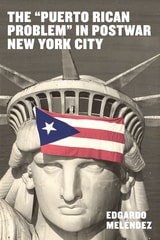
The "Puerto Rican Problem" in Postwar New York City
Edgardo Meléndez
Rutgers University Press, 2023
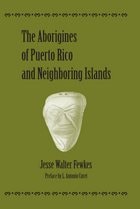
The Aborigines of Puerto Rico and Neighboring Islands
Jesse Walter Fewkes
University of Alabama Press, 2009
Originally published as the Twenty-Fifth Annual Report of the Bureau of American Ethnology to the Secretary of the Smithsonian Institution in 1907, this book was praised in an article in American Anthropologist as doing “more than any other to give a comprehensive idea of the archaeology of the West Indies.”
Until that time, for mainly political reasons, little scientific research had been conducted by Americans on any of the Caribbean islands. Dr. Fewkes' unique skills of observation and experience served him well in the quest to understand Caribbean prehistory and culture. This volume, the result of his careful fieldwork in Puerto Rico in 1902-04, is magnificently illustrated by 93 plates and 43 line drawings of specimens from both public and private collections of the islands.
A 1907 article in the Journal of the Royal Anthropological Institute of Great Britain and Ireland described the volume as “a most valuable contribution to ethnographical science.”
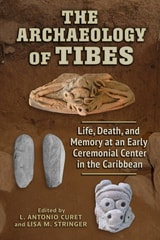
The Archaeology of Tibes
Life, Death, and Memory at an Early Ceremonial Center in the CaribbeanEdited by L. Antonio Curet and Lisa M. Stringer
University of Alabama Press, 2025
A collection of new essays that brings archaeological insights and discoveries at the Tibes Ceremonial Center up to date
The Archaeology of Tibes is a collection of essays offering a fresh analysis of this important ceremonial center. It brings new insights about social structure, illuminating the smaller-scale daily lives of ancient peoples rather than focusing on large-scale chiefdoms.
Tibes is the earliest known (ca. 400 to 1300 CE) ceremonial center in Puerto Rico. It has been the focus of one of the largest and longest-running archaeological programs in the Caribbean. Early researchers interpreted evidence in the area of a shift from dispersed villages to a ceremonial center as suggesting the development of social stratification and accumulation of power. Seen as the seat of an early chiefdom, Tibes served as a model applied broadly across the Greater Antilles.
New discoveries prompted archaeologists to question their original assumptions about ancient Puerto Rico, and later research failed to produce evidence of social stratification at Tibes. The Archaeology of Tibes therefore incorporates updated and wider perspectives on social formation. It considers agency, decisions, and events and the possibility of more than one form of social organization. It also presents a more accurate “humanized” past: the sociological meanings of that space and its significance for the people who created, used, and occupied it and who influenced rituals, social memory, and community.
Summarizing findings from excavations at Tibes after 2010, the collection also reviews the geoarchaeology of the site. Additional essays cover ceramic pastes, lithic production, faunal remains, coral, burials, and rock art. This work will engender discussion and future research by archaeologists across the Caribbean and beyond.

The Food Web of a Tropical Rain Forest
Edited by Douglas P. Reagan and Robert B. Waide
University of Chicago Press, 1996
This volume helps fill the gap by presenting a comprehensive description and analysis of the animal community of the tropical rain forest at El Verde, Puerto Rico. Building on more than a decade of field research, the contributors weave the complex strands of information about the energy flow within the forest—who eats whom—into a powerful tool for understanding community dynamics known as a food web. This systematic approach to organizing the natural histories of the many species at El Verde also reveals basic patterns and processes common to all rain forests, making this book a valuable contribution for anyone concerned with studying and protecting these fragile ecosystems.
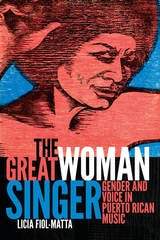
The Great Woman Singer
Gender and Voice in Puerto Rican MusicLicia Fiol-Matta
Duke University Press, 2017
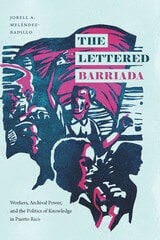
The Lettered Barriada
Workers, Archival Power, and the Politics of Knowledge in Puerto RicoJorell A. Meléndez-Badillo
Duke University Press, 2021
Duke University Press Scholars of Color First Book Award recipient
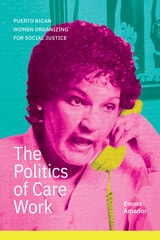
The Politics of Care Work
Puerto Rican Women Organizing for Social JusticeEmma Amador
Duke University Press, 2025
The Politics of Puerto Rican University Students
By Arthur Liebman
University of Texas Press, 1970
In the 1960s, when students everywhere were coming alive politically, and when the Latin American student activist in particular became as archetypal of radicalism as the Latin American dictator was of repression, Puerto Rican students remained strangely silent. With the exception of FUPI, a radical student group with only a small following, student political behavior conformed to that of Puerto Rican society in general—center to conservative.
Historically, Puerto Rico has been economically and politically dominated first by Spain and then by the United States. But unlike other colonial dependencies in Latin America, Puerto Rico has never rebelled. Puerto Rican politics centers on the status issue—independence, statehood, or association for the island. But no legendary victories, no heroic defeats offer a battle cry for nationalists, leftists, and independistas. Overwhelming foreign influence in the Church, the schools, the economy, and eventually the mass media deprived the island of any strong indigenous institutions that might foster nationalism. Militancy lies outside the mainstream of Puerto Rican tradition.
Against this historical and cultural backdrop, Arthur Liebman closely examines the social background and political activity of students at the Rio Piedras campus of the University of Puerto Rico. Based on personal interviews with students, faculty, and administrators, as well as on a survey of the student body, his study reveals the strength of political inheritance among university students in Puerto Rico. The student left is small and weak largely because the left of the parents’ generation is small and weak. To date, Puerto Rican students have been the children of their parents and of their society.
Within a university that emphasizes practicality, the nonmilitant majority of the students study education, business, engineering, and medicine, being trained to participate in and to reap the rewards of the status quo. Student leftists, in the minority, generally study history, economics, sociology, and law—fields that open wider perspectives on their society and its problems and offer no immediate guarantee of its benefits. Brighter, less religious, and more dissatisfied with their role as a student, the student leftists stand apart from their cohort at the University of Puerto Rico. Like their adult counterparts, they are an anomaly in an acquisitive, relatively conservative society.
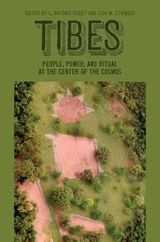
Tibes
People, Power, and Ritual at the Center of the CosmosEdited by L. Antonio Curet and Lisa M. Stringer
University of Alabama Press, 2009
The prehistoric civic-ceremonial center of Tibes is located on the southern coast of Puerto Rico, just north of the modern coastal city of Ponce. Protected on two sides by a river, and on the other two sides by hills, this approximately 10.5-acre site remains as fertile and productive today as when first occupied over 2,000 years ago. Such a rich region would have been a choice location for native peoples because of the diversity in all resources, from land, air, and sea--and also symbolically crucial as a liminal space within the landscape. It may have been regarded as a space charged with numen or cosmic energy where different parts of the cosmos (natural vs. supernatural, or world of the living vs. world of the dead) overlap. Archaeological evidence reveals a long occupation, about 1,000 years, possibly followed by an extensive period of sporadic ceremonial use after the site itself was practically abandoned.
In this volume, nineteen Caribbeanists, across a wide academic spectrum, examine the geophysical, paleoethnobotanical, faunal, lithics, base rock, osteology, bone chemistry and nutrition, social landscape, and ceremonial constructs employed at Tibes. These scholars provide a concise, well-presented, comprehensive analysis of the evidence for local level changes in household economy, internal organization, accessibility to economic, religious, and symbolic resources related to the development and internal operation of socially stratified societies in the Caribbean.
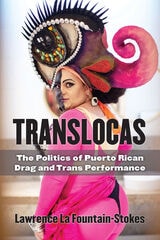
Translocas
The Politics of Puerto Rican Drag and Trans PerformanceLawrence La Fountain-Stokes
University of Michigan Press, 2021
Translocas focuses on drag and transgender performance and activism in Puerto Rico and its diaspora. Arguing for its political potential, Lawrence La Fountain-Stokes explores the social and cultural disruptions caused by Latin American and Latinx “locas” (effeminate men, drag queens, transgender performers, and unruly women) and the various forms of violence to which queer individuals in Puerto Rico and the U.S. are subjected. This interdisciplinary, auto-ethnographic, queer-of-color performance studies book explores the lives and work of contemporary performers and activists including Sylvia Rivera, Nina Flowers, Freddie Mercado, Javier Cardona, Jorge Merced, Erika Lopez, Holly Woodlawn, Monica Beverly Hillz, Lady Catiria, and Barbra Herr; television programs such as RuPaul’s Drag Race; films such as Paris Is Burning, The Salt Mines, and Mala Mala; and literary works by authors such as Mayra Santos-Febres and Manuel Ramos Otero. Lawrence La Fountain-Stokes, a drag performer himself, demonstrates how each destabilizes (and sometimes reifies) dominant notions of gender and sexuality through drag and their embodied transgender expression. These performances provide a means to explore and critique issues of race, class, poverty, national identity, and migratory displacement while they posit a relationship between audiences and performers that has a ritual-like, communal dimension. The book also analyzes the murders of Jorge Steven López Mercado and Kevin Fret in Puerto Rico, and invites readers to challenge, question, and expand their knowledge about queer life, drag, trans performance, and Puerto Rican identity in the Caribbean and the diaspora. The author also pays careful attention to transgender experience, highlighting how trans activists and performers mold their bodies, promote social change, and create community in a context that oscillates between glamour and abjection.
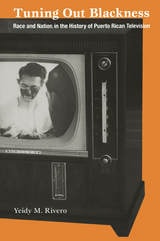
Tuning Out Blackness
Race and Nation in the History of Puerto Rican TelevisionYeidy M. Rivero
Duke University Press, 2005
Drawing on interviews, participant observation, archival research, and textual analysis, Rivero considers representations of race in Puerto Rico, taking into account how they are intertwined with the island’s status as a U.S. commonwealth, its national culture, its relationship with Cuba before the Cuban Revolution in 1959, and the massive influx of Cuban migrants after 1960. She focuses on locally produced radio and television shows, particular television events, and characters that became popular media icons—from the performer Ramón Rivero’s use of blackface and “black” voice in the 1940s and 1950s, to the battle between black actors and television industry officials over racism in the 1970s, to the creation, in the 1990s, of the first Puerto Rican situation comedy featuring a black family. As the twentieth century drew to a close, multinational corporations had purchased all Puerto Rican stations and threatened to wipe out locally produced programs. Tuning Out Blackness brings to the forefront the marginalization of nonwhite citizens in Puerto Rico’s media culture and raises important questions about the significance of local sites of television production.