Results by title
91 books match the query 'Radio' and 17 start with t
Talkative Polity
Radio, Domination, and Citizenship in UgandaFlorence Brisset-Foucault
Ohio University Press, 2019
For the first decade of the twenty-first century, every weekend, people throughout Uganda converged to participate in ebimeeza, open debates that invited common citizens to share their political and social views. These debates, also called “People’s Parliaments,” were broadcast live on private radio stations until the government banned them in 2009. In Talkative Polity, Florence Brisset-Foucault offers the first major study of ebimeeza, which complicate our understandings of political speech in restrictive contexts and force us to move away from the simplistic binary of an authoritarian state and a liberal civil society.
Brisset-Foucault conducted fieldwork from 2005 to 2013, primarily in Kampala, interviewing some 150 orators, spectators, politicians, state officials, journalists, and NGO staff. The resulting ethnography invigorates the study of political domination and documents a short-lived but highly original sphere of political expression. Brisset-Foucault thus does justice to the richness and depth of Uganda’s complex political and radio culture as well as to the story of ambitious young people who didn’t want to behave the way the state expected them to. Positioned at the intersection of media studies and political science, Talkative Polity will help us all rethink the way in which public life works.
Television in the Age of Radio
Modernity, Imagination, and the Making of a MediumSewell, Philip W
Rutgers University Press, 2014
Television existed for a long time before it became commonplace in American homes. Even as cars, jazz, film, and radio heralded the modern age, television haunted the modern imagination. During the 1920s and 1930s, U.S. television was a topic of conversation and speculation. Was it technically feasible? Could it be commercially viable? What would it look like? How might it serve the public interest? And what was its place in the modern future? These questions were not just asked by the American public, but also posed by the people intimately involved in television’s creation. Their answers may have been self-serving, but they were also statements of aspiration. Idealistic imaginations of the medium and its impact on social relations became a de facto plan for moving beyond film and radio into a new era.
In Television in the Age of Radio, Philip W. Sewell offers a unique account of how television came to be—not just from technical innovations or institutional struggles, but from cultural concerns that were central to the rise of industrial modernity. This book provides sustained investigations of the values of early television amateurs and enthusiasts, the fervors and worries about competing technologies, and the ambitions for programming that together helped mold the medium.
Sewell presents a major revision of the history of television, telling us about the nature of new media and how hopes for the future pull together diverse perspectives that shape technologies, industries, and audiences.
The Cinema Dreams Its Rivals
Media Fantasy Films from Radio to the InternetPaul Young
University of Minnesota Press, 2006
Paul Young looks at the American cinema’s imaginative constructions of three electronic media—radio, television, and the Internet—at the times when these media seemed to hold limitless possibilities. In doing so, he demonstrates that Hollywood is indelibly marked by the advent of each new medium, from the inclusion of sound in motion pictures to the use of digital graphics. But conversely, Young argues, the identities of the new media are themselves changed as Hollywood turns them to its own purposes and its own dreams.
Paul Young is professor of English and director of the film studies program at Vanderbilt University.
The Early History of Radio
From Faraday to MarconiG.R.M. Garratt
The Institution of Engineering and Technology, 1994
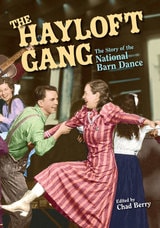
The Hayloft Gang
The Story of the National Barn DanceEdited by Chad Berry
University of Illinois Press, 2007
The Hayloft Gang draws on the colorful commentary of performers and former listeners to analyze the National Barn Dance, its audience, and its impact. Contributors trace the history of barn dance radio, explore the paradox of a foundational country music program broadcast from a major city, investigate notions of authenticity in the presentation of country music and entertainment, and delve into provocative issues raised by the barn dance phenomenon.
Contributors: Chad Berry, Michael T. Bertrand, Lisa Krissoff Boehm, Don Cusic, Wayne W. Daniel, Loyal Jones, Kristine M. McCusker, Stephen Parry, Susan Smulyan, Paul L. Tyler, and Michael Ann Williams.
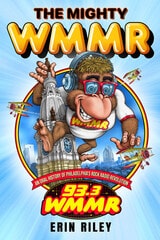
The Mighty WMMR
An Oral History of Philadelphia's Rock Radio RevolutionErin Riley
Temple University Press, 2026
In the early 1980s, the scrappy radio station 93.3 WMMR was on the verge of a major takeover of the Philadelphia airwaves. Erin Riley, who had her finger on the pulse of new artists like Bon Jovi, whose music would define a generation, was hired as the station’s Music Director in 1983.
The Mighty WMMR is Riley’s affectionate and nostalgic oral history of the station’s early years, especially its 1980s heyday, covering everything from the pioneering influence of The Marconi Experiment and the success of The Morning Zoo to how WMMR broke artists like Bruce Springsteen, Billy Joel, and local favorites The Hooters onto the national scene. Featuring anecdotes and memories by beloved on-air personalities including John DeBella, Pierre Robert, and Michael Tearson, Riley chronicles the memorable songs and musicians; concerts, contests, and clubs; and the live broadcasts that marked the height of an unforgettable era in Philadelphia radio.
Riley breezily captures the station’s impact on listeners, which made WMMR a perfect storm of the times, the culture, and the counterculture. The Mighty WMMR is a captivating look back at Philadelphia’s rock history and the station that shaped a city and a generation.
The NBC Advisory Council and Radio Programming, 1926-1945
Louise M. Benjamin
Southern Illinois University Press, 2009
In 1926, the new NBC networks established an advisory board of prominent citizens to help it make program decisions as well as to deflect concerns over NBC’s dominance over radio. The council, which advised NBC on program development—especially cultural broadcasts and those aimed at rural audiences—influenced not only NBC’s policies but also decisions other radio organizations made, decisions that resonate in today’s electronic media
The council’s rulings had wide-ranging impact on society and the radio industry, addressing such issues as radio’s operation in the public interest; access of religious groups to the airwaves; personal attacks on individuals, especially the clergy; and coverage of controversial issues of public importance. Principles adopted in these decrees kept undesirable shows off the air, and other networks, stations, and professional broadcast groups used the council’s decisions in establishing their own organizational guidelines.
Benjamin documents how these decrees had influence well after the council’s demise. Beginning in the early 1930s, the council denied use of NBC to birth control advocates. This refusal revealed a pointed clash between traditional and modernistic elements in American society and laid down principles for broadcasting controversial issues. This policy resonated throughout the next five decades with the implementation of the Fairness Doctrine.
The NBC Advisory Council and Radio Programming, 1926–1945 offers the first in-depth examination of the council, which reflected and shaped American society during the interwar period. Author Louise M. Benjamin tracks the council from its inception until it was quietly disbanded in 1945, insightfully critiquing the council’s influence on broadcast policies, analyzing early attempts at using the medium of radio to achieve political goals, and illustrating the council’s role in the development of program genres, including news, sitcoms, crime drama, soap operas, quiz shows, and variety programs.
The Quieted Voice
Robert L. Hilliard and Michael C. Keith. Foreword by Robert W. McChesney
Southern Illinois University Press, 2005
How has American radio—once a grassroots, community-based medium—become a generic service that primarily benefits owners and shareholders and prohibits its listeners from receiving diversity of opinions, ideas, and entertainment through local programming? In The Quieted Voice: The Rise and Demise of Localism in American Radio, Robert L. Hilliard and Michael C. Keith blame the government’s continual deregulation of radio and the corporate obsession with the bottom line in the wake of the far-reaching and controversial Telecommunications Act of 1996. Fighting for greater democratization of the airwaves, Hilliard and Keith call for a return to localism to save radio from rampant media conglomeration and ever-narrowing music playlists—and to save Americans from corporate and government control of public information.
The Quieted Voice details radio’s obligation to broadcast in the public’s interest. Hilliard and Keith trace the origins of the public trusteeship behind the medium and argue that local programming is essential to the fulfillment of this responsibility. From historical and critical perspectives, they examine the decline of community-centered programming and outline the efforts of media watchdog and special interest groups that have vigorously opposed the decline of democracy and diversity in American radio. They also evaluate the implications of continuing delocalization of the radio medium and survey the perspectives of leading media scholars and experts.
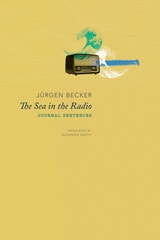
The Sea in the Radio
Journal SentencesJürgen Becker
Seagull Books, 2021
Jürgen Becker’s The Sea in the Radio is a collection of “journal sentences” divided into three sections called notebooks. In this great concert of a novel, language has been pared down to a minimum: fragments, phrases, and short sentences combine and make up a life both banal and profound. It is a life in which many of the details remain unstated or, as in miniatures, float just beyond the edges of the frame. Though at first the narrative may seem to move in a relatively harmless manner, soon enough we begin to realize that the story to be told may indeed be more unsettling than we had suspected.
The Sea in the Radio is a novel that bears witness not only to one’s final years but also to one’s place within history in general and Germany’s cataclysmic twentieth-century past in particular.
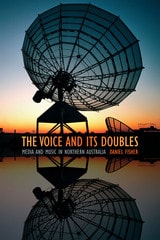
The Voice and Its Doubles
Media and Music in Northern AustraliaDaniel Fisher
Duke University Press, 2016
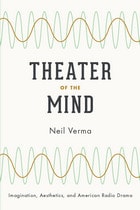
Theater of the Mind
Imagination, Aesthetics, and American Radio DramaNeil Verma
University of Chicago Press, 2012
For generations, fans and critics have characterized classic American radio drama as a “theater of the mind.” This book unpacks that characterization by recasting the radio play as an aesthetic object within its unique historical context. In Theater of the Mind, Neil Verma applies an array of critical methods to more than six thousand recordings to produce a vivid new account of radio drama from the Depression to the Cold War.
In this sweeping exploration of dramatic conventions, Verma investigates legendary dramas by the likes of Norman Corwin, Lucille Fletcher, and Wyllis Cooper on key programs ranging from The Columbia Workshop, The Mercury Theater on the Air, and Cavalcade of America to Lights Out!, Suspense, and Dragnet to reveal how these programs promoted and evolved a series of models of the imagination.
With close readings of individual sound effects and charts of broad trends among formats, Verma not only gives us a new account of the most flourishing form of genre fiction in the mid-twentieth century but also presents a powerful case for the central place of the aesthetics of sound in the history of modern experience.
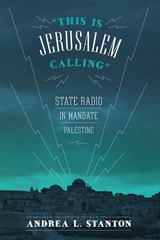
This Is Jerusalem Calling
State Radio in Mandate PalestineBy Andrea L. Stanton
University of Texas Press, 2013
Modeled after the BBC, the Palestine Broadcasting Service was launched in 1936 to serve as the national radio station of Mandate Palestine, playing a pivotal role in shaping the culture of the emerging middle class in the region. Despite its significance, the PBS has become nearly forgotten by scholars of twentieth-century Middle Eastern studies. Drawn extensively from British and Israeli archival sources, “This Is Jerusalem Calling” traces the compelling history of the PBS’s twelve years of operation, illuminating crucial aspects of a period when Jewish and Arab national movements simultaneously took form.
Andrea L. Stanton describes the ways in which the mandate government used broadcasting to cater to varied audiences, including rural Arab listeners, in an attempt to promote a “modern” vision of Arab Palestine as an urbane, politically sophisticated region. In addition to programming designed for the education of the peasantry, religious broadcasting was created to appeal to all three main faith communities in Palestine, which ultimately may have had a disintegrating, separatist effect. Stanton’s research brings to light the manifestation of Britain’s attempts to prepare its mandate state for self-governance while supporting the aims of Zionists. While the PBS did not create the conflict between Arab Palestinians and Zionists, the service reflected, articulated, and magnified such tensions during an era when radio broadcasting was becoming a key communication tool for emerging national identities around the globe.
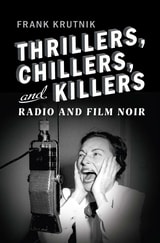
Thrillers, Chillers, and Killers
Radio and Film NoirFrank Krutnik
Rutgers University Press, 2025
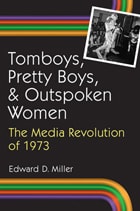
Tomboys, Pretty Boys, and Outspoken Women
The Media Revolution of 1973Edward D. Miller
University of Michigan Press, 2011
“Edward Miller has written a sharply observant, often revelatory, and stimulating book that explores the 1970s with gusto, showing all the intimacy and pleasure and startling richness of observation with which a scholar may sometimes approach a period in which he lived.”
—Martin Harries, New York University
Contemporary American media is awash with reality programs, faux documentaries, and user generated content. When did this fixation on real or feigned nonfictionality begin? Tomboys, Pretty Boys, and Outspoken Women argues that its origins can be found in the early 1970s, when American media discovered the entertainment value of documentaries, news programming, and other nonfiction forms. Edward D. Miller challenges preconceptions of the ’60s and ’70s through close readings of key events and important figures in the early 1970s: John Dean’s performance in front of the Senate during the Watergate Hearings; Billie Jean King popularizing tennis by taking on Bobby Riggs in a prime-time match; David Bowie experiencing “outer space” in his tours across America; An American Family and their gay son facing the public’s consternation; and Alison Steele, a female DJ who invited listeners to fly with her at night. Miller explores the early 1970s as a turning point in American culture, with nonfiction media of the time creating new possibilities for expressions of gender and sexuality, and argues that we are living in its aftermath.
In addition to readers attracted to media studies, this book will be of great interest to those involved in LGBT studies, feminism, and queer studies as well as students of contemporary media culture. The aim of the book is to demystify current media trends by providing an analysis of the recent past. Tomboys, Pretty Boys, and Outspoken Women is written for a large audience that extends beyond academia and embraces readers who have an interest in American pop culture and, in particular, the '70s.
Transceiver and System Design for Digital Communications
Scott R. Bullock
The Institution of Engineering and Technology, 2009
Transceiver and System Design for Digital Communications
Scott R. Bullock
The Institution of Engineering and Technology, 2014
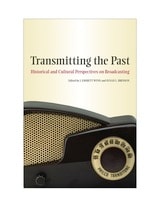
Transmitting the Past
Historical and Cultural Perspectives on BroadcastingEdited by J. Emmett Winn and Susan L. Brinson
University of Alabama Press, 2005
Original essays exploring important developments in radio and television broadcasting
The essays included in this collection represent some of the best cultural and historical research on broadcasting in the U. S. today. Each one concentrates on a particular event in broadcast history—beginning with Marconi’s introduction of wireless technology in 1899.
Michael Brown examines newspaper reporting in America of Marconi's belief in Martians, stories that effectively rendered Marconi inconsequential to the further development of radio. The widespread installation of radios in automobiles in the 1950s, Matthew Killmeier argues, paralleled the development of television and ubiquitous middle-class suburbia in America. Heather Hundley analyzes depictions of male and female promiscuity as presented in the sitcom Cheers at a time concurrent with media coverage of the AIDS crisis. Fritz Messere examines the Federal Radio Act of 1927 and the clash of competing ideas about what role radio should play in American life. Chad Dell recounts the high-brow programming strategy NBC adopted in 1945 to distinguish itself from other networks. And George Plasketes studies the critical reactions to Cop Rock, an ill-fated combination of police drama and musical, as an example of society's resistance to genre-mixing or departures from formulaic programming.
The result is a collection that represents some of the most recent and innovative scholarship, cultural and historical, on the intersections of broadcasting and American cultural, political, and economic life.