Results by title
50 books match the query 'Realism' and 11 start with t
The Logic of Being
Realism, Truth, and TimePaul M. Livingston
Northwestern University Press, 2017
Livingston's formal and phenomenological analysis articulates and defends a realist position about being, time, and their relationship that understands that all of these are structured and constituted in a way that does not depend on the human mind, consciousness, or subjectivity. This approach provides a basis for new logically and phenomenologically based accounts of the structure of linguistic truth in relation to the appearance of objects and of the formal structure of time as given.
Livingston draws on philosophers from Plato and Aristotle to Davidson and Heidegger in this exploration. In it, readers and scholars will discover innovative connections between continental and analytic philosophy.
The New Real
Media and Mimesis in Japan from Stereographs to EmojiJonathan E. Abel
University of Minnesota Press, 2022
Unlocking a vital understanding of how literary studies and media studies overlap and are bound together
A synthetic history of new media reception in modern and contemporary Japan, The New Real positions mimesis at the heart of the media concept. Considering both mimicry and representation as the core functions of mediation and remediation, Jonathan E. Abel offers a new model for media studies while explaining the deep and ongoing imbrication of Japan in the history of new media.
From stereoscopy in the late nineteenth century to emoji at the dawn of the twenty-first, Abel presents a pioneering history of new media reception in Japan across the analog and digital divide. He argues that there are two realities created by new media: one marketed to us through advertising that proclaims better, faster, and higher-resolution connections to the real; and the other experienced by users whose daily lives and behaviors are subtly transformed by the presence and penetration of the content carried through new media. Intervening in contemporary conversations about virtuality, copyright, copycat violence, and social media, each chapter unfolds with a focus on a single medium or technology, including 3D photographs, the phonograph, television, videogames, and emoji.
By highlighting the tendency of the mediated to copy the world and the world to copy the mediated, The New Real provides a new path for analysis of media, culture, and their function in the world.
The Order of Forms
Realism, Formalism, and Social SpaceAnna Kornbluh
University of Chicago Press, 2019
Kornbluh offers a powerful argument that political formalism, by valuing forms of sociability like the city and the state in and of themselves, provides a better understanding of literary form and its political possibilities than approaches that view form as a constraint. To make this argument, she takes up the case of literary realism, showing how novels by Dickens, Brontë, Hardy, and Carroll engage mathematical formalism as part of their political imagining. Realism, she shows, is best understood as an exercise in social modeling—more like formalist mathematics than social documentation. By modeling society, the realist novel focuses on what it considers the most elementary features of social relations and generates unique political insights. Proposing both this new theory of realism and the idea of political formalism, this inspired, eye-opening book will have far-reaching implications in literary studies.

The Reframing of Realism
Galdós & the Discourses of the 19th-Century Spanish NovelHazel Gold
Duke University Press, 1993
A close look at Galdós's novels reveals the artist at pains to contain and interpret what he perceived to be the distinctive and often disheartening experience of bourgeois liberalism of his day. At the same time, he can be seen here undermining or negating the accepted conventions of realist fiction. Looking beyond text to context, Gold examines the ways in which Galdós's work itself has been framed by readers and critics in accordance with changing allegiances to contemporary literary theory and the canon.
The highly ambiguous status of the frame in Galdós's fictions confirms the author's own signal position as a writer poised at the limits between realism and modernity. Gold's work will command the interest of students of Spanish and comparative literature, narrative theory, and the novel, as well as all those for whom realism and representation are at issue.
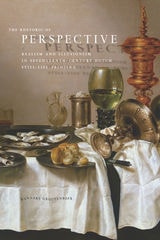
The Rhetoric of Perspective
Realism and Illusionism in Seventeenth-Century Dutch Still-Life PaintingHanneke Grootenboer
University of Chicago Press, 2005
Aided by a stunning full-color gallery, Hanneke Grootenboer proposes a new theory of perspective based on the phenomenological aspects of non-narrative still-life, trompe l'oeil, and anamorphic imagery. Drawing on playful and mesmerizing baroque images, Grootenboer characterizes what she calls their "sophisticated deceit," asserting that painting is more about visual representation than about its supposed objects.
Offering an original theory of perspective's impact on pictorial representation, the act of looking, and the understanding of truth in painting, Grootenboer shows how these paintings both question the status of representation and explore the limits and credibility of perception.

The Semantic Conception of Theories and Scientific Realism
Frederick Suppe
University of Illinois Press, 1989
the semantic conception of theories by one of its chief developers. Suppe has
always seen the semantic conception as providing a way of moving beyond empiricist
philosophies of science. This book provides the definitive account of his views
not only on the issue of realism, but also on a variety of other issues central
to the philosophy of science."
-- Ronald N. Giere, author of Explaining Science: A Cognitive Approach
The Shaky Game
Arthur Fine
University of Chicago Press, 1996
"What really led Einstein . . . to renounce the new quantum order? For those interested in this question, this book is compulsory reading."—Harvey R. Brown, American Journal of Physics
"Fine has successfully combined a historical account of Einstein's philosophical views on quantum mechanics and a discussion of some of the philosophical problems associated with the interpretation of quantum theory with a discussion of some of the contemporary questions concerning realism and antirealism. . . . Clear, thoughtful, [and] well-written."—Allan Franklin, Annals of Science
"Attempts, from Einstein's published works and unpublished correspondence, to piece together a coherent picture of 'Einstein realism.' Especially illuminating are the letters between Einstein and fellow realist Schrödinger, as the latter was composing his famous 'Schrödinger-Cat' paper."—Nick Herbert, New Scientist
"Beautifully clear. . . . Fine's analysis is penetrating, his own results original and important. . . . The book is a splendid combination of new ways to think about quantum mechanics, about realism, and about Einstein's views of both."—Nancy Cartwright, Isis
The Story of Fictional Truth
Realism from the Death to the Rise of the NovelPaul Dawson
The Ohio State University Press, 2023
The Universe of Things
On Speculative RealismSteven Shaviro
University of Minnesota Press, 2014
From the rediscovery of Alfred North Whitehead’s work to the rise of new materialist thought, including object-oriented ontology, there has been a rapid turn toward speculation in philosophy as a way of moving beyond solely human perceptions of nature and existence. Now Steven Shaviro maps this quickly emerging speculative realism, which is already dramatically influencing how we interpret reality and our place in a universe in which humans are not the measure of all things.
The Universe of Things explores the common insistence of speculative realism on a noncorrelationist thought: that things or objects exist apart from how our own human minds relate to and comprehend them. Shaviro focuses on how Whitehead both anticipates and offers challenges to prevailing speculative realist thought, moving between Whitehead’s own panpsychism, Harman’s object-oriented ontology, and the reductionist eliminativism of Quentin Meillassoux and Ray Brassier.
The stakes of this recent speculative realist thought—of the effort to develop new ways of grasping the world—are enormous as it becomes clear that our inherited assumptions are no longer adequate to describe, much less understand, the reality we experience around us. As Shaviro acknowledges, speculative realist thought has its dangers, but it also, like the best speculative fiction, holds the potential to liberate us from confining views of what is outside ourselves and, he believes, to reclaim aesthetics and beauty as a principle of life itself.
Bringing together a wide array of contemporary thought, and evenhandedly assessing its current debates, The Universe of Things is an invaluable guide to the evolution of speculative realism and the provocation of Alfred North Whitehead’s pathbreaking work.
Traces of Gold
California's Natural Resources and the Claim to Realism in Western American LiteratureNicolas Witschi
University of Alabama Press, 2001
Artfully demonstrates the linkage of American literary realism to the texts, myths, and resources of the American West
From Gold Rush romances to cowboy Westerns, from hard-boiled detective thrillers to nature writing, the American West has long been known mainly through hackneyed representations in popular genres. But a close look at the literary history of the West reveals a number of writers who claim that their works represent the “real” West. As Nicolas Witschi shows, writers as varied as Bret Harte, John Muir, Frank Norris, Mary Austin, and Raymond Chandler have used claims of textual realism to engage, replicate, or challenge commonly held assumptions about the West, while historically acknowledged realists like William Dean Howells and Mark Twain have often relied on genre-derived impressions about the region.
The familiar association of the West with nature and the “great outdoors” implies that life in the West affords an unambiguous relationship with an unalloyed, non-human, real nature. But through a combination of textual scholarship, genre criticism, and materialist cultural studies, Witschi complicates this notion of wide-open spaces and unfettered opportunity. The West has been the primary source of raw materials for American industrial and economic expansion, especially between the California Gold Rush and World War II, and Witschi argues that the writers he examines exist within the intersections of cultural and material modes of production. Realistic depictions of Western nature, he concludes, must rely on the representation of the extraction of material resources like minerals, water, and oil.
With its forays into ecocriticism and cultural studies, Traces of Gold will appeal to students and scholars of American literature, American studies, and western history.
Truth, Reference and Realism
Zsolt Novak
Central European University Press, 2011