Results by title
53 books match the query 'Reconstruction (U.S. history, 1865-1877)' and 19 start with t
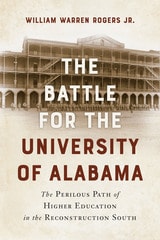
The Battle for the University of Alabama
The Perilous Path of Higher Education in the Reconstruction SouthWilliam Warren Rogers, Jr.
University of Alabama Press, 2025
Traces the little-known story of the bitter contest for the fate of the University of Alabama after the Civil War.
In The Battle for the University of Alabama, William Warren Rogers Jr. gives a fascinating account of the fierce struggle over the nature of the University of Alabama after the Civil War. Union forces reduced the campus to ruins as the war ended, and the university did not reopen until 1869. In the interregnum, powerful forces shifted the trajectory of the school. Alabama Republicans authored an egalitarian state constitution that delivered oversight of the university to the Republican Party. That set the stage for turmoil and confrontation. This book tells the story of that conflict.
In the next few years, Democrats charged Republicans with turning the university into a “radical” institution. They alleged that a handful of unqualified individuals had gained faculty positions because of their political allegiance, which resulted in the university’s academic desecration. Professors were bitterly denounced in the state newspaper press and quite personally in Tuscaloosa. Administration of the university became part of the fratricidal political debate in the state. Political violence and questions concerning race, specifically the possible integration of the university, illuminated the controversies of the Reconstruction years. Many of these questions resonate even today.
This authoritative account sets events at the University of Alabama against the backdrop of what occurred at other state universities in the Reconstruction South. The University of North Carolina experienced controversy similar to Alabama’s. At the University of Georgia, however, calm prevailed. This story of the incendiary events at Alabama’s flagship university charts new ground and provides a revelatory look into the extraordinary partisanship that characterized the South after the Civil War.
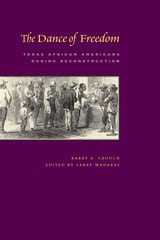
The Dance of Freedom
Texas African Americans during ReconstructionBy Barry Crouch
University of Texas Press, 2007
This anthology brings together the late Barry A. Crouch's most important articles on the African American experience in Texas during Reconstruction. Grouped topically, the essays explore what freedom meant to the newly emancipated, how white Texans reacted to the freed slaves, and how Freedmen's Bureau agents and African American politicians worked to improve the lot of ordinary African American Texans. The volume also contains Crouch's seminal review of Reconstruction historiography, "Unmanacling Texas Reconstruction: A Twenty-Year Perspective." The introductory pieces by Arnoldo De Leon and Larry Madaras recapitulate Barry Crouch's scholarly career and pay tribute to his stature in the field of Reconstruction history.
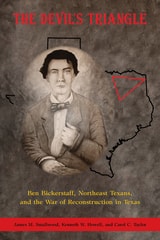
The Devil's Triangle
Ben Bickerstaff, Northeast Texans, and the War of Reconstruction in TexasJames M. Smallwood
University of North Texas Press, 2007
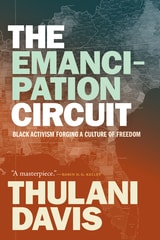
The Emancipation Circuit
Black Activism Forging a Culture of FreedomThulani Davis
Duke University Press, 2022
The Impact of the Civil War and Reconstruction on Arkansas
Persistence in the Midst of RuinCarl H. Moneyhon
University of Arkansas Press, 2002
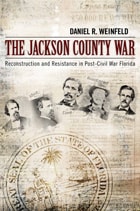
The Jackson County War
Reconstruction and Resistance in Post–Civil War FloridaDaniel R. Weinfeld
University of Alabama Press, 2023
Offers original conclusions explaining why Jackson County became the bloodiest region in Reconstruction Florida
From early 1869 through the end of 1871, citizens of Jackson County, Florida, slaughtered their neighbors by the score. The nearly three year frenzy of bloodshed became known as the Jackson County War. The killings, close to one hundred and by some estimates twice that number, brought Jackson County the notoriety of being the most violent county in Florida during the Reconstruction era. Daniel R. Weinfeld has made a thorough investigation of contemporary accounts. He adds an assessment of recently discovered information, and presents a critical evaluation of the standard secondary sources.
The Jackson County War focuses on the role of the Freedmen’s Bureau, the emergence of white “Regulators,” and the development of African American political consciousness and leadership. It follows the community’s descent after the Civil War into disorder punctuated by furious outbursts of violence until the county settled into uneasy stability seven years later. The Jackson County War emerges as an emblem of all that could and did go wrong in the uneasy years after Appomattox and that left a residue of hatred and fear that endured for generations.
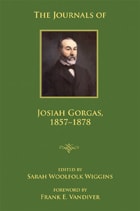
The Journals of Josiah Gorgas, 1857–1878
Josiah Gorgas, edited by Sarah Woolfolk Wiggins, foreword by Frank E. Vandiver
University of Alabama Press, 2009
Josiah Gorgas was best known as the highly regarded Chief of Confederate Ordnance. Born in 1818, he attended West Point, served in the U.S. Army, and later, after marrying Amelia Gayle, daughter of a former Alabama governor, joined the Confederacy. After the Civil War he served as president of The University of Alabama until ill health forced him to resign. His journals, maintained between 1857 and 1878, reflect the family's economic successes and failures, detail the course of the South through the Civil War, and describe the ordeal of Reconstruction. Few journals cover such a sweep of history. An added dimension is the view of Victorian family life as Gorgas explored his feelings about aspects of parental responsibility and transmission of values to children--a rarely documented account from the male perspective. His son, called Willie in the journals, was William Crawford Gorgas (1854-1920), who was noted for his fight to control yellow fever and who became surgeon general of the United States.
In his foreword to the volume, Frank E. Vandiver states: "Wiggins has done much more than present a well-edited version of Gorgas's diaries and journals; she has interpreted them in full Gorgas family context and in perspective of the times they cover. . . . Wiggins informs with the sort of editorial notes expected of a careful scholar, but she enlightens with wide knowledge of American and southern history. . . . Josiah Gorgas [was] an unusually observant, passionate man, a 'galvanized Rebel' who deserves rank among the true geniuses of American logistics."

The Last Nostalgia
Poems, 1982–1990Joe Bolton
University of Arkansas Press, 1999
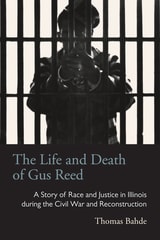
The Life and Death of Gus Reed
A Story of Race and Justice in Illinois during the Civil War and ReconstructionThomas Bahde
Ohio University Press, 2014
Gus Reed was a freed slave who traveled north as Sherman’s March was sweeping through Georgia in 1864. His journey ended in Springfield, Illinois, a city undergoing fundamental changes as its white citizens struggled to understand the political, legal, and cultural consequences of emancipation and black citizenship. Reed became known as a petty thief, appearing time and again in the records of the state’s courts and prisons. In late 1877, he burglarized the home of a well-known Springfield attorney—and brother of Abraham Lincoln’s former law partner—a crime for which he was convicted and sentenced to the Illinois State Penitentiary.
Reed died at the penitentiary in 1878, shackled to the door of his cell for days with a gag strapped in his mouth. An investigation established that two guards were responsible for the prisoner’s death, but neither they nor the prison warden suffered any penalty. The guards were dismissed, the investigation was closed, and Reed was forgotten.
Gus Reed’s story connects the political and legal cultures of white supremacy, black migration and black communities, the Midwest’s experience with the Civil War and Reconstruction, and the resurgence of nationwide opposition to African American civil rights in the late nineteenth century. These experiences shaped a nation with deep and unresolved misgivings about race, as well as distinctive and conflicting ideas about justice and how to achieve it.
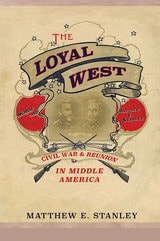
The Loyal West
Civil War and Reunion in Middle AmericaMatthew E. Stanley
University of Illinois Press, 2017
Matthew E. Stanley's intimate study explores the Civil War, Reconstruction, and sectional reunion in this bellwether region. Using the lives of area soldiers and officers as a lens, Stanley reveals a place and a strain of collective memory that was anti-rebel, anti-eastern, and anti-black in its attitudes--one that came to be at the forefront of the northern retreat from Reconstruction and toward white reunion. The Lower Middle West's embrace of black exclusion laws, origination of the Copperhead movement, backlash against liberalizing war measures, and rejection of Reconstruction were all pivotal to broader American politics. And the region's legacies of white supremacy--from racialized labor violence to sundown towns to lynching--found malignant expression nationwide, intersecting with how Loyal Westerners remembered the war.
A daring challenge to traditional narratives of section and commemoration, The Loyal West taps into a powerful and fascinating wellspring of Civil War identity and memory.
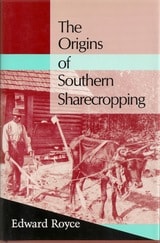
The Origins of Southern Sharecropping
Edward Royce
Temple University Press, 1993
Vivid primary accounts of post-Civil War life by planters and freed slaves complement this study of the rise of southern sharecropping. Edward Royce employs both historical and sociological methods to probe the question of why slavery was replaced by sharecropping rather than by some other labor arrangement. His detailed analysis illuminates conflicts between labor and capital as one group struggles to preserve the plantation system while the other pursues a quest for land and autonomy.
Royce contends that southern sharecropping occurred through a "constriction of possibilities," that it was shaped by default rather than orchestrated by economic reconstruction by white landowners and black laborers.
Highlighting the conflict-ridden nature of the process of social change, The Origins of Southern Sharecropping includes rich descriptions of the plantation system and gang labor, the freed slaves' dream of forty acres and a mule, the black colonization movement, the Freedman's Bureau, and racial relations after the war.
In the series Labor and Social Change, edited by Paula Rayman and Carmen Sirianni.
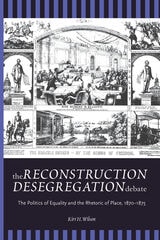
The Reconstruction Desegregation Debate
The Policies of Equality and the Rhetoric of Place, 1870-1875Kirt H. Wilson
Michigan State University Press, 2002
In the decade that followed the Civil War, two questions dominated political debate: To what degree were African Americans now “equal” to white Americans, and how should this equality be implemented in law? Although Republicans entertained multiple, even contradictory, answers to these questions, the party committed itself to several civil rights initiatives. When Congress passed the Thirteenth Amendment, the 1866 Civil Rights Act, the Fourteenth Amendment, and the Fifteenth Amendment, it justified these decisions with a broad egalitarian rhetoric. This rhetoric altered congressional culture, instituting new norms that made equality not merely an ideal,but rather a pragmatic aim for political judgments.
Kirt Wilson examines Reconstruction’s desegregation debate to explain how it represented an important movement in the evolution of U.S. race relations. He outlines how Congress fought to control the scope of black civil rights by contesting the definition of black equality, and the expediency and constitutionality of desegregation. Wilson explores how the debate over desegregation altered public memory about slavery and the Civil War, while simultaneously shaping a political culture that established the trajectory of race relations into the next century.
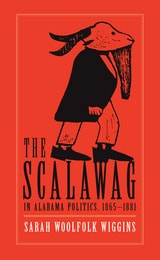
The Scalawag In Alabama Politics, 1865–1881
Sarah Woolfolk Wiggins
University of Alabama Press, 1977
Who was this scalawag? Simply a native, white, Alabama Republican! Scorned by his fellow white Southerners, he suffered, in his desire for socioeconomic reform and political power, more than mere verbal abuse and social ostracism; he lived constantly under the threat of physical violence. When first published in 1977, Wiggin’s treatment of the scalawag was the first book-length study of scalawags in any state, and it remains the most thorough treatment. According to The Journal of American History, this is the “most effective challenge to the scalawag stereotype yet to appear.”
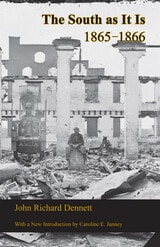
The South As It Is
1865–1866John Richard Dennett, with a new introduction by Caroline E. Janney
University of Alabama Press, 2010
This classic report originally appeared as a series of articles in the Nation between July 8, 1865, and April 11, 1866. Dennett traveled in seven states—Virginia, North Carolina, South Carolina, Georgia, Alabama, Louisiana, and Mississippi—at the very beginning of Reconstruction. His remarkably prophetic account of the recently defeated South is a major source for the history of this transition.
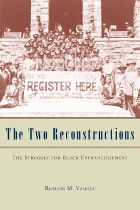
The Two Reconstructions
The Struggle for Black EnfranchisementRichard M. Valelly
University of Chicago Press, 2004
The Reconstruction era marked a huge political leap for African Americans, who rapidly went from the status of slaves to voters and officeholders. Yet this hard-won progress lasted only a few decades. Ultimately a "second reconstruction"—associated with the civil rights movement and the Voting Rights Act—became necessary.
How did the first reconstruction fail so utterly, setting the stage for the complete disenfranchisement of Southern black voters, and why did the second succeed? These are among the questions Richard M. Valelly answers in this fascinating history. The fate of black enfranchisement, he argues, has been closely intertwined with the strengths and constraints of our political institutions. Valelly shows how effective biracial coalitions have been the key to success and incisively traces how and why political parties and the national courts either rewarded or discouraged the formation of coalitions.
Revamping our understanding of American race relations, The Two Reconstructions brilliantly explains a puzzle that lies at the heart of America’s development as a political democracy.
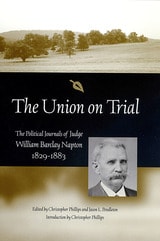
The Union on Trial
The Political Journals of Judge William Barclay Napton, 1829-1883Edited by Christopher Phillips & Jason L. Pendleton. Introduction by Christopher Phillips
University of Missouri Press, 2005
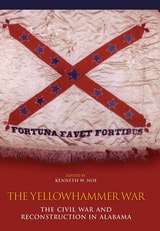
The Yellowhammer War
The Civil War and Reconstruction in AlabamaEdited by Kenneth W. Noe
University of Alabama Press, 2014
During the first winter of the war, Confederate soldiers derided the men of an Alabama Confederate unit for their yellow-trimmed uniforms that allegedly resembled the plumage of the yellow-shafted flicker or “yellowhammer” (now the Northern Flicker, Colaptes auratus, and the state bird of Alabama). The soldiers’ nickname, “Yellowhammers,” came from this epithet. After the war, Alabama veterans proudly wore yellowhammer feathers in their hats or lapels when attending reunions. Celebrations throughout the state have often expanded on that pageantry and glorified the figures, events, and battles of the Civil War with sometimes dubious attention to historical fact and little awareness of those who supported, resisted, or tolerated the war off the battlefield.
Many books about Alabama’s role in the Civil War have focused serious attention on the military and political history of the war. The Yellowhammer War likewise examines the military and political history of Alabama’s Civil War contributions, but it also covers areas of study usually neglected by centennial scholars, such as race, women, the home front, and Reconstruction. From Patricia A. Hoskins’s look at Jews in Alabama during the Civil War and Jennifer Ann Newman Treviño’s examination of white women’s attitudes during secession to Harriet E. Amos Doss’s study of the reaction of Alabamians to Lincoln’s Assassination and Jason J. Battles’s essay on the Freedman’s Bureau, readers are treated to a broader canvas of topics on the Civil War and the state.
CONTRIBUTORS
Jason J. Battles / Lonnie A. Burnett / Harriet E. Amos Doss / Bertis English / Michael W. Fitzgerald / Jennifer Lynn Gross / Patricia A. Hoskins / Kenneth W. Noe / Victoria E. Ott / Terry L. Seip / Ben H. Severance / Kristopher A. Teters / Jennifer Ann Newman Treviño / Sarah Woolfolk Wiggins / Brian Steel Wills
Published in Cooperation with the Frances S. Summersell Center for the Study of the South
Town and Country
Race Relations in an Urban-Rural Context, Arkansas, 1865–1905John Graves
University of Arkansas Press, 1990
A thoroughly researched and extensively documented look at race relations in Arkansas druing the forty years after the Civil War, Town and Country focuses on the gradual adjustment of black and white Arkansans to the new status of the freedman, in both society and law, after generations of practicing the racial etiquette of slavery.
John Graves examines the influences of the established agrarian culture on the developing racial practices of the urban centers, where many blacks living in the towns were able to gain prominence as doctors, lawyers, successful entrepreneurs, and political leaders. Despite the tension, conflict, and disputes within and between the voice of the government and the voice of the people in an arduous journey toward compromise, Arkansas was one of the most progressive states during Reconstruction in desegregating its people.
Town and Country makes a significant contribution to the history of the postwar South and its complex engagement with the race issue.

Two Counties in Crisis
Measuring Political Change in Reconstruction TexasRobert J. Dillard
University of North Texas Press, 2023