Results by title
1017 books match the query 'Reference' and 221 start with t
Tales of the Field
On Writing Ethnography, Second EditionJohn Van Maanen
University of Chicago Press, 2011
For more than twenty years, John Van Maanen’s Tales of the Field has been a definitive reference and guide for students, scholars, and practitioners of ethnography and beyond. Originally published in 1988, it was the one of the first works to detail and critically analyze the various styles and narrative conventions associated with written representations of culture. This is a book about the deskwork of fieldwork and the various ways culture is put forth in print. The core of the work is an extended discussion and illustration of three forms or genres of cultural representation—realist tales, confessional tales, and impressionist tales. The novel issues raised in Tales concern authorial voice, style, truth, objectivity, and point-of-view. Over the years, the work has both reflected and shaped changes in the field of ethnography.
In this second edition, Van Maanen’s substantial new Epilogue charts and illuminates changes in the field since the book’s first publication. Refreshingly humorous and accessible, Tales of the Field remains an invaluable introduction to novices learning the trade of fieldwork and a cornerstone of reference for veteran ethnographers.
Teaching Academic Writing in the Health Sciences
A Guide for Instructors, Mentors, and TrainersElla August
University of Michigan Press, 2026
Part 1 offers the pedagogical basis teachers need to apply best practices, as well as:
- Tips for collaborative writing and writing productivity
- Strategies for using generative artificial intelligence (AI) technology in teaching and writing
- Open-access resources and instruction planning activities
Part 2 focuses on the steps of writing a scientific paper, offering:
- A strong foundation in the structure of and strategies for successful writing
- Customizable teaching materials on how to write a scientific paper
- Strategies for planning a paper, crafting writing to reach readers, developing persuasive arguments, and building a successful author team
- How-to write each section of a paper, from the title to the conclusion
- Guidance on navigating the publishing process, including selecting the appropriate journal and effectively responding to peer-reviewer comments
Teaching Approaches in Music Theory, Second Edition
An Overview of Pedagogical PhilosophiesMichael R. Rogers
Southern Illinois University Press, 2004
Drawing on decades of teaching experience and the collective wisdom of dozens of the most creative theorists in the country, Michael R. Rogers’s diverse survey of music theory—one of the first to comprehensively survey and evaluate the teaching styles, techniques, and materials used in theory courses—is a unique reference and research tool for teachers, theorists, secondary and postsecondary students, and for private study. This revised edition of Teaching Approaches in Music Theory: An Overview of Pedagogical Philosophies features an extensive updated bibliography encompassing the years since the volume was first published in 1984.
In a new preface to this edition, Rogers references advancements in the field over the past two decades, from the appearance of the first scholarly journal devoted entirely to aspects of music theory education to the emergence of electronic advances and devices that will provide a supporting, if not central, role in the teaching of music theory in the foreseeable future. With the updated information, the text continues to provide an excellent starting point for the study of music theory pedagogy.
Rogers has organized the book very much like a sonata. Part one, “Background,” delineates principal ideas and themes, acquaints readers with the author’s views of contemporary musical theory, and includes an orientation to an eclectic range of philosophical thinking on the subject; part two, “Thinking and Listening,” develops these ideas in the specific areas of mindtraining and analysis, including a chapter on ear training; and part three, “Achieving Teaching Success,” recapitulates main points in alternate contexts and surroundings and discusses how they can be applied to teaching and the evaluation of design and curriculum.
Teaching Approaches in Music Theory emphasizes thoughtful examination and critique of the underlying and often tacit assumptions behind textbooks, materials, and technologies. Consistently combining general methods with specific examples and both philosophical and practical reasoning, Rogers compares and contrasts pairs of concepts and teaching approaches, some mutually exclusive and some overlapping. The volume is enhanced by extensive suggested reading lists for each chapter.
Teaching In The Field
Hal Crimmel
University of Utah Press, 2003
Taking students out of the classroom and into a variety of settings, ranging from remote wilderness sites to urban or built environments is now recognized as a valuable means of teaching ecological concepts and environmental values. But field studies are also a way of encouraging explorations across the curriculum, enhancing the teaching of life sciences, literature, and creative writing.
Teaching in the Field is the first volume to specifically survey field studies conducted through colleges and universities. The essays, arranged into three sections, offer rationales, pedagogical strategies, and foundational advice and information that broaden and strengthen the collective knowledge of this increasingly popular means of instruction. The essays present theoretical information within engaging, candid narratives that report on various aspects of field experiences, whether hour-long excursions or month-long trips.
Teachers of environmental studies, of English, composition, and creative writing, and of allied humanities and science disciplines, will find here a wealth of success stories and cautionary tales to guide them in envisioning their own outdoor classrooms.
Teaching and Mentoring Writers in the Sciences
An Evidence-Based ApproachBethann Garramon Merkle and Stephen B. Heard
University of Chicago Press, 2025
Every scientist eventually teaches scientific writing or mentors junior scientists as they develop their writing skills—only to discover that the task is both challenging and remarkably time-consuming. If you are in this position, Teaching and Mentoring Writers in the Sciences is the resource you need, offering approaches that will help you help writers develop their skills more effectively and with less time and effort.
Bethann Garramon Merkle and Stephen B. Heard, both experts in scientific communication, offer evidence-based advice that draws on their own extensive experience as well as on proven tactics from writing studies, science studies, and rhetoric and composition. Shorn of the unfamiliar and off-putting jargon that much pedagogy literature adopts, their advice is engaging and accessible to scientists. As you read, you’ll see where developing writers are coming from; how mastering scientific writing matters to the careers of students who do and don’t continue in academia; how writing occurs and is taught in both undergraduate and graduate curricula; how to find and harness teaching resources that help share the workload; how to teach writing to students who speak English as an additional language; and how to navigate the use (by yourself and by developing writers) of tools from pencils and dictionaries to AI writing assistants. If you teach or mentor scientific writers, this book will help you deliver what your students and mentees need most: clear, effective writing guidance.
Teaching the Bible through Popular Culture and the Arts
Mark Roncace
SBL Press, 2007
Teaching the Bible
Practical Strategies for Classroom InstructionMark Roncace
SBL Press, 2005
Technology and American History
A Historical Anthology from Technology and CultureEdited by Stephen H. Cutcliffe and Terry S. Reynolds
University of Chicago Press, 1997
Emphasizing a societal context for technology, this carefully organized collection demonstrates both the manner in which cultural, political, and economic forces shape innovation, and the ways that technology has influenced society and shaped its values. Individual essays explore the importance of textile manufacturing in American industrialization, the role of the federal government in regulating new modes of transport, the development of interchangeable parts in production, the process of innovation, the notion of technological systems, and the relationship between technological change and work in the factory, on the farm, and in the home.
The essays were selected to be accessible to both the general reader and the undergraduate student.
Technology and the West
A Historical Anthology from Technology and CultureEdited by Terry S. Reynolds and Stephen H. Cutcliffe
University of Chicago Press, 1997
General readers and students will find this collection accessible and engaging.
Telling a Research Story
Writing a Literature ReviewChristine B. Feak and John M. Swales
University of Michigan Press, 2009
Telling a Research Story: Writing a Literature Review is concerned with the writing of a literature review and is not designed to address any of the preliminary processes leading up to the actual writing of the literature review.
This volume represents a revision and expansion of the material on writing literature reviews that appeared in English in Today's Research World.
This volume progresses from general to specific issues in the writing of literature reviews. It opens with some orientations that raise awareness of the issues that surround the telling of a research story. Issues of structure and matters of language, style, and rhetoric are then discussed. Sections on metadiscourse, citation, and paraphrasing and summarizing are included.
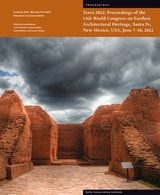
Terra 2022
Proceedings of the 13th World Congress on Earthen Architectural Heritage, Sante Fe, New Mexico, USA, June 7-10, 2022Leslie Rainer
J. Paul Getty Trust, The, 2024
Featuring a global compendium of sites, buildings, urban settlements, and cultural landscapes, this volume combines recent research with practical approaches to conservation of earthen architectural heritage.
Earthen architecture is one of the oldest forms of construction and is evidenced around the globe. This volume gathers the research and presentations from Terra 2022: 13th World Congress on Earthen Architectural Heritage, which brought together in Santa Fe, New Mexico, 350 conservation professionals and practitioners from fifty-two countries.
Seventy richly illustrated papers, fifty-seven in English and thirteen in Spanish, address a range of conservation issues. Abstracts are provided in both English and Spanish for each paper. Themes covered include advances in research, strategies for archaeological sites, community-based care and decision-making, cultural landscapes, decorated surfaces, education, historic and modern buildings, conservation history, risks and vulnerabilities, and traditional materials and practices. Sections that draw on symposia held at the congress spotlight two recent architectural heritage initiatives: the rehabilitation of an urban settlement by the AlUla Old Town and Oasis Conservation Project in Saudi Arabia, and the conservation and management of eight monumental enclosure complexes at the Hopewell Ceremonial Earthworks in Ohio.
Reflecting Getty's commitment to open content, Terra 2022 is available as a free PDF download at: https://www.getty.edu/publications/virtuallibrary/9781606069158.html. This paperback edition is available for sale for readers who wish to have a bound reference copy.
Textual Sources for the Study of Zoroastrianism
Edited by Mary Boyce
University of Chicago Press, 1990
"Wide-ranging. . . . An indispensable one-volume collection of primary materials."—William R. Darrow, Religious Studies Review
That Old-Time Rock & Roll
A Chronicle of an Era, 1954-63Richard Aquila
University of Illinois Press, 1989
Elvis Presley and Bill Haley. Sam Cooke and the Shirelles. The Crows and the Chords. American Bandstand and Motown. From its first rumblings in the outland alphabet soup of R&B and C&W, rock & roll music promised to change the world--and did it.
Combining social history with a treasure trove of trivia, Richard Aquila unleashes the excitement of rock's first decade and shows how the music reflected American life from the mid-1950s through the dawn of Beatlemania. His year-by-year timelines and a photo essay place the music in historical perspective by linking artists and their hits to the news stories, movies, TV shows, fads, and lifestyles. In addition, he provides a concise biographical dictionary of the performers who made the charts between 1954 and 1963, along with the label and chart position of each of their hit songs.
The ABC's of the Brachial Plexus
Written by Denise Justice; Edited by Holly Wagner; Illustrated by Alexandra Paquin and Bethany Runyon
Michigan Publishing Services, 2020
Medical terms used in the doctor’s office can be confusing, especially for the condition of Neonatal Brachial Plexus Palsy and/or Peripheral Nerve Injury. This book is written by a highly experienced therapist and formatted effectively for reference, review, or new learning of the medical terms. In addition, the accompanying hand-drawn illustrations offer attractive colorful pictorial representations of the technical concepts.
From the names and anatomy of individual nerves to multiple surgical treatment options, this book will help patients and caretakers decode the words of doctors, starting with every letter of the alphabet. If you are seeking the knowledge help with the diagnosis and treatment of your Brachial Plexus condition, this book is for you!
The AMS Weather Book
The Ultimate Guide to America's WeatherJack Williams
University of Chicago Press, 2009
America has some of the most varied and dynamic weather in the world. Every year, the Gulf Coast is battered by hurricanes, the Great Plains are ravaged by tornados, the Midwest is pummeled by blizzards, and the temperature in the Southwest reaches a sweltering 120 degrees. Extreme weather can be a matter of life and death, but even when it is pleasant—72 degrees and sunny—weather is still central to the lives of all Americans. Indeed, it’s hard to imagine a topic of greater collective interest. Whether we want to know if we should close the storm shutters or just carry an umbrella to work, we turn to forecasts. But few of us really understand the science behind them.
All that changes with The AMS Weather Book. The most comprehensive and up-to-date guide to our weather and our atmosphere, it is the ultimate resource for anyone who wants to understand how hurricanes form, why tornados twirl, or even why the sky is cerulean blue. Written by esteemed science journalist and former USA Today weather editor Jack Williams, The AMS Weather Book, copublished with the American Meteorological Society, covers everything from daily weather patterns, air pollution, and global warming to the stories of people coping with severe weather and those who devote their lives to understanding the atmosphere, oceans, and climate. Words alone, of course, are not adequate to explain many meteorological concepts, so The AMS Weather Book is filled with engaging full-color graphics that explain such concepts as why winds blow in a particular direction, how Doppler weather radar works, what happens inside hurricanes, how clouds create wind and snow, and what’s really affecting the earth’s climate.
For Weather Channel junkies, amateur meteorologists, and storm chasers alike, The AMS Weather Book is an invaluable tool for anyone who wants to better understand how weather works and how it affects our lives.
The Aesthetics of Survival
A Composer's View of Twentieth-Century MusicGeorge Rochberg
University of Michigan Press, 2005
"Rochberg presents the rare spectacle of a composer who has made his peace with tradition while maintaining a strikingly individual profile. . . . [H]e succeeds in transforming the sublime concepts of traditional music into contemporary language."
---Washington Post
"An indispensable book for anyone who wishes to understand the sad and curious fate of music in the twentieth century."
---Atlantic Monthly
"The writings of George Rochberg stand as a pinnacle from which our past and future can be viewed."
---Kansas City Star
As a composer, George Rochberg has played a leading role in bringing about a transformation of contemporary music through a reassessment of its relation to tonality, melody, and harmony. In The Aesthetics of Survival, the author addresses the legacy of modernism in music and its related effect on the cultural milieu, particularly its overemphasis on the abstract, rationalist thinking embraced by contemporary science, technology, and philosophy. Rochberg argues for the renewal of holistic values in order to ensure the survival of music as a humanly expressive art.
A renowned composer, thinker, and teacher, George Rochberg has been honored with innumerable awards, including, most recently, an Alfred I. du Pont Award for Outstanding Conductors and Composers, and an André and Clara Mertens Contemporary Composer Award. He lives in Pennsylvania.
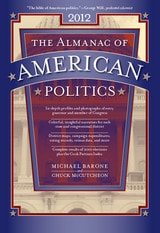
The Almanac of American Politics 2012
Michael Barone and Chuck McCutcheon
University of Chicago Press, 2011
No matter how you voted in the 2010 election, both Democrats and Republicans can agree that there is one indispensable guide to people, politics, and power in Washington. The Almanac of American Politics is the gold standard—the book everyone involved, invested, or interested in American politics must have on their reference shelf.
As in previous editions, the 2012 Almanac includes profiles of every member of Congress and every governor. It offers in-depth and completely up-to-date narrative profiles of all 50 states and 435 House districts, covering everything from economics to history to, of course, politics. The new edition also contains Michael Barone’s sharp-eyed analysis of the 2010 congressional elections, detailing significant trends, redistricting initiatives, and the like.
Full of maps, census data, and information on topics ranging from campaign expenditures to voting records to interest group ratings, the 2012 Almanac of American Politics presents everything you need to know about American politics in snappy prose and framed by cogent analysis.
“Real political junkies get two Almanacs: one for the home and one for the office.”—Chuck Todd, NBC
“It’s simply the oxygen of the political world. We have the most dog-eared copy in town.”—Judy Woodruff, PBS News Hour
“Michael Barone is to politics what statistician-writer Bill James is to baseball, a mix of historian, social observer, and numbers cruncher who illuminates his subject with perspective and a touch of irreverence.”—Chicago Tribune
“Indispensable . . . this compendium of statistics and information has gone as far as humanly possible.”—Washington Post
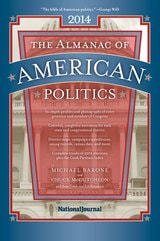
The Almanac of American Politics 2014
Michael Barone, Chuck McCutcheon, Sean Trende, and Josh Kraushaar
University of Chicago Press, 2013
Like every edition since the almanac first appeared in 1972, the 2014 edition is helmed by veteran political analyst Michael Barone. Together with Chuck McCutcheon, collaborator since 2012, and two new editors, Sean Trende, senior elections analyst for RealClearPolitics, and Josh Kraushaar, managing editor at National Journal, Barone offers an unparalleled perspective on contemporary politics.
Full of maps, census data, and detailed information about the American political landscape, the 2014 Almanac of American Politics remains the most comprehensive resource for journalists, politicos, business people, and academics.
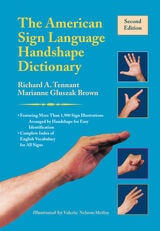
The American Sign Language Handshape Dictionary
Richard A. Tennant
Gallaudet University Press, 2020
Featuring
•More than 1,900 Sign Illustrations Including 327 New Signs•Plus DVD Showing How to Form Signs
•Arranged by Handshape for Easy Identification
•Complete Index of English Vocabulary for All Signs
•An Introduction to Deaf Culture and ASL Structure
The first reference source that allows users to access ASL signs without previous knowledge of their English equivalents (far superior to those in most other English-ASL glossaries). Likely to become indispensable on many educators’ and students’ bookshelves.—CHOICE
Now, the bestselling resource The American Sign Language Handshape Dictionary has been completely revised with more than 320 new signs and a new DVD. This unique reference can help users locate a sign whose meaning they have forgotten, or help them find the meaning of a new sign they have just seen for the first time. It organizes more than 1,900 ASL signs by 40 basic handshapes and includes detailed descriptions on how to form these signs to represent the different English words that they might mean. ASL students can begin to track down a sign by determining whether it is formed with one hand or two. Further distinctions of handshape, palm orientation, location, movement, and other nonmanual body signals help them pinpoint their search while also refining their grasp of ASL syntax and grammar. A complete English word index provides the option of referring to an alphabetical listing of English terms to locate an equivalent sign or choice of signs.
The new DVD shows how each sign is formed from beginning to end. Users can watch a sign at various speeds to learn precisely how to master it themselves. Together, the new edition of The American Sign Language Handshape Dictionary and its accompanying DVD presents students, sign language teachers, and deaf and hearing people alike with the perfect combination for enhancing communication skills in both ASL and English.
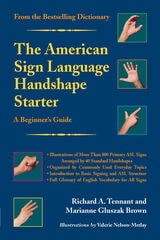
The American Sign Language Handshape Starter
A Beginner's GuideRichard A. Tennant
Gallaudet University Press, 2002
The Amphibians and Reptiles of Arkansas
Stanley E. Trauth
University of Arkansas Press, 2004
The Antinomian Controversy, 1636-1638
A Documentary HistoryDavid D. Hall, ed.
Duke University Press, 1990
This new edition of the 1968 volume, published now for the first time in paperback, includes an expanding bibliography and a new preface, treating in more detail the prime figures of Anne Hutchinson and her chief clerical supporter, John Cotton. Among the documents gathered here are transcripts of Anne Hutchinson’s trial, several of Cotton’s writings defending the Antinomian position, and John Winthrop’s account of the controversy. Hall’s increased focus on Hutchinson reveals the harshness and excesses with which the New England ministry tried to discredit her and reaffirms her place of prime importance in the history of American women.
The Architecture of Story
A Technical Guide for the Dramatic WriterWill Dunne
University of Chicago Press, 2016
Through his workshops and book The Dramatic Writer’s Companion, Will Dunne has helped thousands of writers develop successful scripts. Now, in The Architecture of Story, he helps writers master the building blocks of dramatic storytelling by analyzing a trio of award-winning contemporary American plays: Doubt: A Parable by John Patrick Shanley, Topdog/Underdog by Suzan-Lori Parks, and The Clean House by Sarah Ruhl. Dismantling the stories and examining key components from a technical perspective enables writers to approach their own work with an informed understanding of dramatic architecture.
Each self-contained chapter focuses on one storytelling component, ranging from “Title” and “Main Event” to “Emotional Environment” and “Crisis Decision.” Dunne explores each component in detail, demonstrating how it has been successfully handled in each play and comparing and contrasting techniques. The chapters conclude with questions to help writers evaluate and improve their own scripts. The result is a nonlinear reference guide that lets writers work at their own pace and choose the topics that interest them as they develop new scripts. This flexible, interactive structure is designed to meet the needs of writers at all stages of writing and at all levels of experience.
The Art of Creative Research
A Field Guide for WritersPhilip Gerard
University of Chicago Press, 2017
The Art of Creative Research helps writers take this natural inclination to explore and observe and turn it into a workable—and enjoyable—research plan. It shows that research shouldn’t be seen as a dry, plodding aspect of writing. Instead, it’s an art that all writers can master, one that unearths surprises and fuels imagination. This lends authenticity to fiction and poetry as well as nonfiction.
Philip Gerard distills the process into fundamental questions: How do you conduct research? And what can you do with the information you gather? He covers both in-person research and work in archives and illustrates how the different types of research can be incorporated into stories, poems, and essays using examples from a wide range of writers in addition to those from his own projects. Throughout, Gerard brings knowledge from his seasoned background into play, drawing on his experiences as a reporter and a writer of both fiction and nonfiction. His enthusiasm for adventure is infectious and will inspire writers to step away from the keyboard and into the world.
“Research can take you to that golden intersection where the personal meets the public, the private crosses the universal, where the best literature lives,” Gerard writes. With his masterly guidance, anyone can become an expert in artful investigation.
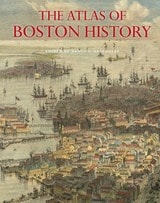
The Atlas of Boston History
Edited by Nancy S. Seasholes
University of Chicago Press, 2019
Edited by historian Nancy S. Seasholes, this landmark volume captures all aspects of Boston’s past in a series of fifty-seven stunning full-color spreads. Each section features newly created thematic maps that focus on moments and topics in that history. These maps are accompanied by hundreds of historical and contemporary illustrations and explanatory text from historians and other expert contributors. They illuminate a wide range of topics including Boston’s physical and economic development, changing demography, and social and cultural life. In lavishly produced detail, The Atlas of Boston History offers a vivid, refreshing perspective on the development of this iconic American city.
Contributors
Robert J. Allison, Robert Charles Anderson, John Avault, Joseph Bagley, Charles Bahne, Laurie Baise, J. L. Bell, Rebekah Bryer, Aubrey Butts, Benjamin L. Carp, Amy D. Finstein, Gerald Gamm, Richard Garver, Katherine Grandjean, Michelle Granshaw, James Green, Dean Grodzins, Karl Haglund, Ruth-Ann M. Harris, Arthur Krim, Stephanie Kruel, Kerima M. Lewis, Noam Maggor, Dane A. Morrison, James C. O’Connell, Mark Peterson, Marshall Pontrelli, Gayle Sawtelle, Nancy S. Seasholes, Reed Ueda, Lawrence J. Vale, Jim Vrabel, Sam Bass Warner, Jay Wickersham, and Susan Wilson
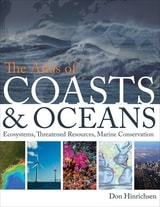
The Atlas of Coasts and Oceans
Ecosystems, Threatened Resources, Marine ConservationDon Hinrichsen
University of Chicago Press, 2011
Oceans drive the world’s climate, nurture marine ecosystems full of aquatic life, and provide shipping lanes that have defined the global economy for centuries. And few realize that half of the world’s population lives in a coastal region within easy reach of one. Yet human activities such as commercial fishing, coastal real estate development, and industrial pollution have taken their toll on the seas. The first book of its kind, The Atlas of Coasts and Oceans documents the fraught relationship between humans and the earth’s largest bodies of water—and outlines the conservation steps needed to protect the marine environment for generations to come.
The Atlas offers a fascinating and often sobering account of how urbanization, climate change, offshore oil drilling, shipping routes, global tourism, and maritime conflict have had a profound impact on the world’s oceans and coasts. Combining text and images in visually engaging, thematically organized map spreads, this volume addresses the ecological, environmental, and economic importance of marine phenomena such as coral reefs, eroding shorelines, hurricanes, and fish populations—and how development threatens to destroy the ultimate source of all life on the “blue planet.” Lavishly illustrated with global and regional maps, from the Arabian Gulf to the Great Barrier Reef, from the Black Sea to the Mediterranean, and all the other major global waterways, The Atlas of Coasts and Oceans will be the definitive companion to any study of its subject for years to come.
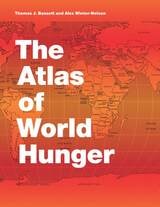
The Atlas of World Hunger
Thomas J. Bassett and Alex Winter-Nelson
University of Chicago Press, 2010
Earlier this year, President Obama declared one of his top priorities to be “making sure that people are able to get enough to eat.” The United States spends about five billion dollars on food aid and related programs each year, but still, both domestically and internationally, millions of people are hungry. In 2006, the Food and Agricultural Organization of the United Nations counted 850 million hungry people worldwide, but as food prices soared, an additional 100 million or more who were vulnerable succumbed to food insecurity.
If hunger were simply a matter of food production, no one would go without. There is more than enough food produced annually to provide every living person with a healthy diet, yet so many suffer from food shortages, unsafe water, and malnutrition every year. That’s because hunger is a complex political, economic, and ecological phenomenon. The interplay of these forces produces a geography of hunger that Thomas J. Bassett and Alex Winter-Nelson illuminate in this empowering book. The Atlas of World Hunger uses a conceptual framework informed by geography and agricultural economics to present a hunger index that combines food availability, household access, and nutritional outcomes into a single tool—one that delivers a fuller understanding of the scope of global hunger, its underlying mechanisms, and the ways in which the goals for ending hunger can be achieved. The first depiction of the geography of hunger worldwide, the Atlas will be an important resource for teachers, students, and anyone else interested in understanding the geography and causes of hunger. This knowledge, the authors argue, is a critical first step toward eliminating unnecessary suffering in a world of plenty.
The Author's Handbook
Franklynn Peterson and Judi Kesselman-Turkel
University of Wisconsin Press, 2006
Providing essential guidance for both aspiring and experienced authors, the second edition of The Author’s Handbook is a valuable resource for writers of all levels. Extensively updated and expanded to account for significant changes in the publishing industry, The Author’s Handbook outlines effective techniques to develop marketable book ideas, research those ideas, and write a manuscript—either fiction or nonfiction—for publication. The authors provide many tips on topics that include choosing a publisher, negotiating contracts, understanding legal matters, and promoting your work. With this guide, the reader will gain insight into virtually every aspect of publishing.
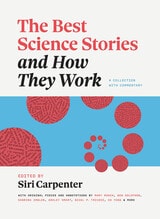
The Best Science Stories and How They Work
A Collection with CommentaryEdited by Siri Carpenter
University of Chicago Press, 2026
An invitation to engage with some of today’s most respected science journalists as they take readers beneath the surface to reveal the making of eleven of the best science stories.
With eleven deeply reported, artfully crafted stories and annotations by some of the most thoughtful and respected science journalists working today, The Best Science Stories and How They Work is more than the sum of its impressive parts. Experience the pleasure of reading a “Best of” anthology, attending a science writing masterclass, and meeting journalists who become more than their familiar bylines. Each piece benefits from an introduction, annotations, and a conversation between the piece’s author and annotator.
Siri Carpenter—editor of this book and cofounder of The Open Notebook, a leading source of training and educational materials for journalists who cover science—has long considered what’s behind the best writing. The pieces in this guide are drawn from a range of publications such as Scientific American, Nature, The Atlantic, and The New York Times Magazine and offer a unique perspective on how great science journalism happens: the careful structuring of a narrative, the delicate balance of skepticism and wonder, the ethical challenges of working with sources, the artistry of prose that sings. Readers will not only encounter outstanding examples of stellar storytelling, but they will also understand how these successful stories were reported and written, revealing the choices fundamental to good science journalism. Following each annotation, a Q&A with the original author provides an intimate look at the decisions and challenges that shaped their work.
Taken together, these pieces and annotations reveal the detailed, technical narrative work required to tell science stories. The book will delight, inspire, and equip readers with new tools to appreciate the stories that matter most.
Contributors: Jordana Cepelewicz, Shraddha Chakradhar, Nadia Drake, Ben Goldfarb, Sabrina Imbler, Ferris Jabr, Emily Laber-Warren, Stephanie M. Lee, Dana Mackenzie, Amy Maxmen, Emiliano Rodríguez Mega, Kendra Pierre-Louis, Debbie Ponchner, Sandeep Ravindran, Mary Roach, Paola Rosa-Aquino, Ashley Smart, Jessica Seigel, Ramin Skibba, Kamala Thiagarajan, Bijal Trivedi, and Ed Yong

The Best in Children's Books
The University of Chicago Guide to Children's Literature, 1966-72Edited by Zena Sutherland
University of Chicago Press, 1973
This guide contains 1,400 reviews of the best children's literature published between 1966 and 1972.
The Best in Children's Books
The University of Chicago Guide to Children's Literature, 1973-78Zena Sutherland
University of Chicago Press, 1980
The Best in Children's Books
The University of Chicago Guide to Children's Literature, 1979-84Zena Sutherland
University of Chicago Press, 1986
This volume carries on the tradition established by Zena Sutherland's two earlier collections covering the periods from 1966 to 1972 and 1973 to 1978. Her 1973 edition of The Best in Children's Books was cited by the American School Board Journal as one of the outstanding books of the year in education.
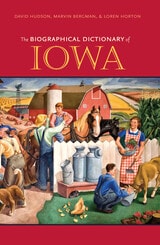
The Biographical Dictionary of Iowa
David Hudson
University of Iowa Press, 2009
Written by an impressive team of more than 150 scholars and writers, the readable narratives include each subject’s name, birth and death dates, place of birth, education, and career and contributions. Many of the names will be instantly recognizable to most Iowans; others are largely forgotten but deserve to be remembered. Beyond the distinctive lives and times captured in the individual biographies, readers of the dictionary will gain an appreciation for how the character of the state has been shaped by the character of the individuals who have inhabited it.
From Dudley Warren Adams, fruit grower and Grange leader, to the Younker brothers, founders of one of Iowa’s most successful department stores, The Biographical Dictionary of Iowa is peopled with the rewarding lives of more than four hundred notable citizens of the Hawkeye State. The histories contained in this essential reference work should be eagerly read by anyone who cares about Iowa and its citizens.
Entries include Cap Anson, Bix Beiderbecke, Black Hawk, Amelia Jenks Bloomer, William Carpenter, Philip Greeley Clapp, Gardner Cowles Sr., Samuel Ryan Curtis, Jay Norwood Darling, Grenville Dodge, Julien Dubuque, August S. Duesenberg, Paul Engle, Phyllis L. Propp Fowle, George Gallup, Hamlin Garland, Susan Glaspell, Josiah Grinnell, Charles Hearst, Josephine Herbst, Herbert Hoover, Inkpaduta, Louis Jolliet, MacKinlay Kantor, Keokuk, Aldo Leopold, John L. Lewis, Marquette, Elmer Maytag, Christian Metz, Bertha Shambaugh, Ruth Suckow, Billy Sunday, Henry Wallace, and Grant Wood.
Excerpt from the entry on:
Gallup, George Horace (November 19, 1901–July 26, 1984)—founder of the American Institute of Public Opinion, better known as the Gallup Poll, whose name was synonymous with public opinion polling around the world—was born in Jefferson, Iowa. . . . . A New Yorker article would later speculate that it was Gallup’s background in “utterly normal Iowa” that enabled him to find “nothing odd in the idea that one man might represent, statistically, ten thousand or more of his own kind.” . . . In 1935 Gallup partnered with Harry Anderson to found the American Institute of Public Opinion, based in Princeton, New Jersey, an opinion polling firm that included a syndicated newspaper column called “America Speaks.” The reputation of the organization was made when Gallup publicly challenged the polling techniques of The Literary Digest, the best-known political straw poll of the day. Calculating that the Digest would wrongly predict that Kansas Republican Alf Landon would win the presidential election, Gallup offered newspapers a money-back guarantee if his prediction that Franklin Delano Roosevelt would win wasn’t more accurate. Gallup believed that public opinion polls served an important function in a democracy: “If govern¬ment is supposed to be based on the will of the people, somebody ought to go and find what that will is,” Gallup explained.
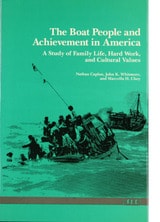
The Boat People and Achievement in America
A Study of Family Life, Hard Work, and Cultural ValuesNathan Caplan, John K. Whitmore, and Marcella H. Choy
University of Michigan Press, 1989
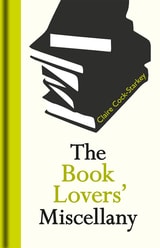
The Book Lovers' Miscellany
Claire Cock-Starkey
Bodleian Library Publishing, 2017
The Book Lovers’ Miscellany is a cornucopia for bibliophiles. With customary wisdom and wit, Claire Cock-Starkey presents a brief illustrated history of paper, binding, printing, and dust jackets, with a wealth of arcane facts that even the most avid book lovers may be hard-pressed to answer: Which natural pigments were used to decorate medieval bibles? Which animal is needed for the making of vellum? Curious facts are drawn from throughout the history of books and publishing, including many more recent examples, such as a short history of the comic and the story behind the massively successful Harlequin romance imprint Mills and Boon. Readers can explore the output of the most prolific writers and marvel at the youth of the youngest published authors—or lament the decisions of the publishers who rejected books that later became colossal bestsellers. The book also includes a collection of lists, including unfinished novels, books that have faced bans, books printed with mistakes, the most influential academic books of all time, and the longest established literary families.
The perfect gift for every bibliophile, The Book Lovers’ Miscellany is equally well suited to reading straight through or dipping into here and there.
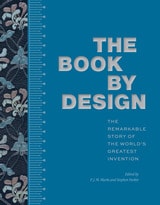
The Book by Design
The Remarkable Story of the World's Greatest InventionEdited by P.J.M. Marks and Stephen Parkin
University of Chicago Press, 2023
For centuries across the world, books have been created as objects of beauty, with bookmakers lavishing great care on their paper, binding materials, illustrations, and lettering.
The Book by Design, featuring an array of books from the British Library's collection, focuses on the sensory experience of holding and reading these objects. Each selection represents a specific moment in the development of what we know today as the book—from scrolls and bound illuminated manuscripts to paperbacks and formatted digital information. These range from the seventh century to the present and include examples from China, Japan, Southeast Asia, the Middle East, Europe, and North America, in addition to a look at book traditions in Africa and Oceania. John James Audubon’s Birds of America, the works of Chaucer, Russian Futurist books, limited editions, historic copies of the Qur’an and the Bible, mass-market paperbacks, and more come together to tell the visual, tactile, artistic, and cultural history of books.
Expert curators and specialists explore these books from the perspective of design and manufacturing, original art photographs offer vivid representations of their textures and materials, and graphics detail the size and specifications of each book. Offering a wide-ranging look at the creation and use of books, illustrated with hundreds of color images, this volume is itself an object of beauty.
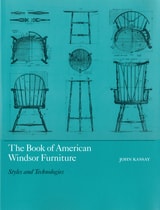
The Book of American Windsor Furniture
Styles and TechnologiesJohn Kassay
University of Massachusetts Press, 1998
Combining comfort, simplicity, and craftsmanship, Windsor chairs have long been prized by collectors. Introduced from England in the early 1700s, the Windsor style took hold in America first as seating for the well-to-do and later as the favorite chair of the general population. Included in the Windsor family are stools, tables, settees, high chairs, cradles, and candle stands, but the greatest variety is found in the chairs, which range from comb-back to bow-back to step-down versions. Their makers took advantage of the natural properties of different woods for particular components of the chairs, employing hickory, red oak, or ash for bent parts, maple for turnings, and pine for seats.
Kassay meticulously documents all of these features and styles with drawings so accurate and precise that amateur furniture makers can use them as blueprints for creating Windsor reproductions. The drawings are complemented by narrative descriptions, photographs, and a list of measured parts for each of the pieces under discussion.
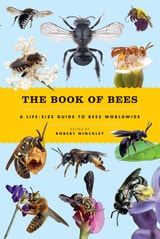
The Book of Bees
A Life-Size Guide to Bees WorldwideEdited by Robert Minckley
University of Chicago Press, 2026
Including more than four hundred species from all seven recognized biological families, a beautiful visual celebration of bee species the world over.
The honeycombs, hives, dancing, and royalty of bee colonies have long captured the public’s imagination, but there’s far more to these insects. There are over 20,000 bee species, but only a handful have colonies approaching the organization of the familiar western honeybee. The typical bee, if there is one, is solitary. It nests in the ground or a stem and has seven to fifteen offspring that develop and emerge the following year, long after their mother has died. These solitary species vary tremendously in the flowers they visit, how they collect pollen and nectar, the architecture of their nests, and how males strategize to find mates. Furthermore, another 17% of all bee species are well-armored parasites, often with striking colors and an array of tactics for attacking other bees.
Bees’ keystone contribution, as pollinators, to the human food supply and to the proper function of ecosystems far exceeds their numbers. From the emerald-green dilemma orchid bee to the spined leafcutter cuckoo, The Book of Bees celebrates bee species worldwide, highlighting a broad range of their diversity to illustrate how different they are in behavior, life history, and interactions with flowers and humans. Each entry includes a distribution map, a table of essential information, a section on related species, and a description of the species’ importance in terms of taxonomy, rarity, behavior, and scientific significance. Striking photos show the bees at their actual size and are also enlarged to showcase intricate details.
This wide-ranging exploration of social, solitary, and parasitic bees offers fascinating insights into their remarkable lives, fostering greater appreciation of their ecological importance and the need for their conservation.
The Book of Beetles, Second Edition
A Life-Size Guide to Six Hundred of Nature’s GemsEdited by Patrice Bouchard and Arthur V. Evans
University of Chicago Press, 2026
An up-to-date, exquisitely illustrated guide to six hundred of the world’s beguiling beetles.
When renowned British geneticist J. B. S. Haldane was asked what could be inferred about God from a study of his works, Haldane replied, “An inordinate fondness for beetles.” With more than 440,000 known species, and scientific estimates that millions more have yet to be identified, their abundance is indisputable, as is their variety. They range from the delightful summer firefly to the one-hundred-gram Goliath beetle. Beetles offer a dazzling array of shapes, sizes, and colors that entice scientists and collectors across the globe.
In a new updated edition, The Book of Beetles celebrates the beauty and diversity of this marvelous group of insects. The book includes six hundred significant beetle species, and each entry features a distribution map, basic biology, feeding habits, and information on cultural and economic significance. The beetles appear both at their actual size and enlarged to show details, such as the sextet of spots that distinguish the six-spotted tiger beetle or the jagged ridges of the mandibles on the giant jawed sawyer beetle. With updates to the common names, distribution, classification, or photographs for nearly five hundred entries, this edition offers the latest science and accessibly written, descriptive text that will appeal to researchers and armchair coleopterists alike.
The humble beetle continues to grow in popularity, taking center stage in biodiversity studies, sustainable agriculture programs, and even the dining rooms of adventurous and eco-conscious chefs. The Book of Beetles is the authoritative reference on these remarkably adaptable and beautiful creatures.
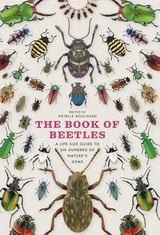
The Book of Beetles
A Life-Size Guide to Six Hundred of Nature's GemsPatrice Bouchard
University of Chicago Press, 2014
The Book of Beetles celebrates the beauty and diversity of this marvelous insect. Six hundred significant beetle species are covered, with each entry featuring a distribution map, basic biology, conservation status, and information on cultural and economic significance. Full-color photos show the beetles both at their actual size and enlarged to show details, such as the sextet of spots that distinguish the six-spotted tiger beetle or the jagged ridges of the giant-jawed sawyer beetle. Based in the most up-to-date science and accessibly written, the descriptive text will appeal to researchers and armchair coleopterists alike.
The humble beetle continues to grow in popularity, taking center stage in biodiversity studies, sustainable agriculture programs, and even the dining rooms of adventurous and eco-conscious chefs. The Book of Beetles is certain to become the authoritative reference on these remarkably adaptable and beautiful creatures.
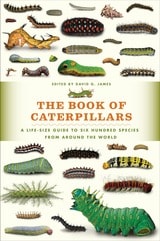
The Book of Caterpillars
A Life-Size Guide to Six Hundred Species from around the WorldEdited by David G. James
University of Chicago Press, 2017
The Book of Caterpillars unveils the mysteries of six hundred species from around the world, introducing readers to the complexity and beauty of these underappreciated insects. With the advent of high-quality digital macrophotography, the world of caterpillars is finally opening up. The book presents a wealth of stunning imagery that showcases the astonishing diversity of caterpillar design, structure, coloration, and patterning. Each entry also features a two-tone engraving of the adult specimen, emphasizing the wing patterns and shades, as well as a population distribution map and table of essential information that includes their habitat, typical host plants, and conservation status. Throughout the book are fascinating facts that will enthrall expert entomologists and curious collectors alike.
A visually rich and scientifically accurate guide to six hundred of the world’s most peculiar caterpillars, this volume presents readers with a rare, detailed look at these intriguing forms of insect life.
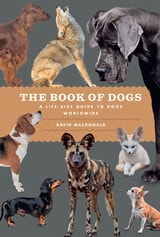
The Book of Dogs
A Life-Size Guide to Canids WorldwideDavid W. Macdonald
University of Chicago Press, 2026
For all dog lovers, a stunningly illustrated and scientifically informed global guide to our beloved canine companions and their wild kin.
Dogs are spectacularly diverse. From the world’s smallest wild canid, the diminutive fennec fox, to the majestic grey wolf, and from the towering great Dane to the tiny Chihuahua, The Book of Dogs celebrates the connections between humans’ best friends, their ancestors, and their wild cousins, offering insights into both wild and domestic canines and profiling every related species in the dog family Canidae as well as the vast variety of domestic dog breeds.
No other book so comprehensively and globally covers the most widespread family of carnivore species, helping to show that humans’ companions are part of a much larger animal world. Leading canid expert and award-winning author David W. Macdonald accessibly explains developments in the study of genetics to reveal the ancestry of modern canids and the astonishing hybridization among them. In addition to showcasing the diversity of our planet’s dogs, the book presents the latest research on the ecology, behavior, and society of wild dog species. These compelling descriptions with beautiful photographs—including life-size snout images of each of the thirty-seven wild canid species and over two hundred global breeds—offer readers of The Book of Dogs a chance to meet and understand our companions and their kin like never before.
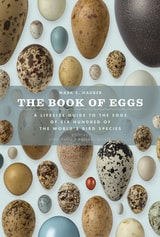
The Book of Eggs
A Life-Size Guide to the Eggs of Six Hundred of the World's Bird SpeciesMark E. Hauber
University of Chicago Press, 2014
The Book of Eggs introduces readers to eggs from six hundred species—some endangered or extinct—from around the world and housed mostly at Chicago’s Field Museum of Natural History. Organized by habitat and taxonomy, the entries include newly commissioned photographs that reproduce each egg in full color and at actual size, as well as distribution maps and drawings and descriptions of the birds and their nests where the eggs are kept warm. Birds’ eggs are some of the most colorful and variable natural products in the wild, and each entry is also accompanied by a brief description that includes evolutionary explanations for the wide variety of colors and patterns, from camouflage designed to protect against predation, to thermoregulatory adaptations, to adjustments for the circumstances of a particular habitat or season. Throughout the book are fascinating facts to pique the curiosity of binocular-toting birdwatchers and budding amateurs alike. Female mallards, for instance, invest more energy to produce larger eggs when faced with the genetic windfall of an attractive mate. Some seabirds, like the cliff-dwelling guillemot, have adapted to produce long, pointed eggs, whose uneven weight distribution prevents them from rolling off rocky ledges into the sea.
A visually stunning and scientifically engaging guide to six hundred of the most intriguing eggs, from the pea-sized progeny of the smallest of hummingbirds to the eggs of the largest living bird, the ostrich, which can weigh up to five pounds, The Book of Eggs offers readers a rare, up-close look at these remarkable forms of animal life.
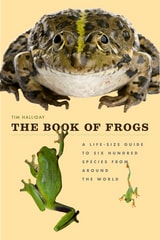
The Book of Frogs
A Life-Size Guide to Six Hundred Species from around the WorldTim Halliday
University of Chicago Press, 2015
The Book of Frogs commemorates the diversity and magnificence of all of these creatures, and many more. Six hundred of nature’s most fascinating frog species are displayed, with each entry including a distribution map, sketches of the frogs, species identification, natural history, and conservation status. Life-size color photos show the frogs at their actual size—including the colossal seven-pound Goliath Frog. Accessibly written by expert Tim Halliday and containing the most up-to-date information, The Book of Frogs will captivate both veteran researchers and amateur herpetologists.
As frogs increasingly make headlines for their troubling worldwide decline, the importance of these fascinating creatures to their ecosystems remains underappreciated. The Book of Frogs brings readers face to face with six hundred astonishingly unique and irreplaceable species that display a diverse array of adaptations to habitats that are under threat of destruction throughout the world.
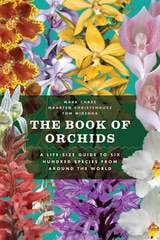
The Book of Orchids
A Life-Size Guide to Six Hundred Species from around the WorldMark W. Chase, Maarten J. M. Christenhusz, and Tom Mirenda
University of Chicago Press, 2017
The Book of Orchids revels in the diversity and oddity of these beguiling plants. Six hundred of the world’s most intriguing orchids are displayed, along with life-size photographs that capture botanical detail, as well as information about distribution, peak flowering period, and each species’ unique attributes, both natural and cultural. With over 28,000 known species—and more being discovered each year—the orchid family is arguably the largest and most geographically widespread of the flowering plant families. Including the most up-to-date science and accessibly written by botanists Mark Chase, Maarten Christenhusz, and Tom Mirenda, each entry in The Book of Orchids will entice researchers and orchid enthusiasts alike.
With stunning full-color images, The Book of Orchids is sure to become the go-to reference for these complex, alluring, and extraordinarily adaptable plants.
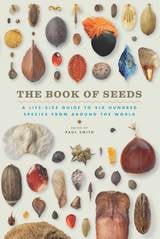
The Book of Seeds
A Life-Size Guide to Six Hundred Species from around the WorldEdited by Paul Smith
University of Chicago Press, 2018
The Book of Seeds takes readers through six hundred of the world’s seed species, revealing their extraordinary beauty and rich diversity. Each page pairs a beautifully composed photo of a seed—life-size, and, in some cases, enlarged to display fine detail—with a short description, a map showing distribution, and information on conservation status. The whole spectrum of seeds is covered here. There are prolific species like corn and less widely distributed species, like the brilliant blue seeds of the traveler’s palm or the bird of paradise flower, aptly named for its distinctive orange coiffure. There are tiny seeds and seeds weighing up to forty pounds. And while seeds in all their shapes, sizes, and colors grant us sustenance, there are even some we would be wise to treat with caution, such as the rosary pea, whose seeds are considered more toxic than ricin.
The essential guide to these complex plant creations, The Book of Seeds offers readers a rare, up-close look that will inspire scientists and nature lovers alike.
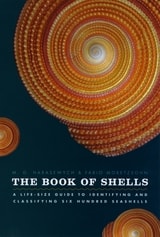
The Book of Shells
A Life-Size Guide to Identifying and Classifying Six Hundred SeashellsM. G. Harasewych and Fabio Moretzsohn
University of Chicago Press, 2010
Who among us hasn’t marveled at the diversity and beauty of shells? Or picked one up, held it to our ear, and then gazed in wonder at its shape and hue? Many a lifelong shell collector has cut teeth (and toes) on the beaches of the Jersey Shore, the Outer Banks, or the coasts of Sanibel Island. Some have even dived to the depths of the ocean. But most of us are not familiar with the biological origin of shells, their role in explaining evolutionary history, and the incredible variety of forms in which they come.
Shells are the external skeletons of mollusks, an ancient and diverse phylum of invertebrates that are in the earliest fossil record of multicellular life over 500 million years ago. There are over 100,000 kinds of recorded mollusks, and some estimate that there are over amillion more that have yet to be discovered. Some breathe air, others live in fresh water, but most live in the ocean. They range in size from a grain of sand to a beach ball and in weight from a few grams to several hundred pounds. And in this lavishly illustrated volume, they finally get their full due.
The Book of Shells offers a visually stunning and scientifically engaging guide to six hundred of the most intriguing mollusk shells, each chosen to convey the range of shapes and sizes that occur across a range of species. Each shell is reproduced here at its actual size, in full color, and is accompanied by an explanation of the shell’s range, distribution, abundance, habitat, and operculum—the piece that protects the mollusk when it’s in the shell. Brief scientific and historical accounts of each shell and related species include fun-filled facts and anecdotes that broaden its portrait.
The Matchless Cone, for instance, or Conus cedonulli, was one of the rarest shells collected during the eighteenth century. So much so, in fact, that a specimen in 1796 was sold for more than six times as much as a painting by Vermeer at the same auction. But since the advent of scuba diving, this shell has become far more accessible to collectors—though not without certain risks. Some species of Conus produce venom that has caused more than thirty known human deaths.
The Zebra Nerite, the Heart Cockle, the Indian Babylon, the Junonia, the Atlantic Thorny Oyster—shells from habitats spanning the poles and the tropics, from the highest mountains to the ocean’s deepest recesses, are all on display in this definitive work.
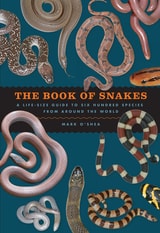
The Book of Snakes
A Life-Size Guide to Six Hundred Species from around the WorldMark O'Shea
University of Chicago Press, 2018
The Book of Snakes presents 600 species of snakes from around the world, covering nearly one in six of all snake species. It will bring greater understanding of a group of reptiles that have existed for more than 160 million years, and that now inhabit every continent except Antarctica, as well as two of the great oceans.
This volume pairs spectacular photos with easy-to-digest text. It is the first book on these creatures that combines a broad, worldwide sample with full-color, life-size accounts. Entries include close-ups of the snake’s head and a section of the snake at actual size. The detailed images allow readers to examine the intricate scale patterns and rainbow of colors as well as special features like a cobra’s hood or a rattlesnake’s rattle. The text is written for laypeople and includes a glossary of frequently used terms. Herpetologists and herpetoculturists alike will delight in this collection, and even those with a more cautious stance on snakes will find themselves drawn in by the wild diversity of the suborder Serpentes.
The Book of Snakes
A Life-Size Guide to Six Hundred Species from around the WorldMark O'Shea
University of Chicago Press, 2023
For millennia, humans have regarded snakes with an exceptional combination of fascination and revulsion. Some people recoil in fear at the very suggestion of these creatures, while others happily keep them as pets. Snakes can convey both beauty and menace in a single tongue flick, and so these creatures have held a special place in our cultures. Yet, for as many meanings as we attribute to snakes—from fertility and birth to sin and death—the real-life species represent an even wider array of wonders.
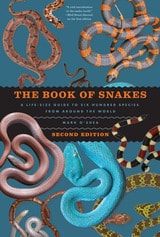
Now in a new edition, reflecting the most recent species classifications, The Book of Snakes presents 600 species of snakes from around the world, covering roughly one in seven of all snake species. It will bring greater understanding of a group of reptiles that have existed for more than 160 million years and that now inhabit every continent except Antarctica, as well as two of the great oceans.
This volume pairs spectacular photos with easy-to-digest text. It is the first book on these creatures that combines a broad, worldwide sample with full-color, life-size accounts. Entries include close-ups of the snake’s head and a section of the snake at actual size. The detailed images allow readers to examine the intricate scale patterns and rainbow of colors as well as special features like a cobra’s hood or a rattlesnake’s rattle. The text is written for laypeople and includes a glossary of frequently used terms. Herpetologists and herpetoculturists alike will delight in this collection, and even those with a more cautious stance on snakes will find themselves drawn in by the wild diversity of the suborder Serpentes.
The Business of Being a Writer
Jane Friedman
University of Chicago Press, 2018
The Business of Being a Writer offers the business education writers need but so rarely receive. It is meant for early-career writers looking to develop a realistic set of expectations about making money from their work or for working writers who want a better understanding of the industry. Writers will gain a comprehensive picture of how the publishing world works—from queries and agents to blogging and advertising—and will learn how they can best position themselves for success over the long term.
Jane Friedman has more than twenty years of experience in the publishing industry, with an emphasis on digital media strategy for authors and publishers. She is encouraging without sugarcoating, blending years of research with practical advice that will help writers market themselves and maximize their writing-related income. It will leave them empowered, confident, and ready to turn their craft into a career.