Results by title
92 books match the query 'Regimental histories' and 24 start with t
The 16th Michigan Infantry in the Civil War, Revised and Updated
Kim Crawford
Michigan State University Press, 2019
The 4th Michigan Infantry in the Civil War
Martin N. Bertera
Michigan State University Press, 2010
This fascinating narrative tells the story of a remarkable regiment at the center of Civil War history. The real-life adventure emerges from accounts of scores of soldiers who served in the 4th Michigan Infantry, gleaned from their diaries, letters, and memoirs; the reports of their officers and commanders; the stories by journalists who covered them; and the recollections of the Confederates who fought against them. The book includes tales of life in camp, portraying the Michigan soldiers as everyday people—recounting their practical jokes, illnesses, political views, personality conflicts, comradeship, and courage.
The book also tells the true story of what happened to Colonel Harrison Jeffords and the 4th Michigan when the regiment marched into John Rose's wheat field on a sweltering early July evening at Gettysburg. Beyond the myths and romanticized newspaper stories, this account presents the historical evidence of Jeffords's heroic, yet tragic, hand-to-hand struggle for his regiment's U.S. flag.
The Artillery Service in the War of the Rebellion, 1861–65
John C. Tidball
Westholme Publishing, 2011
A Rediscovered History That Will Become Essential Reading for Civil War Studies
The Artillery Service in the War of the Rebellion, 1861–65, is a comprehensive overview and analysis of the U.S. Army’s field artillery service in the Civil War’s principal battles, written by John C. Tidball, a distinguished artilleryman of the era. The overview, which appeared in the Journal of the Military Service Institution from 1891 to 1893, and nearly impossible to find today, examines the Army of the Potomac, including the battles of Fair Oaks, Gaines’s Mill, Mechanicsville, Malvern Hill, Antietam, Fredericksburg, Chancellorsville, and Gettysburg; the Army of the Tennessee, including the battles of Stones River and Chickamauga, and the Army of the Ohio’s battle of Shiloh. Tidball, a decorated Civil War veteran and superintendent of artillery instruction for the army, expertly presents the war through an artilleryman’s eyes in explaining the organization, equipping, and manning of the artillery service. His analysis highlights how the improper use of artillery, tying batteries down to relatively small infantry commands that diluted their firepower, seriously undermined the army’s effectiveness until reforms produced independent artillery commands that could properly mass artillery fire in battle.
The Artillery Service in the War of the Rebellion, edited by historian Lawrence M. Kaplan and presented here in one volume for the first time, includes additional material from an unpublished paper Tidball wrote in 1905 which contains further insights into the artillery service, as well as a general overview of the Petersburg campaign. A major new discovery in Civil War scholarship, The Artillery Service in the War of the Rebellion contains essential information that will change earlier historical interpretations of key battles and will be essential reading for all those interested in the war or contemplating writing about it.
The Black Citizen-Soldiers of Kansas, 1864-1901
Roger D. Cunningham
University of Missouri Press, 2008
Roger Cunningham examines a lost history to show that, in addition to black regulars, hundreds of other black militiamen and volunteers from the Sunflower State provided military service from the Civil War until the dawn of the twentieth century. He tells how African Americans initially filled segregated companies hurriedly organized to defend the state from the threat of Confederate invasion, with some units ordered into battle around Kansas City. Then after the state constitution was amended to admit blacks into the Kansas National Guard, but its generals still refused to integrate, blacks served in reserve militia and independent companies and in all-black regiments that were raised for the Spanish-American and Philippine wars.
Cunningham has researched service records, African American newspapers, and official correspondence to give voice to these citizen-soldiers. He shares stories of real people like William D. Matthews, a captain in the First Kansas Colored Infantry who was refused a commission when his regiment was mustered into the Union army; Charles Grinsted, who commanded the first black militia company after the Civil War; and other unsung heroes.
More than a military history, Cunningham’s account records the quest of black men, many of them former slaves, for inclusion in American society. Many came from the bottom of the socioeconomic order and found that as militiamen they could gain respect within their communities. And by marching in public ceremonies and organizing fund-raising activities to compensate for lack of financial support from the state, they also strengthened the ties that bound African American communities together.
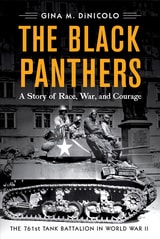
The Black Panthers
A Story of Race, War, and Courage—the 761st Tank Battalion in World War IIGina M. DiNicolo
Westholme Publishing, 2014
Known primarily for being the first African American armored unit to see combat in World War II and as future baseball star Jackie Robinson’s onetime outfit, the 761st Tank Battalion was forged in a devil’s cauldron of heat and prejudice at Camp Claiborne, Louisiana. Here, most viewed the tankers as tokens in a racial experiment, rather than as fellow American soldiers who would actually be deployed to fight a common enemy. Led by a small cadre of white and black officers, the 761st trained to the pinnacle of its craft. The Black Panthers, as they soon were called, proved their battle prowess against other units bound for combat on the parched Texas training fields. For this, they earned a coveted assignment to fight under General George S. Patton and go head-to-head with the best of Hitler’s arsenal. Moving to the front in November 1944, trial by fire soon shook the unit to its core. Ambushed by a veteran German force, the 761st suffered heavy casualties in the confusion as they cut their way out of the trap. But the men rallied to overcome self-doubt and vindicate their losses. Quickly battle hardened, the tankers saw intense combat through November and when Germany launched its last-ditch offensive through the Ardennes in December, the 761st fought side-by-side with Patton’s Third Army. Moving swiftly, the unit helped check the German advance, cut resupply routes to the forces surrounding beleaguered Bastogne, and drove the enemy back, recapturing towns crucial to the final defeat of Germany.
In The Black Panthers: A Story of Race, War, and Courage—the 761st Tank Battalion in World War II, historian Gina M. DiNicolo tells the full and unvarnished history of this important American fighting force. Relying on extensive archival research, including documents that had not been consulted in previous accounts, and interviews with surviving soldiers and family members, the author describes the unit’s training, deployment, combat, and individuals, such as Sgt. Ruben Rivers, one of only seven African American men awarded the Medal of Honor for World War II heroism. The professionalism, dedication, and courage of the 761st and other non-white units made clear that the strength of the American army in the future lay with integration—one of the enduring accomplishments of these servicemen.
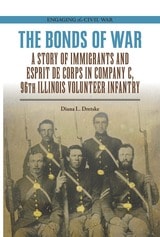
The Bonds of War
A Story of Immigrants and Esprit de Corps in Company C, 96th Illinois Volunteer InfantryDiana L. Dretske
Southern Illinois University Press, 2021
When curator Diana L. Dretske discovered that the five long-gone Union soldiers in a treasured photograph in the Bess Bower Dunn Museum were not fully identified, it compelled her into a project of recovery and reinterpretation. Utilizing an impressive array of local and national archives, as well as private papers, the author’s microhistorical approach records events that often go unnoticed, such as a farmer enlisting in the middle of a crop field, a sister searching her brother’s face for signs of war, and an immigrant dying in an effort to become a good American citizen.
This book, the most intensive examination of the 96th Illinois Volunteer Infantry since the regiment’s history was published in 1887 centers on immigrants from the British Isles who wished to be citizens of a country at war with itself. Far removed from their native homelands, they found new promise in rural Illinois. These men, neighbors along the quiet Stateline Road in Lake County, decide to join the fighting at its most dangerous hour. The bonds of war become then the bonds of their new national identity.
The Bonds of War uncovers the common soldier from the cataclysm that is the American Civil War by offering a collective biography of five soldiers of the 96th in the Western Theater. The human drama of their lives unfolds before the reader on battlefields such as Chickamauga and within the high pine stockades of Andersonville. Their lives argue that those who seem to matter least in military history are the very ones who can tell us the most about the experience of war and the reasons for remembering.
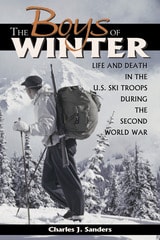
The Boys of Winter
Life and Death in the U.S. Ski Troops During the Second World WarCharles J. Sanders
University Press of Colorado, 2005
The Boys of Winter tells the true story of three young American ski champions and their brutal, heroic, and fateful transformation from athletes to infantrymen with the 10th Mountain Division. Charles J. Sanders's fast-paced narrative draws on dozens of interviews and extensive research to trace these boys' lives from childhood to championships and from training at Mount Rainier and in the Colorado Rockies to battling against the Nazis.
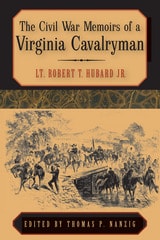
The Civil War Memoirs of a Virginia Cavalryman
Lt. Robert T. Hubard Jr., Edited by Thomas P. Nanzig
University of Alabama Press, 2007
Robert Hubard was an enlisted man and officer of the 3rd Virginia Cavalry in the Army of Northern Virginia (CSA) from 1861 through 1865. He wrote his memoir during an extended convalescence spent at his father’s Virginia plantation after being wounded at the battle of Five Forks on April 1, 1865. Hubard served under such Confederate luminaries as Jeb Stuart, Fitz Lee, Wade Hampton, and Thomas L. Rosser. He and his unit fought at the battles of Antietam, on the Chambersburg Raid, in the Shenandoah Valley, at Fredericksburg, Kelly’s Ford, Chancellorsville, Gettysburg, Bristoe Station, and down into Virginia from the Wilderness to nearly the end of the war at Five Forks.
Hubard was like many of his class and station a son of privilege and may have felt that his service was an act of noblesse oblige. Unlike many of his contemporaries, however, he was a keen observer and a writer of unusual grace, clarity, humor, and intelligence. The editor has fleshed out his memoir by judicious use of Hubard’s own wartime letters, which not only fill in gaps but permit the reader to see developments in the writer’s thinking after the passage of time. Because he was a participant in events of high drama and endured the quotidian life of a soldier, Hubard’s memoir should be of value to both scholars and avocational readers.

The Complete Civil War Journal and Selected Letters of Thomas Wentworth Higginson
Thomas Wentworth Higginson
University of Chicago Press, 1999
So wrote Thomas Wentworth Higginson about his role in one of the most compelling and fascinating episodes in the history of the United States. As the colonel of the first regiment of black men in the Union army during the Civil War, Higginson was an early, articulate, and powerful crusader for civil rights, and his journal and letters, collected for the first time in this volume, present some of the most extraordinary documents of the Civil War.
Higginson was a politically engaged intellectual at the forefront of radical antislavery, labor, and feminist causes. Born in 1823 to a formerly wealthy but still prominent Brahmin family, he became one of America's leading social activists and a prominent writer, minister, and reformer. With the publication in 1869 of his classic Army Life in a Black Regiment, which drew on this journal, Higginson became one of the most important chroniclers of the Civil War. The Complete Civil War Journal and Selected Letters of Thomas Wentworth Higginson is the first comprehensive edition of his journal. Sensitively and thoroughly annotated by Christopher Looby and supplemented by a large selection of Higginson's wartime letters, this volume offers the most vivid and intimate picture of the radical interracial solidarity brought about by the transformative experience of the army camp and of Civil War life.
"The immediacy of Higginson's reflections, as well as their sharp insights, make this journal both distinctive and enduringly compelling . . . . Higginson's vivid texts can once again educate, gratify and delight readers."—Publishers Weekly
"This volume will enrich our understanding of the transformations that emancipation and war wrought."—Library Journal

The Drums of the 47th
Robert J. Burdette
University of Illinois Press, 2000
From Peoria to Corinth, from Corinth to Vicksburg, up the Red River country, down to Mobile and Fort Blakely, and back to Tupelo and Selma, the 47th marched three thousand miles during Burdette's tour, from March 1862 to December 1864.
In a literate voice rare in war memoirs, Burdette speaks of comradeship built and tested, the noise and confusion of the battlefield, the conflicting feelings of witnessing a military execution. Both nostalgic and piercingly immediate, his remembrances evoke the sights, sounds, smells, and above all the inner feelings stirred up by war, from exuberance to terror and from patriotic fervor to compassion for a fallen enemy.
Originally published--on the eve of another great conflict--in 1914, The Drums of the 47th is a moving depiction of the inner life of the common soldier. Like Stephen Crane's The Red Badge of Courage, Burdette's book puts a human face on the war and his words speak to all who have served or imagined serving under fire. The introduction by John E. Hallwas provides a biographical sketch of Burdette and a commentary on his engaging Civil War memoir.
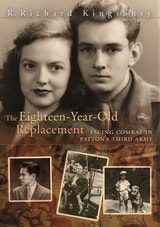
The Eighteen-Year-Old Replacement
Facing Combat in Patton's Third ArmyR. Richard Kingsbury
University of Missouri Press, 2008
When the United States entered the Second World War, eighteen-year-old enlistees were routinely assigned temporary duties and not sent into battle until they turned nineteen. But as the fighting dragged on, America was eventually forced to draft younger men into combat to replace wounded troops—and following the Battle of the Bulge, more than 300,000 eighteen-year-olds were sent as replacements to the army’s decimated divisions.
In The Eighteen-Year-Old Replacement, Richard Kingsbury brings an often-overlooked perspective to the annals of World War II. Torn from an ordinary teenager’s life in the Midwest, young Dick was drafted six weeks after D-Day and rushed with other eighteen-year-olds to the Siegfried Line to bolster Patton’s 94th Infantry Division. His reminiscence provides a moving, diarylike account of what he endured both physically and emotionally—and tells how he went from boyhood to manhood almost overnight.
In prose that is both succinct and evocative, Kingsbury recounts his experiences as a rifleman during the final bloody battles in Germany, giving readers a real feel for what combat was like for a raw recruit. He recalls his first night in a foxhole on the front line and the “unbelievable luxury” of sleeping in a barn’s hayloft. He relives freezing cold at the Bulge, which permanently damaged his legs, and the pounding of enemy artillery during Patton’s breakthrough of the German West Wall, which affected his hearing for life.
More poignantly, Kingsbury shares his anxieties over killing—as well as the distinct possibility of being killed as Wehrmacht tanks mercilessly blasted individual foxholes at Bannholz Woods. He vividly recalls Patton’s attack on Ludwigshafen, on the west bank of the Rhine, where he took a German bullet in his chest—and where three of the six newly arrived eighteen-year-olds were killed.
Interspersed with the accounts of battle are letters between Dick and Mary Jo, his sweetheart back home, capturing the blossoming of romance that transcended both distance and bloodshed. His book casts a new light on war—and courtship—in an era when boys were rushed from the home front to the front lines. By showing how crucial the contribution of these young men was to the war effort, this book gives the eighteen-year-old replacements the recognition they have long deserved.
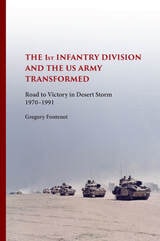
The First Infantry Division and the U.S. Army Transformed
Road to Victory in Desert Storm, 1970-1991Gregory Fontenot
University of Missouri Press, 2017
From the author's introduction:
“My purpose is a narrative history of the 1st Infantry Division from 1970 through the Operation Desert Storm celebration held 4th of July 1991. This story is an account of the revolutionary changes in the late Cold War. The Army that overran Saddam Hussein’s Legions in four days was the product of important changes stimulated both by social changes and institutional reform. The 1st Infantry Division reflected benefits of those changes, despite its low priority for troops and material. The Division was not an elite formation, but rather excelled in the context of the Army as an institution.”
This book begins with a preface by Gordon R. Sullivan, General, USA, Retired. In twelve chapters, author Gregory Fontenot explains the history of the 1st infantry Division from 1970 to 1991. In doing so, his fast-paced narrative includes elements to expand the knowledge of non-military readers. These elements include a glossary, a key to abbreviations, maps, nearly two dozen photographs, and thorough bibliography.
The First infantry Division and the U.S. Army Transformed: Road to Victory in Desert Storm is published with support from the First Division Museum at Cantigny.
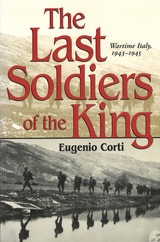
The Last Soldiers of the King
Life in Wartime Italy, 1943-1945Eugenio Corti & Translated by Manuela Arundel
University of Missouri Press, 2003
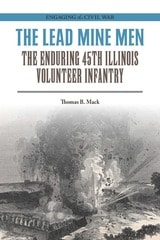
The Lead Mine Men
The Enduring 45th Illinois Volunteer InfantryThomas B. Mack
Southern Illinois University Press, 2023
WINNER, Certificate of Excellence in “Scholarly Publications” from the Illinois State Historical Society’s 2025 Best of Illinois History Awards!
The regiment that never ran
To destroy Confederate infrastructure, avenge the horrors of slavery, and shorten the war, the 45th Illinois Volunteer Infantry imposed the pillaging of hard-war philosophy upon Confederate lands. This comprehensive and engaging narrative explores the Civil War ordeals and triumphs of the “Lead Mine men” who hailed from eleven counties in northern Illinois. Thomas B. Mack uncovers the history on this unit of resilient midwesterners and how they brought hard-war to the Confederacy in 1862, earlier than other historians have previously suggested.
During their service the regiment compiled an exceptional record. The 45th fought under General Ulysses S. Grant in the war’s western theater, earning honors at Vicksburg and in Tennessee. The men later reenlisted as veterans and served in General William T. Sherman’s Atlanta, Savannah, and Carolina campaigns. Mack considers the soldiers’ community, discipline, and faith in Providence during their service in the Union Army of the Tennessee and how, despite the unit’s high casualties, they upheld the lowest rate of desertion due to their fervent patriotism.
Throughout The Lead Mine Men, Mack’s focus remains on the soldiers—their extensive training in Galena and Chicago and their time in camp and in combat. He follows their experiences from recruitment to their celebratory march in the 1865 Grand Review to their postwar lives in which many struggled to adjust, receive their government pensions, and protect the unit’s legacy. In this book, Mack broadens our understanding of the Union soldiers who saved their republic and ended slavery within its borders.
The Missouri Home Guard
Protecting the Home Front during the Great WarPetra DeWitt
University of Missouri Press, 2022
The Home Guard also functioned to preserve patriotism and reduce opposition to the war. Service in the Guard was a way to show loyalty to one’s country, particularly for German Americans, who were frequently under suspicion as untrustworthy. Many German Americans in Missouri enthusiastically signed up to dispel any whispers of treason, while others found themselves torn between the motherland and their new homeland. Men too old or exempt from the draft for other reasons found meaning in helping with the war effort through the Home Guard while also garnering respect from the community. For similar reasons, women attempted to join the organization as did African Americans, some of whom formed units of a “Negro Home Guard.” Informed by the dynamics of race, gender, and ethnicity, DeWitt’s consideration of this understudied but important organization examines the fluctuating definition of patriotism and the very real question of who did and who did not have the privilege of citizenship and acceptance in society.
The Prairie Boys Go to War
The Fifth Illinois Cavalry, 1861-1865Rhonda M. Kohl
Southern Illinois University Press, 2013
The regiment’s history unfolds around major events in the Western Theater from 1861 to September 1865, including campaigns at Helena, Vicksburg, Jackson, and Meridian, as well as numerous little-known skirmishes. Although they were led almost exclusively by Northern-born Republicans, the majority of the soldiers in the Fifth Illinois remained Democrats. As Kohl demonstrates, politics, economics, education, social values, and racism separated the line officers from the common soldiers, and the internal friction caused by these cultural disparities led to poor leadership, low morale, disciplinary problems, and rampant alcoholism.
The narrative pulls the Fifth Illinois out of historical oblivion, elucidating the highs and lows of the soldiers’ service as well as their changing attitudes toward war goals, religion, liberty, commanding generals, Copperheads, and alcoholism. By reconstructing the cultural context of Fifth Illinois soldiers, Prairie Boys Go to War reveals how social and economic traditions can shape the wartime experience.
The Queen's American Rangers
Donald J. Gara
Westholme Publishing, 2015
Prior to the British attack on Long Island in August 1776, French and Indian War hero Robert Rogers organized a regiment to join the fight—but not on the side of his native New Hampshire. Named in honor of Queen Charlotte, the wife of King George III, Rogers’s regiment recruited the bulk of its soldiers from the large number of Loyalist refugees on Staten Island who had fled from New York. Rogers’s command of the unit was short-lived, however, after a humiliating defeat in late October by a surprise attack on his headquarters. Under new leadership, the unit played a decisive role and suffered heavy casualties at the battle of Brandywine that brought them their first favorable attention from the British high command. With this performance, and under the able leadership of John Graves Simcoe, the Queen’s American Rangers—sometimes known as “Simcoe’s Rangers”—were frequently assigned to serve alongside British regular troops in many battles, including Monmouth, Springfield, Charleston, and Yorktown. Receiving frequent high praise from Lieutenant General Sir Henry Clinton, the Commander in Chief of the British Army in America, the unit was placed on the American Establishment of the British Army in May 1779, a status conferred on provincial units that had performed valuable services during the war, and was renamed the 1st American Regiment. Before the end of the war, the rangers were fully incorporated into the British regular army, one of only four Loyalist units to be so honored.
The Queen’s American Rangers by historian Donald J. Gara is the first book-length account of this storied unit. Based on extensive primary source research, the book traces the complete movements, command changes, and battle performances of the rangers, from their first muster to their formal incorporation into the British Army and ultimate emigration to Canada on land grants conferred by a grateful British crown.
The Question of MacArthur's Reputation
Côte De Châtillon, October 14-16, 1918Robert H. Ferrell
University of Missouri Press, 2008
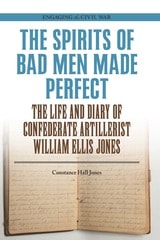
The Spirits of Bad Men Made Perfect
The Life and Diary of Confederate Artillerist William Ellis JonesConstance Hall Jones
Southern Illinois University Press, 2020
In 1865 Jones returned to his prewar printing trade in Richmond, and his lasting reputation stems from his namesake publishing company’s role in the creation and dissemination of much of the Lost Cause ideology. Unlike the pro-Confederate books and pamphlets Jones published—primary among them the Southern Historical Society Papers—his diary shows the mindset of an unenthusiastic soldier. In a model of contextualization, Constance Hall Jones shows how her ancestor came to embrace an uncritical veneration of the army’s leadership and to promulgate a mythology created by veterans and their descendants who refused to face the amorality of their cause.
Jones brackets the soldier’s diary with rich, biographical detail, profiling his friends and relatives and providing insight into his childhood and post-war years. In doing so, she offers one of the first serious investigations into the experience of a Welsh immigrant family loyal to the Confederacy and makes a significant contribution to our understanding of Civil War–era Richmond and the nineteenth-century publishing industry. Invitingly written, The Spirits of Bad Men Made Perfect is an engaging life-and-times story that will appeal to historians and general readers alike.

The US Eighth Air Force in World War II
Ira Eaker, Hap Arnold, and Building American Air Power, 1942–1943William J. Daugherty
University of North Texas Press, 2024
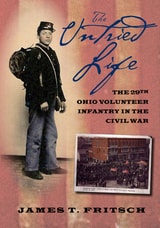
The Untried Life
The Twenty-Ninth Ohio Volunteer Infantry in the Civil WarJames T. Fritsch
Ohio University Press, 2012
Told in unflinching detail, this is the story of the Twenty-Ninth Ohio Volunteer Infantry, also known as the Giddings Regiment or the Abolition Regiment, after its founder, radical abolitionist Congressman J. R. Giddings. The men who enlisted in the Twenty-Ninth OVI were, according to its lore, handpicked to ensure each was as pure in his antislavery beliefs as its founder. Whether these soldiers would fight harder than other soldiers, and whether the people of their hometowns would remain devoted to the ideals of the regiment, were questions that could only be tested by the experiment of war.
The Untried Life is the story of these men from their very first regimental formation in a county fairground to the devastation of Gettysburg and the march to Atlanta and back again, enduring disease and Confederate prisons. It brings to vivid life the comradeship and loneliness that pervaded their days on the march. Dozens of unforgettable characters emerge, animated by their own letters and diaries: Corporal Nathan Parmenter, whose modest upbringing belies the eloquence of his writings; Colonel Lewis Buckley, one of the Twenty-Ninth’s most charismatic officers; and Chaplain Lyman Ames, whose care of the sick and wounded challenged his spiritual beliefs.
The Untried Life shows how the common soldier lived—his entertainments, methods of cooking, medical treatment, and struggle to maintain family connections—and separates the facts from the mythology created in the decades after the war.
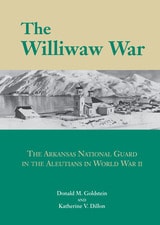
The Williwaw War
The Arkansas National Guard in the Aleutians in World War IIDonald Goldstein
University of Arkansas Press, 1992
When the 206th Coast Artillery Regiment of the Arkansas National Guard was called into federal service in January of 1941, few of the soldiers saw this action as anything more than a temporary detour in their lives. The war, after all, was in Europe and Asia and did not seem to involve them; many of the men thought they would serve their one-year enlistment and go home. The Japanese attack on Pearl Harbor changed all that.
The Williwaw War highlights the event sthat shaped the service of Arkansas’s 206th in the Aleutian Islands, including the Japanese strikes on Dutch Harbor on the third and fourth of June 1942, as well as the naval battle of the Komandorski Islands and the recapture of Attu and Kiska.
Written by the noted co-authors of the best-welling books on World War II, The Williwaw War chronicles the efforts of the men of the 206th as they battled terrible weather, overwhelming boredome and deprivation, and the Japanese, who were succesfully attempting to distract the Americans from the main Japanese assault on Midway Island.
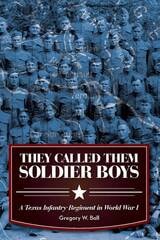
They Called Them Soldier Boys
A Texas Infantry Regiment in World War IGregory W. Ball
University of North Texas Press, 2013
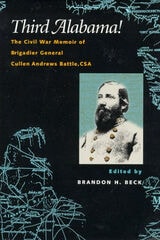
Third Alabama!
The Civil War Memoir of Brigadier General Cullen Andrews Battle, CSACullen Andrews Battle
University of Alabama Press, 2002
From Seven Pines to Sharpsburg and Chancellorsville to Spotsylvania, the Third Alabama Regiment played a key role in the Civil War. One of the first infantry units from the Deep South to make the journey to Virginia in 1861, the Third Alabama was the first to cross the Potomac into Maryland and to enter the streets of Gettysburg in 1863.
As the regiment’s leader and one of General Robert E. Lee’s brigade commanders, General Cullen Andrews Battle witnessed the extent of the many triumphs and sufferings of the Army of Northern Virginia. Trained as a journalist and lawyer, he records these events honestly and with compassion. Battle captures the courage of citizen soldiers fighting without prior military training, always paying tribute to the heroism of those under his command, while providing vivid accounts of some of the war’s bloodiest fights. He assesses Confederate mistakes, particularly at Seven Pines—and sheds light on the third Battle of Winchester, the only decisive defeat in which the regiment was involved.
Brandon Beck’s introductory notes provide a thorough review of Battle’s life and valuable biographical information on soldiers under his command as well as on other officers in the Army of Northern Virginia. A worthwhile addition to all Civil War libraries, public or private, Third Alabama! offers an informative, dramatic reading of the wartime activities of one of the Confederacy’s bravest fighting units.