Results by title
70 books match the query 'Rehabilitation' and 10 start with t
Testimony after Catastrophe
Narrating the Traumas of Political ViolenceStevan Weine
Northwestern University Press, 2006
A deeply involving, compassionate, occasionally confrontational blend of practical hands-on experience and dialogic theory, emerging from the author's decade-long work in Europe and Chicago with survivors of the Balkan wars, this book is committed to the proposition that efforts to use testimony to address the consequences of political violence can be strengthened--though by no means guaranteed--if they are based on a fuller acknowledgment of the personal and ethical elements embodied in the narrative essence of testimony. These elements are what Testimony after Catastrophe seeks to reveal.
The Compassionate Court?
Support, Surveillance, and Survival in Prostitution Diversion ProgramsCorey S. Shdaimah, Chrysanthi S. Leon, and Shelly A. Wiechelt
Temple University Press, 2023
The authors of The Compassionate Court? provide case studies of such programs and draw upon interviews and observations conducted over a decade to reveal how participants and professionals perceive court-affiliated PDPs, clients, and staff. Considering the motivations, vision, and goals of these programs as well as their limitations—the inequity and disempowerment of their participants—the authors also present their own changing perspectives on prostitution courts, diversion programs, and criminalization of sex work.
The Corrigible and the Incorrigible
Science, Medicine, and the Convict in Twentieth-Century GermanyGreg Eghigian
University of Michigan Press, 2015
The Ex-Prisoner's Dilemma
How Women Negotiate Competing Narratives of Reentry and DesistanceLeverentz, Andrea M
Rutgers University Press, 2014
When a woman leaves prison, she enters a world of competing messages and conflicting advice. Staff from prison, friends, family members, workers at halfway houses and treatment programs all have something to say about who she is, who she should be, and what she should do. The Ex-Prisoner’s Dilemma offers an in-depth, firsthand look at how the former prisoner manages messages about returning to the community.
Over the course of a year, Andrea Leverentz conducted repeated interviews with forty-nine women as they adjusted to life outside of prison and worked to construct new ideas of themselves as former prisoners and as mothers, daughters, sisters, romantic partners, friends, students, and workers. Listening to these women, along with their family members, friends, and co-workers, Leverentz pieces together the narratives they have created to explain their past records and guide their future behavior. She traces where these narratives came from and how they were shaped by factors such as gender, race, maternal status, age, and experiences in prison, halfway houses, and twelve-step programs—factors that in turn shaped the women’s expectations for themselves, and others’ expectations of them. The women’s stories form a powerful picture of the complex, complicated human experience behind dry statistics and policy statements regarding prisoner reentry into society for women, how the experience is different for men and the influence society plays.
With its unique view of how society’s mixed messages play out in ex-prisoners’ lived realities, The Ex-Prisoner’s Dilemma shows the complexity of these women’s experiences within the broad context of the war on drugs and mass incarceration in America. It offers invaluable lessons for helping such women successfully rejoin society.

The Future of Meta-Analysis
Kenneth W. Wachter
Russell Sage Foundation, 1990
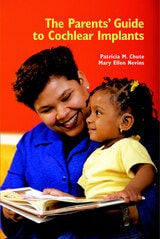
The Parents' Guide to Cochlear Implants
Patricia M. Chute
Gallaudet University Press, 2002
Most importantly, parents will learn their roles in helping their child adjust to and successfully use the cochlear implant. The Parents’ Guide to Cochlear Implants emphasizes such critical subjects as learning to listen through home activities, implants as tools for language development, and critical issues regarding school placement. This encouraging book considers the implications for performance in light of the whole child, including issues related to Deaf culture and cochlear implants. The authors also include brief stories by parents whose children have had implants that provide reassuring actual experiences to parents considering the procedure for their own child. With a last word on parenting perspectives and a rich source of resources in the appendices, this one-of-a-kind guide will arm parents of deaf children with complete confidence to make informed decisions about cochlear implantation.
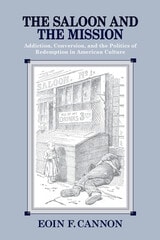
The Saloon and the Mission
Addiction, Conversion, and the Politics of Redemption in American CultureEoin F. Cannon
University of Massachusetts Press, 2013
In this book Eoin Cannon illuminates the role that sobriety movements have played in placing notions of personal and societal redemption at the heart of modern American culture. He argues against the dominant scholarly perception that recovery narratives are private and apolitical, showing that in fact the genre's conventions turn private experience to public political purpose. His analysis ranges from neglected social reformer Helen Stuart Campbell's embrace of the "gospel rescue missions" of postbellum New York City to William James's use of recovery stories to consider the regenerative capabilities of the mind, to writers such as Upton Sinclair and Djuna Barnes, who used this narrative form in much different ways.
Cannon argues that rather than isolating recovery from these realms of wider application, the New Deal–era Alcoholics Anonymous refitted the "drunkard's conversion" as a model of selfhood for the liberal era, allowing for a spiritual redemption story that could accommodate a variety of identities and compulsions. He concludes by considering how contemporary recovery narratives represent both a crisis in liberal democracy and a potential for redemptive social progress.

Time of Grace
Thoughts on Nature, Family, and the Politics of Crime and PunishmentKen Lamberton
University of Arizona Press, 2007
Time of Grace is a remarkable book, written with great eloquence by a former science teacher who was incarcerated for twelve years for his sexual liaison with a teenage student. Far more than a “prison memoir,” it is an intimate and revealing look at relationships—with fellow humans and with the surprising wildlife of the Sonoran Desert, both inside and beyond prison walls. Throughout, Ken Lamberton reflects on human relations as they mimic and defy those of the natural world, whose rhythms calibrate Lamberton’s days and years behind bars. He writes with candor about his life, while observing desert flora and fauna with the insight and enthusiasm of a professional naturalist.
While he studies a tarantula digging her way out of the packed earth and observes Mexican freetail bats sailing into the evening sky, Lamberton ruminates on his crime and on the wrenching effects it has had on his wife and three daughters. He writes of his connections with his fellow inmates—some of whom he teaches in prison classes—and with the guards who control them, sometimes with inexplicable cruelty. And he unflinchingly describes a prison system that has gone horribly wrong—a system entrapped in a self-created web of secrecy, fear, and lies.
This is the final book of Lamberton’s trilogy about the twelve years he spent in prison. Readers of his earlier books will savor this last volume. Those who are only now discovering Lamberton’s distinctive voice—part poet, part scientist, part teacher, and always deeply, achingly human—will feel as if they are making a new friend.
Gripping, sobering, and beautifully written, Lamberton’s memoir is an unforgettable exploration of crime, punishment, and the power of the human spirit.
Trafficked Children and Youth in the United States
Reimagining SurvivorsElzbieta M. Gozdziak
Rutgers University Press, 2016
Breaking new ground, Trafficked Children in the United States offers a fresh take on what matters most to these young people as they rebuild their lives in America.
Trial by Treatment
Punishing Illness in an Age of Criminal Legal ReformMary Ellen Stitt
University of Chicago Press, 2025
A troubling account of the unexpected impacts of treatment-based alternatives to criminal punishment.
Every year, courts send hundreds of thousands of people to treatment-based programs as alternatives to traditional punishment. These alternatives—known as ‘diversion programs’—are widely celebrated as reforms that reduce the punishment of the mentally ill. But in Trial by Treatment, Mary Ellen Stitt shows that they have, in fact, expanded the reach of the criminal legal system and its power over the lives of the most vulnerable.
The inner workings of diversion programs are obscure, partially by design, and data on outcomes is hard to come by. Stitt draws on two years of fieldwork in criminal courtrooms and court-mandated treatment sessions, as well as an original national dataset, in-depth interviews, and experimental survey data, to document the hidden impacts of diversion. She shows that placing mental healthcare under the control of the courts has helped to legitimize the criminalization of illness, warped treatment environments, and amplified inequalities in punishment. In vivid and humanizing detail, Trial by Treatment shows how reforms that keep power and discretion in the same hands can entrench the very problems they promised to solve.