Results by title
346 books match the query 'Relations' and 67 start with t
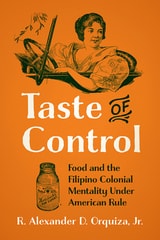
Taste of Control
Food and the Filipino Colonial Mentality under American RuleR. Alexander D. Orquiza, Jr.
Rutgers University Press, 2020
Winner of the 2021 Gourmand Awards, Asian Section & Culinary History Section
Filipino cuisine is a delicious fusion of foreign influences, adopted and transformed into its own unique flavor. But to the Americans who came to colonize the islands in the 1890s, it was considered inferior and lacking in nutrition. Changing the food of the Philippines was part of a war on culture led by Americans as they attempted to shape the islands into a reflection of their home country.
Taste of Control tells what happened when American colonizers began to influence what Filipinos ate, how they cooked, and how they perceived their national cuisine. Food historian René Alexander D. Orquiza, Jr. turns to a variety of rare archival sources to track these changing attitudes, including the letters written by American soldiers, the cosmopolitan menus prepared by Manila restaurants, and the textbooks used in local home economics classes. He also uncovers pockets of resistance to the colonial project, as Filipino cookbooks provided a defense of the nation’s traditional cuisine and culture.
Through the topic of food, Taste of Control explores how, despite lasting less than fifty years, the American colonial occupation of the Philippines left psychological scars that have not yet completely healed, leading many Filipinos to believe that their traditional cooking practices, crops, and tastes were inferior. We are what we eat, and this book reveals how food culture served as a battleground over Filipino identity.
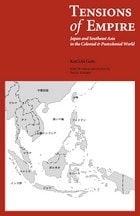
Tensions Of Empire
Japan and Southeast Asia in the Colonial and Postcolonial WorldKen’ichi Goto
Ohio University Press, 2003
Beginning with the closing decade of European colonial rule in Southeast Asia and covering the wartime Japanese empire and its postwar disintegration, Tensions of Empire focuses on the Japanese in Southeast Asia, Indonesians in Japan, and the legacy of the war in Southeast Asia. It also examines Japanese perceptions of Southeast Asia and the lingering ambivalence toward Japanese involvement in Asia and toward the war in particular.
Drawing on extensive multilingual archival research and interviews, Ken‘ichi Goto has produced a factually rich and balanced view of this region’s historical events of the last century.
Tensions of Empire features detailed discussions of Portuguese Timor in the 1930s and 1940s, the decolonization of Malaya, and twentieth-century Indonesia. This extended inquiry yields a unique view of the complicated network within and beyond the colonial and imperial relationships between a one-time nonwestern colonial power and an entire region.
Of great interest to students of Japan-Southeast Asia relations and to specialists in the modern history of both Southeast Asia and Japan, Professor Goto’s Tensions of Empire is a fascinating account of Japan’s recent past from the inside.
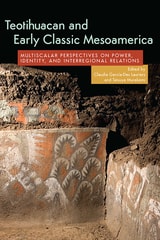
Teotihuacan and Early Classic Mesoamerica
Multiscalar Perspectives on Power, Identity, and Interregional RelationsClaudia García-Des Lauriers
University Press of Colorado, 2021
The volume offers a multiscalar view of power and identity, showing that the spread of Teotihuacan-related material culture may have resulted from direct and indirect state administration, colonization, emulation by local groups, economic transactions, single-event elite interactions, and various kinds of social and political alliances. The contributors explore questions concerning who interacted with whom; what kinds of materials and ideas were exchanged; what role interregional interactions played in the creation, transformation, and contestation of power and identity within the city and among local polities; and how interactions on different scales were articulated. The answers to these questions reveal an Early Classic Mesoamerican world engaged in complex economic exchanges, multidirectional movements of goods and ideas, and a range of material patterns that require local, regional, and macroregional contextualization.
Focusing on the intersecting themes of identity and power, Teotihuacan and Early Classic Mesoamerica makes a strong contribution to the understanding of the role of this important metropolis in the Early Classic history of the region. The volume will be of interest to scholars and graduate students of Mesoamerican archaeology, the archaeology of interaction, and the archaeology of identity.
Contributors: Sarah C. Clayton, Fiorella Fenoglio Limón, Agapi Filini, Julie Gazzola, Sergio Gómez-Chávez, Haley Holt Mehta, Carmen Pérez, Patricia Plunket, Juan Carlos Saint Charles Zetina, Yoko Sugiura, Gabriela Uruñuela, Gustavo Jaimes Vences
The Aggada of the Bavli and Its Cultural World
Geoffrey Herman
SBL Press, 2018
Essays that explore the rich engagement of the Talmud with its cultural world
The Babylonian Talmud (Bavli), the great compilation of Jewish law edited in the late Sasanian era (sixth–seventh century CE), also incorporates a great deal of aggada, that is, nonlegal material, including interpretations of the Bible, stories, folk sayings, and prayers. The Talmud’s aggadic traditions often echo conversations with the surrounding cultures of the Persians, Eastern Christians, Manichaeans, Mandaeans, and the ancient Babylonians, and others. The essays in this volume analyze Bavli aggada to reveal this rich engagement of the Talmud with its cultural world.
Features:
- A detailed analysis of the different conceptions of martyrdom in the Talmud as opposed to the Eastern Christian martyr accounts
- Illustration of the complex ways rabbinic Judaism absorbed Christian and Zoroastrian theological ideas
- Demonstration of the presence of Persian-Zoroastrian royal and mythological motifs in talmudic sources
The Agrarian Dispute
The Expropriation of American-Owned Rural Land in Postrevolutionary MexicoJohn J. Dwyer
Duke University Press, 2008
Dwyer weaves together elite and subaltern history and highlights the intricate relationship between domestic and international affairs. Through detailed studies of land redistribution in Baja California and Sonora, he demonstrates that peasant agency influenced the local application of Cárdenas’s agrarian reform program, his regional state-building projects, and his relations with the United States. Dwyer draws on a broad array of official, popular, and corporate sources to illuminate the motives of those who contributed to the agrarian dispute, including landless fieldworkers, indigenous groups, small landowners, multinational corporations, labor leaders, state-level officials, federal policymakers, and diplomats. Taking all of them into account, Dwyer explores the circumstances that spurred agrarista mobilization, the rationale behind Cárdenas’s rural policies, the Roosevelt administration’s reaction to the loss of American-owned land, and the diplomatic tactics employed by Mexican officials to resolve the international conflict.
The American Enemy
The History of French Anti-AmericanismPhilippe Roger
University of Chicago Press, 2005
Buffon, as Philippe Roger demonstrates here, was just one of the first in a long line of Frenchmen who have built a history of anti-Americanism in that country, a progressive history that is alternately ludicrous and trenchant. The American Enemy is Roger's bestselling and widely acclaimed history of French anti-Americanism, presented here in English translation for the first time.
With elegance and good humor, Roger goes back 200 years to unearth the deep roots of this anti-Americanism and trace its changing nature, from the belittling, as Buffon did, of the "savage American" to France's resigned dependency on America for goods and commerce and finally to the fear of America's global domination in light of France's thwarted imperial ambitions. Roger sees French anti-Americanism as barely acquainted with actual fact; rather, anti-Americanism is a cultural pillar for the French, America an idea that the country and its culture have long defined themselves against.
Sharon Bowman's fine translation of this magisterial work brings French anti-Americanism into the broad light of day, offering fascinating reading for Americans who care about our image abroad and how it came about.
“A brilliant and exhaustive guide to the history of French Ameriphobia.”—Simon Schama, New Yorker
The American Presence in Ulster
A Diplomatic History, 1796–1996Francis M. Carroll
Catholic University of America Press, 2005
The Apathy of Empire
Cambodia in American GeopoliticsJames A. Tyner
University of Minnesota Press, 2024
What America’s intervention in Cambodia during the Vietnam War reveals about Cold War–era U.S. national security strategy
The Apathy of Empire reveals just how significant Cambodia was to U.S. policy in Indochina during the Vietnam War, broadening the lens to include more than the often-cited incursion in 1970 or the illegal bombing after the Paris Peace Accords in 1973. This theoretically informed and thoroughly documented case study argues that U.S. military intervention in Cambodia revealed America’s efforts to construct a hegemonic spatial world order.
James Tyner documents the shift of America’s post-1945 focus from national defense to national security. He demonstrates that America’s expansionist policies abroad, often bolstered by military power, were not so much about occupying territory but instead constituted the construction of a new normal for the exercise of state power. During the Cold War, Vietnam became the geopolitical lodestar of this unfolding spatial order. And yet America’s grand strategy was one of contradiction: to build a sovereign state (South Vietnam) based on democratic liberalism, it was necessary to protect its boundaries—in effect, to isolate it—through both covert and overt operations in violation of Cambodia’s sovereignty. The latter was deemed necessary for the former.
Questioning reductionist geopolitical understandings of states as central or peripheral, Tyner explores this paradox to rethink the formulation of the Cambodian war as sideshow, revealing it instead as a crucial site for the formation of this new normal.
Retail e-book files for this title are screen-reader friendly.
The Apocalypse in Reformation Nuremberg
Jews and Turks in Andreas Osiander’s WorldAndrew L. Thomas
University of Michigan Press, 2022
The Banyamulenge Soldier
Genocide between Congo and RwandaChristopher P. Davey
University of Michigan Press, 2025
Challenging the preconceived perpetrator and victim categories with a forward-thinking approach using the concept of genocide narrative identity—meaning a narrative identity shaped by experiences of social destruction or uses of genocide as a concept—Christopher P. Davey reveals how the stories we tell about ourselves shapes who we are. He shows that Banyamulenge experiences of genocide between Congo and Rwanda are layered around agencies of victimhood and perpetration of genocide. Using soldier and other community narratives, Davey examines the subjective nature of genocide in perception of an event, strategic deployment of the label, and in the (re)shaping of social worlds inhabited by this community and therefore impacting others in Congo and Rwanda. The Banyamulenge Soldier offers an insider view of the historical dynamics of current conflicts in South Kivu while adding to our understanding of relational genocide theory.
The Battle over Peleliu
Islander, Japanese, and American Memories of WarStephen C. Murray
University of Alabama Press, 2016
The expansionist Japanese empire annexed the inhabited archipelago of Palau in 1914. The airbase built on Peleliu Island became a target for attack by the United States in World War II. The Battle over Peleliu: Islander, Japanese, and American Memories of War offers an ethnographic study of how Palau and Peleliu were transformed by warring great powers and further explores how their conflict is remembered differently by the three peoples who shared that experience.
Author Stephen C. Murray uses oral histories from Peleliu’s elders to reconstruct the island’s prewar way of life, offering a fascinating explanation of the role of land and place in island culture. To Palauans, history is conceived geographically, not chronologically. Land and landmarks are both the substance of history and the mnemonic triggers that recall the past. Murray then offers a detailed account of the 1944 US invasion against entrenched Japanese forces on Peleliu, a seventy-four-day campaign that razed villages, farms, ancestral cemeteries, beaches, and forests, and with them, many of the key nodes of memory and identity.
Murray also explores how Islanders’ memories of the battle as shattering their way of life differ radically from the ways Japanese and Americans remember the engagement in their histories, memoirs, fiction, monuments, and tours of Peleliu. Determination to retrieve the remains of 11,000 Japanese soldiers from the caves of Peleliu has driven high-profile civic groups from across the Japanese political spectrum to the island. Contemporary Japan continues to debate pacifist, right-wing apologist, and other interpretations of its aggression in Asia and the Pacific. These disputes are exported to Peleliu, and subtly frame how Japanese commemoration portrays the battle in stone and ritual. Americans, victors in the battle, return to the archipelago in far fewer numbers. For them, the conflict remains controversial but is most often submerged into the narrative of “the good war.”
The Battle over Peleliu is a study of public memory, and the ways three peoples swept up in conflict struggle to create a common understanding of the tragedy they share.
The Black Pacific Narrative
Geographic Imaginings of Race and Empire between the World WarsEtsuko Taketani
Dartmouth College Press, 2014
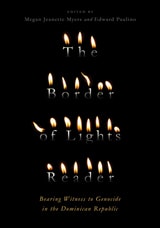
The Border of Lights Reader
Bearing Witness to Genocide in the Dominican RepublicMegan Jeanette Myers
Amherst College Press, 2021
"By bringing together in one volume poetry, visual arts, literary analysis, in-depth interviews and historical analysis this volume will provide its readers with a comprehensive view of the causes and the aftermath of the massacre." —Ramón Antonio Victoriano-Martínez, University of British Columbia
Contributions by Julia Alvarez, Amanda Alcántara, DeAndra Beard, Nancy Betances, Jésula Blanc, Matías Bosch Carcuro, Cynthia Carrión, Raj Chetty, Catherine DeLaura, Magaly Colimon, Juan Colón, Robin Maria DeLugan, Lauren Derby, Rosa Iris Diendomi Álvarez, Polibio Díaz, Rana Dotson, Rita Dove, Rhina P. Espaillat, Maria Cristina Fumagalli, Saudi García, Scherezade García, Juan Carlos González Díaz, Kiran C. Jayaram, Pierre Michel Jean, Nehanda Loiseau Julot, Jake Kheel, Carlos Alomia Kollegger, Jackson Lorrain “Jhonny Rivas”, Radio Marién, Padre Regino Martínez Bretón, Sophie Maríñez, April J. Mayes, Jasminne Mendez, Komedi Mikal PGNE, Osiris Mosquea, Megan Jeanette Myers, Rebecca Osborne, Ana Ozuna, Edward Paulino, John Presimé, Laura Ramos, Amaury Rodríguez, Doña Carmen Rodríguez de Paulino, The DREAM Project, Silvio Torres-Saillant, Ilses Toribio, Deisy Toussaint, Évelyne Trouillot, Richard Turits, William Vazquez, Chiqui Vicioso, Bridget Wooding, and Óscar Zazo.
The Borders Within
Encounters Between Mexico and the U.S.Douglas Monroy
University of Arizona Press, 2008
Douglas Monroy, a noted Mexican American historian, has for many years pondered the historical and cultural intertwinings of the two nations. Here, in beautifully crafted essays, he reflects on some of the many ways in which the citizens of the two countries have misunderstood each other.
Putting himself— and his own quest for understanding—directly into his work, he contemplates the missions of California; the differences between “liberal” and “traditional” societies; the meanings of words like Mexican, Chicano, and Latino; and even the significance of avocados and bathing suits. In thought-provoking chapters, he considers why Native Americans didn’t embrace Catholicism, why NAFTA isn’t working the way it was supposed to, and why Mexicans and their neighbors to the north tell themselves different versions of the same historical events.
In his own thoughtful way, Monroy is an explorer. Rather than trying to conquer new lands, however, his goal is to gain new insights. He wants to comprehend two cultures that are bound to each other without fully recognizing their bonds. Along with Monroy, readers will discover that borders, when we stop and really think about it, are drawn more deeply in our minds than on any maps.
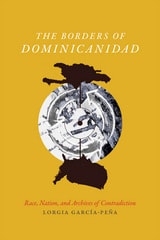
The Borders of Dominicanidad
Race, Nation, and Archives of ContradictionLorgia García Peña
Duke University Press, 2016
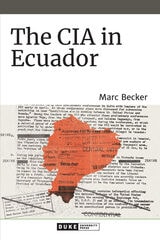
The CIA in Ecuador
Marc Becker
Duke University Press, 2021

The Challenge of Catholic-Jewish Theological Dialogue
Matthew Tapie
Catholic University of America Press, 2024
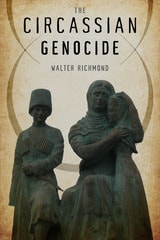
The Circassian Genocide
Richmond, Walter
Rutgers University Press, 2013
Using rare archival materials, Walter Richmond chronicles the history of the war, describes in detail the final genocidal campaign, and follows the Circassians in diaspora through five generations as they struggle to survive and return home. He places the periods of acute genocide, 1821–1822 and 1863–1864, in the larger context of centuries of tension between the two nations and updates the story to the present day as the Circassian community works to gain international recognition of the genocide as the region prepares for the 2014 Winter Olympics in Sochi, the site of the Russians’ final victory.
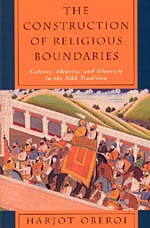
The Construction of Religious Boundaries
Culture, Identity, and Diversity in the Sikh TraditionHarjot Oberoi
University of Chicago Press, 1994
In the closing decades of the nineteenth century, however, the Singh Sabha, a powerful new Sikh movement, began to view the multiplicity in Sikh identity with suspicion and hostility. Aided by social and cultural forces unleashed by the British Raj, the Singh Sabha sought to recast Sikh tradition and purge it of diversity. The ethnocentric logic of a new elite dissolved alternative ideals under the highly codified culture of modern Sikhism.
A study of the process by which a pluralistic religious world view is replaced by a monolithic one, this important book calls into question basic assumptions about the efficacy of fundamentalist claims and the construction of all social and religious identities. An essential book for the field of South Asian religions, this work is also an important contribution to cultural anthropology, postcolonial studies, and the history of religion in general.

The Contemporary Arab Reader on Political Islam
Edited by Ibrahim M. Abu-Rabi' and Tere Vaden
Pluto Press, 2010
The Contemporary Arab Reader on Political Islam brings together the writings of highly influential figures in the field of Islamism in the contemporary Arab world, many of whose writings have never been available before in English.
Addressing the key issues such as human rights, civil society, secularism, globalisation and ummah, and the impact of the West on the modern Arab world, this is the perfect starting point for students and academics looking to understand 'Political Islam' in contemporary Arab and Muslim societies.
The contributors include such important Islamist thinkers and activists as Abdullah Azzam, central to the spread of Islamism in Afghanistan, Sayyid Muhammad Hussain Fadlallah, a major Shiite figure in contemporary Lebanon and Ahmad Bin Yousuf, a political advisor to Akram Haniyya in Gaza.
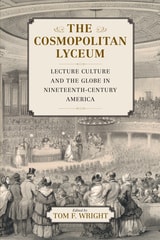
The Cosmopolitan Lyceum
Lecture Culture and the Globe in Nineteenth-Century AmericaTom F. Wright
University of Massachusetts Press, 2013
From the 1830s to the 1900s, a circuit of lecture halls known as the “lyceum movement” flourished across the United States. At its peak, up to a million people a week regularly attended talks in local venues, captivated by the words of visiting orators who spoke on an extensive range of topics. The movement was a major intellectual and cultural force of this nation-building period, forming the creative environment of writers and public figures such as Frederic Douglass, Ralph Waldo Emerson, Anna Dickinson, and Mark Twain.
The phenomenon of the lyceum has commonly been characterized as inward looking and nationalistic. Yet as this collection of essays reveals, nineteenth-century audiences were fascinated by information from around the globe, and lecturers frequently spoke to their fellow Americans of their connection to the world beyond the nation and helped them understand “exotic” ways of life. Never simple in its engagement with cosmopolitan ideas, the lyceum provided a powerful public encounter with international currents and crosscurrents, foreshadowing the problems and paradoxes that continue to resonate in our globalized world.
This book offers a major reassessment of this important cultural phenomenon, bringing together diverse scholars from history, rhetoric, and literary studies. The twelve essays use a range of approaches, cover a wide chronological timespan, and discuss a variety of performers both famous and obscure. In addition to the volume editor, contributors include Robert Arbour, Thomas Augst, Susan Branson, Virginia Garnett, Peter Gibian, Sara Lampert, Angela Ray, Evan Roberts, Paul Stob, Mary Zboray, and Ronald Zboray.
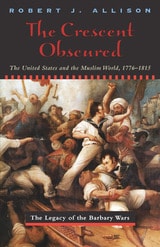
The Crescent Obscured
The United States and the Muslim World, 1776-1815Robert Allison
University of Chicago Press, 2000
"A powerful ending that explains how the experience with the Barbary states compelled many Americans to look inward . . . with increasing doubts about the institution of slavery." —David W. Lesch, Middle East Journal
"Allison's incisive and informative account of the fledgling republic's encounter with the Muslim world is a revelation with a special pertinence to today's international scene." —Richard W. Bulliet, Journal of Interdisciplinary History
"This book should be widely read. . . . Allison's study provides a context for understanding more recent developments, such as America's tendency to demonize figures like Iran's Khumaini, Libya's Qaddafi, and Iraq's Saddam." —Richard M. Eaton, Eighteenth Century Studies
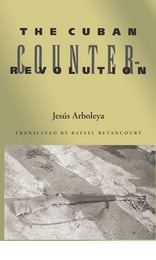
The Cuban Counterrevolution
Jesús Arboleya
Ohio University Press, 2000
For forty years the Cuban Revolution has been at the forefront of American public opinion, yet few are knowledgeable about the history of its enemies and the responsibility of the U.S. government in organizing and sustaining the Cuban counterrevolution. Available in English for the first time, this outstanding study by Cuban historian and former diplomat Jesús Arboleya traces the evolution of the counterrevolutionary movement from its beginnings before 1959, to its transformation into the Cuban-American groups that today dominate U.S. policy toward Cuba. Arboleya also analyzes the role played by Cuban immigrants to the U.S. and the perspectives for improvement in relations between the two nations as a result of the generational and social changes that have been occurring in the Cuban-American community.

The Decolonization Of Africa
David Birmingham
Ohio University Press, 1995
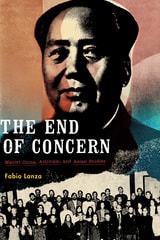
The End of Concern
Maoist China, Activism, and Asian StudiesFabio Lanza
Duke University Press, 2017
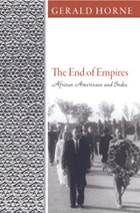
The End of Empires
African Americans and IndiaGerald Horne
Temple University Press, 2009
In the past fifty years, according to Christine So, the narratives of many popular Asian American books have been dominated by economic questions-what money can buy, how money is lost, how money is circulated, and what labor or objects are worth. Focusing on books that have achieved mainstream popularity, Economic Citizens unveils the logic of economic exchange that determined Asian Americans’ transnational migrations and national belonging.
With penetrating insight, So examines literary works that have been successful in the U.S. marketplace but have been read previously by critics largely as narratives of alienation or assimilation, including Fifth Chinese Daughter, Flower Drum Song, Falling Leaves and Turning Japanese. In contrast to other studies that have focused on the marginalization of Asian Americans, Economic Citizens examines how Asian Americans have entered into the public sphere.
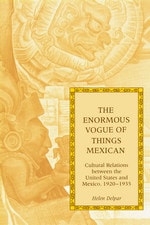
The Enormous Vogue of Things Mexican
Cultural Relations between the United States and Mexico, 1920-1935Helen Delpar
University of Alabama Press, 1995
A landmark study of cultural exchange across the U.S.-Mexico border.
The Enormous Vogue of Things Mexican: Cultural Relations between the United States and Mexico, 1920–1935 explores a remarkable period when Mexico captured the imagination of the United States and became a powerful source of artistic, intellectual, and cultural inspiration. Historian Helen Delpar examines the flourishing exchange between the two nations during the interwar years, revealing how artists, writers, educators, political activists, archaeologists, and travelers helped forge unprecedented connections across the border.
In the decades following the Mexican Revolution, Americans increasingly looked to Mexico as a place of cultural authenticity, creative innovation, and social experimentation. Mexican art, music, literature, archaeology, and revolutionary ideals attracted widespread attention in the United States, while Mexican intellectuals and artists actively engaged with audiences north of the border. Delpar traces the individuals, institutions, and cultural movements that fueled this phenomenon, demonstrating how a growing fascination with Mexico reshaped American perceptions of its southern neighbor.
The book examines the rise of the celebrated Mexican mural movement, expanding interest in Indigenous cultures, and the influence of Mexican themes on American literature, visual arts, music, and education. It also explores the political and social forces that encouraged cultural exchange, including enthusiasm among American liberals for the Mexican Revolution and broader movements toward cultural nationalism in both countries.
By focusing on cultural relationships rather than diplomatic or economic ties, Delpar offers a fresh perspective on the history of U.S.-Mexican relations. Richly researched and engagingly written, The Enormous Vogue of Things Mexican remains an essential work for readers interested in cultural history, Latin American studies, art history, borderlands studies, and the evolving relationship between two neighboring nations whose histories have long been intertwined.
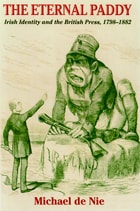
The Eternal Paddy
Irish Identity and the British Press, 1798–1882Michael de Nie
University of Wisconsin Press, 2004
In The Eternal Paddy, Michael de Nie examines anti-Irish prejudice, Anglo-Irish relations, and the construction of Irish and British identities in nineteenth-century Britain. This book provides a new, more inclusive approach to the study of Irish identity as perceived by Britons and demonstrates that ideas of race were inextricably connected with class concerns and religious prejudice in popular views of both peoples. De Nie suggests that while traditional anti-Irish stereotypes were fundamental to British views of Ireland, equally important were a collection of sympathetic discourses and a self-awareness of British prejudice. In the pages of the British newspaper press, this dialogue created a deep ambivalence about the Irish people, an ambivalence that allowed most Britons to assume that the root of Ireland’s difficulties lay in its Irishness.
Drawing on more than ninety newspapers published in England, Scotland, and Wales, The Eternal Paddy offers the first major detailed analysis of British press coverage of Ireland over the course of the nineteenth century. This book traces the evolution of popular understandings and proposed solutions to the "Irish question," focusing particularly on the interrelationship between the press, the public, and the politicians. The work also engages with ongoing studies of imperialism and British identity, exploring the role of Catholic Ireland in British perceptions of their own identity and their empire.

The Fear of Barbarians
Beyond the Clash of CivilizationsTzvetan Todorov
University of Chicago Press, 2010
The relationship between Western democracies and Islam, rarely entirely comfortable, has in recent years become increasingly tense. A growing immigrant population and worries about cultural and political assimilation—exacerbated by terrorist attacks in the United States, Europe, and around the world—have provoked reams of commentary from all parts of the political spectrum, a frustrating majority of it hyperbolic or even hysterical.
In The Fear of Barbarians, the celebrated intellectual Tzvetan Todorov offers a corrective: a reasoned and often highly personal analysis of the problem, rooted in Enlightenment values yet open to the claims of cultural difference. Drawing on history, anthropology, and politics, and bringing to bear examples ranging from the murder of Theo van Gogh to the French ban on headscarves, Todorov argues that the West must overcome its fear of Islam if it is to avoid betraying the values it claims to protect. True freedom, Todorov explains, requires us to strike a delicate balance between protecting and imposing cultural values, acknowledging the primacy of the law, and yet strenuously protecting minority views that do not interfere with its aims. Adding force to Todorov's arguments is his own experience as a native of communist Bulgaria: his admiration of French civic identity—and Western freedom—is vigorous but non-nativist, an inclusive vision whose very flexibility is its core strength.
The record of a penetrating mind grappling with a complicated, multifaceted problem, The Fear of Barbarians is a powerful, important book—a call, not to arms, but to thought.
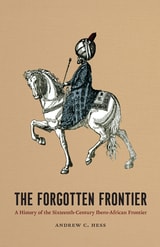
The Forgotten Frontier
A History of the Sixteenth-Century Ibero-African FrontierAndrew C. Hess
University of Chicago Press, 1978
The sixteenth-century Mediterranean witnessed the expansion of both European and Middle Eastern civilizations, under the guises of the Habsburg monarchy and the Ottoman empire. Here, Andrew C. Hess considers the relations between these two dynasties in light of the social, economic, and political affairs at the frontiers between North Africa and the Iberian peninsula.
The Great Satan vs. the Mad Mullahs
How the United States and Iran Demonize Each OtherWilliam O. Beeman
University of Chicago Press, 2008
“William Beeman’s analysis of dissonant perceptions of Iran and the USA is compelling and important. . . . I am particularly grateful for this work.”—James Peacock, University of North Carolina at Chapel Hill
“[Beeman] is more interested in informing the reader than in impressing his peers. The other strength of the book lies in the author’s knowledge of Iranian history and culture. . . . It challenges the reader and forces him to question stereotypes about Iran and Washington’s perspective on the country.”—Abbas William Samii, Middle East Journal
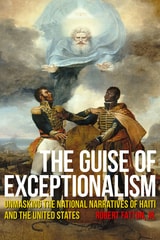
The Guise of Exceptionalism
Unmasking the National Narratives of Haiti and the United StatesRobert Fatton
Rutgers University Press, 2021
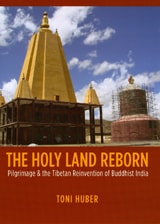
The Holy Land Reborn
Pilgrimage and the Tibetan Reinvention of Buddhist IndiaToni Huber
University of Chicago Press, 2008
Focusing on the Tibetan creation and recreation of India as a destination, a landscape, and a kind of other, in both real and idealized terms, Huber explores how Tibetans have used the idea of India as a religious territory and a sacred geography in the development of their own religion and society. In a timely closing chapter, Huber also takes up the meaning of India for the Tibetans who live in exile in their Buddhist holy land.
A major contribution to the study of Buddhism, The Holy Land Reborn describes changes in Tibetan constructs of India over the centuries, ultimately challenging largely static views of the sacred geography of Buddhism in India.
The Imperialist Imaginary
Visions of Asia and the Pacific in American CultureJohn Eperjesi
Dartmouth College Press, 2014
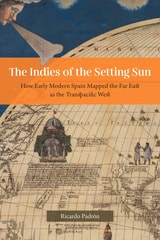
The Indies of the Setting Sun
How Early Modern Spain Mapped the Far East as the Transpacific WestRicardo Padrón
University of Chicago Press, 2020
Narratives of Europe’s westward expansion often tell of how the Americas came to be known as a distinct landmass, separate from Asia and uniquely positioned as new ground ripe for transatlantic colonialism. But this geographic vision of the Americas was not shared by all Europeans. While some imperialists imagined North and Central America as undiscovered land, the Spanish pushed to define the New World as part of a larger and eminently flexible geography that they called las Indias, and that by right, belonged to the Crown of Castile and León. Las Indias included all of the New World as well as East and Southeast Asia, although Spain’s understanding of the relationship between the two areas changed as the realities of the Pacific Rim came into sharper focus. At first, the Spanish insisted that North and Central America were an extension of the continent of Asia. Eventually, they came to understand East and Southeast Asia as a transpacific extension of their empire in America called las Indias del poniente, or the Indies of the Setting Sun.
The Indies of the Setting Sun charts the Spanish vision of a transpacific imperial expanse, beginning with Balboa’s discovery of the South Sea and ending almost a hundred years later with Spain’s final push for control of the Pacific. Padrón traces a series of attempts—both cartographic and discursive—to map the space from Mexico to Malacca, revealing the geopolitical imaginations at play in the quest for control of the New World and Asia.

The Italian Legacy in Philadelphia
History, Culture, People, and IdeasEdited by Andrea Canepari and Judith Goode
Temple University Press, 2021
Italian arts and culture have been a significant influence on Philadelphia dating back to Thomas Jefferson and colonial times. Throughout the ensuing decades, Italian art and architecture styles flourished, and wealthy Philadelphians traveled to Italy and brought back objects to display in emerging institutions of art and culture. New immigration formed neighborhoods—such as South Philly, home to the Italian Market—and Italian business leaders, politicians, artists, musicians and sports figures came to prominence and became part of the social fabric of the city.
This glorious volume, The Italian Legacy in Philadelphia, celebrates the history, impact, and legacy of this vibrant community, tracing four periods of key transformation in the city’s political, economic, and social structures. The editors and contributors chronicle the changing dynamics of the city as Italian immigrants established themselves and as they continue to have lively interactions with people and institutions in Italy.
Interdisciplinary essays, along with nearly 250 gorgeous images, explore the changing perspectives and styles of those who contributed Italian influences. As settlers and their descendants brought everyday cultural practices, memories, and traditions, they created different Italian-American experiences that became important parts of American culture, a legacy that is thriving in contemporary, globalized Philadelphia.
The Last Colonial Massacre
Latin America in the Cold WarGreg Grandin
University of Chicago Press, 2004
Using Guatemala as a case study, Greg Grandin argues that the Cold War in Latin America was a struggle not between American liberalism and Soviet Communism but between two visions of democracy. The main effect of United States intervention in Latin America, Grandin shows, was not the containment of Communism but the elimination of home-grown concepts of social democracy.
Through unprecedented archival research and gripping personal testimonies, Grandin uncovers the hidden history of the Latin American Cold War: of hidebound reactionaries intent on holding on to their own power and privilege; of Mayan Marxists, blending indigenous notions of justice with universal ideas of freedom and equality; and of a United States supporting new styles of state terror throughout the continent. Drawing from declassified U.S. documents, Grandin exposes Washington's involvement in the 1966 secret execution of more than thirty Guatemalan leftists, which, he argues, prefigured the later wave of disappearances in Chile and Argentina.
Impassioned but judicious, The Last Colonial Massacre is history of the highest order—a work that will dramatically recast our understanding of Latin American politics and the triumphal role of the United States in the Cold War and beyond.
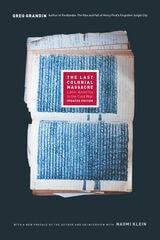
The Last Colonial Massacre
Latin America in the Cold War, Updated EditionGreg Grandin
University of Chicago Press, 2011
After decades of bloodshed and political terror, many lament the rise of the left in Latin America. Since the triumph of Castro, politicians and historians have accused the left there of rejecting democracy, embracing communist totalitarianism, and prompting both revolutionary violence and a right-wing backlash. Through unprecedented archival research and gripping personal testimonies, Greg Grandin powerfully challenges these views in this classic work. In doing so, he uncovers the hidden history of the Latin American Cold War: of hidebound reactionaries holding on to their power and privilege; of Mayan Marxists blending indigenous notions of justice with universal ideas of equality; and of a United States supporting new styles of state terror throughout the region.
With Guatemala as his case study, Grandin argues that the Latin American Cold War was a struggle not between political liberalism and Soviet communism but two visions of democracy—one vibrant and egalitarian, the other tepid and unequal—and that the conflict’s main effect was to eliminate homegrown notions of social democracy. Updated with a new preface by the author and an interview with Naomi Klein, The Last Colonial Massacre is history of the highest order—a work that will dramatically recast our understanding of Latin American politics and the role of the United States in the Cold War and beyond.
“This work admirably explains the process in which hopes of democracy were brutally repressed in Guatemala and its people experienced a civil war lasting for half a century.”—International History Review
“A richly detailed, humane, and passionately subversive portrait of inspiring reformers tragically redefined by the Cold War as enemies of the state.”—Journal of American History
The Latin American Literary Boom and U.S. Nationalism during the Cold War
Deborah Cohn
Vanderbilt University Press, 2012
The high level of interest in Latin America paradoxically led the U.S. government to restrict these authors' physical presence in the United States through the McCarranWalter Act's immigration blacklist, even as cultural organizations cultivated the exchange of ideas with writers and sought to market translations of their work for the U.S. market.
The Legacy of Division
East and West after 1989Ferenc Laczó
Central European University Press, 2020
This volume examines the legacy of the East–West divide since the implosion of the communist regimes in Europe. The ideals of 1989 have largely been frustrated by the crises and turmoil of the past decade. The liberal consensus was first challenged as early as the mid-2000s. In Eastern Europe, grievances were directed against the prevailing narratives of transition and ever sharper ethnic-racial antipathies surfaced in opposition to a supposedly postnational and multicultural West. In Western Europe, voices regretting the European Union's supposedly careless and premature expansion eastward began to appear on both sides of the left–right and liberal–conservative divides. The possibility of convergence between Europe's two halves has been reconceived as a threat to the European project.
In a series of original essays and conversations, thirty-three contributors from the fields of European and global history, politics and culture address questions fundamental to our understanding of Europe today: How have perceptions and misperceptions between the two halves of the continent changed over the last three decades? Can one speak of a new East–West split? If so, what characterizes it and why has it reemerged? The contributions demonstrate a great variety of approaches, perspectives, emphases, and arguments in addressing the daunting dilemma of Europe's assumed East–West divide.
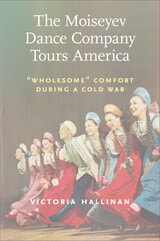
The Moiseyev Dance Company Tours America
"Wholesome" Comfort during a Cold WarVictoria Hallinan
University of Massachusetts Press, 2023
During the Cold War, dancers and musicians from the United States and the USSR were drawn into the battle for hearts and minds, crossing the Iron Curtain to prove their artistic and ideological prowess. After the passage of the Lacy-Zarubin Agreement, direct cultural exchange between the two superpowers opened up, and the Moiseyev Dance Company arrived in the United States in 1958. The first Soviet cultural representatives to tour America, this folk-dance troupe’s repertoire included dances from territories controlled or influenced by the USSR, including Uzbekistan, Crimea, and Poland.
Drawing on contemporary personal and published accounts, Victoria Hallinan explores why the dancers garnered overwhelming acclaim during their multicity tour and Ed Sullivan Show appearance. The “boy-meets-girl” love stories of the dances, and their idealized view of multiple Soviet cultures living together in harmony, presented a comforting image of post–World War II gender norms and race relations for audiences. Americans saw the dancers—their supposed enemies—as humans rather than agents of communist contagion.
The Mortara Case and St. Thomas Aquinas's Defense of Jewish Parental Authority
with Original Documents from the Mortara Case: <i>Pro-memoria, Syllabus, Brevi cenni</i>Matthew Tapie
Catholic University of America Press, 2024
The New South Faces the World
Foreign Affairs and the Southern Sense of Self,1877-1950Tennant S. McWilliams
University of Alabama Press, 2007
The Only True God
Early Christian Monotheism in Its Jewish ContextJames F. McGrath
University of Illinois Press, 2012

The Outsiders
The Western Experience in India and ChinaRhoads Murphey
University of Michigan Press, 1977
This book examines how Western traders, missionaries, officials, and imperial powers encountered, interpreted, and attempted to influence India and China, highlighting the cultural misunderstandings and unequal power dynamics that shaped East-West relations.
The Papacy, the Jews, and the Holocaust
Frank J. Coppa
Catholic University of America Press, 2006

The Pilgrimage of Philosophy
A Festschrift for Charles E. Butterworthel-rayes
St. Augustine's Press, 2019
This book intends to introduce readers to the work of Charles E. Butterworth, and thereby to introduce students to Medieval islamic political philosophy, of which Butterworth is one of the world’s most prominent scholars. In a wider sense, the Festschrift introduces its readers to the current debates on Medieval islamic political philosophy, related as they are to the questions of the relationship between islam and Christianity, the Medieval to the Modern world, and reason and revelation. Butterworth’s scholarship spans six decades, primarily translating, editing, and interpreting the works of the Muslim political philosopher Alfarabi (d. 950) and Averroes (Ibn Rushd, d. 1198). He began his studies of Muslim political philosophy at a time when the Middle East and islam did not have the political salience they have acquired in more recent years. instead, Butterworth’s reason for engaging with islam was rooted in the question of the relationship between reason and revelation.
While one possible answer was pursued in the Christian, latin West, the islamic borderlands of Greek, Roman, and Muslim civilization offered another. By exploring Averroes, who provides the possibility of an Aristotelian-Islamic political philosophy, and Alfarabi, who pursues a Platonic-islamic political philosophy, Butterworth showed how islamic civilization provided a viable alternative to the theologico-political question reason v revelation, as well as serving as an inspiration to the latin West.
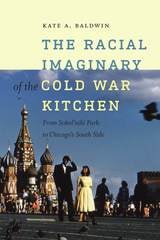
The Racial Imaginary of the Cold War Kitchen
From Sokol’niki Park to Chicago’s South SideKate A. Baldwin
Dartmouth College Press, 2016
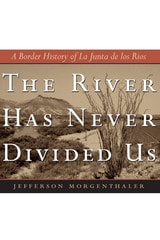
The River Has Never Divided Us
A Border History of La Junta de los RiosBy Jefferson Morgenthaler
University of Texas Press, 2004
Winner, William P. Clements Prize, Best Non-Fiction Book on Southwestern America, 2004
Not quite the United States and not quite Mexico, La Junta de los Rios straddles the border between Texas and Chihuahua, occupying the basin formed by the conjunction of the Rio Grande and the Rio Conchos. It is one of the oldest continuously inhabited settlements in the Chihuahuan Desert, ranking in age and dignity with the Anasazi pueblos of New Mexico.
In the first comprehensive history of the region, Jefferson Morgenthaler traces the history of La Junta de los Rios from the formation of the Mexico-Texas border in the mid-19th century to the 1997 ambush shooting of teenage goatherd Esquiel Hernandez by U.S. Marines performing drug interdiction in El Polvo, Texas. "Though it is scores of miles from a major highway, I found natives, soldiers, rebels, bandidos, heroes, scoundrels, drug lords, scalp hunters, medal winners, and mystics," writes Morgenthaler. "I found love, tragedy, struggle, and stories that have never been told." In telling the turbulent history of this remote valley oasis, he examines the consequences of a national border running through a community older than the invisible line that divides it.
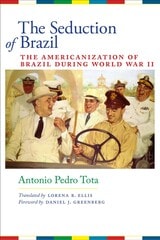
The Seduction of Brazil
The Americanization of Brazil during World War IIBy Antonio Pedro Tota
University of Texas Press, 2009
Following completion of the U.S. air base in Natal, Brazil, in 1942, U.S. airmen departing for North Africa during World War II communicated with Brazilian mechanics with a thumbs-up before starting their engines. This sign soon replaced the Brazilian tradition of touching the earlobe to indicate agreement, friendship, and all that was positive and good—yet another indication of the Americanization of Brazil under way during this period.
In this translation of O Imperialismo Sedutor, Antonio Pedro Tota considers both the Good Neighbor Policy and broader cultural influences to argue against simplistic theories of U.S. cultural imperialism and exploitation. He shows that Brazilians actively interpreted, negotiated, and reconfigured U.S. culture in a process of cultural recombination. The market, he argues, was far more important in determining the nature of this cultural exchange than state-directed propaganda efforts because Brazil already was primed to adopt and disseminate American culture within the framework of its own rapidly expanding market for mass culture. By examining the motives and strategies behind rising U.S. influence and its relationship to a simultaneous process of cultural and political centralization in Brazil, Tota shows that these processes were not contradictory, but rather mutually reinforcing.
The Seduction of Brazil brings greater sophistication to both Brazilian and American understanding of the forces at play during this period, and should appeal to historians as well as students of Latin America, culture, and communications.