Results by title
89 books match the query 'Religion & Science' and 20 start with t
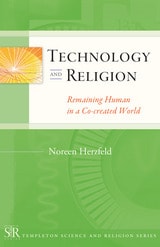
Technology and Religion
Remaining Human Co-created WorldNoreen Herzfeld
Templeton Press, 2009
Technology is changing all the time, but does it also have the ability to change us and the way we approach religion and spirituality? In Technology and Religion: Remaining Human in a Co-created World, Noreen Herzfeld examines this and other provocative questions as she provides an accessible and fascinating overview of the relationship between religion and the ever-broadening world of technology.
The result is a multifaceted look at the ongoing dialogue between these two subjects that are not commonly associated with one another. This volume is the third title published in the new Templeton Science and Religion Series.
Templeton Science and Religion Book Series Bundle
J. Wetzel van Huysssteen
Templeton Press, 2013
The books found in the bundle are:
•Neuroscience, Psychology and Religion by Malcolm Jeeves and Warren Brown
•Technology and Religion by Noreen Herzfeld
•Horizons of Cosmology by Joseph Silk
•Paleontology by Ian Tttersall
•Cognitive Science, Religion, and Theology by Justin L. Barrett
•Ecology and the Environment by R. J. Berry
•The Language of Genetics by Denis Alexander
•Mathematics and Religion by Javier Leach
•The Templeton Science and Religion Reader
•The Templeton Science and Religion Study Guide
This bundle is only sold in e-book format!
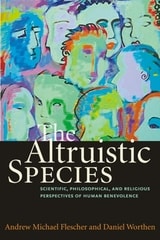
The Altruistic Species
Scientific, Philosophical, and Religious Perspectives of Human BenevolenceAndrew Michael Flescher
Templeton Press, 2008
What motivates altruism? How essential is the phenomenon of altruism to the human experience? Is altruism readily accessible to the ordinary person? In The Altruistic Species, Andrew Michael Flescher and Daniel L. Worthen explore these questions through the lenses of four disciplinary perspectives—biology, psychology, philosophy, and religion. In their investigation, they make an extended argument for the existence of altruism against competing theories that construe all ostensible cases of benevolence as self-interest in disguise. The authors consider theories of egoism; the role of genetics and evolutionary biology; the psychological that induce altruistic behavior; philosophical theories of altruism in normative ethics such as Kantian, utilitarian, and Aristotelian models of moral action; and accounts of love of the neighbor in Christianity and Buddhism. Additionally, they offer a new, comprehensive definition of altruism that includes the insights of each of these perspectives.
The Altruistic Species reinvigorates the debate over the prevalence of selfless motivation in human behavior—whether it is a rare or ubiquitous phenomenon—something considered exceptional or a capacity that members of any community could potentially develop. This noteworthy interdisciplinary examination of altruism balances science, virtue theory, and theology. It is ideal for ethics, human behavior, and evolutionary biology courses as an educational resource for other multidisciplinary studies and interested lay readers.
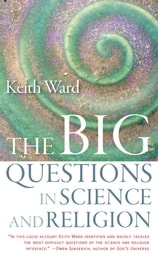
The Big Questions in Science and Religion
Keith Ward
Templeton Press, 2008
In The Big Questions in Science and Religion, Keith Ward, an Anglican priest who was once an atheist, offers compelling insights into the often contentious relationship between diverse religious views and new scientific knowledge. He identifies ten basic questions about the nature of the universe and human life. Among these are:
•Does the universe have a goal or purpose?•Do the laws of nature exclude miracles?
•Can science provide a wholly naturalistic explanation for moral and religious beliefs?
•Has science made belief in God obsolete? Are there any good science-based arguments for God?
With his expertise in the study of world religions, Ward considers concepts from Buddhism, Confucianism, Taoism, Islam, Hinduism, Judaism, and Christianity, while featuring the speculations of cosmologists, physicians, mathematicians, and philosophers. In addition, Ward examines the implications of ancient laws and modern theories and evaluates the role of religious experience as evidence of a nonphysical reality.
Writing with enthusiasm, passion, and clarity, Keith Ward conveys the depth, difficulty, intellectual excitement, and importance of the greatest intellectual and existential questions of the modern scientific age.
The Fire in the Equations
Science Religion & Search For GodKitty Ferguson
Templeton Press, 2004
“ In this beautifully and intelligently written book, Ferguson not only reports on some of the intellectual tremors jolting the world of thinking women and men, but also considers the basic questions with penetrating analysis, yet at a very readable level. . . . An excellent book.” —Choice
Heralded for its readability and scholarship, The Fire in the Equations offers a fascinating discussion of scientific discoveries and their impact on our beliefs. The book’s title is derived from Dr. Stephen Hawking’s pondering, “What is it that breathes fire into the equations and makes a universe for them to describe?”
Originally published in the U.S. in 1995, it provides an excursion through new theories of quantum physics and cosmology, ranging from the nature of time, the big bang, the “unreasonable effectiveness” of mathematics, laws of nature, and their possible relation to God, chaos theory, black holes, Heisenberg’s uncertainty principle, particle physics, Darwin's theory of evolution, and the role of God in all these equations. It even raises such questions as “how God might answer prayers” from the point of view of physics.
While she gives no absolute answers, Kitty Ferguson takes the reader through a world of paradoxes and improbabilities, explaining how believing in a pre-determined universe and free will as a theory of human behavior is possible. She concludes that what we know about science doesn't necessarily make God inevitable, but does not rule God out either.
The God Who Would Be Known
Revelations Of Divine Contemporary ScienceJohn Marks Templeton
Templeton Press, 1998
—from the authors
The Heavens Declare
Natural Theology and the Legacy of Karl BarthRodney Holder
Templeton Press, 2012
In The Heavens Declare, author Rodney Holder re-examines Barth’s natural theology argument and then explores how it has been critiqued and responded to by others, starting with Dietrich Bonhoeffer and Wolfhart Pannenberg. Holder then considers the contributions of two notable British participants in the science-religion dialogue, Thomas Torrance and Alister McGrath, who, despite their repudiation of natural theology in the traditional sense, also provide many positive lessons. The book concludes by defending an overall position which takes into account the ideas of the aforementioned theologians as well as others who are currently engaged positively in natural theology, such as John Polkinghorne and Richard Swinburne.
Holder’s new study is sure to be of interest to theologians, philosophers of religion, and all scholars interested in the science-religion dialogue, especially those interested in natural theology as an enterprise in itself.
The Humble Approach Revised Edition
Scientists Discover GodJohn Marks Templeton
Templeton Press, 1998
For generations the discoveries of science tended to challenge the very existence of God. Templeton makes a striking argument for just the opposite point of view. He goes to the writings of many of the world's leading scientific thinkers—as diverse in background as Albert Einstein and Teilhard de Chardin—and discovers them in awe of the universe, perceiving the hand of Divine mystery at work.
The Humble Approach teaches that man can discover and comprehend only a few of the infinite aspects of God's nature, never enough to form a comprehensive theology. The humble approach may be a science still in its infancy, but it seeks to develop a way of knowing God appropriate to His greatness and our littleness.

The Humble Approach, Anniversary Edition
Scientists Discover GodJohn Marks Templeton
Templeton Press, 2027
For generations the discoveries of science tended to challenge the very existence of God. Templeton makes a striking argument for just the opposite point of view. He goes to the writings of many of the world's leading scientific thinkers—as diverse in background as Albert Einstein and Teilhard de Chardin—and discovers them in awe of the universe, perceiving the hand of Divine mystery at work.
The Humble Approach teaches that man can discover and comprehend only a few of the infinite aspects of God's nature, never enough to form a comprehensive theology. The humble approach may be a science still in its infancy, but it seeks to develop a way of knowing God appropriate to His greatness and our littleness.
The anniversary edition of this groundbreaking book features a new preface by His Holiness the Dalai Lama and a new introduction from Heather Dill, the director of the Templeton Prize. It also includes an updated list of the past winners of the Templeton Prize.
The Language of Genetics
An IntroductionDenis R. Alexander
Templeton Press, 2011
The Language of Genetics: An Introduction is the seventh title published in the Templeton Science and Religion Series, in which scientists from a wide range of fields distill their experience and knowledge into brief tours of their respective specialties. In this volume, Dr. Denis R. Alexander offers readers a basic toolkit of information, explanations, and ideas that can help us grasp something of the fascination and the challenge of the language of genetics.
Alexander surveys the big picture, covering such topics as the birth of the field; DNA: what it is, how it works, and how it was discovered; our genetic history; the role of genes in diseases, epigenetics, and genetic engineering. The book assumes the reader has little scientific background, least of all in genetics, and approaches these issues in a very accessible way, free of specialized or overly technical jargon. In the last chapter, Dr. Alexander explores some of the big questions raised by genetics: what are its implications for notions of human value and uniqueness? Is evolution consistent with religious belief? If we believe in a God of love, then how come the evolutionary process, utterly dependent upon the language of genetics, is so wasteful and involves so much pain and suffering? How far should we go in manipulating the human genome? Does genetics subvert the idea that life has some ultimate meaning and purpose?
Genetics is a rapidly advancing field; it seems new discoveries make headlines every other week. The Language of Genetics is intended to give the general reader the knowledge he or she needs to assess and understand the next big story
in genetics.
The New Flatlanders
A Seeker's Guide to the Theory of EverythingEric Middleton
Templeton Press, 2007
In The New Flatlanders, teacher, scientist, and chaplain Eric Middleton challenges traditional ways of looking at reality by engaging readers in a "voyage of discovery starting with questions." The book engagingly begins with a discussion group embarking on an exploratory conversation about the nature of the universe and the place of human beings in it. Daunting questions emerge, such as "How can there possibly be a tear or hole in three-dimensional space? And if there is a hole, can something fall through it? Where would it fall to?" In short order, students and teacher are on a quest to develop a "working theory of everything" that takes them from stone circles to quarks, superstrings, quantum theory, the anthropic principle, evolution, consciousness, miracles, chaos, and the spiritual universe.
The key to exploring these questions is finding a language with which to talk about the awe and wonder of today's science alongside the joy of experiencing the spiritual. This is done by interweaving into the discussions the philosophy of "Flatland," a nonreligious entry point to Jesus posited by nineteenth-century clergyman and educator Edwin A. Abbott in his classic parable Flatland: A Romance of Many Dimensions.
The Origins of Catholic Evolutionism, 1831-1950
Kenneth W. Kemp
Catholic University of America Press, 2025
The Polkinghorne Reader
Science, Faith, and the Search for MeaningJohn C. Polkinghorne
Templeton Press, 2010
The Revd. Dr. John Polkinghorne is a world-renowned authority in the field of science and religion. His numerous books in this area, written over the past three decades, have been hugely influential. The Polkinghorne Reader brings together key extracts from his writings on core issues such as the nature of science, the physical world, human nature, love, theology, creation, providence, prayer and miracle, time, evil, Jesus, the resurrection, the Trinity, eschatology, and world faiths.
Ideal for readers who are new to Polkinghorne or who are just beginning to explore the interplay between science and religion, this collection will also be welcomed by all who have read his earlier works but would like one handy resource that presents the major facets of his thought in an accessible and systematic fashion.
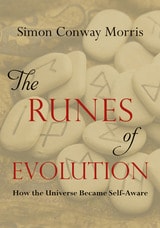
The Runes of Evolution
How the Universe became Self-AwareSimon Conway Morris
Templeton Press, 2015
A leading evolutionary biologist at the University of Cambridge, Conway Morris came into international prominence for his work on the Cambrian explosion (especially fossils of the Burgess Shale) and evolutionary convergence, which is the process whereby organisms not closely related (not monophyletic), independently evolve similar traits as a result of having to adapt to similar environments or ecological niches.
In The Runes of Evolution, he illustrates how the ubiquity of convergence hints at an underlying framework whereby many outcomes, not least brains and intelligence, are virtually guaranteed on any Earth-like planet. Conway Morris also emphasizes how much of the complexity of advanced biological systems is inherent in microbial forms.
By casting a wider net, The Runes of Evolution explores many neglected evolutionary questions. Some are remarkably general. Why, for example, are convergences such as parasitism, carnivory, and nitrogen fixation in plants concentrated in particular taxonomic hot spots? Why do certain groups have a particular propensity to evolve toward particular states?
Some questions lead to unexpected evolutionary insights: If bees sleep (as they do), do they dream? Why is that insect copulating with an orchid? Why have sponges evolved a system of fiber optics? What do mantis shrimps and submarines have in common? If dinosaurs had not gone extinct what would have happened next? Will a saber-toothed cat ever re-evolve?
Cona Morris observes: “Even amongst the mammals, let alone the entire tree of life, humans represent one minute twig of a vast (and largely fossilized) arborescence. Every living species is a linear descendant of an immense string of now-vanished ancestors, but evolution itself is the very reverse of linear. Rather it is endlessly exploratory, probing the vast spaces of biological hyperspace. Indeed this book is a celebration of how our world is (and was) populated by a riot of forms, a coruscating tapestry of life.”
The Runes of Evolution is the most definitive synthesis of evolutionary convergence to be published to date.
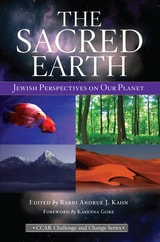
The Sacred Earth
Jewish Perspectives on Our PlanetRabbi Andrue J. Kahn
Central Conference of American Rabbis, 2023
The Torah begins by setting forth the heavens and the Earth as God’s creation, impelling humanity to steward our planet for its own sake and for its ability to nurture our lives. Yet the human-Divine-environment relationship seems to be in perpetual crisis. The Sacred Earth is a contemporary Jewish response to the looming threat of climate change, the widespread desire for experiential spirituality rooted in nature, and the continually changing relationship between humanity, nature, technology, and the Divine. The leading thinkers in this collection reflect on human vulnerability in the face of forces of nature, examine conceptions of our place in cosmology, and grapple with environmental destruction. Ultimately, with hope, they creatively explore ways to redeem this sacred Earth.

The Science of Religion and the Religion of Scientism
A Neuroscientist's Perspective on Consciousness, Morality, and the New AtheismChristopher Breitmeyer
Catholic University of America Press, 2026
The Templeton Science and Religion Reader
J. Wetzel van Huysssteen
Templeton Press, 2012
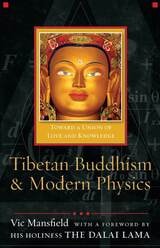
Tibetan Buddhism and Modern Physics
Toward a Union of Love and KnowledgeVic Mansfield
Templeton Press, 2008
Tibetan Buddhism and Modern Physics: Toward a Union of Love and Knowledge addresses the complex issues of dialogue and collaboration between Buddhism and science, revealing connections and differences between the two. While assuming no technical background in Buddhism or physics, this book strongly responds to the Dalai Lama’s “heartfelt plea” for genuine collaboration between science and Buddhism. The Dalai Lama has written a foreword to the book and the Office of His Holiness will translate it into both Chinese and Tibetan.
Time & Eternity
The Question of Time in Church, Science and TheologyAntje Jackelen
Templeton Press, 2005
What is time? Is there a link between objective knowledge about time and subjective experience of time? And what is eternity? Does religion have the answer? Does science?
•Theological approaches to time and eternity, as well as a look at Trinitarian theology and its relation to time
•The discussion of scientific theories of time, including Newtonian, relativistic, quantum, and chaos theories
•The formulation of a "theology of time," a theological-mathematical model incorporating relational thinking oriented toward the future, the doctrine of trinity, and the notion of eschatology
To Care for Creation
The Emergence of the Religious Environmental MovementStephen Ellingson
University of Chicago Press, 2016
To Care for Creation chronicles this movement and explains how it has emerged despite institutional and cultural barriers, as well as the hurdles posed by logic and practices that set religious environmental organizations apart from the secular movement. Ellingson takes a deep dive into the ways entrepreneurial activists tap into and improvise on a variety of theological, ethical, and symbolic traditions in order to issue a compelling call to arms that mobilizes religious audiences. Drawing on interviews with the leaders of more than sixty of these organizations, Ellingson deftly illustrates how activists borrow and rework resources from various traditions to create new meanings for religion, nature, and the religious person’s duty to the natural world.