Results by title
76 books match the query 'Representation' and 15 start with t
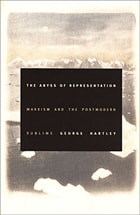
The Abyss of Representation
Marxism and the Postmodern SublimeGeorge Hartley
Duke University Press, 2003
Hartley describes how modern theory from Kant through Lacan attempts to come to terms with the sublime limits of representation and how ideas developed with the Marxist tradition—such as Marx’s theory of value, Althusser’s theory of structural causality, or Zizek’s theory of ideological enjoyment—can be seen as variants of the sublime object. Representation, he argues, is ultimately a political problem. Whether that problem be a Marxist representation of global capitalism, a deconstructive representation of subaltern women, or a Chicano self-representation opposing Anglo-American images of Mexican Americans, it is only through this grappling with the negative, Hartley explains, that a Marxist theory of postmodernism can begin to address the challenges of global capitalism and resurgent imperialism.
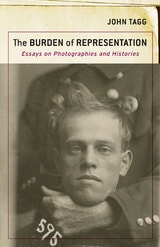
The Burden of Representation
Essays on Photographies and HistoriesJohn Tagg
University of Minnesota Press, 2021
A powerhouse in photographic theory—updated and with a new essay
Every day, photographic images are relied upon as documents, evidence, and records in courtrooms, hospitals, and police work. But how did such usages come to be established, and when? What agencies and institutions had the power to give them this status? And what are the consequences of photographic representation? Drawing on semiotics, cultural theory, and the work of Foucault and Althusser, John Tagg rejects the idea of photography as a record of reality and traces a history that has profound implications not only for the theory of photography but also for understanding the role of new means of representation in modern social regulation. Now with a new essay situating this volume in the changed horizon of cultural politics, The Burden of Representation argues for a rigorous analysis of the meaning, status, and effects of photographs, rooted in a historical grasp of the growth of the modern state.
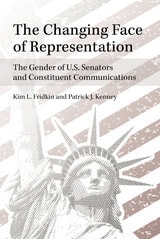
The Changing Face of Representation
The Gender of U.S. Senators and Constituent CommunicationsKim L. Fridkin and Patrick J. Kenney
University of Michigan Press, 2015
As the number of women in the U.S. Senate grows, so does the number of citizens represented by women senators. At the same time, gender remains a key factor in senators’ communications to constituents as well as in news media portrayals of senators. Focusing on 32 male and female senators during the 2006 congressional election year, Kim L. Fridkin and Patrick J. Kenney examine in detail senators’ official websites, several thousand press releases and local news stories, and surveys of 18,000 citizens to discern constituents’ attitudes about their senators.
The authors conclude that gender role expectations and stereotypes do indeed constrain representational and campaign messages and influence news coverage of both candidates and elected senators. Further, while citizens appear to be less influenced by entrenched stereotypes, they pay more attention to female senators’ messages and become more knowledgeable about them, in comparison to male senators.
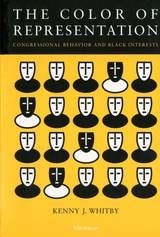
The Color of Representation
Congressional Behavior and Black InterestsKenny J. Whitby
University of Michigan Press, 2000

The Concept of Representation in the Age of the American Revolution
John Phillip Reid
University of Chicago Press, 1989
John Phillip Reid goes on to argue that it was generally the application, not the definition, of these rights that was disputed. The sole—and critical—exception concerned the right of representation. American perceptions of the responsibility of representatives to their constituents, the necessity of equal representation, and the constitutional function of consent had diverged gradually, but significantly, from British tradition. Drawing on his mastery of eighteenth-century legal thought, Reid explores the origins and shifting meanings of representation, consent, arbitrary rule, and constitution. He demonstrates that the controversy which led to the American Revolution had more to do with jurisprudential and constitutional principles than with democracy and equality. This book will interest legal historians, Constitutional scholars, and political theorists.
The Double Screen
Medium and Representation in Chinese PaintingWu Hung
University of Chicago Press, 1997
and pictorial representations, The Double Screen shows how the
collaboration and tension between material form and image gives life to
a painting. A Chinese painting is often reduced to the image it bears;
its material form is dismissed; its intimate connection with social
activities and cultural conventions neglected.
A screen occupies a space and divides it, supplies an ideal surface for
painting, and has been a favorite pictorial image in Chinese art since
antiquity. Wu Hung undertakes a comprehensive analysis of the screen,
which can be an object, an art medium, a pictorial motif, or all three
at once. With its diverse roles, the screen has provided Chinese
painters with endless opportunities to reinvent their art.
The Double Screen provides a powerful non-Western perspective on
issues from portraiture and pictorial narrative to voyeurism,
masquerade, and political rhetoric. It will be invaluable to anyone
interested in the history of art and Asian studies.
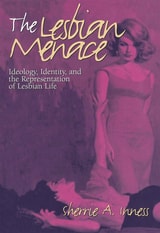
The Lesbian Menace
Ideology, Identity, and the Representation of Lesbian LifeSherrie A. Inness
University of Massachusetts Press, 1997
Electroshock. Hysterectomy. Lobotomy. These are only three of the many “cures” to which lesbians have been subjected in this century. How does a society develop such a profound aversion to a particular minority? In what ways do images in the popular media perpetuate cultural stereotypes about lesbians, and to what extent have lesbians been able to subvert and revise those images? This book addresses these and other questions by examining how lesbianism has been represented in American popular culture in the twentieth century and how conflicting ideologies have shaped lesbian experiences and identity.
In the first section, “Inventing the Lesbian,” Sherrie A. Inness explores depictions of lesbians in popular texts aimed primarily at heterosexual consumers. She moves from novels of the 1920s to books about life at women's colleges and boarding schools, to such contemporary women's magazines as Cosmopolitan, Glamour, and Vogue.
In the next section, “Forms of Resistance,” Inness probes the ways in which lesbians have refashioned texts intended for a heterosexual audience or created their own narratives. One chapter shows how lesbian readers have reinterpreted the Nancy Drew mysteries, looking at them from a distinctly “queer” perspective. Another chapter addresses the changing portrayal of lesbians in children's books over the past two decades.
The last section, “Writing in the Margins,” scrutinizes the extent to which lesbians, themselves a marginalized group, have created a society that relegates some of its own members to the outskirts. Topics include the geographic politics of lesbianism, the complex issue of "passing," and the meaning of butch identity in twentieth-century lesbian culture.

The Nation's Tortured Body
Violence, Representation, and the Formation of a Sikh "Diaspora"Brian Keith Axel
Duke University Press, 2001
Based on ethnographic and archival research conducted by Axel at several sites in India, England, and the United States, the text delineates a theoretical trajectory for thinking about the proliferation of diaspora studies and area studies in America and England. After discussing this trajectory in relation to the colonial and postcolonial movement of Sikhs, Axel analyzes the production and circulation of images of Sikhs around the world, beginning with visual representations of Maharaja Duleep Singh, the last Sikh ruler of Punjab, who died in 1893. He argues that imagery of particular male Sikh bodies has situated—at different times and in different ways—points of mediation between various populations of Sikhs around the world. Most crucially, he describes the torture of Sikhs by Indian police between 1983 and the present and discusses the images of tortured Sikh bodies that have been circulating on the Internet since 1996. Finally, he returns to questions of the homeland, reflecting on what the issues discussed in The Nation's Tortured Body might mean for the ongoing fight for Khalistan.
Specialists in anthropology, history, cultural studies, diaspora studies, and Sikh studies will find much of interest in this important work.
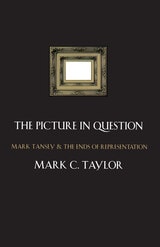
The Picture in Question
Mark Tansey and the Ends of RepresentationMark C. Taylor
University of Chicago Press, 1999
The Quality of Divided Democracies
Minority Inclusion, Exclusion, and Representation in the New EuropeLicia Cianetti
University of Michigan Press, 2019

The Real, the True, and the Told
Postmodern Historical Narrative and the Ethics of RepresentationEric L. Berlatsky
The Ohio State University Press, 2011
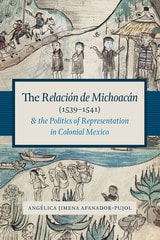
The Relación de Michoacán (1539-1541) and the Politics of Representation in Colonial Mexico
By Angélica Jimena Afanador-Pujol
University of Texas Press, 2015
Through close readings of the painted images in a major sixteenth-century illustrated manuscript, this book demonstrates the critical role that images played in ethnic identity formation and politics in colonial Mexico.
The Relación de Michoacán (1539–1541) is one of the earliest surviving illustrated manuscripts from colonial Mexico. Commissioned by the Spanish viceroy Antonio de Mendoza, the Relación was produced by a Franciscan friar together with indigenous noble informants and anonymous native artists who created its forty-four illustrations. To this day, the Relación remains the primary source for studying the pre-Columbian practices and history of the people known as Tarascans or P’urhépecha. However, much remains to be said about how the Relación’s colonial setting shaped its final form.
By looking at the Relación in its colonial context, this study reveals how it presented the indigenous collaborators a unique opportunity to shape European perceptions of them while settling conflicting agendas, outshining competing ethnic groups, and carving a place for themselves in the new colonial society. Through archival research and careful visual analysis, Angélica Afanador-Pujol provides a new and fascinating account that situates the manuscript’s images within the colonial conflicts that engulfed the indigenous collaborators. These conflicts ranged from disputes over political posts among indigenous factions to labor and land disputes against Spanish newcomers. Afanador-Pujol explores how these tensions are physically expressed in the manuscript’s production and in its many contradictions between text and images, as well as in numerous emendations to the images. By studying representations of justice, landscape, conquest narratives, and genealogy within the Relación, Afanador-Pujol clearly demonstrates the visual construction of identity, its malleability, and its political possibilities.

The Right of Instruction and Representation in American Legislatures, 1778 to 1900
Peverill Squire
University of Michigan Press, 2021
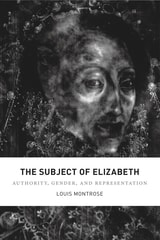
The Subject of Elizabeth
Authority, Gender, and RepresentationLouis Montrose
University of Chicago Press, 2006
Montrose offers a masterful account of the texts, pictures, and performances in which the Queen was represented to her people, to her court, to foreign powers, and to Elizabeth herself. Retrieving this “Elizabethan imaginary” in all its richness and fascination, Montrose presents a sweeping new account of Elizabethan political culture. Along the way, he explores the representation of Elizabeth within the traditions of Tudor dynastic portraiture; explains the symbolic manipulation of Elizabeth’s body by both supporters and enemies of her regime; and considers how Elizabeth’s advancing age provided new occasions for misogynistic subversions of her royal charisma.
This book, the remarkable product of two decades of study by one of our most respected Renaissance scholars, will be welcomed by all historians, literary scholars, and art historians of the period.
Troublemakers
Power, Representation, and the Fiction of the Mass WorkerScott, William
Rutgers University Press, 2012
William Scott’s Troublemakers explores how a major change in the nature and forms of working-class power affected novels about U.S. industrial workers in the first half of the twentieth century. With the rise of mechanization and assembly-line labor from the 1890s to the 1930s, these laborers found that they had been transformed into a class of “mass” workers who, since that time, have been seen alternately as powerless, degraded victims or heroic, empowered icons who could rise above their oppression only through the help of representative organizations located outside the workplace.
Analyzing portrayals of workers in such novels as Upton Sinclair’s The Jungle, Ruth McKenney's Industrial Valley, and Jack London’s The Iron Heel, William Scott moves beyond narrow depictions of these laborers to show their ability to resist exploitation through their direct actions—sit-down strikes, sabotage, and other spontaneous acts of rank-and-file “troublemaking” on the job—often carried out independently of union leadership. The novel of the mass industrial worker invites us to rethink our understanding of modern forms of representation through its attempts to imagine and depict workers’ agency in an environment where it appears to be completely suppressed.