149 books match the query 'Russia (Federation)' and 31 start with t

cover of T-Bone Whacks and Caviar Snacks: Cooking with Two Texans in Siberia and the Russian Far East

T-Bone Whacks and Caviar Snacks

Cooking with Two Texans in Siberia and the Russian Far East

Sharon Hudgins

University of North Texas Press, 2018
[more]
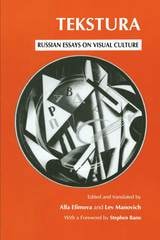
cover of Tekstura: Russian Essays on Visual Culture

Tekstura

Russian Essays on Visual Culture

Edited by Alla Efimova and Lev Manovich

University of Chicago Press, 1993

Fascinated by the myth of the Russian avant-garde and scornful of official art, the West has been selective in its engagement with Russian visual culture. Yet how do contemporary Russian scholars and critics themselves approach the history of visual culture in the former Soviet Union?

Taking its title from a Russian word that can refer to the 'texture" of life, painting, or writing, this anthology assembles thirteen key essays in art history and cultural theory by Russian-language writers. The essays erase boundaries between high and low, official and dissident, avant-garde and socialist realism, art and everyday life. Everything visual is deemed worthy of analysis, whether painting or propaganda banners, architecture or candy wrappers, mass celebrations or urban refuse.

Most of the essays appear here in English for the first time. The editors have selected works of the past twenty years by philosophers, literary critics, film scholars, and art historians. Also included are influential earlier essays by Mikhail Bakhtin, V. N. Voloshinov, and Sergei Eisenstein. Compiled for general readers and specialists alike, Tekstura is a valuable resource for anyone interested in Russian and Soviet cultural history or in new theoretical approaches to the visual.
[more]
cover of The Chekhovian Intertext: Dialogue with a Classic

The Chekhovian Intertext

Dialogue with a Classic

Lyudmila Parts

The Ohio State University Press, 2008

In The Chekhovian Intertext Lyudmila Parts explores contemporary Russian writers’ intertextual engagement with Chekhov and his myth. She offers a new interpretative framework to explain the role Chekhov and other classics play in constructing and maintaining Russian national identity and the reasons for the surge in the number of intertextual engagements with the classical authors during the cultural crisis in post-perestroika Russia.   

The book highlights the intersection of three distinct concepts: cultural memory, cultural myth, and intertextuality. It is precisely their interrelation that explains how intertextuality came to function as a defense mechanism of culture, a reaction of cultural memory to the threat of its disintegration.

In addition to offering close readings of some of the most significant short stories by contemporary Russian authors and by Chekhov, as a theoretical case study the book sheds light on important processes in contemporary literature: it explores the function of intertextuality in the development of Russian literature, especially post-Soviet literature; it singles out the main themes in contemporary literature, and explains their ties to national cultural myths and to cultural memory. The Chekhovian Intertext may serve as a theoretical model and impetus for examinations of other national literatures from the point of view of the relationship between intertextuality and cultural memory.
[more]
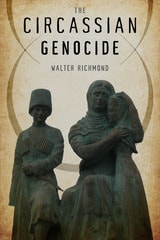
cover of The Circassian Genocide

The Circassian Genocide

Richmond, Walter

Rutgers University Press, 2013

Circassia was a small independent nation on the northeastern shore of the Black Sea. For no reason other than ethnic hatred, over the course of hundreds of raids the Russians drove the Circassians from their homeland and deported them to the Ottoman Empire. At least 600,000 people lost their lives to massacre, starvation, and the elements while hundreds of thousands more were forced to leave their homeland. By 1864, three-fourths of the population was annihilated, and the Circassians had become one of the first stateless peoples in modern history.

Using rare archival materials, Walter Richmond chronicles the history of the war, describes in detail the final genocidal campaign, and follows the Circassians in diaspora through five generations as they struggle to survive and return home. He places the periods of acute genocide, 1821–1822 and 1863–1864, in the larger context of centuries of tension between the two nations and updates the story to the present day as the Circassian community works to gain international recognition of the genocide as the region prepares for the 2014 Winter Olympics in Sochi, the site of the Russians’ final victory.
[more]
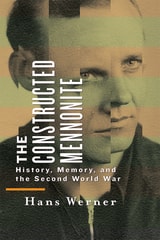
cover of The Constructed Mennonite: History, Memory, and the Second World War

The Constructed Mennonite

History, Memory, and the Second World War

Hans Werner

University of Manitoba Press, 2013

[more]
cover of The Conundrum of Russian Capitalism: The Post-Soviet Economy in the World System

The Conundrum of Russian Capitalism

The Post-Soviet Economy in the World System

Ruslan Dzarasov

Pluto Press, 2013

The Conundrum of Russian Capitalism looks at the nature of Russian capitalism following the fall of the Soviet Union, showing how the system originated in the degenerated Soviet bureaucracy and the pressures of global capital. Ruslan Dzarasov provides a detailed analysis of Russian corporate governance, labour practices and investment strategies.

By comparing the practices of Russian companies to the typical models of corporate governance and investment behaviour of big firms in the West, Dzarasov sheds light on the relationship between the core and periphery of the capitalist world-system.

This groundbreaking study shows that Russia's new capitalism is not a break with the country's Stalinist past, but in fact the continuation of that tradition.

[more]
cover of The Darkest Evening

The Darkest Evening

William Durbin

University of Minnesota Press, 2011

In the 1930s, some 6,000 Finnish Americans traveled to Karelia, a province in Northwestern Russia, hoping to leave the Depression behind and to establish a workers’ paradise. Based on these true events, The Darkest Evening chronicles the story of Jake Maki, whose father, caught up in the socialist fervor washing over their Finnish mining community in Minnesota, moves their family to the Soviet Union.

Instead of finding the utopia they were promised, Jake and his family encounter only disappointment and hardship. When Stalin’s secret police begin targeting Americans for arrest, his worst fears are confirmed, and Jake leads his family on a daring midwinter escape attempt on cross-country skis, fleeing toward the Finnish border.
[more]
cover of The Diaries of Nikolay Punin: 1904-1953

The Diaries of Nikolay Punin

1904-1953

By Nikolay Punin

University of Texas Press, 1999

Nikolay Punin (1888-1953) was the most articulate Russian/Soviet art critic of the 1920s. He strongly advocated Constructivism, an avant-garde impulse that favored mechanomorphic abstraction and proclaimed a movement to bring art into the center of popular life. In the United States, he is perhaps best remembered for his love affair with Anna Akhmatova, one of the great poets of the twentieth century.

This volume presents the first English translation of ten diary notebooks that Punin wrote between 1915 and 1936, as well as selections from his earlier (1904-1910) and later (1941-1946) diaries and some thirty notes and letters relating to his affair with Anna Akhmatova. These materials offer a rare glimpse into the life of art and artists in Russia. They also present vivid scenes from the 1905 Revolution, World War I, the 1917 Revolutions, World War II, and Stalinist oppression through the reflections of a talented man, who, unlike many of his generation, lived to tell the tale.
[more]
cover of The Mitki and the Art of Postmodern Protest in Russia

The Mitki and the Art of Postmodern Protest in Russia

Alexandar Mihailovic

University of Wisconsin Press, 2019

During the late Soviet period, the art collective known as the Mitki emerged in Leningrad. Producing satirical poetry and prose, pop music, cinema, and conceptual performance art, this group fashioned a playful, emphatically countercultural identity with affinities to European avant-garde and American hippie movements.

More broadly, Alexandar Mihailovic shows, the Mitki pioneered a form of political protest art that has since become a centerpiece of activism in post-Soviet Russia, most visibly today in groups such as Pussy Riot. He draws on extensive interviews with members of the collective and illuminates their critique of the authoritarian state, militarism, and social strictures from the Brezhnev years to the present.
[more]
cover of The New Jewish Diaspora: Russian-Speaking Immigrants in the United States, Israel, and Germany

The New Jewish Diaspora

Russian-Speaking Immigrants in the United States, Israel, and Germany

Gitelman, Zvi

Rutgers University Press, 2016

In 1900 over five million Jews lived in the Russian empire; today, there are four times as many Russian-speaking Jews residing outside the former Soviet Union than there are in that region. The New Jewish Diaspora is the first English-language study of the Russian-speaking Jewish diaspora. This migration has made deep marks on the social, cultural, and political terrain of many countries, in particular the United States, Israel, and Germany. The contributors examine the varied ways these immigrants have adapted to new environments, while identifying the common cultural bonds that continue to unite them. 
 
Assembling an international array of experts on the Soviet and post-Soviet Jewish diaspora, the book makes room for a wide range of scholarly approaches, allowing readers to appreciate the significance of this migration from many different angles. Some chapters offer data-driven analyses that seek to quantify the impact Russian-speaking Jewish populations are making in their adoptive countries and their adaptations there. Others take a more ethnographic approach, using interviews and observations to determine how these immigrants integrate their old traditions and affiliations into their new identities. Further chapters examine how, despite the oceans separating them, members of this diaspora form imagined communities within cyberspace and through literature, enabling them to keep their shared culture alive.  
 
Above all, the scholars in The New Jewish Diaspora place the migration of Russian-speaking Jews in its historical and social contexts, showing where it fits within the larger historic saga of the Jewish diaspora, exploring its dynamic engagement with the contemporary world, and pointing to future paths these immigrants and their descendants might follow.  
 
[more]
cover of The Paleolithic of Siberia: New Discoveries and Interpretations

The Paleolithic of Siberia

New Discoveries and Interpretations

Edited and Compiled by Anatoli P. Derev'anko: Demitri B. Shimkin and W. Roger Powers (American Editors). Translated by Inna P. Laricheva

University of Illinois Press, 1998

This major work, the result of collaboration among scholars who worked at dozens of sites from the Ural Mountains to the Pacific Ocean, is the first volume in English to summarize the massive quantity of archaeological data on the Paleolithic occupation of Siberia. Written by leading Russian experts and edited by scholars including the late Demitri Shimkin, the book presents the results of field studies conducted over some twenty-five years.

It traces the routes of human migration throughout Eurasia, shows Siberian lithic industries as they evolved from the Early through the Middle and Late Paleolithic, and correlates them with reports from Mongolia, China, Japan, and America.

[more]
cover of The Petrine Revolution in Russian Architecture

The Petrine Revolution in Russian Architecture

James Cracraft

University of Chicago Press, 1988
In this highly original book James Cracraft provides a major case study of the cultural revolution in Russia initiated by Peter the Great, tsar and first emperor (1682-1725). He recounts in fascinating detail how modern standards of architecture supplanted traditional norms in Russia following a massive injection of European expertise and indicates how, thereby, the modern Russian built world came into being. The first comprehensive study of the Petrine revolution in Russian architecture to be published in any language, the book includes nearly 250 illustrations, many of them original photographs appearing here for the first time.
[more]
cover of The Politics of Bad Governance in Contemporary Russia

The Politics of Bad Governance in Contemporary Russia

Vladimir Gel'man

University of Michigan Press, 2022
In this book, Vladimir Gel’man considers bad governance as a distinctive politico-economic order that is based on a set of formal and informal rules, norms, and practices quite different from those of good governance. Some countries are governed badly intentionally because the political leaders of these countries establish and maintain rules, norms, and practices that serve their own self-interests. Gel’man considers bad governance as a primarily agency-driven rather than structure-induced phenomenon. He addresses the issue of causes and mechanisms of bad governance in Russia and beyond from a different scholarly optics, which is based on a more general rationale of state-building, political regime dynamics, and policy-making. He argues that although these days, bad governance is almost universally perceived as an anomaly, at least in developed countries, in fact human history is largely a history of ineffective and corrupt governments, while the rule of law and decent state regulatory quality are relatively recent matters of modern history, when they emerged as side effects of state-building. Indeed, the picture is quite the opposite: bad governance is the norm, while good governance is an exception. The problem is that most rulers, especially if their time horizons are short and the external constraints on their behavior are not especially binding, tend to govern their domains in a predatory way because of the prevalence of short-term over long-term incentives. Contemporary Russia may be considered as a prime example of this phenomenon. Using an analysis of case studies of political and policy changes in Russia after the Soviet collapse, Gel’man discusses the logic of building and maintaining the politico-economic order of bad governance in Russia and paths of its possible transformation in a theoretical and comparative perspective.
 
[more]
cover of The Politics of Fantasy: Magic, Children's Literature, and Fandom in Putin's Russia

The Politics of Fantasy

Magic, Children's Literature, and Fandom in Putin's Russia

Eliot Borenstein

University of Wisconsin Press, 2025

What happened when J. K. Rowling’s mega-blockbuster—born in the United Kingdom and launched to global heights by Hollywood and the full force of Western marketing—came knocking on President Putin’s door? The arrival of boy wizard and international star Harry Potter in a recently neoliberal Russia was enormously influential, but neither smooth nor uncontested. The franchise quickly became a lens that focused Russian ambitions and fears during an era characterized by both the hegemony of globalized popular culture and a nationalized conservative backlash. 

With crisp, engaging prose, Eliot Borenstein leaps from Harry Potter into an exploration of the culture wars and moral panics sparked in Russia by Western-inspired children’s literature, extending back into the Soviet period and through the invasion of Ukraine. As cultural products pitched ostensibly to children, the Harry Potter books and films became the perfect objects for criticism, translation, adaptation, parody, attack, mimicry, and meme-making, allowing Russians to carve out their own space in the worldwide market of magical multiverses.
[more]
cover of The Privatization Process in Russia, the Ukraine, and the Baltic States

The Privatization Process in Russia, the Ukraine, and the Baltic States

Roman Frydman

Central European University Press, 1993
In this work, comprehensive comparative information on five former Soviet republics has been collected by teams of researchers from both within the region and from the West. Following an introduction to the economic environment in each country, it provides an overview of the privatization process, including an account of the legal framework of ownership, institutions for state regulation, an overview of privatization programmes and the initial transformation of enterprises. A key feature of the book is the authors' access to hitherto unavailable information and their ability to present a vast amount of material in an easily available format. Aimed at policy makers and business people, the work should provide a strong foundation for future research.
[more]
cover of The Recurrence of Fate: Theatre and Memory in Twentieth-Century Russia

The Recurrence of Fate

Theatre and Memory in Twentieth-Century Russia

Spencer Jay Golub

University of Iowa Press, 1994

How, why, and according to whose definitions and requirements does a culture self-consciously create memory and project its fate? In this remarkable book—the first in English to treat Russian history as theatre and cultural performance—Spencer Golub reveals the performative nature of Russian history in the twentieth century and the romantic imprisonment/self-imprisonment of the creative intelligentsia within this scenario.

[more]
cover of The Red Sofa

The Red Sofa

Michel Lesbre

Seagull Books, 2017

Now in paperback, The Red Sofa is a quiet French novella exploring love, memory, and the perspective that travel gives us on both.

In The Red Sofa, we meet Anne, a young woman setting off on the Trans-Siberian Railway in order to find her former lover, Gyl, who left twenty years before. As the train moves across post-Soviet Russia and its devastated landscapes, Anne reflects on her past with Gyl and their patriotic struggles, as well as on the neighbor she has just left behind, Clémence Barrot.

Rocked by the train’s movements Anne is moved by her memory of Clémence, who is old and whose memory is failing, but who has not lost her taste for life and adventure. Ensconced on her red sofa at home, Clémence loves to tell Anne her life story, mourning lost loved ones and celebrating the lives of brave, rebellious women who went before her. Eventually, Anne’s train trip returns her home having not found Gyl, but having found something much more meaningful—herself.
[more]
cover of The Regional Roots of Russia's Political Regime

The Regional Roots of Russia's Political Regime

William M. Reisinger and Bryon J. Moraski

University of Michigan Press, 2017

In The Regional Roots of Russia’s Political Regime, William M. Reisinger and Bryon J. Moraski examine Russian politics at the subnational level in order to discover why democracy failed to take root and how Putin’s authoritarian regime materialized. Since the national regime needed dominant victories in federal legislative and presidential elections, elections were critical to the resurgence of Russian authoritarianism. At the same time, victories without a traditional nationwide political party required that regional politicians help deliver votes. Putin employed a variety of resources to encourage the collaboration of regional leaders during federal elections and to sanction those who would or could not deliver these votes.

By analyzing successive federal elections, Reisinger and Moraski show that regions that led the way in delivering votes in Putin’s favor were those that had been both more independent and more authoritarian during the Yeltsin era. These authoritarian enclaves under Yeltsin became models of behavior in the Putin regime, which prized deferential election results. Other regions were quick to follow this lead, functioning during Putin’s ascendancy as “swing states.” Still, Russia’s regimes continued to exhibit regime diversity, with democratic enclaves resisting the push to become cogs in the Kremlin’s electoral authoritarian wheel.

While motivated by scholarly questions about authoritarianism, democracy, and the influence of subnational forces on national regime trajectories, Reisinger and Moraski also consider policy-relevant questions.

 

[more]
cover of The Reincarnation of Russia: Struggling with the Legacy of Communism, 1990–1994

The Reincarnation of Russia

Struggling with the Legacy of Communism, 1990–1994

John Löwenhardt

Duke University Press, 1995

In The Reincarnation of Russia, John Löwenhardt presents the first in-depth analysis of the initial and crucial stages of Russia’s new statehood. He examines Russia’s recent turbulent history—beginning with the explosive Declaration of State Sovereignty in June 1990, through the adoption of the Yeltsin constitution in the elections of December 1993 and concluding with the early months of 1994. His analysis of Russia’s struggle with the vestige of Soviet Communism and the attempt to create a more democratic form of government offers crucial insight into one of the critical turning points in contemporary history.
Building on analysis of the failure of the Soviet system, Löwenhardt compares the emergence of Russia as a newborn state with other countries that have undergone transitions from authoritarianism toward democracy. Although it is often claimed that Russia is a unique case, the author argues that the lessons of other nations are relevant to the Russian situation. In conjunction with this comparative analysis and with consideration of the significance of the communist and Russian past, Löwenhardt discusses political and economic developments—including both foreign and domestic policy concerns—in Russia over the last four years. He provides a better understanding of the Russian condition and a guarded optimism regarding the ongoing process taking place in Russia today.
The Reincarnation of Russia will be welcomed by scholars with specialized interests in the democratization of Russia, political leaders, journalists, and general readers concerned with the global impact of Russia’s changing status.
[more]
cover of The Return of Ideology: The Search for Regime Identities in Postcommunist Russia and China

The Return of Ideology

The Search for Regime Identities in Postcommunist Russia and China

Cheng Chen

University of Michigan Press, 2016

As a nation makes the transition from communism to democracy or another form of authoritarianism, its regime must construct not only new political institutions, but also a new political ideology that can guide policy and provide a sense of mission. The new ideology is crucial for legitimacy at home and abroad, as well as the regime’s long-term viability. In The Return of Ideology, Cheng Chen compares post-communist regimes, with a focus on Russia under Putin and post-Deng China, investigating the factors that affect the success of an ideology-building project and identifies the implications for international affairs.

Successful ideology-building requires two necessary—but not sufficient—conditions. The regime must establish a coherent ideological repertoire that takes into account the nation’s ideological heritage and fresh surges of nationalism. Also, the regime must attract and maintain a strong commitment to the emerging ideology among the political elite.

Drawing on rich primary sources, including interviews, surveys, political speeches, writings of political leaders, and a variety of publications, Chen identifies the major obstacles to ideology-building in modern Russia and China and assesses their respective long-term prospects. Whereas creating a new regime ideology has been a protracted and difficult process in China, it has been even more so in Russia. The ability to forge an ideology is not merely a domestic concern for these two nations, but a matter of international import as these two great powers move to assert and extend their influence in the world.
[more]
cover of The Russia That We Have Lost

The Russia That We Have Lost

Pavel Khazanov

University of Wisconsin Press, 2023

In 1917, Bolshevik revolutionaries overthrew the tsar of Russia and established a new, communist government, one that viewed the Imperial Russia of old as a righteously vanquished enemy. And yet, as Pavel Khazanov shows, after the collapse of Stalinism, a reconfiguration of Imperial Russia slowly began to emerge, recalling the culture of tsarist Russia not as a disgrace but as a glory, a past to not only remember but to recover, and to deploy against what to many seemed like a discredited socialist project.

Khazanov’s careful untangling of this discourse in the late Soviet period reveals a process that involved figures of all political stripes, from staunch conservatives to avowed intelligentsia liberals. Further, Khazanov shows that this process occurred not outside of or in opposition to Soviet guidance and censorship, but in mainstream Soviet culture that commanded wide audiences, especially among the Soviet middle class. Excavating the cultural logic of this newly foundational, mythic memory of a “lost Russia,” Khazanov reveals why, despite the apparently liberal achievement of the collapse of the Soviet Union in 1991, Boris Yeltsin (and later, Vladamir Putin) successfully steered Russia into oligarchy and increasing autocracy. The anti-Soviet memory of the pre-Soviet past, ironically constructed during the late socialist period, became and remains a politically salient narrative, a point of consensus that surprisingly attracts both contemporary regime loyalists and their would-be liberal opposition.
[more]
cover of The Search for a Socialist El Dorado: Finnish Immigration to Soviet Karelia from the United States and Canada in the 1930s

The Search for a Socialist El Dorado

Finnish Immigration to Soviet Karelia from the United States and Canada in the 1930s

Alexey Golubev and Irina Takala

Michigan State University Press, 2014

In the 1930s, thousands of Finns emigrated from their communities in the United States and Canada to Soviet Karelia, a region in the Soviet Union where Finnish Communist émigrés were building a society to implement their ideals of socialist Finland. To their new socialist home, these immigrants brought critically needed skills, tools, machines, and money. Educated and skilled, American and Canadian Finns were regarded by Soviet authorities as agents of revolutionary transformations who would not only modernize the economy of Soviet Karelia, but also enlighten its society. North American immigrants, indeed, became active participants of socialist colonization of what Bolshevik leaders perceived as dark, uneducated and backward Soviet ethnic periphery. The Search for a Socialist El Dorado is the first comprehensive account in English of this fascinating story. Using a vast body of documentary sources from archives in Petrozavodsk and Moscow, Russian- and Finnish-language press and literature from the 1930s, oral history interviews and secondary literature, Alexey Golubev and Irina Takala explore in depth the “Karelian fever” among Finnish Americans and Canadians, and the lives of immigrants in the Soviet Union, their contribution to Soviet economy and culture, and their fates in the Great Terror.
[more]
cover of The Socialist Way of Life in Siberia: Transformation in Buryatia

The Socialist Way of Life in Siberia

Transformation in Buryatia

Melissa Chakars

Central European University Press, 2014
The Buryats are a Mongolian population in Siberian Russia, the largest indigenous minority. The Socialist Way of Life in Siberia presents the dramatic transformation in their everyday lives during the late twentieth century. The book challenges the common notion that the process of modernization during the later Soviet period created a Buryat national assertiveness rather than assimilation or support for the state.
[more]
cover of The Strategy of Campaigning: Lessons from Ronald Reagan and Boris Yeltsin

The Strategy of Campaigning

Lessons from Ronald Reagan and Boris Yeltsin

Kiron K. Skinner, Serhiy Kudelia, Bruce Bueno de Mesquita, and Condoleezza Rice

University of Michigan Press, 2010

The Strategy of Campaigning explores the political careers of Ronald Reagan and Boris Yeltsin, two of the most galvanizing and often controversial political figures of our time. Both men overcame defeat early in their political careers and rose to the highest elected offices in their respective countries.

The authors demonstrate how and why Reagan and Yeltsin succeeded in their political aspirations, despite—or perhaps because of—their apparent “policy extremism”: that is, their advocacy of policy positions far from the mainstream. The book analyzes the viability of policy extremism as a political strategy that enables candidates to forge new coalitions and outflank conventional political allegiances.

Kiron K. Skinner is Associate Professor of International Relations and Political Science at Carnegie Mellon University, a Research Fellow at the Hoover Institution, and a member of the Chief of Naval Operations Executive Panel and the National Security Education Board.
 
Serhiy Kudelia is Lecturer of Politics at Kyiv-Mohyla Academy, Ukraine and advisor to Deputy Prime Minister of Ukraine.
 

Bruce Bueno de Mesquita is Julius Silver Professor and Director of the Alexander Hamilton Center for Political Economy at New York University and a Senior Fellow at the Hoover Institution.

Condoleezza Rice is on a leave of absence from Stanford University, where she was a Professor of Political Science and a Senior Fellow at the Hoover Institution. She is currently serving as U.S. Secretary of State.
[more]
cover of The Thickets

The Thickets

Józef Lobodowski

Central European University Press, 2026

The Thickets is the first volume of Polish poet and novelist Józef Lobodowski’s Ukrainian Trilogy, written between 1955 and 1960. Set primarily in Russia’s Kuban region, the novel unfolds against a rich backdrop where Ukrainians, Russians, and Cossacks live alongside Tatars, Circassians, and waves of other peoples under Tsarist rule—among them Armenians and Poles. From this world emerges Stas (Stanislaw), a young Pole and the central figure of the trilogy.

In The Thickets, Lobodowski paints a stark, unforgettable portrait of the turmoil that engulfed the former Russian Empire after the fall of the Tsar and Kerensky’s government. For Stas, once a student at a classical gymnasium, survival now means peddling contraband on the black market. Through his eyes, the reader is plunged into the chaos of war, revolution, and occupation—rendered with visceral power and human urgency.
[more]
cover of The Way of Kinship: An Anthology of Native Siberian Literature

The Way of Kinship

An Anthology of Native Siberian Literature

Alexander Vaschenko

University of Minnesota Press, 2010

That these treasures are available to us as writing is a miracle. . . . The writings here, while altogether modern in one sense, are based upon a literature, albeit oral, that has existed for thousands of years. They are the reflections of people who have lived long on the earth, on their own terms, in harmony with the powers of nature. They are invaluable to us who have so much to learn from them. These stories, poems, songs give us a way, a sacred way, into a world that we ought to know for its own sake. It is our own world, after all. —N. Scott Momaday, from the Foreword

The first anthology of Native Siberian literature in English, The Way of Kinship represents writers from regions extending from the Ob River in the west to the Chukotka peninsula, the easternmost point of the Siberian Russian Arctic. Drawn from seven distinct ethnic groups, this diverse body of work-prose fiction, poetry, drama, and creative nonfiction-chronicles ancient Siberian cultures and traditions threatened with extinction in the contemporary world.

Translated and edited by Alexander Vaschenko and Claude Clayton Smith, leading scholars in Native Siberian literature, The Way of Kinship is an essential collection that will introduce readers to new writers and new worlds.
[more]
cover of The Writer in Petrograd and the House of Arts

The Writer in Petrograd and the House of Arts

Martha Weitzel Hickey

Northwestern University Press, 2009
Founded by Maksim Gorky and Kornei Chukovsky in 1919 and disbanded in 1922, the Petrograd House of Arts occupied a crucial moment in Russia's cultural history. By chronicling the rise and fall of this literary landmark, this book conveys in greater depth and detail than ever before a significant but little studied period in Soviet literature.
 
Poised between Russian culture's past and her Soviet future, between pre- and post-Revolutionary generations, this once lavish private home on the Nevsky Prospekt housed as many as fifty-six poets, novelists, critics, and artists at one time, during a period of great social and political turbulence. And as such, Hickey contends, the House of Arts served as a crucible for a literature in transition. Hickey shows how the House of Arts, though virtually ignored by Soviet-era cultural historians, played a critical role in shaping the lively literature of the next decade, a literature often straddling the border between fiction and non-fiction. Considering prose writers such as Yevgeny Zamyatin, Olga Forsh, the Serapion Brothers group, Viktor Shklovsky, Boris Eikhenbaum, as well as poets including Alexander Blok, Nikolay Gumilev, Anna Radlova, Osip Mandelstam, and Vladislav Khodasevich, she traces the comings and goings at the House of Arts: the meetings and readings and lectures and, most of all, the powerful influence of these interactions on those who briefly lived and worked there. In her work, the Petrograd House of Arts appears for the first time in all its complexity and importance, as a focal point for the social and cultural ferment of the day, and a turning point in the direction of Russian literature and criticism.
[more]
cover of Totalitarian Societies and Democratic Transition: Essays in Memory of Victor Zaslavsky

Totalitarian Societies and Democratic Transition

Essays in Memory of Victor Zaslavsky

Riccardo James Vargiu

Central European University Press, 2017

This book is a tribute to the memory of Victor Zaslavsky (1937–2009), sociologist, émigré from the Soviet Union, Canadian citizen, public intellectual, and keen observer of Eastern Europe. In seventeen essays leading European, American and Russian scholars discuss the theory and the history of totalitarian society with a comparative approach. They revisit and reassess what Zaslavsky considered the most important project in the latter part of his life: the analysis of Eastern European - especially Soviet societies and their difficult “transition” after the fall of communism in 1989–91. The variety of the contributions reflects the diversity of specialists in the volume, but also reveals Zaslavsky's gift: he surrounded himself with talented people from many different fields and disciplines. In line with Zaslavsky's work and scholarly method, the book promotes new theoretical and methodological approaches to the concept of totalitarianism for understanding Soviet and East European societies, and the study of fascist and communist regimes in general.
[more]
cover of Tragic Spirits: Shamanism, Memory, and Gender in Contemporary Mongolia

Tragic Spirits

Shamanism, Memory, and Gender in Contemporary Mongolia

Manduhai Buyandelger

University of Chicago Press, 2013
The collapse of socialism at the end of the twentieth century brought devastating changes to Mongolia. Economic shock therapy—an immediate liberalization of trade and privatization of publicly owned assets—quickly led to impoverishment, especially in rural parts of the country, where Tragic Spirits takes place. Following the travels of the nomadic Buryats, Manduhai Buyandelger tells a story not only of economic devastation but also a remarkable Buryat response to it—the revival of shamanic practices after decades of socialist suppression.
 
Attributing their current misfortunes to returning ancestral spirits who are vengeful over being abandoned under socialism, the Buryats are now at once trying to appease their ancestors and recover the history of their people through shamanic practice. Thoroughly documenting this process, Buyandelger situates it as part of a global phenomenon, comparing the rise of shamanism in liberalized Mongolia to its similar rise in Africa and Indonesia. In doing so, she offers a sophisticated analysis of the way economics, politics, gender, and other factors influence the spirit world and the crucial workings of cultural memory.
[more]
cover of Transition in Post-Soviet Art: The Collective Actions Group Before and After 1989

Transition in Post-Soviet Art

The Collective Actions Group Before and After 1989

Octavian Esanu

Central European University Press, 2013
The artistic tradition that emerged as a form of cultural resistance in the 1970s changed during the transition from socialism to capitalism. This volume presents the evolution of the Moscow-based conceptual artist group called Collective Actions, proposing it as a case-study for understanding the transformations that took place in Eastern European art after the fall of the Berlin Wall. Esanu introduces Moscow Conceptualism by performing a close examination of the Collective Actions group's ten-volume publication Journeys Outside the City and of the Dictionary of Moscow Conceptualism. He analyzes above all the evolution of Collective Actions through ten consecutive phases, discussing changes that occur in each new volume of the Journeys. Compares the part of the Journeys produced in the Soviet period with those volumes assembled after the dissolution of the USSR. The concept of "transition" and the activities of Soros Centers for Contemporary Art are also analyzed.
[more]
cover of Trying to Make Law Matter: Legal Reform and Labor Law in the Soviet Union

Trying to Make Law Matter

Legal Reform and Labor Law in the Soviet Union

Kathryn Hendley

University of Michigan Press, 1996

One of the most pressing issues of our time is the possibility of rebuilding the rule of law in former Leninist countries as a part of the transition to a market democracy. Despite formal changes in legislation and an increased attention to law in the rhetoric of policymakers, instituionalization of the rule of law has proven to be an immensely difficult challenge. Leninist regimes destroyed popular faith in law and legal institutions and, like other transitional regimes, contemporary post-communist Russia lacks the necessary institutional infrastructure to facilitate the growth of the rule of law.
Trying to Make Law Matter provides unique insight into the possibility of creating the rule of law. It is based on Kathryn Hendley's pathbreaking field research into the actual practices of Russian trial courts, lawyers, factory managers, and labor unions, contrasting the idealistic legal pronouncements of workers' rights during the Gorbachev era with tawdry reality of inadequate courts and dispirited workers.
Hendley frames her study of Russian law in action with a lively theoretical analysis of the fundamental prerequisites of the rule of law not only as a set of ideals but as a legal system that rests on the participation of rights-bearing citizens. This work will appeal to law, political science, and sociology scholars as well as area specialists and those who study transitions to market democracy.
Kathryn Hendley is Professor, Law and Political Science, University of Wisconsin, Madison.
[more]