Results by title
67 books match the query 'Sea' and 14 start with t
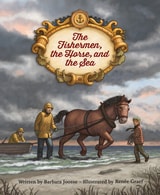
The Fishermen, the Horse, and the Sea
Barbara Joosse
Wisconsin Historical Society Press, 2021
This beautifully illustrated children’s book based on a true story recounts a dramatic rescue on Lake Michigan and introduces young readers to Lester Smith and his family, who founded Port Washington’s long-running and beloved Smith Bros. Fish Shanty. Educational materials including definitions, an illustrated map of Lake Michigan, and short biographies of the story’s featured characters supplement this engaging story for elementary-age readers.
The Mirror of the Sea
Joseph Conrad
Northwestern University Press, 1988
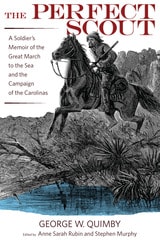
The Perfect Scout
A Soldier’s Memoir of the Great March to the Sea and the Campaign of the CarolinasGeorge W. Quimby, edited by Anne Sarah Rubin and Stephen Murphy
University of Alabama Press, 2018
After his father-in-law passed away, Stephen Murphy found, among the voluminous papers left behind, an ancestral memoir. Murphy quickly became fascinated with the recollections of George W. Quimby (1842–1926), a Union soldier and scout for General William Tecumseh Sherman.
Before Quimby became a part of Sherman’s March, he was held captive by Nathan Bedford Forrest’s troops in western Tennessee. He joined Sherman’s Army in Vicksburg, destroying railroads and bridges across Mississippi and Alabama on the way to Georgia. As the notorious march began, Quimby became a scout and no longer experienced war as his fellow soldiers did. Scouts moved ahead of the troops to anticipate opportunities and dangers. The rank and file were instructed to be seen and feared, while scouts were required to be invisible and stealthy. This memoir offers the rare perspective of a Union soldier who ventured into Confederate territory and sent intelligence to Sherman.
Written around 1901 in the wake of the Spanish American War, Quimby’s memoir shows no desire to settle old scores. He’s a natural storyteller, keeping his audience’s attention with tales of drunken frolics and narrow escapes, providing a memoir that reads more like an adventure novel. He gives a new twist to the familiar stories of Sherman’s March, reminding readers that while the Union soldiers faced few full-scale battles, the campaign was still quite dangerous.
More than a chronicle of day-to-day battles and marches, The Perfect Scout is more episodic and includes such additional elements as the story of how he met his wife and close encounters with the enemy. Offering a full picture of the war, Quimby writes not only about his adventures as one of Sherman’s scouts, but also about the suffering of the civilians caught in the war. He provides personal insight into some of the war’s historic events and paints a vivid picture of the devastation wreaked upon the South that includes destroyed crops and homes and a shattered economy. He also tells of the many acts of kindness he received from Southerners, including women and African Americans, who helped him and his fellow scouts by providing food, shelter, or information.
The Sea Is a Continual Miracle
Sea Poems and Other Writings by Walt WhitmanWalt Whitman
University Press of New England, 2017
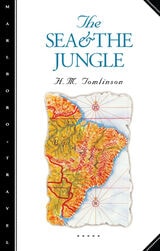
The Sea and the Jungle
H.M. Tomlinson
Northwestern University Press, 1996
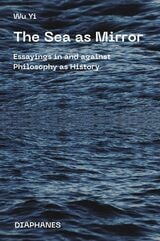
The Sea as Mirror
Essayings in and against Philosophy as HistoryWu Yi
Diaphanes, 2021
These include philosophical texts drawn from a constellation of historical topoi at the critical moments of their encounter with the maritime: Plato and Euripedes’s work from fifth-century Athens; Augustus and Plautus’s writings from republican and early imperial Rome; Shakespeare’s creations from Elizabethan England; Kant and Rousseau’s texts from enlightenment continental Europe; and the thinking of Husserl and Heidegger from interwar Germany of the twentieth century. For each historical topos, Yi juxtaposes different representations of and responses to the maritime through the reading of a philosophical text vis-à-vis the reading of a literary text. In so doing, she lays bare the deep political and moral ambiguity attributed to the ocean in Western philosophical and literary imaginaries.
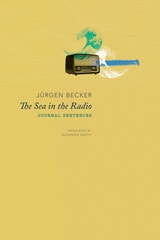
The Sea in the Radio
Journal SentencesJürgen Becker
Seagull Books, 2021
Jürgen Becker’s The Sea in the Radio is a collection of “journal sentences” divided into three sections called notebooks. In this great concert of a novel, language has been pared down to a minimum: fragments, phrases, and short sentences combine and make up a life both banal and profound. It is a life in which many of the details remain unstated or, as in miniatures, float just beyond the edges of the frame. Though at first the narrative may seem to move in a relatively harmless manner, soon enough we begin to realize that the story to be told may indeed be more unsettling than we had suspected.
The Sea in the Radio is a novel that bears witness not only to one’s final years but also to one’s place within history in general and Germany’s cataclysmic twentieth-century past in particular.

The Sea
Thalassography and HistoriographyPeter N. Miller, Editor
University of Michigan Press, 2013
The Silent Deep
The Discovery, Ecology, and Conservation of the Deep SeaTony Koslow
University of Chicago Press, 2007
The Silent Deep tells the story of the exploration and discovery of the deep sea, the ecology of its diverse environments, and the impact of humans, highlighting the importance of global stewardship in keeping this delicate ecosystem alive and well. Written by world renowned deep-sea ecologist Tony Koslow, this book is a comprehensive and authoritative overview of the state of the deep sea today, accessible to anyone interested in ocean science, the story of scientific discovery, and conservation of the earth’s most threatened ecosystems.
“Koslow deals a decisive blow to the notion that the deep sea can ever be immune from unregulated human activities. . . . The historical review of deep-sea biology is the most comprehensive I have ever read.”—Adrian Glover, Times Literary Supplement
“Deeply informed by history and rendered in straightforward, careful prose.”—Anthony Doerr, Boston Globe
“This beautifully produced book tells an urgent story with clarity and grace.”—Choice
“Stands apart from other books about life in the abyss due to Tony Koslow’s thoughtful accounts. . . . [He] succeeds in painting a picture of the deep sea as an environment with inherent and threatened value.”—Science
“Textbook depth on all aspects of deep-sea science and conservation. . . . [An] exhaustively researched and referenced volume with a historical review stretching back to Socrates.”—Mark Schrope, Nature
“An important textbook and viewpoint that is highly recommended for anyone with a professional or personal interest in deep-sea ecosystems.”—Quarterly Review of Biology

The United States and the Treaty Law of the Sea
Henry Reiff
University of Minnesota Press, 1959
The United States and the Treaty Law of the Sea was first published in 1959. Minnesota Archive Editions uses digital technology to make long-unavailable books once again accessible, and are published unaltered from the original University of Minnesota Press editions.
The entire period of the Republic is covered in this account of United States participation in treaties which seek to regulate peacetime use of the sea, its resources, and the air space over it. Noting a revival of maritime interest in America, Professor Reiff describes current uses and abuses of the sea with respect to transportation, communications, exploitation of products and energy, waste disposal, and recreation. He relates developments in economies, technology, social science, and the natural sciences to the expanding web of treaty law, and reports some of the discussion and actions which took place at the United Nations Conference on Sea Law in the spring of 1958.
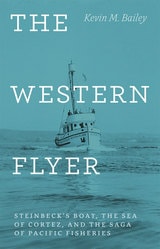
The Western Flyer
Steinbeck's Boat, the Sea of Cortez, and the Saga of Pacific FisheriesKevin M. Bailey
University of Chicago Press, 2015
In this book, Kevin M. Bailey resurrects this forgotten witness to the changing tides of Pacific fisheries. He draws on the Steinbeck archives, interviews with family members of crew, and more than three decades of working in Pacific Northwest fisheries to trace the depletion of marine life through the voyages of a single ship. After Steinbeck and his friend Ed Ricketts—a pioneer in the study of the West Coast’s diverse sea life and the inspiration behind “Doc” in Cannery Row—chartered the boat for their now-famous 1940 expedition, the Western Flyer returned to its life as a sardine seiner in California. But when the sardine fishery in Monterey collapsed, the boat moved on: fishing for Pacific ocean perch off Washington, king crab in the Bering Sea off Alaska, and finally wild Pacific salmon—all industries that would also face collapse.
As the Western Flyer herself faces an uncertain future—a businessman has bought her, intending to bring the boat to Salinas, California, and turn it into a restaurant feature just blocks from Steinbeck’s grave—debates about the status of the California sardine, and of West Coast fisheries generally, have resurfaced. A compelling and timely tale of a boat and the people it carried, of fisheries exploited, and of fortunes won and lost, The Western Flyer is environmental history at its best: a journey through time and across the sea, charting the ebb and flow of the cobalt waters of the Pacific coast.
Tragic History Of The Sea
C.R. Boxer
University of Minnesota Press, 2001
Compelling stories of shipwreck, adventure, and death on the high seas, now back in print.
The sixteenth and seventeenth centuries were a time of great colonial expansion, marked by a mercantile frenzy of ships carrying merchants, aristocrats, missionaries, sailors, Inquisitors, botanists, and statesmen pursuing the spoils of empire. Among the narratives that chronicled these voyages, those of the Portuguese are unequaled. C. R. Boxer’s fascinating translations of famous Portuguese shipwreck stories detail the disasters and terrors plaguing the perilous sea trading route between Portugal and India.
In the tradition of Homer, Virgil, Shakespeare, Defoe, and Poe, these dramatic stories of shipwreck—and those who lived to tell about it—represent existence and survival pushed to the limits. They describe disastrous turns of fate and miraculous rescues, heroism and cowardice, and offer the exhilaration and sheer emotive appeal of a tale of adventure well told. Often circulated in pamphlet form, these stories recounting the dangers and terrors of storm-tossed ocean voyages and the fate of castaways in distant lands were a popular genre, rife with compelling and often gory details. This first ever paperback edition includes a new translation of the tragic tale of Captain Manuel de Sousa Sepúlveda, shipwrecked with his family on the sands of Africa in 1552, the previous English versions of which have long been unavailable. Vividly descriptive and engrossing, these tales of selfishness, cruelty, despair, pirates, mayhem, and harrowing storms will captivate readers.
Turbulence Across the Sea
Transatlantic Relations and Strategic CompetitionEdited by Elie Baranets and Andrew Novo
University of Michigan Press, 2024
With a mix of research methodologies applied by scholars from both sides of the Atlantic, Turbulence Across the Sea offers a comprehensive analysis of relations among European and North American actors in the context of strategic competition among the United States, Europe, Russia, and China. In doing so, it demonstrates that a reaffirmation of transatlantic cooperation is necessary to maintain security in the face of aggressive moves by both Russia and China. By analyzing attitudes from the perspective of both the various actors (Britain, France, Germany, and the European Union) and various sectors (intelligence cooperation, foreign direct investments, technology, and the defense industry), this book provides readers with a comprehensive perspective on the challenges and opportunities in the shifting landscape of security in the twenty-first century.
Twain at Sea
The Maritime Writings of Samuel Langhorne ClemensMark Twain
University Press of New England, 2018