Results by title
64 books match the query 'Self in literature' and 16 start with t
The American Counterfeit
Authenticity and Identity in American Literature and CultureMary McAleer Balkun
University of Alabama Press, 2006
Focusing on texts written between 1880 and 1930, Mary McAleer Balkun explores the concept of the “counterfeit,” both in terms of material goods and invented identities, and the ways that the acquisition of objects came to define individuals in American culture and literature. Counterfeiting is, in one sense, about the creation of something that appears authentic—an invented self, a museum display, a forged work of art. But the counterfeit can also be a means by which the authentic is measured, thereby creating our conception of the true or real.
When counterfeiting is applied to individual identities, it fosters fluidity in social boundaries and the games of social climbing and passing that have come to be representative of American culture: the Horatio Alger story, the con man or huckster, the social climber, the ethnically ambiguous.
Balkun provides new readings of traditional texts such as The Great Gatsby, Adventures of Huckleberry Finn, and The House of Mirth, as well as readings of less-studied texts, such as Walt Whitman’s Specimen Days and Nella Larsen’s Passing. In each of these texts, Balkun locates the presence of manufactured identities and counterfeit figures, demonstrating that where authenticity and consumerism intersect, the self becomes but another commodity to be promoted, sold, and eventually consumed.
The Author as Hero
Self and Tradition in Bulgakov, Pasternak, and NabokovJustin Weir
Northwestern University Press, 2011
The Body of Poetry
Essays on Women, Form, and the Poetic SelfAnnie Finch
University of Michigan Press, 2005

The Ethics of Autobiography
Replacing the Subject in Modern SpainAngel G. Loureiro
Vanderbilt University Press, 2000
To address this oversight, Loureiro draws from his own experiences as well as from a wide range of previous theoretical works on autobiography, especially from the writings of Emmanuel Levinas, who believed that the self does not begin as a self-positing consciousness but as a response to an address from the other. On this basis, Loureiro then brilliantly traces the complex interplays between the political, discursive, rhetorical, and ethical dimensions of autobiography.
After laying out these theoretical foundations, Loureiro puts them to work in analyzing four of the most fascinating autobiographies written by Spanish exiles: The Life of Joseph Blanco White, who lived from 1775 to 1841, Memoria de la Melancolia by Maria Teresa Leon (1904-1988), Coto vedado and En los reinos de taifa by Juan Goytisolo (born 1931), and Literature or Life by Jorge Semprun (born 1923). The lives of these authors, all of whom were exiled for political reasons, were disrupted by some of the most crucial events in Spain's tortuous road to modernity and democracy.
The book closes with a discussion of why there have been so few critical examinations of autobiographies written in modern Spain. Loureiro proposes that, even in today's Spain, stifling social and political forces smother ethical responsibility, which is an essential ingredient in creating autobiographies that dare to be more than a humdrum inventory of personal recollections. Only in exile have Spanish authors seemed able to find the conditions to write their lives in a truly responsible manner. This answer to a call that grounds the subject in an other is ultimately the only form of truth available in autobiography.

The Fate of the Self
German Writers and French TheoryStanley Corngold
Duke University Press, 1994
The Improbability of Othello
Rhetorical Anthropology and Shakespearean SelfhoodJoel B. Altman
University of Chicago Press, 2010
Shakespeare’s dramatis personae exist in a world of supposition, struggling to connect knowledge that cannot be had, judgments that must be made, and actions that need to be taken. For them, probability—what they and others might be persuaded to believe—governs human affairs, not certainty. Yet negotiating the space of probability is fraught with difficulty. Here, Joel B. Altman explores the problematics of probability and the psychology of persuasion in Renaissance rhetoric and Shakespeare’s theater.
Focusing on the Tragedy of Othello, Altman investigates Shakespeare’s representation of the self as a specific realization of tensions pervading the rhetorical culture in which he was educated and practiced his craft. In Altman’s account, Shakespeare also restrains and energizes his audiences’ probabilizing capacities, alternately playing the skeptical critic and dramaturgic trickster. A monumental work of scholarship by one of America’s most respected scholars of Renaissance literature, The Improbability of Othello contributes fresh ideas to our understanding of Shakespeare’s conception of the self, his shaping of audience response, and the relationship of actors to his texts.
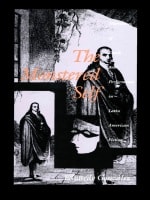
The Monstered Self
Narratives of Death and Performance in Latin American FictionEduardo González
Duke University Press, 1992
What interests González is the signature of authorial selfhood in narrative and performance, which he finds willfully and temptingly disfigured in the works he examines: horrific and erotic, subservient and tyrannical, charismatic and repellent. Searching out the personal image and plot, González uncovers two fundamental types of narrative: one that strips character of moral choice; and another in which characters' choices deprive them of personal autonomy and hold them in ritual bondage to a group. Thus The Monstered Self becomes a study of the conflict between individual autonomy and the stereotypes of solidarity.
Written in a characteristically allusive, elliptical style, and drawing on psychoanalysis, religion, mythology, and comparative literature, The Monstered Self is in itself a remarkable performance, one that will engage readers in anthropology, psychology, and cultural history as well as those specifically interested in Latin American narrative.
The Old Formalism
Character and Contemporary American PoetryJonathan Holden
University of Arkansas Press, 1999
The Russian Memoir
History and LiteratureBeth Holmgren
Northwestern University Press, 2007
The Story of All Things
Writing the Self in English Renaissance Narrative PoetryMarshall Grossman
Duke University Press, 1998
Relating subjectivity to the nature of language, Grossman uses the theories of Lacan to analyze the concept of the self as it encounters a transforming environment. He shows how ideological tensions arose from the reorganization and "modernization" of social life in revolutionary England and how the major poets of the time represented the division of the self in writings that are suspended between lyric and narrative genres. Beginning with the portrayals of the self inherited from Augustine, Dante, and Petrarch, he describes the influence of historic developments such as innovations in agricultural technology, civil war and regicide, and the emergence of republican state institutions on the changing representation of characters in the works of Spenser, Donne, Marvell, and Milton. Furthering this psychoanalytic critique of literary history, Grossman probes the linguistic effects of social and personal factors such as Augustine’s strained relationship with his mother and the marital disharmony of Milton and Mary Powell. With its focus on these and other "literary historical events," The Story of All Things not only proposes a new structural theory of narrative but constitutes a significant challenge to New Historicist conceptions of the self.
The Text is Myself
Women's Life Writing and CatastropheMiriam Fuchs
University of Wisconsin Press, 2004
In The Text Is Myself, Miriam Fuchs analyzes the impact of catastrophe on the lives and writings of these five women. She shows that, however much the past may be shaped into a discernible storyline, it is the uncertain present that preoccupies these writers. Using a feminist and comparative approach to the texts, Fuchs links the women in creative and insightful ways and displays their many profound connections, despite the differences in their cultural and geographic backgrounds.
Fuchs argues convincingly for a new genre within life writing—the narrative of catastrophe, defined by the writing process that occurs during catastrophic events. Two narratives are being told, and two levels of representation, literal and figurative, are present.
The Unforeseen Self in the Works of Wendell Berry
Janet Goodrich
University of Missouri Press, 2001
In this fresh approach to Wendell Berry's entire literary canon, Janet Goodrich argues that Berry writes primarily as an autobiographer and as such belongs to the tradition of autobiography. Goodrich maintains that whether Berry is writing poetry, fiction, or prose, he is imagining and re- imagining his own life from multiple perspectives—temporal as well as imaginative.
Through the different vocations that compose his being, Berry imaginatively shapes his experience into literary artifice. Goodrich identifies five of these vocations—the autobiographer, the poet, the farmer, the prophet, and the neighbor—and traces them in the body of Berry's work where they are consistently identifiable in the authorial voice and obvious to the imagination in fictive characterizations. Berry's writings express these "personae" as they develop, and it is this complexity of perspective that helps to make Berry vital to such a range of readers as he writes and rewrites his experience.
Goodrich's book is organized thematically into five chapters, each examining one of Berry's imaginative voices. Within each chapter, she has proceeded chronologically through Berry's work in order to trace the development in each point of view. By acknowledging the relationships between these different themes and patterns of language in the texts, Goodrich avoids reducing Berry as she helps the reader appreciate the richness with which he writes his life into art.
Whereas others have categorized Berry according to just one of his many facets, The Unforeseen Self in the Works of Wendell Berry takes account of his work in all its complexity, providing a coherent critical context and method of study. Reconciling the sometimes contradictory labels pinned on Berry, this vital study of his poems, stories, and essays from 1957 to 2000 offers an enriching and much needed new perspective for Berry's growing, diverse readership.
The Vanishing
Shakespeare, the Subject, and Early Modern CultureChristopher Pye
Duke University Press, 2000
Pye explores the emergence of the early modern subject in terms of a range of subjectivizing mechanisms tied to the birth of a modern conception of history, one that is structured around a spatial and temporal horizon—a vanishing point. He also discusses the distinctly economic character of early modern subjectivity and how this, too, is implicated in our own modern modes of historical understanding. After explaining how the aims of New Historicist and Foucauldian approaches to the Renaissance are inseparably linked to such a historical conception, Pye demonstrates how the early modern subject can be understood in terms of a Lacanian and Zizekian account of the emerging social sphere. By focusing on the Renaissance as a period of remarkable artistic and cultural production, he is able to illustrate his points with discussions of a number of uniquely fascinating topics—for instance, how demonism was intimately related to a significant shift in law and symbolic order and how there existed at the time a “demonic” preoccupation with certain erotic dimensions of the emergent social subject.
Highly sophisticated and elegantly crafted, The Vanishing will be of interest to students of Shakespeare and early modern culture, Renaissance visual art, and cultural and psychoanalytic theory.
Theater and Integrity
Emptying Selves in Drama, Ethics, and ReligionLarry D Bouchard
Northwestern University Press, 2011
It locates ambiguities in our discourse about integrity, and it delves into conceptions of identity, morality, selfhood, and otherness. Its explorations ask if integrity is less a quality we might possess than a contingent gift that may appear, disappear, and perhaps reappear. Not only does he chart anew the ethical and religious dimensions of integrity, but he also reads closely across the history of theater, from Greek and Shakespearean drama to the likes of Seamus Heaney, T. S. Eliot, Caryl Churchill, Wole Soyinka, Tony Kushner, and Suzan-Lori Parks. His is an approach of juxtaposition and reflection, starting from the perennial observation that theater both criticizes and acknowledges dimensions of drama and theatricality in life.
Towards Reading Freud
Self-Creation in Milton, Wordsworth, Emerson, and Sigmund FreudMark Edmundson
University of Chicago Press, 2007
“Marvelous. . . . Edmundson’s book offers an extraordinary challenge both to practicing analysts and to a scholarly community which all too uncomplainingly inhabits and reinforces the Freudian paradigm of interpretation. Edmundson reinvents an adventurous and dissident Freud as an antidote to . . . weary psychoanalytic commonplaces.”—Malcolm Bowie, Raritan
“This book takes a distinguished place in the ongoing effort to recontextualize Freud by stressing the literary, rather than the scientific roots and character of his theory.”—Virginia Quarterly Review
Tudor Autobiography
Listening for InwardnessMeredith Anne Skura
University of Chicago Press, 2008
In the past such texts have not been called autobiographies because they do not reveal much of the inwardness of their subject, a requisite of most modern autobiographies. But, according to Meredith Anne Skura, writers reveal themselves not only by what they say but by how they say it. Borrowing methods from affective linguistics, narratology, and psychoanalysis, Skura shows that a writer’s thoughts and feelings can be traced in his or her language. Rejecting the search for “the early modern self” in life writing, Tudor Autobiography instead asks what authors said about themselves, who wrote about themselves, how, and why. The result is a fascinating glimpse into a range of lived and imagined experience that challenges assumptions about life and autobiography in the early modern period.