Results by title
158 books match the query 'Social justice' and 25 start with t
Teacher Education across Minority-Serving Institutions
Programs, Policies, and Social JusticePetchauer, Emery
Rutgers University Press, 2017
The first of its kind, Teacher Education across Minority-Serving Institutions brings together innovative work from the family of institutions known as minority-serving institutions: Historically Black Colleges and Universities, Tribal Colleges and Universities, Hispanic Serving Institutions, and Asian American and Native American Pacific Islander Serving Institutions. The book moves beyond a singular focus on teacher racial diversity that has characterized scholarship and policy work in this area. Instead, it pushes for scholars to consider that racial diversity in teacher education is not simply an end in itself but is, a means to accomplish other goals, such as developing justice-oriented and asset-based pedagogies.

Teaching Peace
Students Exchange Letters with Their TeacherColman McCarthy
Vanderbilt University Press, 2015
The discussions range from peace and war to a host of other issues of social justice, such as the death penalty, human rights, poverty, the living wage, animal rights, and vegetarianism. The wide-ranging letters suggest how teacher and students co-create a world of more love and less hate.

The Beneficiary
Bruce Robbins
Duke University Press, 2017
The Benevolent Gaslight
A Technology of Race-MakingLouis M. Maraj
Utah State University Press, 2026
At the intersection of rhetorical studies and critical race/ethnic studies, The Benevolent Gaslight analyzes cultural and political discourses that recharacterize acts of racial violence as teaching moments and learning opportunities. Naming this phenomenon “benevolent gaslighting,” Louis M. Maraj and Pritha Prasad explore its application across academic disciplines/epistemologies, educational history, and university race management, while also diving into how popular culture and political figures use benevolent gaslighting to reinscribe normative operations of race, gender, and sexuality.
Although this rhetoric usually presents as progressive, when used for the purposes of advancing “antiracism,” the benevolent gaslight re-centers the very whiteness it supposedly critiques. It prompts peoples of color to question their histories, memories, and realities by suggesting their pain has been necessary for positive social change and by situating racial trauma as opportunities for public learning. Specific examples include antiracist teaching initiatives and the sudden proliferation of apologies for past acts of racism by public figures. Both trends saw an uptick from 2020 onward as a result of publicity crises and public “reckonings” necessitated by Black Lives Matter protests in response to widely reported, hypervisible anti-Black violences like the murders of George Floyd, Breonna Taylor, and Ahmaud Arbery.
These discourses deflect blame for past or present racial violence by narrating it as an opportunity for “antiracist” growth and intervention. Utilizing conventional academic and creative/narrative methods to examine examples of the benevolent gaslight across US histories of education during the First Reconstruction, the post–Civil Rights management of student activists in the university, and the progressivist discourses of humanities disciplines and popular culture, this book reveals the insidious ways in which peoples of color are routinely (re)traumatized through mechanisms of “pedagogy.”

The Book of Jonah
A Social Justice CommentaryRabbi Dr. Shmuly Yanklowitz
Central Conference of American Rabbis, 2020

The Book of Proverbs
A Social Justice CommentaryRabbi Dr. Shmuly Yanklowitz
Central Conference of American Rabbis, 2022
The Borders of Justice
Etienne Balibar
Temple University Press, 2013
International in scope and featuring a diverse group of contributors, The Borders of Justice investigates the complexities of transitional justice that emerge from its “social embeddedness.” This original and provocative collection of essays, which stem from a collective research program on social justice undertaken by the Calcutta Research Group, confronts the concept and practices of justice. The editors and contributors question the relationship between geography, methodology, and justice—how and why justice is meted out differently in different places.
Expanding on Michael Walzer's idea of the “spheres of justice,” the contributors argue that justice is burdened with our notions of social realities and expectations, in addition to the influence of money, law, and government. Chapters provide close readings of Pascal, Plato and Marx, theories on global justice, the relationship between liberalism and multiculturalism, struggles of social injustice, and how and where we draw the borders of justice.
The Color of Mind
Why the Origins of the Achievement Gap Matter for JusticeDerrick Darby and John L. Rury
University of Chicago Press, 2018
Telling the story of what they call the Color of Mind—the idea that there are racial differences in intelligence, character, and behavior—they show how philosophers, such as David Hume and Immanuel Kant, and American statesman Thomas Jefferson, contributed to the construction of this pernicious idea, how it influenced the nature of schooling and student achievement, and how voices of dissent such as Frederick Douglass, Frances Ellen Watkins Harper, and W. E. B. Du Bois debunked the Color of Mind and worked to undo its adverse impacts.
Rejecting the view that racial differences in educational achievement are a product of innate or cultural differences, Darby and Rury uncover the historical interplay between ideas about race and American schooling, to show clearly that the racial achievement gap has been socially and institutionally constructed. School leaders striving to bring justice and dignity to American schools today must work to root out the systemic manifestations of these ideas within schools, while still doing what they can to mitigate the negative effects of poverty, segregation, inequality, and other external factors that adversely affect student achievement. While we cannot expect schools alone to solve these vexing social problems, we must demand that they address the dignitary injustices associated with how we track, discipline, and deal with special education that reinforce long-standing racist ideas. That is the only way to expel the Color of Mind from schools, close the racial achievement gap, and afford all children the dignity they deserve.
The Concept of Social Justice
Christopher Wolfe
St. Augustine's Press, 2018
The inspiration for this book comes from the fact that current discussions of “social justice” often deal overwhelmingly with programs that aim to advance certain specific and controversial policies to deal with various social problems. In the process, important theoretical questions about social justice are not even confronted, much less resolved. For example, what does the word “social” add to “justice”? Isn't all justice “social”? What is the relation between “social justice” and more classical Aristotelian terms such as “distributive justice,” “commutative justice,” and “legal justice”? With respect to its current usage, is the term “social justice” applicable only to special policies or programs (e.g., government or nonprofit social welfare programs)? Does it apply only to the provision of material goods and services? Does it play a role in the ordinary everyday world of business and work?
The papers in this book aim, not at identifying some particular set of public policies that allegedly constitute the right content of “social justice,” but at reflection on the meaning of social justice. It is not an exhortation to pursue policies that are “understood,” without discussion, to be the right way to pursue social justice. It is not aimed at stimulating activism, mobilizing people to go out and achieve social justice now. Rather, it aims at building the foundation upon which people can identify general principles of justice, and make reasonable prudential judgments about how to pursue social justice. This theoretical orientation means that it is neither “right-wing” nor “left-wing.” The Concept of Social Justice provides a range of insightful essays on the term and on its various uses and abuses. The authors of these papers are committed to something like “social justice” – they don't believe that it is spurious notion that should be rejected. They may very well disagree about exactly how to pursue social justice. But their primary concern here is to ask, simply, “what is social justice?”
Jean Bethke Elshtain and Michael Novak show various ways in which the term has been misunderstood or narrowed or abused for ideological reasons. Nicholas Wolterstorff’s essay makes careful distinctions necessary to identify the implications of adding “social” to “justice” and fleshes out a valuable notion of the concept. John Finnis locates the origins of social justice in an historical misreading of Thomas Aquinas’ discussion of justice, which narrowed his “general justice” in a way that required a new notion of “social justice.” Joseph Koterksi, S.J., Robert Kennedy, and J. Brian Benestad each elaborate some of the ways in which “social justice” has been used in the Catholic social teaching since Rerum Novarum and in international theological and U.S. episcopal documents.
Readers will come away from this book with a deeper understanding of the origins of social justice, a sensitivity to the frequent abuses of the term, and a recognition of the forms in which it can be a valuable part of today’s political discourse.
The Effluent Eye
Narratives for Decolonial Right-MakingRosemary J. Jolly
University of Minnesota Press, 2024
Why human rights don’t work
In The Effluent Eye, Rosemary J. Jolly argues for the decolonization of human rights, attributing their failure not simply to state and institutional malfeasance but to the very concept of human rights as anthropocentric—and, therefore, fatally shortsighted. In an engaging mix of literary and cultural criticism, Indigenous and Black critique, and substantive forays into the medical humanities, Jolly proposes right-making in the demise of human rights.
Using what she calls an “effluent eye,” Jolly draws on “Fifth Wave” structural public health to confront the concept of human rights—one of the most powerful and widely entrenched liberal ideas. She builds on Indigenous sovereignty work from authors such as Robin Wall Kimmerer, Leanne Betasamosake Simpson, and Mark Rifkin as well as the littoral development in Black studies from Christine Sharpe, Saidiya Hartman, and Tiffany Lethabo King to engage decolonial thinking on a range of urgent topics such as pandemic history and grief; gender-based violence and sexual assault; and the connections between colonial capitalism and substance abuse, the Anthropocene, and climate change.
Combining witnessed experience with an array of decolonial texts, Jolly argues for an effluent form of reading that begins with the understanding that the granting of “rights” to individuals is meaningless in a world compromised by pollution, poverty, and successive pandemics.
Retail e-book files for this title are screen-reader friendly.
The End of the Cognitive Empire
The Coming of Age of Epistemologies of the SouthBoaventura de Sousa Santos
Duke University Press, 2018
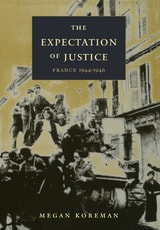
The Expectation of Justice
France, 1944–1946Megan Koreman
Duke University Press, 2000
As the first social history of the “après -Libération” period from the perspective of ordinary people, Koreman’s study reveals how citizens of these towns expected legal, social, and honorary justice—such as punishment for collaborators, fair food distribution, and formal commemoration of patriots, both living and dead. Although the French expected the Resistance’s Provisional Government to act according to local understandings of justice, its policies often violated local sensibilities by instead pursuing national considerations. Koreman assesses both the citizens’ eventual disillusionment and the social costs of the “Resistencialist myth” propagated by the de Gaulle government in an effort to hold together the fragmented postwar nation. She also suggests that the local demands for justice created by World War II were stifled by the Cold War, since many people in France feared that open opposition to the government would lead to a Communist takeover. This pattern of nationally instituted denial and suppression made it difficult for citizens to deal effectively with memories of wartime suffering and collaborationist betrayal. Now, with the end of the Cold War, says Koreman, memories of postwar injustices are resurfacing, and there is renewed interest in witnessing just and deserved closure.
This social history of memory and reconstruction will engage those interested in history, war and peace issues, contemporary Europe, and the twentieth century.
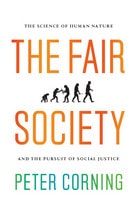
The Fair Society
The Science of Human Nature and the Pursuit of Social JusticePeter Corning
University of Chicago Press, 2011
We’ve been told, again and again, that life is unfair. But what if we’re wrong simply to resign ourselves to this situation? What if we have the power—and more, the duty—to change society for the better?
We do. And our very nature inclines us to do so. That’s the provocative argument Peter Corning makes in The Fair Society. Drawing on the evidence from our evolutionary history and the emergent science of human nature, Corning shows that we have an innate sense of fairness. While these impulses can easily be subverted by greed and demagoguery, they can also be harnessed for good. Corning brings together the latest findings from the behavioral and biological sciences to help us understand how to move beyond the Madoffs and Enrons in our midst in order to lay the foundation for a new social contract—a Biosocial Contract built on a deep understanding of human nature and a commitment to fairness. He then proposes a sweeping set of economic and political reforms based on three principles of fairness—equality, equity, and reciprocity—that together could transform our society and our world.
At this crisis point for capitalism, Corning reveals that the proper response to bank bailouts and financial chicanery isn’t to get mad—it’s to get fair.
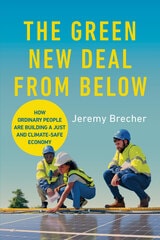
The Green New Deal from Below
How Ordinary People Are Building a Just and Climate-Safe EconomyJeremy Brecher
University of Illinois Press, 2024
A visionary program for national renewal, the Green New Deal aims to protect the earth’s climate while creating good jobs, reducing injustice, and eliminating poverty. Its core principle is to use the necessity for climate protection as a basis for realizing full employment and social justice.
Jeremy Brecher goes beyond the national headlines and introduces readers to the community, municipal, county, state, tribal, and industry efforts advancing the Green New Deal across the United States. Brecher illustrates how such programs from below do the valuable work of building constituencies and providing proofs of concept for new ideas and initiatives. Block by block, these activities have come together to form a Green New Deal built on a strong foundation of small-scale movements and grassroots energy.
A call for hope and a better tomorrow, The Green New Deal from Below offers a blueprint for reconstructing society on new principles to avoid catastrophic climate change.

The Nature of Home
Taking Root in a PlaceGreta Gaard
University of Arizona Press, 2007
Gaard journeys through the deserts of southern California, through the High Sierras, the Wind River Mountains, and the Northern Cascades, through the wildlands and waterways of Washington and Minnesota, through snow season, rain season, mud season, and lilac season, yet her essays transcend mere description of natural beauty to investigate the interplay between place and identity. Gaard examines the earliest environments of childhood and the relocations of adulthood, expanding the feminist insight that identity is formed through relationships to include relationships to place. “Home” becomes not a static noun, but an active verb: the process of cultivating the connections with place and people that shape who we become.
Striving to create a sense of home, Gaard involves herself socially, culturally, and ecologically within her communities, discovering that as she works to change her environment, her environment changes her. As Gaard investigates environmental concerns such as water quality, oil spills, or logging, she touches on their parallels to community issues such as racism, classism, and sexism, uncovering the dynamic interaction by which “humans, like other life on earth, both shape and are shaped by our environments.”
While maintaining an understanding of the complex systems and structures that govern communities and environments, Gaard’s writing delves deeper to reveal the experiences and realities we displace through euphemisms or stereotypes, presenting issues such as homelessness or hunger with compelling honesty and sensitivity. Gaard’s essays form a quest narrative, expressing the process of letting go that is an inherent part of an impermanent life. And when a person is broken, in the aftermath of that letting go, it is a place that holds the pieces together.
As long as we are forced to move—by economics, by war, by colonialism—the strategies we possess to make and redefine home are imperative to our survival, and vital in the shaping of our very identities.
The Politics of Care Work
Puerto Rican Women Organizing for Social JusticeEmma Amador
Duke University Press, 2025
The Racial Order Of Things
Cultural Imaginaries Of The Post-Soul EraRoopali Mukherjee
University of Minnesota Press, 2006
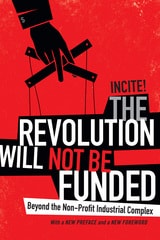
The Revolution Will Not Be Funded
Beyond the Non-Profit Industrial ComplexINCITE! Women of Color Against Violence
Duke University Press, 2017
Contributors. Christine E. Ahn, Robert L. Allen, Alisa Bierria, Nicole Burrowes, Communities Against Rape and Abuse (CARA), William Cordery, Morgan Cousins, Ruth Wilson Gilmore, Stephanie Guilloud, Adjoa Florência Jones de Almeida, Tiffany Lethabo King, Paul Kivel, Soniya Munshi, Ewuare Osayande, Amara H. Pérez, Project South: Institute for the Elimination of Poverty and Genocide, Dylan Rodríguez, Paula X. Rojas, Ana Clarissa Rojas Durazo, Sisters in Action for Power, Andrea Smith, Eric Tang, Madonna Thunder Hawk, Ije Ude, Craig Willse

The Social Justice Torah Commentary
Rabbi Barry H. Block
Central Conference of American Rabbis, 2021
What does the Torah have to say about social justice? As the contributors to The Social Justice Torah Commentary demonstrate, a great deal. A diverse array of authors delve deeply into each week's parashah, drawing lessons to inspire tikkun olam. Chapters address key contemporary issues such as racism, climate change, mass incarceration, immigration, disability, women's rights, voting rights, and many more. The result is an indispensable resource for weekly Torah study and for anyone committed to repairing the world.
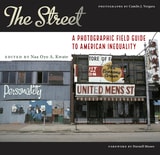
The Street
A Photographic Field Guide to American InequalityNaa Oyo A. Kwate
Rutgers University Press, 2021
Using MacArthur fellow Camilo José Vergara’s intimate street photographs of Camden, New Jersey as reference points, the essays in this collection analyze these images within the context of troubled histories and misguided policies that have exacerbated racial and economic inequalities. Rather than blaming Camden’s residents for the blighted urban landscape, the multidisciplinary array of scholars contributing to this guide reveal the oppressive structures and institutional failures that have led the city to this condition. Tackling topics such as race and law enforcement, gentrification, food deserts, urban aesthetics, credit markets, health care, childcare, and schooling, the contributors challenge conventional thinking about what we should observe when looking at neighborhoods.
The University and Social Justice
Struggles Across the GlobeAziz Choudry
Pluto Press, 2020
Whether calling for the decommodification or the decolonization of education, many of these struggles have attempted to draw on (and in turn, resonate with) longer histories of popular resistance, broader social movements and radical visions of a fairer world. In this critical collection, Aziz Choudry, Salim Vally and a host of international contributors bring grounded, analytical accounts of diverse struggles relating to higher education into conversation with each other.
Featuring contributions written by students and staff members on the frontline of struggles from 12 different countries, including Canada, Chile, France, India, Mexico, Nigeria, Occupied Palestine, the Philippines, South Africa, Turkey, the UK and the USA, the book asks what can be learned from these movements' strategies, demands and visions.
The View from Somewhere
Undoing the Myth of Journalistic ObjectivityLewis Raven Wallace
University of Chicago Press, 2019
In The View from Somewhere, Lewis Raven Wallace dives deep into the history of “objectivity” in journalism and how its been used to gatekeep and silence marginalized writers as far back as Ida B. Wells. At its core, this is a book about fierce journalists who have pursued truth and transparency and sometimes been punished for it—not just by tyrannical governments but by journalistic institutions themselves. He highlights the stories of journalists who question “objectivity” with sensitivity and passion: Desmond Cole of the Toronto Star; New York Times reporter Linda Greenhouse; Pulitzer Prize-winner Rachel Kaadzi Ghansah; Peabody-winning podcaster John Biewen; Guardian correspondent Gary Younge; former Buzzfeed reporter Meredith Talusan; and many others. Wallace also shares his own experiences as a midwestern transgender journalist and activist who was fired from his job as a national reporter for public radio for speaking out against “objectivity” in coverage of Trump and white supremacy.
With insightful steps through history, Wallace stresses that journalists have never been mere passive observers. Using historical and contemporary examples—from lynching in the nineteenth century to transgender issues in the twenty-first—Wallace offers a definitive critique of “objectivity” as a catchall for accurate journalism. He calls for the dismissal of this damaging mythology in order to confront the realities of institutional power, racism, and other forms of oppression and exploitation in the news industry.
The View from Somewhere is a compelling rallying cry against journalist neutrality and for the validity of news told from distinctly subjective voices.
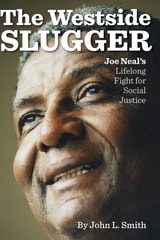
The Westside Slugger
Joe Neal's Lifelong Fight for Social JusticeJohn L. Smith
University of Nevada Press, 2019
Filled with an intense desire for education, he joined the United States Air Force and later graduated from Southern University—studying political science and the law at a time of great upheaval in the racial status quo. As part of a group of courageous men, Neal joined a Department of Justice effort to register the first black voters in Madison Parish.
When Neal moved to southern Nevada in 1963 he found the Silver State to be every bit as discriminatory as his former Louisiana home. As Neal climbed through the political ranks, he used his position in the state senate to speak on behalf of the powerless for more than thirty years. He took on an array of powerful opponents ranging from the Clark County sheriff to the governor of the state, as well as Nevada’s political kingmakers and casino titans. He didn’t always succeed—he lost two runs for governor—but he never stopped fighting. His successes included improved rights for convicted felons and greater services for public education, mental health, and the state’s libraries. He also played an integral role in improving hotel fire safety in the wake of the deadly MGM Grand fire and preserving the pristine waters of Lake Tahoe, which brought him national attention.
Neal lived a life that personified what is right, just, and fair. Pushing through racial and civil rights hurdles and becoming a lifelong advocate for social justice, his dedication and determination are powerful reminders to always fight the good fight and never stop swinging.
Thick Moralities, Thin Politics
Social Integration Across Communities of BeliefBenjamin Gregg
Duke University Press, 2003
Thick Moralities, Thin Politics grapples with the work of theorists from both sides of the Atlantic, including Jürgen Habermas, Anthony Giddens, and Niklas Luhmann, as well as George Herbert Mead, Erving Goffman, and Harold Garfinkel. Gregg develops a model of validity for arguments made in the public sphere, for understanding among competing worldviews, and for adjudicating disputes generated by normative differences. He applies his theory of politics to specific issues of contemporary social life, including those relating to the place of women, minorities, and multiculturalism in American and European society today. He also addresses the scientific study of religion, issues of legal interpretation, and the critique of ideology, in each case illuminating how different epistemic systems, as well as competing value systems, can achieve some understanding of one another. Gregg demonstrates, ultimately, that thin politics actually further, rather than reduce, citizens' engagement in the political process.
Transformation Now!
Toward a Post-Oppositional Politics of ChangeAnaLouise Keating
University of Illinois Press, 2013