Results by title
100 books match the query 'Sociolinguistics' and 24 start with t
Teaching and Learning in Bilingual Classrooms
New ScholarshipKristin J. Mulrooney
Gallaudet University Press, 2014
After extensive SoTL training, the GSTLI professors reviewed interaction in their respective classrooms. Through meticulous study of class videos and written assignments in three General Studies Requirements courses for first-year students, the teachers learned how to ensure connecting with students who have a variety of language differences and communication methods.
The other professors assessed bottlenecks in classes on the linguistic structure of ASL, and on criminal justice. The linguistics professor identified the bottleneck as the students’ inability to conceptualize the interrelationship between definitions and examples, a fundamental skill to scientific thinking. In the criminal justice class, the professor saw the need to guide students through linguistic bottlenecks by providing materials in both ASL and English. The successes of the GSTLI presented in this unique volume can benefit other teachers by better preparing them to meet the needs of bilingual diverse learners in more effective ways.

Telling Deaf Lives
Agents of ChangeKristin Snoddon
Gallaudet University Press, 2014
Due to the dearth of formal research on deaf people, Deaf community historians drove the preservation of the stories in this collection. Their diversity is remarkable: Melissa Anderson and Breda Carty describe the Cosmopolitan Correspondence Club, a group of Deaf individuals who corresponded in the early 20th century from Australia to Western Europe to the United States; Ulla-Bell Thorin recounts first-hand growing up deaf in Sweden and her process in authoring six memoirs; Harry Lang reflects on writing biographies of numerous Deaf Americans in the arts and science; Akio Suemori profiles the first Deaf president of a Japanese school for the Deaf; Tatiana Davidenko writes about her Deaf family’s experience during the World War II siege of Leningrad; Theara Yim and Julie Chateauvert look at the evolution of ASL poetry by analyzing works of prominent ASL poets Clayton Valli, Peter Cook, and Kenny Lerner. These and the other contributions here enshrine Deaf people in collective memory by virtue of disseminating and preserving their stories.

The Afro-Bolivian Spanish Determiner Phrase
A Microparametric AccountSandro Sessarego
The Ohio State University Press, 2014
This dialect presents phenomena that offer a real challenge to current linguistic theory. The Afro-Bolivian Spanish Determiner Phrase elaborates on the importance of enhancing a stronger dialogue between formal generative theory and sociolinguistic methodology, in line with recent work in the field of minimalist syntax. Sessarego’s study combines sociolinguistic techniques of data collection with generative models of data analysis to obtain more fine-grained, empirically testable generalizations.
The Comparative Method of Language Acquisition Research
Clifton Pye
University of Chicago Press, 2017
Pye here applies the comparative method to three Mayan languages—K’iche’, Mam, and Ch’ol—showing how differences in the use of verbs are connected to differences in the subject markers and pronouns used by children and adults. His holistic approach allows him to observe how small differences between the languages lead to significant differences in the structure of the children’s lexicon and grammar, and to learn why that is so. More than this, he expects that such careful scrutiny of related languages’ variable solutions to specific problems will yield new insights into how children acquire complex grammars. Studying such an array of related languages, he argues, is a necessary condition for understanding how any particular language is used; studying languages in isolation, comparing them only to one’s native tongue, is merely collecting linguistic curiosities.
The Crip Linguistics Reader
Octavian Robinson
Gallaudet University Press, 2025

The Discourse of Police Interviews
Edited by Marianne Mason and Frances Rock
University of Chicago Press, 2020
The first book to focus exclusively on the discourses of police interviewing, The Discourse of Police Interviews examines leading debates, approaches, and topics in contemporary police interview research. Among other topics, the book explores the sociolegal, psychological, and discursive framework of popular police interview techniques employed in the United States and the United Kingdom, such as PEACE and Reid, and the discursive practices of institutional representatives like police officers and interpreters that can influence the construction and quality of linguistic evidence. Together, the contributions situate the police interview as part of a complex, and multistage, criminal justice process. The book will be of interest to both scholars and practitioners in a variety of fields, such as linguistic anthropology, interpreting studies, criminology, law, and sociology.
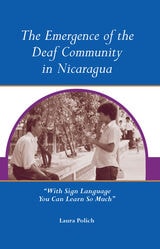
The Emergence of the Deaf Community in Nicaragua
“With Sign Language You Can Learn So Much”Laura Polich
Gallaudet University Press, 2005
The sudden discovery of Nicaraguan Sign Language (NSL) enthralled scholars worldwide who hoped to witness the evolution of a new language. But controversy erupted regarding the validity of NSL as a genuinely spontaneous language created by young children. Laura Polich’s fascinating book recounts her nine-year study of the Deaf community in Nicaragua and her findings about its formation and that of NSL in its wake.
Polich crafted The Emergence of the Deaf Community in Nicaragua from her copious research in Nicaragua’s National Archives, field observations of deaf pupils in 20 special education schools, polls of the teachers for deaf children about their education and knowledge of deafness, a survey of 225 deaf individuals about their backgrounds and living conditions, and interviews with the oldest members of the National Nicaraguan Association of the Deaf.
Polich found that the use of a “standardized” sign language in Nicaragua did not emerge until there was a community of users meeting on a regular basis, especially beyond childhood. The adoption of NSL did not happen suddenly, but took many years and was fed by multiple influences. She also discovered the process that deaf adolescents used to attain their social agency, which gained them recognition by the larger Nicaraguan hearing society. Her book illustrates tremendous changes during the past 60 years, and the truth in one deaf Nicaraguan’s declaration, “With sign language you can learn so much.”
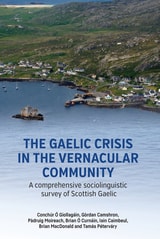
The Gaelic Crisis in the Vernacular Community
A Comprehensive Sociolinguistic Survey of Scottish GaelicConchúr Ó Giollagáin, Gòrdan Camshron, Pàdruig Moireach, Brian Ó Curnáin, Iain Caimbeul, Brian MacDonald and Tamás Péterváry
Aberdeen University Press, 2020
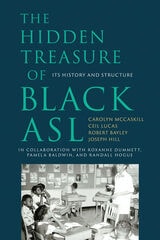
The Hidden Treasure of Black ASL
Its History and StructureCarolyn McCaskill
Gallaudet University Press, 2020
Black ASL has long been recognized as a distinct variety of American Sign Language based on abundant anecdotal evidence. The Hidden Treasure of Black ASL, originally published in 2011, presents the first sociohistorical and linguistic study of this language variety. Based on the findings of the Black ASL Project, which undertook this unprecedented research, Hidden Treasure documents the stories and language of the African American Deaf community. With links to online supplemental video content that includes interviews with Black ASL users (formerly on DVD), this volume is a groundbreaking scholarly contribution and a powerful affirmation for Black Deaf people.
This paperback edition includes an updated foreword by Glenn B. Anderson, a new preface that reflects on the impact of this research, and an expanded list of references and resources on Black ASL.
The supplemental video content is available online at the Gallaudet University Press YouTube Channel. Under Playlists, click “The Hidden Treasure of Black ASL: Companion Video to the Book.” The original Black ASL Project research videos are also available.
Featured in the film Signing Black in America: The Story of Black ASL, produced by The Language and Life Project at North Carolina State University (Dr. Walt Wolfram, Executive Producer). Look for it on PBS.

The Language of Languages
Ngugi wa Thiong’o
Seagull Books, 2023
With clear, conversational prose, this is the first book dedicated entirely to Ngũgĩ wa Thiong’o’s writings on translation.
Through his many critically acclaimed novels, stories, essays, plays, and memoirs, Kenyan writer Ngũgĩ wa Thiong’o has been at the forefront of world literature for decades. He has also been, in his own words, “a language warrior,” fighting for indigenous African languages to find their rightful place in the literary world. Having begun his writing career in English, Ngũgĩ shifted to writing in his native language Gikũyũ in 1977, a stance both creatively and politically significant. For decades now, Ngũgĩ has been translating his Gikũyũ works into English himself, and he has used many platforms to champion the practice and cause of literary translations, which he calls “the language of languages.”
This volume brings together for the first time Ngũgĩ’s essays and lectures about translation, written and delivered over the past two decades. Here we find Ngũgĩ discussing translation as a conversation between cultures, proposing that dialogue among African languages is the way to unify African peoples, reflecting on the complexities of auto-translation or translating one’s own work, exploring the essential task translation performed in the history of the propagation of thought, and pleading for the hierarchy of languages to be torn down. He also shares his many experiences of writing across languages, including his story The Upright Revolution, which has been translated into more than a hundred languages around the globe and is the most widely translated text written by an African author.
At a time when dialogues between cultures and peoples are more essential than ever, The Language of Languages makes an outspoken case for the value of literature without borders.
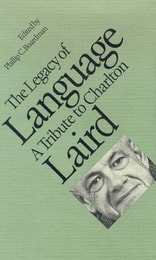
The Legacy Of Language
A Tribute To Charlton LairdPhillip C. Boardman
University of Nevada Press, 1987
In this tribute to Charlton Laird, ten scholars in the fields of language and linguistics provide ordinary readers with new insight into the workings of the English language. Laird, one of Nevada's treasured authors, was a professor of English at the University of Nevada, Reno.

The Lettered Mountain
A Peruvian Village’s Way with WritingFrank Salomon and Mercedes Niño-Murcia
Duke University Press, 2011

The Madison Women
Gender, Higher Education, and Literacy in Nineteenth-Century AppalachiaAmanda E Hayes
West Virginia University Press, 2024
Incorporating captivating mini-biographies of women who attended Madison College and who went on to change their communities in ways large and small, this book reveals how the lives of its students impart lessons about history, regional culture, and how we can shape the Appalachia's future.

The Matter of Language
Abstraction and PoetryBenjamin Noys
Seagull Books, 2023
If the twentieth century was the century in which language was at the center of thought, the twenty-first century has, so far, been the century of matter. The Matter of Language is a critical intervention that aims to return to the relationship between language and matter to think of our present moment as one dominated by abstractions that rule our lives. In a series of dated chapters, that form punctual moments of intervention, this book both rehabilitates key thinkers, like Marx, Freud, and Saussure, and engages with poetic thinking on matter in David Jones, Diane di Prima, William Blake, Leslie Kaplan, and others. It is a matter of understanding language as a site of struggle, which is intimately bound to the material but also crucial in formulating and expressing the material and the abstractions that shape language and matter. Working between theory and poetry, The Matter of Language reconceives notions of alienation and class struggle as essential modes of reading and analysis for our fractured present.
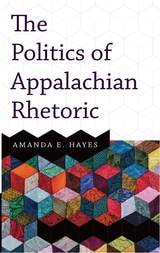
The Politics of Appalachian Rhetoric
Amanda E Hayes
West Virginia University Press, 2018
In exploring the ways that Appalachian people speak and write, Amanda E. Hayes raises the importance of knowing and respecting communication styles within a marginalized culture. Diving deep into the region’s historical roots—especially those of the Scotch-Irish and their influence on her own Appalachian Ohio—Hayes reveals a rhetoric with its own unique logic, utility, and poetry.
Hayes also considers the headwinds against Appalachian rhetoric, notably ideologies about poverty and the biases of the school system. She connects these to challenges that Appalachian students face in the classroom and pinpoints pedagogical and structural approaches for change.
Throughout, Hayes blends conventional scholarship with autobiography, storytelling, and language, illustrating Appalachian rhetoric’s validity as a means of creating and sharing knowledge.
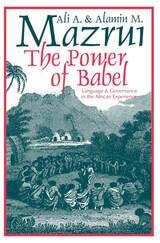
The Power of Babel
Language and Governance in the African ExperienceAli A. Mazrui and Alamin M. Mazrui
University of Chicago Press, 1998
The Power of Babel is one of the first comprehensive studies of the complex linguistic constellations of Africa. It draws on Ali Mazrui's earlier work in its examination of the "triple heritage" of African culture, in which indigenous, Islamic, and Western traditions compete for influence. In bringing the idea of the triple heritage to language, the Mazruis unravel issues of power, culture, and modernity as they are embedded in African linguistic life.
The first section of the book takes a global perspective, exploring such issues as the Eurocentrism of much linguistic scholarship on Africa; part two takes an African perspective on a variety of issues from the linguistically disadvantaged position of women in Africa to the relation of language policy and democratic development; the third section presents a set of regional studies, centering on the Swahili language's exemplification of the triple heritage.The Power of Babel unites empirical information with theories of nationalism and pluralism—among others—to offer the richest contextual account of African languages to date.
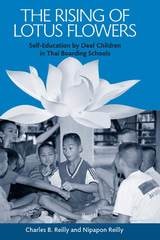
The Rising of Lotus Flowers
Self-Education by Deaf Children in Thai Boarding SchoolsCharles B. Reilly
Gallaudet University Press, 2005
In developed nations around the world, residential schools for deaf students are giving way to the trend of inclusion in regular classrooms. Nonetheless, deaf education continues to lag as the students struggle to communicate. In the Bua School in Thailand, however, 400 residential deaf students ranging in age from 6 to 19 have met with great success in teaching each other Thai Sign Language (TSL) and a world of knowledge once thought to be lost to them. The Rising of Lotus Flowers: Self-Education by Deaf Children in Thai Boarding Schools reveals how their institutionalization allowed them to foster a unique incubator of communication and education.
Charles B. Reilly, a teacher and community organizer in Thailand for eight years, and Nipapon Reilly, a Deaf Thai citizen, studied the students in the Bua School for 14 years, with periodic follow-ups thereafter. They found that the students learned little from their formal instructors, but that they were able to educate each other in time spent away from the classroom. Older students who had learned TSL in the dorms and on the playground successfully passed it on to six-year-olds who had virtually no language at all. The Reillys’ study uncovers an elaborate hierarchy of education among these students, with each group using games and other activities to teach and bring other classmates up to their level. Named for the much admired aquatic plant that blooms in Thailand’s bogs, the Bua School epitomizes the ideal of The Rising of Lotus Flowers, which also offers analytical evidence of the continuing value of residential schools in deaf education.
The Sociolinguistics of Ethiopian Sign Language
A Study of Language Use and AttitudesEyasu Hailu Tamene
Gallaudet University Press, 2017
Tamene collects data from three principal groups of people: deaf participants, teachers of deaf students, and parents of deaf children. He examines EthSL use within families, in formal and informal settings, and in various community spaces. He documents the awareness among different groups of the services available for deaf people, such as sign language interpreters and Deaf associations. He finds that members of the Deaf community show positive attitudes toward the use of EthSL and investigates the factors that impact those attitudes. His work indicates that there are still critical gaps in recognition and support for the use of EthSL, which can pose a threat to the vitality of the language. The Sociolinguistics of Ethiopian Sign Language will help to advance public understanding of EthSL and contribute to improved educational and social outcomes for the Deaf community in Ethiopia.
The Subtlety of the Street
The Discourse of ResponsibilityM Peregrine Balmat
University of Michigan Press, 2026
The Subtlety of the Street examines the effects of small, seemingly mundane words that occur in conversations between street-level workers and those they serve. Combining discourse analysis, public policy studies, and higher education and social work research, M Peregrine Balmat examines data from two distinct ethnographies that comprise over 1100 pages of transcribed social interaction and 24 months of participant observation fieldwork. Balmat uses Interactional Linguistics to examine how responsibility is constructed over time in social work (homeless shelter) and higher education (community college) contexts, bringing to light systemic issues that face street-level disciplines. Analyzing constellations of words—personal pronouns, terms referring to performance benchmarks and assessments, and cultural mythologies—the author shows that clusters of seemingly generic phrases street-level workers use to communicate responsibility can function, in concert, as racialized microaggressions —termed the Gestalt of Responsibility.
These problematic linguistic choices can accumulate over a student’s time in the classroom or over a person’s time in shelter. They shift in response to performance assessments and measurements, increasing in unfriendly, morally-loaded constructions of responsibility as testing days and shelter restrictions approach. While street-level research suggests that strategies like these are utilized because workers believe those discourse practices work, the phrases reflect historical English Poor Laws and racialized ideologies leveled against enslaved Black people as well as more modern neoliberal welfare state and education politics where such ideologies persist. The Subtlety of the Street offers recommendations for street-level workers’ collaborative professional development and implications for street-level approaches to pedagogy and practice.

The Translations of Nebrija
Language, Culture, and Circulation in the Early Modern WorldByron Ellsworth Hamann
University of Massachusetts Press, 2015
Tracing the global influence of Nebrija's dictionary, Byron Ellsworth Hamann, in this interdisciplinary, deeply researched book, connects pagan Rome, Muslim Spain, Aztec Tenochtitlan, Elizabethan England, the Spanish Philippines, and beyond, revealing new connections in world history. The Translations of Nebrija re-creates the travels of people, books, and ideas throughout the early modern world and reveals the adaptability of Nebrija's text, tracing the ways heirs and pirate printers altered the dictionary in the decades after its first publication. It reveals how entries in various editions were expanded to accommodate new concepts, such as for indigenous languages in the Americas—a process with profound implications for understanding pre-Hispanic art, architecture, and writing. It shows how words written in the margins of surviving dictionaries from the Americas shed light on the writing and researching of dictionaries across the early modern world.
Exploring words and the dictionaries that made sense of them, this book charts new global connections and challenges many assumptions about the early modern world.
To the Lexicon and Beyond
Sociolinguistics in European Deaf CommunitiesMieke Van Herreweghe
Gallaudet University Press, 2004
Volume 10 of the series explores sociolinguistics in various European Deaf communities. Editors Van Herreweghe and Vermeerbergen present a wide array of research inspired by the Sociolinguistics Symposium 14 held at Ghent University, Belgium, in April 2002. Noted contributors from Finland, Belgium, Ireland, the Netherlands, Germany, Sweden, Spain and the United Kingdom offer insights gleaned from the languages of their countries.
Part One of this five-part volume investigates multilingualism and language contact among Finland-Swedish Deaf People. Part Two looks at regional variation and the evolution of signs in Flemish Sign Language, as well as gender-influenced variation in Irish Sign Language. Language policy and planning receives consideration in the third part, with a study of sign language lexical variation in the Netherlands and an analysis of the risks of codification in Flemish Sign Language. Part Four examines the implementation of bilingual programs for deaf students throughout Europe, and updates research on language use visually oriented in Swedish Deaf education classrooms.
The final part of To the Lexicon and Beyond: Sociolinguistics in European Deaf Communities presents data on language attitudes, including a census of sign language users in Spain that reveal a changing language community. The last chapter of this fascinating assembly assays British Deaf communities and language identity in relation to issues of transnationality in the 21st century.
Translation, Sociolinguistic, and Consumer Issues in Interpreting
Melanie Metzger
Gallaudet University Press, 2007
The Third Volume in the Studies in Interpretation Series
This new volume focuses on scholarship over a refined spectrum of issues that confront interpreters internationally. Editors Melanie Metzger and Earl Fleetwood call upon researchers from the United States, Ireland, Australia, and the Philippines to share their findings in six chapters.
In the first chapter, Roberto R. Santiago and Lisa A. Frey Barrick reveal how interpreters deal with translating source language idioms into American Sign Language (ASL). In Chapter 2, Lorraine Neeson and Susan Foley-Cave review the particular demands for decision-making that face interpreters on several levels in a class on semantics and pragmatics. Liza B. Martinez explains in Chapter 3 the complicated, multilingual process of code switching by Filipino interpreters when voice-interpreting Filipino Sign Language.
Chapter 4 offers a deconstruction by Daniel Roush of the stereotype that Deaf ASL-users are direct or blunt, based on his analysis of two speech/social activities of requests and refusals. Jemina Napier investigates interpreting from the perspective of deaf consumers in Australia in Chapter 5 to explore their agenda for quality interpreting services. In the final chapter, Amy Frasu evaluates methods for incorporating visual aids into interpretations from spoken English to American Sign Language and the potential cognitive dissonance for deaf persons that could result.
Truth and Veridicality in Grammar and Thought
Mood, Modality, and Propositional AttitudesAnastasia Giannakidou and Alda Mari
University of Chicago Press, 2021
Can language directly access what is true, or is the truth judgment affected by the subjective, perhaps even solipsistic, constructs of reality built by the speakers of that language? The construction of such subjective representations is known as veridicality, and in this book Anastasia Giannakidou and Alda Mari deftly address the interaction between truth and veridicality in the grammatical phenomena of mood choice: the indicative and subjunctive choice in the complements of modal expressions and propositional attitude verbs.
Combining several strands of analysis—formal linguistic semantics, syntactic theory, modal logic, and philosophy of language—Giannakidou and Mari’s theory not only enriches the analysis of linguistic modality, but also offers a unified perspective of modals and propositional attitudes. Their synthesis covers mood, modality, and attitude verbs in Greek and Romance languages, while also offering broader applications for languages lacking systematic mood distinction, such as English. Truth and Veridicality in Grammar and Thought promises to shape longstanding conversations in formal semantics, pragmatics, and philosophy of language, among other areas of linguistics.
Turn-Taking, Fingerspelling, and Contact in Signed Languages
Ceil Lucas
Gallaudet University Press, 2002